




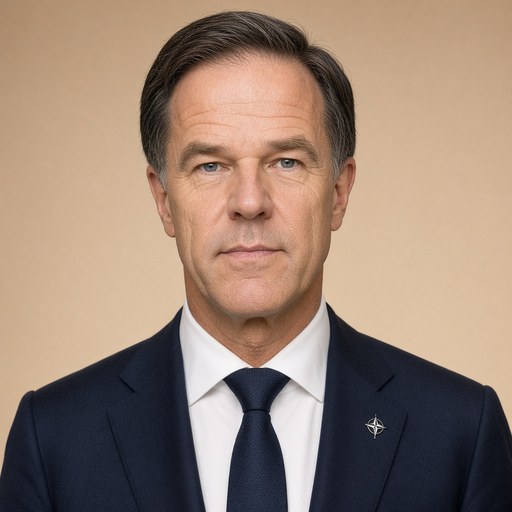
Speech by Prime Minister Mark Rutte to the Atlantic Commission
 Mark Rutte · Prime Minister of the Netherlands
- Context
- Rutte addressed the Atlantic Commission on October 2, 2019, delivering a speech on NATO's 70th anniversary and the importance of transatlantic security cooperation.
- Main themes
- NATO's continued relevance, transatlantic cooperation, European security, Dutch foreign policy, hybrid threats, defense investment, Russia's assertiveness, multilateralism and international law, public support for NATO, NATO-EU relationship
- Duration
- ~22 min
- Words
- 2,595
- Sentences
- 148
- Readability
- 54
- Grade
- 10.0
- Syntax
- 2.92
- Vocabulary
- 2.05
Translated from Dutch
The broad sphere of national life a sentence belongs to. Every sentence has an Arena, so it is the denominator the other indices are read against.
Other148 sentences in 48 paragraphs
"As long as international law remains dependent on the whims of individual states, as long as there is no higher legal system or international morality to which all states bow, we cannot build international politics on the quicksand of idealistic hope. We must face the hard truth; above all, we must ensure that we become economically and militarily strong enough to defend our freedom. We should take to heart the – freely translated – statement of Hilaire Belloc:
'Fighting is very wrong, said Johnny Blood. Fighting is good, said Rough Peter and killed him.'
Ladies and gentlemen, end quote.
For you may have already understood: these are not my words, but those of Dirk Stikker, one of the founding fathers of the VVD, who, as Minister of Foreign Affairs in 1949, was closely involved in the establishment of NATO and later became the 3rd Secretary-General of the alliance. The quote comes from his memoirs, published in 1966, in which Stikker talks extensively about the early years of NATO. I wasn't even born when that book was published, so this is really old history.
The birth certificates of NATO, of course, lie in the Cold War, which dominated international politics for 40 years. Based on the Truman Doctrine, NATO had to come into being after the war to contain the communist threat from Russia and the countries of the Warsaw Pact for Western Europe. And it was also inevitable that the Netherlands said goodbye to its pre-war neutrality policy after 1945.
Looking back, we did that with conviction, especially within NATO. Because in those 70 years, a Dutchman led this important alliance for more than 2 decades. First Stikker, then Luns, and later De Hoop Scheffer. That says something.
You all know the history. After the fall of the wall, the world was able to live for a few years in the illusion that the old security structures had become less important forever. Even in 1999, at the 50th anniversary, there was a plea within NATO for close cooperation with Russia – I am not making this up.
That thought is far behind us. Today we are dealing with an assertive Russia at the eastern external border of the European Union. A Russia that is slowly but surely trying to expand its sphere of influence, with both political and military means, also in this direction. Since the events in Crimea in 2014, it has become clear that peace and security do not come from the East.
Also at the southern borders of our continent, Fukuyama's end of history has become very distant. With the civil war in Syria, the unrest in North Africa, and the potential threat of Iran's nuclear program. And due to the position of countries like China, new questions arise, for example in the field of cybersecurity, to which NATO must also formulate a careful response. A response in which security, economy, and the importance of international dialogue are well balanced.
In short, a different perspective and a different playing field than 70 years or 20 years ago. And yet the words of Stikker have lost none of their meaning after all these years. As long as the ideal world does not exist, we must be realistic. We must be willing to invest in our security, thus in the transatlantic bond and thus in the relationship with the United States.
You undoubtedly heard the King say it in the Throne Speech: transatlantic cooperation is and remains a cornerstone of our foreign policy. I would like to make a few remarks about that today before we engage in conversation. To begin with, NATO still enjoys remarkably strong public support, both in our country and in the U.S.
For the Netherlands, I base this on research that your own Atlantic Commission presented this spring. Almost three-quarters of all Dutch people find NATO membership important for our security. An American scientific study, also from this spring, shows that more than 8 out of 10 Americans support NATO membership. During the Cold War, that public support was taken for granted, as the communist enemy had a clear face and the threat of nuclear war seemed very real for decades.
In today's multipolar world, the threat is much more hybrid. Stikker had really never heard of digital hacks, hypersonic missiles, or jihadist terrorism.
In our time, danger comes from many sides, it changes in character and location, and in this digital age, it is not always easy to recognize or grasp. And that is precisely why it is so important to maintain that support.
That support is closely related to the fact that we need NATO. People seem to realize that. There is no alternative. The Netherlands, Europe – we cannot guarantee our own security. The new President of the European Commission, Ursula von der Leyen, recently stated in the European Parliament that for her it is a foregone conclusion that the EU's collective security policy is unthinkable without NATO. She said literally:
'We will stay transatlantic and we have to become more European.'
And I endorse that.
Because NATO is indispensable for the security of Europe and for the protection of everything that has been built since 1945. But in the cooperation between the EU and NATO, Europe can and must do more. A concrete example – those of you in the know will recognize it – is the improvement of military mobility in Europe. In crisis situations, it is crucial that troops, European and American, can move quickly through Europe. Another example is the mutual cooperation and pooling of forces in the military field, as has been taking shape for years between the Netherlands and Germany and the Netherlands and Belgium. With the hybrid threats of today, mutual coordination, division of tasks, and pooling of forces are becoming increasingly urgent. In short, even without a European army, Europe can and must do more to ensure its own security, in closer cooperation with NATO.
And yes, security comes with a price tag. Those who are members of a club must pay dues. We may not like it, but the time when Europe could shelter under the American security umbrella for a minimal amount is over. That movement had already begun under the previous American president, and the current one makes no secret of the fact that the disproportionate cost distribution within NATO is a thorn in his side. I can honestly only have a lot of understanding for that.
The fact is that soon, after Brexit, about one-fifth of NATO's total military spending will be borne by the remaining EU members. No more than that.
That is not sustainable in the long term. You undoubtedly know that in 2014 in Wales, we agreed that all countries would work towards a defense budget of 2 percent of national income by 2024. With the coalition agreement and the latest spring memorandum, we have added billions to the defense budget. But to be honest, we will not reach 2 percent by 2024.
But, ladies and gentlemen, let us also keep in mind that the transatlantic bond encompasses so much more than just the military alliance. Military strength has never been an end in itself, but always a means. The establishment of NATO was not an isolated event after the war.
In the same period, the Marshall Plan laid the foundation for the economic reconstruction of our shattered and demoralized continent and simultaneously for European cooperation. And these were also the years in which, under American leadership, the UN, the World Bank, and the IMF were established, because the world had learned from past mistakes. In other words: an important goal after the war was a peaceful, prosperous, and stable Europe, closely connected to the U.S.
That was and is a mutual interest. Because when Europe does well, it is good for the U.S. and vice versa. And a stable Europe between Russia, the Middle East, and Africa is a strategic interest for the U.S. And that is precisely the point I try to make in my conversations with President Trump and on stages in the U.S. time and again: transatlantic cooperation is a domestic interest – also for America.
To begin with, because of the values we share: democracy, the rule of law, freedom of expression. 75 years ago, our country was liberated, and American soldiers played a significant role in that. We remain grateful for that, and anyone who has ever visited the military cemetery in Margraten knows what that gratitude looks like.
We have already heard it a few times in recent weeks, and I predict that it will come up even more often in this commemorative year: 75 years of freedom, democracy, and the rule of law are not a given. For a long time, we in the West implicitly assumed that these values were so logical that it was inevitable that the rest of the world would eventually adopt them. A matter of economic development, the formation of a middle class, and political awareness – we thought.
Now we know that this thought was quite naive, and that countries like China and Russia really look at the world through a different rule of law lens. Regarding democracy, human rights, but also intellectual property. This means that after 75 years of liberation and 70 years of NATO, there is still reason to defend those shared core values, which are the thick ice layer beneath our way of life. That is also what transatlantic cooperation is about.
And there are, of course, the shared economic interests. Roughly 1/10 of the world's population lives in the United States and the countries of the EU. But together we account for nearly half of the world's GDP. That is enormous. And the mutual transatlantic trade and investments are also significant. For example, Americans invest three times as much in the EU as in all of Asia. And looking ahead: by 2050, China and India are expected to be the 1st and 2nd economies in the world, with over 3 billion inhabitants. So what could be more logical than that the U.S. and Europe, with an estimated combined population of still less than 1 billion, continue to hold on to each other and work together? A rhetorical question, you understand. That is also what transatlantic cooperation is about.
And it is about something else: the multilateral world order. Let me be very clear.
The importance of multilateral international cooperation, as it has grown since 1945, cannot be overstated. Certainly not by a medium-sized country like the Netherlands, or as some say: a great power in pocket size. I have little patience for grandiose idealism and airy-fairy notions, but I do care about hard interests, and the Netherlands truly benefits from a multilateral system in which not the law of the strongest but the strength of the law prevails. Hugo Grotius knew that in the 17th century.
The UN is, of course, the flagship of the system. NATO and the EU are important pillars.
And the World Trade Organization is one of those structural, regulatory bodies with an important role in the better functioning of world trade. However you look at it, through international rules, mutual agreements, and sanction mechanisms, the world has become incredibly better since 1945. With more prosperity for more people, less poverty, fewer wars and violence, and more rule of law.
And no, the system is not perfect, and no, the world is still not a Garden of Eden, but I dare to assert that the post-war multilateral world order is a success from which many people and countries have benefited. And that certainly applies to an open and internationally oriented country like ours, which benefits from international stability.
That comes with responsibility, as the Netherlands continually takes within NATO and other international bodies. Also financial responsibility. Not because the Americans ask us to, but because it is in our own interest. And that system is under pressure. It took shape in a time when the world could still be simply divided into communist versus democratic and poor versus rich.
That world of yesterday no longer exists, and that constrains the way the system works. For example, look at the decision-making in the UN, especially the Security Council, which still operates as if the world has not changed since 1945. Or look at the World Trade Organization, where a country like China still has the status of a developing country, with all the financial benefits that come with it. Or look at the Human Rights Council, where the condemnation of Israel is a major agenda item, while serious human rights violators like Syria, Eritrea, or North Korea often go unpunished.
The criticism of this from President Trump – but not only from him – is strong, that is true.
But at its core, much of that criticism is also justified. And I believe that we should see President Trump's actions as an opportunity to push forward and improve and modernize the international system. Not by canceling memberships and treaties, not by throwing away old shoes before we have new ones, but by working together to advocate for modernization and improvement of the system. That is also my ongoing appeal to the United States, arguing that it is also in their interest. Reasoned from our shared values and our shared economic interests, I say: that is also what transatlantic cooperation is about.
The eminent American historian Robert Kagan uses a beautiful metaphor for this in a recent book.
The jungle grows back."
, that book is called. In short, Kagan's argument is that the natural state of international relations has historically resembled a jungle. Chaos, then. Think of the background to World War I, with the patchwork of alliances and the nationalist diplomacy of those days, which inevitably led to a devastating world war.
Or rather two, if we extend the story to after the Treaty of Versailles. After World War II, America took the lead out of idealism and well-understood self-interest to civilize that jungle, says Kagan. As a result, peace, freedom, and prosperity have been achieved for more people than ever before. The danger that Kagan now sees is that the multilateral world order is under such pressure that the jungle is growing back, and at a rapid pace.
It seems to me that it is an essential transatlantic interest to ensure that this does not happen, but that we work together to strengthen a multilateral world order that can last for a while. For ourselves and for the collective.
Ladies and gentlemen,
In the preface to his memoirs, Stikker wrote that – and I quote:
‘(…) my experiences have led me to believe not only in the desirability but also in the essential existence of an Atlantic community – a community that truly encompasses Western and Southern Europe and North America in its current form. I belong to those who believe that the Atlantic Ocean is a main road that connects us, not a barrier that separates us.’
End quote, from 1966, then.
It is written in the language of the time and against the backdrop of the bipolar relations of that era. Today, the world looks different, and NATO looks very different as well. But at its core, one thing has not changed, and that is that we need each other desperately. We feel that even more so 75 years after liberation and 30 years after the fall of the wall. And it is crucial that we continue to realize this and act accordingly.
Thank you.
The original Dutch. The tags above are read on the English translation's sentences.
‘Zolang het volkenrecht afhankelijk blijft van de willekeur van afzonderlijke staten, zolang er geen hoger rechtsstelsel of internationale moraal bestaat waar alle staten voor buigen, kunnen wij op het drijfzand der idealistische hoop geen internationale politiek bouwen. Wij moeten de harde waarheid onder ogen zien; voor alles moeten wij ervoor zorgen, dat wij economisch en militair sterk genoeg worden om onze vrijheid te kunnen verdedigen. Wij dienen de – vrij vertaalde – uitspraak van Hilaire Beloc ter harte te nemen:
“Vechten is heel verkeerd zei Jantje Blood. Vechten is goed, zei Rauwe Piet en sloeg hem dood.”’
Dames en heren, einde citaat.
Want u had het misschien al begrepen: dit zijn niet mijn woorden, maar die van Dirk Stikker, een van de founding fathers van de VVD, als minister van Buitenlandse Zaken in 1949 nauw betrokken bij de oprichting van de NAVO en later de 3eSecretaris-Generaal van het bondgenootschap. Het citaat komt uit zijn memoires, gepubliceerd in 1966, waarin Stikker veel vertelt over de beginjaren van de NAVO. Ik was nog niet eens geboren toen dat boek verscheen, dus dit is echt oude geschiedenis.
De geboortepapieren van de NAVO liggen natuurlijk in de Koude Oorlog, die 40 jaar lang de internationale politiek domineerde. Op basis van de Truman-doctrine moest de NAVO er na de oorlog wel komen om voor West-Europa de communistische dreiging vanuit Rusland en de landen van het Warschaupact in te dammen. En het was ook onontkoombaar dat Nederland de vooroorlogse neutraliteitspolitiek na 1945 vaarwel zei.
Terugblikkend hebben we dat met overtuiging gedaan, zeker binnen de NAVO. Want in die 70 jaar stond er meer dan 2 decennia een Nederlander aan het hoofd van dit belangrijke bondgenootschap. Eerst Stikker, later Luns en nog weer later De Hoop Scheffer. Dat zegt toch wel iets.
U kent allemaal de geschiedenis. Na de val van de muur heeft de wereld een paar jaar in de illusie kunnen leven dat de oude veiligheidsstructuren voor altijd minder belangrijk waren geworden. Nog in 1999, bij het 50-jarig bestaan, klonk binnen de NAVO een pleidooi voor nauwe samenwerking met Rusland – ik verzin dit niet.
Die gedachte ligt ver achter ons. Vandaag hebben we te maken met een assertief Rusland aan de oostelijke buitengrens van de Europese Unie. Een Rusland dat zijn invloedssfeer langzaam maar zeker probeert uit te breiden, met politieke én militaire middelen, ook deze kant op. Sinds de gebeurtenissen op de Krim in 2014 is wel duidelijk dat de rust en veiligheid niet uit het Oosten komen.
Ook aan de zuidgrenzen van ons continent is Fukuyama’s einde van de geschiedenis ver uit het zicht geraakt. Met de burgeroorlog in Syrië, de onrust in Noord-Afrika en de potentiële dreiging van het nucleaire programma van Iran. En door de positie van landen als China dienen zich nieuwe vragen aan, bijvoorbeeld op het terrein van cyberveiligheid, waarop de NAVO ook een zorgvuldig antwoord moet formuleren. Een antwoord waarin veiligheid, economie en het belang van de internationale dialoog goed in balans zijn.
Kortom, een ander perspectief en een ander speelveld dan 70 jaar of 20 jaar geleden. En toch hebben de woorden van Stikker na al die jaren niets aan betekenis verloren. Zolang de ideale wereld niet bestaat, moeten we realistisch zijn. We moeten bereid zijn te investeren in onze veiligheid, dus in de trans-Atlantische band en dus in de relatie met de Verenigde Staten.
U hebt het de Koning ongetwijfeld ook horen zeggen in de Troonrede: de trans-Atlantische samenwerking is en blijft een hoeksteen van ons buitenlands beleid. Ik wil daar vandaag een paar opmerkingen bij maken, voor we met elkaar in gesprek gaan. Om te beginnen dat de NAVO nog altijd opmerkelijk veel publieke steun heeft, zowel in ons land als in de VS.
Voor Nederland baseer ik me op een onderzoek dat uw eigen Atlantische Commissie dit voorjaar zelf presenteerde. Bijna driekwart van alle Nederlanders vindt het lidmaatschap van de NAVO belangrijk voor onze veiligheid. Een Amerikaans wetenschappelijk onderzoek, ook van dit voorjaar, laat zien dat ruim 8 op de 10 Amerikanen het lidmaatschap van de NAVO steunen. In de periode van de Koude Oorlog was dat publieke draagvlak vanzelfsprekend, omdat de communistische vijand een duidelijk gezicht had en de dreiging van een nucleaire oorlog decennialang heel reëel leek.
In de multipolaire wereld van vandaag, is de dreiging veel meer hybride. Stikker had echt nog nooit gehoord van digitale hacks, hypersone rakketten of jihadistisch terrorisme.
In onze tijd komt het gevaar van meer kanten, het verandert van karakter en locatie, en is in dit digitale tijdperk niet altijd makkelijk te herkennen of vast te pakken. En juist daarom is het zo belangrijk om dat draagvlak vast te houden.
Dat draagvlak heeft alles te maken met het feit dat we de NAVO nodig hebben. Mensen realiseren zich dat blijkbaar. Er is geen alternatief. Nederland, Europa – we kunnen onze eigen veiligheid niet garanderen. De nieuwe voorzitter van de Europese Commissie, Ursula van der Leyen, zei pas geleden in het Europees parlement dat het voor haar een uitgemaakte zaak is dat het collectieve veiligheidsbeleid van de EU ondenkbaar is zonder de NAVO. Ze zei letterlijk: ‘
We will stay transatlantic and we have to become more European
.’ En ik onderschrijf dat.
Want de NAVO is onmisbaar voor de veiligheid van Europa en voor de bescherming van alles wat na 1945 is opgebouwd. Maar in de samenwerking tussen de EU en de NAVO kan en moet Europa wel meer doen. Een concreet voorbeeld – de kenners onder u weten het – is de verbetering van de militaire mobiliteit in Europa. In crisissituaties is het cruciaal dat troepen, Europese en Amerikaanse, snel door Europa kunnen bewegen. Een ander voorbeeld is de onderlinge samenwerking en krachtenbundeling op militair terrein, zoals die tussen Nederland en Duitsland en Nederland en België al jaren vorm krijgt. Met de hybride dreigingen van vandaag de dag wordt onderlinge coördinatie, taakverdeling en krachtenbundeling alleen maar dringender. Kortom, ook zonder Europees leger kan en moet Europa meer doen om de eigen veiligheid te waarborgen, in nauwere samenwerking met de NAVO.
En ja, aan veiligheid hangt een prijskaartje. Wie lid is van een club moet contributie betalen. We kunnen het niet leuk vinden, maar de tijd dat Europa voor een miniem bedrag onder de Amerikaanse veiligheidsparaplu kon schuilen, is voorbij. Die beweging was al ingezet onder de vorige Amerikaanse president en de huidige maakt er geen geheim van dat de onevenredige kostenverdeling binnen de NAVO hem een doorn in het oog is. Ik kan daar eerlijk gezegd alleen maar veel begrip voor opbrengen.
Feit is dat straks, na de brexit, nog ongeveer een vijfde deel van de totale militaire uitgaven van de NAVO door de resterende EU-leden wordt opgebracht. Niet meer dan dat.
Dat is op termijn niet vol te houden. U weet ongetwijfeld dat we in 2014 in Wales hebben afgesproken dat alle landen toewerken naar een defensiebudget van 2 procent van het nationaal inkomen in 2024. Met regeerakkoord en de laatste voorjaarsnota hebben we miljarden aan de defensiebegroting toegevoegd. Maar eerlijk is eerlijk, daarmee komen we in 2024 nog niet aan de 2 procent.
Maar, dames en heren, laten we vooral ook goed blijven zien dat de trans-Atlantische band zoveel meer omvat dan alleen het militaire bondgenootschap. Militaire kracht is nooit het doel op zich geweest, maar altijd een middel. De oprichting van de NAVO stond na de oorlog niet op zichzelf.
In dezelfde periode werd met de Marshallhulp de basis gelegd voor de economische wederopbouw van ons kapotgeschoten en gedemoraliseerde continent en tegelijkertijd voor Europese samenwerking. En het waren ook de jaren waarin onder Amerikaans leiderschap ook de VN, de Wereldbank en het IMF werden opgericht, omdat de wereld van eerdere fouten had geleerd. Met andere woorden: een belangrijk doel na de oorlog was een vreedzaam, welvarend en stabiel Europa, nauw verbonden met de VS.
Dat was en is een wederzijds belang. Want als het goed gaat met Europa is dat goed voor de VS en andersom. En een stabiel Europa tussen Rusland, het Midden-Oosten en Afrika is een strategisch belang voor de VS. En precies dat punt probeer ik in mijn gesprekken met president Trump en op podia in de VS steeds weer te maken: trans-Atlantische samenwerking is een binnenlands belang – ook voor Amerika.
Om te beginnen vanwege de waarden die we delen: democratie, de rechtstaat, vrijheid van meningsuiting. 75 jaar geleden werd ons land bevrijd en Amerikaanse soldaten hadden daar een groot aandeel in. Daar blijven we dankbaar voor en wie ooit de militaire begraafplaats in Margraten bezocht, die weet hoe die dankbaarheid eruit ziet.
We hebben het de laatste weken al een paar keer gehoord en ik voorspel u dat het dit herdenkingsjaar nog vaker voorbij zal komen: 75 jaar vrijheid, democratie en rechtsstatelijkheid zijn geen vanzelfsprekendheid. Lange tijd hebben we in het westen impliciet aangenomen dat deze waarden zo logisch waren, dat het onvermijdelijk was dat de rest van de wereld ze uiteindelijk over zou nemen. Een kwestie van economische ontwikkeling, de vorming van een middenklasse en politieke bewustwording – dachten we.
Nu weten we dat die gedachte behoorlijk naïef was, en dat landen als China en Rusland echt door een andere rechtsstatelijke bril naar de wereld kijken. Naar democratie, naar mensenrechten, maar bijvoorbeeld ook naar intellectueel eigendom. Wat betekent dat er na 75 jaar bevrijding en 70 jaar NAVO nog altijd reden is om die gedeelde kernwaarden, die dikke ijslaag onder onze manier van leven, te verdedigen. Ook daarover gaat de trans-Atlantische samenwerking.
En er zijn natuurlijk de gedeelde economische belangen. Grofweg 1/10 van de wereldbevolking woont in de Verenigde Staten en de landen van de EU. Maar samen zijn we wel goed voor bijna de helft van het opgetelde Wereld-BNP. Dat is gigantisch. En ook de onderlinge trans-Atlantische handel en investeringen zijn enorm. De Amerikanen investeren bijvoorbeeld 3 keer zoveel in de EU als in heel Azië. En vooruitkijkend: in 2050 zijn China en India met naar schatting ruim 3 miljard inwoners de 1e en 2e economie van de wereld. Dus wat is er logischer dan dat de VS en Europa, met dan opgeteld naar schatting nog steeds minder dan 1 miljard inwoners elkaar vast blijven houden en samen blijven werken? Een retorische vraag, dat begrijpt u. Ook daarover gaat de trans-Atlantische samenwerking.
En het gaat over nog iets anders: de multilaterale wereldorde. Laat ik heel duidelijk zijn.
Het belang van de multilaterale internationale samenwerking zoals die na 1945 is gegroeid, kan niet worden overschat. Zeker niet door een middelgroot land als Nederland, of zoals sommigen zeggen: een grote mogendheid in broekzakformaat. Ik heb weinig met hoogdravend idealisme en luchtfietserij, wel met harde belangen en Nederland is echt gebaat bij een multilateraal stelsel waarin niet het recht van de sterkste maar de sterkte van het recht geldt. Dat wist Hugo de Groot in de 17e eeuw al.
De VN is natuurlijk het boegbeeld van het systeem. De NAVO en de EU belangrijke pijlers.
En de Wereldhandelsorganisatie is een van die structuurgevende, regulerende organen met een belangrijke rol voor een beter functioneren van de wereldhandel. Hoe je er ook naar kijkt, door internationale regels, onderlinge afspraken en sanctiemechanismes is de wereld er sinds 1945 ongelooflijk veel beter op geworden. Met meer welvaart voor meer mensen, minder armoede, minder oorlogen en geweld, meer rechtsstatelijkheid.
En nee, het systeem is niet perfect en nee, de wereld is nog altijd geen Hof van Eden, maar ik durf de stelling aan dat de naoorlogse multilaterale wereldorde een succes is waar veel mensen en landen van hebben geprofiteerd. En dat geldt dus zeker voor een open en internationaal georiënteerd land als het onze, dat gebaat is bij internationale stabiliteit.
Daar hoort verantwoordelijkheid bij, zoals Nederland die binnen de NAVO en andere internationale organen steeds weer neemt. Ook financiële verantwoordelijkheid. Niet omdat de Amerikanen het van ons vragen, maar omdat het in ons eigen belang is. En dat systeem staat onder druk. Het heeft zijn vorm gekregen in een tijd waarin de wereld zich nog eenvoudig liet indelen in communistisch versus democratisch en arm versus rijk.
Die wereld van gisteren bestaat niet meer en dat knelt in de manier waarop het systeem werkt. Kijk bijvoorbeeld naar de besluitvorming in de VN, en speciaal de Veiligheidsraad die feitelijk nog altijd werkt alsof de wereld na 1945 niet is veranderd. Of kijk naar de Wereldhandelsorganisatie waarin een land als China nog altijd de status heeft van ontwikkelingsland, met alle financiële voordelen die daarbij horen. Of kijk naar de Mensenrechtenraad, waar de veroordeling van Israël een groot agendapunt is, terwijl zware mensenrechtenschenders als Syrië, Eritrea of Noord-Korea vaak vrijuit gaan.
De kritiek daarop van president Trump – maar niet alleen van hem – is stevig, dat is waar.
Maar in de kern is veel van die kritiek ook terecht. En ik denk dus dat we het optreden van president Trump als een kans moeten zien om door te pakken en het internationale systeem te verbeteren en bij de tijd te brengen. Niet door lidmaatschappen en verdragen op te zeggen, niet door oude schoenen weg te gooien voor we nieuwe hebben, maar door ons samen hard te maken voor modernisering en verbetering van het systeem. Dat is ook mijn voortdurende oproep aan de Verenigde Staten, met als argument dat het ook in hun belang is. Geredeneerd vanuit onze gezamenlijke waarden en onze gedeelde economische belangen zeg ik: ook daarover gaat de trans-Atlantische samenwerking.
De eminente Amerikaanse historicus
Robert Kagan
gebruikt er in een recent boek een mooie metafoor voor.
The jungle grows back
, heet dat boek. In het kort komt Kagan’s betoog erop neer dat de natuurlijke staat van de internationale verhoudingen historisch gezien veel weg heeft van een jungle. Chaos dus. Denk aan de voorgeschiedenis van de Eerste Wereldoorlog, met de lappendeken aan bondgenootschappen en de nationalistische diplomatie van die dagen, die onvermijdelijk tot een vernietigende wereldoorlog leidde.
Of eigenlijk 2, als we het verhaal doortrekken tot na de Vrede van Versailles. Na de Tweede Wereldoorlog heeft Amerika uit idealisme en welbegrepen eigenbelang het voortouw genomen om die jungle in cultuur te brengen, zegt
Kagan
. Met als gevolg vrede, vrijheid en welvaart voor meer mensen dan ooit. Het gevaar dat
Kagan
nu ziet is dat de multilaterale wereldorde zo onder druk staat, dat de jungle terug groeit, en wel in hoog tempo.
Mij lijkt het bij uitstek een trans-Atlantisch belang ervoor te zorgen dat dit niet gebeurt, maar dat we ons samen sterk maken voor een multilaterale wereldorde die weer een tijd meekan. Voor onszelf én voor het collectief.
Dames en heren,
In het voorwoord van zijn memoires schreef Stikker dat – en ik citeer:
‘(…) mijn ervaringen mij ertoe gebracht hebben te geloven niet alleen in de wenselijkheid, maar bovendien in het wezenlijke bestaan van een Atlantische gemeenschap – een gemeenschap die daadwerkelijk in haar huidige vorm West- en Zuid-Europa en Noord-Amerika omvat. Ik behoor tot hen die geloven dat de Atlantische Oceaan een hoofdweg is die ons verbindt, niet een slagboom die ons scheidt.’
Einde citaat, uit 1966 dus.
Het is opgeschreven in de taal van toen en tegen de achtergrond van de bipolaire verhoudingen van toen. Vandaag ziet de wereld er anders uit en ook de NAVO ziet er heel anders uit. Maar in de kern is één ding niet veranderd en dat is dat we elkaar keihard nodig hebben. Dat voelen we 75 jaar na de bevrijding en 30 jaar na de val van de muur nog eens extra. En het is cruciaal dat we ons dat blijven realiseren en er ook naar blijven handelen.
Dank u wel.