




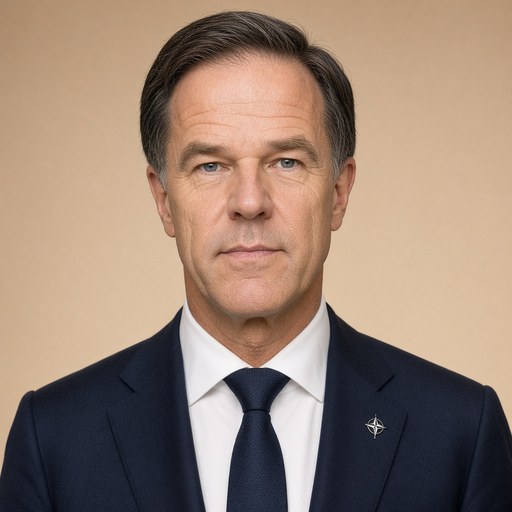
Speech by Prime Minister Mark Rutte during Veterans Day in the Ridderzaal, The Hague
 Mark Rutte · Prime Minister of the Netherlands
- Context
- Rutte addressed veterans, dignitaries, and the Dutch royal family at Veterans Day in the Ridderzaal, The Hague, on 29 June 2018.
- Main themes
- Veterans recognition and honor, life after war, PTSD and mental health support, Moluccan KNIL veterans, Dutch military missions abroad, service dogs for veterans, Invictus Games, gratitude for military service, Afghanistan and Mali missions, veteran reintegration
- Duration
- ~6 min
- Words
- 707
- Sentences
- 57
- Readability
- 71
- Grade
- 6.4
- Syntax
- 2.52
- Vocabulary
- 2.11
Translated from Dutch
The broad sphere of national life a sentence belongs to. Every sentence has an Arena, so it is the denominator the other indices are read against.
Other57 sentences in 14 paragraphs
Your Majesty, knights of the Military Order of William, veterans, ladies and gentlemen,
There is a life before and a life after the war. A life before and a life after the conflict, the tension, the confrontation with violence. Most Dutch people do not know this feeling. That applies to me as well. We can try to imagine it, but we cannot truly feel it.
Veterans do know this feeling. You have lived on the edge. You have had to operate under high pressure. Perhaps you have developed intense friendships, missed home, felt bored at times. You have seen and helped victims of violence, or have been in danger yourself. Perhaps you have lost comrades or been injured. And then you come home. Life after the war. What do you do then? How do you move on?
This morning, I had the honor of meeting Joyce van den Waardenburg and Mezak Bakarbessy. They are also present here now, sitting over there.
Two veterans with stories about life after the war. Very different stories, about very different lives. But both of them know that feeling.
Thirty-five-year-old Joyce van den Waardenburg has been deployed twice to Iraq and Afghanistan. Her life after the war has been overshadowed by the dark clouds of PTSD, the post-traumatic stress disorder that soldiers sometimes struggle with. But with her, I also met her service dog Rhone and dog trainer Herman Pestman. They help Joyce make life after the war livable. And they succeed. Joyce is participating in the parade today and will take part in the Invictus Games next year, in swimming, athletics, including shot put, and sitting volleyball. What an athlete.
And Herman recently received the White Carnation Award for his commitment to veterans. He trains the dogs to wake a veteran who is having a nightmare. Or to take him or her away from a crowded environment if that causes stress. In doing so, he makes a significant difference in the lives of soldiers with PTSD, like Joyce. A well-deserved award indeed.
I also had the honor of meeting Mezak Bakarbessy, 90 years old. His family came from the village of Waai on the Moluccan island of Ambon. He lost many family members during World War II. After the war, he served in the Royal Netherlands East Indies Army. In 1951, he came to the Netherlands.
The Moluccan KNIL veterans have long been insufficiently part of the veteran group. They formed a forgotten group that has received too little recognition and appreciation. Fortunately, that has changed. Several Moluccan KNIL veterans received the honors they are entitled to in 2017, and others will receive them as well. As thanks for their commitment to the Netherlands.
I am glad that Mezak Bakarbessy is here today. Because of his own merits and as a symbol for the important group of KNIL veterans that he represents.
Today we honor all veterans who have fought for our freedom. Veterans who had to rebuild their lives after the war, carrying experiences in their backpacks that you never forget. Even at this moment, Dutch soldiers are working worldwide for peace and security. Therefore, today I think with great respect of all the men and women in, among others, Mali, Iraq, and Afghanistan.
Recently, the cabinet decided to extend and expand the mission in Afghanistan and to scale down the mission in Mali. I am very aware that these are initially decisions on paper for us, but that they have a very direct impact on the lives of our soldiers.
I have been able to see this more closely over the past year, for example during my visit to the men and women in Mali in November. We fly in and out, but they work day and night under often difficult conditions and far away from friends and family.
Ladies and gentlemen, we support our soldiers in duty, but we certainly also support them in their life after the war. Today, on Veterans Day, I would like to take a moment to reflect on this with you. You have put your lives on the line, you have made sacrifices, and you carry those experiences with you for the rest of your life. You deserve our utmost respect and gratitude.
The original Dutch. The tags above are read on the English translation's sentences.
Majesteit, ridders militaire Willems-Orde, veteranen, dames en heren,
Er is een leven voor en een leven na de oorlog. Een leven voor en een leven na het conflict, de spanning, de confrontatie met geweld. De meeste Nederlanders kennen dit gevoel niet. Dat geldt ook voor mijzelf. We kunnen het ons proberen voor te stellen, maar we kunnen het niet doorvoelen.
Veteranen kennen dit gevoel wel. Je hebt op het scherpst van de snede geleefd. Je hebt onder hoogspanning moeten opereren. Misschien heb je intense vriendschappen ontwikkeld, het thuisfront gemist, je af en toe verveeld. Je hebt slachtoffers van geweld gezien en geholpen, of bent zelf in gevaar geweest. Misschien heb je kameraden verloren of ben je gewond geraakt. En dan kom je thuis. Het leven na de oorlog. Wat doe je dan? Hoe ga je verder?
Vanochtend had ik de eer Joyce van den Waardenburg en Mezak Bakarbessy te mogen ontmoeten. Zij zijn hier nu ook aanwezig, daar zitten ze.
2 veteranen met verhalen over een leven na de oorlog. Heel verschillende verhalen, over heel verschillende levens. Maar alle twee kennen zij dat gevoel.
De 35-jarige Joyce van den Waardenburg is 2 keer uitgezonden geweest naar Irak en Afghanistan. Haar leven ná de oorlog werd overschaduwd door de donkere wolken van ptss, het posttraumatisch stresssyndroom waar militairen soms mee kampen. Maar met haar ontmoette ik ook haar hulphond Rhone en hondentrainer Herman
Pestman. Zij helpen Joyce het leven na de oorlog leefbaar te maken. En dat lukt. Joyce loopt vandaag mee in het defilé en neemt komend jaar deel aan de
Invictus Games,
in de onderdelen zwemmen, atletiek, onder andere kogelstoten én zitvolleybal. Wát een sporter.
En Herman, die heeft onlangs als 1e de Witte Anjer Prijs ontvangen voor zijn inzet voor veteranen. Hij traint de honden om een veteraan te wekken die in een nachtmerrie terechtkomt. Of om hem of haar weg te halen uit een drukke omgeving als dat stress veroorzaakt. Daarmee maakt hij een groot verschil in de levens van militairen met ptss, zoals Joyce. Een welverdiende prijs dus.
Ik had ook de eer om Mezak Bakarbessy, 90 jaar oud, te ontmoeten. Zijn familie kwam van het dorp Waai op het Molukse eiland Ambon. Hij verloor veel familieleden tijdens de Tweede Wereldoorlog. Na de oorlog diende hij in het Koninklijk Nederlands Indisch leger. In 1951 kwam hij naar Nederland.
De Molukse KNIL-veteranen zijn lange tijd onvoldoende onderdeel geweest van de veteranengroep. Zij vormden een vergeten groep, die te weinig erkenning en waardering heeft gekregen. Dat is gelukkig veranderd. Meerdere Molukse KNIL-veteranen hebben in 2017 de onderscheidingen gekregen waar zij recht op hebben en anderen zullen die nog krijgen. Als dank voor hun inzet voor Nederland.
Ik ben blij dat Mezak Bakarbessy hier vandaag is. Vanwege zijn eigen verdiensten en als symbool voor de belangrijke groep van KNIL-veteranen die hij vertegenwoordigt.
Vandaag eren wij alle veteranen die gevochten hebben voor onze vrijheid. Veteranen die na de oorlog hun leven weer op moesten bouwen, met in hun rugzak ervaringen die je nooit meer vergeet. Ook op dit moment werken Nederlandse militairen wereldwijd aan vrede en veiligheid. Ik denk daarom vandaag met groot respect aan alle mannen en vrouwen in onder meer Mali, Irak en Afghanistan.
Onlangs besloot het kabinet om de missie in Afghanistan te verlengen en uit te breiden en om de missie in Mali af te bouwen. Ik besef heel goed dat dit voor ons in 1e instantie besluiten op papier zijn, maar dat die een heel directe impact hebben op de levens van onze militairen.
Ik heb dat het afgelopen jaar zelf van dichterbij kunnen zien, bijvoorbeeld bij mijn bezoek aan de mannen en vrouwen in Mali in november. Wij vliegen daar in en uit, maar zij werken dag en nacht onder vaak moeilijke omstandigheden en ver weg van vrienden en familie.
Dames en heren, wij steunen onze militairen in functie, maar wij steunen hen zeker ook in hun leven na de oorlog. Vandaag, op Veteranendag, sta ik daar met jullie graag bewust bij stil. Jullie hebben je leven in de waagschaal gesteld, jullie hebben offers gebracht en jullie dragen die ervaringen je verdere leven met je mee. Jullie verdienen ons grootste respect en dankbaarheid.