




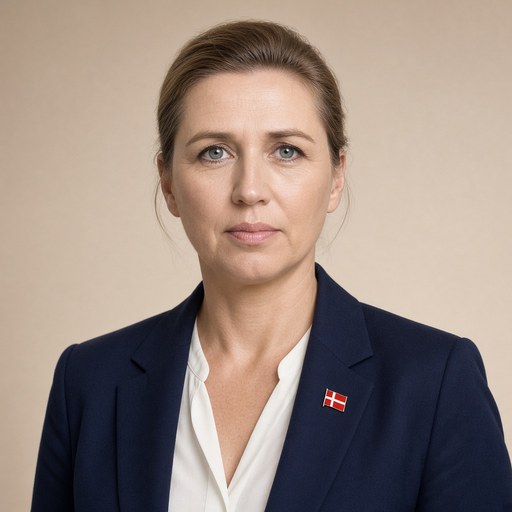
Prime Minister Mette Frederiksen's statement to the Folketing on January 17, 2023.
 Mette Frederiksen · Prime Minister of Denmark
- Context
- Frederiksen addressed the Folketing on January 17, 2023, delivering her opening statement at the start of a new parliamentary term following the 2022 general election.
- Main themes
- Danish democracy and parliamentary cooperation, green transition and climate goals, welfare state investment, immigration policy, economic challenges and inflation, defense and collective security, political coalition governance, energy policy, education and health, global leadership
- Duration
- ~39 min
- Words
- 4,628
- Sentences
- 510
- Readability
- 58
- Grade
- 7.2
- Syntax
- 2.22
- Vocabulary
- 2.02
Translated from Danish
The broad sphere of national life a sentence belongs to. Every sentence has an Arena, so it is the denominator the other indices are read against.
Other510 sentences in 255 paragraphs
When I stood at the podium here last year and delivered my opening statement, I thanked a number of colleagues for their many years of dedication to democracy and to Denmark.
Today, we can welcome a total of 65 newly elected members of the Folketing.
Congratulations to all of you who have been elected for the first time. And to those of you who have been re-elected.
The Constitution of the Kingdom of Denmark is among the oldest constitutions in the world. We were one of the first countries to introduce universal suffrage. And throughout turbulent times in the world and Europe, we have held fast to our democracy and our system of government.
Denmark is a country with a great deal of trust among its people. Voter turnout is high. And the Danish population is knowledgeable, engaged, and participatory.
We here in this chamber represent a fantastic people. A fantastic country. And we must take care of our precious and well-functioning democracy.
It is our common task.
My hope is that the term we are now embarking on will be characterized by cooperation and decency. Both towards the people our decisions affect. And towards each other here as colleagues.
Division and polarization are easy. But a well-functioning society requires the opposite.
That is why we, the 179, have a very special task. To work every day for the common good of the population we have the immense privilege and responsibility to represent.
I look forward to the collaboration. Both on the local issues. And on what is happening in the world around us.
We live in a time marked by unpredictability and great challenges.
First a pandemic. Then a war in Europe. An energy crisis. Inflation. Economic uncertainty.
But also a time of hope. And a willingness to forge new paths.
This was reflected in the government negotiations that we concluded shortly before Christmas.
All parties in the Folketing participated in the discussions. Which became historically long. Because we were thorough. And explored all possibilities to move Denmark forward in broad political cooperation.
I hope that there are several parties here in the chamber that can find their imprint in the government platform that resulted from the negotiations.
We have set new climate goals – indeed the most ambitious ever for Denmark.
With a stubborn focus on realizing the climate goals we have set – and with the new ones in mind – we will pave the way for a faster green transition.
District heating and heat pumps must reach more Danish homes. And we must expand our global green leadership. Create green growth for our businesses.
When it comes to welfare, the money must of course follow as we have more children and elderly.
We will maintain a strict immigration policy. Keeping track of the number of people coming here is crucial for both Denmark's cohesion and for successful integration.
But the strict rules sometimes pose challenges for people who want to work and contribute to Denmark. We will seek to resolve that.
* * *
In the coming years, we will invest in welfare. In education. In health and psychiatry.
And in defense and our collective security.
Common to the initiatives I mention here is that they are associated with significant expenses.
But the proposals for how we will finance them. I sense that there is not as much appetite for those.
Because they are difficult. And because they will require tough prioritizations.
Isn't the truth that it is often easy to agree on spending more money? And less easy to decide where that money should come from?
The new government is born as a working community. We are three parties with different views and historical roots. We do not see eye to eye on everything and probably never will.
But we share a common recognition that we will only achieve the goals we have for Denmark if we enter into a binding cooperation on the solutions and reforms that will make them possible.
In my speech today, I would like to invite the Folketing to join in that cooperation.
* * *
The foundation of the Danish welfare state.
It is, of course, a strong and robust Danish economy.
We have that today.
Successive governments have for decades pursued an economic policy that has created sound public finances. Good framework conditions for businesses. Growth. And low public debt.
And shortly after the worst waves of Covid-19, we achieved the highest employment in Denmark. Ever.
We are well prepared.
But we are also challenged.
In the short term by high inflation.
Fortunately, we see that inflation has decreased in recent months. But it remains at a very high level. It is felt in every family.
The government will soon present a proposal for a new inflation package that specifically and temporarily helps struggling Danes.
At the same time, we are challenged by the fact that the global economy is slowing down. This will hit a small open economy like ours, which relies on trade with other countries.
We are looking at a year where the Danish economy will lose momentum. Growth will fall. And unemployment will – unfortunately – rise.
Therefore, we must pursue an economic policy that is both responsible and fair. So that we get through as gently as possible.
And at the same time, we must strengthen Denmark structurally.
In just seven years. In 2030. There will be 125,000 more elderly people aged 70 or over. And 50,000 more children under 7 years old.
You have all heard the numbers again and again in the recently concluded election campaign.
And I want to make one thing very clear: This is not about viewing the elderly in society as a burden. Not at all.
It is the generations before us who have built our society. We are deeply grateful to you. And it is our task to ensure dignified elderly care when the autumn of life arrives.
More elderly people in need of care and support. More acute patients in hospitals. More children in nurseries, kindergartens, daycare, and schools.
While the proportion of us who are employed will fall.
This has the consequence that the economic room for new priorities is limited. While the number of initiatives we need to achieve – initiatives that cost money – is large.
Some examples:
Letting the money follow as we have more children and elderly. That will cost 21 billion by 2030.
Better wages and working conditions in welfare. 3 billion by 2030.
A psychiatric plan. 3 billion by 2030.
Add to that the decision that Denmark must, of course, deliver the contribution we have promised in NATO.
The government will accelerate defense spending. So that by 2030 we reach 2% of GDP. As there is a broad majority for here in the chamber.
20 billion more for defense and security by 2030.
Without new sources of financing. Then the math simply does not add up.
Some will say: You can just raise taxes.
Others will say: You can just cut welfare.
Neither of those paths will make Denmark stronger. It will not lead to any form of development.
The government's path is reforms. Where we will do things in a new way. Choose to drop some things in order to choose others. And where we all must contribute.
For the harsh truth is that there are no easy solutions.
Allow me to be a bit direct:
If we do not reform, prioritize, and get even more people into work.
Then we must lower the ambitions we have set for our society.
Whether it concerns climate. Welfare. The individual Dane's economy. Or the necessary investments in our security and international alliances.
So simple. And so difficult it is.
We can ask ourselves some questions:
Are we satisfied with the welfare society we offer the Danes?
Is there enough dignity in elderly care? In the frameworks we provide for people with disabilities?
Should we be satisfied that one in ten students does not complete the Folkeskole exit exam?
Is it good enough when a young man with cancer is sought to be sent into activation shortly before he unfortunately does not survive his illness?
Is it good enough that we – in a society whose foremost task is to ensure social mobility – still largely reproduce social problems from one generation to the next?
Are we sure that we are passing on a planet to the next generation that is in better condition than the one we inherited?
And what is our answer if the security policy threats we face today do not go away. But perhaps rather become a new norm?
I can answer for myself. And for the government.
Denmark is a fantastic country. Perhaps the best in the world. And much is good. Solid. And better than in most other places.
But can we go further?
Can we give even more children even more opportunities? Can we create a society with more freedom? One that is greener? One that is stronger?
The answer is yes. But it will not happen by itself.
And no, we are simply not satisfied with the results we deliver today from Christiansborg.
If we are to succeed with all that we want for our country, then reforms are needed.
* * *
Let me start with our welfare.
The Danish welfare state is among the best in the world.
But there is – indeed – also room for improvement. Change. Higher ambitions on behalf of those who are struggling the most. New goals. Concrete results for the Danes.
We already know the problems all too well.
The bureaucracy, paperwork, and detailed management that eat into everyday life in nursing homes, schools, and hospitals.
Which costs precious time and job satisfaction. And affects the presence and care for the people it is all about. The elderly. The children. The patients.
That cannot continue.
Therefore, the government has set out to implement the most comprehensive liberation of the public sector in the history of the welfare state.
Kindergartens, schools, and nursing homes should be managed by the citizens. Not the bureaucracy.
And leaders and employees should be met with trust so they can use their expertise to make decisions themselves.
People are different. Have different wishes. Different needs. Therefore, we must strengthen free choice. Strengthen cooperation between the public and private sectors.
So that greater equality and more competition are created among providers and opportunities for new partnerships.
And so that each individual citizen has more options to choose the welfare and service they desire.
Citizenship. And much more local freedom, responsibility, and engagement. That should characterize the welfare of the future.
We must turn the welfare state into a welfare society.
* * *
The liberation of our welfare is one of a total of eight reform tracks that the government has set out to implement.
I will not go through them all today. But I will highlight a couple of the most central ones.
We must strengthen our economy structurally. More people must enter the workforce. And everyone must contribute more.
The government has set a goal of increasing structural employment by 45,000 people by 2030.
We propose, as the first step, that we work one more day a year. By abolishing a public holiday.
We will also implement a tax reform that reduces taxes for working people.
We propose to increase the employment deduction. Lower the top tax rate for incomes up to 750,000 DKK. And introduce a special tax on very high incomes.
The tax reform will overall make it more attractive for the individual citizen to work. And to make an extra effort.
For the individual, having a job is not just about money. It is also about dignity. Pride. Community. And freedom.
At the same time, it must – of course – always pay to work.
Therefore, we will particularly increase the employment deduction for single parents.
Being a single mother or father of three children while holding down a job can be a harder life than many others. That effort. And those life circumstances we want to honor particularly.
The many who today work part-time should have better opportunities for full-time work.
Sick leave must be reduced.
At the same time, we must pave the way for more of those who are still outside the labor market to start working.
More women with immigrant backgrounds must enter jobs and take part in the community with the rest of us. A real work obligation is now coming. We should have introduced that many years ago.
It is good for women. For the economy. For the children. And for gender equality.
And the government will find new paths and solutions that can genuinely help the approximately 45,000 young people who today start their youth and adult lives far too precariously. Because they are neither in education nor in jobs.
When more people enter the workforce, it will strengthen our economy, our businesses, and our welfare.
But just as importantly, it will lift the quality of life and living standards for many people.
Having a job – if one can at all – to be useful and to contribute is one of the most important values in our society.
Not everyone can work. Those of you who are affected by illness. Live with a serious disability.
Or have just lost your footing in life for a while.
You should feel that the welfare society supports you.
The same goes for those of you who have already contributed through a long working life.
* * *
We need more people in jobs. But jobs do not come by themselves. They are created by a strong and competitive business sector.
When Danish businesses do well, employment does well. Then Denmark does well.
That is why the government will work for even better growth conditions for Danish companies.
In many areas, Danish companies are leading the way in the world.
Energy and green solutions. Shipping. Digitalization. Life sciences. Food. Just to mention a few examples.
We must protect those strengths – and continue to build on them.
Both when it comes to large companies. The many small and medium-sized enterprises that today are the backbone of Danish business. And the very young and fresh. The entrepreneurs. Who can become tomorrow's giants.
This requires a sharp and sustained focus on framework conditions.
We must ensure better access to foreign labor. Of course, on fair terms.
And the government will promote entrepreneurship. Present an entrepreneurship strategy that makes it more attractive to be an entrepreneur – regardless of gender – and easier to attract capital.
The Danish education system is a fantastic success story. Generation after generation, we have become better educated.
Education creates opportunities for the individual and a stronger future for us all.
For the government, reforms in the education sector are crucial. We must address the challenges:
That we lose too many children at the primary school level. Perhaps because the academic focus is too strong and the practical focus too weak.
That we train too few skilled workers. And too few are drawn to welfare education programs.
That education is, to too great an extent, something one pursues in youth. While too few pursue education later in life.
And that too many do not pursue any education at all. Perhaps due to the failures they have experienced early in life.
Today, one in four young people is expected to pursue a university education. In 1990, it was one in ten.
And the labor market and the demands faced by new graduates have changed drastically.
But have the universities kept pace?
The government would like to debate this.
Universities today are a main route for many young people who will later need to find jobs in private companies.
Here, it is not necessarily five years in the lecture hall that is the best tool to prepare the young.
There must also be a closer connection to the business community. And better opportunities for further education and interaction between education and work throughout the rest of their working lives.
Therefore, the government proposes to establish new one-year master's programs with more teaching and guidance. A clear labor market focus. And better opportunities for further education later in life.
The world around us does not stand still. Therefore, we must dare to change.
* * *
This also applies to the healthcare system.
For here too, there is a need for change. I would like to elaborate on this today.
The free and equal access to healthcare is a cornerstone of our welfare society.
It is when we are sick and most vulnerable that we truly need the welfare society to support us.
More diseases must be prevented. If we are struck by serious illness, treatment must be swift and effective. Citizens with chronic illnesses must have support so that daily life does not become unnecessarily burdensome.
And in the most difficult situations, there must be a strong healthcare system where there is enough time. For security and care. Treatment and follow-up.
High specialization in cases where it is required. And proximity in most other cases.
The Danish healthcare system is, in many ways, good. We have skilled and dedicated staff. High professionalism. And over the years, we have become significantly better at diagnosing and treating a wide range of diseases.
But there are also significant and urgent problems.
Since the summer of 2021, a considerable backlog in treatment has developed in hospitals. And it is difficult to recruit and retain staff in the healthcare system.
The waiting lists are too long. Far too many wait too long for treatment or surgery in a hospital. And patients who arrive at the hospital in an emergency often experience excessive waiting times and busyness.
At the same time, we are challenged by the fact that even though doctors, nurses, and other staff in hospitals are working hard. From patient to patient. From examination to examination. From operation to operation. It is not possible everywhere to accomplish everything.
The pressure is too great.
The government will do something about that.
The government prioritizes 2 billion kroner to reduce waiting lists and ease the pressure on emergency departments.
It is not just about money. It is complex.
There is a shortage of especially nurses. Declining productivity in hospitals – despite the fact that significant financial resources have been allocated to the regions in recent years to solve the problems.
Together with the regions, we must agree on an acute plan. Negotiations have begun.
Salary will play a role. But other factors must also be considered.
Can we free up nurses' time? So that he or she, instead of filling out forms, spends more time where it has the greatest value for the patient. Taking blood pressure. Setting up a catheter. Talking with a concerned relative. All those things that really matter.
And can we, through stronger collaboration across hospitals, regions, and private actors, organize things in a smarter way?
We must not just do one thing. But initiate many measures. And follow them closely.
Still, we must acknowledge that it will be a long and tough process. It may take several years.
For even in the long term, the healthcare system is challenged.
Among other things, by significant geographical differences.
In some of the sparsely populated areas of the country, there are too few doctors. And especially a shortage of specialists. Conversely, there is a large proportion of citizens with chronic diseases and elderly individuals in need of treatment in these areas.
This means that many patients and people with chronic diseases do not necessarily receive the treatment that best addresses their illness.
The diabetic. The COPD patient. Who must navigate a complicated healthcare system on their own.
This places great demands on patients. And their relatives. It creates inequality in health.
We are not good enough at taking care of those who need it the most.
We must be able to do better. And not just a little.
There must be more doctors, nurses, social and health care workers, and other healthcare personnel. They must be closer to the patient.
And there must be greater coherence between what one hand does. And what the other hand does.
For example, it often goes wrong when an elderly patient is discharged without coordination with home care. That is the path to readmissions.
It is unreasonable to the patient. And it takes resources out of a system that is already under pressure.
There should always be someone to catch you when you are discharged from a hospital.
And another example: Today, there are many elderly, frail citizens who experience frequent and short acute hospitalizations. "Revolving door" patients. It is confusing. It is unsafe.
The ambulance must respond and the hospital must receive patients if it is an emergency. That is clear.
But imagine if the hospital could reach out into the citizen's home and save a hospitalization?
And if the healthcare personnel who are close to the citizen were equipped to handle more issues at the outset?
We must think anew. Organize the healthcare system in a new way. All the way around.
Today, we do not know all the answers. Therefore, the government will establish a structural commission.
For although it is urgent to improve our healthcare system and make it more robust.
There is also a need for us to think carefully. Approach the task thoroughly. And involve experiences and knowledge from experts, staff, patients, and relatives.
Will it take time? Yes. But it is time that will be very well spent. For we must do it properly.
Health is not just about the body. But also about the mind.
Today, we have a particular challenge in our treatment of people with mental illnesses. Who are often the most vulnerable among us.
More and more are seeking help in psychiatry. Suffering mentally. Especially among children and young people. It is unbearable for those affected. And for the father, mother, or partner who stands helplessly by.
Here, we as a society have failed. Not provided the necessary help.
The government will now rectify this.
We will provide a significant boost to psychiatry of 3 billion kroner by 2030.
The money will go towards better prevention. More hospital beds. More content during the days when the patient is hospitalized. More staff. More research.
This will mean a different psychiatry than the one we know today. And a psychiatry where we finally equalize physical and mental illnesses.
The goal of the major work we are now initiating is a fundamentally better healthcare system – for all Danes. Throughout the country. And regardless of whether it concerns physical or mental illnesses.
* * *
We also set ambitious goals when it comes to the climate. For the climate crisis is and will remain the greatest challenge of our time.
The fight against climate change is not something we can choose to engage in or not. It is a binding task. Both for the Parliament and the government.
With the government platform, we have set the goal that Denmark should be completely climate-neutral by 2045. And just five years later – in 2050. We must absorb more CO2 than we emit.
The green transition is now one of the cornerstones upon which we build our society. Jobs. Business opportunities. Exports. What our children and grandchildren will live off in the future.
The climate goals are important. But the most important thing right now is probably not to set new goals. It is to achieve the goals.
In short, to make all that we have agreed upon across the parties here in the chamber a reality.
Therefore, the government will have a sharp focus on implementation in the upcoming electoral term.
We will introduce a CO2 tax in agriculture. This should pave the way for a green transition of Denmark's food production.
Danish farmers are already among the best in the world at producing high-quality food. In a more environmentally and climate-friendly way than in many other countries.
Now we take the next step. Responsibly. Sustainably. And without simply shifting problems and jobs abroad. We must develop agriculture. Not dismantle it.
The government will also introduce a natural law. Where we protect nature. The plants and animals. Give nature more space. We must protect drinking water. And establish new forests on an area equivalent to twice the size of Lolland.
We owe it to each other. And to the generations after us.
* * *
In a month, it will be a year since Putin invaded Ukraine.
The war was a watershed break with everything we thought was given.
That peace and freedom had come to stay in Europe. That history could only move forward.
What we see now was an illusion.
The government will, in the coming period, develop a new foreign policy strategy for how we will safeguard the country's security, value-based, and economic interests in the world.
Denmark – and the entire realm – has entered a new era of foreign policy. Which will require something from all of us.
Thank you to the North Atlantic members for the good cooperation during the negotiations for the new government.
We share the ambition to develop the community between our three countries. In all aspects of cooperation. In areas that are transferred. And in areas that Denmark manages for the entire realm.
Equally. Trustingly. And with respect for each country's independent identity, culture, and language.
Where we find common solutions. And together prepare ourselves for the changes and challenges we face.
With the contact committee on foreign, security, and defense policy, we are moving closer together. This is necessary in a time when threatening forces stand right outside our door.
We are also moving closer together in the EU.
Last year, Denmark wholeheartedly joined the European cooperation on defense and security. This is good for us and for the rest of Europe.
And transatlantically. We must contribute more to NATO. Take on more ourselves.
The government will accelerate our investments in defense and security. So that by 2030 we reach 2% of GDP. As is needed, and as we have promised our allies.
Faced with the horrors of war, there is no middle ground. Ukraine must be free again. And we must be able to defend ourselves and each other.
It is with this starting point that we will soon begin work on a new defense agreement.
Danish defense policy has been characterized by broad cooperation for decades.
It is my hope that we can continue this strong tradition. That we can show the Danes that we – across political divides – are united in the solutions. And in the financing.
We are facing the largest boost to Danish defense ever. This requires difficult prioritizations. And it requires that we all contribute.
* * *
Being elected to represent Denmark is a fantastic privilege. And a great responsibility.
We must guide Denmark through difficult times.
We must strengthen the foundation of the welfare society. Improve our healthcare system. Our education. Strengthen our defense and security. Create more freedom and more opportunities for many more people.
And make our small, wonderful country even stronger, even greener, and even safer.
All of this. We can only achieve if we are ambitious. Open. Curious. And above all, responsible.
As a new government, we will hold each other accountable to ensure that the automatic reactions that too often characterize the political debate are replaced by both reflection and courage to meet on real solutions.
And it is my hope that we here in the Parliament can come together in a broad and binding collaboration that will move Denmark forward.
We have much to accomplish.
The original Danish. The tags above are read on the English translation's sentences.
Da jeg stod på talerstolen her sidste år og holdt min åbningsredegørelse. Der takkede jeg en række kolleger for deres mangeårige indsats for folkestyret og for Danmark.
I dag kan vi byde velkommen til hele 65 nyvalgte medlemmer af Folketinget.
Tillykke til alle jer, der er valgt ind for første gang. Og til jer, der har opnået genvalg.
Danmarks Riges Grundlov er blandt de ældste forfatninger i verden. Vi var et af de første lande til at indføre almindelig stemmeret. Og vi har igennem turbulente tider i verden og Europa holdt fast i vores demokrati og folkestyre.
Danmark er et land med megen tillid mellem mennesker. Valgdeltagelsen er høj. Og den danske befolkning er vidende, engageret og deltagende.
Vi her i salen repræsenterer et fantastisk folk. Et fantastisk land. Og vi skal passe på vores dyrebare og velfungerende demokrati.
Det er vores fælles opgave.
Mit håb er, at den valgperiode, vi nu tager fat på, vil blive kendetegnet af samarbejde og ordentlighed. Både over for de mennesker, vores beslutninger vedrører. Og over for hinanden her som kolleger.
Splittelse og polarisering er nemt. Men et velfungerende samfund kræver det modsatte.
Derfor har netop vi 179 en helt særlig opgave. Hver dag at arbejde for det fælles bedste for den befolkning, vi har fået det kæmpe privilegium og ansvar for at repræsentere.
Jeg glæder mig til samarbejdet. Både om det nære. Og om det, der sker i verden omkring os.
Vi lever i en tid præget af uforudsigelighed og store udfordringer.
Først en pandemi. Så en krig i Europa. Energikrise. Inflation. Økonomisk usikkerhed.
Men også en tid med håb. Og vilje til at gå nye veje.
Det afspejlede sig i de regeringsforhandlinger, som vi afsluttede kort før jul.
Alle Folketingets partier deltog i drøftelserne. Som blev historisk lange. Fordi vi var grundige. Og afsøgte alle muligheder for at bringe Danmark videre i et bredt politisk samarbejde.
Jeg håber, at der er en del partier her i salen, som kan finde deres aftryk i det regeringsgrundlag, som blev resultatet af forhandlingerne.
Vi har sat nye klimamål – vel og mærke de mest ambitiøse for Danmark nogensinde.
Med et stædigt fokus på at realisere de klimamål, vi har sat – og med de nye for øje – vil vi bane vejen for en hurtigere grøn omstilling.
Fjernvarme og varmepumper skal nå flere danske hjem. Og vi skal udbygge vores globale grønne førerposition. Skabe grøn vækst for vores virksomheder.
Når det gælder velfærden, skal pengene selvfølgelig følge med, når vi bliver flere børn og ældre.
Vi vil holde fast i en stram udlændingepolitik. At have styr på antallet, der kommer hertil, er afgørende for både Danmarks sammenhængskraft, og for at integrationen lykkes.
Men de stramme regler medfører nogle gange udfordringer for mennesker, der ønsker at arbejde og bidrage til Danmark. Det vil vi søge at løse.
* * *
De kommende år vil vi investere i velfærd. I uddannelse. I sundhed og psykiatri.
Og i forsvaret og vores fælles tryghed.
Fælles for de initiativer, jeg nævner her, er, at de er forbundet med store udgifter.
Men forslagene til, hvordan vi skal finansiere dem. Dem fornemmer jeg ikke, at der er lige så stor appetit på.
Fordi de er svære. Og fordi de vil kræve hårde prioriteringer.
Mon sandheden ikke er den, at det ofte er let at blive enige om at bruge flere penge. Og mindre let at beslutte, hvor de penge så skal komme fra?
Den nye regering er født som et arbejdsfællesskab. Vi er tre partier med forskellige holdninger og historiske rødder. Vi ser ikke ens på alting og kommer nok heller ikke til det.
Men vi deler en fælles erkendelse af, at vi kun når i mål med de ambitioner, vi har for Danmark. Hvis vi indgår et forpligtende samarbejde om de løsninger og reformer, der skal gøre dem mulige.
I min tale i dag vil jeg gerne invitere Folketinget med i det samarbejde.
* * *
Grundlaget for det danske velfærdssamfund.
Det er selvfølgelig en stærk og robust dansk økonomi.
Det har vi i dag.
Skiftende regeringer har igennem årtier ført en økonomisk politik, der har skabt sunde offentlige finanser. Gode rammevilkår for erhvervslivet. Vækst. Og lav offentlig gæld.
Og kort tid efter de værste bølger af Covid-19 opnåede vi den højeste beskæftigelse i Danmark. Nogensinde.
Vi står godt rustet.
Men vi er også udfordret.
På den korte bane af den høje inflation.
Vi ser heldigvis, at inflationen er aftaget de seneste måneder. Men den ligger fortsat på et meget højt niveau. Det kan mærkes i alle familier.
Regeringen vil inden længe fremlægge et forslag til en ny inflationspakke, der målrettet og midlertidigt hjælper trængte danskere.
Samtidig er vi udfordret af, at verdensøkonomien bremser op. Det vil ramme en lille åben økonomi som vores, der lever af at handle med andre lande.
Vi ser ind i et år, hvor dansk økonomi vil tabe fart. Væksten vil falde. Og arbejdsløsheden vil – desværre – stige.
Derfor skal vi føre en økonomisk politik, der både er ansvarlig og retfærdig. Så vi kommer så skånsomt igennem som muligt.
Og samtidig skal vi styrke Danmark strukturelt.
Om bare syv år. I 2030. Vil der være 125.000 flere ældre på 70 år eller derover. Og 50.000 flere børn under 7 år.
I har alle hørt tallene igen og igen i den netop overståede valgkamp.
Og jeg vil gerne gøre én ting helt klart: Det her handler ikke om at betragte samfundets ældste som en ældrebyrde. Slet ikke.
Det er generationerne før os, der har bygget vores samfund. Vi er jer dybt taknemmelige. Og det er vores opgave at sikre en værdig ældrepleje, når livets efterår melder sin ankomst.
Flere ældre med behov for pleje og omsorg. Flere akutte patienter på sygehusene. Flere børn i vuggestuer, børnehaver, dagpleje, skoler.
Mens andelen af os, der er i beskæftigelse, vil falde.
Det har den konsekvens. At det økonomiske råderum til nye prioriteter er begrænset. Mens mængden af initiativer, vi skal i mål med – initiativer, der koster penge. Er stor.
Nogle eksempler:
At lade pengene følge med, når vi bliver flere børn og ældre. Det vil koste 21 milliarder frem mod 2030.
Bedre løn- og arbejdsvilkår i velfærden. 3 milliarder i 2030.
En psykiatriplan. 3 milliarder i 2030.
Læg dertil beslutningen om, at Danmark selvfølgelig skal levere det bidrag, vi har lovet i NATO.
Regeringen vil fremrykke forsvarsudgifterne. Så vi i 2030 når op på 2 pct. af BNP. Som der er et bredt flertal for her i salen.
20 milliarder mere til forsvar og sikkerhed i 2030.
Uden nye kilder til finansiering. Så går regnestykket ganske enkelt ikke op.
Nogle vil sige: I kan bare hæve skatterne.
Andre vil sige: I kan bare skære ned på velfærden.
Ingen af delene er vejen til at gøre Danmark stærkere. Det vil ikke føre nogen form for udvikling med sig.
Regeringens vej er reformer. Hvor vi vil gøre tingene på en ny måde. Vælge noget fra for at kunne vælge andet til. Og hvor vi alle sammen må bidrage.
For den barske sandhed er, at der ikke findes nogen nemme løsninger.
Tillad mig at være lidt direkte:
Hvis ikke vi reformerer, prioriterer og får endnu flere mennesker i arbejde.
Så må vi slække på de ambitioner, vi har sat for vores samfund.
Enten når det gælder klima. Velfærd. Den enkelte danskers økonomi. Eller de nødvendige investeringer i vores sikkerhed og internationale alliancer.
Så enkelt. Og så svært er det.
Vi kan stille os selv nogle spørgsmål:
Er vi selv tilfredse med det velfærdssamfund, vi tilbyder danskerne?
Er der værdighed nok i ældreplejen? I de rammer, vi giver mennesker med handicap?
Skal vi stille os tilfredse med, at hver tiende elev ikke gennemfører Folkeskolens afgangseksamen?
Er det godt nok, når en ung mand med kræft søges sendt i aktivering, kort tid før han desværre ikke overlever sin sygdom?
Er det godt nok, at vi – i et samfund, hvis fornemste opgave er at sikre social mobilitet – stadig i vidt omfang reproducerer sociale problemer fra én generation til den næste?
Er vi sikre på, at vi leverer en jordklode videre til næste generation, der er i bedre stand end den, vi selv overtog?
Og hvad er vores svar, hvis de sikkerhedspolitiske trusler, vi står over for i dag, ikke falder bort. Men måske snarere er et nyt vilkår?
Jeg kan svare på egne vegne. Og på regeringens.
Danmark er et fantastisk land. Måske verdens bedste. Og meget er godt. Solidt. Og bedre end de fleste andre steder.
Men kan vi nå længere?
Kan vi give endnu flere børn endnu flere muligheder? Kan vi skabe et samfund med mere frihed? Et, der er grønnere? Et, der er stærkere?
Svaret er ja. Men det kommer ikke af sig selv.
Og nej, vi er ganske enkelt ikke tilfredse med de resultater, vi leverer i dag her fra Christiansborg.
Skal vi lykkes med alt det, vi vil med vores land. Så er der brug for reformer.
* * *
Lad mig starte med vores velfærd.
Det danske velfærdssamfund hører til de bedste i verden.
Men der er – i den grad – også rum for forbedring. Forandring. Højere ambitioner på vegne af dem, der har det sværest. Nye mål. Konkrete resultater for danskerne.
Vi kender allerede problemerne til hudløshed.
Bureaukratiet, papirarbejdet og detailstyringen, der æder sig ind på hverdagen på plejehjemmet, i skolen og på sygehuset.
Som koster dyrebar tid og arbejdsglæde. Og går ud over nærværet og omsorgen over for de mennesker, som det hele handler om. De ældre. Børnene. Patienterne.
Det går ikke længere.
Derfor har regeringen sat sig for at gennemføre den mest omfattende frisættelse af den offentlige sektor i velfærdssamfundets historie.
Børnehaver, skoler og plejehjem skal forvaltes af borgerne. Ikke bureaukratiet.
Og ledere og medarbejdere skal mødes med tillid så de kan bruge deres faglighed til selv at træffe beslutninger.
Mennesker er forskellige. Har forskellige ønsker. Forskellige behov. Derfor skal vi styrke det frie valg. Styrke samarbejdet mellem det offentlige og private.
Så der bliver skabt større ligestilling og mere konkurrence mellem leverandører og muligheder for nye partnerskaber.
Og så hver enkelt borger får flere muligheder for at vælge den velfærd og service, man ønsker.
Medborgerskab. Og langt mere lokal frihed, ansvar og engagement. Det skal kendetegne fremtidens velfærd.
Vi skal gøre velfærdsstaten til et velfærdssamfund.
* * *
Frisættelsen af vores velfærd er det ene af i alt otte reformspor, som regeringen har sat sig for at gennemføre.
Jeg vil ikke gennemgå dem alle i dag. Men slå ned på et par af de mest centrale.
Vi skal styrke vores økonomi strukturelt. Flere skal i arbejde. Og alle skal bidrage mere.
Regeringen har sat et mål om at øge den strukturelle beskæftigelse med 45.000 personer i 2030.
Vi foreslår som det første, at vi skal arbejde én dag mere om året. Ved at afskaffe en helligdag.
Vi vil også gennemføre en skattereform, der letter skatten for mennesker i arbejde.
Vi foreslår at forhøje beskæftigelsesfradraget. Sænke topskatten for indkomster op til 750.000 kr. Og indføre en særlig skat på meget høje indkomster.
Skattereformen vil samlet set gøre det mere attraktivt for den enkelte borger at arbejde. Og at yde en ekstra indsats.
For det enkelte menneske handler dét at have et arbejde ikke bare om kroner og øre. Det handler også om værdighed. Stolthed. Fællesskab. Og frihed.
Samtidig skal det – selvfølgelig – altid kunne betale sig at arbejde.
Derfor vil vi særligt forhøje beskæftigelsesfradraget for enlige forsørgere.
At være enlig mor eller far til tre børn og passe sit arbejde kan være et sværere liv end så mange andres. Den indsats. Og de livsomstændigheder vil vi gerne honorere særligt.
De mange, der i dag arbejder deltid, skal have bedre mulighed for fuldtid.
Sygefraværet skal ned.
Samtidig skal vi bane vejen for, at flere af de, der stadig står uden for arbejdsmarkedet, kommer i gang med at arbejde.
Flere kvinder med indvandrerbaggrund skal i job og tage del i fællesskabet med os andre. Der kommer nu en egentlig arbejdspligt. Det skulle vi have indført for mange år siden.
Det er godt for kvinderne. For samfundsøkonomien. For børnene. Og for ligestillingen mellem kønnene.
Og regeringen vil finde nye veje og løsninger, der reelt kan hjælpe de omkring 45.000 unge, der i dag starter deres ungdom og voksenliv alt for skrøbeligt. Fordi de hverken er i uddannelse eller i job.
Når flere kommer i arbejde, vil det styrke vores økonomi, vores virksomheder og vores velfærd.
Men lige så vigtigt. Så vil det løfte tilværelsen og livskvaliteten for rigtig mange mennesker.
At have et job – hvis man overhovedet kan – at gøre nytte og at bidrage er en af de vigtigste værdier i vores samfund.
Ikke alle kan arbejde. Jer, der er ramt af sygdom. Lever med et alvorligt handicap.
Eller bare har mistet fodfæstet i tilværelsen for en stund.
I skal mærke, at velfærdssamfundet griber jer.
Det samme gælder jer, der allerede har bidraget gennem et langt arbejdsliv.
* * *
Vi skal have flere i job. Men arbejdspladser kommer ikke af sig selv. De bliver skabt af et stærkt og konkurrencedygtigt erhvervsliv.
Når det går godt for dansk erhvervsliv. Så går det godt for beskæftigelsen. Så går det godt for Danmark.
Derfor vil regeringen arbejde for endnu bedre vækstbetingelser for danske virksomheder.
På så mange områder går danske virksomheder forrest i verden.
Energi og grønne løsninger. Søfart. Digitalisering. Life science. Fødevarer. For nu bare at nævne nogle eksempler.
De styrkepositioner skal vi værne om – og fortsætte med at udbygge.
Både når det gælder de store virksomheder. De mange små og mellemstore virksomheder, der i dag er rygraden i dansk erhvervsliv. Og de helt unge og friske. Iværksætterne. Der kan blive morgendagens kæmper.
Det kræver et skarpt og vedvarende fokus på rammevilkår.
Vi skal sikre bedre adgang til udenlandsk arbejdskraft. Selvfølgelig på ordnede vilkår.
Og regeringen vil fremme iværksætteri. Fremlægge en iværksætterstrategi, der gør det mere attraktivt at være iværksætter – uanset køn – og lettere at tiltrække kapital.
* * *
Det danske uddannelsessystem er en fantastisk succeshistorie. Generation for generation er vi blevet bedre uddannet.
Uddannelse skaber muligheder for den enkelte og en stærkere fremtid for os alle.
For regeringen er reformer på uddannelsesområdet afgørende. Vi skal tage hånd om udfordringerne:
At vi taber for mange børn på gulvet allerede i folkeskolen. Måske fordi det boglige fylder for meget og det praktiske for lidt.
At vi uddanner for få faglærte. Og for få søger mod velfærdsuddannelserne.
At uddannelse i alt for vidt omfang er noget, man tager i ungdommen. Mens for få uddanner sig senere i livet.
Og at for mange slet ikke uddanner sig. Måske på grund af de nederlag, de har oplevet tidligt i livet.
I dag er det hver fjerde ung, der ventes at tage en uddannelse på universitetet. I 1990 var det hver tiende.
Og det arbejdsmarked og de krav, de nyuddannede mødes af, har forandret sig drastisk.
Men er indretningen af universiteterne fulgt med?
Det vil regeringen gerne debattere.
Universiteterne er i dag en hovedvej for mange unge, der bagefter skal finde job i private virksomheder.
Her er det ikke nødvendigvis fem år i auditoriet, der er det bedste redskab til at klæde de unge på.
Der skal også være en tættere kobling til erhvervslivet. Og bedre muligheder for efteruddannelse og vekselvirkning mellem uddannelse og job gennem resten af arbejdslivet.
Derfor foreslår regeringen at oprette nye étårige kandidatuddannelser med mere undervisning og vejledning. Et tydeligt arbejdsmarkedssigte. Og bedre muligheder for at videreuddanne sig senere i livet.
Verden omkring står ikke stille. Derfor skal vi turde forandre.
* * *
Det gælder også i sundhedsvæsenet.
For også her er der brug for forandringer. Det vil jeg gerne sætte nogle ord på i dag.
Den fri og lige adgang til sundhed er en bærende søjle i vores velfærdssamfund.
Det er, når vi er syge og allermest sårbare, at vi for alvor har brug for, at velfærdssamfundet griber os.
Flere sygdomme skal forebygges. Rammes vi af alvorlig sygdom, skal behandlingen foregå hurtigt og effektivt. Borgere med kroniske sygdomme skal have et tilbud, så hverdagen ikke bliver unødigt besværlig.
Og i de sværeste situationer skal der være et stærkt sundhedsvæsen, hvor der er tid nok. Til tryghed og omsorg. Behandling og opfølgning.
Høj specialisering i de tilfælde, hvor det er påkrævet. Og nærhed i de fleste andre tilfælde.
Det danske sundhedsvæsen er på rigtig mange måder godt. Vi har dygtige og dedikerede medarbejdere. Høj faglighed. Og vi er gennem årene blevet markant bedre til at diagnosticere og behandle en lang række sygdomme
Men der er også store og akutte problemer.
Siden sommeren 2021 er der oparbejdet et betydeligt behandlingsefterslæb på sygehusene. Og det er svært at rekruttere og fastholde medarbejdere i sundhedsvæsnet.
Ventelisterne er for lange. Alt for mange venter for længe på behandling eller operation på et sygehus. Og patienter, som kommer akut på sygehuset, oplever alt for ofte ventetid og travlhed.
Samtidig er vi udfordret af, at selvom læger, sygeplejersker og andre medarbejdere på sygehusene løber stærkt. Fra patient til patient. Fra undersøgelse til undersøgelse. Fra operation til operation. Så kan det ikke alle steder lade sig gøre at nå det hele.
Presset er for stort.
Dét vil regeringen gøre noget ved.
Regeringen prioriterer 2 milliarder kroner til at få ventelisterne ned og lette presset på akutmodtagelserne.
Det handler ikke kun om penge. Det er komplekst.
Der er mangel på især sygeplejersker. Dalende produktivitet på sygehusene – på trods af, at der de sidste år er blevet tilført betydelige økonomiske midler til regionerne for at løse problemerne.
Sammen med regionerne skal vi aftale en akutplan. Forhandlingerne er gået i gang.
Løn vil spille en rolle. Men andre ting skal også i spil.
Kan vi frigøre sygeplejerskens tid? Så han eller hun i stedet for at udfylde skemaer i højere grad bruger tiden der, hvor det har størst værdi for patienten. Tage blodtryk. Sætte et kateder op. Tale med en bekymret pårørende. Alt dét, der virkelig tæller.
Og kan vi gennem et stærkere samarbejde på tværs af sygehuse, regioner og private aktører organisere tingene på en smartere måde?
Vi skal ikke bare gøre én ting. Men sætte mange tiltag i gang. Og følge dem tæt.
Alligevel må vi erkende, at det bliver et langt sejt træk. Der kan tage flere år.
For også på den lange bane er sundhedsvæsenet udfordret.
Blandt andet af store geografiske forskelle.
I nogle af de tyndtbefolkede dele af landet er der for få læger. Og især mangel på speciallæger. Til gengæld er der i disse områder en stor andel borgere med kroniske sygdomme og ældre med behov for behandling.
Det betyder, at mange patienter og mennesker med kroniske sygdomme ikke nødvendigvis får den behandling, som bedst tager hånd om deres sygdom.
Diabetikeren. KOL-patienten. Som selv skal navigere i et kompliceret sundhedsvæsen.
Det stiller store krav til patienterne. Og de pårørende. Det skaber ulighed i sundhed.
Vi er ikke gode nok til at tage hånd om dem, der har allermest brug for det.
Det må vi kunne gøre bedre. Og ikke kun
lidt
.
Der skal være flere læger, sygeplejersker, sosu’er og andet sundhedspersonale. De skal tættere på patienten.
Og der skal være større sammenhæng mellem, hvad den ene hånd gør. Og hvad den anden hånd gør.
For eksempel går det alt for ofte galt, når en ældre patient udskrives, uden at det er koordineret med hjemmesygeplejen. Så er det vejen til genindlæggelser.
Det er urimeligt over for patienten. Og tager ressourcer ud af et system, der i forvejen er presset.
Der bør altid være nogen, der griber dig, når du bliver udskrevet fra et sygehus.
Og et andet eksempel: I dag er der mange ældre, svækkede borgere, som oplever hyppige og korte akutte indlæggelser. Svingdørspatienter. Det er forvirrende. Det er utrygt.
Ambulancen skal køre og sygehuset tage imod, hvis det er akut. Det er klart.
Men tænk nu, hvis sygehuset kunne række helt ud i borgerens hjem og spare en indlæggelse?
Og hvis det sundhedspersonale, som er tæt på borgeren, var klædt på til at tage flere ting i opløbet?
Vi må tænke nyt. Organisere sundhedsvæsenet på en ny måde. Hele vejen rundt.
I dag kender vi ikke alle svarene. Derfor vil regeringen nedsætte en strukturkommission.
For selvom det haster med at gøre vores sundhedsvæsen bedre og mere robust.
Så er der også brug for, at vi tænker os om. Går grundigt til værks. Og inddrager erfaringer og viden fra både eksperter, medarbejdere, patienter og pårørende.
Vil det tage tid? Ja. Men det er tid, der vil være rigtig godt givet ud. For vi skal gøre det ordentligt.
Sundhed handler ikke kun om kroppen. Men også om psyken.
Vi har i dag en særlig udfordring i vores behandling af mennesker med psykiske lidelser. Som ofte er de mest sårbare af os alle.
Flere og flere søger hjælp i psykiatrien. Får ondt i sindet. Især blandt børn og unge. Det er ubærligt for den, der bliver ramt. Og for den far, mor eller partner, der står magtesløs ved siden af.
Her har vi som samfund svigtet. Ikke givet den nødvendige hjælp.
Dét vil regeringen nu rette op på.
Vi vil give et markant løft til psykiatrien på 3 milliarder kroner i 2030.
Pengene skal gå til bedre forebyggelse. Flere sengepladser. Mere indhold i de dage, hvor patienten er indlagt. Mere personale. Mere forskning.
Det vil betyde en anden psykiatri, end den vi kender i dag. Og en psykiatri, hvor vi langt om længe ligestiller fysiske og psykiske lidelser.
Målet med det store arbejde, vi nu sætter i gang, er et grundlæggende bedre sundhedsvæsen – for alle danskere. I hele landet. Og uanset om det gælder fysiske eller psykiske lidelser.
* * *
Ambitiøse mål sætter vi også, når det gælder klimaet. For klimakrisen er og bliver vor tids største udfordring.
Kampen mod klimaforandringerne er ikke noget, vi kan vælge til eller fra. Det er en bunden opgave. Både for Folketinget og regeringen.
Med regeringsgrundlaget har vi sat det mål, at Danmark skal være helt klimaneutralt i 2045. Og bare fem år senere – i 2050. Der skal vi optage mere CO2, end vi udleder.
Grøn omstilling er nu en af de grundpiller, vi bygger vores samfund på. Arbejdspladser. Forretningsmuligheder. Eksport. Det, som vores børn og børnebørn skal leve af i fremtiden.
Klimamålene er vigtige. Men det vigtigste lige nu er nok ikke at sætte nye mål. Det er at komme i mål.
Kort sagt få alt det, vi har aftalt på tværs af partierne her i salen, gjort til virkelighed.
Derfor vil regeringen i den kommende valgperiode have et skarpt fokus på implementering.
Vi vil indføre en CO2-afgift i landbruget. Der skal bane vejen for en grøn omstilling af Danmarks fødevareproduktion.
Danske landmænd er allerede blandt verdens bedste til at producere fødevarer af høj kvalitet. På en mere miljø- og klimavenlig måde end i mange andre lande.
Nu tager vi skridtet videre. Ansvarligt. Bæredygtigt. Og uden bare at skubbe problemer og arbejdspladser til udlandet. Vi skal udvikle landbruget. Ikke afvikle det.
Regeringen vil også indføre en naturlov. Hvor vi beskytter naturen. Planterne og dyrene. Giver naturen mere plads. Vi skal beskytte drikkevandet. Og etablere ny skov på et areal svarende til to gange Lollands størrelse.
Det skylder vi hinanden. Og generationerne efter os.
* * *
Om en måned er det et år siden, at Putin invaderede Ukraine.
Krigen var et skelsættende brud med alt det, vi troede, var givet.
At freden og friheden var kommet for at blive i Europa. At historien kun kunne gå fremad.
Det, ser vi nu, var en illusion.
Regeringen vil i den kommende periode udarbejde en ny udenrigspolitisk strategi for, hvordan vi skal varetage landets sikkerhedspolitiske, værdipolitiske og økonomiske interesser i verden.
Danmark – og hele rigsfællesskabet – har taget hul på en ny udenrigspolitisk epoke. Som vil kræve noget af os alle.
Tak til de nordatlantiske medlemmer for det gode samarbejde under forhandlingerne om den nye regering.
Vi deler ambitionen om at udvikle fællesskabet mellem vores tre lande. I alle aspekter af samarbejdet. På områder, som er overtaget. Og på områder, som Danmark varetager for hele riget.
Ligeværdigt. Tillidsfuldt. Og med respekt for hvert lands selvstændige identitet, kultur og sprog.
Hvor vi finder fælles løsninger. Og sammen ruster os til de forandringer og udfordringer, vi møder.
Med kontaktudvalget om udenrigs-, sikkerheds- og forsvarspolitikken rykker vi tættere sammen. Det er der brug for i en tid, hvor truende kræfter står lige uden for vores dør.
Rykker sammen gør vi også i EU.
Sidste år meldte Danmark sig helhjertet ind i det europæiske samarbejde om forsvar og sikkerhed. Det er godt både for os og for resten af Europa.
Og transatlantisk. Vi skal bidrage mere til NATO. Løfte mere selv.
Regeringen vil fremrykke vores investeringer i forsvar og sikkerhed. Så vi i 2030 kommer op på 2 pct. af BNP. Som der er brug for, og som vi har lovet vores allierede.
Stillet over for krigens rædsler findes ingen mellemvej. Ukraine skal igen være frit. Og vi andre skal kunne forsvare os selv og hinanden.
Det er med det udgangspunkt, at vi inden længe tager fat på arbejdet med et nyt forsvarsforlig.
Dansk forsvarspolitik har i årtier været kendetegnet ved bredt samarbejde.
Det er mit håb, at vi kan fortsætte den stærke tradition. At vi kan vise danskerne, at vi – på tværs af politiske skel – er fælles om løsningerne. Og om finansieringen.
Vi står over for det største løft af dansk forsvar nogensinde. Det kræver svære prioriteringer. Og det kræver, at vi alle bidrager.
* * *
At være folkevalgt for Danmark er et fantastisk privilegie. Og et stort ansvar.
Vi skal have Danmark godt igennem svære tider.
Vi skal styrke fundamentet under velfærdssamfundet. Forbedre vores sundhedsvæsen. Vores uddannelser. Styrke vores forsvar og sikkerhed. Skabe mere frihed og flere muligheder for mange flere mennesker.
Og gøre vores lille dejlige land endnu stærkere, endnu grønnere og endnu mere trygt.
Alt det. Det kan vi kun, hvis vi er ambitiøse. Åbne. Nysgerrige. Og frem for alt ansvarlige.
Som ny regering vil vi holde hinanden op på, at de automatreaktioner, der lidt for ofte præger den politiske debat, erstattes af både eftertænksomhed og mod til at mødes om reelle løsninger.
Og det er mit håb, at vi her i Folketinget kan finde sammen i et bredt og forpligtende samarbejde, der skal bringe Danmark videre.
Vi har meget, vi skal nå.