




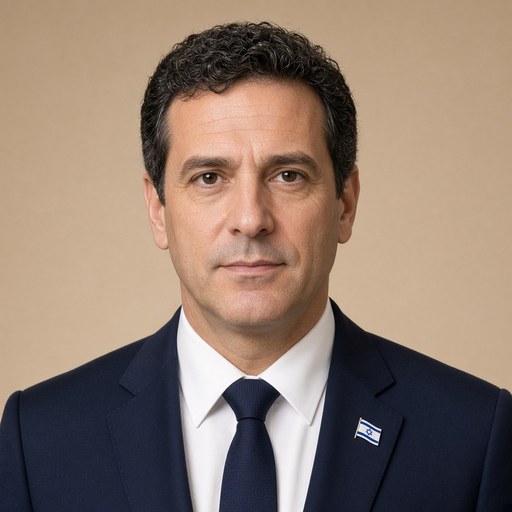
The words of Prime Minister Bennett at the state memorial ceremony for Benjamin Ze'ev Herzl.
 Naftali Bennett · Prime Minister of Israel
- Context
- Bennett spoke at the state memorial ceremony for Theodor Herzl on June 30, 2021, at Mount Herzl, reflecting on Zionist vision and Israel's unity.
- Main themes
- Zionist vision and legacy of Herzl, national unity and coalition government, internal polarization and political disagreements, external and internal threats to Israel, state continuity and historical responsibility, Jewish state identity and character, mosaic of ideologies within Israeli society, leadership and national purpose
- Duration
- ~8 min
- Words
- 913
- Sentences
- 56
- Readability
- 57
- Grade
- 9.3
- Syntax
- 2.85
- Vocabulary
- 2.18
Translated from Hebrew
The broad sphere of national life a sentence belongs to. Every sentence has an Arena, so it is the denominator the other indices are read against.
Other56 sentences in 15 paragraphs
A small line, miniature, separates the word "visionary" from the word "delusional."
A small line that says it all. A small line that on one side holds dreams in Aspamia, disappointments, failures, every entrepreneur and creator knows this, and on the other side a historic process, the sovereign revival of a people after two thousand years of exile. And the one who draws the tiny line, the one who turns the dream into a vision – is not the person themselves.
After all, the transformation from dreamer to visionary whose vision has been realized was not in Herzl's hands, but in ours. Who turned Herzl's vision into reality? Our grandparents, our parents. They are the ones who practically fulfilled Herzl's dream. And now the baton of the Zionist vision has been passed to us.
The thriving Jewish state does not depend, of course, on Herzl today; it depends on us, on all of us. The ability of all of us to safeguard it, its unique character, its prosperity – security, political, economic, and social. And still, we must remember that this process is not irreversible.
We must not, as leadership, as a society, and as a state, rest on our laurels. Look here, at Mount Herzl, around the grave site of the visionary of the state, cedar trees were planted in the past by heads of state from all over the world. This was part of the ceremonial rules. A head of state would come and plant a tree at the summit of Mount Herzl, and next to each tree is a small sign, who planted it, when it was planted, and in the name of which country.
But if you walk there among the trees, after the ceremony, you will notice that some of the countries that planted the tree – no longer exist. Some have changed their character and name as a result of internal struggles. Others have been defeated by powers and other states. Some of the countries no longer exist. They have been erased. We must not reach that point; we must not get there. The two threats I described exist even today. The threat from outside and from within.
The State of Israel will always defend itself, against any external threat. Israel will not bind its hands from ensuring our security. We will act decisively, creatively, and continuously, against emerging threats, from afar and from close by.
There is also an internal threat that we have experienced in recent years, and we must also deal with it. After a series of endless elections, which brought internal polarization to its peak, we established a government. This is not a taken-for-granted government. It is a beautiful mosaic government.
This is a government that I admit was born out of political necessity, but every passing day teaches me that it is a government that is desirable from the outset. A government with disagreements, discussions, a government that knows how to disagree, but we are learning as we go how to manage the differences: quietly, calmly, with respect and listening. We do not only talk, but we also hear the opposing side.
But more importantly – we succeed, really people with conflicting opinions, to understand what we do agree on. And that is a lot. Simply a lot. Most of the things that impact our lives are agreed upon by all of us, and therefore we can, people with very different opinions, move forward quickly, in execution, in harmony, truly in harmony.
Disagreements are not a bad thing. Certainly not between the opposition and the coalition, and even within the coalition. Disagreements for the sake of heaven are our lifeblood, the lifeblood of the Jewish heritage. Generations upon generations of disagreements have led to enrichment. If you enter a high-tech office, you will hear screams for the sake of heaven; if you enter a study session, you will hear a chevruta in the Gemara, and also shouts for the sake of heaven.
And even here, at Herzl's grave site, it is based on a mosaic of opinions and debates along the way but agreeing on the destination – a Jewish state in the Land of Israel, the State of Israel. Even today, this entire mosaic agrees on the good of the State of Israel, and once that is agreed upon, we know how to manage the rest.
In Herzl's funeral procession, representatives from all over the country and the world participated, bringing with them bags of soil, each from their place of residence. The bags of soil represent different ideologies and identities or different tribes. But something great united them.
Something caused then, something causes today, all of us to feel part of that one. Of that people, of that state, and of that destiny that we all share. Not just to exist, but to shine as a model state under true conditions. Difficult conditions, but we have a compass to be a model state, and we are walking, step by step, towards that vision.
Herzl's monument is the State of Israel, as Ben Gurion said, and the responsibility today is on us – its builders and creators. Responsibility to thwart any external threat, responsibility to heal every crack from within. Responsibility to keep Herzl as a visionary, as a founder of reality, and God forbid not to let his dream turn into a dream in Aspamia. May the memory of Benjamin Ze'ev Herzl be preserved and engraved in our hearts forever.
The original Hebrew. The tags above are read on the English translation's sentences.
. קו קטן, מיניאטורי, מבדיל בין המילה "חוזה" למילה "הוזה".
קו קטן שאומר הכל. קו קטן שבצידו האחד חלומות באספמיא, אכזבות, כשלונות, כל יזם וכל יוצר מכיר את זה, ובצידו האחר מהלך היסטורי, תקומה ריבונית של עם לאחר אלפיים שנות גלות. ומי שמשרטט את הקו הקטנצי'ק, מי שהופך את החלום לחזון – הוא בכלל לא האדם עצמו.
הרי המהפך ממדמיין לחוזה שחזונו מומש, לא היה בידי הרצל, אלא בידינו. מי הפך את חזונו של הרצל למציאות? סבינו וסבתותינו, הורינו. הם אלה שהגשימו בפועל את חלומו של הרצל. ועכשיו מקל החזון הציוני הועבר אלינו.
המדינה היהודית המשגשגת לא תלויה כמובן בהרצל כיום, היא תלויה בנו, בכולנו. היכולת של כולנו לשמור עליה, על אופייה המיוחד, על שגשוגה – הביטחוני, המדיני, הכלכלי והחברתי. ועדיין, עלינו לזכור שהתהליך הזה הוא לא בלתי הפיך.
אסור לנו, כהנהגה, כחברה וכמדינה, לנוח על זרי הדפנה. תראו, כאן, בהר הרצל, מסביב לחלקת הקבר של חוזה המדינה, ניטעו בעבר עצי ארז על ידי ראשי מדינות מכל העולם. זה היה חלק מכללי הטקס. ראש מדינה היה מגיע ונוטע עץ בפסגת הר הרצל, וליד כל עץ יש שלט קטן, מי נטע, מתי נטע ובשם איזו מדינה.
אבל אם אתם תעברו שם בין העצים, אחרי הטקס, אתם תשימו לב שחלק מהמדינות שנטעו את העץ - כבר לא קיימות. חלקן שינו את אופיין ושמן כתוצאה ממאבקים פנימיים. חלקן האחר הוכרעו על ידי מעצמות ומדינות אחרות. חלק מהמדינות כבר לא קיימות. נמחקו. אנחנו לא נגיע לשם, אסור לנו להגיע לשם. שני האיומים שתיארתי, קיימים גם היום. האיום מבחוץ ומבפנים.
מדינת ישראל תמיד תגן על עצמה בעצמה, מפני כל איום חיצוני. ישראל לא תכבול את ידיה מלהבטיח את ביטחוננו. אנחנו נפעל בתקיפות, ביצירתיות וברציפות, מול איומים מתהווים, מרחוק ומקרוב.
קיים גם איום פנימי שחווינו בשנים האחרונות וגם איתו צריך להתמודד. בתום סדרה של מערכות בחירות בלתי נגמרות, שהביאו את הקיטוב הפנימי לשיאו, הקמנו ממשלה. זאת לא ממשלה מובנת מאליה. זו ממשלת פסיפס יפיפיה.
זו ממשלה שאני מודה, היא קמה מתוך אילוץ פוליטי, אבל כל יום שעובר מלמד אותי שהיא ממשלה רצויה מלכתחילה. ממשלה עם מחלוקות, דיונים, ממשלה שיודעת לא להסכים, אבל אנחנו לומדים תוך כדי תנועה איך לנהל את חילוקי הדעות: בשקט, ברוגע, בכבוד ובהקשבה. אנחנו לא רק מדברים, אלא גם שומעים את הצד שכנגד.
אבל יותר חשוב מזה – אנחנו מצליחים, ממש אנשים ניצים בדעותיהם, להבין על מה אנחנו כן מסכימים. וזה המון. פשוט המון. רוב הדברים שמקרינים על החיים שלנו מוסכמים על כולנו, ולכן אנחנו יכולים, אנשים עם דעות מאוד שונות, להתקדם קדימה במהירות, בביצוע, בהרמוניה, ממש הרמוניה.
מחלוקות זה, לא דבר רע. בטח לא בין אופוזיציה לקואליציה, וגם בתוך הקואליציה. מחלוקות לשם שמיים הן נשמת אפינו, נשמת אפה של המורשת היהודית. דורות על גבי דורות של מחלוקות הביאו להפריה. אם תיכנסו למשרד היי-טק אתם תשמעו צרחות לשם שמיים, אם תיכנסו לישיבה תשמעו חברותא בגמרא, וגם צעקות לשם שמיים.
ואפילו כאן, חלקת הקבר של הרצל, מתבססת על פסיפס של דעות ופולמוסים על הדרך אבל מסכימים על היעד – מדינה יהודית בארץ ישראל, מדינת ישראל. גם היום, כל הפסיפס הזה מסכים על טובת מדינת ישראל, וברגע שזה מוסכם, עם היתר אנחנו יודעים להסתדר.
במסע ההלוויה של הרצל השתתפו נציגים ונציגות מכל רחבי הארץ והעולם, שהביאו איתם שקיות עפר, כל אחד ממקום ישובו. שקיות העפר שמייצגות אידיאולוגיות שונות וזהויות או שבטים שונים. אבל משהו גדול איחד אותן.
משהו גרם אז, משהו גורם היום, לכולנו להרגיש חלק מאותו אחד. מאותו עם, מאותה מדינה ומאותו עיעוד שיש לכולנו. לא רק להתקיים, אלא להקרין אור כמדינת מופת בתנאי אמת. תנאים קשים, אבל יש לנו מצפן להיות מדינת מופת ואנחנו צועדים, צעד אחר צעד, לקראת החזון הזה.
מצבתו של הרצל היא מדינת ישראל, כפי שאמר בן גוריון, והאחריות היום היא עלינו – בניה ובוניה. אחריות לבלום כל איום מבחוץ, אחריות לאחות כל סדק מבפנים. אחריות לשמור על הרצל כחוזה, כמכונן של מציאות, וחלילה לא לתת לחלום שלו להפוך לחלום באספמיה. יהי זכרו של בנימין זאב הרצל נצור וחקוק בליבנו לעד