





- Context
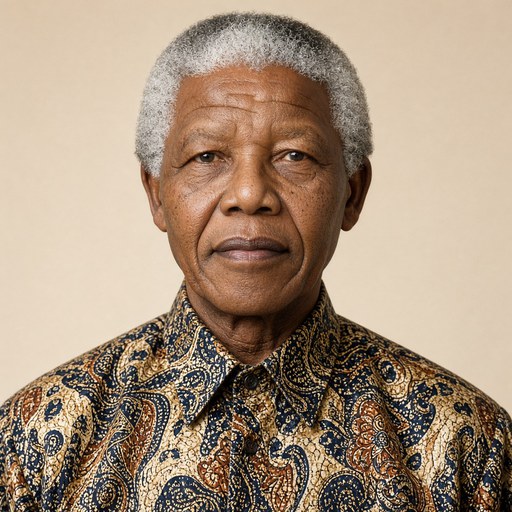
- Mandela addressed the Conference on Small Business on March 28, 1995, opening it and urging a united small business sector, announcing a planned National Small Business Council and restructuring of the Small Business Development Corporation.
- Main themes
- National small business movement, fragmentation of small business associations, need for a cohesive representative voice, White Paper on small business strategy, job creation, empowerment of previously excluded groups, women and rural youth entrepreneurs, restructuring of the Small Business Development Corporation, proposed National Small Business Council, NEDLAC, R180 million government support allocation, partnership with big business and foreign donors
- Duration
- ~9 min
- Words
- 1,027
- Sentences
- 69
- Readability
- 42
- Grade
- 11.1
- Syntax
- 2.71
- Vocabulary
- 2.22
Source: GitHub DRChivers/Nelson-Mandela-Speeches-Sentiment-and-Topic-Modelling-Analysis ↗
The broad sphere of national life a sentence belongs to. Every sentence has an Arena, so it is the denominator the other indices are read against.
Other69 sentences in 30 paragraphs
Minister of Trade & Industry;
Acting Secretary-General of the UN Conference on Trade & Development;
Distinguished guests;
Ladies and gentlemen.
There are moments, poised between the dissolution of the old order and the establishment of the new, at which the change coursing through our society becomes sharply visible.
Gathered at this impressive Conference on Small Business, are representatives of a sector which until now has been fragmented and, therefore, unable to tap our society's potential for enterprise. This has worsened the political reality of the apartheid past where many have been marginalised, impeded and even excluded from making their full contribution.
Now you are preparing, in consultation with representatives of a democratic government, to expand and develop the small business sector in a decisive manner. In this way, we will be able not only to make our rightful contribution towards a better life for all South Africans, but also open the way for other in this matter.
The potential is immense. We see this in what has been achieved against all odds by those business people in whose way obstacles were placed - particularly African, Indian and Coloured, as well as women. We see it in the contribution to our national wealth by small entrepreneurs of other communities not held back in the same ways.
Many proud business associations have evolved, often rooted in particular communities. Sectoral associations representing the interests of particular trade and industries have in time supplemented the broad-based associations. Today there are hundreds of business associations, most of whom are represented here today.
This proliferation is asiness in our national life. But it is also a sign of weakness. Small businesses need strong, cohesive and inclusive organisations to represent them. Your combined voice should be clearly heard. We do understand that this will not be easy to accomplish. But we are confident that if the broad national interest is put above sectional interests then consensus will be achieved. Government is committed to facilitating this process.
New conditions, arising from the establishment of democracy and the interest shown by small business in combining forces, have opened up great possibilities.
These include the recent flourishing of small-business support agencies in the public, private and NGO sector acceptance into the international have been generous in their support and development of small business. They stand ready to expand this e economies lends particular implosion in small business support amtries of Southern Africa. We pary welcome the representatives from these states at this conference
All these developments provnational movement for the expansion in South Africa. It must be a brrporating all sectors of societyeneurial energies of all our peoe for all, especially the poor.
The directions for such a mo wide-ranging consultations. Many have been part of them. They inform the White Paper on a "National Strategy for the development and Promotion of Small Business in South Africa".
The government feels strongly about these initiatives, for several reasons.
Firstly, the development of the small, medium and micro-enterprises sector is critical to the social and economic development of this country. Small enterprises are an integral part of any healthy economy. They enhance competitiveness of the kind which our economy sorely needs. They help to mobilise the savings from communities for productive purposes.
Secondly, the development of this sector will assist in the economic empowerment of those previously excluded. This does not, of course, mean that small business is the only domain of empowerment. Nor does it mean that business opportunities and support are only for one sector of our society.
Finally, the stimulation of smaller firms can contribute a great deal to job-creation. With appropriate support, small businesses can provide long-term jobs for millions. In particular we must remove the barriers that have impeded the vast entrepreneurial potential amongst women. Equally, young people, especially in rural areas, need an option to migration to the cities.
It will not be easy to achieve these goals. Government cannot do it on its own.
The co-operation and assistance of big business will be vital. We are hopeful that this sector will work with us to realise our common vision for the country. In this connection, government and key private sector shareholders of the Small Business Development Corporation have agreed to restructure the corporation to give it a sharper focus on certain of the needs of the small-business community.
The small business sector itself needs to be the principal agent in its own expansion and development. To that end we are planning to establish as soon as possible a National Small Business Council. It will give maximum scope for interaction between the public sector and small business interests.
The Council should enhance the effectiveness of the National Economic Development and Labour Council. NEDLAC is a powerful vehicle for business to participate with government, labour and development organisations, in the shaping of economic and development policy.
With partnership come responsibilities for all concerned. The R180 million allocated by government for small business support can only be the oil for our large support machine.
For its part, government has to operate under strict financial constraints. It is answerable to those who elected it. It will have to account for the scarce public funds it will be using to promote the development of small business. Handouts and blanket subsidies will not be part of the plan. Measurement of the cost of any programme against the expected results is imperative before scarce public funds are committed.
Standards of efficiency, productivity and other business practices must be the highest. Entrepreneurs will be expected to meet their financial, social, labour and other responsibilities.
Ladies and gentlemen.
In seeking to launch a national business movement this conference faces an immense challenge. There are no simple solutions.
Only a partnership embracing small business and the big corporations, government and foreign donors, can marshal the energies and generate the bulk of the resources needed.
Success will bring great benefits to our society and bring us closer to a better life for all.
I am confident that you will rise to the challenge. And it is with this firm conviction that I declare this conference open, and wish you success in your deliberations.