





- Context
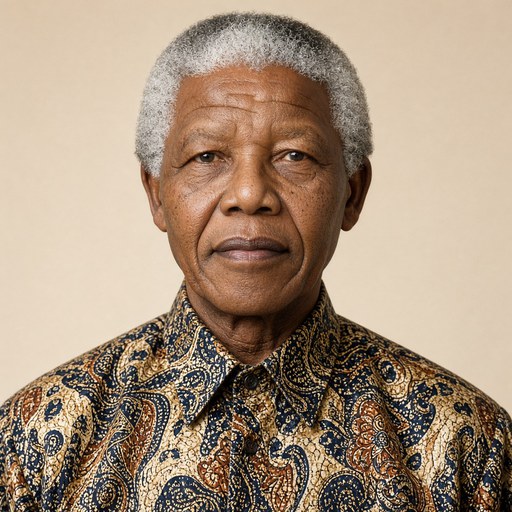
- Mandela addressed guests and South Africans at the Engen refinery in Durban on March 25, 1995, declaring open the 1,5-billion rand redevelopment and praising government-business co-operation.
- Main themes
- Opening of the expanded Engen refinery, government and business co-operation, 1,5-billion rand domestic investment, Reconstruction and Development Programme, Government of National Unity economic policy, legacy of apartheid siege economy, oil industry contribution to GDP, Engen support for Bedford hospital in Umtata, Engen exports and African co-operation, balancing development and environment
- Duration
- ~8 min
- Words
- 922
- Sentences
- 46
- Readability
- 34
- Grade
- 13.4
- Syntax
- 2.92
- Vocabulary
- 2.35
Source: GitHub DRChivers/Nelson-Mandela-Speeches-Sentiment-and-Topic-Modelling-Analysis ↗
The broad sphere of national life a sentence belongs to. Every sentence has an Arena, so it is the denominator the other indices are read against.
Other46 sentences in 13 paragraphs
Honoured guests; Distinguished foreign visitors; My fellow South Africans.
There are several reasons why it is a special pleasure and privilege to be here today to launch this spectacular redevelopment at the Engen refinery in Durban. Today's opening vindicates co-operation between government and business for the benefit of all South Africans. It bodes well for continuing good relations between the public and private sectors, in pursuit of job- creation and a better life for all.
The period of intense conflict to rid South Africa urgency of an oppressive political order drew harsh lines through our society. With the approach of democracy, however, we all found the courage to identify the true national interest, to trust one another and to lay the basis for co-operation in good faith. Today we see that courage, co-operation, and good faith being rewarded with success. We see it rewarded in the reality of Engen's 1,5-billion rand investment in this impressive oil refinery. But more importantly, we see it in what this very large investment symbolises, namely, the determination of all South Africans to work together to emulate in the economic field what we have achieved politically.
For its part the Government of National Unity has sought to create a climate for the flourishing of business, in pursuit of sustained economic growth. It is insisting on the most efficient use of public resources in the national task of improving the lives of all South Africans, especially the poor. Economic indicators, underline our success and confirm the resilience of the confidence which others have in us. The government budget indicates our determination to continue applying these policies.
On the part of business, a meaningful contribution to the RDP means, amongst other things, commitment to our country's future of the kind involved in this project. It represents a decision by South Africans to invest in their own future. As such it is a magnificent expression of confidence in the country's economic and political prospects. More than anything else, it is domestic confidence as expressed in domestic investment, which will strengthen foreign confidence and attract the foreign investment which we need. This refinery project also assists in the achievement of the goals of reconstruction and development, through its contribution to the creation of national wealth and of beneficial international trade.
Indeed, South Africa's energy industry has much to contribute to the RDP, and to the general rehabilitation of our economy. The oil industry creates one-tenth of the country's Gross Domestic Product. It earns millions in vital foreign exchange from exports and saves millions by refining crude into fuel products locally.
We are, however, aware of the difficulties and complexities which face the industry. These are largely a legacy of the way it was artificially managed as a strategic part of South Africa's siege economy during the apartheid years. I would like to take this opportunity to assure the energy industry as a whole that the government is fully committed to resolving these difficulties. This we will do in close co-operation with all sectors of the industry and society, in a manner which will serve the best long-term interests of all South Africans.
On a more immediate note, I am proud to be associated with this refinery because Engen is owned and operated by South Africans. Engen is also among the leaders of those corporations which, while attending to competitive reality, also participate meaningfully in the broader vision of political freedom and social justice which is being realised in South Africa today. That too should be part of the compact upon which our future must be based.
In this connection I would like to mention a project which is benefiting from this sense of social responsibility. Amongst the cruellest consequences of apartheid is the state of medical facilities in the former Transkei region. Engen's commitment to assist in the upgrading and renovation of the Bedford hospital in Umtata will impact on the whole region, which depends for orthopaedic services on this hospital.
Engen already has, and is further developing, close links throughout the African continent where it not only exports to some 20 countries, but also co-operates closely in new ventures of exploration. This refinery expansion will help promote economic co-operation in our continent. Engen is also active as far afield as the North Sea, the Middle East, West and East Africa, the Indian Ocean Islands, and even the Far East. Before expansion of the refinery commenced, Engen already exported US$ 100-million worth of product per annum. The increased production from the expansion will double that figure.
The world has grown increasingly conscious of the need to try to combine development aimed at meeting the material needs of its peoples, with sustainable use of the environment. In some countries the oil industry has acquired the image of neglecting the natural environment. It is, therefore, especially gratifying that Engen, in developing this refinery, has been conscious of the need to harmonise the requirements of economics and ecology.
Ladies and gentlemen. This expanded refinery is a remarkable achievement. It bears witness to the courage of those who committed the resources and to the ingenuity and skill of the many thousands of people who designed and constructed it. It is tribute to the ordinary worker whose labour is today finding joyous expression in this mammoth creation. It demonstrates what our country is capable of. This refinery is a symbol of what the future holds for South Africa.
That is why, ladies and gentlemen, I now take much pride and pleasure in declaring the refinery "open".