





- Context
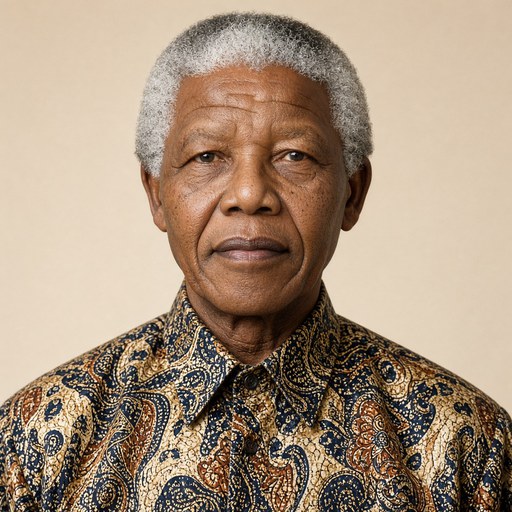
- Mandela spoke at the opening of new buildings and a room named for Archbishop Desmond Tutu at Southwark Cathedral, in the United Kingdom, on April 28, 2001, during a Freedom Day weekend visit.
- Main themes
- Honouring Archbishop Desmond Tutu, opening of Southwark Cathedral's new buildings, Tutu's moral leadership against apartheid, Truth and Reconciliation Commission, rainbow nation and reconciliation, peaceful transition to democracy, gratitude to the British and world church, Freedom Day celebrations, plight of the poor in Africa
- Duration
- ~6 min
- Words
- 674
- Sentences
- 30
- Readability
- 56
- Grade
- 11.0
- Syntax
- 2.99
- Vocabulary
- 2.22
Source: GitHub DRChivers/Nelson-Mandela-Speeches-Sentiment-and-Topic-Modelling-Analysis ↗
The broad sphere of national life a sentence belongs to. Every sentence has an Arena, so it is the denominator the other indices are read against.
Other30 sentences in 23 paragraphs
I am honoured to be with you today to open these doors at this great Cathedral.
Adding to the joy of being here is the knowledge that this ceremony honours a great South African in the person of Archbishop Desmond Tutu.
It was from him that I learnt about the Southwark Diocese, where he was for a time an honorary curate, as a faithful and outward looking community with this great Cathedral at its heart.
I therefore truly feel as if I am at a home away from home here with you today. Thank you for the invitation to join with you at this occasion.
I trust that the room next to this entrance that it is being named after Archbishop Tutu will be a source of inspiration to those using it, and beyond.
In the proud annals of the history of our country the name of Desmond Mpilo Tutu is indelibly inscribed.
He was in the darkest days of apartheid a symbol and a source of hope: through his deeds and his faith reassuring that good must triumph over evil, hope over despair, love over hatred.
At the dawn of our democracy, as we tentatively strode from the deep divisions of our past, he embodied the conviction that we could reconcile and hold together as one people.
When so many of the political leaders of the people were banished to exile, were forced to operate underground or were in prison, Desmond Tutu was foremost amongst those who stepped into that breach to give moral leadership in the fight against apartheid.
Fearlessly he stood up to the might of the State, uncompromisingly protesting against the evil of apartheid.
He always did so as a religious leader, as a pastor of the people. In the times of the most intense hostility, he prayed for his adversaries. When the country was being torn apart by the cruel and divisive policies of apartheid, he preached of the unity of the rainbow nation.
The remarkably peaceful transition in our country, achieved through negotiations amongst former adversaries and foes, was a vindication of everything that Desmond Tutu stood for, fought for and believed in.
As he led in the times of intense strife and violence, he was once more there to respond to the call of duty in times of peace and peace making.
It was he who headed one of the most important bodies in our history, the Truth and Reconciliation Commission. Here was the pastor of the people helping to heal our nation, to promote reconciliation amongst people with such an intensely divided past.
He truly is a man of hope, faith and great charity.
I am here in the United Kingdom this Freedom Day weekend to Celebrate South Africa. It is highly appropriate to celebrate in a church in this way.
The struggle and the work of the Archbishop, and millions like him who stood up against apartheid out of religious conviction, are central to what we celebrate.
I am certain that I speak for the Archbishop and indeed for our entire country when expressing gratitude for the prayers and support the British and world church all through our dark years of suffering and in our struggle against apartheid. Without that moral and material support we could not have achieved what we now celebrate.
It is for that reason too that we feel so privileged to share in this occasion at your magnificent Cathedral.
We are confident that these buildings will be a true resource for people inspired by faith into action.
I know also that people of faith throughout this Diocese will keep in their minds and hearts the plight of the poor all over the world and especially on our continent Africa.
This beautiful building has been constructed with craftsmanship and a quality to last. I congratulate the architects and the craftsmen who have built these new resources for Southwark and I wish you well on your new pilgrimage into this new Millennium.
It will now be my great honour to open these doors.