




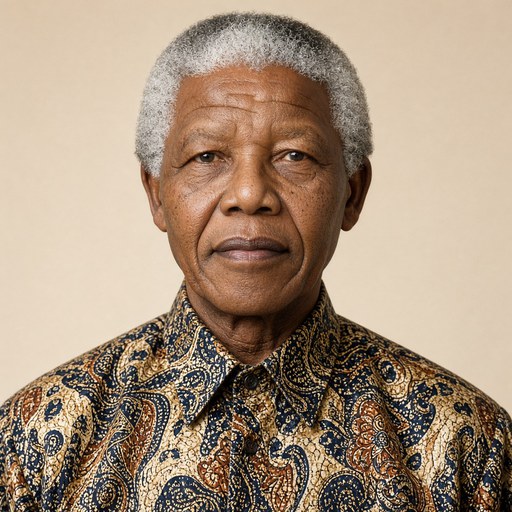

- Context
- Mandela addressed an audience of legal professionals on March 11, 2002, at an event honouring the lawyer Isie Maisels, recalling his role in the Treason Trial and urging transformation of the legal profession and judicial system.
- Main themes
- Tribute to Isie Maisels, admission of Duma Nokwe to the Johannesburg Bar, Treason Trial defence and acquittal, Freedom Charter as blueprint for a democratic South Africa, apartheid-era persecution of lawyers, legal aid for the oppressed, access to the legal profession, transformation of the judicial system, administration of justice under stress
- Duration
- ~5 min
- Words
- 591
- Sentences
- 31
- Readability
- 58
- Grade
- 9.8
- Syntax
- 2.74
- Vocabulary
- 2.53
Source: GitHub DRChivers/Nelson-Mandela-Speeches-Sentiment-and-Topic-Modelling-Analysis ↗
The broad sphere of national life a sentence belongs to. Every sentence has an Arena, so it is the denominator the other indices are read against.
Other31 sentences in 16 paragraphs
I thank you for asking me to be with you to honour Isle Maisels, the giant of the legal profession for more than a generation. As an Articled Clerk and a young attorney, together with many others, I respected and admired him as a great lawyer, his leadership, integrity and generosity of spirit.
It was my ambition to be the first African member of the Johannesburg Bar. I did not make it for reasons we need not speak of today. But our Comrade in the ANC Duma Nokwe did, after he was forced out of the teaching profession for his political beliefs.
Oliver Tambo and I as attorneys were threatened with prosecution and ejectment for occupying premises in the City reserved for whites. Jules Browde was fighting hard for us to remain. We wondered whether Duma Nokwe would be allowed to join his colleagues in His Majesty's Building.
A few influenced supporters of the Government of the Bar sought the intervention of the Ministers to keep him out.
Fortunately Isie Maisels was the Chairman of the Bar Council. With the consent of all concerned_ he exposed to prosecution the members of the Council, himself, the landlord and George Bizos who shared his office with Duma. Maisels took him into his own prestigious group and together with Walter Pollak, QC (who acted for me when the Law Society unsuccessfully applied for my removal from the Roll of Attorneys) contributed moral and material support for Duma, particularly after he with 155 of us was arrested on the charge of treason.
The leaders of the JHB Bar rallied to our defence. Their appearance at the beginning of the Preparatory Examination to protest the manner we were treated endeared them the vast majority the people of SA and many of our friends throughout the world.
Isie Maisels at considerable cost to himself became the leader of the team to defend us before Judges Rumpff Kennedy and Bekker at the old Synagogue in Pretoria. Together with Bram Fischer, Vernon Berrangé, Sydney Kentridge and others they tore the states case apart. We were all acquitted after more than 4 years of our initial arrest.It was a great victory not only for us as individuals but our Movement. No fair minded person would thereafter believe the propaganda of the government that we were terrorists. We established with our lawyers' help and particularly Isie Maisels that our Freedom Charter was a blue print for a democratic SA for all those who live in it.
He was also readily available to the poorest of the oppressed whenever he was asked to go to court to expose the abuse of power.
Isie Maisles served justice in our neighbouring countries with distinction. A pity that he was denied that right in his own country. He is part of our history, part of our heritage. His name will be remembered by all our people.
Let us honour him guided by his leadership and courage to solve the problems we are now facing.
*There are threats to the unity of the profession caused by the difficulties that prevent many from entering it;
*The legal services provided are confined to the few, for the vast majority they are almost non-existent;
*The administration of justice is under stress, the efforts being made to improve it will have to be extended;
*Transformation of our judicial system at all levels is urgently required.
I am confident that amongst you here there must be others of the calibre of Isie Maisels to help us go forward.
I thank you