




- Context
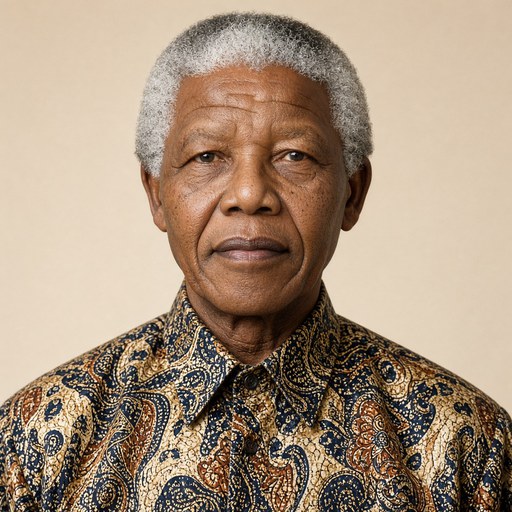
- Mandela addressed a Women's Month celebration evening organised by Women in Action for Development on August 25, 2003, praising women's role in advancing gender equality in South Africa and urging action against deprivation and violence.
- Main themes
- Women's Month celebrations, achievements of women in democratic South Africa, non-sexism alongside non-racialism, gender equality in the Constitution, women's pressure for social change, gap between rhetoric and practice, social and economic deprivation of women, rural and urban poverty, domestic violence and rape, suffering of children, tribute to Women in Action for Development
- Duration
- ~4 min
- Words
- 524
- Sentences
- 24
- Readability
- 51
- Grade
- 11.6
- Syntax
- 2.94
- Vocabulary
- 2.07
Source: GitHub DRChivers/Nelson-Mandela-Speeches-Sentiment-and-Topic-Modelling-Analysis ↗
The broad sphere of national life a sentence belongs to. Every sentence has an Arena, so it is the denominator the other indices are read against.
Other24 sentences in 7 paragraphs
Thank you for inviting me to speak here tonight and for providing this opportunity to participate in the celebrations of Women’s Month. We should be celebrating women and their central role in society all year through, day in and day out; but I am proud to add my voice to those recognising and celebrating women in this special month. May I in the first place extend my congratulations to "Women in Action for Development" for organising this occasion.
As you said in your letter of invitation: even though we recognise the many and grave challenges women continue to face, there is reason to celebrate the achievements of women. This, as I understand, is such an evening of celebration.
One of the spectacular achievements of democratic South Africa is the extent to which issues of gender and the role of women had assumed prominence in the public conversation. Too much of this is still only on the rhetorical level, but the fact that few people in our society can claim ideological ignorance or innocence in this matter, is largely due to the consistent and persistent pressure of women. Today we speak of the ideals of South African society as being non-sexist as much as non-racial. We should not underestimate the fundamental significance of that change in our societal idiom. No longer are we allowed to put the national question above gender issues; in fact, we are no longer allowed to think of the national question as something apart from the role and place of women in society.
As I have said: much still needs to be done to fully realise the noble ideals of gender equality contained in our Constitution and in our pronouncements. However, we can celebrate the firm foundations that have been laid. And these have come about not through the favours and generosity of men; but through the struggles and pressures women have brought to bear on our thinking and ways of doing. For that we salute you, because through that you not only improved the lot of women but you helped to liberate all of us. You have helped to make our society, at least in its rhetoric and stated intentions, a more progressive and caring one.
It is now for all of us to redouble our efforts and our commitment to collectively ensure broad-based gender sensitivity and real life practices of gender equality. Too many women continue to bear the brunt of social and economic deprivation, in the rural as well as urban areas. Domestic violence, rape, abuse of women remain disgraceful blots on the reputation of a country that is called a miracle nation in other respects. The suffering of children invariably impacts more greatly on women than on men.
You, the women of our nation, have been an inspiration to us, showing us the way towards a more humane and caring society. We owe it to you – and to our collective selves – to build a society where women genuinely share equally in the social, economic and cultural fruits of society.
I wish you well. And I thank you for the opportunity to be here. Thank you.