




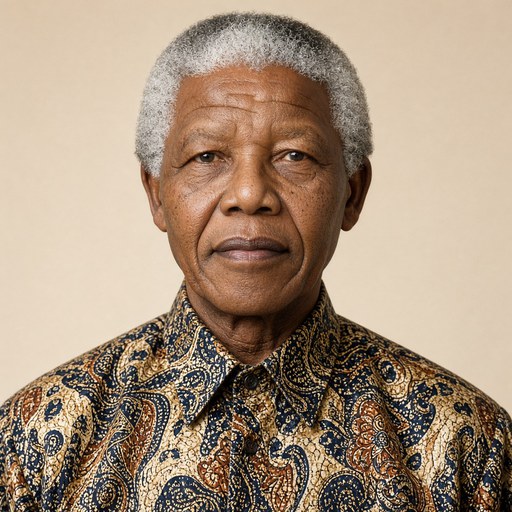

- Context
- Mandela addressed the World Parks Congress on September 8, 2003, reflecting as a former president on conservation challenges, youth involvement, poverty alleviation, partnerships and transboundary protected areas in southern Africa.
- Main themes
- Challenges for protected areas in the 21st century, engaging youth in conservation, Junior Rangers programmes, protected areas and poverty alleviation, Parks Empowering People, Working for Water, removal of alien plant species, partnerships for protected areas, transboundary conservation in southern Africa, biodiversity conservation and tourism
- Duration
- ~5 min
- Words
- 590
- Sentences
- 29
- Readability
- 44
- Grade
- 12.1
- Syntax
- 2.87
- Vocabulary
- 2.12
Source: GitHub DRChivers/Nelson-Mandela-Speeches-Sentiment-and-Topic-Modelling-Analysis ↗
The broad sphere of national life a sentence belongs to. Every sentence has an Arena, so it is the denominator the other indices are read against.
Other29 sentences in 16 paragraphs
Distinguished guests
Ladies and gentlemen
I have been asked in my address today to reflect on challenges for the 21st century as it affects conservation and protected areas. You may very well be a little curious to hear what an old man without a job, office, power or influence, and with his roots far in the past, is going to say about challenges for the future! The future is, after all, in the hands of the youth.
If this seems ironical, I know that I am not alone in this situation. It is well known that, among those who are preoccupied with the future of protected areas, there are a great many grey heads and far too few youthful ones. I am told that under-representation of the youth is a widespread phenomenon in many fields associated with protected area management. This is of course a matter for concern because without the involvement of the youth, the future cannot be secured.
I am therefore particularly gratified and impressed to note the importance that this congress has attached to engaging the youth. Let me take the opportunity to express my appreciation and support for all Junior Rangers and other programmes involving the youth the world over. It must surely be one of the greatest challenges for the future to build on such programmes, to develop them and to give them yet higher priority.
I am also encouraged to learn that the contribution Protected Areas can make to alleviating poverty is going to be given serious consideration over the next few days.
Our Government is justifiably proud of projects such as "Parks Empowering People", "Working for Water" and related programmes.
In these programmes millions of Rands are being spent to create jobs which increase the effectiveness and viability of our Protected Areas by removing alien plant species, and building infrastructure, visitor facilities, roads and fencing.
By these means people in need are provided with a living, at the same time involving them in Protected Area development, increasing their capacity and awareness. It will be a challenge for the future to develop these and other programmes and to analyze both their successes and their shortcomings in making Protected Areas relevant to the poor.
We know that the key to a sustainable future for Protected Areas lies in the development of partnerships. It is only through alliances and partnerships that Protected Areas can be made relevant to the needs of society.
In Southern Africa we are in the process of laying the groundwork for very exciting partnerships in the field of transboundary conservation. The countries of southern Africa are working together to challenge the rigidity of their national boundaries, developing opportunities and potential for both biodiversity conservation and tourism that would be impossible to reach through individual and uncoordinated efforts.
Fully realising this potential will take time. The plans for transboundary protected areas that have been laid now will need to be carefully developed and implemented before they will finally and fully bear fruit.
We have entered a phase where there are many promising opportunities; the key challenge for the future will be to realise the full potential of these great opportunities.
The aims and objectives of the World Parks Congress have clearly been very well chosen.
I wish you every success in your deliberations over the next ten days. And more importantly, success in your efforts to implement the decisions you will arrive at. A sustainable future for humankind depends on a caring partnership with nature as much as anything else.
I thank you