




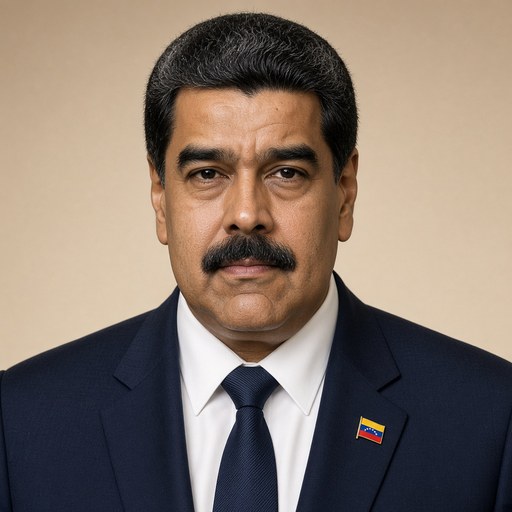
Speech by President Nicolás Maduro Moros at the Special Session of the National Assembly.
 Nicolás Maduro · President of Venezuela
- Context
- Maduro addressed a special session of Venezuela's National Assembly on July 6, 2015, marking the close of the legislature's five-year period and praising the Armed Forces.
- Main themes
- Venezuelan national sovereignty, Bolivarian Armed Forces discipline and readiness, Greek referendum and Tsipras solidarity, economic war and resistance, ALBA unity, anti-imperialism, legislative session conclusion, people's dignity and courage
- Duration
- ~127 min
- Words
- 15,279
- Sentences
- 497
- Readability
- 35
- Grade
- 15.9
- Syntax
- 3.37
- Vocabulary
- 2.29
Translated from Spanish
The broad sphere of national life a sentence belongs to. Every sentence has an Arena, so it is the denominator the other indices are read against.
Other497 sentences in 171 paragraphs
"Good evening, deputies of this sovereign National Assembly, which is now concluding its five-year legislative period. I want to congratulate all the deputies for the effort made over nearly five years in defense of the stability of our Homeland, of national unity, of the great interests in all the circumstances we have had to live through... This legislature will be unforgettable for the role you have played in defending stability, peace, and sovereignty.
Dear comrade Diosdado Cabello Rondón, president of the National Assembly, and your board of directors, Elvis Hidrobo Amoroso, Tania Díaz, vice president and vice president, respectively; secretary, deputy secretary; dear magistrate doctor, president of the Supreme Court of Justice, Gladys Gutiérrez Alvarado; citizen Tarek William Saab, president of the Republican Moral Council and Ombudsman; citizen Tibisay Lucena Ramírez, president of the Electoral Power; citizen Luisa Ortega Díaz, attorney general of the Republic; citizen Manuel Galindo Ballesteros, comptroller general of the Republic; magistrates who have come in full to this session of the National Assembly to address very important issues of our Homeland; rectors of the National Electoral Council; deputies of the Latin American Parliament, Parlatino; professors, researchers, historians present in this session, artists, youth, athletes, men, women; executive vice president, Jorge Arreaza; vice presidents of government, ministers, fellow ministers; governors present; mayor of Caracas. A greeting to the mayor of Caracas, to the deputy ministers, fellow members of the High Military Command; Vladimir Padrino López, general in chief, Strategic Operational Commander of our Armed Forces, dear comrades, general commanders of the Army, the Navy, the Bolivarian Military Aviation, and the Bolivarian National Guard, and our Bolivarian National Militia; gentlemen generals, admirals present.
I reaffirm once again in this Assembly, in less than 24 hours, I reaffirm our recognition and congratulations to the Bolivarian National Armed Forces, which without a doubt has achieved, through the leadership and effort of its men and women, a very high level of moral excellence, discipline, organization, deployment capacity, and, moreover, the correct and advanced use of all the modern equipment and weapon systems with which the Bolivarian Revolution has equipped our Bolivarian National Armed Forces at all levels, technological systems, armored systems, air defense; of what is known and of what is not known as well. Congratulations.
Yesterday, for example, in the deployment of the armored brigades, in one minute and ten seconds they were able to arm and disarm, mount and dismount two modern tanks that have all the equipment, not only to defend our land but to defend against aerial attacks; a discipline. And an Armed Force that today more than ever has a full awareness of its roots, of the cause it represents, of the ideas it upholds, and for that reason, it is never too much to say that a Bolivarian National Armed Force is truly worthy of the flags of the liberators of America, the flags of freedom and independence, anti-imperialist. And as they themselves say, bolivarian and deeply chavista.
I apologize for arriving a few minutes late, but I had a very good conversation with the Prime Minister of Greece, Alexis Tsipras, a good and long conversation with comrade Alexis Tsipras. And I conveyed on behalf of all the people of Venezuela, of the peoples of ALBA, congratulations for the feat they are experiencing, the historic day they are living, which is leaving great lessons for the world that is opening up.
The Greek people were subjected, as I shared in this conversation with Prime Minister Tsipras, to a war that only we know, intense, brutal, barbaric, through nine television media; they closed the supermarkets, the gas stations – any resemblance to our reality is not a coincidence – economic war, they closed the banks and the war continues.
I read now on my way here some statements from the President of the Spanish government, truly outrageous. They do not believe in the peoples, they despise the peoples of the world. The Greek people have just spoken with a giant voice, 61 percent of men and women overcame the campaign of fear and took a step of dignity, of courage that only we can value because we are a people that has faced all the wars that have come our way with courage.
So I come with a renewed spirit, with courage, with optimism for the future of humanity and our Homeland; I come with a renewed spirit from this leader, a young leader, who is only 40 years old.
A respectful greeting to the opposition deputies of the MUD who are present.
Alexis Tsipras was born on July 28, 1974, he is left-handed, a man of only 40 years, and leaders are emerging who do not belong to cliques, to economic groups. This is the great difference from the vast majority of those who make decisions there, in the International Monetary Fund, in the European Central Bank, and in the institutions of the European Union, who are all, all hostages of financial capital, of the most rancid and neoliberal financial bourgeoisie that has existed in the last 50, 60 years in Europe, whose objective is to dismantle the welfare state and impose a barbaric, savage model.
These are events, as Walter Martínez would say, in full development.
Dear compatriots, a greeting to all of Venezuela. This intervention that I have come to make here before the Legislative Power of the Homeland, the legitimate Legislative Power of our Homeland, our National Assembly, is to make a call, to summon our people and all the institutions of our country, to summon them to a struggle to put things in their place from a historical point of view, at a time when our homeland, as I have been denouncing in recent weeks, has been subjected, is being subjected to new forms of harassment, of aggression; and provocations are being prepared behind the scenes and a little further out, publicly and openly, provocations that could seriously affect the peace of our country and our region.
I confess that with a group of scholars on the issues of Esequibo and the geostrategic, geopolitical issues of our region, we have been delving into all these topics that in some way, over time, have not been part of the public agenda of our country. Perhaps if we asked the younger ones and those not so young about the dispossession of Esequibo in the 19th century, about the Treaty of Paris and how the Monroe Doctrine was imposed to dispossess our country of Esequibo, few could answer some basic questions about the development of this history that has been like a wound in the heart of the Homeland for more than two centuries and now has been attempted to be taken as a theme to install an irritating provocation against the dignity of the Venezuelan people.
Thus I say, the Venezuela of this 21st century is characterized, first of all, by the ideal of Latin American and Caribbean unity. If anything characterizes Venezuela in the 21st century, it is an immense awareness of respect towards the peoples of the Caribbean and Latin America as brotherly peoples. It is no coincidence that we have been architects and protagonists of the construction of the new system of regional organizations on the continent: Petrocaribe, ALBA, Unasur, Celac; it is no coincidence that we have actively participated in other organizations with greater tradition, such as Caricom, SICA; it is no coincidence that almost obsessively, we insisted in the face of a thousand provocations until our admission as a full member of Mercosur was approved.
Our bet – our people know, the brotherly peoples of Latin America and the Caribbean know – has been for cooperation, for peace, for integration, for unity, for respect, for processing conflicts through dialogue, for overcoming conflicts through international law, and the priority of the foreign policy of the Bolivarian Revolution has been, in many cases, to take historical traditions from the 19th and 20th centuries of our foreign policy, to promote the construction of a solid base of understanding, respect, and trust among the peoples, among the rulers, without disregarding or sidelining problems and differences, but covering them with a new method of peace diplomacy.
We were talking in these days with several prime ministers from the Caribbean and we insisted on this because there is a serious and grave campaign, brothers and sisters of our Homeland, a grave campaign promoting hatred, distrust, promoting negative elements about the character and being Venezuelan, about the history of Venezuela, about the liberating tradition of the people of Bolívar; multimillion-dollar campaigns in the Caribbean, in every country in the Caribbean, in Colombia; campaigns that are lost from view trying to install in the collective being of these brotherly homelands elements of distrust, of revenge, of hatred, that could justify at any moment the escalation of a series of events against our country; and thus I come to denounce it, president and deputy Diosdado Cabello, before the entire National Assembly.
There is a political, diplomatic, media, and economic operation against Venezuela to impose on our region a pincer operation against the Bolivarian Venezuela and to try to seek high-intensity conflicts.
A few months ago I was here, on March 10, the day before President Barack Obama of the United States had signed a decree that, according to the US government itself, as we denounced from this platform, was a disproportionate decree that declared Venezuela a danger, a threat to the security of the United States. After a great debate on the continent, after a great debate in Venezuela, after a great support and unity of the Venezuelan people, we managed in Latin America and the Caribbean for President Barack Obama to recognize that Venezuela was not a threat nor is it a threat to the United States of America.
More than 11 million Venezuelans, beyond even partisan, ideological, political, social differences, came out to support, during March and part of April. When on April 10 I arrived at the Summit in Panama, I carried the strength of you, more than 11 million compatriots, and what that spiritual strength of our homeland meant; what it meant that, in just a month, Venezuela achieved something that could be qualified by some commentator, some sports journalist in relation to some sport, in a month Venezuela achieved a world record: that the President of the United States himself disavowed the decree he had signed and diplomatic channels were initiated for the search for peace, respect, and understanding. Diplomatic channels were initiated.
It must be recognized, the courage of President Obama in declaring what he declared and in taking the step to approach, to extend his hand, to converse, and from there to establish a diplomatic channel that, thank God and the Virgin, as they say over there in the East, is functioning very well, brothers of the MUD, brothers of the Great Patriotic Pole, the channel with the United States is functioning very well.
A year earlier, in the midst of the famous guarimbas, I had launched a series of peace initiatives, both internal and international, and had appointed, as head of state, on behalf of all our Venezuela, comrade Diosdado Cabello Rondón as head of a diplomatic, political team.
A year later, after going through everything we went through, bringing the situation to a pulse, always with the truth, in Haiti, just a week ago, the diplomatic channel was officially established along with our chancellor, comrade Delcy Rodríguez.
How difficult relations with the United States are! Very difficult. They are an empire, beyond President Obama, it is an empire that seeks to govern the world, to dominate us, that has its eyes on the immense oil and gas wealth, on the immense wealth of Venezuela. Where there is oil wealth, there they go, their interests, their power. Moreover, they have the serious and absolute decision to dismantle and defeat the example that the Bolivarian and socialist revolution of the 21st century represents in Latin America and the world, which has been set in motion from Venezuela, first in the hands of Commander Chávez and now under the leadership of this humble worker who stands before you. Maximum geopolitical interest!
National unity, geoeconomic interest, oil. I believe no one could deny this, geopolitical interest, geo-ideological – one could say to the planners, to the scholars of the subject, Professor Pompeyo – geostrategic, to destroy this example of dignity, of independence that allowed to energize a new Latin America that has been born, a new Caribbean. They want to dismember it. That is why they attack comrade Rafael Correa, leader of our new Latin America, president of Celac, to stop his momentum, his advance, his prestige, his moral strength, his orientations."
That is why there are so many attacks on the Bolivarian Revolution, which according to calculations from the Pentagon, the CIA, and the NSA, would not survive, I don’t know how long, a week, a month, it wouldn’t survive December 2013. I believe that if there is something important —comrades, senior generals and admirals, heads of the integrated defense regions, the REDI, let’s give a round of applause to these men who are on the streets every day, military leaders of the Homeland, deputy ministers of Defense; the Homeland has tremendous military leadership, thank you brothers—, if there is something important, and I spoke about it personally with the special envoy of President Obama and our comrade Diosdado and the chancellor conveyed it in Haiti —and meetings are planned for the coming weeks—, it is that we recognize each other, it is that Venezuela is recognized as a reality, diverse, yes, but I believe that no one can continue to ignore the existence of a powerful popular movement, of a powerful mass movement that has taken up the banners of Bolívar and identifies with the flag of chavismo as a fundamental, majority force that crosses the country transversally; wherever you go, you find there a human, cultural expression of the beauty of what we are. Nineteen elections, I told President Obama in Panama; name a political force in this world, in Europe, in Africa, in Asia that has first held 19 elections in 15 years, 16 years, and then won 18 of them outright and has been perfecting the electoral system to a point that it is the object of admiration by technical specialists, political leaders from other parts of the world and from other ideologies.
It is true that with diplomacy of peace and with the truth we managed to weave a powerful national and international movement that neutralized what was an escalation following the decree of March 9, an escalation. Now we are learning much more about the scope of the subsequent measures that were intended to be activated against Venezuela following the famous decree, which would not distinguish whether your little heart was red-red or of another color, it would affect you equally. Those measures do not discriminate, just as the bombs that fell on Baghdad did not discriminate, or those that fell on Tripoli; they did not discriminate against anyone.
When an empire unleashes the brutal force it possesses against a country, it does not discriminate, it destroys, controls, dominates, subjugates, kneels, humiliates. This is what we have avoided and will continue to avoid, so that the Bolivarian Revolution and the political, social, and economic life of the country continue in peace. Our goal is peace, our victory is and must always be peace, national peace, regional peace, regional unity, national unity.
Now, once we managed to control that threat, to partially dissipate it, to neutralize it, other diverse threats began to activate; but I believe, I truly believe, compatriots, ladies and gentlemen magistrates who are in full session, full chamber; prosecutor, Moral Power, Electoral Power, Judicial Power, ministers, leaders of the various political parties that are active in Venezuelan society, the scenario that has been set up, with the complicity of important political and economic sectors of the Cooperative Republic of Guyana against Venezuela, is a serious, dangerous scenario that must be dissipated with national unity, it must be neutralized; and Venezuela must continue to raise more forcefully than ever the just claim over the Esequibo, through the avenues of international law and reclaim it through the path of peace.
That is why my first word and my first call is for national unity, men and women of this Homeland. It is a topic that stirs passion. I call for a debate. In the Foreign Policy Commission, in the plenary of the National Assembly, in universities, in academies, I call for a revitalizing debate on the issues.
No one can ever think that at the head of our country, or that our people are leaders or a people of troglodytes. There is not a drop of blood, in this blood that runs here, of us Venezuelans, that has ever gone to loot or rob any people in this world, nor to bomb it. In this blood that runs here, runs the blood of liberators, of men who gave their blood for the freedom of other peoples! And we cannot accept being accused of being an aggressive people, of being a pro-imperialist people. By no one in this world. We cannot accept it.
You know that one must have great patience, great height to process, digest, and not vomit when one reads and hears the statements made against Venezuela, against our history, against our people, by the current president of the Cooperative Republic of Guyana, vomitous statements! Highly offensive against the dignity of a people of heroes, of a people of liberators! It is the people of Bolívar.
A whole operation of provocation has been set up. Behind this operation is Exxon Mobil and the interests of the arms lobby, which decisively influences the Pentagon and all the imperial plans of the United States. A provocation that we have been containing, dissipating through diplomatic means, and from that provocation, in light of the firm reaction I have had towards the Government of Guyana, prioritizing diplomatic, political methods, a campaign has increased that has no words to qualify it. If we said brutal, we would be understating it; referring to our country almost as an imperialist country, that seeks to loot Guyana, that seeks to dispossess Guyana, that seeks to dispossess our Caribbean brothers.
Who can be behind such a powerful campaign? Where are so many resources being invested? Who can be behind a campaign to seek a great political, diplomatic conflict, and that escalates to other levels? Who can be seeking? Who can profit from a conflict, from a confrontation at the highest level between brother countries?
The people of Guyana are a noble people. We know the people of Guyana, they are a fighting people. The result of the mestizaje of Amerindian peoples, of Afro-descendant peoples, of peoples of Hindu roots, from India, a combination of mestizaje, of a noble, hardworking, peaceful people, who for decades have been injected with the worst to feel distrust, fear, hatred towards the people of Venezuela, so that they do not know or recognize a virtuous people, full of noble spirituality, as is our people; a people that has been capable of battling for the freedom of this continent and for its own freedom, time and again. A campaign that has brought statements, I have brought them here, extremely offensive against our people.
From the very first moment that the statements arose and were elevated that expressed distrust and transmitted a message not aligned with the truth, to speak in diplomatic terms. I am obliged, beyond the passion, the pain, and the indignation that these offensive statements, this provocative attitude creates in me and in us, I am obliged as head of State and Government, at the forefront of our Homeland, to channel to dissipate and neutralize the scenario that is underway and seeks to establish itself.
But I want you to know, gentlemen deputies, ladies deputies, present Public Powers, that from the very moment the new Government of Guyana was installed, from the first day Mr. David Granger assumed the presidency, I sent the ambassador of the Bolivarian Republic of Venezuela in Georgetown to attempt a direct, frank dialogue. I did it once, twice, three times; I even sent a presidential envoy to Georgetown, the advisor on international affairs, Licenciado Raúl Li Causi, a young Venezuelan, an expert in the Caribbean and international matters, who personally met several weeks ago with high officials of the current Government of Guyana.
How many weeks has this government been in power? Five weeks. This government that is now at the head of our sister Cooperative Republic of Guyana is a government that came to power amid critical circumstances in Guyanese society and politics, and that had Exxon Mobil’s high influence for its nomination, its campaign, and its arrival at the presidency of Guyana.
From the very first day, knowing where the provocations were coming from, I made every effort, all efforts, dear brothers of the Armed Forces, to seek through words and truth, to dissipate in time and preventively what we already knew from political and intelligence information, was a set of actions that were going to be advanced against Venezuela, reviving Venezuela's historical claim for the dispossession of the Esequibo. A long history as you know. We must make an effort so that more and more Venezuelans are well informed about what that dispossession was and about the historical evolution in the 19th century, in the 20th century, and today in the 21st century.
It is not due to a lack of diplomatic initiatives, nor dialogue that the anti-Venezuelan statements were unleashed, because when they declare in this way, they do not do it against President Maduro, they do it against all of Venezuela. They do it against history, against our people. But indeed, it all forms part of a plan of provocation, which has the decided support, the financing of oil transnationals, of Exxon Mobil, and has the decided support of important power lobbies in Washington and in agencies of U.S. power, including the Pentagon.
A plan of provocation has been activated against Venezuela, brothers and sisters, and it is our duty to show the strongest unity of the Venezuelan nation to send a clear message that allows us to overcome these scenarios of violence, confrontation, conflict that have been activated against our country from abroad.
Look at how he refers, I tried to find references, professor, fellow historians —I don’t know if Pedro Calzadilla is also around, from the National History Center— and I found no statements of this kind, from 1966 when the British Empire granted independence to Guyana until today, and I did not find them. There were moments of harsh statements, but never of this derogatory, even racist nature, against our people.
The president of Guyana says, just a few days ago before Caricom: “Guyana, as it approaches the 50th anniversary of its independence (next year 2016), still carries a monkey on its back (referring to Venezuela). That burden is the unbearable weight of an oppressive and offensive claim over our land and marine spaces.
The border of Guyana with Venezuela was set 116 years ago, it was determined, it was defined, it was delineated, it was demarcated by international arbitrators…”; I add, in an award called the Paris Award of 1899, which Venezuela has considered and we consider null and void, which was imposed on our country with the Monroe Doctrine. We declare it once again: the Paris award is null and void for Venezuela.
And the historical claim of our Homeland must be respected. Not only does it disregard in this case, assuming the old theses of the British Empire, but later it says: “…Any State that systematically, cynically, and tirelessly seeks to repudiate international agreements, solemn and undermine the security and sovereignty of another State, must be condemned. The Republic of Venezuela in the last 50 years has become reactionary and increasingly aggressive.”
This is the systematic campaign through press, radio, television, in the morning, in the afternoon, at night, in Guyana, in the other, in the other; every day. It is a campaign of intrigue, of hatred. Its objective is to divide us, to lead us into a high-intensity conflict to destroy Caribbean unity, Latin American unity that has cost so much effort for more than a century in our region. And to bring war to our borders, to our land. It is the supreme, maximum objective of this strategy that has been unleashed from Exxon Mobil and the Pentagon through this president who is a hostage of Exxon Mobil who has the Cooperative Republic of Guyana.
It is no small matter, gentlemen of the opposition, it is no small matter, because I suddenly see a face of disillusionment. I come to ask for your support as well, because it is the Homeland of Venezuela that is at stake; it is the peace of Venezuela that is at stake; it is the sovereignty of our Homeland that belongs to all of us.
This is not a matter of elections; this is not a matter of colors; this is not a matter of parties; this is a matter of the whole nation. This is a matter that I set apart from internal political confrontation, I set it apart from electoral confrontation, I set it apart from the differences we have, from political, economic models; it is a matter that I set apart. It is a matter in which I call for the best Venezuelan, nationalist, pacifist, humanist, patriotic sentiment.
The president of Guyana, who has been in government for five weeks, attacking Venezuela every day –I will not read the statements of the chancellor because I believe we do not deserve to spread so much offense, so much grievance, so much contempt, so much racism from the chancellor of Guyana against our beloved and noble people. Beyond the differences we may have, we have a noble, great people, a loving people, it is the people of Bolívar–: “The Republic of Venezuela in the last 50 years has become reactionary (he integrates us all, he already unites us). This country continues (he says) threatening the development of Guyana, both on land and at sea, a member state of Caricom. Venezuela, aware of its superior wealth and its military and naval power, in view of the plight of the poor people of one of the smallest states, tries to victimize itself. It has once again resorted to intimidation with the threat of the use of force…”.
It is very serious for a President to say this. Venezuela has never threatened to use force, nor will it ever do so, neither against the people of Guyana nor against any brotherly people of our Latin America, the Caribbean, or this world. Venezuela is a country of peace, pacifist, spiritually and doctrinally pacifist. But it is serious because it is an escalation. In international politics, language is very important, because it presents scenarios and escalates scenarios, and this is a discourse intoxicated with violence and hatred, from a provocateur – without a doubt – a provocateur; in every sense of the word, a provocateur, who knows how to use language to offend, to hurt, to stain.
Furthermore, it incorporates I don’t know how many things, insults, grievances against our country. It accuses us of aggression, when the historical conduct of our country, and our conduct on the contrary, has privileged the rebuilding of our relations on the basis of constructing a new mutual trust between countries, leaders, peoples; to accompany our relations on the basis of powerful energy, commercial, economic, and cultural cooperation, on the basis of a permanent dialogue between the foreign ministries, the presidents.
If there is something to recognize about Commander Hugo Chávez, it is that as President of the Republic since 1999, he initiated a new era of relations with the Caribbean, and particularly with the Cooperative Republic of Guyana, without disregarding or abandoning an inch of the historical claims for the dispossession made by the British Empire against our Homeland.
In the face of this aggression, we have made various efforts in the diplomatic field. The aggression has only increased, the attacks, the insults towards our people.
That is why I have made the decision, and I ask for the unanimous support of all decent, nationalist, patriotic people, of all Venezuelans, for a set of political and diplomatic actions, to stop this provocateur; to stop the provocation, and to seek a point of redirection and reorientation of political and diplomatic relations with the government of Guyana, and a process of repositioning of the just and legal claim for the Esequibo of Venezuela.
That is why I have decided to call the ambassador of the Bolivarian Republic of Venezuela in Guyana for consultations, to reduce the size and level of our Embassy in Guyana. And I have ordered the Foreign Ministry to conduct a comprehensive review of relations with the current government of Guyana.
I ask for the full support of the country; I ask for the support of this National Assembly.
Now, it is worth giving our vote of friendship, of sincere respect to all the people of the Cooperative Republic of Guyana. They have in us a brotherly people, a Caribbean, South American people, a brotherly people. That for dignity, I am sure that if our message reaches, it will be understood by the hearts of the humble, and of the people of Guyana, for dignity we must react and defend the justice of our politics and diplomacy of peace, knowing what lies behind, knowing what is sought by encouraging this conflict.
You know that this is a long conflict, right? There is a group of experts present. I do not intend to replace their knowledge, nor their function as experts, but they must know, especially our children, our youth, that the dispossession of the Esequibo has marked our country for two centuries or more. Certainly, it is a legacy, it is a wound that we have inherited from the old British colonialism. Do we not know this, we who are the victims of the dispossession? A painful wound, because it was made with the arrogance and the typical arrogance of empires, especially the British, taking advantage of the weaknesses that our country had during the 19th century, after a war that physically destroyed our Homeland, and after the betrayal and division of Gran Colombia, the American power that was born from the sword of the Liberator Bolívar.
The British Empire took advantage throughout the 19th century and then in the 20th century, with the Monroe Doctrine, to impose upon us the dispossession, a grave dispossession.
I would like to briefly share with you, knowing that the Foreign Policy Commission, the National Assembly, the different instances, media, Ministries of Education, Culture, and Communes, we must make an effort in universities, a broad effort to understand this history. The history of the Esequibo, we could say, is the history of the diplomacy of imperial plunder in the world. That is why, from generation to generation, from government to government, it has been a point of convergence.
In the 19th century, liberals, conservatives; in the 20th century, from Gómez, Cipriano Castro, Isaías Medina Angarita, Marcos Pérez Jiménez and the successive governments of Acción Democrática and Copei, of Raúl Leoni, Rómulo Betancourt, Rafael Caldera, Carlos Andrés Pérez, Luis Herrera Campíns, Rafael Caldera later, Jaime Lusinchi, with one or another point of tension or attention, it has always been a national cause, a just cause.
We could see here some elements that have been presented and will be presented in the course of the coming weeks and months in all the international organizations that we are going to activate to see this battle for the peace and sovereignty of the country. We will go to all organizations: to the UN, to Celac, to Unasur. We have already activated some of them.
Look, this was the map of Venezuela, of the United Provinces of Venezuela, it is the map made by Agustín Codazzi, 1810, which reflects what were the territories of the Captaincy General of Venezuela, created by mandate of the King of Spain on September 8, 1777. Very well. This is the map, the Province of Caracas, and at the time the border limit of Venezuela was always the Esequibo River, Guiana, the Province of Esequibo Guiana.
Our Constitutions say, in a customary manner, that the territory of Venezuela is composed of the territory that was part of the Captaincy General of Venezuela before the political transformations of April 19, 1810.
There is much documentation on this, Venezuela presented it at the meetings of the Paris Award and it was disregarded because simply, as you will see now, Venezuela had no voice or vote in the Paris Award and it was imposed upon us absolutely tainted with imperial interests and of absolute nullity.
Here is another map taken from historical archives, a map of Gran Colombia, already formed Colombia, that of Bolívar. One looks at this map and cannot help but feel emotional, because when we were born into the world, we were born as a power, and the betrayal of the petty oligarchies led us to be dependent countries, on our knees, plundered by empires throughout the 19th and 20th centuries. That is why Venezuela must return, within the framework of Latin America and the Caribbean, to be a respected power: in politics, in morality, in economics, and in all areas.
In these worlds of powers, no one respects the weak, no one respects the coward, no one respects the one who is on their knees. The dignified, the one who is standing, the one who is strong by their own nature, by their own spirit, is respected.
Look at the beauty of this map: Geographical, statistical and historical map of Colombia. This is a map from those worlds where English was spoken. Where was English spoken and maps were drawn? In London. Look at how they drew Colombia. Colombia was the old United Provinces of Venezuela, of New Granada and Quito, and we always reached up to the Esequibo, there is no doubt about it in the foundation of Venezuela, of Colombia and then in the refoundation of Venezuela in 1830. Venezuela always exercised, the United Provinces of Venezuela, in colonial times and in times of independence, undisputed, full sovereignty over the territory of the Esequibo.
Look at this beauty, immense geopolitical territory, an Atlantic, Caribbean, Amazonian, Pacific, Central American, South American, Andean country. The times will return, they will return, as a song says, the times will return; Gran Colombia will return; Bolívar will return, you will see, we will see it. We must become the builders of the dream of the liberators.
Here is the other map, already by Agustín Codazzi, 1830, the same, the same, here it is, Colombia, the united, Colombia the power, Colombia the one of Bolívar, Colombia the one of dreams, Colombia the union of republics, Colombia the nation of republics. 1830, a fateful year with the assassination of Sucre, the death of Bolívar, then the betrayal that ended with Colombia, the united, the one of Bolívar. Here is the full exercise up to the Esequibo River, without a doubt.
Likewise, another map, by Codazzi, about Venezuela, 1840, fully up to the Esequibo. 1777-1811, United Provinces of Venezuela, 1811; at least up to this map of 1840. All this material has been part of a set of historical materials that Venezuela has submitted and will continue to defend before the international instances that have been duly decided to take this case.
Now, it is the British Empire that initiates a maneuver of taking, of occupying, of marking this territory historically ours Venezuelan. In 1835, the first attempt to occupy this space is known, but why? Simply, due to a geopolitical reaction. Colombia had separated; our countries were internally dismembered; Venezuela was deeply weakened in all aspects of the economy, of society, a dictatorship had been imposed, that of Páez, with a vision that we could call today, that we could compare with the extreme vision of savage neoliberalism; a weakened country that dissolved its Liberating Army, that dispossessed the soldiers who came from Junín and Ayacucho of the lands that Bolívar had given them; without morality now, with armies that responded to caudillos and landowners.
The British Empire, seeing the weakness of what had previously emerged as a power, seeing our division, began to set its sights on several objectives, one of them the Malvinas Islands, which our Argentine brothers defend in a historical battle and that sooner or later, I am sure, the Malvinas will be recovered through dialogue and international law, by the Argentine people; and the other, the Orinoco and the immense wealth in all that area of Esequibo Guiana, the gold rush, the oil rush we could say today.
There are sufficient documents – I hope in this national debate we can instruct our people, inform them, educate them – sufficient documents on how, early on, that imperial diplomacy, that center of power that was London in the world, visualized the strategic objectives to capture in the South of America, and one was the Orinoco, to possess the Orinoco, to capture the outlets of the Orinoco to then conquer all the lands that go upwards, up to the Meta.
In historical documents, made by these same planners that I will now show you, these same planners spoke of reaching Bogotá to conquer all these lands with their riches.
Here I have a chronology that I think is very useful. We tried to make some materials that simplified this first presentation to awaken a debate that allows us to consolidate our historical claim and consolidate peace. 1824, we put as a reference, the line of British recognition of the territory of Gran Colombia. Here is the line of official British recognition of Colombia, before the United Provinces of Venezuela and then the Republic of Venezuela.
In 1835, the British Empire hired a naturalist geographer named Schomburgk, Prussian, German, merchant, naturalist, to come and take a look at this whole region. So you can see the history of this dispossession. It is Schomburgk who elaborates for the Royal Geographical Society of London and the Colonial Office, the Ministry of Colonies that existed, I am not making this up, the British Ministry of Colonies, he elaborates a first map (1835) and a first report where he sets his sights on the Orinoco. It would be very long to read it here. This is the Schomburgk Line and the British Empire on the map takes the first step, the original Schomburgk line, to take the western bank of the Esequibo.
In 1840, a second map is drawn up. If the first map aimed to incorporate 4,920 square kilometers of Venezuelan territory, the second map, already drawn by Schomburgk, swallows up 141,930 square kilometers. This is the second line. The purple line you see here, the first, the brown, is the Schomburgk line (1835) and the purple line is the Schomburgk line of 1840. In 1841, the Venezuelan minister Alejo Fortique makes a claim to the British government, but it is a weak government of the landowning oligarchy, a divided country, weakened in all senses.
In 1850, an agreement is signed between the United Kingdom of Great Britain and Northern Ireland and Venezuela where they commit not to occupy the disputed territory. I believe that historically this is the first step of British occupation, when an agreement is signed where we, in our own house, cannot enter. The weaknesses of a country that was no longer a country, that had lost the original dream of the Liberator, that had lost its original morality. Then, in 1887, the British Empire published a new Schomburgk line, where they intended to claim 167,830 square kilometers within Venezuelan territory. It is the blue line (on the map).
For the Venezuelans of this time, to better understand each other, the British Empire intended to extend its plunder, its seizure, to territories historically occupied by Venezuelan populations, such as Guasipati, Upata, El Callao, Tumeremo; the pretension to control a vast and immense strategic territory for the control of the Orinoco and the riches of our Esequibo Guiana approached the banks of the Guri.
In 1895, prior to a declaration from the Government of the United States, with the Monroe Doctrine, the Government of the United States brought to Congress, and they approved, a declaration warning the Government of Her Majesty, the Government of London, that the United States would not allow any type of illegal occupation of territory in Venezuelan Guiana. It was the application of the Monroe Doctrine, of America for Americans. It was no favor they were doing us.
We have brought important material, a synthesis. We were correcting it until an hour ago, because we truly want to spread the truth about Venezuela. Because with the truth that we defend, only with the truth is it possible to achieve historical objectives and preserve the peace of our country, which is the most beautiful and precious thing we must preserve: the truth.
Let no one come to manipulate, neither our brother peoples of the Caribbean, nor the people of Venezuela! Look at the title we gave to the book: The Truth About Esequibo. With the truth, everything is possible, everything is achieved. With the truth, we have always been able.
This book really has great, great virtues, one of which is that it is a complete chronology, year by year, of what has been done in relation to the plunder to which our homeland was subjected.
Precisely, it is in 1895 that the Government of the United States, after debate in the U.S. Congress, sends a note from Secretary Richard Olney, on July 20, in the name of President Grover Cleveland, who invoked the Monroe Doctrine in his annual message to the U.S. Congress, to compel the United Kingdom to submit to an arbitration process regarding the usurpations it was making in Guiana territory.
This material says, and I think the explanation is perfect: “Secretary Olney's note, on behalf of President Cleveland, was described as a 20-inch cannon… This cannon, for the time, was the most powerful in the world, due to the effect it had in England. The U.S. Congress, in 1896, appointed a six-member commission to determine the true boundaries of British Guiana with Venezuela.”
“America for Americans.”
The American powers that emerged from the south were divided, our peoples were betrayed, and we were plunged into the worst weakness that any government and people have ever had in these lands. The 19th century, in shame, we ended a weakened 19th century, without dignity, without identity. A U.S. Congress in 1896 decides on a commission to determine our boundaries; the rise of the American empire was beginning.
Years later, they would take Cuba, Puerto Rico, the Philippines, Guam, and begin their expansion in the world, at the end of the 19th century, beginning of the 20th century.
“This commission —this book says— with high-profile personalities, David Brewer, Supreme Court Justice; Richard Alvey, President of the Court of Appeals; Federick Coudert, member of the New York Forum; Daniel Gilman, President of Johns Hopkins University; and Andrew White, of Cornell University. The Hispanist and expert in Latin American law Severo Mallet-Prevost was appointed secretary of this commission.” Remember that name, because it was very important later to uncover the farce of the Paris Award. “On November 12 of the same year, in 1896, the bases of the Treaty of Arbitration to decide the Guiana issue were signed between the United States of America and England.” Venezuela did not exist. “Under pressure from the government of the United States, the conditions established were accepted (I say imposed on our country), and no Venezuelan was part of, nor would be part of, the Arbitration Tribunal that would address the vital issues of the territory and the life of our homeland. Two Englishmen, appointed by the United Kingdom, two Americans, appointed by the United States, representing Venezuela.” And a Russian, a member of a court of admiration, of adulation to the queen of England at that time, a pro-British figure in the life of Russia, very flattering to the British Empire. Five members, very objective they were.
“To Venezuela, a preconceived treaty was delivered by London and Washington. On February 2, 1897, the Washington Arbitration Treaty was signed. Under American and British pressures, Venezuela was forced to accept the unfavorable conditions of that arbitration. That same year, the Venezuelan Congress ratified the award that established, created the aforementioned arbitration. Each jurist presented their arguments with documents and annexes; Venezuela presented three volumes, plus an atlas with sufficient evidence of sovereign possession over Venezuelan Guiana. Great Britain presented seven more volumes and an atlas as well, and from there on there were 54 working sessions and appeals of four hours each. Between July and October of 1899, the Arbitration Tribunal met in the city of Paris. Great Britain was represented by four English advisors and Venezuela by four American advisors. The deliberations lasted 13 days, and on October 3, 1899, an infamous date in the history of our homeland, the Arbitration Tribunal issued a unanimous decision, known as the Paris Arbitration Award, to resolve the territorial demarcation of the boundary between the United States of Venezuela, at that time, and British Guiana, a colonial possession of the British Empire. It was an extremely brief decision, this historian describes, without motivation or legal arguments, which merely described the border line approved by this spurious tribunal, starting at Punta de Playa, about 43 miles east of Punta Barima and Bururuma, continuing south along the Amacuro River. This ruling gave Great Britain 90% of the disputed territory (I would say, in plunder), claimed by our country. Except for the mouth of the Orinoco and 500 square miles of the estuary that were recognized for Venezuela. It was argued that the decision was made to avoid a war, so the judges ruled without taking into account the legal or historical aspects.”
Venezuela, then, in 1900, already under the presidency of Cipriano Castro, denounced the Paris Award and began a long, intense, difficult uphill struggle of our country to reclaim what the liberators left in the possession of Venezuela, the Esequibo Guiana, against the British Empire.
As the 20th century passed, all the Constitutions, including those imposed by dictators like Juan Vicente Gómez, maintained the concept of the original constitution of 1811, recognizing our territory as the territory that by inheritance we would receive, upon conquering our freedom, which was from the Captaincy General of Venezuela. On this, I have quite a bit of worked material that demonstrates the different conceptual elements, but that preserved the fundamental definition of July 5, 1811.
By the mid-20th century, at the end of the 40s, Severo Mallet-Prevost, who had been a member of this arbitration tribunal, wrote what became known as a confession that came to prove what was already an open secret, in Paris, in London, in Washington, in Upata, in Caracas, the illegal, irregular, imperialist way in which Venezuela had been stripped of a precious territory for national interests, which we had conquered, watering the battlefields with the blood of the Negro Primero, of the humble of this Homeland. No one gifted us the conquered territory of the United Provinces of Venezuela and Greater Colombia. They were conquered with effort, with much passion, much love for the homeland.
This material, young people, surely weighed on the conscience, one thinks, perhaps, of Severo Mallet-Prevost, and he left it to be published, called “After My Death,” and so it was published.
The government of Isaías Medina Angarita recognized him at the time, and Mallet-Prevost said, who was in the interim, knew the secrets of this negotiation and this imperial division: “Although it is true that in the decision, the Tribunal gave Venezuela the most important sector in dispute from a strategic point of view, such as the mouth of the Orinoco, it was unjust to Venezuela and stripped it of a very extensive and important territory, over which Great Britain had, in my opinion, not the slightest shadow of right.” It remained for history.
There a whole debate opened, 1944. In 1948, Severo Mallet-Prevost passed away on December 10, and in 1949, an article appeared in The American Journal of International Law about the fraud of the Arbitration Award, which greatly stimulated the debate in Venezuela.
The American empire was already consolidated as a dominant and hegemonic empire in Latin America and the Caribbean, a hegemonic empire almost already in the world, in dispute with the former Soviet Union. But this territory was controlled by governments, economic groups. They used armies and armed forces as occupying, dominating forces.
When the politicians of “politics” failed them, they used politicians with stars, bayonets, prisons, and torture, distorting the noble military career, which should be, as it is in Venezuela, a noble career to defend the Homeland, to defend territorial integrity, to defend the people, to defend the Constitution, peace, and freedom. With pride, I say this, as Commander-in-Chief I feel extremely proud of the Armed Forces we have, of the Army, of the Navy, of the Air Force, of the National Guard, of the militia. I thank God that we have, and to our Commander Chávez, if you allow me, from my heart I thank him for the work he left, in doctrine, in strategic concept, in discipline, in organization, and in arms of our Armed Forces.
“The 50s passed, the government of Marcos Pérez Jiménez tried, at the moments of greatest friendship with the United States, to introduce the issue at the Tenth Inter-American Conference in Caracas. You know that the Tenth Conference of 1954 had a central theme: the overthrow of Jacobo Árbenz. Unfortunately, the issue was postponed or not sufficiently addressed. Entering the 60s, a situation arose that warranted study, combining several factors. A first factor, the interest of the British Empire in establishing another type of relationship with its former colonies, after the defeat in India with Mahatma Gandhi at the forefront, with a devastating blow, just like yesterday's referendum in Greece, are blows that remain over time generating events, circumstances, impacts.
There are people who believe that the blow at first has no major influence; but that redefined the relationships of the former British empire defeated in the 18th century in the United States, by the 13 colonies, which was the first global empire that had possessions in Asia, in America, in Africa; not as global and powerful as the American empire today. They did not have the weaponry, the satellites, the financial power, the control of the world that the American empire has today. The first circumstance: the interest in establishing new types of relationships and replacing the old possession and colonial government of the metropolis, London, with its former colonies. Furthermore, in most of these countries, political movements had emerged, fundamentally linked to the British Labour Party, a historical party of progressive left ideas, a historical party of the British and Irish working class, which began to seek, with the decolonization process that occurred after World War II, their spaces of autonomy, of independence. That was like a first element.
A second important element, there in the 60s, is the arrival of governments that in Venezuela had strong ties with the United States, strong ties. It is no secret, recognized by them themselves, I do not want to offend anyone here; Rómulo Betancourt, Raúl Leoni. Rómulo said after having been a founder of the Communist Party of Costa Rica, when he went to the New York Pact, he said: “In Venezuela, one cannot govern without the support of Fedecámaras, the high clergy of the Church, and the U.S. Embassy.” He said it differently, and those ties the government of Rómulo Betancourt used and the government of Raúl Leoni, to begin to introduce the issue of Venezuelan Esequibo in various spaces and world organizations.
A third element was the rise of a very important historical movement, unfortunately sidelined, ignored by American and British imperial pressures, movements of Amerindians in Esequibo who wanted Esequibo to be Venezuelan; they did everything possible for Esequibo to be attended to by Venezuela. And they were ignored for decades. But particularly in those 60s, they organized, they knocked on the door of political power in Venezuela.
I did not bring the book that Elías Jaua lent me, a biography of Miguel Ángel Burelli Rivas. I did not know this, he was the interim chancellor of Rómulo Betancourt when Ignacio Arcaya, Sr. held the position of non-expulsion defense of Cuba in the OAS. It is a fairly extensive biography, very interesting. I read it in one complete night because it is so interesting, as it recounts details of things that only he experienced in the 1940s, 50s, and 60s. He was interim chancellor, he had a time, a few months in the government of Rómulo Betancourt during this period, and he recounts many elements of this; then he was always in the foreign service in the government of Leoni; later he was a candidate in 1968 when Prieto won and his victory was not recognized. Prieto won, first they did not recognize the primaries that he won against Gonzalo Barrios, but Betancourt never accepted him, he never accepted him. Well, that is part of history.
And by scrutinizing all these historical books, those three conditions were given –among others–, and they yielded a result that should be evaluated. Some people say one thing and some people say another.
In 1962, the chancellor of Venezuela, Marcos Falcón Briceño, denounced –on the occasion of the United Nations General Assembly– in a very well-exposed and finished historical report, the null and void nature of the Arbitral Award of 1899. Following this denunciation –as a result of this intervention by Chancellor Marcos Falcón Briceño, chancellor of the government of Rómulo Betancourt–, a meeting was held on November 5, 6, and 7, 1963, between the Government of Great Britain, Venezuela, and at that time the colonial government of what was called British Guiana, to begin reviewing the issues from our concepts, derived from the dispossession of our Esequibo, and in journalistic-diplomatic terms the issues related to the dispute.
This was the beginning of a path of meetings, of searching. The interest of the British Empire at that time was to grant, to agree on the independence of Guyana, and indeed the negotiations concluded with the participation of Venezuela and the signing of the Geneva Agreement.
The Geneva Agreement was signed on February 17, 1966. This agreement was signed by both parties, plus the colonial government of British Guiana, and establishes the mechanisms to initiate a process for addressing the so-called historical dispute over Esequibo between the independent Republic of Venezuela and the Republic that emerged from the granting of independence to Guyana, which already had an interim government. It is a signed agreement.
There is a historical debate on the subject, Burelli Rivas himself says that pressure should have been applied for the non-recognition of independence and the new Republic; there are others who believe that a maximum was reached because this agreement, after 67 years of the offensive, abusive, imperial Arbitral Award of Paris, is an agreement that in diplomatic terms establishes based on international law to seek through diplomatic means a fair, satisfactory, legal agreement.
One must be in the shoes of those who negotiated, conversed, and sought this. Surely, there will be time in the future or in this debate to establish whether it could have been more advanced or less advanced, but what is certain is that since its signing —February 17, 1966, and its publication in the Official Gazette of April 15, 1966—, this is an international binding agreement for Venezuela and for Guyana that establishes the terms of faithful compliance to channel this historical dispossession that the British Empire made against our Venezuelan homeland.
There are many more elements that will surely arise from the debate, but here is a key element, for example: “We have duplicated in Geneva on the 17th day of the month of February, on behalf of the government of Venezuela signed by the Minister of Foreign Affairs, Ignacio Iribarren Borges; on behalf of the government of the United Kingdom of Great Britain and Northern Ireland, the Secretary of State for Foreign Affairs, Mitchel Stewart and the Prime Minister of British Guiana at that time, Forbes Burnham” —who later became the leader of the Cooperative Republic— “…given, signed, and sealed in the Federal Legislative Palace, in Caracas, on the 13th day of the month of April 1966, year 156 of Independence and 108 of the Federation. President of the Congress, Luis Beltrán Prieto Figueroa”.
This is the agreement that places, as they would say in English, “a new beginning” between a Caribbean country that was emerging to independence, the Republic, which would later be the Cooperative Republic of Guyana, and a historical country, a leader of the independence of Latin America, the Republic today Bolivarian of Venezuela, our homeland. This agreement established a set of elements and mechanisms. It first establishes a conceptual element in Article 5, in its numeral 2 which states, after the debate of 67 years: “No act or activity that Venezuela has not accepted nor will accept that Exxon Mobil or transnationals come to position themselves on territory that is in dispute, marine and submarine territory that is in dispute, we cannot allow it, I will not allow it to be carried out while this agreement is in force, it will constitute the basis for asserting, supporting or denying a claim of territorial sovereignty in the territories of Venezuela or British Guiana.” It qualifies it as such, it was still British Guiana.
This is very important in light of international law and the diplomatic effort that we are going to reinforce at all levels; “nor to create rights of sovereignty in said territories, except in as much as such acts or activities are the result of any agreement reached by the mixed commission and accepted in writing by the Government of Venezuela and the Government of Guyana. No new claim or expansion of an existing claim to territorial sovereignty in said territory will be asserted while this agreement is in force nor will any claim be asserted, except in the mixed commission while such commission exists.”
Here are the mechanisms. That is why Venezuela has not accepted nor will it accept that Exxon Mobil or transnationals come to position themselves on territory that is in dispute, marine and submarine territory that is in dispute. We cannot allow it, I will not allow it.
I apologize for the length, but I am summarizing two very important centuries because it is not just anything, it is a very important issue. It is a great responsibility for all of us to carry in peace, to clear and dissipate provocations, but also to assert the rights of Venezuela. No one will mock the rights of Venezuela, we cannot allow it.
That is why the Government of Guyana has violated international law consecutively, in word and in deed. This government of Guyana has gone so far as to disregard the Geneva Agreement, a very serious fact. Until today we could have differences with the governments that have been in Guyana but the Geneva Agreement was always respected as a basis for the peaceful, civilized, and diplomatic channeling of this historical dispute to which Venezuela will not renounce; let no one think that Venezuela will renounce its just right to recover Esequibo. I say this for our friends and I say this for our enemies, let no one aspire for Venezuela to renounce its historical rights to Esequibo.
Now, everything must be carried out with balance, with moderation; the fairest idea must be defended correctly and justly as well, without falling into provocations; that yes, responding to them. In the life of states, of governments, and of countries, there are mechanisms for that, humanity has built International Law, has built an international system of relations –like the United Nations system–, a whole network of international agreements has been built and for that our country has great experience in international diplomacy and in peace diplomacy. It is not by chance that the issue of Esequibo has gone from generation to generation, surely some generation did it better than another, but all fought for what belongs to all. Our generation must be the best of all in the defense of our historical rights and it is not patriotism, it is not false nationalism, it is not chauvinism, no; it is Bolivarianism.
We love the peoples of the Caribbean, can anyone doubt it? We even give our blood for them. Here no one gives away oil to anyone, brother. Do not offend the peoples of the Caribbean. It is sold to them under conditions of complementarity, solidarity, union, and Latin American and Caribbean integration; love, relationships of love is what we have, of brotherhood, Bolivarianism, good chavismo, pure chavismo.
Now, this Government of Guyana –not the people of Guyana–, this I feel and believe, has adopted the criteria of the old British Empire against Venezuela. It is not Venezuela that has criteria of aggression or imperialism, never, it is this sector hijacked by Exxon Mobil, brothers of Guyana, I say this from Caracas, the land of freedom and solidarity. It is this government of Mr. Granger who is hijacked by Exxon Mobil and is seeking a conflict with Venezuela to harm Caribbean unity, Latin American unity and to bring us a serious conflict here at the borders of Venezuela, reviving in the worst imperial style, abusing and disregarding the Geneva Agreement. We could say, recalling Lina Ron, within the Geneva Agreement everything, outside the Geneva Agreement nothing. That is our official legal position.
It is not easy, I have received calls from General Vladimir Padrino López and I have received calls from the officers who guard our borders and there have been provocations for months, for weeks. As Commander-in-Chief, I have given very precise instructions on how to act; delicate issues because they are provocations that could lead to serious events and then the world media begins –you know how it is–: “Maduro is Saddam Hussein,” they already say it. In Georgetown, they have taken pictures of me with –as I have a mustache similar to Saddam Hussein– Saddam Hussein's cap, “Maduro is Saddam Hussein,” and I don’t know how many nonsense, to prepare the scenario. False positives, someone said here. Setting up false positives. That is why, wisdom, reason, diplomacy, and the truth to defend our stability, our peace. How many efforts we have made. But the government of Guyana has forced us, and has forced me as President, to make the decision to return, to summon our ambassador for consultation and to conduct a comprehensive review of all relations with this government of Guyana.
And in addition, I will proceed to communicate directly and personally with the Secretary-General, our friend Ban Ki-moon of the United Nations, to convene as soon as possible a meeting within the framework of the Geneva Agreement between the parties and advance in the definition of the next good officer, of the good officer mechanism.
I am making an effort, deputies, I apologize for the length and breadth of this intervention, I am making a great effort because indeed between 1966 and 2015 there were various events. “In 1970 –as a result of U.S. pressures against President Rafael Caldera to disregard his presidency, and from the U.S. empire, pressures of various kinds that history will leave for posterity, Chancellor Aristides Calvani signed what was called and was applied at the time the Protocol of Port of Spain, signed in Trinidad and Tobago on June 18, 1970, four years after the Geneva Agreement. This Protocol of Port of Spain froze, suspended the application of the Geneva Agreement for twelve years.”
“In 1981, a year before this international agreement expired, President Luis Herrera Campíns officially announced to Guyana his willingness not to renew it and to activate the mechanisms of the Geneva Agreement, which indeed happened. Venezuela proposed at that time a direct negotiation with Guyana, Guyana did not want to accept and proposed three alternatives: to take the issue to the UN General Assembly, to take it to the UN Security Council, or to the International Court of Justice.”
“In 1983, at the initiative of Venezuela, the case of Esequibo was brought under the auspices of the Secretary-General of the United Nations in accordance with what is established in Article 4, numeral 2 of the agreement and in accordance with Article 33 of the UN Charter, which establishes mechanisms for the diplomatic solution of conflicts in the world. On March 30 of that same year, the then Secretary-General, Javier Pérez de Cuéllar, accepted the responsibility of seeking a practical arrangement for this controversy and appointed Diego Cordobés to study Venezuela's claim and serve as a contact between both governments.”
“In 1987, Guyana and Venezuela mutually agreed to accept the method of Good Offices, which was activated two years later, starting in 1989. The good officer, since that date we have had three good officers: the first appointed in 1989, unfortunately passed away in 1998; —generally they are magistrates, legal scholars, historians, and sometimes of advanced age— in 1998 Alister McIntyre died; then another was appointed in 1999, with the arrival of President Chávez's government and by mutual agreement, which is the method for their appointment. Names are proposed in consultation with the Secretary-General and by mutual agreement, the good officer Oliver Jackman was appointed, who died in 2007”; then, I remember when I was chancellor, we spent three years looking for a Good Officer, I remember a trip I made to New York, until we managed to appoint a honorable man of history, a Jamaican, Professor Norman Girvan, appointed in 2010, who unfortunately passed away in April 2014.
I will personally communicate with Secretary General Ban Ki-moon to activate, based on the Geneva Agreement, the designation of the Good Officer. It is the Geneva Agreement, it is the mechanism of the Good Officer that is the path for Guyana, the current government, to sit at the table, respecting international law, to continue the search for a satisfactory, legal, practical solution, and Venezuela can historically satisfy this just claim for this dispossession.
Likewise, I have decided – and I ask for the support of the National Assembly, the Judicial Power, the Moral Power, and the Electoral Power – to convene a high-level commission of the Venezuelan state, which will immediately deploy diplomatically and request the pro tempore presidency of the Community of Latin American and Caribbean States (CELAC), under the direction of President Rafael Correa, for the CELAC troika to convene a dialogue meeting between the Government of Guyana and the Government of Venezuela with the presence of the pro tempore presidency.
And furthermore, prosecutors, magistrates, the Ombudsman, deputies, the Foreign Policy Commission, and experts from our Armed Forces, under the leadership of Executive Vice President, comrade Jorge Arreaza, and Foreign Minister Delcy Rodríguez, will immediately deploy an intense, profound tour, with the highest level of state representation, to all countries in the Caribbean, Latin America, and South America, to explain the justice of the Venezuelan cause and to dispel the lies that have been spread.
These are initiatives in the diplomatic field for which I hope for maximum support; my hope is for the unanimous support of the National Assembly. I do not say my hope, but the hope of an entire country. Likewise, you know that recently – in this entire process of defense, vigilance of our territorial, marine, and submarine spaces – an administrative decree of an eminently administrative, technical nature was issued, creating the Maritime Integral Defense Zones of our country; a decree with the mandate of our Constitution. I must say, this Constitution embodies the most complete and thorough doctrine that has historically and constitutionally accumulated as heritage in the country. But I believe – I truly believe, and I submit this criterion to historians, to constitutionalists – that it is the most complete Constitution in the definition of Venezuelan territory that has been made. It was made with a great debate; I remember it perfectly.
This interim administrative decree has been used by a brutal campaign of manipulation in all countries; all the media lie. It is an interim administrative decree that bears the mark of the Constitution; it cannot be otherwise. The Constitution establishes, Chapter I: Of the territory and other geographical spaces. Article 10: “The territory and other geographical spaces of the Republic are those that corresponded to the Captaincy General of Venezuela before the political transformation initiated on April 19, 1810, with the modifications resulting from treaties and arbitral awards not vitiated by nullity.”
It is a key element that has been placed in constitutional doctrine.
Then Article 11 establishes: “The full sovereignty of the Republic is exercised in the continental and insular, lacustrine and fluvial spaces, territorial sea, internal marine areas, historical and vital, and those included within the straight baseline that the Republic has adopted or adopts; the soil and subsoil of these; the continental, insular, and maritime airspace and the resources found therein, including genetic resources, those of migratory species, their derived products, and the intangible components that are found there for natural reasons.”
The article is extensive, but precise; I would say more than precise, perfect, this article of the 1999 Constitution.
“The insular space of the Republic includes the archipelago of Los Monjes, the archipelago of Las Aves, the archipelago of Los Roques, the archipelago of La Orchila, La Tortuga Island, La Blanquilla Island, the archipelago of Los Hermanos, the islands of Margarita, Cubagua, and Coche, the archipelago of Los Frailes, La Sola Island, the archipelago of Los Testigos, Patos Island, and Aves Island; and, furthermore, the islands, islets, cays, and banks located or that emerge within the territorial sea, covering the continental shelf or within the limits of the exclusive economic zone.”
And then these concepts continue to be developed. Why did I bring the reading of these articles? Because the decree issued administratively, temporarily by the Ministry of Defense itself, is a decree marked by the Constitution, by a country that considers the law sacred, especially international law, and that has marked in this Constituent Assembly its historical aspirations and the exercise of its sovereignty at all levels. I say more, at the level of the 21st century, because it is an article of the 21st century, perfectly adapted to the 21st century.
A campaign that we have had to overcome, uphill, brutal. That is why I made a consultation to the Supreme Court of Justice in full, through the Council of State, in the midst of this battle we have been fighting; I made a consultation about the scope of the decree, manipulated internationally, and I requested a set of recommendations that were delivered to me today very early, in an opinion from the Supreme Court of Justice. The decree in question has been analyzed, and a set of suggestions have been made to perfect it, nationally and internationally, to deepen it, to improve it in every way.
The first concept of our highest court of justice establishes a very clear political criterion of the State, constitutional, doctrinal, and legal order. It tells me, as Head of State: “In this decree, whose object is not border delimitation, the obligation of the State to adopt the necessary measures to guarantee the independence, sovereignty, security, and integrity of the geographical space is invoked, based on the national defensive strategic conception…” National! When we talk about national defensive conception, it is in the vital spaces of a country, according to its legally established limits, according to international law, not imperial law, with all the countries with which we have established territorial, maritime, submarine limits, and with the methods of international law, with those countries that still have pending negotiations.
Look, the campaign is brutal. Perhaps in the daily hustle and bustle one does not have enough time to know how conditions are being created in the world, our world, for a great conflict that involves Venezuela. That is why it is not a trivial matter; that is why I insisted so much on the need to hold this working session, and I insist a thousand times on the need to foster national unity to defend the peace and sovereignty of our country.
Furthermore, this opinion states the recommendations: “Consequently, it is suggested to the Council of State to present to the citizen President of the Republic recommendations so that together, in the institutional concert of the National Public Power, the content and scope of the aforementioned decree regarding the delimitation by coordinates of the geographical space of the Republic is technically verified. Regarding the jurisdictions of the Maritime and Insular Integral Defense Zones (Zodimain) under the Circumscription of the Redimain, Regions of Maritime and Insular Integral Defense, in the context of the periodic review of our territorial limits that constitute the political territorial unit of the Republic, and that describes the democratic and social state of law, of justice, that constitutes the Bolivarian Republic of Venezuela.”
Likewise, the Supreme Court of Justice states: “Consulted on this matter of such national and regional importance, due to the significance of the indicated issue, it is considered pertinent that the objectives contained in the decree in question, prior to the recommended technical verification, be included, for example, in the decree with rank, value, and force of Law of the Organic Law of the Bolivarian National Armed Forces, or beyond, be embodied in another legal text that could even be a decree law based on the current Enabling Law that develops the principles contemplated in the Preamble and in Chapters I and II of the Bolivarian Constitution…”
The Supreme Court opens channels, so that you can see how an element that they have tried to use negatively against our country opens new paths for the ratification of our sovereignty, and to perfect its defense through the Armed Forces and all institutions.
“In consideration of the above, the appropriate regulation proposed by the National Executive in this matter of great national significance is reiterated, which due to its sensitive importance could be elevated to a legal instrument that increases the full validity and protection of the aforementioned constitutional postulates in the integral development of the nation.”
In that sense, once the consultation made duly before the Supreme Court of Justice is known, and making the necessary evaluations, I have decided, effectively, to elevate all the content of this Decree 1,787 to the Council of State and the Supreme Court of Justice.
Meanwhile, taking into account the constitutional doctrinal criteria and the justice of our country's claim, I have decided to issue a new decree that replaces in all its parts Decree 1,787 and from today it will be Decree 1,859 that establishes all the constitutional, legal, and doctrinal elements from which our Bolivarian National Armed Forces create the Integral Defense Zones and establish their tasks in all maritime spaces of our country, duly and legally established.
I have given the order to Admiral Carmen Meléndez to publish this new Decree 1,859 tomorrow at first light, and we will make it known.
It is a decree, I could say it in poetic language, it is a beautiful decree because it has emerged from all this debate. So we have reinforced it in all its parts so that these media oligarchies financed by Exxon Mobil, and I say more, and this media oligarchy from Bogotá stop lying.
The times of abuses and influences of those oligarchies are over here, thank God and the Virgin, and the Bolivarian Revolution. This President that you see standing here does not depend on any Bogotá oligarchy, nor from anywhere in the world that gives me orders, intimidates me, or manipulates me. Neither with skirts nor without skirts, as it was in the past.
I say this because I do have very good relations, in this case, with President Santos, and we have a fluid relationship with the Foreign Ministry, beyond differences. Sometimes the Colombian Foreign Ministry makes the mistake of falling into microphone diplomacy; I immediately call and tell the Foreign Minister, “call the Colombian Foreign Minister and tell her that we reached an agreement that must be respected, zero microphone diplomacy.” If there is a doubt about any issue, we talk directly. If the doubt is very great, the Foreign Minister goes there, or the Foreign Minister comes here. If the doubt is greater, I go to Bogotá, or to Cúcuta. Or the President comes here if there is doubt.
Our relations with Colombia are based on respect, and respect for international law. Now there is a campaign in Bogotá to try to corner President Santos against me, against Venezuela. If I start reading everything I have here that is said every day in Bogotá about me, about us… Tell me about Diosdado. My God! The magazine Semana. Who does the magazine Semana respond to? I ask someone who knows Colombian issues well. Who do all those television stations respond to? I tell you from here, President Santos, we must maintain the best relations of respect for international law, of respect between our countries, beyond ideological differences, views of the State, policies we may have; we must continue persevering in relations of direct dialogue, of clearing up issues, of cooperation.
Oh, my God! Someday everything we have done and are doing for our beloved Colombia to achieve peace will be written; everything that has been done, everything that needs to be done, and our willingness, my willingness to do everything, everything that needs to be done for peace in Colombia. When I say everything, I mean everything, it is not just talk.
When we say from here from Venezuela, everything, it is everything, beyond what is imaginable today. How does one of the Army battalions say? “If it is possible… it is done. If it is impossible… we will do it.” That is how we tell Colombia, if peace is possible we will help to make it. And if it is impossible, we will also help to make it… So no to microphone diplomacy.
I ask Venezuela, I ask you who have friends in Bogotá too, in Colombia. Can you imagine that in the press, television, and radio of Venezuela every day the president Santos was attacked? That here the most influential media dedicated themselves to speaking ill of Colombia, and to saying things, whatever, I will not say them here, because I have a lot of love and respect for Colombia.
It is an unheard-of thing what is being done against Venezuela in the media of Colombia every day, at all hours. Tell me about the media on the border. It is a permanent promotion of hatred. I only compare it, for its outrageousness, to the statements of Donald Trump against us, Mexicans and Latin Americans. They are on the same path. I believe that no one here agrees with Donald Trump, right? God save us! For example, Donald Trump is the extreme of racism, of contempt for us; I believe he is unanimously repudiated by one hundred percent of those of us here and from Latin America and the Caribbean. Well, what Donald Trump did, the magazine Semana, Caracol, RCN, NTN24 do every day against me, against the country, against Venezuela, against the memory of Commander Chávez, against comrade Diosdado; they spread those waters of hatred and then, who collects them? Who collects those poisoned waters afterwards?
I am not going to ask President Santos, because he is going to tell me that he has no control over that, and he is right; he has nothing to do with that. But I, as President of Venezuela, if I saw something irregular like that against a President of another country, I would act a little at least; I would call attention to it, at least, “please, do not promote hatred against Colombia,” I would do it. That they do not promote hatred against the Colombian people, nor against any politician from Colombia. You know that we have many differences with Uribe, but we do not promote hatred against him; from time to time we give him the necessary reprimand, technically necessary, for all the evil he does to us, but it is a political difference.
If I were to see former President Uribe, I would shake his hand, calmly; then I would sprinkle myself with holy water, that’s for sure. I talked a lot with Uribe when I was Foreign Minister, long hours, because I always had to go look for him in La Guaira, and we would go up, the line all the way up, and we would talk; he also had long hours of meetings with President Chávez, sometimes up to seven hours discussing peace issues in Colombia. Uribe wanted Commander Chávez to go to the mountains of Colombia to talk with Commander Marulanda, and that once he was with Marulanda and convinced him to start peace talks, he would show up there, in the jungle. Uribe proposed that to Commander Chávez, and Chávez agreed and was going to do it.
Among many things, I have many secrets, and I am not going to die with those secrets; one day I will write them down. I have proof of all this; but for us to allow a campaign of hatred against a brother people, or against political leaders, no. In Colombia, thousands of millions of pesos are dedicated to conspiring against me, against Venezuela, to conspire against us. Do not think, even the opposition, that what they do to me is not being done to you, because I am also your President. I am the President of this country, and I am a citizen just like you. Some of you are my acquaintances and, even, could be my friends, some of you.
Do not think that what is done in Bogotá against me is not against you as well. Perhaps those who do things against me respect me more than they respect you, perhaps; it is a reflection, then; we have a chance to reflect here, at least I do towards that. How good it would be if we could dialogue, discuss things as you know we did when I was a deputy here.
Now, a tremendous campaign, and a little further. I have a video that is concerning; I am going to present it to you, because a few months ago, we asked for explanations from the Foreign Minister and the government of Colombia, because the former Minister of Defense, Pinzón, held an event in Colombia where Venezuela was discussed, and where spokespeople from the U.S. establishment, officials trained in the Pentagon, who have been undersecretaries of very reactionary governments, or the leaders of the Tea Party, or Giuliani, spoke about the plan; they were happy, a plan in which Colombian military are preparing for when they sign the peace, the post-conflict, to come for Venezuela.
We requested an official explanation from the government of Colombia, because I know that these are intrigues from the North; that Colombia and Venezuela have never, ever in history, as it is written in the sacred books, will we have a binational armed conflict, never, that is denied. It must be denied, but there are those who intrigue, military comrades, intrigue. Look at this Molotov cocktail, campaign of hatred, Yankee intrigue. And then, they distort a decree, create an incident, and the disaster.
Who benefits from that type of policy or such events, if they were to be established as a scenario? Who benefits? The people of Venezuela? The people of Colombia? The peoples of Latin America and the Caribbean? No one. Who benefits? The enemies of our Homeland. These are issues that we must address and, with the truth, dissipate, with serenity, with security, with firmness, with diplomacy, with clarity, with noble gestures, in the realm of diplomacy.
That is why I have come to this Assembly, to bring this set of issues. Where else am I going to go if not to the sovereign representation of the popular will, here in the National Assembly, our National Assembly, plural, diverse? I have come to invoke in your hearts the cause of peace and the sovereignty of our country, to knock on the door of your hearts, to defend the peace, the right to peace that our people have, the right to sovereignty, to defend our Constitution, to defend international law, to continue advancing in the policies of integration, of union of Latin America, of the Caribbean, of good neighborliness. That is why I have come.
With an open heart I have come, knowing that in many cases, like you, compatriots of the opposition, we have serious political disputes and we resolve them. On December 6 we have an appointment; we will see who the people vote for, the people will vote and decide, and whatever they decide, I will say amen. If you win, you won very well; if we win again, the patriotic and revolutionary forces, very well, respect, recognition.
And I will be here on January 15, presenting my report for the year 2015, and I will surely see some faces that are here and others not; they will go to other tasks. The political diatribe, the electoral diatribe, the battle of ideas, the confrontation of positions, welcome.
Sometimes you go a little overboard, according to my appreciation, but well, we are among Venezuelans, Caribbeans, passionate, and we fight hard. But these issues, for the love of God, I tell you, for our people I tell you, these issues, let us take them with the utmost height, patriotic sensitivity, and seriousness. Let us not take them to the swamp of electoral debate, I ask you.
Beyond the differences, and the circumstances that touch us here, that touch us there, the country continues its march; no one is going to stop this country; it has its own dynamics, it has its own strength.
I want to present this video to you, because it is serious. This is a sample of a few minutes; I could show you the complete file, the dossier we have on the announcement from U.S. spokespeople, in Colombian territory, that the Colombian military force is being prepared for a conflict against Venezuela after signing the peace. And I have said, and I am not a fool in politics, nor in life, but I have said, despite that intrigue, despite that, our Bolivarian duty, and with your permission, our Chavista duty, is to work and help Colombia in any circumstance to achieve peace and to overcome the war that has bled it for 60 years since they killed Jorge Eliécer Gaitán. Peace, peace, peace for Colombia, is a great American cause, it is a great Bolivarian cause.
Some I am sure do not agree with this idea, but it is just what I am saying, and it should be the position of the State, the position of the country; we will deal with the rest later; to guarantee that the intrigue does not bear fruit there, to guarantee that the Colombian political class has rationality in its relationship with Venezuela and respects us. And to guarantee that no one touches Venezuela; that is our responsibility, that no one touches Venezuela ever. And the Colombian people will also take care of that, if necessary.
Look, a public broadcast with the official presence of the Minister of Defense, two U.S. spokespeople, a woman from the Pentagon and the NSA; they are high-level officials who provide advice to the United States and at any moment return to high-ranking positions; and Mr. Giuliani as well; they call them as advisors for the post-conflict, and all they point to is Venezuela. Issues that must be addressed, citizen Foreign Minister, that must be cleared up and avoid microphone diplomacy, address them directly, clear them up, create awareness, alert, and always defend our Homeland, defend it, protect it, guarantee peace as a great guarantee of development.
Finally, President of the National Assembly, comrade Diosdado Cabello, deputies, magistrates, rectors, high-ranking state officials, leaders of the opposition political parties and the Great Patriotic Pole; following the recommendation of the Supreme Court of Justice and the analysis of the Council of State, I find it appropriate to issue an enabling law that allows us to respond to these multiple provocations, to the attempt to position scenarios of provocation to stop the advance of Venezuela, to stop the advance of Latin American and Caribbean unity, to put their hands on our country; in order to address all these issues, I am editing, signing immediately an enabling law with the rank, value, and force of law to create an institutional presidential commission of the Venezuelan state to address all border issues of our country with our neighbors in Latin America, the Caribbean, in the pending cases, issues to be resolved and delimited beyond the issue of Esequibo, which I have spoken about extensively today.
This enabling law establishes the creation of a single and unique State Commission with Presidential rank to take on each of these issues. It will have a technical secretariat; this National Presidential Commission will be directed by the Executive Vice President, comrade Jorge Arreaza, and I also call for the participation in the Presidential Commission for Border Issues of the ministers of the Popular Power for Foreign Relations, Defense, the Office of the Presidency of the Republic, the Attorney General of the Republic, the president or president of the Supreme Court of Justice, and a representative designated by the National Assembly, so that the highest level of the State is present, both from the Judicial Power and the Legislative Power. And this Commission allows us to orient ourselves correctly, based on international law, based on constructive bilateral relations, to seek negotiations that allow us to resolve all problems.
So I will proceed immediately, with your permission, Mr. President, using the enabling powers for the defense of peace, sovereignty, which you approved for me in March when the threatening decree from President Obama against Venezuela was issued; you approved the enabling law until December 31, and this is the first in defense of the sovereignty and peace of the country that I am going to sign on behalf of the people of Venezuela.
Enabling law for peace, for sovereignty, so that it goes into effect and we can complete a set of internal, national, popular, and state actions, and we can complete a set of international actions to guarantee, protect the peace of our country, protect and defend the most just rights, the struggle for the historical Esequibo, protect international negotiations within the framework of international law, and protect with special care the unity of Latin America, the unity of the Caribbean, because our region and our country must continue down the paths of building the new Latin American and Caribbean power, a power of peace that overcomes the old wounds of colonialism. And do not allow today’s empires to fill us with new wounds, intrigues, hatred, and less of war.
The original Spanish. The tags above are read on the English translation's sentences.
“Buenas noches, diputados, diputadas de esta soberana Asamblea Nacional que ya en estos meses va culminando su período legislativo de cinco años. Quiero felicitar a todos y todas las diputadas por el esfuerzo hecho durante casi cinco años, en la defensa de la estabilidad de nuestra Patria, de la unión nacional, de los grandes intereses en todas las coyunturas que le ha tocado vivir… Esta legislatura será inolvidable por el papel que ustedes han jugado en la defensa de la estabilidad, de la paz, de la soberanía.
Querido compañero Diosdado Cabello Rondón, presidente de la Asamblea Nacional, y su junta directiva, Elvis Hidrobo Amoroso, Tania Díaz, vicepresidente y vicepresidenta, respectivamente; secretario, subsecretario; querida doctora magistrada, presidenta del Tribunal Supremo de Justicia, Gladys Gutiérrez Alvarado; ciudadano Tarek William Saab, presidente del Consejo Moral Republicano y defensor del Pueblo; ciudadana Tibisay Lucena Ramírez, presidenta del Poder Electoral; ciudadana Luisa Ortega Díaz, fiscal general de la República; ciudadano Manuel Galindo Ballesteros, contralor general de la República; magistrados, magistradas, que han venido en pleno a esta sesión de la Asamblea Nacional para tratar temas muy importantes de nuestra Patria; rectores y rectoras del Consejo Nacional Electoral; diputados del Parlamento Latinoamericano, Parlatino; profesores, investigadores, historiadores, presentes en esta sesión, artistas, jóvenes, deportistas, hombres, mujeres; vicepresidente ejecutivo, Jorge Arreaza; vicepresidentes de gobierno, ministros, compañeros ministros, ministras; gobernadores y gobernadoras presentes; alcalde de Caracas. Un saludo al alcalde de Caracas, a los viceministros, viceministras, compañeros del Alto Mando Militar; Vladimir Padrino López, general en jefe, comandante Estratégico Operacional de nuestra Fuerza Armada, queridos compañeros, comandantes generales del Ejército, la Armada, la Aviación Militar Bolivariana y la Guardia Nacional Bolivariana, y nuestra Milicia Nacional Bolivariana; señores generales, almirantes presentes.
Ratifico ya nuevamente en esta Asamblea, en menos de 24 horas, ratifico nuestro reconocimiento y felicitación a la Fuerza Armada Nacional Bolivariana, que sin lugar a dudas ha logrado por el liderazgo, el esfuerzo de sus hombres y mujeres, ha logrado un altísimo nivel de excelencia moral, disciplina, organización, capacidad de despliegue y, además, de utilización correcta, avanzada de todos los equipos y sistemas de armas modernos con que la Revolución Bolivariana ha dotado a nuestra Fuerza Armada Nacional Bolivariana, a todo nivel, sistemas tecnológicos, sistemas blindados, defensa antiaérea; de lo que se conoce y de lo que no se conoce también. Felicitaciones.
Ayer, por ejemplo, en el despliegue de las brigadas blindadas, en un minuto diez segundos fueron capaces de armar y desarmar, montar y desmontar dos modernos tanques que tienen todos los equipos, no solamente para defender nuestra tierra sino para defenderse de ataques aéreos; una disciplina. Y una Fuerza Armada que tiene hoy más que nunca antes plena conciencia de sus raíces de la causa que representan, de las ideas que enarbolan, y por eso jamás estará de más decir una Fuerza Armada Nacional Bolivariana verdaderamente digna de las banderas de los libertadores y las libertadoras de América, las banderas de libertad e independencia, antiimperialista. Y como ellos mismos dicen, bolivariana y profundamente chavistas.
Pido disculpas por haber llegado unos minutos después, pero tuve una muy buena conversación con el Primer Ministro de Grecia, Alexis Tsipras, buena y larga conversación con el compañero Alexis Tsipras. Y le transmití a nombre de todo el pueblo de Venezuela, de los pueblos del ALBA, la felicitación por la gesta que están viviendo, la jornada histórica que está viviendo y que está dejando grandes lecciones para el mundo que se abre.
El pueblo griego fue sometido, como compartí en esta conversación con el primer ministro Tsipras, a una guerra que solo nosotros conocemos, intensa, brutal, bárbara, por nueve medios de comunicación televisivos; le cerraron los supermercados, las gasolineras –cualquier parecido con nuestra realidad no es coincidencia–, guerra económica, cerraron los bancos y sigue la guerra.
Yo leí ahora cuando venía para acá unas declaraciones del Presidente del gobierno español, verdaderamente inauditas. No creen en los pueblos, desprecian a los pueblos del mundo. El pueblo griego acaba de hablar con una voz de gigante, 61 por ciento de hombres y mujeres vencieron la campaña de miedo y dieron un paso de dignidad, de valentía que solo nosotros podemos valorar porque somos un pueblo que con coraje ha enfrentado todas las guerras que nos han tocado.
Así que vengo con el alma renovada, de coraje, de optimismo por el futuro de la humanidad y de nuestra Patria; vengo con el alma renovada de este líder, joven líder, tiene 40 años apenas.
Un saludo a los diputados y diputadas de la oposición, de la MUD que están presentes, un saludo respetuoso.
Alexis Tsipras nació un 28 de julio de 1974, es zurdo, hombre de 40 años apenas, y van surgiendo líderes que no pertenecen a macollas, a grupos económicos. Es la gran diferencia de la gran mayoría de quienes toman decisiones allí, en el Fondo Monetario, en el Banco Central europeo y en las instancias de la Unión Europea, que todos, todos son rehenes del capital financiero, de la burguesía financiera más rancia y neoliberal que haya existido en los últimos 50, 60 años en Europa, que tiene como objetivo desmontar el Estado de bienestar social e imponerle un modelo bárbaro, salvaje.
Son eventos, como diría Walter Martínez, en pleno desarrollo.
Queridos compatriotas, un saludo a toda Venezuela. Esta intervención que he venido a hacer aquí ante el Poder Legislativo de la Patria, legítimo Poder Legislativo de nuestra Patria, nuestra Asamblea Nacional, es para hacer un llamado, convocar a nuestro pueblo y a todas las instituciones de nuestro país, convocarlos a una lucha por poner las cosas en su lugar desde el punto de vista histórico, en un momento en que nuestra patria, como lo he venido denunciando en las últimas semanas, ha sido sometida, está siendo sometida a nuevas formas de acoso, de agresión; y se preparan tras bambalinas y un poco más allá, de manera pública y abierta, se preparan provocaciones que pudieran afectar gravemente la paz de nuestro país y de nuestra región.
Confieso que con un conjunto de estudiosos de los temas del Esequibo y de los temas geoestratégicos, geopolíticos de nuestra región, hemos estado adentrándonos en todos estos temas que de alguna manera, al pasar del tiempo, no han sido parte de la agenda pública de nuestro país. Quizás si preguntáramos a los más jóvenes y a los no tan jóvenes sobre el despojo del Esequibo en el siglo XIX, sobre el Tratado de París y cómo fue impuesta la Doctrina Monroe para despojar a nuestro país del Esequibo, pocos pudieran responder algunas preguntas básicas sobre el desarrollo de esta historia que ha estado como una herida en el corazón de la Patria durante más de dos siglos y ahora ha pretendido ser tomada como tema para instalar un escenario de provocación irritante contra la dignidad del pueblo venezolano.
Así lo digo, a la Venezuela de este siglo XXI nos caracteriza, en primer lugar, el ideal de la unión latinoamericana y caribeña. Si algo caracteriza la Venezuela del siglo XXI, es una inmensa conciencia del respeto hacia los pueblos del Caribe y de América Latina como pueblos hermanos. No por casualidad hemos sido arquitectos y protagonistas de la construcción del nuevo sistema de organizaciones regionales en el continente: Petrocaribe, el ALBA, Unasur, la Celac; no por casualidad hemos participado de manera activa en otros organismos con mayor tradición, como Caricom, el SICA; no por casualidad de manera casi obsesiva, insistimos frente a mil provocaciones hasta que fue aprobado nuestro ingreso como miembro de pleno derecho en Mercosur.
Nuestra apuesta –sabe nuestro pueblo, saben los pueblos hermanos de América Latina y el Caribe– ha sido por la cooperación, por la paz, por la integración, por la unión, por el respeto, por el procesamiento de los conflictos por la vía del diálogo, por la superación de los conflictos por la vía del derecho internacional y la prioridad de la política exterior de la Revolución Bolivariana y, en muchos casos, tomando tradiciones históricas del siglo XIX y XX de nuestra política exterior, ha sido impulsar la construcción de una sólida base de entendimiento, de respeto, de confianza entre los pueblos, entre los gobernantes, sin desdeñar ni dejar de lado los problemas y las diferencias, pero cubriéndolos con un nuevo método de la diplomacia de paz.
Conversábamos en estos días con varios primeros ministros del Caribe y le insistíamos en esto porque hay una gran y grave campaña, hermanos y hermanas de nuestra Patria, una grave campaña promoviendo el odio, la desconfianza, promoviendo elementos negativos sobre el carácter y el ser venezolano sobre la historia de Venezuela, sobre la tradición libertaria del pueblo de Bolívar; campañas multimillonarias en el Caribe, en cada país del Caribe, en Colombia; campañas que se pierden de vista tratando de instalar en el ser colectivo de estas patrias hermanas elementos de desconfianza, de revanchismo, de odio, que pudieran justificar en cualquier momento la escalada de un conjunto de eventos contra nuestro país; y así lo vengo a denunciar, presidente y diputado Diosdado Cabello, ante toda la Asamblea Nacional.
Hay una operación política, diplomática, mediática, económica contra Venezuela para implantarle a nuestra región una operación tenaza contra la Venezuela bolivariana y tratar de buscar conflictos de alta intensidad.
Hace unos meses apenas estuve aquí, el 10 de marzo, un día antes el presidente Barack Obama de los Estados Unidos había firmado un decreto que a decir del propio gobierno de los Estados Unidos, como lo denunciamos en esta tarima, un decreto desproporcionado que declaraba a Venezuela como un peligro, una amenaza a la seguridad de los Estados Unidos. Luego de un gran debate en el continente, luego de un gran debate en Venezuela, luego de un gran apoyo y unión del pueblo venezolano, logramos en América Latina y el Caribe que el presidente Barack Obama reconociera que Venezuela no era una amenaza ni es una amenaza para los Estados Unidos de Norteamérica.
Más de 11 millones de venezolanos, venezolanas, más allá inclusive de diferencias partidistas, ideológicas, políticas, sociales, salieron a respaldar, durante marzo y parte de abril. Cuando el 10 de abril yo llegué a la Cumbre de Panamá, yo llevaba la fuerza de ustedes, más de 11 millones de compatriotas y vaya lo que significa y significó esa fuerza espiritual de nuestra patria; vaya lo que significó que, en apenas en un mes, Venezuela lograra algo que pudieran calificar algún comentarista, algún periodista deportivo en relación a algún deporte, en un mes Venezuela logró un récord mundial: que el propio Presidente de los Estados Unidos desconociera el decreto que había firmado y se iniciaran canales diplomáticos para la búsqueda de la paz, del respeto, del entendimiento. Se iniciaran canales diplomáticos.
Hay que reconocerlo, la valentía también del presidente Obama al declarar lo que declaró y al dar el paso de acercarse, darnos la mano, conversar y a partir de allí instalar un canal diplomático que, gracias a Dios y a la Virgen, como dicen por allá en Oriente, está funcionando muy bien, hermanos de la MUD, hermanos del Gran Polo Patriótico, muy bien está funcionando el canal con los Estados Unidos.
Un año antes, en medio de las famosas guarimbas, yo había lanzado un conjunto de iniciativas de paz, internas e internacionales, y había designado, como jefe de Estado, a nombre de toda nuestra Venezuela, al compañero Diosdado Cabello Rondón como jefe de un equipo diplomático, político.
Un año después, luego de pasar todo lo que pasamos, llevando la situación a pulso, siempre con la verdad, en Haití, apenas hace una semana, se instaló el canal diplomático oficialmente junto a nuestra canciller, compañera Delcy Rodríguez.
¡Qué difícil las relaciones con los Estados Unidos! Muy difíciles. Ellos son imperio, más allá del presidente Obama es un imperio que busca gobernar el mundo, dominarnos, que tiene puestos sus ojos en la inmensa riqueza petrolera, gasífera, en la inmensa riqueza de Venezuela. Donde hay riqueza petrolera, ahí van ellos, sus intereses, su poder. Además, tienen la seria y absoluta decisión de desmontar y derrotar el ejemplo que significa en América Latina y en el mundo la Revolución Bolivariana y socialista del siglo XXI que ha echado andar desde Venezuela, primero de la mano del comandante Chávez y ahora bajo la conducción de este humilde obrero que está aquí frente a ustedes. ¡Máximo interés geopolítico!
Unión nacional, interés geoeconómico, el petróleo. Creo que nadie podría negar esto, interés geopolítico, geoideológico —se pudiera decir a los planificadores, a los estudiosos del tema, profesor Pompeyo—, geoestratégico, de destruir este ejemplo de dignidad, de independencia que permitió dinamizar una nueva América Latina que ha nacido, un nuevo Caribe. Lo quieren desmembrar. Por eso atacan al compañero Rafael Correa, líder de nuestra nueva América Latina, presidente de la Celac, para detener su empuje, su avance, su prestigio, su fuerza moral, sus orientaciones.
Por eso tantos ataques a la Revolución Bolivariana, que según los cálculos del Pentágono, la CIA, la NSA, no sobrevivía no sé cuánto, una semana, un mes, no sobrevivía diciembre 2013. Creo que si algo tiene de importante —compañeros, mayores generales y almirantes, jefes de las regiones de defensa integral, las REDI, un aplauso a estos hombres que están en las calles todos los días, líderes militares de la Patria, viceministros de Defensa; tremendo liderazgo militar tiene la Patria, gracias hermanos—, si una cosa tiene de importante, y lo hablaba yo personalmente con el enviado especial del presidente Obama y lo transmitió nuestro compañero Diosdado y la canciller en Haití —y en las reuniones están planificadas para las próximas semanas—, es que nos reconozcamos, es que se reconozca a Venezuela como una realidad, diversa, sí, pero creo que nadie puede seguir desconociendo la existencia de un poderoso movimiento popular, de un poderoso movimiento de masas que ha asumido las banderas de Bolívar y que se identifica con la bandera del chavismo como fuerza fundamental, mayoritaria, que cruza transversalmente todo el país; donde usted se meta encuentra allí una expresión humana, cultural de la hermosura de lo que somos. Diecinueve elecciones, decía yo al presidente Obama en Panamá; digan ustedes una fuerza política en este mundo, en Europa, en África, en Asia que primero haya hecho 19 elecciones en 15 años, 16 años, y después que haya ganado 18 de ellas por la calle del medio y que haya ido perfeccionando el sistema electoral hasta un punto que es objeto de admiración por técnicos especialistas, líderes políticos de otros lugares del mundo y de otras ideologías.
Es cierto que con la diplomacia de paz y con la verdad logramos hilvanar un poderoso movimiento nacional e internacional que neutralizó lo que era una escalada a partir del decreto del 9 de marzo, una escalada. Ahora vamos conociendo mucho más los alcances de las medidas posteriores que pensaban activarse contra Venezuela a partir del famoso decreto, que no iban a distinguir si su corazoncito era rojo-rojito o era de otro color, lo iba a tocar por igual. Esas medidas no discriminan, así como no discriminaron las bombas que le cayeron a Bagdad, o que le cayeron a Trípoli; no discriminaron a nadie.
Cuando un imperio lanza la fuerza brutal que posee contra un país, no discrimina, destruye, controla, domina, somete, arrodilla, humilla. Es lo que hemos evitado y seguiremos evitando, para que la Revolución Bolivariana y la vida política, social y económica del país siga en paz. Nuestro objetivo es la paz, nuestra victoria es y debe ser siempre la paz, la paz nacional, la paz regional, la unión regional, la unión nacional.
Ahora, una vez que logramos controlar esa amenaza, disiparla parcialmente, neutralizarla, se fueron activando otras, diversas; pero creo, así lo creo, compatriotas, señoras y señoras magistradas que están en pleno, sala plena; fiscal, Poder Moral, Poder Electoral, Poder Judicial, ministros, ministras, líderes políticos de los distintos partidos políticos que hacen vida en la sociedad venezolana, el escenario que se ha venido montando, con la complicidad de importantes sectores políticos y económicos de la República Cooperativa de Guyana contra Venezuela, es un escenario grave, peligroso, que debe ser disipado con la unión nacional, debe ser neutralizado; y Venezuela debe seguir levantando con más fuerza que nunca la reclamación justa sobre el Esequibo, por las vías del derecho internacional y reconquistarlo por la vía de la paz.
Por eso mi primera palabra y mi primer llamado es a la unión nacional, hombres y mujeres de esta Patria. Es un tema que mueve la pasión. Yo llamo a un debate. En la Comisión de Política Exterior, en la plenaria de la Asamblea Nacional, en las universidades, en las academias, llamo a un debate revitalizador de los temas.
Nunca nadie podrá pensar que al frente de nuestro país, o que nuestro pueblo somos líderes o pueblo de trogloditas. No hay ni una gota de sangre, en esta sangre que corre aquí, de nosotros los venezolanos, que jamás haya ido a saquear ni a robar a ningún pueblo de este mundo, ni a bombardearlo. ¡En esta sangre que corre aquí, corre sangre de libertadores, de hombres que dieron su sangre por la libertad de otros pueblos! Y no podemos aceptar que se nos acuse de pueblo agresor, de pueblo pro imperialista. Por nadie en este mundo. No podemos aceptarlo.
Saben ustedes que hay que tener una gran paciencia, una gran altura para procesar, digerir y no vomitar cuando uno lee y escucha las declaraciones que ha dado contra Venezuela, contra nuestra historia, contra nuestro pueblo, el actual presidente de la República Cooperativa de Guyana, ¡declaraciones vomitivas! ¡altamente ofensivas contra la dignidad de un pueblo de héroes, de un pueblo de libertadores! Es el pueblo de Bolívar.
Se ha montado toda una operación de provocación. Detrás de esta operación esta la Exxon Mobil y los intereses del lobby petrolero armamentista, que influye de manera decisiva en el Pentágono y todos los planes imperiales de los Estados Unidos. Una provocación que hemos ido conteniendo, disipando por vías diplomáticas, y a partir de esa provocación, ante la reacción firme que he tenido frente al Gobierno de Guyana, privilegiando los métodos diplomáticos, políticos, se ha incrementado una campaña que no tiene palabra para calificarla. Si dijéramos brutal, quedaríamos cortos; refiriéndose a nuestro país casi como un país imperialista, que pretende saquear Guyana, que pretende despojar a Guyana, que pretende despojar a nuestros hermanos del Caribe.
¿Quién puede estar detrás de una campaña tan poderosa? ¿Dónde se están invirtiendo tantos recursos? ¿Quién puede estar detrás de una campaña para buscar un gran conflicto político, diplomático, y que escale a otros niveles? ¿Quién puede estar buscando? ¿Quién puede sacar ganancias de un conflicto, de un enfrentamiento al más alto nivel entre países hermanos?
El pueblo de Guyana es un pueblo noble. Nosotros conocemos al pueblo de Guyana, es un pueblo luchador. Resultado del mestizaje de pueblos amerindios, de pueblos afrodescendientes, de pueblos de raíz hindú, de la India, una combinación de un mestizaje, de un pueblo noble, trabajador, pacífico, que por décadas, le han inyectado lo peor para que sienta desconfianza, miedo, odio hacia el pueblo de Venezuela, para que no conozca ni reconozca a un pueblo virtuoso, lleno de una espiritualidad noble, como es nuestro pueblo; a un pueblo que ha sido capaz de batallar por la libertad de este continente y por su propia libertad, una y otra, y otra vez. Una campaña que ha traído declaraciones, las he traído aquí, sumamente ofensivas en contra de nuestro pueblo.
Desde el primer momento en que surgieron y fueron elevando las declaraciones que manifestaban desconfianza y transmitían un mensaje no ajustado a la verdad, para hablar en términos diplomáticos. Estoy obligado, más allá de la pasión, el dolor y la indignación que me crea y nos crea estas declaraciones ofensivas, esta actitud provocadora, estoy obligado como jefe de Estado y de Gobierno, al frente de nuestra Patria, a canalizar para disipar y neutralizar el escenario que está en marcha y pretende instalarse.
Pero quiero que sepan ustedes, señores diputados, señoras diputadas, Poderes Públicos presentes, que desde el propio momento en que se instaló el nuevo Gobierno de Guyana, desde el primer día en que asumió la presidencia el señor David Granger, yo envíe a la propia embajadora de la República Bolivariana de Venezuela en Georgetown para intentar un diálogo directo, franco. Lo hice una, dos, tres veces; inclusive mandé a Georgetown a un enviado presidencial, el asesor en asuntos internacionales, licenciado Raúl Li Causi, joven venezolano, experto en el Caribe y en materia internacional, y personalmente hace varias semanas se entrevistó con altos personeros del Gobierno actual de Guyana.
¿Cuántas semanas tiene este gobierno? Cinco semanas. Este gobierno que hoy está al frente de nuestra hermana República Cooperativa de Guyana es un gobierno que llegó al poder en medio de circunstancias críticas, de la sociedad y de la política guyanesa, y que tuvo la Exxon Mobil una altísima influencia para su postulación, su campaña y su llegada a la presidencia de Guyana.
Desde el primer día, sabiendo por dónde venía las provocaciones, hice todos los esfuerzos, todos los esfuerzos, queridos hermanos de la Fuerza Armada, para buscar a través de la palabra y de la verdad, disipar a tiempo y preventivamente lo que ya sabíamos por informaciones políticas y de inteligencia, que era un conjunto de acciones que se iban a adelantar contra Venezuela, avivando el histórico reclamo de Venezuela por el despojo del Esequibo. Larga historia como saben ustedes. Debemos hacer un esfuerzo porque cada vez más venezolanos y más venezolanas estemos bien informados de lo que fue ese despojo y de la evolución histórica en el siglo XIX, en el siglo XX y hoy en el siglo XXI.
No es por falta de iniciativas diplomáticas, ni de diálogo que se desataron las declaraciones antivenezolanas, porque cuando declaran de esta forma, no lo hacen contra el presidente Maduro, lo hacen contra toda Venezuela. Lo hacen contra la historia, contra nuestro pueblo. Pero efectivamente, todo forma parte de un plan de provocación, que cuenta con el apoyo decidido, el financiamiento de transnacionales petroleras, de la Exxon Mobil, y cuenta con el apoyo decidido de importantes lobbies de poder en Washington y en agencias del poder estadounidense, incluyendo el Pentágono.
Ha sido activado contra Venezuela un plan de provocación, hermanos y hermanas, y es nuestro deber mostrar la unión más férrea de la nación venezolana para enviar un mensaje claro que nos permita vencer estos escenarios de violencia, de confrontación, de conflicto que se han activado contra nuestro país, desde el extranjero.
Miren cómo se refiere, traté de buscar referencias, profesor, compañeros historiadores —no sé si Pedro Calzadilla está por ahí también, del Centro Nacional de la Historia— y no encontré declaraciones de este signo, desde 1966 cuando el imperio británico concedió la independencia a Guyana hasta nuestros días, y no las conseguí. Había momentos de declaraciones duras, pero jamás de este signo despectivo, racista inclusive, contra nuestro pueblo.
Dice el presidente de Guyana, hace unos días apenas ante el Caricom: “Guyana, al aproximarse al 50 aniversario de su independencia (el próximo año 2016), aún lleva un mono sobre su espalda (refiriéndose a Venezuela). Esa carga es el peso insoportable de un reclamo opresivo y ofensivo sobre nuestros espacios terrestres y marinos.
La frontera de Guyana con Venezuela fue fijada hace 116 años, fue determinada, fue definida, fue delineada, fue demarcada por árbitros internacionales…”; agrego yo, en un laudo, llamado el Laudo de París de 1899, que Venezuela ha considerado y consideramos nulo e írrito, que se le impuso con la Doctrina Monroe a nuestro país. Lo declaramos una vez más: el laudo de París para Venezuela es nulo, es írrito.
Y debe respetarse el reclamo histórico de nuestra Patria. No solo desconoce en este caso, asumiendo las tesis antiguas del imperio británico, sino que más adelante dice: “…Cualquier Estado, que sistemática, cínica e incansablemente busque repudiar los acuerdos internacionales, solemnes y socavar la seguridad y la soberanía de otro Estado, debe ser condenado. La República de Venezuela en los últimos 50 años se ha vuelvo reaccionaria y cada vez más agresiva”.
Esta es la campaña sistemática por prensa, radio, televisión, en la mañana, en la tarde, en la noche, en Guyana, en el otro, en el otro; todos los días. Es una campaña de intrigas, de odio. Su objetivo es dividirnos, es llevarnos a un conflicto de alta intensidad para destruir la unión caribeña, la unión latinoamericana que tanto esfuerzo durante más de un siglo ha costado en nuestra región. Y traernos la guerra a nuestras fronteras, a nuestra tierra. Es el objetivo supremo, máximo, de esta estrategia que se ha desatado desde la Exxon Mobil y el Pentágono a través de este presidente rehén de la Exxon Mobil que tiene la República Cooperativa de Guyana.
No es poca cosa, señores de la oposición, no es poca cosa, porque veo de pronto una cara de desencantados. Yo vengo a pedir el apoyo de ustedes también, porque es la Patria de Venezuela la que está en juego; es la paz de Venezuela la que está en juego; es la soberanía de nuestra Patria que nos pertenece a todos.
Esto no es un tema de elecciones; este no es un tema de colores; este no es un tema de partidos; este es un tema de la nación toda. Este es un tema que yo aparto de la confrontación política interna, lo aparto de la confrontación electoral, lo aparto de las diferencias que tenemos, de modelo político, económico; es un tema que lo aparto. Es un tema en el cual convoco el mejor sentimiento venezolanista, nacionalista, pacifista, humanista, patriota.
Dice el presidente de Guyana, que tiene cinco semanas en el gobierno, atacando a Venezuela todos los días –no les voy a leer las declaraciones del canciller porque creo que no merecemos difundir tanta ofensa, tanto agravio, tanto desprecio, tanto racismo del canciller de Guyana contra nuestro amado y noble pueblo. Más allá de las diferencias que podamos tener, tenemos un pueblo noble, grandioso, un pueblo amoroso, es el pueblo de Bolívar–: “La República de Venezuela en los últimos 50 años se ha vuelto reaccionaria (nos integra a todos, ya él nos une). Este país continúa (dice) amenazando el desarrollo de Guyana, tanto en tierra como en el mar un Estado miembro del Caricom. Venezuela, conciente de su riqueza superior y su poder militar y naval, en vista de la situación de apuro del pueblo pobre de uno de los Estados más pequeños, trata de victimizarse. Ha recurrido una vez más a la intimidación con la amenaza del uso de las fuerzas…”.
Esto es muy grave que lo diga un Presidente. Venezuela jamás ha amenazado con el uso de las fuerzas, ni jamás lo hará, ni con el pueblo de Guyana, ni con ningún pueblo hermano de nuestra América Latina, del Caribe o de este mundo. Venezuela es un país de paz, pacifista, espiritual y doctrinariamente pacifista. Pero es grave, porque es la escalada. En política internacional el lenguaje es muy importante, porque va presentando escenarios y va escalando escenarios, y esto es un discurso intoxicado de violencia y de odio, de un provocador –sin lugar a dudas–, un provocador; en todas las de la ley de un provocador, que sabe usar el lenguaje para ofender, para herir, para manchar.
Más adelante, incorpora no sé cuántas cosas, insultos, agravios contra nuestro país. Nos acusa de agredirlos, cuando la conducta histórica de nuestro país, y nuestra conducta al contrario ha privilegiado en volver nuestras relaciones sobre la base de la construcción de una nueva confianza mutua entre países, dirigentes, pueblos; acompañar nuestras relaciones sobre la base de una poderosa cooperación energética, comercial, económica, cultural, sobre la base de un diálogo permanente entre las cancillerías, los presidentes.
Si algo hay que reconocerle al comandante Hugo Chávez, es que como Presidente de la República desde 1999 inició una nueva era de relaciones con el Caribe, y particularmente con la República Cooperativa de Guyana, sin desdeñar, ni abandonar un milímetro de los reclamos históricos por el despojo hecho por el imperio británico contra nuestra Patria.
Frente a esta agresión hemos hecho esfuerzos diversos en el campo diplomático. La agresión lo que ha hecho es incrementarse, los ataques, los insultos hacia nuestro pueblo.
Es por eso que yo he tomado la decisión, y pido el apoyo unánime de todo el país decente, nacionalista, patriótico, de todos los venezolanos y las venezolanas, para un conjunto de acciones políticas, diplomáticas, para detener a este provocador; para detener la provocación, y para buscar un punto de encauce y reorientación de las relaciones políticas y diplomáticas con el gobierno de Guyana, y un proceso de reposicionamiento de la justa y legal reclamación por el Esequibo de Venezuela.
Por eso he decidido llamar a consultas a la embajadora de la República Bolivariana de Venezuela en Guyana, reducir el tamaño y el nivel de nuestra Embajada en Guyana. Y he ordenado a la Cancillería una revisión integral de las relaciones con el gobierno actual de Guyana.
Pido todo el apoyo del país; pido el apoyo de esta Asamblea Nacional.
Ahora, no está demás dar nuestro voto de amistad, de respeto sincero a todo el pueblo de la República Cooperativa de Guyana. Tienen en nosotros un pueblo hermano, un pueblo caribeño, suramericano, un pueblo hermano. Que por dignidad, estoy seguro que si nuestro mensaje llega, será comprendido por el corazón de los humildes, y del pueblo de Guyana, por dignidad tenemos que reaccionar y defender la justicia de nuestra política y diplomacia de paz, sabiendo lo que hay por detrás, sabiendo lo que se busca alentando este conflicto.
Saben ustedes que este es un conflicto largo, ¿no? Hay un conjunto de expertos presentes. No pretendo sustituir su conocimiento, ni su función como expertos, pero deben saber, sobre todo nuestros niños, niñas, nuestra juventud, que el despojo sobre el Esequibo ha marcado a nuestro país durante dos siglos o más. Ciertamente, es una herencia, es una herida que hemos heredado del viejo colonialismo británico. ¿No lo vamos a saber nosotros que somos las víctimas del despojo? Una herida dolorosa, porque además fue hecha con arrogancia y la prepotencia típica de los imperios, sobre todo el británico, aprovechando las debilidades que nuestro país tuvo durante el siglo XIX, luego de una guerra que destruyó a nuestra Patria físicamente, y luego de la traición y la división de la Gran Colombia, potencia americana que nació de la espada del Libertador Bolívar.
El imperio británico se aprovechó en todo el siglo XIX y luego en el siglo XX, con la Doctrina Monroe, para imponernos el despojo, grave despojo.
Yo quisiera compartir brevemente con ustedes, sabiendo que la Comisión de Política Exterior, la Asamblea Nacional, las distintas instancias, medios de comunicación, Ministerios de Educación, de Cultura, de Comunas, tenemos que hacer un esfuerzo en las universidades, un esfuerzo amplio de conocimiento de esta historia. La historia del Esequibo, pudiéramos decir, es la historia de la diplomacia del saqueo imperial en el mundo. Por eso, de generación tras generación, de gobierno tras gobierno, ha sido un punto de encuentro.
En el siglo XIX, liberales, conservadores; en el siglo XX, desde Gómez, Cipriano Castro, Isaías Medina Angarita, Marcos Pérez Jiménez y los gobiernos sucesivos de Acción Democrática y Copei, de Raúl Leoni, Rómulo Betancourt, Rafael Caldera, Carlos Andrés Pérez, Luis Herrera Campíns, Rafael Caldera después, Jaime Lusinchi, con uno que otro digamos punto de tensión o atención, siempre ha sido una causa nacional, una causa justa.
Pudiéramos ver aquí algunos elementos que han sido presentados y serán presentados en el transcurso de las próximas semanas y meses en todos los organismos internacionales que vamos a activar para ver esta batalla por la paz y la soberanía del país. Vamos a acudir a todos los organismos: a la ONU, a la Celac, a la Unasur. Ya hemos activado algunos de ellos.
Fíjense ustedes, este era el mapa de Venezuela, de las Provincias Unidas de Venezuela, es el mapa hecho por Agustín Codazzi, 1810, que refleja lo que eran los territorios de la Capitanía General de Venezuela, creada por mandato del Rey de España un 8 de septiembre de 1777. Muy bien. Este es el mapa, la Provincia de Caracas, y para el momento la frontera límite de Venezuela siempre fue el Río Esequibo, la Guayana, la Provincia de la Guayana Esequiba.
Dicen nuestras Constituciones, de manera consuetudinaria, que el territorio de Venezuela está compuesto por el territorio que formaba parte de la Capitanía General de Venezuela antes de las transformaciones políticas del 19 de abril de 1810.
Sobre esto hay mucha documentación, Venezuela las presentó en las reuniones del Laudo de París y fueron desconocidas porque sencillamente, como ustedes verán ahora, Venezuela no tuvo voz ni voto en el Laudo de París y se nos impuso absolutamente viciado de intereses imperiales y de nulidad absoluta.
Aquí está otro mapa sacado de los archivos históricos, mapa de la Gran Colombia, ya conformada Colombia, la de Bolívar. Uno ve este mapa y no deja de emocionarse, porque cuando nacimos al mundo, nacimos como una potencia, y la traición de las oligarquías mezquinas nos llevaron a ser países dependientes, de rodillas, saqueados por los imperios durante todo el siglo XIX y el siglo XX. Por eso Venezuela tiene que volver, en el marco de América Latina y el Caribe, a ser una potencia respetada: en lo político, en lo moral, en lo económico y en todos los planos.
En estos mundos de poderes nadie respeta al débil, nadie respeta al cobarde, nadie respeta al que está de rodillas. Se respeta al digno, al que está de pie, al que es fuerte por su propia naturaleza, por su propio espíritu.
Miren qué belleza este mapa: Geographical, statistical and historical map of Colombia. Este es un mapa de aquellos mundos donde se hablaba inglés. ¿Dónde se hablaba inglés y se sacaban mapas? En Londres. Miren Colombia cómo la dibujaban. Colombia era las antiguas Provincias Unidas de Venezuela, de la Nueva Granada y de Quito, y siempre llegamos hasta el Esequibo, de eso no hay ninguna duda en la fundación de Venezuela, de Colombia y luego en la refundación de Venezuela en 1830. Venezuela siempre ejerció, las Provincias Unidas de Venezuela, en tiempos de Colonia y en tiempos de Independencia, ejerció soberanía indiscutida, plena, sobre el territorio del Esequibo.
Miren esta hermosura, inmenso territorio geopolítico, un país atlántico, caribeño, amazónico, pacífico, centroamericano, suramericano, andino. Volverán los tiempos, volverán, como dice una canción, volverán los tiempos, es lo único que volverá; volverá la Gran Colombia, volverá; volverá Bolívar, volverán, ustedes verán, lo veremos. Tenemos que convertirnos en los constructores del sueño de los libertadores.
Aquí está el otro mapa, ya de Agustín Codazzi, 1830, igual, igual, aquí está pues, Colombia, la unida, Colombia la potencia, Colombia la de Bolívar, Colombia la de los sueños, Colombia la unión de repúblicas, Colombia la nación de repúblicas. 1830, año fatídico con el asesinato de Sucre, la muerte de Bolívar, luego se completó la puñalada de la traición que acabó con Colombia, la unida, la de Bolívar. Aquí está el ejercicio pleno hasta el río Esequibo, sin lugar a dudas.
Igualmente, otro mapa, de Codazzi, sobre Venezuela, 1840, plenamente hasta el Esequibo. 1777-1811, Provincias Unidas de Venezuela, 1811; por lo menos hasta este mapa de 1840. Todo este material ha formado parte de un conjunto de materiales históricos que Venezuela ha consignado y seguiremos defendiendo ante las instancias internacionales que debidamente se han decidido para llevar este caso.
Ahora, es el imperio británico que inicia una maniobra de toma, de ocupación, de marcaje de este territorio históricamente nuestro venezolano. En 1835 se conoce el primer intento para ocupar este espacio, pero ¿por qué? Sencillamente, por una reacción geopolítica. Se había separado Colombia; nuestros países estaban desmembrados a lo interno; Venezuela estaba profundamente debilitada en todos los aspectos de la economía, de la sociedad, se había impuesto una dictadura, la de Páez, con una visión que pudiéramos llamar hoy, que pudiéramos compararla con la visión extrema del neoliberalismo salvaje; un país debilitado que disolvió su Ejército Libertador, que despojó a los soldados que llegaron de Junín y de Ayacucho de las tierras que les había dado Bolívar; sin moral ya, con ejércitos que respondían a caudillos y a terratenientes.
El imperio británico, viendo la debilidad de lo que había surgido antes como una potencia, viendo nuestra división, comenzó a poner el ojo sobre varios objetivos, uno de ellos las Islas Malvinas, que nuestros hermanos argentinos en batalla histórica defienden y que más temprano que tarde, estoy seguro, Las Malvinas serán recuperadas por la vía del diálogo y el derecho internacional, por el pueblo argentino; y el otro, el Orinoco y la riqueza inmensa en toda esa zona de la Guayana Esequiba, la fiebre del oro, la fiebre del petróleo pudiéramos decir hoy.
Hay suficientes documentos —ojalá en este debate nacional podamos instruir a nuestro pueblo, informarlo, educarlo— suficientes documentos de cómo, de manera temprana, esa diplomacia imperial, ese centro de poder que era Londres en el mundo, visualizó los objetivos estratégicos a capturar en el Sur de la América, y uno fue el Orinoco, poseer el Orinoco, atrapar las salidas del Orinoco para luego conquistar todas las tierras que van hacia arriba, hasta el Meta.
En documentos históricos, hechos por estos mismos planificadores que ahora voy a enseñarles, estos mismos planificadores hablaban de llegar hasta Bogotá para conquistar todas estas tierras con sus riquezas.
Aquí tengo una cronología que creo es muy útil. Tratamos de hacer algunos materiales que simplificaran esta primera exposición para despertar un debate que nos permita consolidar nuestro reclamo histórico y consolidar la paz. 1824, le pusimos como referencia, la línea de reconocimiento británico del territorio de la Gran Colombia. Aquí está la línea de reconocimiento británico oficial de Colombia, antes Provincias Unidas de Venezuela y luego República de Venezuela.
En 1835, el imperio británico contrató a un naturalista geógrafo de apellido Schomburgk, prusiano, alemán, comerciante, naturalista, para que viniera ya a meterle el ojo a toda esta región. Para que ustedes vean la historia de este despojo. Es Schomburgk quien elabora para la Royal Geographical Society de Londres y Colonial Office, Ministerio de Colonias, que existía, no estoy inventando, Ministerio de Colonias británico, elabora un primer mapa (1835) y un primer informe donde pone el ojo sobre el Orinoco. Sería muy largo leerlo aquí. Esta es la Línea Schomburgk y el imperio británico en el mapa da el primer paso, la línea original Schomburgk, para tomar la ribera occidental del Esequibo.
En 1840 se elabora un segundo mapa. Si el primer mapa pretendía incorporar 4.920 kilómetros cuadrados de territorio venezolano, el segundo mapa, ya dibujado por Schomburgk, se engulle 141.930 kilómetros cuadrados. Esta es la segunda línea. La línea moradita que ven ustedes por aquí, la primera, la marrón, es la línea Schomburgk (1835) y la línea morada es la línea Schomburgk de 1840. En 1841 el ministro venezolano Alejo Fortique hace un reclamo al Gobierno británico, pero es un Gobierno débil de la oligarquía terrateniente, un país dividido, debilitado en todos los sentidos.
En 1850 se firma entre el Reino Unido de la Gran Bretaña e Irlanda del Norte y Venezuela un acuerdo donde se comprometen a no ocupar el territorio en disputa. Creo que históricamente es el primer paso de ocupación de los británicos, cuando se firma un acuerdo donde nosotros, en nuestra casa, no podemos entrar. Las debilidades de un país que ya no era país, que había perdido el sueño original del Libertador, que había perdido su moral original. Luego, en 1887, publica el imperio británico una nueva línea Schomburgk, donde se pretendían 167.830 kilómetros cuadrados dentro de territorio venezolano. Es la línea azul (en el mapa).
Para los venezolanos de esta época, para un poco entendernos mejor, el imperio británico pretendía llevar su despojo, su arrebato, hasta territorios históricamente ocupados por población venezolana, como Guasipati, Upata, El Callao, Tumeremo; a las riberas del Guri se acercaba la pretensión para controlar un vasto e inmenso territorio estratégico para el control del Orinoco y de las riquezas de la Guayana Esequiba nuestra.
En 1895, previa declaración del Gobierno de los Estados Unidos, con la Doctrina Monroe, el Gobierno de los Estados Unidos llevó al Congreso, y aprobaron, una declaración advirtiendo al Gobierno de su majestad, al Gobierno de Londres, que los Estados Unidos no permitirían ningún tipo de ocupación ilegal de territorio en la Guayana venezolana. Era la aplicación de la Doctrina Monroe, de América para los americanos. No era ningún favor que nos estaban haciendo.
Hemos traído un importante material, síntesis. Estuvimos corrigiéndolo hasta hace una hora, porque de verdad queremos difundir la verdad de Venezuela. Porque con la verdad que nosotros defendemos, solo con la verdad es posible lograr los objetivos históricos y preservar la paz de nuestro país, que es lo más hermoso y preciado que debemos preservar: la verdad.
¡Que nadie venga a manipular, ni a nuestros pueblos hermanos del Caribe, y menos al pueblo de Venezuela! Vean el título que le pusimos al libro: La verdad sobre el Esequibo. Con la verdad todo se puede, todo se logra. Con la verdad siempre hemos podido.
Este libro tiene realmente grandes, grandes virtudes, una de ellas es que es una cronología completa, año por año, de lo que se ha hecho en relación al despojo a que fue sometida nuestra patria.
Precisamente, es en 1895 que el Gobierno de los Estados Unidos, previo debate en el Congreso estadounidense, envía una nota del secretario Richard Olney, un 20 de julio, en nombre del presidente Grover Cleveland, quien ha invocado la Doctrina Monroe en el mensaje anual de su Gobierno al Congreso de los Estados Unidos, para emplazar al Reino Unido a someterse a un proceso de arbitraje en relación a las usurpaciones que estaba haciendo en territorio de Guayana.
Dice este material, y creo que es perfecta la explicación: “La nota del secretario Olney, de parte del presidente Cleveland, fue calificada como un cañón de 20 pulgadas… Este cañón, para la época, era el más poderoso del mundo, por el efecto que causó en Inglaterra. El Congreso de los Estados Unidos, en 1896, nombra una comisión de seis miembros para determinar los verdaderos límites de la Guayana Británica con Venezuela”.
“América para los americanos”.
Las potencias americanas que surgieron del sur se dividieron, fueron traicionados nuestros pueblos, y fuimos sumergidos en la peor debilidad que jamás haya tenido Gobierno y pueblo alguno en estas tierras. Siglo XIX, de pena, terminamos un siglo XIX debilitados, sin dignidad, sin identidad. Un Congreso de Estados Unidos en 1896 decide una comisión para determinar nuestros límites; comenzaba el auge del imperio estadounidense.
Años después tomarían Cuba, Puerto Rico, Filipinas, las Islas Guam, empezaría su expansión en el mundo, a finales del siglo XIX, principios del siglo XX.
“Esa comisión —dice aquí este libro— con altas personalidades, David Brewer, juez de la Corte Suprema; Richard Alvey, presidente de la Corte de Apelación; Federick Coudert, miembro del Foro de Nueva York; Daniel Gilman, presidente de la Universidad Jhon Hopkins; y Andrew White, de la Universidad de Cornell.El hispanista y experto en derecho latinoamericano Severo Mallet-Prevost fue designado secretario de esta comisión”. Grábense ese nombre, porque fue muy importante después para descubrir la farsa del Laudo de París. “El 12 de noviembre del mismo año, en 1896, se firmó entre los Estados Unidos de Norteamérica e Inglaterra, las bases del Tratado de Arbitramento para decidir la cuestión guayanesa”. Venezuela no existía. “Bajo la presión del gobierno de los Estados Unidos, fueron aceptados (digo yo, fueron impuestos a nuestro país), las condiciones establecidas y ningún venezolano formó parte, ni formaría parte integrante del Tribunal de Arbitramento que iba a tocar las cuestiones vitales del territorio y la vida de nuestra Patria. Dos ingleses, nombrados por el Reino Unido, dos norteamericanos, nombrados por los Estados Unidos, en representación de Venezuela”. Y un ruso, miembro de una corte de admiración, de adulación a la reina de Inglaterra de entonces, un probritánico de entonces en la vida de Rusia, muy adulante del imperio británico. Cinco miembros, muy objetivos ellos.
“A Venezuela se le entregó un tratado preconcebido por Londres y Washington. El 2 de febrero de 1897, se firmó el Tratado Arbitral de Washington. Bajo presiones norteamericanas y de la Gran Bretaña, Venezuela se vio obligada a aceptar las condiciones desventajosas de ese arbitraje. Ese mismo año, el Congreso venezolano ratificó el laudo que fundaba, creaba el arbitraje antes descrito. Cada jurista presentó sus alegatos con documentos y anexos, Venezuela presentó tres volúmenes, más un atlas con las pruebas suficientes de la posesión soberana sobre la Guayana venezolana. La Gran Bretaña presentó siete volúmenes más y un atlas también y de allí en adelante hubo 54 sesiones de trabajo y apelaciones de cuatro horas cada una. Entre los meses de julio a octubre de 1899 se reunió el Tribunal de Arbitraje en la ciudad de París. Gran Bretaña estuvo representada por cuatro consejeros ingleses y Venezuela por cuatro consejeros norteamericanos. Las deliberaciones duraron 13 días, y el 3 de octubre de 1899, fecha infausta para la historia de nuestra patria, el Tribunal de Arbitraje dictó una decisión unánime, que se conoce como Laudo Arbitral de París, para dirimir la demarcación territorial del límite entre los Estados Unidos de Venezuela, entonces, y la Guayana Británica, posesión colonial del imperio británico. Fue una decisión sumamente breve, describe este historiador, sin motivación ni argumentos legales, la cual se limitó a describir la línea fronteriza aprobada por este írrito tribunal, comenzando en Punta de Playa, alrededor de 43 millas al este de Punta Barima y Bururuma para continuar hacia el sur a lo largo del río Amacuro. Esta sentencia le dio a la Gran Bretaña el 90% del territorio en disputa (diría yo, en despojo), reclamado por nuestro país. Menos la boca del Orinoco y 500 millas cuadradas de la desembocadura que fueron reconocidas para Venezuela. Se argumentó que la decisión se hizo para evitar una guerra, por lo que los jueces dictaminaron sin tomar en cuenta los aspectos jurídicos, ni históricos”.
Venezuela, luego, en 1900, ya con la presidencia de Cipriano Castro, denunció el Laudo de París y empezó una larga, intensa, difícil cuesta arriba lucha de nuestro país por rescatar lo que los libertadores dejaron en posesión de Venezuela, la Guayana Esequiba, frente al imperio británico.
Al pasar del siglo XX, todas las Constituciones, incluyendo aquellas impuestas por dictadores como Juan Vicente Gómez, mantuvieron el concepto de la constitución original de 1811, al reconocer nuestro territorio como el territorio que en herencia nos tocara, al conquistar nuestra libertad, que fuera de la Capitanía General de Venezuela. Sobre eso tengo bastante material trabajado que demuestra los distintos elementos conceptuales, pero que conservaron la definición fundamental del 5 de julio de 1811.
A mediados del siglo XX, finalizando ya la década del 40, quien había sido miembro de este tribunal arbitral, Severo Mallet-Prevost, casi al final de su vida, escribió lo que fue conocido como una confesión que venía a comprobar lo que ya era un secreto a voces, en París, en Londres, en Washington, en Upata, en Caracas, la manera ilegal, irregular, imperialista en que se había despojado a Venezuela de un territorio precioso para los intereses nacionales, que habíamos conquistado, regando los campos de batalla con la sangre de los Negro Primero, de los humildes de esta Patria. Nadie nos regaló a nosotros el territorio conquistado de las Provincias Unidas de Venezuela y de la Gran Colombia. Fueron conquistados con esfuerzo, con mucha pasión, mucho amor patrio.
Este material, muchachos, jóvenes, seguramente le pesó a la conciencia, piensa uno, puede ser, de Severo Mallet-Prevost, y lo dejó para publicarlo, llamado “Después de mi muerte”, y así fue publicado.
El gobierno de Isaías Medina Angarita le hizo un reconocimiento en su momento, y decía Mallet-Prevost, quien estuvo en los interines, conoció los secretos de esta negociación y este reparto imperial: “Si bien es cierto que en la decisión, el Tribunal le dio a Venezuela el sector en litigio más importante desde el punto de vista estratégico, como lo es la desembocadura del Orinoco, fue injusta para Venezuela y la despojó de un territorio muy extenso e importante, sobre el cual la Gran Bretaña no tenía, en mi opinión, la menor sombra de derecho”. Quedó para la historia.
Allí se abrió todo un debate, 1944. En 1948 fallece, el 10 de diciembre, Severo Mallet-Prevost, y en 1949, aparece un artículo en The American Journal of International Law sobre el fraude del Laudo Arbitral y eso estimula grandemente el debate en Venezuela.
El imperio estadounidense ya estaba consolidado como imperio dominante y hegemónico en América Latina y el Caribe, imperio hegemónico casi ya en el mundo, en disputa con la antigua Unión Soviética. Pero este territorio lo controlaban, gobiernos, grupos económicos. Utilizaban los ejércitos y las fuerzas armadas como fuerzas de ocupación, de dominación.
Cuando le fallaban los políticos de la “política”, utilizaban los políticos con estrellas, bayonetas, cárceles y torturas, desnaturalizando la noble carrera militar, que debe ser, como es en Venezuela, una noble carrera para defender la Patria, para defender la integridad territorial, para defender al pueblo, para defender la Constitución, la paz y la libertad. Con orgullo digo esto, como Comandante en Jefe me siento extremadamente orgulloso de la Fuerza Armada que tenemos, del Ejército, de la Armada, de la Aviación, de la Guardia Nacional, de los milicianos y milicianas. Le doy gracias a Dios que tengamos, y a nuestro Comandante Chávez, si me lo permiten, desde mi corazón le doy gracias por la obra que dejó, en doctrina, en concepto estratégico, en disciplina, en organización y en armas de nuestra Fuerza Armada.
“Pasaron los años 50, el gobierno de Macos Pérez Jiménez intentó, en los momentos de mayor amistad con los Estados Unidos, introducir el tema ante la Décima Conferencia Interamericana de Caracas. Saben ustedes que la Décima Conferencia de 1954 tuvo un tema central: el derrocamiento de Jacobo Árbenz. Lamentablemente, el tema fue pospuesto o no atendido suficientemente. Entrando la década de los 60 se presentó una coyuntura que amerita el estudio que combinó varios factores. Un primer factor, el interés del Imperio Británico de establecer otro tipo de relaciones con sus antiguas colonias, luego de la derrota en India con Mahatma Gandhi al frente, con golpe demoledor, así como el referéndum de ayer en Grecia, son golpes que quedan por el tiempo generando eventos, circunstancias, impactos.
Hay gente que cree que el golpe al principio no tiene mayor influencia; pero eso replanteó las relaciones del antiguo imperio británico derrotado en el siglo XVIII en los Estados Unidos, por las 13 colonias, que fue el primer imperio global que tuvo posesiones en Asia, en América, en África; no tan global y poderoso como el imperio estadounidense hoy. No tenían el armamento, los satélites, el poder financiero, el control del mundo que tiene hoy el imperio estadounidense. Primera circunstancia: el interés de ir estableciendo nuevos tipos de relaciones y sustituyendo la vieja posesión y gobierno colonial de la metrópolis, Londres, con sus antiguas colonias. Además, en la mayoría de estos países habían surgido, fundamentalmente vinculados al Partido Laborista británico, partido histórico de ideas progresistas de izquierda, partido histórico de la clase obrera británica e irlandesa, habían surgido movimientos políticos progresistas, que empezaban a buscar, con el proceso de descolonización que se dio después de la II Guerra Mundial, sus espacios de autonomía, de independencia. Fue como un primer elemento.
Un segundo elemento importante, ahí en los años 60, es la llegada de gobiernos que en Venezuela tenían fuertes lazos con los Estados Unidos, fuertes lazos. No es un secreto pues, reconocido por ellos mismos, no quiero ofender a nadie aquí; Rómulo Betancourt, Raúl Leoni. Rómulo lo dijo después de haber sido fundador del Partido Comunista de Costa Rica, cuando fue al Pacto de Nueva York, dijo: “En Venezuela no se puede gobernar sin el apoyo de Fedecámaras, del alto clero de la Iglesia y de la Embajada de Estados Unidos”. Lo dijo de distinta forma, y esos lazos el gobierno de Rómulo Betancourt los fue utilizando y el gobierno de Raúl Leoni, para comenzar a introducir en distintos espacios y organismos mundiales el tema de la Guayana Esequiba venezolana.
Un tercer elemento fue el levantamiento de un movimiento histórico muy importante, lamentablemente echado de lado, ignorado por presiones imperiales estadounidenses y británicas, movimientos de amerindios en el Esequibo que deseaban que el Esequibo fuera venezolano; hicieron todo lo posible para que el Esequibo fuera atendido por Venezuela. Y fueron ignorados durante décadas. Pero particularmente en esos años 60 se organizaron, tocaron a la puerta del poder político en Venezuela.
No traje el libro que me prestó Elías Jaua, una biografía de Miguel Ángel Burelli Rivas. Yo no lo sabía, fue canciller interino de Rómulo Betancourt cuando Ignacio Arcaya padre sostuvo la posición de no expulsión de defensa de Cuba en la OEA. Es una biografía bastante extensa, muy interesante. Yo me la leí una madrugada completa por lo interesante que es, porque cuenta detalles de cosas que solo él vivió en los años 40, 50 y 60. Él fue canciller interino, tuvo un tiempo, unos meses en el gobierno de Rómulo Betancourt en esta época, y cuenta muchos elementos de esto; luego estuvo siempre en el servicio exterior en el gobierno de Leoni; después fue candidato en el 68 cuando ganó Prieto y no le reconocieron la victoria. Prieto ganó, primero le desconocieron las primarias que le ganó a Gonzalo Barrios, pero Betancourt no lo aceptó, no lo aceptaba nunca. Bueno eso es parte de la historia.
Y escudriñando todos estos libros históricos, se dieron esas tres condiciones –entre otras–, y dieron un resultado que habría que evaluar. Alguna gente dice una cosa y alguna gente dice otra.
En 1962 el canciller de Venezuela, Marcos Falcón Briceño, denuncia –con motivo de la Asamblea General de Naciones Unidas– en un informe histórico muy bien expuesto y acabado, el carácter nulo e írrito del Laudo Arbitral de 1899. A partir de esta denuncia –como resultado de esta intervención del canciller Marcos Falcón Briceño, canciller del gobierno de Rómulo Betancourt–, en 1963 se realiza una reunión el 5, 6 y 7 de noviembre, entre el Gobierno de la Gran Bretaña, Venezuela, y en su momento el gobierno colonial de la llamada Guayana Británica, para empezar a revisar los temas desde nuestros conceptos, derivados del despojo de nuestra Guayana Esequiba, y en concepto periodístico-diplomático los temas relativos al diferendo.
Este fue el inicio de un camino de reuniones, de búsqueda. El interés del imperio británico entonces era concederle, pactar la independencia de Guyana y efectivamente las negociaciones concluyen con la participación de Venezuela y la firma del Acuerdo de Ginebra.
El Acuerdo de Ginebra se firma el 17 de febrero de 1966. Este acuerdo fue firmado por ambas partes, más el gobierno colonial de la Guayana Británica, establece los mecanismos para iniciar un proceso de tratamiento del llamado diferendo histórico por el Esequibo entre la República independiente de Venezuela y la República que se derivaba de la concesión de la independencia de Guyana y que ya tenía un gobierno interino. Es un acuerdo firmado.
Hay un debate histórico sobre el tema, el propio Burelli Rivas dice que debió haberse presionado el no reconocimiento de la independencia y la nueva República; hay otros que creen que se llegó a un máximo porque este acuerdo, luego de 67 años del ofensivo, abusivo, imperial Laudo Arbitral de París, es un acuerdo que en términos diplomáticos establece con base al derecho internacional a buscar por las vías diplomáticas un acuerdo justo, satisfactorio, legal.
Hay que estar puesto en los zapatos de quien negoció, conversó y buscó esto. Seguramente, habrá tiempo en el futuro o en este debate para establecer si pudo haber sido más avanzado o menos avanzado, pero lo que es cierto es que desde su firma —17 de febrero de 1966 y su publicación en la Gaceta Oficial del 15 de abril de 1966—, esto es un convenio internacional obligante para Venezuela y para Guyana que establece los términos de fiel cumplimiento para canalizar este despojo histórico que hizo el Imperio Británico contra nuestra Patria venezolana.
Hay muchos elementos más que seguramente surgirán del debate, pero aquí hay un elemento clave, por ejemplo: “Hemos duplicado en Ginebra a los 17 días del mes de febrero, por el gobierno de Venezuela firmó el ministro de Relaciones Exteriores, Ignacio Iribarren Borges; por el gobierno del Reino Unido de la Gran Bretaña e Irlanda del Norte, el Secretario de Estado de Relaciones Exteriores, Mitchel Stewart y el Primer Ministro de la Guayana Británica entonces, Forbes Burham” —que luego fue líder de la República Cooperativa— “…dada, firmada y sellada en el Palacio Federal Legislativo, en Caracas, a los 13 días del mes de abril de 1966, año 156 de la Independencia y 108 de la Federación. Presidente del Congreso, Luis Beltrán Prieto Figueroa”.
Este es el acuerdo que coloca, como dirían en inglés, “un nuevo comienzo” entre un país caribeño que surgía a la independencia, la República, quien fuera después la República Cooperativa de Guyana, y un país histórico, líder de la independencia de América Latina, la República hoy Bolivariana de Venezuela, nuestra patria. Este acuerdo establecía un conjunto de elementos y mecanismos. Establece primero un elemento conceptual en el Artículo 5, en su numeral 2 que dice, luego del debate de 67 años: “Ningún acto o actividad que se “Venezuela no ha aceptado ni aceptará que la Exxon Mobil o transnacionales vengan a posicionarse de territorio que está en disputa, territorio marino y submarino que está en disputa, no podemos permitirlo, no voy a permitir que se lleve a cabo mientras se halle en vigencia este acuerdo constituirá fundamento para hacer valer, apoyar o negar una reclamación de soberanía territorial en los territorios de Venezuela o la Guayana Británica”. La califica así, aún era la Guayana Británica.
Esto es muy importante a la luz del derecho internacional y del esfuerzo diplomático que nosotros vamos a reforzar en todas las instancias; “ni para crear derechos de soberanía en dichos territorios, excepto en cuantos tales actos o actividades sean resultado de cualquier convenio logrado por la comisión mixta y aceptado por escrito por el Gobierno de Venezuela y el Gobierno de Guyana. Ninguna nueva reclamación o ampliación de una reclamación existente a soberanía territorial en dicho territorio será hecha valer mientras este acuerdo esté en vigencia ni se hará valer reclamación alguna, sino en la comisión mixta mientras tal comisión exista”.
Aquí están los mecanismos. Por eso Venezuela no ha aceptado ni aceptará que la Exxon Mobil o transnacionales vengan a posicionarse de territorio que está en disputa, territorio marino y submarino que está en disputa. No podemos permitirlo, no lo voy a permitir.
Me perdonan lo extenso, pero estoy haciendo un resumen de dos siglos muy importante porque no es cualquier cosa, es un tema muy importante. Es una responsabilidad muy grande para todos nosotros llevar en paz, despejar y disipar las provocaciones, pero además hacer valer los derechos de Venezuela. Nadie se va a burlar de los derechos de Venezuela, no podemos permitirlo.
Es por eso que el Gobierno de Guyana ha violado el derecho internacional de manera consecutiva, de palabra y de hecho. Este gobierno de Guyana ha llegado al extremo de desconocer el Acuerdo de Ginebra, un hecho gravísimo. Hasta el día de hoy podíamos tener diferencias con los gobiernos que ha habido en Guyana pero siempre se respetó el Acuerdo de Ginebra como base en la canalización pacífica, civilizada y diplomática de este diferendo histórico al que Venezuela no va a renunciar; que nadie piense que Venezuela va a renunciar a su justo derecho a recuperar el Esequibo. Lo digo para nuestros amigos y lo digo para nuestros enemigos, que nadie aspire a que Venezuela renuncie a sus derechos históricos al Esequibo.
Ahora, todo hay que llevarlo con equilibrio, con ponderación; la idea más justa debe ser defendida de manera correcta y justa también, sin caer en provocaciones; eso sí, respondiéndolas. En la vida de los Estados, de los Gobiernos y de los Países, hay mecanismos para eso, la humanidad ha construido el Derecho Internacional, ha construido un sistema internacional de relaciones –como el sistema de Naciones Unidas–, se ha construido toda la red de convenios internacionales y para eso nuestro país tiene una gran experiencia en la diplomacia internacional y en la diplomacia de paz. No por casualidad el tema del Esequibo ha ido de generación en generación, seguramente alguna generación lo hizo mejor que otra, pero todos lucharon por lo que es de todos. Nuestra generación tiene que ser la mejor de todas en la defensa de nuestros derechos históricos y no es patrioterismo, no es falso nacionalismo, no es chauvinismo, no; es bolivarianismo.
Amamos a los pueblos del Caribe, ¿alguien puede dudarlo? Si hasta nuestra sangre damos por ellos. Aquí no se le regala petróleo a nadie, hermano. No ofenda a los pueblos del Caribe. Se les vende en condiciones de complementariedad, de solidaridad, de unión e integración latinoamericanista y caribeña; amor, relaciones de amor es lo que tenemos, de hermandad, bolivarianismo, chavismo del bueno, del puro.
Ahora, este Gobierno de Guyana –no el pueblo de Guyana–, así lo siento y lo creo, ha asumido los criterios del viejo imperio británico contra Venezuela. No es Venezuela que tiene criterios de agresión ni imperiales, jamás, es este sector secuestrado por la Exxon Mobil, hermanos de Guyana, así lo digo desde Caracas, tierra de libertad y solidaridad. Es este gobierno del señor Granger quien está secuestrado por la Exxon Mobil y está buscando un conflicto con Venezuela para perjudicar la unión caribeña, la unión latinoamericana y para traernos un conflicto grave aquí en las fronteras de Venezuela, reavivando en el peor estilo imperial, abusando y desconociendo el Acuerdo de Ginebra. Pudiéramos decir, recordando a Lina Ron, dentro del Acuerdo de Ginebra todo, fuera del Acuerdo de Ginebra nada. Esa es nuestra posición legal oficial.
No es fácil, yo he recibido llamada del general Vladimir Padrino López y he recibido llamadas de los oficiales que cuidan nuestras fronteras y ha habido provocaciones hace meses, hace semanas. Como Comandante en Jefe le he dado instrucciones muy precisas de cómo obrar; temas delicados porque son provocaciones que pudieran pasar a eventos graves y después comienza la mediática mundial –ustedes saben cómo es–: “Maduro es Saddam Hussein”, ya lo dicen. En Georgetown me han sacado fotos con –como tengo un bigote así parecido a Saddam Hussein– la gorra de Saddam Hussein, “Maduro es Saddam Hussein”, y no sé cuántas sandeces, para preparar el escenario. Falsos positivos, dijo alguien por aquí. Montar los falsos positivos. Por eso, sabiduría, razón, diplomacia, y la verdad para defender nuestra estabilidad, nuestra paz. Cuántos esfuerzos hemos hecho. Pero el gobierno de Guyana nos ha obligado, y me ha obligado como Presidente, a tomar la decisión de regresar, de convocar a consulta a nuestra embajadora y de hacer una revisión integral de todas las relaciones con este gobierno de Guyana.
Y además, voy a proceder a comunicarme directa y personalmente con el secretario general, nuestro amigo Ban Ki-moon de la Organización de Naciones Unidas, para que convoque en la brevedad posible una reunión en el marco del Acuerdo de Ginebra entre las partes y avancemos en la definición del próximo buen oficiante, del mecanismo del buen oficiante.
Estoy haciendo un esfuerzo, diputados, diputadas, pido disculpas por la ampliación y lo largo de esta intervención, estoy haciendo un gran esfuerzo porque efectivamente entre el 66 y el 2015 hubo diversos sucesos. “En 1970 –producto de las presiones estadounidenses contra el presidente Rafael Caldera para desconocer su presidencia, y del imperio estadounidense, presiones de diverso signo que la historia dejará para la posteridad el canciller Aristides Calvani firmó lo que se llamó y se aplicó en su momento el Protocolo de Puerto España, firmado en Trinidad y Tobago el 18 de junio de 1970, cuatro años después del Acuerdo de Ginebra. Este Protocolo de Puerto España congeló, suspendió la aplicación del Acuerdo de Ginebra por doce años”.
“En 1981, un año antes que expirara este convenio internacional, el presidente Luis Herrera Campíns anunció oficialmente a Guyana su disposición de no renovarlo y de activar los mecanismos del Acuerdo de Ginebra, cosa que sucedió precisamente. Venezuela propuso en su momento una negociación directa con Guyana, Guyana no quiso aceptar y propuso tres alternativas: llevar el tema a la Asamblea General de la ONU, llevarlo al Consejo de Seguridad de la ONU o a la Corte Internacional de Justicia”.
“En el año 83, por iniciativa de Venezuela, se llevó el caso del Esequibo bajo los auspicios del Secretario General de Naciones Unidas en concordancia a lo establecido en el artículo 4, numeral 2 del acuerdo y apegados al artículo 33 de la Carta de Naciones Unidas, que establece mecanismos para la solución diplomática de conflictos en el mundo. El 30 de marzo de ese mismo año, el Secretario General de entonces, Javier Pérez de Cuéllar, aceptó la responsabilidad de buscar un arreglo práctico de esta controversia y designó a Diego Cordobés encargado de estudiar la reclamación de Venezuela y servir de contacto entre ambos gobiernos”.
“En 1987 Guyana y Venezuela decidieron de mutuo acuerdo aceptar el método de los Buenos Oficios, que es activado dos años después, a partir de 1989. El buen oficiante, desde esa fecha hemos tenido tres buenos oficiantes: el primero designado en 1989, lamentablemente falleció en 1998; —por lo general son magistrados, estudiosos del derecho, historiadores, y con una edad a veces elevada— en el año 98 murió Alister McIntyre; luego se designó otro en el año 99, con la llegada ya del gobierno del presidente Chávez y por mutuo acuerdo, que es el método para su designación. Se proponen nombres en consulta con el secretario general y por mutuo acuerdo, se designa el buen oficiante Oliver Jackman, quien murió en el 2007”; luego, recuerdo cuando era canciller, duramos tres años buscando un Buen Oficiante, recuerdo un viaje que hice a Nueva York,
hasta que conseguimos designar un honorable hombre de la historia, jamaiquino, profesor Norman Girvan, nombrado en el año 2010, lamentablemente falleció en abril del 2014.
Yo personalmente me voy a comunicar con el secretario general Ban Ki-moon, para activar en base al Acuerdo de Ginebra, la designación del Buen Oficiante. Es el Acuerdo de Ginebra, es el mecanismo del Buen Oficiante el camino para que Guyana, el Gobierno actual, respetando el derecho internacional, se siente en la mesa para continuar la búsqueda de una solución satisfactoria, legal, práctica, y Venezuela pueda satisfacer históricamente este justo reclamo por este despojo.
Igualmente, he decidido –y pido apoyo de la Asamblea Nacional, al Poder Judicial, al Poder Moral y al Poder Electoral– convocar una comisión de alto nivel del Estado venezolano, que de manera inmediata se despliegue diplomáticamente y solicite a la presidencia pro témpore de la Comunidad de Estados Latinoamericanos (Celac), en la dirección del presidente Rafael Correa, que la troika de la Celac convoque a una reunión de diálogo entre el Gobierno de Guyana y el Gobierno de Venezuela con la presencia de la presidencia pro témpore.
Y además se desplieguen fiscal, magistrados, defensor del Pueblo, diputados, diputadas, Comisión de Política Exterior y los expertos de nuestra Fuerza Armada, bajo la conducción del vicepresidente ejecutivo, compañero Jorge Arreaza, y la canciller Delcy Rodríguez, desplieguen de manera inmediata una gira intensa, profunda, del mayor nivel de representación del Estado, a todos los países del Caribe, de América Latina y América del Sur, a explicar la justicia de la causa venezolana y a despejar las mentiras que se han difundido.
Son iniciativas en el campo diplomático para lo cual espero el máximo apoyo, mi esperanza es el apoyo unánime de la Asamblea Nacional. No digo mi esperanza, la esperanza de un país entero. Igualmente, saben ustedes que recientemente –en todo este proceso de defensa, vigilancia de nuestros espacios territoriales, marinos, submarinos– se sacó un decreto de carácter administrativo, eminentemente administrativo, técnico, creando las Zonas de Defensa Integral Marítima de nuestro país; decreto con el mandato de nuestra Constitución. Tengo que decirlo, esta Constitución recoge la doctrina más completa y acabada que históricamente y constitucionalmente se acumuló como patrimonio en el país. Pero creo –así lo creo, y someto este criterio a los historiadores, a los constitucionalistas– que es la Constitución más completa en la definición del territorio venezolano, que se ha hecho. Se hizo con un gran debate, lo recuerdo perfectamente.
.Este decreto administrativo, interino, ha sido utilizado por una campaña brutal de manipulación en todos los países, mienten todos los medios. Es un decreto interino administrativo que tiene la marca de la Constitución, no puede ser de otra manera. La Constitución establece, el Capítulo I: Del territorio y demás espacios geográficos. Artículo 10: “El territorio y demás espacios geográficos, de la República son los que correspondían a la Capitanía General de Venezuela antes de la transformación política iniciada el 19 de abril de 1810, con las modificaciones resultantes de los tratados y laudos arbitrales no viciados de nulidad”.
Es un elemento clave que se colocó en la doctrina constitucional.
Luego el artículo 11 establece: “La soberanía plena de la República se ejerce en los espacios continental e insular, lacustre y fluvial, mar territorial, áreas marinas interiores, históricas y vitales y las comprendidas dentro de las líneas de base recta que ha adoptado o adopte la República; el suelo y subsuelo de éstos; el espacio aéreo continental, insular y marítimo y los recursos que en ellos se encuentran, incluidos los genéticos, los de las especies migratorias, sus productos derivados y los componentes intangibles que por causas naturales allí se hallen”.
El artículo es extenso, pero preciso; yo diría más que preciso, perfecto, este artículo de la Constitución del 99.
“El espacio insular de la República comprende el archipiélago de Los Monjes, archipiélago de Las Aves, archipiélago de Los Roques, archipiélago de La Orchila, isla La Tortuga, isla La Blanquilla, archipiélago Los Hermanos, islas de Margarita, Cubagua y Coche, archipiélago de Los Frailes, isla La Sola, archipiélago de Los Testigos, isla de Patos e isla de Aves; y, además, las islas, islotes, cayos y bancos situados o que emerjan dentro del mar territorial, en el que cubre la plataforma continental o dentro de los límites de la zona económica exclusiva”.
Y luego se sigue desarrollando estos conceptos.¿Por qué yo traje la lectura de estos artículos? Porque el decreto emanado administrativamente, interinamente del propio Ministerio de la Defensa, es un decreto marcado por la Constitución, por un país que considera sagrado el derecho, sobre todo el derecho internacional, y que ha dejado marcado en esta Constituyente sus aspiraciones históricas y el ejercicio de su soberanía a todo nivel. Digo más, a nivel del siglo XXI, pues, porque es un artículo del siglo XXI, adaptado perfectamente al siglo XXI.
Una campaña que nos ha tocado remontar, como cuesta arriba, brutal. Por eso yo le hice una consulta al Tribunal Supremo de Justicia en pleno, a través del Consejo de Estado, en medio de esta batalla que hemos estado dando, le hice una consulta sobre los alcances del decreto, manipulado internacionalmente, y pedí un conjunto de recomendaciones que se me ha entregado el día de hoy muy temprano, en un dictamen del Tribunal Supremo de Justicia. Ha sido analizado el decreto en cuestión, y se me hacen un conjunto de sugerencias para perfeccionarlo, nacional e internacionalmente, para profundizarlo, para mejorarlo en todo sentido.
El primer concepto de nuestro máximo tribunal de justicia establece muy claramente un criterio político de Estado, constitucional, de orden doctrinario y legal. Me dice, como Jefe de Estado: “En este decreto, cuyo objeto no es la delimitación fronteriza, se invoca la obligación del Estado sobre la adopción de medidas necesarias para garantizar la independencia, soberanía, seguridad e integridad del espacio geográfico, sobre la base de la concepción estratégica defensiva de nacional…”. ¡Nacional! Cuando hablamos de concepción defensiva nacional, es en los espacios vitales de un país, de acuerdo a sus límites establecidos legalmente, de acuerdo al derecho internacional, no al derecho imperial, con todos los países que tenemos establecidos límites territoriales, marítimos, submarinos, y con los métodos del derecho internacional, con aquellos países que aún están pendiente negociaciones.
Miren, la campaña es brutal. Quizás en el trajinar diario de uno no queda el tiempo suficiente para saber cómo están creando condiciones en el mundo, nuestro mundo, para un gran conflicto que involucre a Venezuela. Por eso no es cualquier cosa, por eso insistí tanto en la necesidad de hacer esta sesión de trabajo, e insisto mil veces en la necesidad de gestar la unión nacional para defender la paz y la soberanía de nuestro país.
Más adelante, dice este dictamen las recomendaciones: “En consecuencia, se sugiere al Consejo de Estado presentar ante el ciudadano Presidente de la República recomendaciones para que en conjunto, en el concierto institucional del Poder Público nacional se verifique técnicamente el contenido y alcance del referido decreto en cuanto a la delimitación mediante coordenadas del espacio geográfico de la República. En lo que atañe a las jurisdicciones de la Zonas de Defensa Integral Marítimas e Insulares (Zodimain) bajo la Circunscripción de las Redimain, Regiones de Defensa Integral Marítimas e Insulares, en el contexto de la revisión periódica de nuestros límites territoriales que conforman la unidad política territorial de la República, y que describe el Estado democrático y social de derecho, de justicia, que constituye la República Bolivariana de Venezuela”.
Asimismo, dice el Tribunal Supremo de Justicia: “Consultado sobre esta materia de tanta importancia nacional y regional, por la trascendencia del asunto señalado, se considera pertinente que los objetivos que contiene el decreto en cuestión previa la verificación técnica recomendada, sean incluidos, por ejemplo, el decreto con rango, valor y fuerza de Ley de la Ley Orgánica de la Fuerza Armada Nacional Bolivariana, o más allá sean plasmados en otro texto de rango legal que incluso podría ser un decreto ley con base a la Ley Habilitante vigente que desarrolle los principios contemplados en el Preámbulo y en el Capítulo I y II de la Constitución Bolivariana…”.
Abre canales el Tribunal Supremo, para que ustedes vean cómo un elemento que han tratado de utilizar negativamente contra nuestro país nos abre nuevos caminos para la ratificación de nuestra soberanía, y para perfeccionar su defensa a través de la Fuerza Armada y todas las instituciones.
“En consideración a lo expuesto se reitera la atinada regulación planteada por el Ejecutivo Nacional en esta materia de gran trascendencia nacional, la cual por tan sensible importancia podría ser elevado a un instrumento de rango legal, que incremente la plena vigencia y protección a los aludidos postulados constitucionales en el desarrollo integral de la nación”.
En ese sentido, una vez conocida la consulta hecha debidamente ante el Tribunal Supremo de Justicia, y haciendo el conjunto de evaluaciones necesarias, yo he decido, efectivamente, elevar todo el contenido de este Decreto 1.787 al Consejo de Estado y al Tribunal Supremo de Justicia.
Mientras tanto, tomando los criterios doctrinarios constitucionales y de la justicia de la reclamación de nuestro país, he decidido emitir un nuevo decreto que sustituya en todas sus partes al Decreto 1.787 y a partir de hoy sería el Decreto 1.859 que fija todos los elementos constitucionales legales y doctrinarios a partir de lo cual nuestra Fuerza Armada Nacional Bolivariana, creo las Zonas de Defensa Integral y les establezco sus tareas en todos los espacios marítimos de nuestro país, debida y legalmente establecido.
Le he dado la orden a la almiranta en jefe, Carmen Meléndez, que publique este nuevo Decreto 1.859 mañana a primera hora, y lo demos a conocer.
Es un decreto, yo pudiera decirlo en lenguaje poético, es un decreto hermoso porque ha surgido de todo este debate. Así que lo hemos blindado por todas sus partes para que estas oligarquías mediáticas financiadas por la Exxon Mobil, y digo más, y esta oligarquía mediática de Bogotá deje de mentir.
Los tiempos de los abusos y de las influencias de esas oligarquías se acabaron aquí, gracias a Dios y a la Virgen, y a la Revolución Bolivariana. Este Presidente que ustedes ven parado aquí no depende de ninguna oligarquía bogotana, ni de ningún lugar del mundo que me dé órdenes, que me intimide, que me manipule. Ni con faldas, ni sin faldas, como fue en el pasado.
Esto lo digo porque efectivamente yo tengo muy buenas relaciones, en este caso, con el presidente Santos, y tenemos una relación fluida con la Cancillería, más allá de diferencias. Que a veces la Cancillería comete el error, la colombiana, de caer en la diplomacia de micrófono, yo inmediatamente llamo y le digo a la canciller, “llámese a la canciller de Colombia y dígale que nosotros llegamos a un acuerdo, que debe respetarse, cero diplomacia de micrófono”. Si tiene una duda de algún tema, hablamos directamente. Si la duda es muy grande, va la canciller para allá, o viene la canciller para acá. Si la duda es más grande, yo me voy para Bogotá, o a Cúcuta. O se viene el Presidente para acá si hay duda.
Nuestras relaciones con Colombia se basan en el respeto, y el respeto al derecho internacional. Ahora hay una campaña en Bogotá para tratar de acorralar al presidente Santos contra mí, contra Venezuela. Si me pongo a leer todo lo que tengo aquí que se dice todos los días en Bogotá de mí, de nosotros… Dígame de Diosdado. ¡Dios mío! La revista Semana. ¿A quién responde la revista Semana? Pregunto yo a alguien que conozca bien temas de Colombia. ¿A quién responde? ¿A quién responden todas esas televisoras? Yo le digo desde aquí, presidente Santos, debemos mantener las mejores relaciones de respeto al derecho internacional, de respeto entre nuestros países, más allá de las diferencias de carácter ideológico, de ver al Estado, de políticas que podamos tener; debemos seguir perseverando en relaciones de diálogo directo, de despeje, de asuntos, de cooperación.
¡Ay, Dios mío! Algún día se escribirá todo lo que hemos hecho y estamos haciendo por nuestra amada Colombia para que consiga la paz; todo lo que se ha hecho, todo lo que hay que hacer, y nuestra disposición, mi disposición a hacer todo, todo lo que haya que hacer por la paz en Colombia. Cuando digo todo, digo todo, no es un decir.
Cuando decimos desde aquí desde Venezuela, todo, es todo, más allá de lo imaginable hoy. ¿Cómo es que dice uno de los batallones del Ejército? “Si es posible… está hecho. Si es imposible… lo haremos.” Así le decimos a Colombia, si la paz es posible la ayudaremos a hacer. Y si es imposible, también la ayudaremos a hacer… Así que no a la diplomacia de micrófono.
Yo le pregunto a Venezuela, le pregunto a ustedes que tienen amigos en Bogotá también, en Colombia. ¿Ustedes se imaginan que en la prensa, televisión y radio de Venezuela todos los días se atacara al presidente Santos? Que aquí los medios de comunicación más influyentes se dedicaran a mal hablar de Colombia, y a decir cosas, equis, no las voy a decir aquí, porque le tengo mucho amor y respeto a Colombia.
Es una cosa inaudita lo que se hace contra Venezuela en los medios de Colombia todos los días, a toda hora. Dígame los medios de la frontera. Es una promoción permanente del odio. Yo solo lo comparo, por lo inaudito, a las declaraciones de Donald Trump contra nosotros, los mexicanos y los latinoamericanos. Van por el mismo camino. Yo creo que aquí nadie está de acuerdo con Donald Trump, ¿no? ¡Dios nos salve! Por ejemplo, Donald Trump es el extremo del racismo, del desprecio a nosotros, creo que es repudiado unánimemente por el cien por ciento de los que estamos aquí y de América Latina y el Caribe. Bueno, lo que hizo Donald Trump, lo hacen en Colombia la revista Semana, Caracol, RCN, NTN24, todos los días contra mí, contra el país, contra Venezuela, contra la memoria del Comandante Chávez, contra el compañero Diosdado, riegan esas aguas del odio y después, ¿quién las recoge? ¿Quién recoge después esas aguas envenenadas?
Yo no le voy a pedir al presidente Santos, porque él me va a decir que él no tiene control sobre eso, y tiene razón, él no tiene nada que ver con eso. Pero, yo como Presidente de Venezuela, si viera algo irregular así contra un Presidente de otro país, yo actuaría un poquito aunque sea, llamaría la atención por lo menos, “por favor, no promuevan el odio contra Colombia”, yo lo haría. Que no promovieran el odio contra el pueblo colombiano, ni contra ningún político de Colombia. Ustedes saben que tenemos muchas diferencias con Uribe, pero nosotros no promovemos el odio contra él, de vez en cuando le damos su tatequieto necesario, técnicamente necesario, por toda la maldad que nos hace, pero es una diferencia política.
Si yo llegara a ver al expresidente Uribe, le diera la mano, tranquilamente, después me echo agua bendita, eso sí. Bastante conversé con Uribe cuando fui canciller, largas horas, porque siempre me tocaba irlo a buscar a La Guaira y subíamos, la cola hasta arriba y hablábamos; también tuvo largas horas de reunión con el presidente Chávez a veces hasta siete horas hablando de los temas de la paz en Colombia. Uribe quería que el Comandante Chávez fuera hasta las montañas de Colombia a hablar con el comandante Marulanda, y que una vez que estuviera con Marulanda y lo convenciera de iniciar las conversaciones de paz, él se presentaba allí, en la selva. Uribe le propuso eso al Comandante Chávez y Chávez estuvo de acuerdo y lo iba a hacer.
Entre muchas cosas, yo tengo muchos secretos y no me voy a morir con esos secretos, algún día los voy a escribir. Tengo pruebas sobre todo esto; pero que nosotros permitamos, que se haga una campaña de odio contra un pueblo hermano, o contra líderes políticos, no. En Colombia se dedican miles de millones de pesos para conspirar contra mí, contra Venezuela, para conspirar contra nosotros. No vayan a creer inclusive la oposición que lo que me hacen a mí, no se lo están haciendo a ustedes, porque yo soy Presidente también de ustedes. Soy Presidente de este país y soy un ciudadano igual que ustedes. Algunos de ustedes son mis conocidos e, inclusive, pudieran ser mis amigos, alguno de ustedes.
No vayan a creer que lo que se haga en Bogotá contra mí, no es contra ustedes también. Quizás los que hacen las cosas contra mí, me respetan más que a mí, que a ustedes, quizás, es una reflexión pues; tenemos chance de reflexionar aquí, por lo menos yo hacia allá. Qué bueno sería que pudiéramos dialogar, conversar cosas como saben ustedes que lo hacíamos cuando yo era diputado aquí.
Ahora, una campaña tremenda, y un poco más allá. Yo tengo un video que es preocupante, yo se los voy a presentar, porque hace unos meses atrás, pedimos explicaciones a la Canciller y al gobierno de Colombia, porque el exministro de Defensa, Pinzón, hizo un evento en Colombia donde se habló de Venezuela y donde voceros del establisment estadounidense, funcionarios formados en el Pentágono, que han sido subsecretarios de gobiernos muy reaccionarios, o los señores líderes del Tea Party, o Giuliani, hablaron del plan, estaban felices, plan en que los militares colombianos se están preparando para cuando firmen la paz, el postconflicto, venir por Venezuela.
Nosotros le pedimos explicación oficial al gobierno de Colombia, porque yo sé que son intrigas del Norte; que nunca Colombia y Venezuela, jamás en la historia, eso está escrito en los libros sagrados, jamás tendremos un conflicto armado binacional, jamás, eso está negado. Tiene que estar negado, pero hay quienes intrigan compañeros militares, intrigan. Miren ustedes esta bomba molotov, campaña de odio, intriga gringa. Y luego, tergiversan un decreto, crean un incidente, y el desastre.
¿A quién beneficia ese tipo de política o sucesos así, si llegaran a instalarse como escenario? ¿A quién beneficia? ¿Al pueblo de Venezuela? ¿Al pueblo de Colombia? ¿A los pueblos de América Latina y el Caribe? A nadie. ¿A quién beneficia? A los enemigos de nuestra Patria. Son temas que nosotros debemos ir llevando y, con la verdad, ir disipando, con serenidad, con seguridad, con firmeza, con diplomacia, con claridad, con gestos nobles, en el plano de la diplomacia.
Por eso he venido a esta Asamblea, para traer este conjunto de temas. ¿A dónde más voy a ir si no es a la soberanísima representación de la voluntad popular, aquí en la Asamblea Nacional, nuestra Asamblea Nacional, plural, diversa? He venido a invocar en su corazón la causa de la paz y la soberanía de nuestro país, a tocar la puerta de su corazón, para defender la paz, el derecho a la paz que tiene nuestro pueblo, el derecho a la soberanía, para defender nuestra Constitución, para defender el derecho internacional, para seguir avanzando en las políticas de integración, de unión de América Latina, del Caribe, de buena vecindad. Para eso he venido.
Con el corazón abierto he venido, sabiendo que en muchos casos como ustedes, compatriotas de la oposición, tenemos serias pugnas políticas y las dirimimos. El 6 de diciembre tenemos una cita, vamos a ver por quién vota el pueblo, el pueblo votará y decidirá y lo que decida, yo le diré amén. Si ustedes ganan, ganaron muy bien; si volvemos a ganar nosotros, las fuerzas patrióticas y revolucionarias, muy bien, respeto, reconocimiento.
Y estaré aquí el 15 de enero, rindiendo mi examen del año 2015 y seguramente veré algunas caras que están aquí y otras no, se irán a otras tareas. La diatriba política, la diatriba electoral, la batalla de ideas, la confrontación de posiciones, bienvenida.
A veces se les pasa un poquito la mano, de acuerdo a mi apreciación, pero bueno estamos entre venezolanos, caribeños, apasionados y batallamos duro. Pero estos temas, por el amor de Dios, se los digo, por nuestro pueblo se los digo, estos temas, tomémoslo con la mayor altura, sensibilidad patria y seriedad. No lo llevemos a la charca del debate electorero, se los pido.
Más allá de las diferencias, y las circunstancias que nos toque por aquí, que nos toque por allá, el país continúa su marcha, a este país no lo va a parar nadie, tiene su propia dinámica, tiene su propia fuerza.
Yo quiero presentarles este video, porque es grave. Esto es una muestra de unos minutos, pudiera mostrarle el archivo completo, el expediente que tenemos sobre el anuncio desde voceros estadounidenses, en territorio colombiano, de que se está preparando a la fuerza militar colombiana para un conflicto contra Venezuela después de firmar la paz. Y yo he dicho, y no soy un inocentón en política, ni en la vida, pero yo he dicho, a pesar de esa intriga, a pesar de eso, nuestro deber bolivariano, y con el permiso de ustedes, nuestro deber chavista, es trabajar y ayudar a Colombia en cualquier circunstancia a lograr la paz y a superar la guerra, que la ha desangrado durante 60 años desde que mataron a Jorge Eliécer Gaitán. Paz, paz, paz para Colombia, es una gran causa americana, es una gran causa bolivariana.
Algunos estoy seguro no están de acuerdo con esta idea, pero que es justo lo que estoy diciendo, y debe ser la posición de Estado, la posición del país, de lo demás nos ocupamos después; de garantizar que la intriga no fructifique allá, de garantizar que la clase política colombiana tenga racionalidad en su relación con Venezuela y nos respete. Y de garantizar que nadie toque a Venezuela, de eso nos encargamos nosotros, que nadie toque a Venezuela nunca. Y de eso se encargará el pueblo colombiano también, si acaso.
Fíjense ustedes, una transmisión pública con presencia oficial del Ministro de la Defensa, dos voceros estadounidense, una mujer pieza del Pentágono y de la NSA –National Security Agency–; son funcionarios del más alto nivel que ejercen asesorías de los Estados Unidos y en cualquier momento vuelven a cargos de alta importancia; y el señor Giuliani también, los llaman como consejeros para el posconflicto y lo único que apuntan es a Venezuela. Temas que hay que llevar, ciudadana canciller, que hay que despejar y evitar la diplomacia de micrófonos, llevarlo de manera directa, despejarla, crear conciencia, alertar y defender nuestra Patria siempre, defenderla, protegerla, garantizar la paz como gran garantía del desarrollo.
Por último, presidente de la Asamblea Nacional, compañero Diosdado Cabello, diputados, diputadas, magistrados, rectores, magistradas, rectoras, altos funcionarios del Estado, dirigentes de los partidos políticos de la oposición y del Gran Polo Patriótico; tras la recomendación del Tribunal Supremo de Justicia y el análisis del Consejo de Estado, me ha parecido conveniente dictar una ley habilitante que permita ordenar frente a estas provocaciones múltiples, frente al intento de posicionar escenarios de provocación para detener el avance de Venezuela, para detener el avance de la unión latinoamericana y caribeña, para ponerle la mano a nuestro país, en función de ordenar todos estos temas estoy editando, firmando inmediatamente una ley habilitante con rango, valor y fuerza de ley para crear una comisión presidencial institucional del Estado venezolano para llevar todos los asuntos limítrofes de nuestro país con nuestros vecinos de América Latina, del Caribe, en los casos que estén pendientes, asuntos por resolver y delimitar más allá del tema del Esequibo, de que he hablado ampliamente el día de hoy.
Esta ley habilitante establece la creación de una sola y única Comisión de Estado con rango Presidencial para que asuma cada uno de estos temas. Tendrá una secretaría técnica, esta Comisión Presidencial Nacional, la va a dirigir el vicepresidente ejecutivo, compañero Jorge Arreaza, y además convoco para que participen en la Comisión Presidencial para Asuntos Limítrofes a los ministros del Poder Popular para Relaciones Exteriores, Defensa, Despacho de la Presidencia de la República, la Procuraduría General de la República, el presidente o presidenta del Tribunal Supremo de Justicia y un representante designado por la Asamblea Nacional, para que esté el más alto nivel del Estado, tanto del Poder Judicial como del Poder Legislativo. Y esta Comisión permite orientarnos correctamente, en base al derecho internacional, en base a las relaciones bilaterales constructivas, buscar negociaciones que nos permitan ir resolviendo todos los problemas.
Así que voy a proceder inmediatamente, con su venia, señor presidente, utilizando los poderes habilitantes para la defensa de la paz, la soberanía, que ustedes me aprobaran en marzo cuando se produjo el decreto amenazante del presidente Obama contra Venezuela, ustedes aprobaron la ley habilitante hasta el 31 de diciembre, y esta es la primera en defensa de la soberanía y la paz del país que voy a firmar a nombre del pueblo de Venezuela.
Ley habilitante para la paz, para la soberanía, para que vaya al ejecútese y vayamos completando un conjunto de acciones internas, nacionales, populares y de Estado, y vayamos completando un conjunto de acciones internacionales para garantizar, proteger la paz de nuestro país, proteger y defender los derechos más justos, la lucha por el Esequibo histórico, proteger las negociaciones internacionales en el marco del derecho internacional y proteger con especial esmero la unión de América Latina, la unión del Caribe, porque nuestra región y nuestro país debe seguir andando los caminos de la construcción de la nueva potencia latinoamericana y caribeña, una potencia de paz que supere las viejas heridas del colonialismo. Y no permita que los imperios de hoy nos llenen de heridas nuevas, de intrigas, de odio, y menos de guerra.