




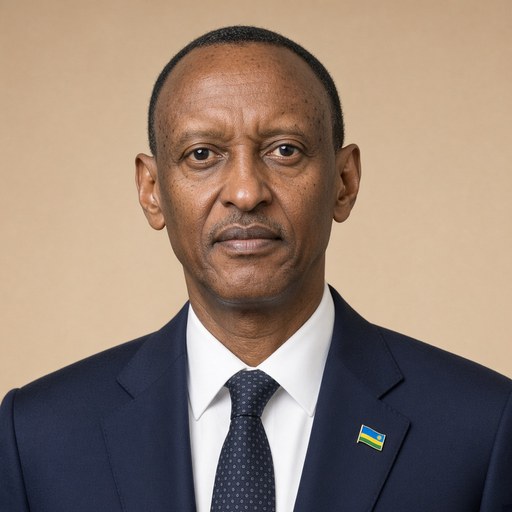
Address by Minister Bashya | Message from President Kagame | Kigali, March 19, 2021
 Paul Kagame · President of Rwanda
- Context
- Kagame addressed newly appointed ministers at their oath-taking ceremony in Kigali on March 19, 2021, urging servant leadership and also mourning Tanzania's President Magufuli.
- Main themes
- Ministerial oath-taking ceremony, public service and servant leadership, national interest over personal gain, COVID-19 pandemic challenges, economic impact of the pandemic, condolences for President Magufuli, Rwanda-Tanzania solidarity, pan-Africanism, collective policymaking, accountability of leaders
- Duration
- ~7 min
- Words
- 833
- Sentences
- 32
- Readability
- 61
- Grade
- 11.3
- Syntax
- 3.47
- Vocabulary
- 1.95
Translated from Swahili
The broad sphere of national life a sentence belongs to. Every sentence has an Arena, so it is the denominator the other indices are read against.
Other32 sentences in 19 paragraphs
Greetings to you all. I hope you are all doing well during these challenging times.
As usual, we are here for the ceremony to receive the oaths of the new Ministers, who are committed to serving our Country, together with all of us.
I would also like to thank you, the appointees, who have just taken these oaths, and I wish you good work.
Although the appointees are new to these responsibilities, they have been serving the Country in various capacities.
This is just a matter of being given new tasks. It is about being assigned additional responsibilities, which may even be more than what they were doing before. I therefore believe this is a journey of work, of serving the Country, of serving the citizens, which simply means that the efforts you were putting in before are now going to increase. Be prepared to exert more effort than you did before.
This is just a reminder; all the work we do for the citizens, for Rwandans, for the Country, we must always remind ourselves that we are serving other people. We are serving many Rwandans so that their lives can change for the better; we do not work for our own benefit.
It is not us who benefit from the actions of the first, even though it may also reach us. The ones who should benefit from the actions are the Rwandans. It is clear, it is often said, but it is not always fulfilled.
You often find it difficult; leaders sometimes or often work in a way that leads to their own personal interests, but there is also work that leads you to do it as you see fit or as you understand it. That is not how it should be. The operation is based on what we have all agreed upon as a country, as Rwandans in various sectors, where there should be a way to establish strategies, to establish policies, which are collectively agreed upon by the people, and we work towards that direction.
It is not just about working as you see it; saying, "this is how I understand it, this is how I am going to do it," often brings problems.
There is work that leads to your own personal interests only, and there is also work that leads to your own personal thoughts where you say, "this is how I understand it, this is how I must do it," in both cases, that is where the problem often lies. I believe that leaders should always try to remind themselves of this, and sometimes or often they should avoid it where it has been evident.
It is about working for the interests of Rwandans, and they know what those interests are, they know how they should reach them, I think we should always remind leaders or remind each other so that it does not happen otherwise.
And now, the leadership or responsibilities you have sworn to, we all, who are already in the work of serving the country in various capacities, are currently in difficult times, it is a time of challenges, it is a time that includes a pandemic, and its many consequences. This means that the work we do and the responsibilities we have have increased in weight many times over, and it has had an impact on the economy of the Country.
It has an impact on people's lives, it has many consequences in such a way that we must continue to try to use more effort, to think more about giving, our mindset should start from there. But it also relates to the citizens, so that they feel that the issue at hand, what they were expecting from us often does not materialize as it should, it does not happen quickly, but the essential thing is to keep explaining.
When you explain to people what the issue is, how it is, the strategies you have, what you are trying to do, it eases the weight of the problem when people discuss it, and often a solution can be found. I wish you all good work, and the collaboration we want to always prioritize at all levels, I believe it will show in you.
Finally, let me say another word, let me also speak in a foreign language we share in this region, due to what has happened in the past few days, where we lost a leader of the country during these days.
I cannot end my remarks without expressing, on my own behalf, and on behalf of the government and people of Rwanda, my deepest condolences to the family of the late President John Pombe Joseph Magufuli, and to the entire Tanzanian nation.
President Magufuli was a steadfast pan-African, and a friend to our country.
Rwanda stands in solidarity with Tanzania and with President Samia Suluhu Hassan at this difficult moment.
So, I would like to conclude by thanking you all once again, and may you always have the peace of God.
The original Swahili. The tags above are read on the English translation's sentences.
Mbanje kubasuhuza. Ndizera ko mwese mumeze neza no muri ibi bihe bigoranye.
Nk’ibisanzwe, turi hano mu muhango wo kwakira indahiro ya ba Minisitiri bashya, biyemeje gukorera Igihugu cyacu, dufantanyije twese hamwe.
Ndagira ngo kandi mbashimire mwebwe abarahiye, abamaze kutugezaho izo ndahiro, ngira ngo mbifurize imirimo myiza.
Nubwo abarahiye ari bashya muri izi nshingano barahiriye hano, basanzwe bakorera Igihugu mu nzego zitandukanye.
Ubu ni uguhabwa indi mirimo gusa. Ni uguhabwa izindi nshingano ndetse zishobora kuba ziyongereyeho, kurusha izo bakoraga. Ndizera rero ko ari urugendo rwo gukora, gukorera Igihugu, gukorera abaturage bisanzwe, icyo bivuze gusa uyu munsi ni uko imbaraga mwakoreshaga no mu busanzwe ubu zigiye kwiyongera. Mube mwiteguye kongera imbaraga kurusha uko byari bisanzwe.
Ibi ni ukubisubiramo gusa, twese imirimo dukorera abaturage, abanyarwanda, dukorera Igihugu, tugomba kujya twiyibutsa ko tuba dukorera abandi bantu. Tuba dukorera abanywarwada benshi kugira ngo ubuzima bwabo buhinduke bumere neza, ntabwo dukora twiganishaho.
Ntabwo ari twe tubona inyungu z’ibikorwa ba mbere, n’ubwo natwe bitugeraho. Abagomba kubona inyungu z’ibikorwa ni abanyarwanda. Birumvikana, bivugwa kenshi, ariko ntabwo ariko iteka byuzuzwa.
Usanga akenshi bigorana, abayobozi rimwe na rimwe cyangwa akenshi bagakora, hari ugukora biganisha ku nyungu zawe bwite, ariko hari no gukora biganisha wowe uko ubishaka cyangwa uko ubyumva. Ibyo ntabwo ariko ubundi bigenda. Imikorere ishingira ku byo twumvikanyeho twese nk’igihugu, nk’abanyarwanda mu nzego zitandukanye, hajyaho uburyo hakajyaho ingamba, hakajyaho politiki, bikubiye hamwe by’abantu bumvikanyeho, tugakora tuganisha muri iyo nzira.
Ntabwo ari ugukora wowe gusa nk’uko ubyumva, ngo njyewe uko mbyumva ni uku, niko ngiye gukora, akenshi nibyo bizana ibibazo.
Hari ugukora uganisha ku nyungu zawe gusa bwite, hari no gukora uganisha mu bitekerezo byawe bwite gusa uvuga uti njyewe uko mbyumva niko ngomba kubikora, aho hombi, niho hakunze kuba ikibazo nibwira ko abayobozi iteka bajya bagerageza kubyiyibutsa, ndetse rimwe na rimwe cyangwa kenshi bakabyirinda aho byagaragaye.
Ni ugukorera rero inyungu z’abanyarwanda, kandi bo bazi uko izo nyungu izo arizo, bazi uko zigomba kubageraho, ngira ngo twajya duhora twibutsa abayobozi cyangwa twibukiranya kugira ngo bitaba ukundi.
Kandi ubu, ubuyobozi cyangwa inshingano murahiriye, natwe twese abasanzwe mu mirimo yo gukorera igihugu ku nzego zitandukanye, ubu biriho mu bihe bitari byiza, ni ibihe by’ingorane, ni ibihe birimo ari icyorezo, n’ingaruka zacyo nyinshi. Ni ukuvuga rero ngo imirimo dukora n’inshingano dufite byagiye byiyongera uburemere inshuro nyinshi, byagize ingaruka ku bukungu bw’Igihugu.
Bifite ingaruka ku buzima bw’abantu, bifite ingaruka nyinshi ku buryo tugomba gukomeza kugerageza gukoresha imbaraga nyinshi, gutekereza kwinshi kwitanga, imyumvire ubwacu ikwiye guheraho. Ariko bigana no ku baturage, kugira ngo bumve ko ikibazo uko giteye, ibyo bari badutezeho akenshi ntibiboneka nk’uko bikwiye, ntibyihuta, ariko ibyangombwa ni uguhora dusobanura.
Iyo usobanuriye abantu ikibazo icyo aricyo, uko giteye, ingamba ufite, ibyo ugerageza gukora, byoroshya uburemere bw’ikibazo iyo abantu bakiganira, ndetse ahenshi umuti ukaboneka. Ndabifurije rero nanone imirimo myiza, kandi n’ubufatanye dushaka guhora dushyira imbere ku nzego zose, ndibwira ko bizabagaragaramo.
Hanyuma reka ngire ijambo rindi mvuga, reka ndivuge no mu rurimi rw’amahanga duhuriyeho muri aka karere, kubera nanone ibyabaye muri iyi minsi mikeya ishize, aho twatakaje umuyobozi w’igihugu muri iyi minsi.
I cannot end my remarks without expressing, on my own behalf, and on behalf of the government and people of Rwanda, my deepest condolences to the family of the late President John Pombe Joseph Magufuli, and to the entire Tanzanian nation.
President Magufuli was a steadfast pan-African, and a friend to our country.
Rwanda stands in solidarity with Tanzania and with President Samia Suluhu Hassan at this difficult moment.
Hanyuma rero, ndagira ngo ndangize nanone mbashimira mwese, kandi muhorane amahoro y’Imana.