




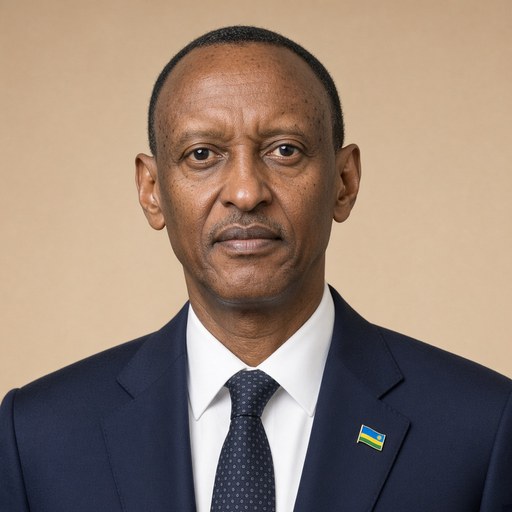
Meeting on the International Debt Architecture and Liquidity | Remarks by President Kagame | 29 March 2021
 Paul Kagame · President of Rwanda
- Context
- Kagame addressed an international meeting on debt architecture and liquidity on March 29, 2021, co-convened by Canada, Jamaica, and the UN Secretary-General.
- Main themes
- International debt architecture reform, COVID-19 pandemic recovery, global economic inequality, fiscal space and liquidity, G20 Debt Service Suspension Initiative, Special Drawing Rights, debt relief negotiations, sustainable development goals, developing country financing
- Duration
- ~2 min
- Words
- 243
- Sentences
- 15
- Readability
- 44
- Grade
- 11.1
- Syntax
- 2.90
- Vocabulary
- 2.27
The broad sphere of national life a sentence belongs to. Every sentence has an Arena, so it is the denominator the other indices are read against.
Other15 sentences in 14 paragraphs
Recovery from the Covid-19 pandemic depends on adequate fiscal space and liquidity.
However, there is a sharp dividing line in today’s world.
Some countries can finance their own recovery through quantitative easing. The rest must borrow from private or public creditors, much as individuals do.
Without corrective action, this divergence will entrench a profoundly unequal global order, in which the poor have no chance of ever catching up with the prosperous.
I therefore welcome this initiative by, my friends, Prime Minister Justin Trudeau of Canada and Prime Minister Andrew Holness of Jamaica, together with United Nations Secretary-General António Guterres.
Allow me to contribute three points.
First, it is critically important to extend the G20 Debt Service Suspension Initiative, for the foreseeable future.
Second, a new issuance of Special Drawing Rights would enhance liquidity.
But there needs to be a system of accountability for how SDRs are used, as well as a method of allocating them according to need rather than quota.
Third, debt relief negotiations should be conducted with the welfare of citizens in mind, and with a long-term view of development objectives, including the SDGs.
Modernising the international debt architecture should not be seen, as merely a Covid emergency measure.
It is a long-overdue discussion that goes to the heart of the inequalities that continue to bedevil our world.
Finding innovative solutions to this dilemma should rightly be a central preoccupation of the international community in the immediate future.
I thank you.