




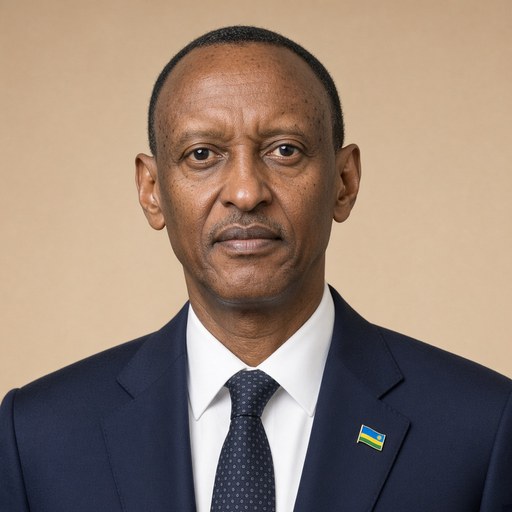
CHOGM2024 Opening Ceremony | Remarks by President Kagame | Apia, 25 October 2024
 Paul Kagame · President of Rwanda
- Context
- Kagame addressed the 2024 Commonwealth Heads of Government Meeting opening ceremony in Apia, Samoa on 25 October 2024, marking Rwanda's end as Chair-in-Office.
- Main themes
- Climate change and small island developing states, Commonwealth unity and solidarity, COP-29 and climate finance, digital jobs and youth employment, artificial intelligence and technology policy, irregular migration, public-private partnerships for green investment, Commonwealth's 75th anniversary, human capital development, debt and development finance, gender inclusion
- Duration
- ~4 min
- Words
- 452
- Sentences
- 31
- Readability
- 57
- Grade
- 9.0
- Syntax
- 2.65
- Vocabulary
- 2.08
The broad sphere of national life a sentence belongs to. Every sentence has an Arena, so it is the denominator the other indices are read against.
Other31 sentences in 30 paragraphs
I am very pleased to join you for the 2024 Commonwealth Heads of Government Meeting.
To the Government and people of Samoa, our host, I thank you for the warm welcome and hospitality.
It has been a great honour for Rwanda to serve as Chair-in-Office for the past two years.
I congratulate Prime Minister Fiamē Naomi Mata’afa, and wish you all success as Chair.
Rwanda stands ready to support you.
It is also fitting for us to thank the Secretary-General for her distinguished service to our organization, during her historic tenure.
This year’s meeting marks yet another milestone in the history of the Commonwealth family.
Samoa is the first Pacific island state to host CHOGM.
This comes at a turning point.
Temperatures are rising, and for small island developing States in the Pacific and the Caribbean, this is literally a matter of survival.
Africa and Asia also share this burden.
Two-thirds of the world’s small states are members of the Commonwealth.
We cannot ignore the voices of those who are bearing the brunt of this crisis, and they should not have to beg for our support.
As we head to COP-29 in a few weeks, let’s act and lead by example. Making empty promises can only move the needle for so long.
We continue to support His Majesty the King’s Sustainable Markets Initiative, as a blueprint for public-private partnerships and green investment, throughout the Commonwealth.
Indeed, what will make us cross the finish line in the fight against climate change is more finance from wealthy countries.
Still, our collective efforts must not stop there.
The terms must be favourable, without pushing developing countries into more debt.
The Commonwealth’s comparative advantage remains its young and vibrant population.
Creating digital jobs for women and young people should remain at the top of the agenda this year.
We must rely on the potential for innovation and technology to resolve the daunting challenge of rising unemployment and irregular migration.
This is also a good way to bridge the skills gap, and the imbalances in human capital development opportunities between our regions.
Artificial intelligence should not become a problem.
If we use it responsibly, and establish sound policies, we can transcend the realm of our imagination, and become even more resilient.
Earlier this year, the Commonwealth turned 75.
What was once an association of eight countries, is now one of 56.
Equality, diversity, and solidarity are the values that bind us together.
Because of this, where we have the opportunity to right our wrongs, let’s do that, and find a consensus that can stand the test of time.
With respect for each other and our differences, we can move forward towards our common future.
I thank you.