




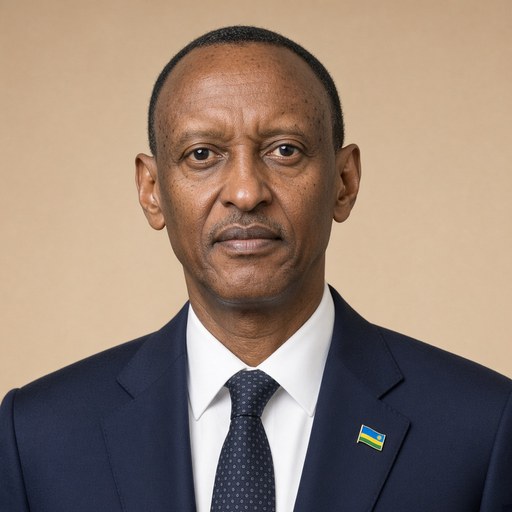
Remarks by President Kagame at the Summit on Foreign Terrorist Fighters
 Paul Kagame · President of Rwanda
- Context
- Kagame addressed the UN Security Council Summit on Foreign Terrorist Fighters in New York on 24 September 2014, outlining Rwanda's approach to combating terrorism and extremism.
- Main themes
- Foreign terrorist fighters, international counterterrorism cooperation, violent extremism, root causes of terrorism, demobilization and reintegration, genocide ideology, inclusive institutions, youth radicalization, terrorist financing, UN Security Council resolution
- Duration
- ~2 min
- Words
- 290
- Sentences
- 19
- Readability
- 47
- Grade
- 10.5
- Syntax
- 2.78
- Vocabulary
- 2.22
The broad sphere of national life a sentence belongs to. Every sentence has an Arena, so it is the denominator the other indices are read against.
Other19 sentences in 7 paragraphs
New York, 24 September 2014
Thank you for calling and chairing this important meeting. Terrorism has been a reality in Africa and across the world for decades, and it continues to be. In some regions, it has even been getting worse. Another reality is that we can and must defeat these terrorists through concrete actions and cooperation. One year ago this week, the attack on the Westgate Mall in Nairobi claimed dozens of lives. The resolution which we have just adopted is therefore an unfortunate necessity. Additional measures to disrupt travel and terrorist financing are important, and we will continue to do our part.
Above and beyond that, wherever atrocities are being committed, the first priority is to halt them. Only then can efforts to address the root causes be effective.
Terrorism is not caused by religion or ethnicity or even poverty, but by misguided politics and false beliefs. In order to build resilience to extremist narratives, people, especially the young ones, must feel they have a stake in their country.
Thus we fully endorse the call for a broad-based approach to combating violent extremism. In Rwanda, we still face acts of terrorism driven by the ideology of genocide. We have responded with force where necessary, but more importantly we have remained committed to building inclusive and accountable institutions and systems.
In particular, it is essential that those who renounce violence can be accommodated. The Rwanda Demobilisation and Reintegration Programme, a partnership with the United Nations and the World Bank, has provided tens of thousands with a pathway out of extremism.
This resolution reflects a consensus that terrorism is an urgent problem for the entire world. We stand ready to work together to make sure that we address this challenge.