




Rwanda — Statement to the General Debate of the 69th Session of the United Nations General Assembly (2014)
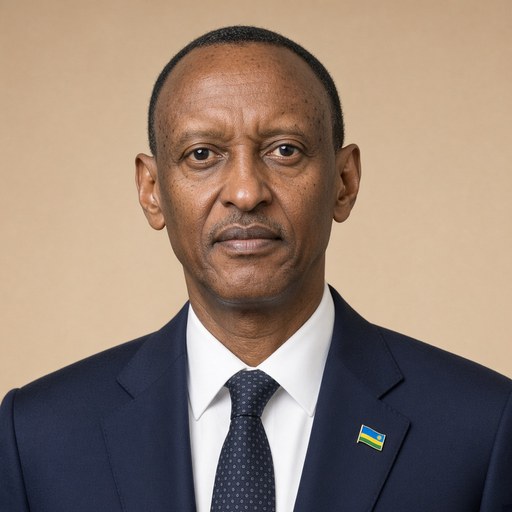
 Paul Kagame · President
- Context
- Paul Kagame delivered the statement of Rwanda in the general debate of the 69th session of the United Nations General Assembly in 2014.
- Main themes
- Physical security in conflict resolution, national identity and unity, international cooperation and Millennium Development Goals, climate change and green energy investment, governance structures and local ownership, peacebuilding and consensus-building processes, Rwanda's accountable institutions and national renewal, conflict prevention versus conflict management
- Duration
- ~4 min
- Words
- 523
- Sentences
- 34
- Readability
- 41
- Grade
- 11.3
- Syntax
- 2.68
- Vocabulary
- 2.12
UN General Assembly Translated from French
The broad sphere of national life a sentence belongs to. Every sentence has an Arena, so it is the denominator the other indices are read against.
Other34 sentences in 8 paragraphs
I want to start by congratulating you, Sir, on your election as President of the General Assembly.
We are living through a period of unprecedented progress in human development. The success of the Millennium Development Goals framework demonstrates that international cooperation remains strong, though we wish the expected results would come faster. Even on climate change, if the public and private sectors work together to increase investment in scientific research, we can look forward to a future where countries no longer have to choose between green energy and economic growth.
While we work on building peace and well-being in Africa, crises elsewhere in the world have aroused grave concern. Efforts to address them seem to have little effect, and in some cases they may even make things worse.
Two critically important public goods have been consistently undervalued by the international system in its approach to conflict resolution and peacebuilding. They are physical security and national identity. When security breaks down, the human costs are enormous. Extremists and opportunists are empowered. Citizens lose faith in public institutions, as grievances are settled in the street. As a result, sustainable gains in good governance cannot be made. It takes time and patience to build a better political system. There are no shortcuts. We are dealing with real people who want change, but with continuity and safety. They must be fully included in the process of consensus-building.
That is because structures of governance that are not developed from within will not take root. We should encourage full ownership and partnership, and the approach of international institutions and Member States should take those realities into account. In countries that have known only peace, such arguments may sound self-serving. But they are not, because lives are at stake.
The second neglected element is national identity. That is just as important. To manage the diversity in our societies, politics must be national in scope. Whatever differences we may have, our common citizenship is a bond that unites us. The negative experiences of nationalism have created doubt about affirming patriotism and national identity. However, what we see around the world today is that national identities are too weak, not that they are too strong. As a result, ethnicity, region and religion become the dominant currency of politics, and nations are torn apart. International systems should encourage efforts by Governments and civil society to strengthen national unity.
In Rwanda, we have focused on building accountable governance institutions and renewing our dignity as a nation. As a result, Rwandans today are among the most optimistic and civic-minded people in the world. For us, stability is not an abstraction, it is a reality that abides in the minds and hearts of the people and the institutions they build to sustain it. Once achieved, the horizon expands from poverty reduction to wealth creation and the attainment of ever higher measures of human development.
Therefore, our task in the international community is not to manage conflicts, but to help prevent and end those conflicts. If we focus on keeping people safe and bringing them together to solve their problems, we will be able to do so.