




- Context
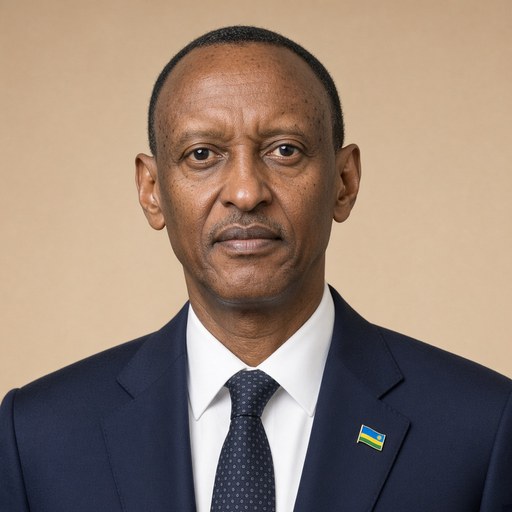
- Kagame addressed the World Government Summit in Dubai on 12 February 2019, representing Rwanda as the summit's guest country of the year.
- Main themes
- Rwanda's nation-building journey, good governance and accountability, human capital investment, private sector and economic transformation, regional and continental integration, African Continental Free Trade Area, youth empowerment, civic participation and inclusion, women's rights, infrastructure and technology, Africa's economic prospects, UAE as model of development
- Duration
- ~6 min
- Words
- 736
- Sentences
- 38
- Readability
- 42
- Grade
- 12.2
- Syntax
- 3.02
- Vocabulary
- 2.05
The broad sphere of national life a sentence belongs to. Every sentence has an Arena, so it is the denominator the other indices are read against.
Other38 sentences in 25 paragraphs
Dubai, 12 February 2019
It is a pleasure to be back at the World Government Summit, in the dynamic city of Dubai. I am particularly honoured that Rwanda has been selected as a guest country this year. On behalf of the Government and people of Rwanda, I wish to thank you most sincerely for this recognition.
The United Arab Emirates is an inspiration to many, including my own country, Rwanda, for your example of placing high value on people, and the private sector to achieve remarkable results. You have shown the world how vision, leadership, and good stewardship of natural resources transforms scarcity into prosperity.
In the last twenty-five years in Rwanda, we have worked to build a new nation, based on the values of unity and opportunity for all our citizens.
Earlier today, in the session on best practices from Rwanda, representatives from our country discussed the work we are doing in agriculture and tourism, to grow our economy and maximise the benefits for our people.
We have made significant progress over the years, but there is much more to do. However, none of this would have been possible without the right foundation. There are several things we had to get right from the beginning.
First, was the understanding that leaders and institutions are in place to respond to the expectations of citizens. This was complemented by a focus on civic participation and trust, ensuring that everyone is included in shaping the country’s future.
Bringing all Rwandans together in a common enterprise also meant guaranteeing the rights of those who were previously marginalised, particularly women.
The commitment to good politics has generated immense goodwill, and energy, which helped Rwandans to resolve the complex issues related to our country’s history.
Second, as a result of this social contract, the government has been able to simultaneously invest heavily in our human capital, and also in ambitious infrastructure and technology for our future prosperity.
Although the means available do not always match the scale of our ambitions, we have done our best to get the most out of the resources we do have, and find creative ways to fill the gaps.
Third, we had to start transforming the basis of our economy from subsistence to knowledge, in order to unleash creativity, entrepreneurship, and innovation.
In other words, our strategy has been to get government out of the business of business, and focus instead on creating a conducive enabling environment, and a level playing field for private enterprise.
Good governance and accountability is central to everything we do. In Rwanda’s case, we are working to reverse a legacy of extreme corruption and division, that nearly completely destroyed our country.
The final point, is that regional and continental integration are a key priority for Rwanda. Participating in bigger markets is vital for our economic future.
By 2050, Africa’s population will be two-and-a-half billion, larger than any other continent. We will only realise our full promise, by joining together our historically fragmented markets, and making it easier for people, goods, and services to move across our continent.
That is why the African Union adopted the African Continental Free Trade Area, which is due to enter into force later this year. We have also adopted a Protocol on the Free Movement of People, and agreed a Single African Air Transport Market.
This means that African countries are now faced with unprecedented prospects for economic transformation and growth. The faster we can go, the better!
Let me conclude, your Highness, Excellencies, with a final word about our young people.
We want young Rwandans and their peers across Africa, to remain connected to their countries and each other
We have a responsibility to ensure that young Africans have a real stake in a bright future on their own continent. It is our responsibility to equip them with the skills to compete and succeed globally. This should be our primary focus, and it is doable.
If there is one lesson from Rwanda’s experience, it is optimism.
If Rwanda can make it to this point, it means that there are no insurmountable challenges, provided that people work together, towards a common goal.
I want to, once again, thank the organisers of the World Government Summit for honouring Rwanda, with this unique platform to talk about our journey of nation-building, in the context of the growing opportunities in Africa generally and globally.
I thank you very much.