




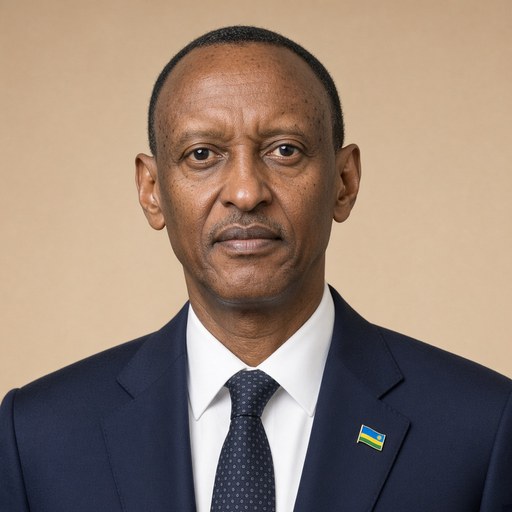
Remarks by President Kagame – High-Level Lunch on Digital Transformation in Africa
 Paul Kagame · President of Rwanda
- Context
- Kagame addressed a High-Level Lunch on Digital Transformation in Africa during the African Union Summit in Addis Ababa on 11 February 2019.
- Main themes
- Digital transformation in Africa, e-government services, digital identity, data protection and trust, interoperability of digital platforms, common standards for Africa, Smart Africa Alliance, regional cooperation, physical infrastructure, Rwanda's Irembo platform, Estonia's e-governance model, African Union digital agenda
- Duration
- ~4 min
- Words
- 458
- Sentences
- 23
- Readability
- 39
- Grade
- 12.8
- Syntax
- 2.89
- Vocabulary
- 2.25
The broad sphere of national life a sentence belongs to. Every sentence has an Arena, so it is the denominator the other indices are read against.
Other23 sentences in 11 paragraphs
Addis Ababa, 11 February 2019
Yesterday at the opening ceremony, I mentioned that “the future of the global economy is digital”. I should have added: “and government”.
Still, it is not digital alone. As the President of Egypt, the Chairperson of the African Union, mentioned to us yesterday, different kinds of physical infrastructure are going to be very important in support of the digitalisation of our continent.
In this case, e-government is a powerful tool for improving both the quality and accessibility of government services. In Rwanda, we have used the Irembo platform to make many public records available online, such as land titles, birth certificates, visas, driver’s licenses, national ID, and even mountain gorilla trekking permits.
Digital identity is the start of a long and valuable chain of capabilities that make citizens better able to participate productively in the regional and global economy. But digital systems can only function well when they are trusted. Information must be protected from unauthorised access. It should be clear who owns the data that people generate and how it will be used.
Different digital platforms must also be able to communicate with each other seamlessly. Otherwise, we are merely rebuilding the same fragmentation in the cloud, that we have been working to transcend here on the ground in the African Union. That is why working together to design common standards and guidelines, that serve Africa’s unique needs, is as important for e-government, as it is for e-commerce.
I would like to recall the value of the Smart Africa Alliance for implementing technology-based initiatives on a regional basis.
Smart Africa, working together with the World Bank (I would like to say that the Vice President of the World Bank is in our midst — thank you for being here), the Economic Commission for Africa, and of course the African Union — led by the Commissioner for Infrastructure and Energy — along with the Ministers of ICT of our continent. All working together, the momentum created by the digital identity decision taken at this Summit will be seized.
We are fortunate to be joined by the President of Estonia. Her country is among the most advanced in terms of e-government and digitalisation, and this was the centrepiece of Estonia’s chairmanship of the European Union in 2017. We congratulate you, Madame President, and your country.
President Kaljulaid is also a good friend of Africa, and there is a clear willingness by Estonia to collaborate productively with our continent, especially in digitalisation.
Excellencies, Ladies and Gentlemen, I wish to thank you all for being with us here today, and for the ideas that you will be able to share with us. Thank you for your kind attention, and I look forward to our lunch discussion.