




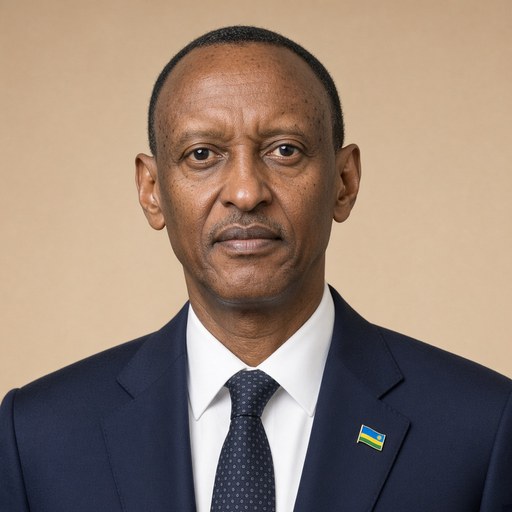
Speech by President Kagame at the MDGs Advocacy Group opening session – New York, 22 September, 2010
 Paul Kagame · President of Rwanda
- Context
- Kagame co-chaired the MDGs Advocacy Group second meeting at the UN in New York on 22 September 2010, advocating for achievement of MDG targets by 2015.
- Main themes
- Millennium Development Goals progress, Africa's MDG implementation, Rwanda's development achievements, poverty and hunger reduction, healthcare improvements, education enrollment, collective action and global partnerships, leadership and government ownership, accountability, resource mobilization
- Duration
- ~3 min
- Words
- 416
- Sentences
- 17
- Readability
- 49
- Grade
- 12.4
- Syntax
- 3.16
- Vocabulary
- 2.16
The broad sphere of national life a sentence belongs to. Every sentence has an Arena, so it is the denominator the other indices are read against.
Other17 sentences in 12 paragraphs
It is my pleasure, together with the United Nations Secretary General, to welcome you all to this second meeting of the Millennium Development Goals Advocacy Group.
We are here because we agreed to be advocates for a noble cause, which the MDGs represent, and because we believe that they are achievable by 2015.
Africa’s experience over the last ten years of implementing the MDGs has shown us that it is possible. With still five years to go, a number of countries have met some of the MDGs, and are on course to achieve most targets by 2015. Clearly, some are also still lagging behind.
Despite starting from a much disadvantaged base, Rwanda too has made progress. We have seen a significant decline in extreme hunger and poverty; made improvements in healthcare that have reduced maternal and child mortality, with a 50% decline in under-5 deaths over the last eight years.
Despite our modest resources, we have allocated more than 25% of our annual national budget to education, helping us to realize 98% enrollment target for primary education, well ahead of 2015.
Many thought this unimaginable given the magnitude of the challenges we faced – but through sheer determination, hard work and ownership of MDGs by local leadership, we have been able to register this progress.
Realizing MDGs, even at local levels, calls for collective action. That is why we must all rise up to the challenge, and support each other to deliver the outcomes that will shape the face of our world over the next century.
The universal, progressive values that have guided so many nations to prosperity should be revisited so that they underpin the actions that the MDGs Advocacy Group hopes to take.
Indeed, as a number of African leaders stressed at the recently held Africa Consultative Forum in Rwanda: the MDG agenda requires strong leadership and government ownership; the appreciation of Africa’s greatest asset, its people; and the mobilization of resources and new global partnerships to build catalytic physical and human infrastructure.
We should all be guided by this, as we seek to drive forward the global development agenda in the weeks, months and years to come.
In conclusion, let me say that this group has a unique role to play in promoting the merits of the MDGs. Many in this world owe so much to the MDGs and are watching with anticipation the actions we take and we should be willing to be held accountable.
I thank you for your kind attention.