




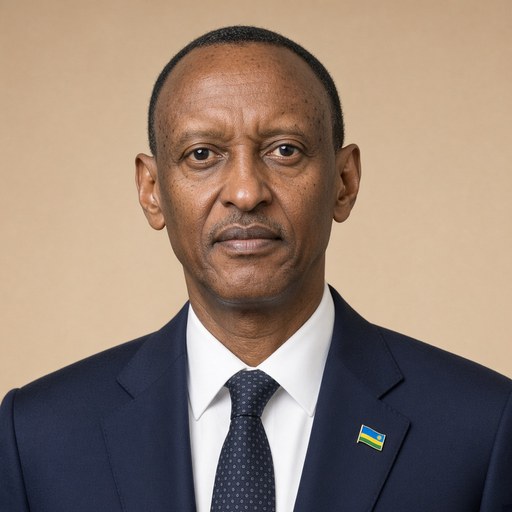
The speech of the President of the Republic of Rwanda on the day of inauguration – Kigali, Amahoro Stadium, September 6, 2010.
 Paul Kagame · President of Rwanda
- Context
- Kagame delivered his inauguration speech at Amahoro Stadium in Kigali on September 6, 2010, after winning re-election as President of Rwanda.
- Main themes
- Inauguration and democratic mandate, national unity and reconciliation, development and poverty reduction, democracy and governance, African sovereignty and self-determination, criticism of foreign interference, education and healthcare, decentralization and technology, anti-corruption and transparency, Rwanda's post-genocide progress
- Duration
- ~12 min
- Words
- 1,414
- Sentences
- 75
- Readability
- 54
- Grade
- 10.4
- Syntax
- 2.86
- Vocabulary
- 2.24
Inaugural Addresses Translated from Swahili
The broad sphere of national life a sentence belongs to. Every sentence has an Arena, so it is the denominator the other indices are read against.
Other75 sentences in 34 paragraphs
Welcome and thank you all. I am very pleased that the Heads of State of our friendly countries have come to join us in today’s celebrations.
Your Excellencies, your presence at this event is a delightful sign that reflects the unity of Africans. I would like, on behalf of all Rwandans, to sincerely thank you and let you know that we want to strengthen the unity of all Africa.
Here, there are also friends of Rwanda who have come from all over the world. I want to inform you that we appreciate the friendship we have and the support you have continued to provide us in this journey of development.
Rwandans, and you Rwandan women, I stand before you to express my gratitude for the trust you have once again placed in me by giving me the responsibility to lead our country again. I will do everything possible, as I have always done, to fulfill this responsibility you have given me.
Your Excellencies; Friends of Rwanda;
A month ago, Rwandans chose who would lead them, and they did so in an irreversible manner, exercising their inviolable right to make decisions that concern them, especially those that affect their lives. They demonstrated that what they desire and wish for their country is what should be the foundation of leadership and governance in Rwanda.
In the past sixteen years, Rwandans have continued to strive for their unity and to determine where they want to lead Rwanda. They have shown that they want to continue to fight for the common good above all else. They did this by overwhelmingly choosing unity, reconciliation, and development.
In the days leading up to the elections, there were media outlets and some organizations claiming to advocate for human rights that attacked Rwanda, speaking ill of it with intent, trying to show that there is chaos in Rwanda, as if that is what they wish for it. This even led some foreigners to believe that Rwanda was heading for turmoil, asserting that if that is the face of Africa, it would be surprising to diverge from it.
They did not know that Rwandans had suffered beyond measure, learning lessons from it. As the days went by, they took steps, making decisions from within to continue progressing. What they wanted was clearly demonstrated when they participated without hesitation in campaigning and even voting peacefully.
Our history shows us that whenever people are called to participate in activities designated for them, and they respond, they achieve many gratifying and rapid results. That in itself is democracy.
What has resulted from all this here in Rwanda is that the living conditions of Rwandans have improved to the extent that it is evident to everyone. Education and healthcare have been strengthened, and we will continue. Decentralizing governance to the people, as well as investing in technology, continues to give Rwandans a voice and opens doors for them in the world. All this also builds Rwandans, as they access information freely in a way that has never existed in our history.
Why then are there some who feel that democracy conflicts with development? We believe that one cannot achieve sustainable economic development without democratic governance. That is why we find that political rights that do not align with strategies to combat poverty and improve the well-being of the people lack substance.
There is no doubt that Africa has many problems. But the most serious issue is not the lack of democracy. Rather, it is poverty that forces one to be dependent on others. This disease of being governed by others is what causes some foreign governments, as well as non-governmental organizations, to dictate and control African leaders, elected by the citizens of their countries, on how they should behave. Yet those foreigners never show what they do.
African governments are accused of being mired in corruption and neglecting the needs of their citizens. However, when you do what every government is supposed to do, which is to provide quality services to the people, build effective systems, operate transparently, and develop infrastructure that advances the people and transforms their lives, then they change their tune. Then they accuse us of forcing people into development while infringing on their rights. Those people have a mindset that is disconnected from the reality of the citizens. That is why we should not listen to them.
And those two narratives are not due to misunderstanding. Rather, they are a sign of a persistent attitude aimed at marginalizing Africa in subjugation, poverty, and devaluing us. We must rise up and fight against those attitudes from within, and we must reject their baseless accusations.
What we need is support to implement our ideas that solve our problems. That is the true partnership we seek.
Developed countries are those that have been able to build their unity and encourage their citizens to strive for the common good. This is why we have drawn from our culture what unites us, using our strength and capabilities to restore pride to Rwanda.
There are those who always tell us that we should base our politics on ethnicity. They forget that those divisions were brought by colonialism.
This may work elsewhere, but in Rwanda, we know that ethnicity-based politics destroys the country. That is why Rwandans chose to turn their backs on that divisive politics and instead voted for a politics that builds their unity.
It should be understood that continuing the unity of Rwandans does not prevent us from valuing what Rwandans may not share, and the benefits that come from it. It rather means that what we prioritize is what we share that we value.
What we have gone through has taught us to confront serious challenges. Among them, we can mention:
• Thousands of orphans and widows who needed care; • We repatriated millions of refugees and returned them to their homes; • We integrated into the national army those who had previously been in the army that committed genocide; • We established justice that reconciles the victims of genocide and the perpetrators.
All this would not have been possible if we had not established a power-sharing policy that emphasizes unity rather than division.
Based on all this, we cannot understand those who always want to give us lessons on exclusion, tolerance, and respect for human dignity. All those who speak ill of Rwanda will continue to say what they want, but they will never replace us in the vision we have chosen as Rwandans or diminish our resolve for independence. That is why we cannot accept at all their baseless accusations.
This does not mean that we should not constantly evaluate what we do to improve it further. We must always strive for good governance, to deliver to the people what they need, and to empower them. The strength that allows us to continue on this path we have chosen is that we see that the living conditions of Rwandans are improving. This is the reward we seek.
Your Excellencies; Distinguished guests; Rwandans, Rwandan women;
We are embarking on a new journey that leads us to development and well-being. Based on what we have achieved, better things lie ahead.
In the coming years:
• We will do everything possible to ensure that all Rwandans have what they need to live; • We will focus on education and healthcare for all; • We will promote trade and investment; • We will provide modern infrastructure to Rwandans, including clean water, electricity in their homes, schools, health facilities, and industries.
We will also continue to:
• Promote the participation of citizens in economic development and in the governance of the country, while also empowering women and girls; • We will continue to provide citizens with knowledge and skills that enable them to compete on the international stage.
Furthermore, we will strengthen our collaboration with other countries, fostering good relations with our neighbors because what we seek to achieve is the same. So now, Rwandans, Rwandan women, I want to conclude by making a promise to you: we will work together to accomplish the tasks ahead of us diligently and with determination. This will strengthen what we have achieved and build a country where every Rwandan has a role, a voice, and equal opportunities.
Let us join hands with other African countries. Let us stand firm, draw from the good in our culture, and build Rwanda and Africa that makes us proud.
Thank you, and may you be blessed.
The original Swahili. The tags above are read on the English translation's sentences.
Nejejwe no kubaha ikaze mwese. Nishimiye cyane Abakuru b’Ibihugu by’Inshuti baje kwifatanya natwe mu birori by’uyu munsi.
Banyakubahwa, kuza kwanyu miri ibi birori ni ikimenyetso gishimishije kandi kigaragaza ubumwe bw’Abanyafurika. Nkaba ngira ngo, mu izina ry’Abanyarwanda bose, mbashimire byimazeyo kandi mbamenyeshe ko dushaka gushimangira ubumwe bw’Afurika yose.
Hano kandi hari n’inshuti z’u Rwanda zaturutse hirya no hino ku isi. Ndagira ngo mbamenyeshe ko twishimiye ubucuti dufitanye n’inkunga mwakomeje kudutera muri uru rugendo turimo rw’iterambere.
Banyarwanda, na mwe Banyarwandakazi, mpagaze imbere yanyu ngira ngo mbashimire icyizere mwongeye kungirira mukampa inshingano yo kongera kuyobora Igihugu cyacu. Nzakora ibishoboka byose, nk’uko bisanzwe, kugira ngo nuzuze iyi nshingano mumpaye.
Banyakubahwa; Nshuti z’u Rwanda;
Hashize ukwezi, Abanyarwanda bihitiyemo uzabayobora kandi babikoze ku buryo budasubirwaho, bakoresheje uburenganzira bwabo butavogerwa mu gufata ibyemezo bibareba, cyane cyane ibireba ubuzima bwabo. Bagaragaje ko icyo bifuza kandi bifuriza Igihugu cyabo ari cyo kigomba kuba ishingiro ry’ubuyobozi n’imiyoborere by’u Rwanda.
Muri iyi myaka cumi n’itandatu ishize, Abanyarwanda bakomeje guharanira kunga ubumwe bwabo no kugena aho bifuza kuganisha u Rwanda. Bagaragaje ko bashaka gukomeza guharanira inyungu rusange kuruta ibindi byose. Ibi babikoze bahitamo ku bwinshi ubumwe, ubwiyunge, n’iterambere.
Mu minsi yabanjirije amatora, hari ibitangazamakuru n’imiryango imwe n’imwe ivuga ko iharanira uburenganzira bwa muntu bibasiye u Rwanda, baruvuga nabi babigambiriye, bashaka kugaragaza ko mu Rwanda bicika, basa nk’aho ari byo barwifuriza. Ndetse bituma bamwe mu banyamahanga bakeka ko u Rwanda rugiye mu mvururu, bemeza ko iyo ari yo sura y’Afurika, ko byaba bitangaje habayeho gutandukana na yo.
Ntibari bazi ko Abanyarwanda bababaye birenze urugero, bakabivanamo amasomo. Uko iminsi yahitaga ari na ko batera intambwe, bafashe ingamba bivuye inyuma zo gukomeza gutera imbere. Icyo bashakaga bakigaragaje igihe bitabiraga badashidikanya ibikorwa byo kwamamaza ndetse banatora mu mahoro.
Amateka yacu atwereka ko igihe cyose, iyo abantu bakanguriwe ibikorwa bagenewe, bakabyitabira, bagera kuri byinshi bishimishije kandi vuba. Ibyo ubwabyo ni demokarasi.
Icyavuye muri ibyo byose hano iwacu mu Rwanda ni uko imibereho y’Abanyarwanda yabaye myiza ku buryo bigaragarira buri wese. Uburezi no kwivuza byashyizwemo imbaraga kandi tuzakomeza. Kwegereza ubuyobozi abaturage, ndetse no gushora imari mu ikoranabuhanga bikomeje guha Abanyarwanda ijambo no kubakingurira amarembo ku isi. Ibi byose kandi byubaka Abanyarwanda, kuko babona amakuru nta nkomyi mu buryo bwisanzuye butabagaho mu mateka yacu.
Kuki noneho haba hari abumva ko demokarasi igongana n’iterambere? Twe twumva ko udashobora kugera ku iterambere ry’ubukungu burambye mu gihe udafite imiyoborere ishingiye kuri demokarasi. Ni na yo mpamvu dusanga uburenganzira bwa politike butagendanye n’ingamba zo kurwanya ubukene no guhindura imibereho myiza y’abaturage, buba budafite ireme.
Nta gushidikanya ko Afurika ifite ibibazo byinshi. Ariko ikibazo gikomeye kurusha ibindi, ntabwo ari ukutagira demokarasi. Ahubwo ni ubukene butuma ugomba gusindagizwa n’abandi. Iyi ndwara yo kugengwa n’abandi ni yo ituma Leta zimwe z’amahanga, ndetse n’imiryango itegamiye kuri Leta, biha kugena no gutegeka abayobozi b’Afurika, batowe n’abaturage b’Ibihugu byabo, uko bagomba kwitwara. Nyamara abo banyamahanga nta na rimwe bagaragaza ibyo bakora.
Leta z’Afurika zishinjwa kuba zaramunzwe na ruswa no kutita ku byo abaturage bazo bakeneye. Ariko iyo ukoze ibyo Leta yose ishinzwe gukora, ari byo: kugeza serivisi nziza ku baturage, kubaka imikorere inoze, gukorera mu mucyo, kubaka ibikorwaremezo biteza imbere abaturage kandi bihindura n’imibereho yabo, icyo gihe bahindura indimi. Noneho bakadushinja ko duhatira abantu iterambere kandi tukaba tubangamira uburenganzira bwabo. Abo bantu baba bafite imitekerereze itagira aho iburira n’iy’abaturage. Ni yo mpamvu tudakwiye kubatega amatwi.
Kandi izo ndimi ebyiri ntiziterwa no kutabyumva. Ahubwo ni ikimenyetso cy’ingeso itaranduka igamije guheza Afurika mu buhake, mu bukene, no kuduteza agaciro. Tugomba guhaguruka tukarwanya izo ngeso twivuye inyuma, kandi n’ibyo badushinja bidafite ishingiro tukabyamagana.
Icyo dukeneye ni ibidufasha gushyira mu bikorwa ibitekerezo byacu bikemura ibibazo byacu. Ni bwo bufatanye nyakuri twifuza.
Ibihugu byateye imbere ni ibyashoboye kubaka ubumwe bwabyo no gushishikariza abenegihugu babyo guharanira inyungu rusange. Iyi ni yo mpamvu twavomye mu muco wacu ibiduhuza, dukoresha imbaraga n’ubushobozi byacu kugira ngo twongere dusubize u Rwanda ishema.
Hari abahora batubwira ko dukwiye kubakira politike yacu ku moko. Biyibagiza ko izo ngirwamoko zazanywe n’ubukoloni.
Ibi wenda bishobora gukora ahandi, ariko mu Rwanda tuzi ko politike ishingiye ku moko yoretse Igihugu. Ni na yo mpamvu Abanyarwanda bahisemo gutera umugongo iyo politike ishingiye ku macakubiri, maze bagatora politike yubaka ubumwe bwabo.
Bikwiye kumvikana ko gukomeza ubumwe bw’Abanyarwanda bitatubuza guha agaciro ibyo Abanyarwanda baba badahuriyeho, n’ibyiza bibikomokaho. Bivuze ahubwo ko icyo twimirije imbere ari uko ibyo dusangiye ari byo duha agaciro.
Ibyo twanyuzemo byatwigishije guhangana n’ibibazo by’ingutu. Muri byo twavuga :
• Ibihumbi n’ibihumbi by’impfubyi n’abapfakazi bari bakeneye kwitabwaho; • Twacyuye za miliyoni z’impunzi kandi zisubizwa mu byabo; • Twinjije mu ngabo z’Igihugu abahoze mu ngabo zakoze jenoside; • Twashyizeho ubutabera bwunga abakorewe jenoside n’abayikoze.
Ibi byose ntibyari gushoboka iyo tudashyiraho politike y’isaranganya ry’ubutegetsi, kandi ishimangira kunga aho gutanya.
Dushingiye kuri ibi byose, ntidushobora kumva abahora bashaka kuduha amasomo ku byerekeye ukudaheza, koroherana no kubaha ikiremwamuntu. Abo bose bavuga nabi u Rwanda bazakomeza kuvuga ibyo bashaka ariko ntibazigera badutsimbura ku cyerekezo twihitiyemo nk’Abanyarwanda cyangwa ngo bagabanye umurego wo kwigenga. Ni yo mpamvu tudashobora kwemera na gato ibyo baturega bidafite agaciro.
Ibi ntibivuze ko tudakwiye guhora dusuzuma ibyo dukora ngo tubinoze kurushaho. Tugomba guhora duharanira kuyobora neza, kugeza ku baturage ibyo bakeneye, no kubongerera ubushobozi. Imbaraga zituma dukomeza iyi nzira twahisemo ni uko tugenda tubona ko imibereho y’Abanyarwanda irushaho kuba myiza. Iyi ni yo ngororano twifuza.
Banyakubahwa; Bashyitsi bahire; Banyarwanda, Banyarwandakazi;
Dutangiye urugendo rushya rutuganisha mu iterambere n’imibereho myiza. Dushingiye ku byo tumaze kugeraho, ibyiza biri imbere.
Muri iyi myaka iri imbere:
• Tuzakora ibishoboka byose kugira ngo Abanyarwanda bose babone ibibatunga; • Tuzashyira ingufu mu burezi no mu buzima bwa bose; • Tuzateza imbere ubucuruzi n’ishoramari; • Tuzageza ibikorwaremezo bigezweho ku Banyarwanda, harimo amazi meza, amashanyarazi mu ngo zabo, nu mashuri, mu mavuriro, no mu nganda.
Tuzakomeza kandi:
• Guteza imbere uruhare rw’abaturage mu iterambere ry’ubukungu no mu miyoborere y’Igihugu, tunakomeze guha ubushobozi abagore n’abakobwa; • Tuzanakomeza guha abaturage ubumenyi n’ubushobozi bituma bashobora gupigana mu ruhando mpuzamahanga.
Na none, tuzashyira imbaraga mu gukomeza kwibumbira hamwe n’ibindi bihugu, dutsure imibanire myiza n’ibihugu duturanye kuko ibyo twifuza kugeraho ari bimwe. None rero Banyarwanda, Banyarwandakazi, ndagira ngo nsoze ngirana na mwe isezerano: tuzafatanya gukora imirimo idutegereje nta mususu, kandi dushishikaye. Ibi bizatuma dushimangira ibyo twagezeho kandi twubake Igihugu Umunyarwanda wese agiramo uruhare, akagira ijambo n’amahirwe angana.
Nimucyo dufatane urunana n’ibindi bihugu by’Afurika. Duhagarare twemye, tuvome ibyiza biri mu muco wacu, maze twiyubakire u Rwanda n’Afurika bidutera ishema.
Murakoze, murakarama.
Save