




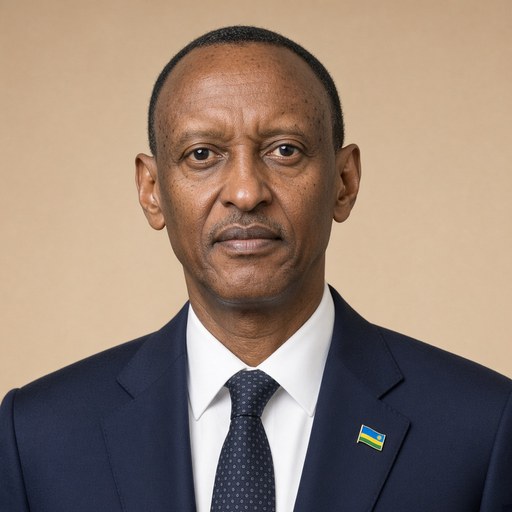
The speech President Paul Kagame delivered to inaugurate the commemoration of the 23rd anniversary of the Genocide against the Tutsi.
 Paul Kagame · President of Rwanda
- Context
- Kagame addressed a national ceremony in Kigali on April 13, 2017, inaugurating the 23rd commemoration of the Genocide against the Tutsi.
- Main themes
- Genocide commemoration, survivors' solidarity, African Union support, UN failures, international responsibility, naming the genocide, national unity, historical memory, individual acts of courage, Rwanda's recovery, justice and accountability
- Duration
- ~17 min
- Words
- 2,082
- Sentences
- 151
- Readability
- 75
- Grade
- 6.2
- Syntax
- 2.55
- Vocabulary
- 1.81
Translated from Swahili
The broad sphere of national life a sentence belongs to. Every sentence has an Arena, so it is the denominator the other indices are read against.
Other151 sentences in 42 paragraphs
Kigali, May 7, 2017
I would like to start by referring to the speech we heard from the children who sang and spoke other words.
They began by asking us, speaking in English, they asked: “How did we get here?” I think you heard that. How did we get here? How did we manage to arrive at this point?
It is not a question that one can answer right now or in a short time, but we must answer it. The proper way to answer it is to respond to it every day in what we do, as we continue to build a country that belongs to all of us, to every Rwandan, and that is also for foreigners who visit or wish to live here. Every day we should be answering that question.
Returning to today, remembering is important, and I would like to tell the survivors in particular that they are not alone. They lost their families, but there is one family they did not lose: it is their country. Rwanda is the family of the survivors; it is the family of every Rwandan.
This reminder that they are not alone is part of answering that question: how did we get here?
When we look back, examining history, and all these events that happened or the time they occurred and afterwards, there were those who played a role in bringing people together, in conflict. There are countries, international organizations, and individuals…
But there were also others who did what they could, or what they were supposed to do to save people.
At the forefront, even to this day, are some Africans and the African Union. Recently, in the African Union, represented by the guest we have today, the Chairperson of the African Union Commission, as he has already said, Africans have stood up, saying that Rwandans should not continue to be persecuted.
You remember, there was once a question based on what is called international justice. There were long debates and discussions, where some countries wanted to rewrite history to absolve themselves of their roles in what happened in Rwanda and instead place the blame on all Rwandans, including the survivors of the genocide. At that time, Africa stood firm, almost all countries sided with Rwanda, saying that it was not right.
I would like to thank Africans through the representative of the African Union Commission who is here.
If you look back to when people were being killed, the UN was supposed to do something about it; it had its own issues. But it is difficult to know what the UN is, because the UN is not a country. It is an organization of countries coming together. Rather, powerful countries use the UN as they wish. If things go badly, the UN is blamed; if things go well, the countries within it, using it, take the credit.
So when we think of the UN, we should know what it is. There is no country called the UN. It is a mixed entity, and those involved use it as their power increases. This was evident in Rwanda. But in what they could not do, some Africans did it on their own. That is why we remember the Senegalese soldier, a captain, who refused to obey general orders, using his own conscience to understand that what was being done was wrong. That is also why Ghanaian soldiers refused to follow the orders given to them, because they saw that what was being done was wrong, that it was bad.
You see, therefore, the solidarity with Rwandans was marked by Senegalese and Ghanaian soldiers, just as I mentioned earlier about how Africans stood with Rwanda in the African Union.
There are also others here, from different countries who saved people. We can mention an American who fought for people, feeding those who were hiding, fighting for them, and helping them. We also honor him for his bravery and actions. There are others from various European countries or as I mentioned, from America and elsewhere, individuals who fought against what was happening here.
This means that this question we constantly face is a complex, intricate issue. However, even though we cannot prevent serious challenges from arising, there are ways to resolve some issues that we can manage. We have the capacity to do so. We will resolve what we can, what we can as Rwanda; what we cannot do, we will set aside.
For instance, when you hear discussions happening in the world, people no longer talk about the lives lost, but they are caught up in words and searching for terminology for what happened. They go there and say, how do we name this? Is it the Genocide against the Tutsi? Is it the Genocide of 1994? And then they go there searching for words to describe what happened here.
It is no longer about human lives. It is just words; it is names. How do we name it? You know, humanity – I think we are good people, but we are also bad people. When something small happens, we show our weaknesses.
There are those who think they are bringing something new, saying you cannot call it the Genocide against the Tutsi, it is the Genocide of 1994, or the Genocide of Rwandans. Those people are trying to create confusion, as if confusion is something important. Another comes thinking he is better than others, saying let’s call it the Genocide against the Tutsi and moderate Hutus.
I have a problem that prevents me from engaging in these discussions, because they are pointless. It is a waste of time. Those who must define the terminology are the ones who participated in those atrocities. It seems they spend their time playing with words for some ulterior motive.
We lost people. We lost over a million, and they were not killed by natural disasters. They did not die from ordinary death. They were killed by people. The killings were driven by the politics of this country and international politics.
So how can people continue to play with words? And then they bring in experts. What do these experts do? Will they bring back the people we lost? We as Rwandans, these are not discussions we should engage in or waste our time with meaningless words.
Genocide has a meaning, and I am not the one who gave it that meaning. When someone speaks of the Genocide against the Jews, it has its own meaning. I am not the one who sets the definitions. If you have a problem finding a name for the killings that occurred here, that is a sign that you have another problem. That is the problem you should focus on first.
People were persecuted here in Rwanda for a long time. It did not only happen in 1994. It happened for a very long time. I hope you do not forget so quickly, like those who seek definitions. Why are you afraid to say things as they are? Is it a mystery that Tutsis were persecuted for a long time in Rwanda? Is it new? Is it something unknown? You must have a problem if that is how you see it.
We as Rwandans must live, forgetting what has no value. And the way to live as we wish is to reach a point where we say: There are people in this country, some call them small or big, who have been persecuted for a long time. They were persecuted for who they are, for who they were. That is what happened. So those who want to can name it whatever they wish.
The second thing is to say: that happened, we could not prevent it. It happened, we cannot take it back. But today we can do something. What we can do now is to commit that it will not happen again. No one will be persecuted again.
In the years to come, perhaps fifty years from now, or at another time I do not know, there may be foolish people, but I cannot predict what will happen. I am saying now, and in the coming years, that such persecution will not happen again. It cannot happen. We can truly achieve this.
Forget those who speak nonsense about Rwanda, who criticize what we do and the definitions they seek to impose on us. Forget them. That is a waste of time. As Rwandans, we will continue to live, and we will live as it suits us. What others think about it is their concern.
And indeed, we are committed to working with and collaborating with everyone. We need friends, we work with friends, and we seek friends.
However, that does not mean we must live our lives dictated by anyone, no matter what happens.
I thank all those who have continued to support us and stand with us through everything we have gone through. It is a difficult history.
Those others, if they wish to change and join us in working together, we truly welcome them. Those who make good decisions, no matter how late they are, if they return to the right path, acknowledging the mistakes they made and seeking forgiveness from Rwandans, we thank them for that step and continue on the journey together.
Those who do not wish for this, who think they can change the history and the path we have chosen, they do not take anything from us. But they must know they have a formidable enemy, because we will not make it easy for them. They will not divert us from our course, they will not change what we believe, they will not change the politics we have chosen or our lives, which also have meaning for us. They cannot do anything about it. Where they will go, they will find us prepared.
Yes, it certainly takes time. Sometimes it takes time for people to realize they have a problem. As Rwandans, we have endured, and we will continue.
Even in recent days, our relationship with the Catholic Church is no secret. We have had many discussions, some say it is not the Church, but individuals. But now we have found a solution to the problem. I appreciate that and I also thank those senior leaders who played a role in bringing us all back to a good place. It is truly good.
There are others who are either eager or unwilling to acknowledge their role, but instead, they seem to want to bring us other problems. They have been trying this for 23 years. But they will not stop us from progressing. They will not succeed. No matter how strong they think they are, it is their work.
We have innocent victims here, but you find them being blamed for what was done to them. There are those who have not sought forgiveness but have not even acknowledged what they did.
We do not need their money. We are not asking them for money. That is not what we want. No amount of money can compare to the millions we lost in the genocide. What we need is the truth, the truth that will free people to continue their lives.
We will continue to endure. But there are limits; there are things we will not tolerate. You cannot take our lives as you wish. It is not possible.
I believe this is one of the lessons we learned from the tragedies we experienced. These atrocities took the lives of our people, and we learned how we must live. We have learned from what we believe, but also what happened happened; we cannot change that. However, there is something we can do today to prepare for tomorrow. And we will do it.
People who were persecuted will not be persecuted again, and no one else will be harmed. Those who have not been persecuted before, no one will persecute them. No one will be persecuted again. What this means is that we all, as Rwandans, must live our lives, like others do in the world. We will continue the path we started to build our country and our lives.
We thank you, Moussa, for representing our African continent, as we share much, we work on many things, and we will continue to work together to improve life in our country. But if there is anything we can do to contribute to uplifting the lives of our African brothers, we are ready for that.
The original Swahili. The tags above are read on the English translation's sentences.
Kigali, 7 Mata 2017
Nagira ngo mpere ku ijambo twagejejweho n’abana baririmbaga n’abavugaga andi magambo.
Batangiye batubaza, bavuze mu rurimi rw’Icyongereza, barabaza ngo ariko: “Ubundi aha twahageze dute?” Ngirango mwabyumvise. Twahageze dute? Twarinze tugera aha dute?
Ntabwo ari ikibazo umuntu yasubiza ubungubu cyangwa mu mwanya muto, ariko tugomba kugisubiza. Uburyo bwo kugisubiza uko bikwiye ni ukugisubiza buri munsi mu byo dukora, twongera kubaka igihugu kugira ngo kibe igihugu cyacu twese, cya buri Munyarwanda, ndetse kikaba n’icy’abanyamahanga bakigenda cyangwa bashaka no kugituramo. Buri munsi dukwiriye kuba dusubiza icyo kibazo.
Nsubiye kubijyanye n’uyu munsi, Kwibuka ni ngombwa kandi nagira ngo mbwire abacitse ku icumu ku buryo bw’umwihariko ko batari bonyine. Batakaje imiryango, ariko hari umuryango umwe batatakaje: ni Igihugu cyabo. U Rwanda ni umuryango w’abacitse ku icumu, ni umuryango wa buri Munyarwanda.
Ibyo nabyo, kwibutsa ko batari bonyine, ni kimwe mu gusubiza cya kibazo: twageze aha dute?
Iyo dusubije amaso inyuma, tukareba mu mateka, n’ibi byose bijya kuba cyangwa igihe byabaga na nyuma yaho, hari abagize uruhare mu guteranya abantu, bakangana. Hari ibihugu, imiryango mpuzamahanga, n’abantu ku giti cyabo…
Ariko hari n’abandi bakoze ibyo bari bashoboye, cyangwa bagombaga gukora bakiza abantu.
Ku isonga, kugeza n’ubu, harimo Abanyafurika bamwe, n’Umuryango w’Afurika yunze Ubumwe. Mu minsi ishize ya vuba aha, muri Afurika yunze Ubumwe, ihagarariwe n’umushyitsi dufite uyu munsi, Umuyobozi Mukuru wa Komisiyo ya Afurika, nibyo yaramaze kuvuga, Abanyafurika barahagaze, bavuga ko Abanyarwanda badakwiriye gukomeza gutotezwa.
Muribuka, higeze kuba ikibazo cyari gishingiye ku cyo bita ubucamanza mpuzamahanga. Habayeho impaka n’ibiganiro birebire, aho ibihugu bimwe bishaka guhindura amateka ngo ibyabaye mu Rwanda n’uruhare rwabo babyivaneho ahubwo babishyire ku Banyarwanda bose, ndetse n’abarokotse jenoside. Icyo gihe Afurika yarahagaze iranga, hafi ibihugu byose, ijya ku ruhande rw’u Rwanda, iravuga iti ntabwo ari byo.
Nangira ngo nshimire Abanyafurika mbinyujije ku uhagarariye Komisiyo y’Afurika yunze Ubumwe uri hano.
Ugiye kureba no mu gihe abantu bicwaga Loni, ubundi yagombaga kugira icyo ibikoraho, yari ifite ibibazo byayo. Ariko burya biragoye kumenya Loni icyo ari cyo, kuko Loni ntabwo ari igihugu. Ni umuryango ibihugu bihuriyemo. Ahubwo ibihugu bifite imbaraga bikoresha Loni uko bishaka. Ibintu byaba byabaye bibi Loni akaba ariyo ifatwa n’icyaha; byaba byabaye byiza, ibihugu biyirimo, biyikoresha akaba ari byo bifata ishimwe.
Rero nitwumva na Loni tujye tumenya icyo ari cyo. Nta gihugu kitwa Loni. Ni ikintu cy’imvange, abavangiyemo bakayikoresha uko barushana imbaraga. Ni ibyo byagaragaye mu Rwanda. Ariko mu byo batashoboye gukora, Abanyafurika bamwe barabikoze ku giti cyabo. Ni yo mpamvu twibuka umusirikare w’Umunyasenegale, kapitene, wanze kumvira amategeko rusange, agakoresha amategeko ashingiye ku mutimanama we, wo kumva ko ibyakorwaga atari byo. Ni nayo mpamvu abasirikare ba Ghana banze kumva amabwiriza babahaga, kuko babonaga ko ibyakorwaga bitari byo, ko byari bibi.
Murumva rero kwifatanya n’Abanyarwanda byaranze Abasenegale n’Abanyaghana ari kimwe nka byabindi navugaga mbere by’uko Abanyafurika bahagaze ku Rwanda muri Afurika yunze Ubumwe.
Hari n’abandi bari hano, bava mu bihugu bitandukanye barokoye abantu. Twavuga nk’Umunyamerika warwanye ku bantu, akagaburira abari bihishe, akabarwanaho, agahuruza, akagira ate. Nawe twamuhaye ishimwe rijyanjye n’ibikorwa bye by’ubutwari. Hari abandi mu bihugu bitandukanye by’Uburayi cyangwa aho nari mvuze, muri Amerika n’ahandi, abantu ku giti cyabo barwanije ibyakorerwaga hano.
Ni ukuvuga rero ngo iki kibazo duhora duhangana nacyo, ni ikibazo kigoranye, cy’inzitane. Ariko, n’ubwo tutabuza ibikomeye gukomera, cyangwa ibigoranye kugorana, hari uburyo bwo gukemura ibintu bimwe dushoboye. Dufite ubushobozi bwo kubikora. Tuzajya dukemura ibyo dushoboye, ibyo dushoboye nk’u Rwanda, Ibyo tudashoboye tuzabireka, tubishyire i ruhande.
Nk’ubu iyo wumvise ibiganiro bibaho ku isi, abantu ntibakivuga ku ubuzima bw’abantu bwatakaye, ahubwo bari mu magambo no gushakisha inyito y’ibyabaye. Bakajya aho bakavuga bati tubyite dute? Ni Jenoside y’Abatusi? Ni Jenoside yo mu 1994?. Nuko bakajya aho bagashakisha amagambo asobanura ibykozwe hano.
Ntabwo bikiri ubuzima bw’abantu. Ni amagambo gusa; ni amazina. Tubyite dute? Murabizi, ikiremwamuntu – ntekereza ko turi abantu beza, ariko nanone turi n’abantu babi. Iyo haje akantu gato tugaragaza intege nke zacu.
Hari abibwira ko bazanye akarusho, bati ntiwayita Jenoside yakorewe Abatutsi, ngo ni Jenoside yo muri1994, cyangwa Jenoside y’Abanyarwanda. Abo rero, baragerageza kuzana urujijo, nkaho urujijo ari narwo ari ikinti k’ingenzi. Undi akaza yibwira ko yarushije abandi, ati reka tubyite Jenoside y’Abatutsi n’Abahutu batari intagondwa.
Ngewe mfite ikibazo cyatuma ntinjira muri ibi biganiro, kuko ntacyo bimaze. Ni ugukora ubusa. Abo bagomba kwemeza inyito ni nabo bagize uruhare muri ayo mahano. Wagira ngo kwirirwa bakina n’amagambo hari inyungu bifite.
Twabuze abantu. Twapfushije abarenga miliyoni, kandi ntabwo bishwe n’ibiza. Ntibazize urupfu rusanzwe. Bishwe n’abantu. Ubwicanyi bwatewe na politiki yo muri iki gihugu ndetse na politiki mpuzamahanga.
None se ni gute abantu bakomeza gukina n’amagambo? Maze bakazana inzobere. Izo nzobere ni izikora iki? Zizatugarurira se abantu twatakaje? Twebwe nk’Abanyarwanda, ibi si ibiganiro dukwiye kujyamo cyangwa ngo duteshwe igihe n’amanjwe atadufitiye akamaro.
Jenoside ifite igisobanuro kandi si na nge wayihaye icyo gisobanuro. Iyo umuntu avuga Jenoside yakorewe Abayahudi, ifite igisobanuro cyayo. Si ngewe ushyiraho ibisobanuro. Niba ufite ikibazo cyo kubonera izina ubwicanyi bwabereye hano, ibyo ni ikimenyetso cy’uko ufite ikindi kibazo. Icyo kibazo ni cyo ukwiye kubanza kwitaho.
Abantu baratotejwe hano mu Rwanda mu gihe kirekire. Ntabwo byabaye mu mwaka wa 1994 gusa. Byabaye igihe kirekire cyane. Nizere ko namwe mutibagirwa vuba mutyo, nk’abo bashaka ibisobanuro. Kuki mutinya kuvuga ibintu uko bimeze? Ese kuba Abatutsi baratotejwe igihe kirekire mu Rwanda nabyo ni amayobera? Ni bishya? Ni ikintu kitari kizwi se? Waba ufite ikibazo niba ari uko ubibona.
Twe nk’Abanyarwanda, tugomba kubaho, tukibagirwa ibyo bidafite agaciro. Kandi uburyo bwo kubaho uko tubyifuza ni ukugera aho tuvuga tuti: Hari abantu muri iki gihugu, bamwe bita gito cyangwa kinini, batotejwe igihe kirekire. Batotezwaga kubera icyo bari cyo, kubera abo bari bo. Ni ibyo byabaye. Ngaho ababishaka bazabyite ikindi bashaka.
Icya kabiri ni ukuvuga tuti: ibyo byarabaye, ntitwashoboye kubikumira. Byarabaye, ntitwabisubiza inyuma. Ariko uyu munsi twagira icyo dukora. Icyo dushobora gukora ubu ni ukwiyemeza ko bitazongera kubaho ukundi. Nta bantu bazongera gutotezwa.
Mu myaka iri imbere, ahari nyuma yacu twe dushishikajwe no kubaka umusingi no kubaka igihugu cyacu, wenda nko mu myaka mirongo itanu iri imbere, cyangwa ikindi gihe ntazi, habayeho abantu b’abasazi, ubwo bwo sinamenya ibizaba. Ngewe ndavuga ubu, no mu myaka mike iri imbere, ntabwo uko gutoteza abantu byakongera kubaho. Ntibyabaho. Ibi rwose turabishoboye.
Mwibagirwe abo bavuga ubusa ku Rwanda, baneguza izuru ibyo dukora n’ibyo bisobanuro bagenda bashaka kuduha. Mubibagirwe. Ibyo ni ugukora ubusa. Nk’Abanyarwanda tuzakomeza kubaho, kandi tububemo uko bitubereye. Ibyo abandi babitekerezaho birabareba.
Kandi rwose twiyemeje gukorana no gufatanya n’abantu bose. Dukeneye inshuti, dukorana n’inshuti kandi dushaka inshuti.
Ariko nyamara ibyo ntibikuraho ko tugomba kubaho ubuzima bwacu. Ntabwo bugomba kugengwa n’undi muntu uwo ari we wese, uko byagenda.
Ndashimira abo bose bakomeje kudufata mu mugongo no kubana natwe mu byo twanyuzemo byose. Ni amateka atoroshye.
Abo bandi nibumva bashatse guhinduka bakaza kwifatanya natwe tugakorana, nabo rwose tubahaye ikaze. Abo barimo abafata icyemezo cyiza, naho baba barakerewe bingana iki, bagera aho bakagaruka mu nzira nziza, bakemera amakosa bakoze, bakayasabira imbabazi Abanyarwanda. Tubashimira iyo ntambwe maze tugakomezanya urugendo.
Abo bandi batabyifuza, bakumva bahindura amateka n’inzira twiyemeje, nabo ntacyo badutwaye. Ariko bagomba kumenya ko bafite umwanzi ukomeye, kuko ntituzaborohera. Ntabwo bazadutesha umurongo, ntabwo bazahindura ibyo twemera, ntibazahindura politiki twiyemeje cyangwa ubuzima bwacu kandi binafite icyo bitumariye. Ntacyo babikoraho. Aho bazazira bazasanga tubiteguye.
Yego rwose bitwara igihe. Hari ubwo bitwara igihe ngo abantu bamenye ko bafite ikibazo. Nk’Abanyarwanda twarabyihanganiye, turakomeza.
No mu minsi ishize, n’imibanire yacu na Kiliziya Gaturika, si ibanga. Twagiranye ibiganiro kenshi cyane, bamwe bavuga ngo si Kiliziya, ngo ni abantu ku giti cyabo. Ariko ubu ikibazo twakiboneye umuti. Ndabishima kandi ndanashimira abo bayobozi bakuru babigizemo uruhare bagatuma twese tugaruka mu nziza nziza. Ni byiza rwose.
Hari abandi bashishikajwe cyangwa badashaka kwiyumvisha uruhare rwabo ariko ahubwo ugasanga bagenda bashaka kutuzanira ibindi bibazo. Ibi bamaze imyaka 23 babigerageza. Ariko ntibazatubuza gutera imbere. Ntibazabigeraho. Uko baba bakeka ko bakomeye kose ni akazi kabo.
Dufite inzirakarengane hano ariko usanga bagirwa abanyamakosa y’ibyabakorewe. Hari abatarasabye imbabazi ariko bataranemera n’ibyo bakoze.
Nta mafaranga yabo dukeneye. Ntabwo tubasaba amafaranga. Si yo dushaka. Nta mafaranga yanganya agaciro n’abacu miliyoni twabuze muri Jenoside. Icyo dukeneye ni ukuri, ukuri kuzatuma abantu babohoka bagakomeza ubuzima bwabo.
Tuzakomeza tubyihanganira. Ariko hari nyirantarengwa, hari ibyo tutazihanganira. Ntabwo washaka gufata ubuzima bwacu uko ubishaka. Ntibishoboka.
Nibwira ko iki ari kimwe mu byo twakuye muri ibi byago twagize. Aya mahano yatwaye ubuzima bw’abacu twayakuyemo uko tugomba kubaho. Dufite ibyo twayigiyemo, byakomeje ibyo twemera, ariko kandi ibyabaye byarabaye, ntabwo twabihindura. Cyakora hari icyo twakora uyu munsi tukanategura ejo hazaza. Kandi tuzabikora.
Abantu batotejwe ntabwo bazongera gutotezwa, ndetse n’abandi bose ntawe uzahohoterwa. Abataratotejwe mbere, nabo ntawe uzabatoteza. Nta muntu uzongera gutotezwa. Icyo bivuze ni uko twese nk’Abanyarwanda tugomba kubaho ubuzima bwacu, nk’abandi uko babaho ku isi. Tuzakomeza inzira twatangiye yo kubaka igihugu n’ubuzima bwacu.
Turagushimira Moussa, kuba wahagarariye umugabane wacu wa Afurika tunahuje byinshi, dukorana byinshi kandi tuzakomeza gukorana mu guteza imbere ubuzima mu gihugu cyacu. Ariko kandi niba hari n’icyo twakora ngo dutange umusanzu mu kuzamura ubuzima bw’abavandimwe bacu b’Abanyafurika, turabyiteguye.