




You don’t have to be a scientist to appreciate the importance of science
 Paul Kagame · President of Rwanda
- Context
- Kagame delivered a keynote address at the launch of the African Institute of Mathematical Sciences (AIMS) headquarters in Kigali, Rwanda, on 3 April 2017.
- Main themes
- Science and technology for African development, AIMS launch, pan-African education, quantum sciences research, Rwanda as innovation hub, collaboration and partnership, digital revolution, economic growth, brain drain reversal, youth empowerment
- Duration
- ~4 min
- Words
- 469
- Sentences
- 24
- Readability
- 38
- Grade
- 12.8
- Syntax
- 3.02
- Vocabulary
- 2.30
The broad sphere of national life a sentence belongs to. Every sentence has an Arena, so it is the denominator the other indices are read against.
Other24 sentences in 11 paragraphs
Kigali, 3 April, 2017
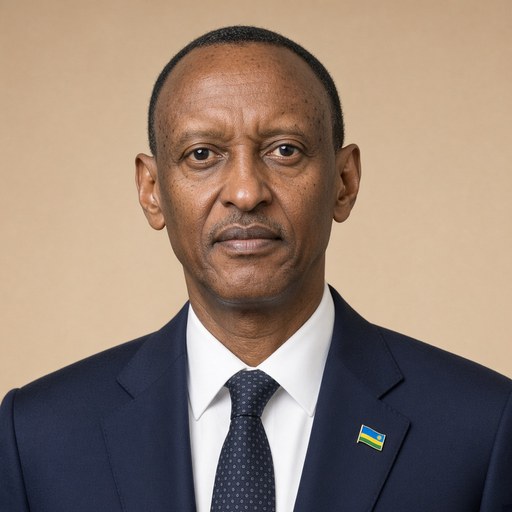
President Kagame has said that the importance and impact of science on the world is not appreciated by only scientists, but also those who are not scientists.
President Kagame made this statement today, while delivering a Keynote Address at the launch of the African Institute of Mathematical Sciences (AIMS), an ecosystem of pan-African transformation that will leverage scientific innovation, learning and research to apply solutions to the continent’s challenges.
“Those of us who are not scientists know the importance of science first hand. We are on the right path, and you can count on Rwanda as a committed partner. We all recognise that AIMS’ education model is an important tool for development and progress on our continent. The African Union has endorsed AIMS. We must fully support these institutions so that they are sustainable and productive.”
President Kagame attributed today’s launch of AIMS and other scientific centres of excellence in Rwanda to collaboration and partnership.
“We always move forward faster and achieve better results when we work together. The centre will also build capability in the information technology of the future. This will be a world-class centre of scientific research, and a leader in solving critical problems of development. Rwanda will work with AIMS to establish Quantum Leap Africa, the first research centre in quantum sciences in Africa. We must be positioned to obtain maximum benefit, from this new area of science. A new and important area of quantum information science and is bound to drive the next global cycle of innovation. The digital revolution is transforming our world and creating multiple prospects for economic growth and societal progress.”
President Kagame said Rwanda was honoured to host the AIMS headquarters in Kigali, the latest addition, to a system of science and technology-related institutions, based here in Rwanda.
Thierry Zomahoun, President and CEO of AIMS said:
“We are thrilled to have partnered with the government of Rwanda to continue to nurture Africa’s most talented scientific minds in mathematical sciences, creating opportunities to allow them to contribute to the continent by tangibly developing solutions to Africa’s problems, and fostering collaboration that will reverse the brain drain of our thinkers, problem-solvers and innovators.”
The first AIMS centre of excellence was opened in Cape Town, South Africa, founded by Professor Neil Turok in 2003. The network prioritises international class education for Africa’s most valuable resource, its youth, for the development of Africa and to the benefit of society. The institute has since opened up six education centers of excellence across the continent with the latest in Rwanda’s capital, Kigali.
President Kagame later received a delegation of Stanford Graduate School of Business students, who have been conducting study trips to Rwanda since 2010. Their theme for this year’s visit is: “Building an inclusive Economy for the future of East Africa.”