




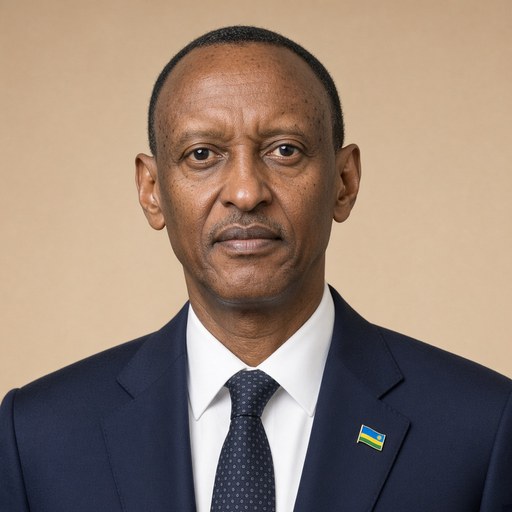
The speech of His Excellency Paul Kagame delivered to the citizens of Ruhango District.
 Paul Kagame · President of Rwanda
- Context
- Kagame addressed citizens of Ruhango District and Southern Province on April 16, 2012, emphasizing self-reliance, shared responsibility, and Rwanda's ongoing development progress.
- Main themes
- National self-reliance, mindset change, citizen responsibility, community development, government-citizen partnership, Girinka program, economic progress, Rwanda's transformation, local examples of success, denouncing destruction
- Duration
- ~14 min
- Words
- 1,706
- Sentences
- 125
- Readability
- 79
- Grade
- 5.6
- Syntax
- 2.57
- Vocabulary
- 1.78
Translated from Swahili
The broad sphere of national life a sentence belongs to. Every sentence has an Arena, so it is the denominator the other indices are read against.
Other125 sentences in 21 paragraphs
Ruhango District, April 16, 2012
Dear citizens of Ruhango, and those from other districts who are here, how are you? Are you well? I am pleased to have the opportunity to come and meet with you, to greet you, and to thank you. Thank you for the many things you do, done well, that advance our country, that advance your own lives, and pave the way for continuing to do many more things in the future.
Thank you all for being here in such large numbers, for coming together so we can discuss what continues to build our country. There are many important things that have been said, and I would like to reiterate them in a clear way that gives us a path to continue to progress.
Citizens of Ruhango and those from the Southern Province who are here;
The first thing we continue to emphasize is to recognize that we have the capacity within us. When we all come together, each person using their will, their strength, and their intelligence, we have the ability to change our lives for the better. We can achieve progress like that which you hear about in other countries. There are countries that have developed, that are accumulating wealth, and even have surplus to share with you, to sustain you. You should not rely on handouts. Do you understand that? Do you want to be dependent on others? No, one should not go to the table and be given what is left over. That is not right. You should have something to put on the table yourselves. And there are many examples of what we have already achieved that show that this is possible. Isn’t that so?
For this to be possible, before we change that life, and also change our ways of working, we must first change our mindset. Once you understand this well, once you see those examples, it becomes easier for actions to change. When actions change, they also visibly change that life.
The woman who just gave us an example of how her life and that of her family has changed, you heard her. Mukarugambwa, what she told us, you heard it. It is an example. Mukarugambwa is like all of you. What she can do or what she does, you also have the capacity to do. She remembers going to the bank, she remembers going to buy a hoe, and then she uses it to farm. What hoe would you buy if you are not going to farm?
We have made many commitments. Some have already been fulfilled. Others are still in progress. But when people commit to doing something, each person must play their part and respect it, especially when it is in our collective interest as we are all here. On the side of the government, the government provides resources, gives you a starting point, offers collaboration, and provides direction, and the actions become those of the citizens. If the government started by giving you a cow, in the Girinka program, the government does not follow up to take care of it for you. It is you who must take care of it. Isn’t that so? Yes... you must take your responsibility and take good care of it, so it breeds and solves the problems you had.
If the government gave you a hoe, it does not come back to farm with it for you. No, it is you. Isn’t that so?
We must share responsibilities and complement each other. But each person must have interests that change their life. When your life changes, the life of the country also changes. You can see that where Rwanda was ten years ago, fifteen years ago, it is clear that it is not where it is now. We have made significant strides forward, beyond where we were ten years, fifteen years ago. We still have to continue to progress, so that in the next ten years, when we look back, we can say, look where we have come from. Where we are now is much further ahead than where we were ten years ago. Isn’t that so? That is how people live. That is how people give themselves value. And our goal is to give ourselves value. Value, Value. Everything you add value to. We start from there. Therefore, we should not say it as if it is a proverb. The actions have already shown themselves and their benefits to the citizens are evident. Even now, one can see it, one can see it in your eyes. You are awake, you are alert. That is how people should live, always seeking solutions to the problems that exist. We are moving forward, leaving many problems behind; we are going into solutions only. And those who used to talk about what we would discuss after this, it is only solutions. They are not problems.
I believe that all of you here leave your problems behind, not bringing them here. The problems you leave behind, the solutions are what you bring here. So let this truly be a culture. I also feel it. The songs you sing have beautiful words. Moreover, it is even better when we base our actions on those words. Saying that no one destroys what they see! But really?, you should denounce those who destroy what they see, do not tolerate them. People who aim for solutions do not destroy. Those who destroy are the ones we have left behind, we do not want to encounter them ahead. Those who destroy are the ones of problems. Those who remain behind in history, we do not wish to meet them ahead.
Let no one allow themselves to destroy your security, to destroy your Rwandan identity, to be Rwandan, let no one destroy your culture, let no one destroy your roads, let no one destroy your lives so that you accept it. Life is not for playing, life is not for destruction, life is valuable. And it is within your capacity to give yourselves the value you seek.
Therefore, this goes hand in hand with the actions that brought us here. There are well-built hospitals that I have seen here, better than many I see in the city over there. But that is not enough; it should not stop at just having beautiful buildings, but you must continue to take good care of them so that they remain beautiful buildings. But hospitals, their purpose is to protect people's lives. It is to manage, to ensure that people's lives are well taken care of, so that people have good health. It is actions that are carried out there, when someone is sick, they go to get treated, and there come lessons that prevent citizens from diseases that can be avoided and others... We therefore wish to see those hospitals functioning soon, providing you with services, you should see. I will come back here to ask you if you are indeed receiving those services as you should.
Then, there is a cassava factory. Cassava in our ancient history of people who were still very behind, different from where we are now, cassava used to end with those who harvested it. Do you know how to harvest cassava? To eat it fresh! There used to be value added, they would roast it. They could also boil it. But that value is only for here at home, in people's households. But now that factory is going to add value to cassava, so that even in Europe they eat it and ask: “but where does this cassava come from?”
Then as that value increases, so does the benefit for the farmer who grows cassava, the value will increase. You know how to grow cassava, you are capable of it. What it means is let us add value to it, grow it in abundance, satisfy that factory, but also let the value increase and increase in what we put in our pockets. Isn’t that so?
What you were asking for, to have shares in the factory, that too is easy. People assess it. There are things that must be done. The first step is to come together, to pool your efforts. So that in those cooperatives you have, as you come together based on your good practices, it is possible for you to have a stake and through these cooperatives. This will promote the cooperatives, promote the factory, and promote those who are in those cooperatives.
Everything is for our advancement, I believe you continue to understand it well, you continue to have the will to advance and to accelerate. A lot of time has been lost, we do not want to waste more time.
When someone is caught in the rain, does anyone wish to continue being caught in the rain? You wish for the rain to stop quickly... Or to get to a place where you can shelter quickly. You would not want to continue being caught in the rain. Our progress, therefore, is how we must take it, it is like that person caught in the rain. Poverty and lack of development have held us back for too long, it is time to hurry and get out of it. Isn’t that so?
I wish we could act quickly. I was looking at the swamp over there where we went to the factory, I was wondering why it is there filled with water... ? It has become a problem for us instead of being a solution. I wish it could be managed properly and quickly, so that it becomes a productive area and does not become something that will harm our lives. We will closely monitor this with those responsible, who are tasked with always engaging with the citizens on how solutions can be found.
Citizens of Ruhango, that message is what I had for you, and as I promised you, I will return. It is not just once. It will be many times. Have a good life, have the strength to work and to advance us in development, in the practices they spoke of, take steps forward and do so quickly, even more than it has been.
Thank you very much. May you have the peace of God.
The original Swahili. The tags above are read on the English translation's sentences.
Akarere ka Ruhango, Itariki 16 Mata 2012
Baturage mwese ba Ruhango, n’ab’utundi turere mwese muri hano, muraho? Muraho neza? Byanshimishije kubona umwanya wo kuza kubonana namwe, kubasuhuza, no kubashimira. Kubashimira byinshi bikorwa, bikorwa neza, biteza igihugu cyacu imbere, bibateza imbere ubwanyu, ndetse n’inzira yo gukomeza gukora ibindi byinshi bikiri imbere.
Mwakoze kandi mwese uko mungana mutya muri benshi cyane, kuba mwaje ngo duhure., tuganire ibikomeza kubaka igihugu cyacu. Hari byinshi byagiye bivugwa by’ingenzi, nagira ngo mbe nabisubiramo ku buryo busobanutse kandi bwaduha uko twakomeza gutera imbere.
Baturage ba Ruhamgo n’abo mu ntara y’amajyepfo bandi muri hano;
Icya mbere dukomeza kuvuga twubakiraho ni ukubanza tukamenya ko buriya twifitemo ubushobozi.Twese dushyize hamwe, buri wese akoresheje ubushake bwe n’imbaraga ze, n’ubwenge bwe, dufite ubushobozi bwo guhindura ubuzima bwacu bukaba bwiza. Tukagira amajyambere nk’ayo mujya mwumva aba mu bindi bihugu.Hari ibihugu byateye imbere, biragenda bigira umutungo mwinshi, ndetse bakagira n’uwo kubasagurira, bakabagemurira ngo bababesheho namwe .Ntabwo mukwiye kubeshwaho no gusagurirwa. Ibyo murabyumva? Murashaka kubeshwaho no gusagurirwa? Oya, ntabwo umuntu yajya ajya ku meza, akaza kukugenera ibyo asigaje. Ntabwo aribyo. Mukwiriye kugira icyo mwishyirira ku meza mwebwe ubwanyu. Kandi ingero ni nyinshi z’ibyo tumaze kugeraho byerekana ko ibyo bishoboka. Sibyo?
Kugira ngo bishoboke rero mbere y’uko duhindura ubwo buzima, ndetse no guhindura imikorere, harabanza hagahinduka imyumvire. Iyo umaze kubyumva neza, iyo umaze kureba izo ngero, bituma byoroha no kugira ngo n’ibikorwa bihinduke.Ibikorwa iyo bihindutse nabyo bihindura bwa buzima ku buryo bugaragara.
Umudamu wari umaze kuduha urugero rw’ukuntu ubuzima bwe n’ubw’umuryango we bwahindutse, mwabyumvise .Mukarugambwa ibyo yatubwiye mwabyumvise.ni urugero. Mukarugambwa uriya ni nkamwe mwese. Ibyo yakora cyangwa ibyo akora, namwe mubifite m’ubushobozi bwanyu. Yibuka kujya muri Banki, yibuka kugenda akagura isuka, yarangiza akayihingisha. Isuka wagura iy’iki, niba itari buhinge?
Ubundi ibyo twasezeranye ni byinshi. Bimwe bimaze gukorwa. Ibindi biracyari mu nzira. Ariko abantu iyo basezeranye kugira icyo bakora buri wese nyine agomba kugira uruhare rwe kandi akarwubahiriza cyane cyane ibi ngibi noneho twebwe biri mu nyungu zacu twese uko turi hano. Kur’uhande rwa Leta, Leta itanga uburyo, itanga aho uhera, itanga ubufatanye, itanga icyerekezo, ibikorwa bikaba iby’abaturage. Niba Leta yahereye kuguha inka, muri ya gahunda ya gir’inka, nta nubwo leta yakurikirana ngo ize iyikuragirire. Ni wowe uyiragira. Sibyo? Yee..ugomba gushyiraho akawe nawe ukayiragira, ukayiragira neza, ikororoka, ikagukemurira ibibazo wari ufite.
Leta yaguhaye isuka, ntabwo yongera ngo igukurikire abe ari yo iyihingisha. Oya, ni wowe. Sibyo?
Tugomba kugabana imirimo kandi tukuzuzanya. Ariko buri wese agomba kugiramo inyungu zihindura ubuzima bwe .Iyo ubuzima bwawe buhindutse, n’ubuzima bw’igihugu burahinduka. Ibyo murabibona aho u Rwanda rwari ruri mu myaka icumi ishize, cumi n’itanu ishize, ngira ngo biragaragara ko atariho ruri ubu ngubu. twateye intambwe nyinshi imbere, kurenza aho twari turi mu myaka icumi, mu myaka cumi n’itanu ishize. Taracyafite gukomeza gutera imbere, kugira ngo mu myaka yindi icumi iri imbere nidusubiza amaso inyuma tuvuge ngo dore aho tuvuye. Aho twari turi ubu ngubu hari imbere cyane kurusha aho twari turi mu myaka icumi ishize. Sibyo? Niko abantu babaho. Niko abantu biha agaciro babaho. Kandi intego yacu ni ukwiha agaciro. Agaciro, Agaciro. Ikintu cyose ukongeramo agaciro.Twihereyeho.Ntabwo rero tukibivuga ngo habe hagira n’ubyumva nk’aho ari umugani. Ibikorwa bimaze kwigaragaza n’inyungu zabyo, kubaturage zimaze kugaragara. N’ubu umuntu arabireba, Arabireba no ku maso yanyu. Murakeye, murashishe,. Ni ko abantu bakwiye kubaho, bagahora bishakamo ibisubizo by’ibibazo bihari. Turagenda dusiga ibibazo byinshi inyuma; turajya mu bisubizo gusa. N’abahoze bavuga ibyo turi buganire nyuma y’aha, ni ibisubizo gusa. Ntabwo ari ibibazo.
Ndizera ko mwese muri hano ibibazo mubisiga inyuma, Atari byo muzana imbere hano. Ibibazo mutabizana hano, ibibazo mubisiga inyuma, ibisubizo akaba ari byo muzana aha ngaha. Rero rwose bibe umuco. Nanabyumvaga. Izi ndirimbo muririmba, zifitemo amagambo meza. Ndetse birushaho, iyo ayo magambo tuyashingiraho tugira ibikorwa. Kuvuga ko ntawasenya umureba! None se koko?,Mujye mwamagana abasenysa mubareba, Ntimukabihanganire. Abantu bagamije ibisubizo ntibasenya. Abasenya ni babandi twasize inyuma, ntabwo dushaka ko tubasanga imbere. Abasenya ni ab’ibibazo. Abo bagenda basigara inyuma mu mateka, ntabwo tubifuza ko duhura nabo imbere.
Ntihakagire uwo mwakwemerera kubasenyera umutekano, kubasenyera Ubunyarwanda, kuba Umunyarwanda, ntihakagire ubasenyera umuco, ntihakagire ubasenyera imihanda, ntihakagire ubasenyera ubuzima ngo mwemere. Ubuzima ntabwo ari ubwo gukinisha, ubuzima ntabwo ari ubwo gusenya, ubuzima ni ubufite agaciro. Kandi biri mu bushobozi bwanyu kwiha agaciro mushaka.
Ibyo rero birajyana n’ibikorwa nabyo byari byatuzanye hano. Hari ibitaro byubatswe byiza rwose nabonye hano, biruta na byinshi njya mbona mu mujyi hariya. Ibyo bitari rero, ntabwo bigomba kugarukira ku nyubako gusa nziza, ariko mugomba gukomeza kubifata neza bikaba inyubako nziza. Ariko ibitaro, akamaro kabyo ni ukurinda ubuzima bw’abantu. Ni ukubucunga, ubuzima bw’anantu bugafatwa neza, abantu bakagira ubuzima bwiza. Ni ibikorwa rero bikorerwamo, urwaye akajya kwivurizamo, hagaturukamo inyigisho zirinda abaturage indwara zishobora kwirindwa n’ibindi… Turifuza rero bidatinze kubona biriya bitaro bikora, bibagezaho serivisi, mukwiriye kubona. Bizangarura hano kuza kubabaza niba izo serivisi muzibona koko uko bikwiye.
Hanyuma, hariho uruganda rw’imyumbati. Imyumbati mu mateka yacu ya kera y’abantu bari bakiri inyuma cyane, atandukanye n’ayo tugezemo ubu, imyumbati yarangiriraga mu bayikota. Gukota imyumbati murabizi? Kuyirya mibisi! Haba habayeho kuyongerera agaciro, bakayotsa. Byakwiyongeraho bakayitogosa. Ariko biriya, ni agaciro kagarukira hano iwacu mu rugo, mu mago y’abantu gusa. Ariko ubu ruriya ruganda rugiye kongera agaciro ku myumbati, kuburyo nab’i Burayi bayirya bakabaza ngo: “ariko iyi myumbati ituruka he?”
Hanyuma uko ako gaciro kiyongereyeho, ni na ko ku nyungu y’umuturage uhinga imyumbati, agaciro kaziyongera. Imyumbati rero kuyihinga murabizi, murabishoboye. Icyo bivuze ni ukuvuga ngo reka twongereho agaciro tuyihinge ibe myinshi, ihaze ruriya ruganda, ariko noneho, n’agaciro kiyongere kandi kiyongere mu byo twinjiza mu mufuka wacu. Sibyo?
Ibyo mwasabaga byo kugira imigabane mu ruganda, buriya nabyo biroroshye. Abantu babisuzuma. Hari ibigomba gukorwa. Aha mbere uhera ni ukwishyira hamwe, ni ugushyira hamwe imbaraga. Kuburyo muri ariya ma koperative mugira uko mwishyize hamwe, bitewe n’imikorere yanyu myiza, birashoboka ko mwagiramo uruhare kandi binyuze muri aya ma koperative. Bigateza imbere amakoperetive, bigateza imbere uruganda, bigateza imbere n’abari muri ayo ma koperative.
Byose ni ibiduteza imbere, ndibwira ko mukomeza kubyumva neza, mukomeza kugira ubushake, bwo kugira ngo dutere imbere kandi twihute. Igihe cyinshi cyaratakaye, ntabwo dushaka kongera guta igihe.
Iyo umuntu ari mu mvura anyagirwa, hari uwifuza ko yakomeza kunyagirwa? Uba wifuza ko imvura ihita vuba..Cyangwa ngo ugere aho wakugama vuba. Ntabwo wakwifuza gukomeza kunyagirwa. Amajyambere yacu rero n’uko tugomba kuyifatamo, ni nk’uwo muntu unyagirwa. Ubukene n’ibura ry’iterambere bitunyagiye kera, biratinze.Tugomba kwihuta tukabuvamo.Sibyo?
Ndifuza ko twakora vuba. Nahoze ndeba igishanga kiri hariya aho twagiye ku ruganda, nibazaga impamvu kiri aho cyuzuye amazi gusaaa….? Kikatubera ikibazo aho kutubera igisubizo. Ndifuza ko gitunganywa uko bikwiye kandi vuba, kuburyo cyatubera umusaruro ntikitubere ikigiye kutwangiriza ubuzima bwacu. Ibyo turaza kubikurikiranira hafi ku babishinzwe,bashinzwe guhora bigana n’abaturage uburyo haboneka ibisubizo.
Baturage ba Ruhango rero ubwo butumwa nibwo nari mbafitiye, kandi nk’uko nabasezeranyije nzagaruka. Nta nubwo ari rimwe gusa. Ubwo ni kenshi. Mugire ubuzima bwiza rero, mugire imbaraga zo gukora no kuduteza imbere mu majyambere, muri ya mikorere bavugaga, mutere intambwe imbere ndetse yihute, Birusheho uko byari bimeze.
Murakoze cyane. Mugire amahoro y’Imana.