




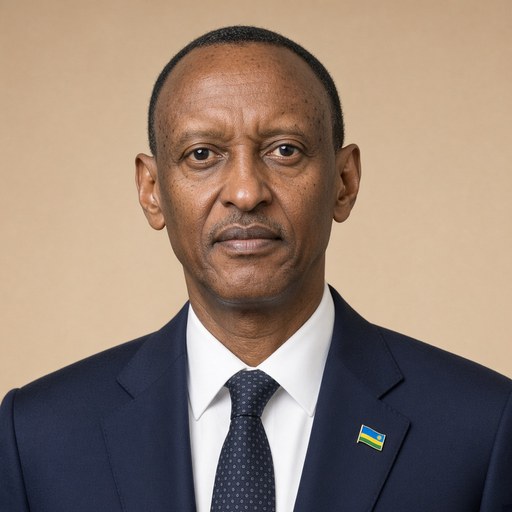
Statement by His Excellency President of the Republic, Paul Kagame, on the 18th Commemoration of the Genocide against the Tutsi in Rwanda.
 Paul Kagame · President of Rwanda
- Context
- Kagame addressed Rwandans and guests in Kigali on April 7, 2012, at the 18th commemoration of the genocide against the Tutsi.
- Main themes
- Genocide commemoration, justice for perpetrators, value of African lives, international double standards on human rights, Rwandan resilience and unity, national rebuilding, youth and future generations, Rwandan identity and dignity, democracy and human rights narratives, historical memory
- Duration
- ~10 min
- Words
- 1,204
- Sentences
- 52
- Readability
- 60
- Grade
- 10.6
- Syntax
- 3.00
- Vocabulary
- 1.98
Translated from Swahili
The broad sphere of national life a sentence belongs to. Every sentence has an Arena, so it is the denominator the other indices are read against.
Other52 sentences in 23 paragraphs
Kigali, April 7, 2012
All Rwandans here, I would like to greet you and thank the guests who have come here to join us on this day as we remember our loved ones for the 18th time.
We will always remember them, so that those who were not there at that time may know the dark history of the genocide our country went through, and what led to that dark history of genocide. Thus, they too will always remember that history even when we are no longer here. They will draw lessons from it so that what happened does not occur again in the future.
But as you know, at this time we remember those we have lost, some of those who devastated Rwanda are still roaming freely in countries that claim to be advanced, particularly in terms of human rights, in terms of freedom, in terms of values related to life in all its forms.
Sometimes there is even a lack of will to bring those who have harmed our country before justice. Even when they are arrested, it is often just a formality to make us believe that something is being done about it. And indeed, they are eventually released.
However, as we know, those countries are facing issues of terrorism, threatening the security of their citizens, calling upon the whole world, urging it to intervene to resolve these issues, and sometimes even using force to ensure that everyone participates, so that those wrongdoers are held accountable, brought before justice, and made to answer for their actions. It is incomprehensible why for Rwandans, or for others we are related to as Africans, this does not happen in the same way.
This implies that perhaps the value of Rwandans, or of Africans, is less than the value of the lives of others who are given more consideration. There are even those who have committed those atrocities who are found to be given seats, given opportunities to enjoy, to celebrate the fact that genocide occurred in Rwanda, as you will hear in these days that there are places where it will go on like that.
It is said that this is because they have the right to pursue political agendas; it is in their political rights. In that right is also the enjoyment of having devastated Rwanda. I do not believe that this should be understood in that way.
But again, it requires us Rwandans to confront this and put it in order. There are also many narratives, including many accusations they support, those who enjoy celebrating that they devastated Rwanda. The accusations claim that there is no democracy in Rwanda, that there are no human rights, that there are no rights of any kind, that no one speaks. But I believe you all know; all activities here in Rwanda are conducted in the interests of Rwandans and are carried out by Rwandans.
That is why I believe that in what we confront, we will continue to confront it just as we share it with other Africans. The way our lives are given less value, we must confront that and raise the value of our lives.
But there are many lessons we have drawn from our history, and as those lessons tell us, we must confront our issues and seek our own solutions. I believe that in all the suffering Rwandans have gone through, there is also great strength that we Rwandans have drawn from seeking solutions and ways to confront all these issues.
Today we have strength and capabilities that surpass those of the past. We have built security; Rwandans are pleased with their living conditions as they continue to improve, and they are also pleased with the role they play in changing their lives and the image of our country. That alone gives us hope for the future.
There is no doubt that our country is on the right path. I ask that we continue to work together, to do more, where necessary to draw from our beautiful culture of Kinyarwanda. And it has become evident that what we have used has brought us to many achievements.
Every Rwandan does everything possible to rise above the challenges they face, seeking strength to rebuild themselves, and all of this, if we work together, will provide us all with well-being and a good life.
That hope for the future I also base on the youth of Rwanda. The children born during the time of genocide are now reaching the age where the law allows them to make decisions.
They have grown up in a Rwanda characterized by the pride and dignity of every Rwandan, characterized by the unity of the people of Rwanda. They have grown up in a country where every Rwandan child has full rights and equal opportunities in everything, and grows up knowing that we are all equal before the law and have equal opportunities.
I want to remind you that our history, however it may be, is ours, and everything that has come from that history and from this genocide, the trials that have taken place, and how they were resolved, all of that history, including testimonies in courts, all of that is ours.
That is why we should keep it in our memory, not let it be stored elsewhere. There is no understandable reason, a reason based on our history, even though we may share it with others, that it should be kept outside. It does not make sense. I believe that we will continue to fight for that.
I would like to take this opportunity to once again thank the friends and countries that have stood by us in these past 18 years. They have not only supported us in development activities, but they have also helped us to make the genocide that occurred in our country understood and to combat those who still seek to deny that genocide.
I want to thank Rwandans in general for the role they have played in the Gacaca Courts that will conclude this year. We all know the importance they have had in restorative justice. They have been a symbol for us as Rwandans to seek solutions to issues that otherwise seemed impossible to resolve.
In conclusion, I want to assure Rwandans that Rwanda and the government, and the institutions based on it, will do everything possible to ensure that our country, the path of progress we are on, cannot be halted or reversed as we move forward from the history we have left behind.
I want to tell all those who slander Rwanda wherever they may be, using those who claim to be their friends wherever they are, that I assure you, I assure Rwandans that there will be no setback in the steps we take in rebuilding and building the future that Rwanda aspires to achieve. I would tell them that in millions and millions of opportunities, they have no chance of pulling us back, because it is impossible. It is not possible. It is not possible.
I wish you all continued strength and for all of us to continue to work together to confront the challenges we face in building our lives as they should be. Thank you.
The original Swahili. The tags above are read on the English translation's sentences.
Kigali, itariki 7 Mata 2012
Banyarwanda mwese muri hano, nabanzaga kubasuhuza kandi nshimira n’abashitsi baje hano kwifatanya na twe kuri uyu munsi twibuka abacu ku nshuro ya 18.
Tuzahora tubibuka kandi, kugira ngo n’abatarabaye muri icyo gihe bamenye amateka mabi ya jenocide iki Gihugu cyacu cyanyuzemo, ndetse ni cyateye ayo mateka mabi ya jenocide. Bityo nabo bazahore bazirikana ayo mateka n’igihe tuzaba tutagihari. Bayavanemo amasomo kugira ngo ibyabaye bitazongera kubaho ikindi gihe.
Ariko nk’uko mubizi, muri iki gihe twibuka abo twabuze, bamwe mu bahekuye u Rwanda barakidegembya hirya no hino mu bihugu byitwa ko byateye imbere, bya ganje mu bijyanye n’ikiremwa muntu, mubijyanye n’ubwigenge, mu bijyanye n’ibijyana n’agaciro ku buzima ako ariko kose.
Ndetse rimwe na rimwe ntihagaraga ubushake bwo kugeza abo baduhekuriye igihugu imbere y’ubutabera. Niyo ndetse bashyizwe muri yombi bikaba ari ibya nyirarureshwa kugira ngo twibwire ko hari icyo babikoraho. Ndetse ni bitinda bakaba barekuwe.
Nyamara nkuko tubizi ibyo bihugu bihuye n’ibibazo by’iterabwoba, yoguhungabanya umutekano wa banyir’ibyo bihugu, biyambaza isi yose, bakayikangurira kubihagukira ngo bikemurwe, ndetse rimwe na rimwe bagakoresha n’ingufu kugira ngo abantu bose babyitabire, kugirango abo bagizi ba nabi babikurikiranweho, bashyirwe imbere y’ubutabera babibazwe. Ntabwo byakumvikana, impamvu ku Banyarwanda, cyangwa no mu bandi dufitanye isano nk’Abanyafurika, ibyo bitagenda bityo.
Bivuze rero ko wenda ari uko agaciro k’Abanyarwanda, cyangwa ak’Abanyafurika ari gato kurusha agaciro ubundi buzima bw’abandi bihabwa. Ndetse hari nabo bakoze ayo marorerwa usanga bahabwa intebe, bahabwa umwanya wo kwidagadura, wo kwishimira ko jenocide yabaye mu Rwanda, hirya no hino nk’uko no muri iyi minsi muzakubyumva ko hari aho bizagenda bityo.
Bikavugikako ibyo ari ukubera ko bafite uburenganzira bwo guharanira politike ; ngo ni mu burenganzira bwa politike yabo. Muri ubwo burenganzira harimo no kwishimira ko bahekuye u Rwanda. Ntabwo nibwira ko ari ko bikwiye kumvikana.
Ariko na none biradusaba ko ubwo Abanyarwanda duhangana nabyo tukabishyira mu buryo. Ndetse hari n’imvugo nyinshi, zirimo ibirego byinshi byabo bashyigikira, abo bidagadura bishimira ko bahekuye u Rwanda. Ibirego bikaba ko mu Rwanda nta demokarasi, mu Rwanda nta burenganzira bw’ikiremwa muntu, nta burenganzira ubwo ari bwo bwose, ntawe uvuga. Ariko ngirango murabizi mwese ; ibikorwa hano mu Rwanda byose bikorwa mu nyungu z ‘Abanyarwanda kandi bikorwa n’Abanyarwanda.
Niyo mpamvu nibwira ko mu byo duhangana nabyo ibyo nabyo tuzakomeza guhangana nabyo nk’uko kandi tunabisangiye na Abanyafurika bandi. Uburyo ubuzima bwacu buhabwa agaciro gake tugomba guhangana nabyo tukazamura agaciro kubuzima bwacu.
Ariko hari amasomo menshi twavanye mu mateka yacu, ni natwe kandi nkuko ayo masomo atubwira tugomba guhangana ni bibazo byacu tukishakira ibisubizo. Ndibwira ko muri aka kababaro kose Abanyarwanda banyuzemo , harimo n’imbaraga nyinshi Abanyarwanda twavanyemo mu kwishakamo ibisubizo n’uburyo bwo guhangana n’ibi bibazo byose.
Uyu munsi dufite imbaraga n’ubushobozi biruta iby’icyo gihe cyashize. Twiyubakiye umutekano ; Abanyarwanda bishimiye imibereho yabo ukuntu ikomeza kugenda itera imbere , kandi bishimiye n’uruhare bagira mu guhindura ubuzima bwabo n’isura y’Igihugu cyacu. Ibyo ubwabyo biduha icyizere cy’ejo hazaza.
Ntanogushidikanya ko igihugu cyacu kiri mu nzira nziza. Ndasaba ko dukomeza gufatanya, tukarushaho gukora, aho bibaye ngombwa dushingire ku byo twavana mu muco wacu mwiza wa Kinyarwanda. Kandi bimaze kugaragara ko ibyo twakoresheje bimaze kutugeza kuri byinshi.
Buri Munyarwanda agakora ibishoboka byose ngo yivane mu bibazo bimwugarije, akishakamo imbaraga zo kwiyubaka, ndetse ibyo byose byaba dushyirahamwe, dufatanije, bikaduha twese imibereho myiza, n’ubuzima bwiza.
Icyo cyizere cy’ejo hazaza ndanagishingira no ku rubyiruko rw’u Rwanda. Abana bavutse igihe cya jenoside ubu bagejeje ku myaka amategeko abemerera gufata ibyemezo.
Babyirukiye mu Rwanda rurangwa n’ishema n’agaciro ka buri Munyarwanda, rurangwa n’ubumwe bw’abatuye u Rwanda. Bakuriye mu Gihugu aho buri mwana w’ Umunyarwanda agira uburenganzira busesuye n’ amahirwe angana muri byose, kandi agakura azi ko twese tungana imbere y’amategeko kandi dufite amahirwe angana.
Ndagira ngo nibutse ko amateka yacu uko ameze kose ari ayacu, n’ibyavuye muri ayo mateka yose no muri aya ya jenocide, , n’imanza zabaye, nuko zaciwe, byose ibyayo mateka ubundi, harimo n’ubuhamya mu nkiko, ibyo byose ni ibyacu.
Ni nayo mpamvu twari dukwiriye kuba tubyibikira, ntibibikwe ahandi. Nta mpamvu yumvikana, impamvu ibishingiye ku mateka yacu nubwo twaba tuyasangiye n’ahandi, bikwiriye kuba bibikwa hanze. Ntabwo byumvikana. Ibyo ndibwira ko tuzakomeza kubiharanira.
Mboneyeho n’umwanya wo kongera gushimira inshuti n’Ibihugu byatubaye hafi muri iyi myaka 18 ishize. Ntibyadushyigikiye gusa mu bikorwa by’iterambere, byanadufashije kumvikanisha jenoside yabaye mu Gihugu cyacu no kurwanya abagishaka gupfobya iyo jenocide.
Ndagira ngo nshimire Abanyarwanda muri rusange uruhare bagize mu Nkiko Gacaca zizasozwa uyu mwaka. Twese tuzi akamaro zatugiriye mu butabera bwunga. Zatubereye ikimenyetso cyo kwishakamo ibisubizo nk’Abanyarwanda ku bibazo ndetse byagaragaraga ko ubundi bidashoboka gukemurwa.
Icyanyuma narangirizagaho, ni ugusezeranya Abanyarwanda ko u Rwanda na guverinoma, n’inzego ishingiyeho, hazakorwa ibishoboka byose, kugira ngo igihugu cyacu, inzira ya majyambere turimo idashobora guhagarara cyangwa ngo isubire inyuma tugane mu mateka dusize inyuma.
Nagirango mbwire na bariya bose aho bazerera hose baharabika u Rwanda, bakoresha na bitwa ko ari inshuti zabo aho baba bari hose, ndabasezeranya ko, ndasezeranya Abanyarwanda ko ntangaruka nimwe bizagira ku ntambwe dutera mu kwiyubaka no kubaka igihe kiri imbere u Rwanda rwifuza kugeraho. Nababwiraga ko mu mahirwe milioni na milioni, ntamahirwe bafitemo kugira ngo badusubize inyuma, kuko bidashoboka. Ntibishoboka. Ntabwo bishoboka.
Nagirango mbifurize gukomeza kugira imbaraga no kugomeza twese gufatanya kugira ngo dukomeze guhangana n’ibibazo duhura nabyo mukubaka ubuzima bwacu uko bikwiye kuba bimeze. Murakoze.