




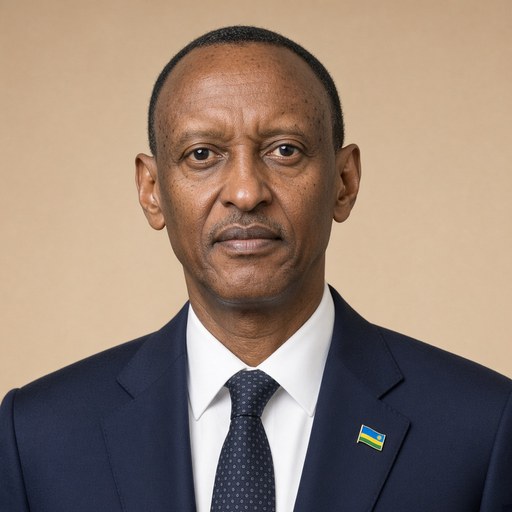
The speech delivered by President Kagame to the participants of the swearing-in ceremony | Kigali, November 14, 2019
 Paul Kagame · President of Rwanda
- Context
- Kagame addressed newly sworn-in ministers and military heads at a swearing-in ceremony in Kigali on November 14, 2019.
- Main themes
- Leadership responsibility, national development vision, good governance, security, performance and accountability, public service, economic transformation, well-being of Rwandans, management improvement
- Duration
- ~4 min
- Words
- 517
- Sentences
- 37
- Readability
- 65
- Grade
- 7.6
- Syntax
- 2.58
- Vocabulary
- 1.91
Translated from Swahili
The broad sphere of national life a sentence belongs to. Every sentence has an Arena, so it is the denominator the other indices are read against.
Other37 sentences in 11 paragraphs
Welcome here as usual at the ceremony to receive the oaths of new leaders in various sectors of our country. This includes Ministers and the heads of the national army.
This is not new; it is customary. You are used to it. Our responsibilities are always changing, but they all aim at serving our country.
Therefore, I would like to thank these leaders who have accepted these responsibilities. These are heavy responsibilities. I wish you good work. It is not to remind you because you are aware of them. I do not think they will forget so easily. The responsibilities are well known and are reiterated all the time. This is what Rwandans expect from us, including these leaders who have taken on these new positions. I believe fulfilling this is our duty. I have no doubt that everyone will do their utmost to meet these responsibilities.
Let me remind you of just four things;
First, you come into these responsibilities at a time when we are starting a new phase of the national development vision. Secondly, the energy, mindset, and performance you bring to this work must be directed towards that path.
Secondly, in everything we do to transform our country, we must continue to genuinely change. The path is still wide open. So that the economy, the well-being of Rwandans continues to improve, and governance is based on that, or enables it to continue to be refined.
Another point is that to reach the level we desire, leaders must improve their performance and management of what they are responsible for, putting the interests of Rwandans first. We all must prioritize the interests of Rwandans in everything. Our interests as leaders come last. We must also respect the interests of everyone, including other leaders.
The challenges we often face, whether in life, education, or entertainment including sports and others; often stem from poor management, lack of follow-up, and other weaknesses that prevent us from reaching our desired goals as we should. Even where we want to reach, it sometimes appears that we are close, we are approaching it, but you find that there is always a noticeable gap where it has not been possible. And it should have been possible if people did what they were capable of. It is not that what was lacking was that we did not have it.
I would like to conclude with the point that for all these things we wish to achieve, the country must be secure. It must have security. Security, therefore, where we had reached, we had come to take it for granted, that nothing could undermine it.
It is clear, therefore, as usual, we must protect security at all costs. And it is the responsibility of everyone, in all sectors.
I believe that we will work together to achieve all that we desire. I thank you again and wish you good work, assuring you of support in this partnership because what we do is in our interest more than anyone else's. I wish you a good day and good times ahead with good work. Thank you.
The original Swahili. The tags above are read on the English translation's sentences.
Twateraniye hano nk’uko bisanzwe mu muhango wo kwakira indahiro y’abayobozi bashya mu nzego zitandukanye z’igihugu cyacu. Harimo ba Minisitiri n’abagaba b’ingabo z’igihugu.
Ntabwo ari ibishya, ni ibisanzwe. Murabimenyereye. Inshingano dufite zihora zihinduka ariko zose ni iziganisha ku gukorera igihugu cyacu.
Ndagira ngo rero nshimire aba bayobozi bemeye izo nshingano. Ni inshingano ziba ziremereye. Ndagirango mbifurize imirimo myiza. Si no kuzibutsa kuko barazizi. Ntabwo nibwira ko bakwibagirwa vuba gutyo. Inshingano zo zirazwi zisubirwamo buri gihe. Ni ibyo Abanyarwanda badutegerejeho, harimo n’aba bayobozi bagiye muri iyi myanya mishya. Ngira ngo kuzuzuza ni inshingano dufite. Sinshidikanya ko buri wese azakora ibishoboka kugira ngo izo nshingano zuzure.
Reka nibutse ibintu nka bine gusa;
Icya mbere, muje muri izi nshingano mu gihe dutangiye urundi rwego rw’ikerekezo cy’amajyambere y’igihugu cyacu. Ikindi imbaraga, imitekerereze, n’imikorere muzanye muri iyi mirimo ubwo bizagomba kuganishwa muri iyo nzira.
Icya kabiri, ni uko mu byo dukora byose twifuza guhindura igihugu cyacu, ni ugukomeza guhindura mu by’ukuri. Inzira iracyari yose. Ku buryo ubukungu, imibereho myiza y’Abanyarwanda bikomeza kwiyongera, n’imiyoborere bigenderaho, cyangwa ituma bishoboka igakomeza kunozwa.
Ikindi ni uko kugira ngo tugere ku rwego twifuza, abayobozi bagomba kunoza imikorere, n’imicungire y’ibyo bashinzwe, bagashyira inyungu z’Abanyarwanda imbere. Twese tugashyira inyungu z’Abanyarwanda imbere muri buri byose. Inyungu zacu nk’abayobozi ziza nyuma. Natwe ntabwo tugomba kutubahiriza inyungu za buri wese, harimo n’abayobozi.
Ibibazo dukunze guhura nabyo, yaba ari mu buzima, mu burezi cyangwa mu myidagaduro harimo n’imikino n’ibindi; akenshi bituruka ku micungire mibi, kudakurikirana, ibyo byavanga n’izindi ntege nke bigatuma tutagera aho dushaka kugera uko bikwiye. Ndetse aho dushaka kugera hari ubwo bigaragara ko tuhegereye, tugenda tuhasatira, ariko ugasanga iteka hari ikinyuranyo kigaragara hari aho bitashobotse. Kandi ubundi byagombaga gushoboka iyo abantu bakora ibyo bari bafite mu bushobozi bwabo. Bitari uko ibyabuze ari uko tutari tubifite.
Ndagira ngo ndangirize ku bintu bijyanye nuko ibyo byose twifuza kugeraho, igihugu kigomba gutekana. Kigomba kuba gifite umutekano. Umutekano rero ubundi aho twari tugeze, twari tumaze kuwumenyera nk’ibintu bisanzwe, ko nta n’igishobora kuwuhungabanya.
Ubwo birumvikana rero nkuko bisanzwe umutekano tugomba kuwurinda byanze bikunze. Kandi ni uruhare rwa buri wese, mu nzego izo arizo zose.
Ubwo ndizera ko tuzafatanya tukagera ku byo twifuza byose. Nongeye kubashimira no kubifuriza imirimo myiza mbizeza kandi inkunga muri ubwo bufatanye kuko ibyo dukora nitwe tubifitemo inyungu kurusha abandi abo ari bo bose. Ndagira ngo mbifurize umunsi mwiza n’ibihe byiza biri imbere n’imirimo myiza. Murakoze.