




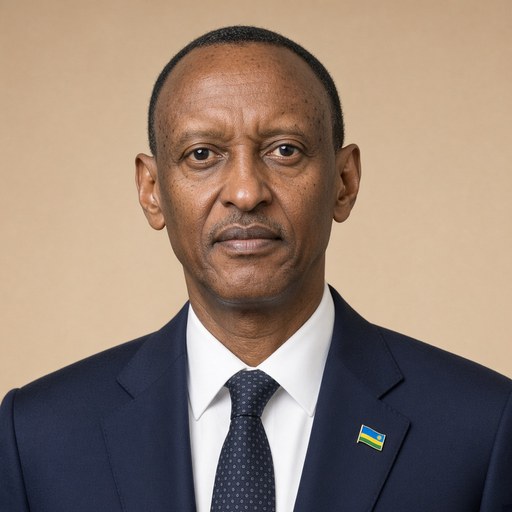
The speech President Kagame delivered to those attending the #Kwibuka24 ceremony.
 Paul Kagame · President of Rwanda
- Context
- Kagame addressed attendees at the Kwibuka24 ceremony in Rwanda on April 7, 2018, marking the 24th commemoration of the 1994 genocide against the Tutsi.
- Main themes
- Genocide commemoration, truth and remembrance, confronting history, national unity, rebuilding Rwanda, external responsibility for genocide, resilience, national capacity-building, preventing recurrence of atrocities
- Duration
- ~7 min
- Words
- 824
- Sentences
- 37
- Readability
- 62
- Grade
- 10.0
- Syntax
- 2.95
- Vocabulary
- 2.01
Translated from Swahili
The broad sphere of national life a sentence belongs to. Every sentence has an Arena, so it is the denominator the other indices are read against.
Other37 sentences in 9 paragraphs
Good afternoon.
I would like to start by thanking our guests and friends of our country who always remember to stand with the country on a day like today. Some guests have introduced themselves. But there are also others representing their countries, who are here, already in Rwanda, and others who have come from far and wide. I want to take this opportunity to thank you all.
I also thank Dr. Bizimana for the presentation he delivered to us. It contains history, truth, and many other things that are often unknown or overlooked. It is good, therefore, that when it goes out, it helps people continue to understand the truth, and the truth is essential to base our progress on. Even in remembrance, it is about remembering the truth, and those who do not remember or forget are forgetting the truth. The truth does not fade away. Rwandans have a saying that the truth passes through the fire but does not burn. The truth, therefore, is everlasting. The truth also goes hand in hand with remembrance. In this remembrance, as we know, we have reached this 24th commemoration, and there will be many more to follow; remembrance will not stop. Remembrance, therefore, goes hand in hand with the truth, but it also goes hand in hand with building; we build our country based on the truth we remember.
Another point is that for many Rwandans, even though I mentioned that this is the 24th commemoration, each remembrance feels as if it is just beginning; it has been 24 times, but it feels as if it is the first time, it does not reach 10, 15, or 20 times to feel as if it is just passing. Rather, it feels like a new beginning because what we remember is our essence, it is our life, it is our families, it is our country. When we remember, people return to where it all began. They do not reach the 20th time and start from there; they are still back at the beginning.
Remembrance, another aspect of it, is that it is about confronting our history. Whenever we remember, we confront our history that makes us remember. We again confront it, we face it anew. It reminds us that there are bad histories we had that we should not have had; it reminds us that if we do not look closely, history can repeat itself, it can happen again; it reminds us that there are things that must be done to ensure that history does not repeat itself.
Remembrance also reminds us that we, Rwandans, are the ones who are at the forefront. The idea that someone else can resolve your historical issues does not exist. Your history is yours, your problems are yours. Those who help you do so while you are on the path, you are trying to resolve them yourself. Rather, it also reminds us that, when it comes to bad history, it can originate from elsewhere, or those from elsewhere can fuel the bad actions of that history. The truth is what Dr. Bizimana told us, and that is evident. It shows that part of the history did not originate from Rwandans, that is not its source, and part of the history shows us that even from outside, there are those who fueled us to commit the wrongs we did ourselves, and then we collaborated with them to do wrong.
It also reminds us that, even after that, in erasing the truth, distorting the truth, hiding the truth, that too is how they will fuel you. Once you know the truth, what can we do about it? What we can do, as has been mentioned, is to continue to rebuild, to build strength in all areas: in the economy, in security, in building and uniting the Rwandan family, that is it. That is what will enable us to always move forward, not to be burdened by bad history, not to be led or to be burdened by others who played a role in it, and often have the capacity to keep you in that history, and many other things. Therefore, I want to remind you that remembrance is about remembering the truth of history, it is about remembering that it concerns us first and foremost, it is about remembering that we must continue to be one people, to unite, and it is also about remembering that we must base ourselves on building our capacity, confronting the time we faced the truth of that history, so that we can move forward, reach far, and achieve much that everyone deserves to aspire to.
I would like to again thank Rwandans because this path we are on seems to be understood by everyone that we all must have a role, everyone must contribute, so that we can leave behind the bad history, and we can lead it through remembrance and rebuilding, and moving forward.
Thank you.
The original Swahili. The tags above are read on the English translation's sentences.
Mwiriwe neza?
Nagira ngo mbanze nshimire abashyitsi bacu n’inshuti z’igihugu cyacu zihora zizirikana kwifatanya n’igihugu ku munsi nk’uyu nguyu. Abashyitsi bamwe babatweretse. Ariko hari n’abandi bahagarariye ibihugu byabo, nabo bari hano, basanzwe mu Rwanda, n’abandi bavuye hirya no hino. Ndagira ngo mbanze mbashimire.
Ndashimira n’ikiganiro twagejejweho na Dr Bizimana. Biba birimo amateka, ukuri n’ibindi byinshi biba bitazwi cyangwa byirengagizwa. Ni byiza rero ko iyo bigiye hanze bituma abantu bakomeza kumva neza ukuri, kandi ukuri ni ngombwa kugushingiraho kugira ngo dutere imbere. No mu kwibuka ni ukwibuka uko kuri, ndetse n’abatibuka cyangwa biyibagiza baba biyibagiza uko kuri. Ukuri ko ntabwo gusibangana. Abanyarwanda banaciye n’umugani ko ukuri guca mu ziko ariko ntabwo gushya. Ukuri rero guhoraho. Ukuri kandi kujyana no kwibuka. Nabyo, uko kwibuka uko tubizi aho tugeze kuri iyi nshuro zigeze 24, hari n’izindi nyinshi zizakurikira, kwibuka byo ntibizahagarara. Kwibuka rero kujyana n’ukuri, ariko kujyana no kubaka; twubaka igihugu cyacu dushingiye kuri uko kuri twibuka.
Ikindi ni uko mu Banyarwanda benshi, n’ubwo navuze ko iyi nshuro ibaye iya 24, buri kwibuka bisa nk’aho ari bwo bitangiye; bibaye inshuro 24, ariko uko biba, biba bisa nk’aho ari ku nshuro ya mbere, ntabwo bijya bigera ku 10, 15, 20 ngo bigende bisa nk’aho bihita gusa. Ahubwo bisa nk’aho ari ugutangira bundi bushya kubera ko ibyo twibuka ni kamere yacu, ni ubuzima bwacu, ni imiryango yacu, ni igihugu cyacu. Iyo twibuka rero abantu basubira ha handi aho bitangirira iteka. Ntabwo bagera ku nshuro ya 20 ngo babe batangiriye aho ngaho, baracyari ha handi ha mbere.
Kwibuka, ikindi cyabyo, ni uko ari uguhangana n’amateka yacu. Iteka iyo twibuka duhura n’amateka yacu atuma twibuka. Twongera guhangana nayo, duhura nayo tukarebana nayo bundi bushya. Ni ibitwibutsa rero ko hari amateka mabi twagize tutagombaga kugira; ni ibitwibutsa ko tutarebye neza amateka ashobora kwisubiramo, ashobora kongera kuba; ni ukutwibutsa ko hari ibigomba gukorwa kugira ngo ayo mateka atazongera kuba.
Kwibuka kandi ni ibitwibutsa ngo twebwe ubwacu, Abanyarwanda, ni twe tuba turi ku isonga. Iby’uko hari uwakurangiriza ibibazo byawe by’amateka yawe byo, ntibibaho. Amateka yawe ni ayawe, ibibazo byawe ni ibyawe. Ubigufashamo abigufashamo uri mu nzira, wowe ugerageza kubyikemurira. Ahubwo bikanatwibutsa ko, iyo ari amateka mabi, ashobora gukomoka n’ahandi, cyangwa ab’ahandi bagutiza umurindi mu bikorwa bibi by’ayo mateka. Kwa kuri ni uko Dr. BIZIMANA yatubwiye, nicyo kigaragara. Hagaragaramo ko igice cy’amateka kitaturutse mu Banyarwanda, atari yo nkomoko yacyo, kandi igice cy’amateka kikatwereka ko ahubwo no kuva hanze hari abadutije umurindi wo gukora ibibi twikoreraga twebwe ubwacu noneho dufatanya nabo gukora ibibi.
Binatwibutsa ko, na nyuma yahoo, mu gusiba ukuri, gusibanganya ukuri, mu guhisha ukuri, nabyo ari uko, nabyo bazagutiza umurindi. Iyo umaze kumenya uko kuri rero, kwabyo kose twagira dute? Icyo twakora, nabyo byavuzwe, ni ugukomeza kwiyubaka, kwiyubaka imbaraga mu nzego zose: ari ubukungu, ari umutekano, ari ukubaka no gushyira hamwe umuryango nyarwanda, ni ibyo ngibyo. Nicyo cyatuma duhora dutera imbere, ntiduheranwe n’amateka mabi, ntituyoborwe cyangwa nabwo ngo duheranwe n’abandi bayagizemo uruhare, kandi kenshi bafite n’ubushobozi bushobora kuguheza muri ayo mateka, n’ibindi byinshi. Ubwo rero ndagira ngo nibutse ko kwibuka ari ukwibuka ukuri kw’amateka, ari ukwibuka ko ari twe bireba mbere na mbere, ari ukwibuka ko tugomba gukomeza kuba abantu bamwe, tugashyira hamwe, ari no kwibuka ko tugomba gushingiraho twubaka ubushobozi bwacu, buhangana igihe twahuye n’ukuri kw’ayo mateka, kugira ngo dushobore gutera imbere, tugere kure, tugere kuri byinshi buri wese akwiriye kuba yifuza.
Ndagira ngo rero nanone nshimire Abanyarwanda kubera ko iyo nzira ariyo turimo, bisa nk’aho byumvikana kuri buri wese ko twese tugomba kugira uruhare, buri wese agomba kugira umusanzu we atanga, kugira ngo amateka mabi tugende tuyasiga inyuma, tuganisha kandi tubihabwa n’uko kwibuka no kwiyubaka, no gutera imbere.
Murakoze.