





- Context
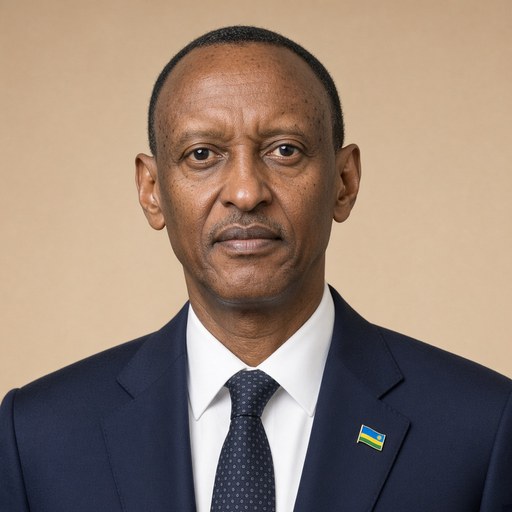
- Kagame addressed the U.S. Fund for UNICEF Children's Champion Dinner in 2009, highlighting Rwanda's progress in child welfare and its partnership with UNICEF.
- Main themes
- Children's education and welfare, Rwanda's development agenda, UNICEF partnership, Child-Friendly School Model, school nutrition and food programs, human capital investment, economic self-sufficiency, entrepreneurship and youth, middle income vision 2020, holistic child development, good development partnerships
- Duration
- ~6 min
- Words
- 688
- Sentences
- 28
- Readability
- 36
- Grade
- 14.5
- Syntax
- 2.85
- Vocabulary
- 2.19
The broad sphere of national life a sentence belongs to. Every sentence has an Arena, so it is the denominator the other indices are read against.
Other28 sentences in 21 paragraphs
Distinguished guests:
Over the last fifteen years we in Rwanda have worked and continue to work diligently to build a united and prosperous country relying on the participation and innovative efforts of all Rwandans.
Improving the lives of Rwandan children has been central to our growth and development agenda. Progress in this regard includes reaching ninety-six percent enrolment for the first nine years of education, which is now tuition-free in Rwanda.
One of the reasons behind this accomplishment is the quality of partnerships we have developed with our many friends and colleagues – and their institutions and agencies.
We have a simple definition for a “good partner”.
A good partner supports programs that we Rwandans have conceived, and works with us on effective implementation aimed at improving lives and creating greater prosperity. Indeed, a good development partner’s success is tied to its client’s own success.
We are pleased to count UNICEF and its team based in our country among our good partners. Let me illustrate this with two examples, namely the Child-Friendly School Model and provision of meals to learners program – two exemplary initiatives that we have worked on with UNICEF-Rwanda.
The Child-Friendly School Model focuses on the overall wellbeing of the child, including health and nutrition. This approach also incorporates the circumstances of classroom and school infrastructure as well as the conditions of the children’s teachers, families, and their communities.
The impact of this holistic model has been remarkable, as demonstrated by higher enrolment and retention rates, and rehabilitated school infrastructure – as well as improved capabilities of families in terms of income-generation activities that in turn support their children’s education. We look forward to duplicating this model extensively throughout the country.
Rather than accepting free food for supported schools that would not only breed dependency, but also distort local market prices and put our farmers at a distinct disadvantage, we have worked with UNICEF-Rwanda on empowering initiatives that include purchasing food from communities in which schools are located and having children grow some of their own food in school gardens.
It has been rewarding to work with institutions that share our belief that no country is destined to stay impoverished, diseased and illiterate forever – and that all nations and regions of the world have the potential to graduate to a socioeconomic situation that no longer requires aid, charity or pity.
While that day may not yet have arrived, I am confident that the building blocks we are putting in place are preparing us to achieve our country’s vision of attaining middle income status by the year 2020.
The cornerstone of our strategy for building a new nation and achieving greater prosperity is serious and sustained investment in human capital.
Focusing on our children and youth is fundamental to realize these goals – and our approach must be holistic to ensure that our young people are healthy, educated, and well equipped to face the challenges and seize the opportunities of the twenty-first century.
In Rwanda, and in fact, throughout Africa, we recognize that our prosperity will come from thriving businesses – led by entrepreneurs who have been adequately prepared in their childhood and youth. We are shaping our curricula and other programs for children to reflect this for maximum impact.
Esteemed Ladies and Gentlemen Dear friends
In conclusion, let me take this opportunity to express our deep appreciation to the US Fund for UNICEF and UNICEF-Rwanda for recognizing Rwanda’s efforts to create a conducive environment in which our children can grow into productive citizens and contribute to their own success and that of their communities and their nation.
We look forward to continued partnership that is stronger and even more innovative.
To all of you present tonight, your friendship, support and belief in a bright future for Rwanda is of great value to us. If you have not yet visited our country, I take the pleasure of welcoming you to do so and see for yourselves the fruits of this partnership, and the many other developments that offer the promise that our children sing so eloquently about.
I THANK YOU FOR YOUR KIND ATTENTION
Save