




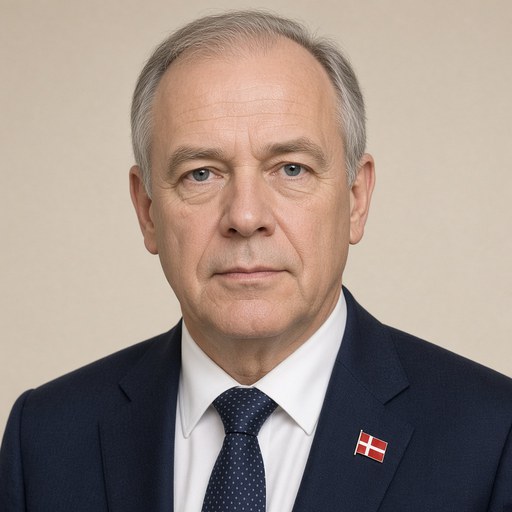
A new future. Prime Minister Poul Nyrup Rasmussen's speech at the SID congress on September 13, 2001.
 Poul Nyrup Rasmussen · Prime Minister of Denmark
- Context
- Rasmussen addressed the SID (General Workers' Union) congress in Denmark on September 13, 2001, two days after the 9/11 attacks, pivoting from a prepared domestic policy speech to address the global crisis.
- Main themes
- September 11 terrorist attacks, solidarity and unity, defense of democracy and shared values, international alliance, terrorism and its consequences, Danish labor movement, future of Denmark, social democratic values
- Duration
- ~54 min
- Words
- 6,515
- Sentences
- 463
- Readability
- 68
- Grade
- 6.9
- Syntax
- 2.63
- Vocabulary
- 1.80
Translated from Danish
The broad sphere of national life a sentence belongs to. Every sentence has an Arena, so it is the denominator the other indices are read against.
Other463 sentences in 95 paragraphs
Thank you all very much. I will not hide the fact that I have not had many hours of sleep over the past few days, but I am quite happy to be here. I feel, in a way, that we are together both in good times and in bad, in thick and in thin.
There is no one in Denmark who can scold each other as well as we can. And there is no one in Denmark who can stand together as strongly as we can. And when you can do both, you can achieve a lot. You can make a difference.
* * *
Poul Erik, I have read your speech and I think it is great. I think it is great because it both gives a fight, gives scolding where we need to be scolded. It provides perspective. It outlines a future for Denmark. It also gives others what they need. I must say that your congress, your speech, what you present, what you remind us of regarding New Zealand and the perspective you outline for the labor market, is simply fantastic. You are the most solidary people I know, and I would like to thank you for a very beautiful, very perspective-filled, and very responsible speech.
I will also today do what I can to provide some of the answers that you are entitled to. And how I have prepared myself today. I have here an excellent speech. It will not be lacking, I can promise you that. It is filled with everything we want in the Social Democrats and it is filled with everything we have in common with you. It is filled with the difference between the two paths that are emerging for Denmark's future. It also includes a mention of the finance bill for 2002. And everything we must and will do in the coming months. About how the upcoming election campaign will shape up. About how important it is that we gather our forces now. And I know that deep down, you would have preferred that I delivered this speech. It is almost as if you could write it yourselves.
But I must tell you that I need to set this speech aside. I need to say to you, and I hope you understand it. Since the day before yesterday, Tuesday, September 11, 2001, the world is not the same as it was.
* * *
In my office the day before yesterday, I was in the process of writing the speech for SID that I just showed you, as well as a lot of other work that one must take care of. Normally at that time, I switch to CNN, and suddenly I thought it was a trailer for the latest film from one of the film centers in the USA. A film clip. A few seconds later, I realized that it was reality we were facing. With a horror and a dread that I have never experienced before.
The worst nightmare of all has now struck us. The worst thing we can do is to fool ourselves into thinking that the world continues as it usually does. It does not anymore.
Thousands of people have been burned alive, have been crushed under the collapse of two towers in downtown New York. Thousands of innocent people have become victims of an incomprehensible hatred, which we have encountered in the most horrifying and appalling extent. Thousands of innocent people, whom we saw, who have burned themselves into our retinas indelibly, hang there in the windows and some throw themselves out. Thousands of innocent people have paid with their lives as victims of an unfathomable, horrifying terrorism, which we must confront concretely and directly.
The world is not the same today as it was before September 11. Almost twelve years ago, the Berlin Wall fell. Many of you can remember that. Back then, some of us went to celebrate the new freedom with the Germans and all the others in Europe.
Some of us trampled on the Berlin Wall in joy that it was all over. The evil had been defeated. Now there was a bright future ahead of us. We talked about the future, we embraced each other about that future. We looked forward to that future.
But since the day before yesterday, it is not the same as it was before.
Less than two days ago, we witnessed an unimaginable terrorist attack that shakes the world and our belief in our own invulnerability. We need to talk a little more about that today. Let me remind you that we are members of a strong alliance with the USA. We are part of a community that values democracy above all. That world has been attacked by terrorism, taking thousands of innocent lives. It was senseless. It was disgusting, and we will not tolerate it. It is an attack on all of us. It is not just an attack on a large country. It is an attack on everything we stand for.
On your and my solidarity. On your and my compassion. On your and my fundamental belief that every single human being has an incredible, infallible value in and of themselves simply by being human. Neither those who committed the despicable act nor those who condone what happened have the right to be heard by us.
What they did was not just an attack on the USA, but on all of us. They attacked what we believe in. And they must not get away with it. They must not trample on our values or on our democracy. If they get away with it. If violence and terror win, and we are cowed by fear and insecurity. Finding ourselves sitting on a plane one day and perhaps there are other passengers who look a little different from us and suddenly we ask ourselves the question – can we be completely sure? That day must not come. But for that day not to come, it is important that we act very, very wisely.
Dear congress delegates, I have been working almost non-stop since that Tuesday with the answers, with the counter-responses, and with the protection of our country. I see interviews now where terrorist leaders state that this is not the last time. They state what else they have planned to use as weapons.
Dear everyone, we will not accept that violence and fear dominate our world. I stand here before you today to emphasize that no matter how much they try, no matter how much they attempt to terrorize the free world, we cannot and must not allow them to take our community and our democracy from us.
So I stand here to tell you that they can try with all kinds of atrocities, but the last 48 hours also show us that when it really matters, we can and we must stand together. Because we are still fighting for compassion and humanity. It is that simple, really. We need that humanity and compassion, and we need it to be clear. That we show it to each other. Without it, we would be reduced to mere machines or animals.
We need the feeling that we are together. We need the feeling of sensing this community in this matter right now. To belong somewhere. Being part of a community is not new to us or foreign to us. Community has always been the cornerstone of Danish trade unionism and social democracy.
How we have fought, and how we have deep down understood the importance of not being enough unto ourselves. SID is the very embodiment of that. Humanity and community. A community that has a future, as you have rightly written.
Therefore, we also have a lot to arrange now in these days. For our community is also an international community. We are so incredibly busy in Denmark with everything we must do and achieve. And sometimes we may forget what the most important agenda is.
It is high time we take action now and high time we give each other a handshake that the future is about how we get more time. More quality and more thoughtfulness into our everyday lives. I have said it before, but it takes time to change the fact that we are getting busier and busier. We must think carefully about how we avoid the development that comes in snapshots every day on the TV screen for ten seconds, from pulling us to a place where we should not be.
The development must not just run away with us.
It is us who must run away with the development.
* * *
In the last two days, it seems that Denmark - the Danish people have decided to stop and take the necessary time to think through our new world. If we are to relate to it, we must also relate to what we must do concretely. Is 50 years a long or short time?
For 50 years, we used incredible resources on the eastern and western sides of the Iron Curtain to fight each other. And then freedom came in 1989. Never again should we be each other's enemies. That is why Denmark took the lead in the Eastern enlargement, and that is why I am so incredibly happy that we can have different discussions about Europe and Europe's future - also in SID and in the Social Democrats. But I have not heard a single SID congress delegate stand up here at this podium or in any other way question that Europe must of course be united again. That the new democracies must of course join the same union as us. That Polish workers do not threaten our workers. We must help Polish workers to raise their wages and living standards so that together we can lift a new future. And that is why Denmark also took the lead in peacekeeping actions in the Balkans, because one cannot talk about having a common responsibility for the world if one does not implement it.
Never again war between countries and peoples was our decision. Now we see a frightening new world. Hatred has in some places become stronger than peace. Hatred has in some places become stronger than cooperation and tolerance. In some places, terrorism has found new ground because there is a foundation of hatred, of oppression. Now is the new time where we must redefine what security policy and defense policy are. War is also terrorism, Lockerbie, embassies, and car bombs. Last night at the NATO summit among NATO's permanent representatives in Brussels, we had the basis to consider our situation. Last night, we made a very principled decision together. Last night we said that there is not only one community if NATO countries are attacked by other countries. There is also a community if we are attacked by terrorists. We redefined and expanded our defense last night. And we did it with open eyes - with deep shared responsibility.
* * *
Ich bin ein Berliner – former President Kennedy once said. You all remember it. In that saying. In those words lay an international cross-border solidarity. In other words, as said yesterday and the day before yesterday, in these moments we feel like New Yorkers. The tragedy in New York has shaken our world. It has exposed how fragile our democracy is. We have built a Denmark on community, on solidarity, on democracy, on security. And we know that the basis for true freedom is also security. You know and I know that one is not free when one is unemployed. One is not free when one lacks housing. One is not free when one cannot get the education one needs and can manage. One is only free if others can provide the foundation upon which one can be free. Only a society characterized by community and solidarity can provide the basis for being free. It can provide housing. It can provide education. It can provide employment if we act wisely.
We know that well. But it is not given that it is like that all the time. And it is not given that it will continue to be like that all the time. There are so many who tempt, there are so many who pull at us. There are so many who have this, that, and the other offer. Yes, even some of us have completely forgotten that this life we have been entrusted with has an ending just as naturally as it has a beginning. When can one say that we, in all our haste and busyness, have forgotten that? We rejoice when the new is born. But we tend to completely forget that at a certain point, life has an ending. And then it is also the nursing home’s fault. Well, may I not say to you all. We all grow old at a certain point. And yes, when we get to that point where we must say goodbye, we also become ill. We must face it. We must understand our own lives and our community to have extra power and strength to participate in the international community.
I become sad when TV shows are made from nursing homes where they get right up in the face of a poor elderly person who perhaps for many does not know that she is on TV. And we all get excited and say it is also too bad, but we forget the fundamental basic observation within ourselves. That life has a beginning, and it has an ending. In return, we know that it must be a good life between those two points, and that is what we must hold on to. Should our community have a future? You know the answer yourself. It must. But then we must hold on even more tightly. Then we must stand even more together. Then we must be even clearer when we tell our youth about how it was, how it is, and how it can be.
* * *
The future did not stop since Tuesday. But it will look different than it did before. And we must shape our politics and our labor work accordingly. And remember when we start to talk about the future. It must never become a struggle between people. Just as desperate as we are right now, just as desperate as we are over what happened on Tuesday, it must never erupt into a struggle between people, between religions.
What we must do now is not to fight other people. What we must do now is not to fight others who have a different faith than us. What we must do now is to fight terrorism. It is very, very important for me to say that.
And that is why it was so important yesterday that there were others than a tiny group who had totally misunderstood and received a wrong upbringing - if they had received any at all - who went out and celebrated in the streets over what happened in New York. And fortunately, it succeeded, and fortunately it was so important yesterday. That there were other immigrant organizations that stood up and said that we must distance ourselves from this.
We will never use violence and insecurity as methods in our democratic society. It was high time for someone to step up. For I have a very, very strong appeal to you in the Danish labor movement and to the entire Danish population. Let reflection also come to you in all the despair. We do not want to see or allow others in the coming weeks and months to use this moment of despair to turn it into a struggle between people or between religions. It is a fight against terrorism – we must hold on to that.
And we must remove the breeding ground for terrorism. This is done by working methodically and purposefully, as you are already doing. We need a new international order. We must not allow the enormous growing gap between the third world and ours. That is where the new solidarity must be created, and I am proud of SID’s commitment. I am so proud that you report on what you are doing in Central America, for Nicaragua and many, many other communities. I am so proud that you invest your hard-earned pennies – you certainly get enough flak for the dues you pay – I know that, so it is doubly commendable that you also think of those out there.
You are a guiding light for us. And I believe that Denmark must maintain its international commitment and its development aid. The other thing I believe must happen is that we must consistently follow what you have put forward and what we are working on. Recently, Poul Erik, we had an international conference here on international construction workers. Where we shook hands on the fact that we must also have a new world order here, where agreements are not just something we know in Denmark and in the Nordic countries. But agreements have come to stay as a lasting foundation for the new international world order and world peace. No more exploitation of children, no more underpayment of labor, and no more prohibition against organizing.
* * *
The third is solidarity when it comes to our environment. When it comes to our educational efforts and when it comes to getting a grip on the international economy. We need more international agreements and rules – not fewer. We need more politics to regulate market forces internationally – not less. We need greater union engagement – not less. We must show – and only we can show – what true solidarity is. International community presupposes national community in our own country. I ask quietly, is there something we have forgotten? Have we been too busy?
On the way here, I was reminded of a newspaper article from the other day about a female cyclist. The bike path is extremely crowded with cyclists who are in a hurry to get to work. They push a little against each other, nudge each other. They need to get there. Then it happens. The tragic accident, where a female cyclist loses her balance in Copenhagen's busy morning traffic, loses control, is run over, and killed on the spot. And no one. Not a single one of the others turns around. They cycle on. Not a single one turns around to help – they cycle on. They may have forgotten it. Or rather, they may not have even seen it.
We must now take time for community. We must now take time to deal with what is slipping away from us as we shape the future of Denmark.
I feel that we have a good foundation for shaping the future of Denmark. I feel that we have a good platform. I feel that the struggle you and we have fought since we came to power in 1993 has been an effective, a joint, and a fruitful struggle. And I thank Poul Erik and you for knowing that too. I will not stand here and list it all. This is neither the time nor the place. But you know well that we have always fought against unemployment. We are gradually getting it under control. It is the lowest in 25 years, but it is not low enough. However, it does provide a platform to tackle the future, which is so fundamental for us.
The new tasks. When I start to talk a little about them, some may say why haven’t you done anything about it before? And why hasn’t the government done anything long before, after all, you have had the responsibility of government for eight years?
The answer is simple: Because we could not do it before. Because there were other tasks before that were more important to get under control. Unemployment. The economy. The first fundamental breakthroughs in education. Getting a grip on the social side. These have been the most important tasks until now. But now we can tackle the new things, the new tasks.
* * *
I have been informed about your debate here from the congress, both through the Minister of Labor Ove and through Poul Erik's message to me today.
I would like to make some remarks about some of the things you have discussed and some of the things you have put forward. I would like to start by saying that in a way it is echoed in Poul Erik's and your speeches. That you are aware that the time is past when the oppressed were the majority.
When we formed the first social democratic government in the 1920s under Stauning, we all knew that back then the majority were those who were oppressed, underpaid, living a life in a miserable everyday existence with cold and social insecurity. Therefore, we could unite to shape a policy where we would say: "Now you – the elites in society – must give us something so that we can achieve greater equality and a future in our country." Back then, solidarity meant taking – now it is much harder, for in many cases solidarity in this century we have just begun will mean giving. That is, as you know, something much harder. Giving among us. Giving within our society. Not only between those at the very top and those at the very bottom, but also those around the middle.
But before I get to that, there is something else about our society that is just as important. SID has presented the most thoroughly worked documentation I have seen about how a society can go in the wrong direction.
I must say that your documentation about New Zealand is very, very thought-provoking. Some will of course say in Denmark: "But Denmark is not New Zealand." I would say: "No, it is not. But the direction. It does not take much before we catch ourselves thinking – oh, we are heading in that direction." The message from New Zealand is, of course, also a message that is connected to everything I have talked about today.
Privatization is not the answer to community. If you go too far down that path, you cannot roll it back again. We see that in the wake of what happened in New Zealand, there was also a fragmentation and erosion of the communities that had been built up. And since it is now the case that we need communities more than ever in this century, we do not need to go that way. The documentation you have presented does not need many more words. It speaks for itself. We just need to tell what perspective is emerging if privatization becomes
There is something else. It is our most vulnerable in our society. The outcasts. The mentally ill. The prostitutes who are trying to get by to get the drugs they need to get through the day. The most marginalized, who live the most miserable lives in our society. We must say to each other: It is still a huge task for us to hold on and do everything we can to give these people a better life. Otherwise, we cannot see ourselves and our own lives as meaningful.
* * *
I will not go into details today, but I just want to say to you: The direction, the thinking is right in what you propose about a reorientation of the labor market in Denmark.
I would say that it is the same in the entire public sector. It is time for us to realize that we have moved away from an industrial society to a more mobile society in more than one sense. It is not just about mobile phones; it is also about something else.
Your colleagues around and you yourselves are moving much, much more mobile in the labor market than you did just 10-15 years ago. It is as if our rules in the modern welfare society do not fit the modern worker and employee.
Back then in the industrial society, it was different. When you became unemployed, you received your unemployment benefits, and you usually got a job again, either at the same workplace or at least in the same industry. Back then, when you had learned a trade or learned to work or could operate a machine, you were fairly certain that when you got back to work, it would be the same type of machine you would be working on.
Back then, when you got married – now I am getting close – you were basically married for the rest of your life. I know there are exceptions, even back then. But that was the case. People did not just go around divorcing! That has fundamentally changed!
Back then, it was also the case that where you grew up, you got a job. You stayed there. Okay, there were a few who moved to Copenhagen back then. And they have had varying fortunes!
My point is essentially this: Denmark has also changed, and I therefore quietly ask: Do the rules we have in the welfare society now, in the labor market, in social legislation, in educational legislation, do they fit the modern working person? The modern SID employee? Do they fit together? Have we fully understood in the modern welfare society that we change jobs many, many more times in our lives now than we did before? That we need to constantly update our education many, many more times than before if we are to cope? If our qualifications are to match the new jobs, it will not help to force the new jobs to become old jobs. Because they will never be that again.
And therefore, I invite you to, in the future Denmark that we are now to shape together, implement a fundamental redesign of our society's rules, which fundamentally have the genuine content goal: Why do we have rules in this country? We have them to protect the weak from the strong. Why do we have rules in this country? We have them so that money does not determine everything.
So let us reassess the rules that have such a great influence on us. Let us, in a certain sense, put the employees first and people first. Without questioning that there is a future community, for that is the only future perspective there is. But also have the courage to reformulate our rules.
You have very strongly and very rightly talked about groups of people who do not just automatically enter the new jobs. Who cannot just automatically upskill. Who cannot just automatically read their way to everything. I think what you have talked about, Poul Erik, about the illiterate, about the dyslexic, is right. I think I can say today that we must lift that task. And I think your proposal for a research center is a fundamentally correct sign. I would like to say to you today: I consider that to be one of the most important tasks of the Social Democrats and the government. That it becomes natural here in the country that one does not consider oneself disqualified because one is dyslexic or illiterate. Not perhaps being able to figure it out. I know some who cannot calculate but can still figure it out. But that was not my point.
My point is that there must not be a difference between people because one happens to lack the same reading skills as another. That belongs to the new time. And we must lift the new time. And we must do it in such a way that there is not a single dyslexic or illiterate in this country who cannot see "so, now I can do it after all." And I think all the experiments you have conducted, the concrete examples you have, show that it is possible. And therefore: Thank you for this proposal and let me give a commitment that it will have a strong place in the efforts in this area in the coming years.
I expect that already in October, we, together with Danmarks Radio and in other ways, will ensure that we take the first steps in the preparatory adult education that we have started. There needs to be much more speed. There needs to be more turbulence. But the direction is unmistakable. You have my commitment on that, Poul Erik. We must give it high priority.
* * *
Then there is our working life, which has filled much in the report, in the discussion here at SID’s congress. There is no people, men or women, who work as much as you do in Denmark. We have the highest percentage of men and women who go to work in the world. Employment rate, as it is called. Now that our working life occupies so much in our lives and is so fundamental, we must make that working life a better place to be. We must take that as the other major reform line in the future Denmark. One task was to align the rules with the modern society and the modern person. The other major reform line in the future Denmark is to make our working life a good place to be for everyone. Today, it is such that 1/3 look forward to going to work, 1/3 think it is okay, and 1/3 think that now it is about getting home as quickly as possible.
We need to change that. It is about giving our Danish workplaces a better working environment. From occupational injury efforts to working environment in a broader sense, including the psychological working environment to co-determination and a whole new participation of Danish employees in Danish decisions. I therefore think it is a core issue for us to ensure that Danish employees receive better treatment when they experience an occupational injury in Danish companies.
I would therefore like to say that this autumn we will begin a reform of workers' compensation. It is pointless, as Poul Erik and many of you have said, that you have to wait five, ten, fifteen, or seventeen years before you can receive your workers' compensation. Danish wage earners should not be tossed around in appeal systems, because there is only one loser, and that is the Danish wage earners. We need to create a new reform.
* * *
And how is it now? If there is a restaurant that does not serve proper food. If there is too much salmonella or whatever else is wrong, we will be informed. When we buy goods in the supermarket, we will be able to see what is inside. We want labels. We want to be warned, and we want to be able to choose out and choose in. We want to know what we are dealing with. This has become a natural part of our everyday life.
Isn't it time for Danish companies to face this as well? I feel that it is. I feel that we must establish a number of new standards for how Danish workplaces should operate. Some ideal goals that are not on the moon stage. But that are achievable in everyday life. I feel that it is time for Danish companies to provide information about how exactly their workplace is.
Do you have any workplaces abroad that are part of your workplace? How is it with the ethnic considerations and equality in the workplace? How do you treat your employees? How is it with workplace injuries? How is it with the working environment?
I see a direct connection with the new working environment reform that we set in motion, you know, just before the summer holidays. When we are now to give each other's workplaces a blue stamp for the working environment being in order, it should also be visible when the working environment is not in order.
I feel that we are also in a new time there. Because the community I am talking about is also the responsibility of companies. We all have a responsibility now in this new time. Companies also have a responsibility. I appeal to the leaders of Danish workplaces to understand that when SID and we talk about this, as we do, it is not to annoy them. It is to create a common basis for positive development. For I am completely sure that we will not be the last country to start this debate now in our workplaces. We may be the first country. But many, many others will follow. For that is the direction development must take.
It is no longer the future that companies can impose many costs on society without any cost to themselves, because we now have 65,000 workplace injuries a year in Denmark. Or because we have so many sick days a year that it corresponds to, if we could halve them among other things, through a better working environment, we would have an additional employment of up to 50,000 full-time jobs. That is good social economics. It is obvious professional and social democratic policy.
We must be able to see in the future whether companies have a good working environment and live up to what we expect, or whether they do not.
I have two remarks I would like to make towards the end. One is about refugees and immigrants. I spoke earlier about the new time after last Tuesday. I would like to take just a small step deeper and say to you: There are 2,000 well-educated engineers in Denmark who have names other than Rasmussen and Petersen. That is why they have not found work. Some of them are in a flower shop, others are taxi drivers. This is not a criticism of the flower shop or the taxi drivers. It is a criticism of us. There are too many refugees and immigrants in Denmark who could have a job but do not have one. I know that you have set out to change that, and I am glad that we have made that commitment. It obliges us – me too. And imagine if we could positively surprise our entire country and see over the course of a few years that it was possible through rights and duties. Through workplace Danish - through a massive effort towards the newcomers and towards those who otherwise have difficulty entering the labor market - to achieve full employment.
You know what? If we do that, we have helped to cement the new Denmark, the Denmark of the future. Then we can also show other countries: Yes, it is possible if one decides to do it, and if one has the will to do it.
* * *
Some of you may be sitting there thinking: Why isn’t he saying anything about early retirement?
Yes, we must get to that! I read through what I had said at the congress last time. Poul Erik said: "Would you like a copy?" I have read it carefully. I also know that this is the first congress where we meet, you and I, since last time, and in the meantime there was an intervention regarding early retirement.
I have also read the minutes of what you have said. I will say two things today.
I have no reason to challenge the discussion we had back then. I am glad that Poul Erik has told me: "You should just be aware that I have not regretted a single thing." That is fair enough! That is how it should be. But I am also glad that you have said that now we need to move on.
I would like to say to you that it is with such decisions that it is to be the chairman of the Social Democrats and the Prime Minister of Denmark. It is as Søren Kierkegaard once wrote (in slightly altered form): "If you are so afraid of making decisions because you risk losing your footing, you risk losing life itself if you do not make the decision."
I say to you that I certainly did not receive all the criticism on purpose. I want to say to you that it was not something I directly desired. I am not a masochist! But I am not the other either. I will not talk my way out of it. I will say one single thing to you: What I had to do at that time was damned difficult to do, and what I will do going forward is, of course, to ensure that the early retirement certificate, which is now part of our early retirement reform, still works and is received. And when we know that there are more than 30,000 people who today have the early retirement certificate, I am of course glad for that.
I will not today engage in a long polemic about how others wanted early retirement to have a completely different future. You know that! You know what could have happened. I will just quietly say to you – two things:
When we now gather around the future of Denmark, ensuring a continued future in the economy in community and employment, we will probably also be able to afford one day to look at how we can otherwise arrange ourselves with early retirement.
I will not today stand here and say that we will do everything you have asked for tomorrow. I will not simply say yes to everything you have proposed. I will not say no to everything you have proposed either. I will just say that as early retirement looks now, it can still be used and is being used. So I will say that I have carefully noted what changes you have proposed. It will not be forgotten. When we one day discuss various forms of relief – there are so many who are busy issuing tax cuts right now, so it could well be that we should consider how we best, wisely, and most solidarily use our opportunities.
In other words: I register what you have said. It has given me food for thought. I have the experience that I have. I will conclude by saying that I feel a bit like a captain on a ship. If the ship is to correct its course to avoid meeting the fate of the Titanic, one must take it upon oneself.
Everyone, this became a somewhat different speech today, but deep down there is still a community that makes it possible for me to do without a few hours of sleep. A community that I feel incredibly closely connected to in relation to you. Because every single person has value to you and to me – no matter what they are called, no matter where they come from, and no matter what their background is. And because there is only one answer to Denmark's and the world's problems and challenges. It is the future in community that you have shaped.
Thank you all – and stay united.
The original Danish. The tags above are read on the English translation's sentences.
Tak skal I have alle sammen. Jeg skal ikke skjule at, det er ikke blevet til så mange timers søvn her igennem de senere døgn, men jeg er ret glad for at være her. Jeg føler jo på en måde, at vi er sammen både i opture og i nedture, i tykt og i tyndt
Der er ingen i Danmark, der kan skælde hinanden så godt ud, som vi kan. Og der er ingen i Danmark, der kan holde så stærkt sammen, som vi kan. Og når man kan begge dele, så kan man meget. Så kan man gøre en forskel.
* * *
Poul Erik, jeg har læst din tale og jeg synes, den er flot. Jeg synes, den er flot, fordi den både giver kamp, giver skældud der, hvor vi skal skældes ud. Den giver perspektiv. Den tegner en fremtid for Danmark. Den giver også de andre, hvad de skal have. Jeg må sige, at jeres kongres, din tale, det I lægger frem, det I minder om New Zealand og det perspektiv I tegner for arbejdsmarkedet, det er simpelthen fantastisk. I er de mest solidariske jeg kender, og jeg vil gerne sige dig tak for en meget flot, meget perspektivfyldt og meget ansvarlig tale.
Jeg vil så også i dag gøre, hvad jeg kan for at give nogle af de svar, som I har krav på. Og hvor har jeg dog forberedt mig i dag. Jeg har her alle tiders brandtale. Den får ikke for lidt, det kan jeg godt love jer. Den er fyldt med alt det, vi vil i Socialdemokratiet og den er fyldt med alt det, vi har til fælles med jer. Den er fyldt med forskellen mellem de to veje, der tegner sig for Danmarks fremtid. Den har også en omtale af finansloven for 2002. Og alt det vi skal og må gøre i de kommende måneder. Om hvordan den kommende valgkamp vil forme sig. Om hvor vigtigt det er, at vi samler kræfterne nu. Og jeg ved godt, at I inderst inde helst ville have, at jeg holdt den her tale. Det er lige før, I kunne skrive den selv.
Men jeg må sige til jer, at jeg er nødt til at lægge denne her tale til side. Jeg er nødt til at sige til jer, og jeg håber I forstår det. Fra i forgårs, tirsdag den 11. september 2001, er verden ikke den samme, som den var.
* * *
På mit kontor i forgårs var jeg i gang med at skrive den tale til SID, som jeg lige har vist jer samt en masse andet arbejde, man nu engang skal tage sig af. Normalt på den tid slår jeg over på CNN, og pludselig troede jeg, at det var en gengivelse af den nyeste film fra et af filmcentrene i USA. Et filmklip. Få sekunder bagefter blev jeg klar over, at det var virkelighed, vi stod med. Med en gru og med en rædsel som jeg aldrig har oplevet før.
Det værste mareridt af alle har ramt os nu. Det værste vi kan gøre er at tro med os selv, at verden fortsætter som den plejer at gøre. Det gør den ikke mere.
Tusindvis af mennesker er brændt ihjel, er knust ihjel under sammenstyrtningen af to tårne i New Yorks centrum. Tusindvis af uskyldige mennesker er blevet ofre for et uforståeligt had, som vi har mødt i den mest afskrækkende og forfærdende ustrækning. Tusindvis af uskyldige mennesker, som vi så, som har brændt sig ind på vores nethinder uudsletteligt, hænger der i vinduerne og nogen kaster sig ud. Tusindvis af uskyldige mennesker har betalt med deres liv som ofre for en ufattelig rædselsvækkende terrorisme, som vi er nødt til at forholde os konkret og direkte til.
Verden er ikke den samme i dag, som den var før den 11. september. For snart tolv år siden faldt Berlin-muren. Mange af jer kan huske det. Dengang tog nogle af os afsted for at fejre den nye frihed med tyskerne og alle de andre i Europa.
Nogle af os trampede oven på Berlin-muren i glæde over, at det hele nu var forbi. Det onde var bekæmpet. Nu var der en lys fremtid foran os. Vi talte om fremtiden, vi holdt om hinanden om den fremtid. Vi glædede os til den fremtid.
Men fra i forgårs er det ikke det samme, som det var før.
For mindre end to døgn siden var vi vidner til et ufatteligt terrorangreb, som ryster verden og troen på at vores egen usårlighed. Det skal vi tale lidt mere om i dag. Må jeg mindre jer om, at vi er medlem af en stærk alliance med USA. Vi er medlem af et fællesskab som sætter demokratiet højst. Den verden er blevet angrebet af terrorismen som totusindvis af uskyldige menneskers liv. Det var meningsløst. Det var afskyeligt, og vi vil ikke tolerere det. Det er et angreb på os alle. Det er ikke kun et angreb på et stort land. Det er et angreb på alt det, vi står for.
På jeres og min solidaritet. På jeres og min medfølelse. På jeres og min fundamentale tro på, at hvert eneste menneske har en ufattelig ufejlbarlig værdi i sig selv alene i kraft af, at det er et menneske. Hverken dem, der begik den afskyelige handling eller dem, der bifalder det, der skete, har krav på, at vi lytter til dem.
Hvad de gjorde var ikke blot et angreb på USA, men på os alle sammen. De angreb det, vi tror på. Og de skal ikke slippe godt fra det. De skal ikke trampe på vores værdier eller på vores demokrati. Hvis de slipper fra det. Hvis vold og terror vinder, og vi kues af angst og utryghed. Griber hinanden i at sidde i et fly en dag og måske er der andre passagerer, der ser lidt anderledes ud end os og pludselig stiller vi os selv det spørgsmål – kan man nu være helt sikker? Den dag må ikke komme. Men for at den dag ikke skal komme, er det vigtigt vi bærer os meget, meget klogt ad.
Kære kongresdelegerede jeg har arbejdet stort set uafbrudt siden den tirsdag med svarene, med modsvarene og med beskyttelsen af vores land. Jeg ser interviews nu, hvor terroristledere udtaler sig om, at det ikke er sidste gang. Udtaler sig om, hvad de ellers har planlagt at bruge af våben.
Kære alle sammen vi vil ikke acceptere at vold og angst skal dominere vores verden. Jeg står her foran jer i dag for at understrege, at hvor meget de end prøver, hvor meget de end forsøger at terrorisere den frie verden, så kan og skal vi ikke tillade, at de tager fællesskabet og vores demokrati fra os.
Jeg står altså her for at sige til jer, at de kan forsøge med alverdens grusomheder, men de seneste 48 timer viser os også, at når det virkelig gælder, så kan vi og så skal vi stå sammen. Fordi vi stadig kæmper for medfølelse og medmenneskelighed. Så enkelt er det i virkeligheden. Vi har brug for den medmenneskelighed og medfølelse og vi har brug for, at den er tydelig. At vi viser den for hinanden. Uden den ville vi blive reduceret til rene maskiner eller dyr.
Vi har brug for følelsen af, at vi er sammen. Vi har brug for følelsen af at mærke det her fællesskab i denne sag lige nu. At høre til et sted. At være med i et fællesskab er jo ikke nyt for os eller fremmed for os. Fællesskabet har altid været hovedhjørnestenen i dansk fagbevægelses og socialdemokratiets grundlag.
Hvor har vi dog kæmpet, og hvor har vi dog inderst inde kendt betydningen af ikke at være os selv nok. SID er selve indbegrebet af det. Medmenneskelighed og fællesskab. Et fællesskab der er fremtid i, som I så rigtigt har skrevet.
Derfor har vi også meget at lægge til rette nu i de her dage. For vores fællesskab er også et internationalt fællesskab. Vi har så forbandet travlt i Danmark med alt det, vi skal gøre og nå. Og en gang imellem glemmer vi måske, hvad der er den allervigtigste dagsorden.
Det er på høje tid, vi sætter ind nu og på høje tid, vi giver hinanden håndslag på, at fremtiden handler om, hvordan vi får mere tid. Mere kvalitet og mere tænksomhed ind i vores hverdag. Jeg har sagt det før, men det tager tid at ændre det faktum, at vi får mere og mere travlt. Vi må tænke grundigt igennem, hvordan vi undgår at udviklingen, der kommer i snapshots hver dag på TV-skærmen i ti sekunder, ikke får lov at trække os hen et sted, hvor vi ikke skal være.
Udviklingen skal ikke bare løbe af med os.
Det er os, der skal løbe af med udviklingen.
* * *
I de seneste to døgn ser det alligevel ud til, at Danmark - den danske befolkning har besluttet sig til at stoppe op og tage sig den nødvendige tid til at tænke vores ny verden igennem. Skal vi forholde os til den, så skal vi også forholde os til det, vi skal gøre konkret. 50 år er det lang eller kort tid?
I 50 år brugte vi ufattelige ressourcer på den østlige og den vestlige side af jerntæppet til at bekæmpe hinanden. Og så kom friheden i 1989. Aldrig mere skulle vi være hinandens fjender. Derfor satte Danmark sig i spidsen for Østudvidelsen og derfor er jeg så ufattelig glad for, at vi kan have forskellige diskussioner om Europa og Europas fremtid - også i SID og i Socialdemokratiet. Men jeg har ikke hørt en eneste SID-kongresdelegeret stille sig op her på denne talerstol eller på anden måde sætte spørgsmålstegn ved, at Europa selvfølgelig skal forenes igen. At de nye demokratier selvfølgelig skal ind i samme forening som os. At polske arbejdere selvfølgelig ikke truer vores arbejdere. Vi skal hjælpe polske arbejdere til at komme op i løn og levestandard, så vi i fællesskab kan løfte en ny fremtid. Og derfor satte Danmark sig også i spidsen for de fredsbevarende aktioner på Balkan, fordi man ikke kan tale om at have et fælles ansvar for verden, hvis man ikke udmønter det.
Aldrig mere krig mellem lande og folk besluttede vi os for. Nu ser vi en uhyggelig ny verden. Hadet er nogen steder blevet stærkere end freden. Hadet er nogen steder blevet stærkere end samarbejdet og tolerancen. Nogle steder har terrorismen fået ny grobund, fordi der er en grobund af had, af undertrykkelse. Nu er det den ny tid, hvor vi må omdefinere, hvad sikkerhedspolitik og forsvarspolitik er. Krig er også terrorisme, Lockerbie, ambassader og bilbomber. I går aftes ved NATO-topmødet blandt NATOs faste repræsentanter i Bruxelles havde vi grundlaget for at overveje vores situation. I går aftes traf vi en meget principiel beslutning i fællesskab. I går aftes sagde vi, at der findes ikke kun ét fællesskab såfremt NATO-landene bliver angrebet af andre lande. Der findes også et fællesskab, såfremt vi bliver angrebet af terrorister. Vi omdefinerede og udvidede vores forsvar i går aftes. Og vi gjorde det med åbne øjne - med dybt fælles ansvar.
* * *
Ich bin ein Berliner – har tidligere præsident Kennedy engang sagt. I husker det alle sammen. I det ordsprog. I de ord lå en international grænseoverskridende solidaritet. Med andre ord som sagt i går og i forgårs, i de her stunder føler vi os som New Yorkere. Tragedien i New York har rystet vores verden. Har udstillet hvor skrøbeligt vores demokrati er. Vi har bygget et Danmark på fællesskab, på solidaritet, på demokrati, på tryghed. I og vi ved, at basis for ægte frihed også er tryghed. I ved og jeg ved, at man er ikke fri, når man er arbejdsløs. Man er ikke fri, når man mangler en bolig. Man er ikke fri, når man ikke kan få den uddannelse, man har brug for og som man kan magte. Man er kun fri, hvis nogle andre kan levere det grundlag, man kan blive fri på. Kun et samfund, der er præget af fællesskab og solidaritet kan levere grundlaget for at være fri. Det kan levere bolig. Det kan levere uddannelse. Det kan levere beskæftigelse, hvis vi bærer os klogt ad.
Det ved vi godt. Men det er ikke givet, det er sådan hele tiden. Og det er ikke givet, det bliver ved med at være sådan hele tiden. Der er så mange, der lokker, der er så mange, der flår i os. Der er så mange, der har det ene og det andet og det tredje tilbud. Ja, selv nogle af os har helt glemt, at det her liv, vi har fået betroet, det har en afslutning lige så naturligt, som det har en begyndelse. Hvornår kan man sige, at vi også i al vores hast og travlhed har glemt det? Vi glæder os, når det nye bliver født. Men vi er tilbøjelige til helt at glemme, at på et vist tidspunkt har livet en afslutning. Og så er det også plejehjemmets skyld. Jamen, må jeg ikke sige til jer alle sammen. Vi bliver alle gamle på et vist tidspunkt. Og ja, når vi bliver helt derhenne, hvor vi skal tage afsked, så bliver vi også syge. Vi skal se det i øjnene. Vi skal forstå vores eget liv og vores fællesskab for at have ekstra magt og styrke til at deltage i det internationale fællesskab.
Jeg bliver ked af det, når der laves TV-udsendelser fra plejehjem, hvor man går helt op i ansigtet på et stakkels ældre menneske, som måske for manges vedkommende ikke ved, at hun er kommet i TV. Og vi bliver alle ophidsede og siger, det er også for dårligt, men vi glemmer jo den fundamentale grundlæggende observation hos os selv. At livet har en begyndelse, og det har en afslutning. Til gengæld ved vi, at det skal være et godt liv imellem de to punkter, og det er det, vi skal holde fast i. Skal vores fællesskab så have en fremtid? Svaret kender I selv. Det skal det. Men så skal vi holde endnu mere fast. Så skal vi holde endnu mere sammen. Så skal vi være endnu klarere, når vi skal fortælle vores ungdom om, hvordan det var, hvordan det er og hvordan det kan blive.
* * *
Fremtiden stopper ikke fra i tirsdags. Men den kommer til at se anderledes ud end den gjorde før. Og vi må forme vores politik og vores faglige arbejde derefter. Og husk når vi skal til at tale fremtid. Det må aldrig blive en kamp mellem folk. Lige så desperate vi er lige nu, lige så fortvivlet vi er over det, der skete i tirsdags, må det aldrig slå ud i at blive en kamp mellem folk, mellem religioner.
Det, vi skal gøre nu, er ikke at bekæmpe andre folk. Det vi skal gøre nu, er ikke at bekæmpe andre, der har en anden tro end os. Det, vi skal gøre nu, er at bekæmpe terrorisme. Det er meget, meget vigtigt for mig at få sagt.
Og derfor var det så vigtigt i går, at der var andre end en lillebitte gruppe, der havde totalt misforstået og fået en forkert opdragelse - hvis de overhovedet havde fået nogen - der gik ud og jublede på gaderne over det, der var sket i New York. Og heldigvis lykkedes det og heldigvis var det så vigtigt i går. At der var andre indvandrerorganisationer, der stod op og sagde, at det her må vi tage afstand fra.
Vi vil aldrig bruge volden og utrygheden som metoder i vores demokratiske samfund. Det var på høje tid, at der kom nogen på banen. For jeg har en meget, meget stærk appel til jer i dansk fagbevægelse og hele den danske befolkning. Lad nu også i al fortvivlelsen eftertanken komme til jer. Vi vil ikke i de kommende uger og måneder se eller tillade andre at bruge fortvivlelsens stund til at gøre det her til en kamp mellem folk eller mellem religioner. Det er en kamp mod terrorisme – det skal vi holde fast i.
Og så skal vi fjerne grobunden for terrorismen. Den fjerner man ved metodisk og målrettet at arbejde, som I i virkeligheden allerede gør. Vi skal have en ny international orden på tingene. Vi skal ikke tillade den enorme stigende forskel, der er mellem den tredje verden og vores. Det er der, den nye solidaritet skal skaffes, og jeg er stolt af SID’s engagement. Jeg er så stolt at, at I beretter om, hvad I gør i Mellemamerika, for Nicaragua og mange, mange andre samfund. Jeg er så stolt af, at I investerer jeres surt sammensparede skillinger – I får jo hug nok for det kontingent I betaler – det ved jeg godt, så derfor er det dobbeltflot, at I også tænker på dem derude.
I er en ledetråd for os. Og jeg mener, at Danmark skal fastholde sit internationale engagement og sin ulandsbistand. Det andet jeg mener skal til er, at vi ligeså konsekvent må følge det, I har lagt frem, og det vi arbejder med. Vi havde jo forleden, Poul Erik, en international konference her om internationale bygningsarbejdere. Hvor vi gav hinanden håndslag på, at også her må vi have en ny verdensorden, hvor overenskomster ikke bare er noget, vi kender i Danmark og i Norden. Men overenskomster er kommet for at blive et varigt grundlag for den ny internationale verdensorden og verdensfred. Slut med udbytning af børn, slut med underbetaling af arbejdskraft og forbud mod at organisere sig.
* * *
Det tredje er solidaritet, når det gælder vores miljø. Når det gælder vores uddannelsesindsats og når det gælder om at få styr på den internationale økonomi. Vi har brug for flere internationale aftaler og regler - ikke færre. Vi har brug for mere politik til at regulere markedskræfterne internationalt - ikke færre. Vi har brug for større fagligt engagement - ikke mindre. Vi skal vise - og kun vi kan vise - hvad sand solidaritet er. Fællesskab internationalt forudsætter fællesskab nationalt i vores eget land. Jeg spørger lidt stilfærdigt, er der noget vi har glemt? Har vi haft for travlt?
På vejen herhen kom jeg til at tænke på en avisartikel fra forleden om en kvindelig cyklist. Cykelstien er ekstrem tæt af cyklister, der har travlt med at komme på arbejde. De presser lidt hinanden, puffer lidt til hinanden. De skal nå frem. Så sker det. Den tragiske ulykke, hvor en kvindelig cyklist mister balancen i Københavns travle morgentrafik, mister kontrollen, bliver kørt ned og dræbt på stedet. Og ingen. Ikke en eneste af de andre vender sig om. De cykler videre. Ikke en eneste vender sig om for at hjælpe – de cykler videre. De har måske glemt det. Eller rettere de har måske ikke engang set det.
Vi må have tid nu til fællesskab. Vi må have tid nu til at beskæftige os med, hvad det er der er ved at løbe fra os, når vi skal forme fremtidens Danmark.
Jeg føler, at vi har et godt grundlag for at forme fremtidens Danmark. Jeg føler, at vi har en god platform. Jeg føler, at den kamp I og vi har ført siden, vi kom til magten i 1993 har været en effektiv, en fælles og en resultatrig kamp. Og jeg takker Poul Erik og jer for, at I også godt ved det. Jeg skal ikke stå her og remse op. Det er ikke tiden og stedet. Men I ved godt, at vi altid har kæmpet imod arbejdsløsheden. Den er vi så småt ved at få under kontrol. Det er laveste i 25 år, men den er ikke lav nok. Den udgør dog en platform for at tage fat på den fremtid, som er så fundamental for os.
De nye opgaver. Når jeg begynder at tale lidt om dem vil nogen måske sige hvorfor har du ikke gjort noget ved det før? Og hvorfor har regeringen ikke gjort noget langt før, I har jo dog trods alt haft regeringsansvaret i otte år?
Svaret er enkelt: Fordi vi ikke kunne gøre det før. Fordi der var andre opgaver før, der var vigtigere at få styr på. Arbejdsløsheden. Økonomien. De første fundamentale uddannelsesgennembrud. At få styr på den sociale side. Det har været de vigtigste opgaver indtil nu. Men nu kan vi tage fat på de nye ting, de nye opgaver.
* * *
Jeg har fået refereret jeres debat her fra kongressen, dels via arbejdsministeren Ove og dels via Poul Eriks melding til mig i dag.
Jeg vil gerne gøre nogle bemærkninger til noget af det, I har diskuteret og noget af det, I har lagt frem. Jeg vil gerne starte med at sige, at på en måde går det igen i Poul Eriks og jeres taler. At I er bevidste om, at den tid jo er forbi, hvor de undertrykte var de fleste.
Da vi dannede den første socialdemokratiske regering i 1920’erne under Stauning vidste vi jo godt alle sammen, at den gang var de fleste jo dem, som var underkuede, underbetalte, førte et liv i en træls hverdag med kulde, med social utryghed. Derfor kunne vi samles om at forme en politik, hvor vi skulle sige: ”Nu har I - de øverste i samfundet at give os noget, sådan at vi kan få større lighed og fremtid i vores land”. Den gang var solidaritet ensbetydende med at tage – nu er det langt sværere, for i mange tilfælde vil solidaritet i det her århundrede vi nu så småt har taget fat på, være ensbetydende med at give. Det er jo som bekendt noget sværere. Give mellem os. Give indenfor vores samfund. Ikke alene mellem dem helt øverst oppe og dem helt nede i bunden, men også dem omkring midten.
Men før jeg kommer til det, er der noget andet omkring vores samfund, der er lige så vigtigt. SID har fremlagt den mest gennemarbejdede dokumentation, jeg har set, om hvordan det kan gå et samfund, som bevæger sig en forkert vej.
Jeg må sige, at jeres dokumentationsmateriale om New Zealand, er meget, meget tankevækkende. Nogle vil selvfølgelig sige i Danmark: ”Jamen, Danmark er jo ikke New Zealand”. Jeg vil sige: ”Nej, det er Danmark ikke. Men retningen. Retningen skal der såmænd ikke så meget til, før vi vil tage os selv i at - hov, vi er på vej i den retning”. Budskabet fra New Zealand er selvfølgelig også et budskab, der hænger sammen med alt det, jeg har talt om i dag.
Privatisering er ikke svaret på fællesskabet. Hvis man går for langt ad den vej, kan man ikke rulle det tilbage igen. Vi ser, at i kølvandet af det, der skete i New Zealand, fulgte også en opsplitning og en erodering af de fællesskaber, der var bygget op. Og når det nu er sådan, at vi mere end nogensinde i det her århundrede har brug for fællesskaber, så har vi ikke brug for at gå den vej. Den dokumentation, I har lagt frem behøver ikke ret mange flere ord. Den taler for sig selv. Vi skal bare have fortalt om det, hvad det er for et perspektiv, der tegner sig, hvis privatisering bliver
Der er noget andet. Det er vores allersvageste i vores samfund. De udstødte. De sindslidende. De prostituerede, der prøver at slå sig igennem for at få den narko, de har brug for, for at holde dagen og vejen ud. De allermest udstødte, der lever det allermest usle liv i vores samfund. Vi er nød til at sige til hinanden: Det er fortsat en kæmpe opgave for os at holde fast og bare gøre alt, hvad vi kan for at give de mennesker et bedre liv. Ellers kan vi jo heller ikke se os selv og vores eget liv foran os som meningsfyldt.
* * *
Jeg skal ikke gå i detaljer i dag, men vil bare sig til jer: Retningen, tankegangen er rigtig i det I foreslår om en nyorientering af arbejdsmarkedet i Danmark.
Jeg vil sige, at det er med det, ligesom det er i hele den offentlige sektor. Det er på tide, at vi gør os klart, at vi har bevæget os væk fra et industrisamfund til et mere end en forstand mobilt samfund. Det handler ikke bare om mobiltelefoner, det handler også om noget andet.
Jeres kolleger rundt omkring, og I selv, bevæger jer jo langt, langt mere mobilt på arbejdsmarkedet, end I gjorde for bare 10-15 år siden. Det er som om, at vores regler i det moderne velfærdssamfund ikke passer til den moderne arbejder og lønmodtager.
Dengang i industrisamfundet var det noget andet. Når man blev arbejdsløs fik man sine dagpenge, så fik man som regel arbejde, enten på den samme arbejdsplads eller i hvert fald i den samme branche. Dengang, når man havde lært sig et fag, eller lært arbejde eller kunne betjene en maskine, så var man nogenlunde sikker på, når man kom i arbejde igen, så var det den samme tuåe maskine, man skulle arbejde ved.
Dengang, når man giftede sig – nu kommer jeg tæt på - så var man stort set gift hele resten af tiden. Jeg ved godt, at der er undtagelser, også for dengang. Men det var man jo. Man gik jo ikke sådan og skilte sig af med folk! Det er jo ændret grundlæggende!
Dengang var det jo også sådan, at der hvor man voksede op, der fik man arbejde. Der blev man. Okay, der var nogle enkelte, der tog til København dengang. Og dem er det jo gået lidt forskelligt!
Min pointe er egentlig den grundlæggende: Også Danmark har forandret sig, og jeg spørger derfor stilfærdigt: De regler vi har i velfærdssamfundet nu, på arbejdsmarkedet, i sociallovgivningen, i uddannelseslovgivningen, passer de til det moderne arbejdende menneske? Til den moderne SID lønmodtager? Passer de til hinanden? Har vi helt forstået i det moderne velfærdssamfund, at vi skifter job mange, mange flere gange i livet nu, end vi gjorde før. At vi er nødt til hele tiden at opdatere vores uddannelser mange, mange flere gange end før, hvis vi skal klare den. Hvis vores kvalifikationer skal svare til de nye job, kan det ikke nytte noget, at vi tvinger de nye job til at blive gamle job. For det bliver de aldrig mere.
Og derfor inviterer jeg til, at vi i fremtidens Danmark, som vi nu skal forme i fællesskab, gennemfører en grundlæggende ny udformning af vort samfunds regler, som jo i grunden har den ægte indholdsmålsætning: Hvorfor har vi regler i det her land? Det har vi for at beskytte den svage mod den stærke. Hvorfor har vi regler i det her land? Det har vi for, at pengene ikke skal bestemme alt.
Så lad os nyvurdere de regler, der har så stor indflydelse på os selv. Lad os i en vis forstand sætte lønmodtagerne forrest og mennesker først. Uden at anfægte, at der er fremtidigt fællesskab, for det er det eneste fremtidsperspektiv, der er. Men også have mod til at nyformulere vores regler.
I har meget stærkt og meget rigtigt talt om grupper af mennesker, der ikke bare sådan automatisk kommer ind i de nye job. Der ikke bare automatisk kan opkvalificere sig. Der ikke bare automatisk kan læse sig til alt. Jeg synes, at det du har talt om, Poul Erik, om de læsesvage, om de ordblinde, er rigtigt. Jeg synes godt, at jeg i dag vil sige, at den opgave skal vi løfte. Og jeg synes, at jeres forslag om en forskningscentral er et grundlæggende rigtigt tegn. Jeg vil gerne i dag sige til jer: Det anser jeg for at være én af Socialdemokratiets og regeringens allervigtigste opgaver. At det bliver naturligt her i landet, at man ikke betragter sig som diskvalificeret, fordi man er ordblind eller læsesvag. Ikke måske ikke lige kan regne den ud. Jeg kender godt nogle, der ikke kan regne, men som alligevel kan regne den ud. Men det var ikke dét, der var min pointe.
Min pointe er, at der må ikke være forskel på folk, fordi den ene tilfældigvis ikke har de samme læsemæssige forudsætninger som den anden. Det hører med til den nye tid. Og vi skal løfte den nye tid. Og vi skal gøre det sådan, så der ikke er én eneste ordblind eller læsesvag i det her land, der ikke kan se ”så, nu kan jeg jo godt alligevel”. Og jeg synes, at alle de eksperimenter I har foretaget, de konkrete eksempler I har, viser jo, at det kan lade sig gøre. Og derfor: Tak for det her udspil og lad mig give et tilsagn om, at det skal have en stærk placering i de kommende års indsats på det her område.
Jeg regner med allerede i oktober måned, at vi sammen med Danmarks Radio og på anden måde sørger for at tage de første skridt i den forberedende voksenundervisning, som vi er startet på. Der skal meget mere fart på. Der skal mere turbulens på. Men retningen er ikke til at tage fejl af. Det har du mit tilsagn på, Poul Erik. Det skal vi give stor prioritet.
* * *
Så er der vores arbejdsliv, som jo har fyldt meget i beretningen, i diskussionen her på SID’s kongres. Der er ikke noget folk, mænd som kvinder, der arbejder så meget som I gør i Danmark. Vi har verdens højeste procent af mænd og kvinder, der går på arbejde. Erhvervsfrekvens, som det kaldes. Når det nu er sådan, at vores arbejdsliv fylder så meget i vores liv, og er så fundamentalt, så må vi gøre det arbejdsliv til et bedre sted at være. Så må vi tage det som den anden store reformlinie i fremtidens Danmark. Den ene opgave var at rette reglerne ind efter det moderne samfund og det moderne menneske. Den anden store reformlinie i fremtidens Danmark, det er at gøre vores arbejdsliv til et godt sted at være for alle. I dag er det jo sådan, at 1/3 glæder sig til at komme på arbejde, 1/3 synes at det er ok og 1/3 synes, at nu gælder det om at komme hjem hurtigst muligt.
Det skal vi have lavet om på. Det handler om at give vores danske arbejdspladser et bedre arbejdsmiljø. Fra arbejdsskadeindsats til arbejdsmiljø i bredere forstand, inklusiv det psykiske arbejdsmiljø til medbestemmelse og en hel ny deltagelse af danske lønmodtagere i danske beslutninger. Jeg synes derfor, at det er en kernesag for os at få givet danske lønmodtagere en bedre behandling, når man kommer ud for en arbejdsskade på danske virksomheder.
Jeg vil derfor gerne sige, at vi allerede i det her efterår vil tage fat på en arbejdsskadeerstatningsreform. Det er meningsløst, som Poul Erik og mange af jer har sagt det, at du skal vente fem, ti, femten eller sytten år, før du kan få din arbejdsskadeerstatning. Danske lønmodtagere skal ikke blæses rundt i appelsystemer, for der er kun én taber, og det er de danske lønmodtagere. Vi skal lave en ny reform.
* * *
Og hvordan er det nu, det er? Hvis der er en restaurant, som ikke laver ordentlig mad. Hvis der er for meget salmonella eller hvad det nu er, der er galt, så får vi det jo at vide. Når vi køber varer ind i supermarkedet, vil vi kunne se, hvad der er indeni. Vi vil have mærkater på. Vi vil kunne advares, og vi vil kunne vælge fra og vælge til. Vi vil vide, hvad det er, vi har med at gøre. Det er blevet naturlig hverdag for os.
Er tiden så ikke også kommet til, at danske virksomheder ser det i øjnene? Jeg føler, at det er sådan. Jeg føler, at vi må etablere en række nye standarder for, hvordan danske arbejdspladser skal arbejde. Nogen idealmålsætninger, som ikke er på månestadiet. Men som er til at nå i hverdagen. Jeg føler, at det er tid at danske virksomheder kommer med oplysninger om, hvordan netop deres arbejdsplads er.
Har du nogle arbejdspladser i udlandet, som er en del af din arbejdsplads? Hvordan er det med de etniske hensyn og ligestillingen på arbejdspladsen? Hvordan behandler du dine medarbejdere? Hvordan er det med arbejdsskaderne? Hvordan er det med arbejdsmiljøet?
Jeg ser en direkte sammenhæng også med den nye arbejdsmiljøreform, som vi satte på bedding, ved I, lige før sommerferien. Når vi nu skal give hinandens arbejdspladser et blåt stempel for at arbejdsmiljøet er i orden, så skal det også kunne ses, når arbejdsmiljøet
ikke
er i orden.
Jeg føler, at dér er vi også i en ny tid. Fordi det fællesskab jeg taler om er jo også virksomhedernes ansvar. Vi har alle et ansvar nu i den nye tid. Virksomhederne har også et ansvar. Jeg appellerer til, at danske arbejdspladsers ledere forstår, at når SID og vi taler om det her, som vi gør, så er det ikke for at genere dem. Så er det for at skabe et fælles grundlag for en positiv udvikling. For jeg er fuldstændig sikker på, at vi bliver ikke det sidste land, der starter den debat nu på vores arbejdspladser. Vi bliver måske det første land. Men mange, mange andre vil følge efter. For det er den retning udviklingen må tage.
Det er ikke længere fremtid, at virksomheder omkostningsfrit kan pålægge samfundet masser af omkostninger, fordi vi nu i Danmark har 65.000 arbejdsskader om året. Eller fordi vi har så mange sygedage om året, så det svarer til, at hvis vi kunne halvere dem blandt andet, gennem et bedre arbejdsmiljø, så havde vi en beskæftigelse ekstra på op imod 50.000 helårsjob. Det er altså god samfundsøkonomi. Det er indlysende faglig og socialdemokratisk politik.
Vi må kunne se i fremtiden om virksomheder har et godt arbejdsmiljø og lever op til det, vi forventer, eller om de ikke gør.
Jeg har her mod slutningen to bemærkninger, jeg vil gøre. Den ene er om flygtninge og indvandrere. Jeg talte før om den ny tid efter i tirsdags. Jeg vil godt gå bare et lille skridt dybere og sige til jer: Der findes 2.000 veluddannede ingeniører i Danmark, der hedder noget andet end Rasmussen og Petersen. Det er derfor de ikke har fået arbejde. Nogle af dem er i en blomsterbutik, andre er taxachauffører. Det er sådan set ikke en kritik af blomsterbutikken eller taxachaufførerne. Det er en kritik af os. Der er for mange flygtninge og indvandrere i Danmark som godt kunne have et arbejde, men som ikke har det. Jeg ved, at I har sat jer for, at vi skal forandre det, og jeg er glad for, at vi har givet det tilsagn. Det forpligter – også mig. Og tænk hvis vi kunne overraske hele vores land positivt og i løbet af nogle år se, at det var muligt gennem ret og pligt. Gennem arbejdsplads-dansk - gennem en massiv indsats over for de nye og over for dem, der i øvrigt har det svært med at komme på arbejdsmarkedet - at nå den fulde beskæftigelse.
Ved I hvad? Hvis vi gør det har vi været med til at cementere det ny Danmark, fremtidens Danmark. Så kan vi også vise andre lande: Ja, det kan lade sig gøre hvis man beslutter det, og hvis man har vilje til det.
* * *
Nogle af jer sidder måske og tænker: Hvorfor siger han ikke noget om efterløn?
Ja vi skal jo til det! Jeg læste igennem hvad jeg havde sagt på kongressen sidst. Poul Erik sagde: ”Vil du ikke have en kopi”? Det har jeg læst omhyggeligt. Jeg ved også godt, at dette er den første kongres, hvor vi mødes, I og jeg, siden sidst og i mellemtiden var der et efterlønsindgreb.
Jeg har også læst referaterne af det, I har sagt. Jeg vil sige to ting i dag.
Jeg har ingen grund til at anfægte den diskussion, vi havde dengang. Jeg er glad for at Poul Erik har sagt til mig: ”Du skal bare være klar over, at jeg har ikke fortrudt en eneste ting”. Det er fair nok! Sådan skal det også være. Men jeg er også glad for at du har sagt, at nu skal vi se at komme videre.
Jeg vil gerne sige til jer, at det er med den slags beslutninger, som det er med at være Socialdemokratiets formand og statsminister i Danmark. Det er med det, som det er da Søren Kierkegaard en gang skrev (i lettere omskrivning): ”Hvis du har så stor angst for at træffe beslutninger, fordi du risikerer at miste fodfæstet, så risikerer du at miste selve livet, hvis du ikke træffer beslutningen.”
Jeg siger til jer, at jeg selvfølgelig heller ikke har fået alle de skældud igennem med vilje. Jeg vil godt sige til jer, at det var ikke noget, jeg direkte ønskede. Jeg er jo ikke masochist! Men jeg er heller ikke det andet. Jeg vil ikke snakke mig ud af det. Jeg vil sige én eneste ting til jer: Det jeg skulle gøre på det tidspunkt var forbandet svært at gøre, og det jeg vil gøre fremover, det er selvfølgelig at sørge for, at det efterlønsbevis, som nu er en del af vores efterlønsreform, stadigvæk virker og er modtaget. Og når vi ved, at der er mere en 30.000 mennesker, der i dag har efterlønsbeviset. Det er jeg selvfølgelig glad for.
Jeg vil i dag ikke kaste mig ud i en lang polemik om, at der var andre, der ønskede den efterløn en helt anden fremtid. Det ved I godt! I ved godt, hvad der kunne være sket. Jeg vil bare stilfærdigt sige til jer – to ting:
Når vi nu skal samles om fremtidens Danmark, sikre en fortsat fremtid i økonomi i fællesskab og beskæftigelse, så får vi nok også råd til en dag at se på, hvordan vi så i øvrigt kan indrette os med den efterløn.
Jeg vil ikke i dag stå at sige, at det gør vi i morgen, alt det I har bedt om. Jeg vil heller ikke uden videre sige ja til alt det, I har foreslået. Jeg vil heller ikke sige nej til alt det, I har foreslået. Jeg vil bare sige, at som efterlønnen nu ser ud, kan den dog bruges og bliver brugt. Så vil jeg sige, at jeg omhyggeligt har noteret ned, hvad det er I har foreslået af ændringer. Det bliver ikke glemt. Når vi en dag skal diskutere lettelser af forskellig karakter – der er jo så mange, der har travlt med at udstede skattelettelser lige nu, så kunne det jo godt være, at vi skulle overveje, hvordan vi bruger vores muligheder bedst og klogest og mest solidarisk.
Med andre ord: Jeg registrerer hvad I har sagt. Det har givet mig stof til eftertanke. Jeg har den erfaring, som jeg nu en gang har. Jeg vil slutte med at sige, at jeg føler mig lidt som kaptajn på et skib. Hvis skibet skal korrigere kursen hvis det skal undgå at få Titanic’s skæbne, så må man tage det på sig.
Alle sammen, det blev en lidt anderledes tale i dag, men inderst inde er der alligevel et fællesskab, som gør at jeg godt kan undvære nogle timers søvn endnu. Et fællesskab, som jeg føler mig utrolig tæt forbundet med i forhold til jer. Fordi hvert eneste menneske har værdi hos jer og hos mig – uanset hvad det hedder, uanset hvor det kommer fra og uanset hvad baggrunden er. Og fordi der kun er ét eneste svar på Danmarks og verdens problemer og udfordringer. Det er den fremtid i fællesskab, som I har formet.
Tak skal I have alle sammen – og hold nu sammen.