




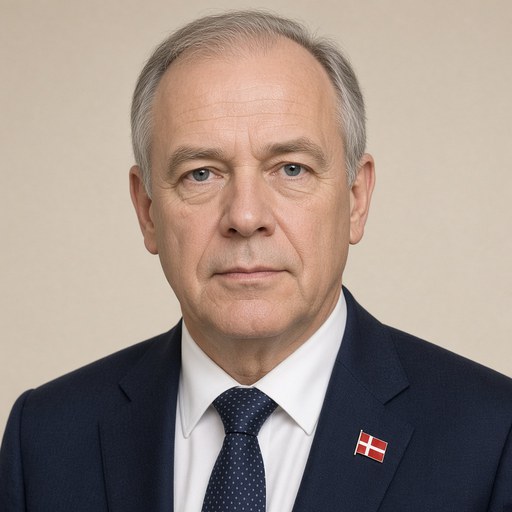
"Global Citizens in a New Community." Prime Minister Poul Nyrup Rasmussen's speech at the Industry's Annual Day 2001 on September 20, 2001.
 Poul Nyrup Rasmussen · Prime Minister of Denmark
- Context
- Rasmussen addressed Danish industry leaders at Dansk Industri's Annual Day 2001 on September 20, 2001, days after the September 11 terrorist attacks.
- Main themes
- September 11 attacks and global security, global citizenship in business, international solidarity and alliance, vulnerability of democracies, NATO Article Five invocation, Danish industry's global role, post-Cold War world order, shared global community, combating terrorism, values and democratic resolve
- Duration
- ~38 min
- Words
- 4,607
- Sentences
- 306
- Readability
- 54
- Grade
- 8.8
- Syntax
- 2.72
- Vocabulary
- 1.98
Translated from Danish
The broad sphere of national life a sentence belongs to. Every sentence has an Arena, so it is the denominator the other indices are read against.
Other306 sentences in 96 paragraphs
Thank you for the welcome.
May I start by expressing my deep gratitude for the theme you have chosen at Dansk Industri. It is ambitious, and some may certainly think: Is it relevant for me? Associations usually aim to tackle a new theme with the assurance that they are reasonably certain to have everyone on board. For there is, of course, a risk in setting the ambition of being a global citizen as a business. All the more respectful is your ambition.
I think it is commendable that you have set this goal. And I find it impressive that you have dedicated an entire day to it. I like to think that I know a fair amount about European industry organizations. But I have not yet met anyone who has so thoroughly embraced the theme that you have today.
Unfortunately, the events of recent days have also underscored that it is more important than ever to engage.
I would therefore like to start by saying a few words about Tuesday, September 11. And especially the time that followed. Not only because I personally, and as Prime Minister, cannot let go of the theme. I cannot. But because I consider an analysis of the world after September 11 to be so closely related to the ambition you have set forth, and with which I agree.
We can no longer separate them.
The fact is that Tuesday, September 11 changed the world’s agenda. We have not yet fully understood the full extent of the events in the United States. But they are significant. And they are very, very fundamental.
The plane that was hijacked was American. The buildings that were attacked were in the United States. But the people who died were your and my neighbors. I think it is very important to remember that the terrible collapse of the two towers was a collapse in which thousands of people, buried in ruins of steel, stone, cement, and dust, created a despair among millions, and millions of people and governments a sense of powerlessness and an unfathomable lack of understanding of what had happened. It created a glimpse of vulnerability that suddenly stands so strong and unequivocally before us.
That the world’s greatest superpower is vulnerable now underscores a very simple and fundamental thing: That there is no longer any neutral corner. No curtain behind which we can hide in safety and security. No horizon where we can say: They will not come here.
* * *
The people who lost their lives on September 11, just a few days ago, remind us of an equally horrifying fact, that it was ultimately chance that placed them in a location where brutal terrorists chose to strike. That they, in reality, could just as easily have been us.
One of us, who never returned that evening to family and friends.
Therefore, the world is no longer the same.
Our notions of security and defense have received a fundamental jolt. And now we live in a strange vacuum, where uncertainty and awareness of a new necessary global alliance are slowly beginning to take shape. But there is still a very, very long way ahead of us.
And it is important that we understand that there once was a Cold War, where friend was friend, and enemy was enemy. That there was once a time after the Cold War, where the sense of a new, safer world spread. Where we remember that we jumped and danced on the fallen Berlin Wall. Embraced each other and a future we believed in.
* * *
Now the terrorists have attacked everything we believe in. They have attacked our very fundamental belief that every single human being has value, simply by virtue of being a human.
Therefore, the future stands and falls with us and our insistence on our values. And it is equally clear that if we shake in our resolve or become afraid, insecure, or paralyzed, then they have won. And therefore it is equally clear that the task we must undertake can only be accomplished by all parties in our society and on our globe.
* * *
There is quite a lot that needs to be arranged now. Here in the country and internationally. And it is beyond any doubt that Danish companies will – and I hope will – play a central role in this task.
For we are now bound together in a much clearer global community than we have ever been before. A community of fate that is far more fundamental, visible, and necessary. There is no window that can be closed. There is no curtain that can be drawn down. There is no longer any shield. We all share vulnerability for better or for worse. Great things are happening now, and many decisions are being made. Decisions that business leaders will face for many years to come.
First: The day after the catastrophe in the United States, we made the necessary initial decisions within NATO. On September 12, we invoked for the first time in many, many, many years Article Five regarding mutual defense when we are attacked. We expanded the scope of Article Five to also include terrorist attacks from outside and stated: That terrorist attack is not only an attack on the United States. It is an attack on all of us, on our democracies.
Second: That very same evening, we expanded our responsibility in the UN Security Council. We created the global legitimate basis for a global alliance. We expressed our solidarity with the United States, New York, Washington D.C., Pennsylvania, and the unfortunate people who were affected.
On Friday, tomorrow, we will come together at the European Council Summit in Brussels, and follow up on what has now been initiated. We will make quite a few decisions. The justice ministers have in these hours made a number of the first decisions that will provide us with a basis for a new and well-coordinated response to terrorism.
And when I speak of terrorism, I am no longer only talking about what we have seen. That is terrible enough in itself. But I am also talking about what we know. That terrorist activity in the modern global world is not a phenomenon isolated from economic crime, from drugs, from human trafficking. But is part of a larger phenomenon.
* * *
I foresee that we are facing the greatest security risk in a different world for a time to come, probably in the next ten years. The threat we are talking about is new, different, and far more cunning and sophisticated than we have ever seen.
I foresee that we must take that fight from the beginning in an international, strong, well-thought-out, and sustained response. And I foresee that Denmark will not hesitate for a second. We currently hold the presidency for crime fighting in the Baltic Sea. We will inject renewed energy into that. In a little over a year, we will hold the presidency in the European Union.
We have just taken a huge step in intensifying research, investigation, and intelligence cooperation with the United States. This will not be a single action. It will not be a single weekend. It will be a long-term effort that can only be won by thinking and acting globally. But it can also only be won by thinking and acting broader and more coherently than the first move.
* * *
May I say that we need to think in three tracks, which are very closely related to the business as a global citizen. Three tracks.
First, we must combat terrorism here and now. That means the masterminds and perpetrators behind the terrible catastrophe in the United States.
Second, a comprehensive international alliance must be initiated to combat terrorism. Dismantling its machinery. Financially, including money transfers to finance terrorist activities. Organizationally, including connections with the other forms of crime I have mentioned. Human trafficking, drugs, etc.
All of this presupposes a global alliance that neither Europe nor the United States can manage alone. But in reality, it also presupposes that we have the other countries with us, who feel committed, who have a cultural and civil foundation for this.
And then there is the third and equally important point. We must, to an even greater extent, remove the very breeding ground for hatred. And thus the breeding ground for terrorism. And we can only do that if we purposefully work to bridge the gap between the poor and the rich parts of the world. We can only do that if our global efforts have the ethical dimension that Dansk Industri has also placed on the agenda.
* * *
It is about competing on an ethical basis that is broader than we have been used to thinking.
It is about technology transfer, about development aid, about opening our markets, about stronger social and economic progress for all parts of the global community.
Only by organizing such a strategy that moves in these three tracks do we have a chance to create new security.
And it is obviously also in that light that globalization is on the agenda. The new agenda. It is clear that globalization, in the eyes of ordinary people, is a coin with two sides.
On the one hand, globalization, as you and I know, holds colossal new opportunities for progress. International investments can contribute to the goal I have tried to outline. Greater knowledge and greater welfare and opening of markets are interconnected. That is the perspective that must be maintained.
But on the other hand, we also face the realization that globalization contains elements of uncertainty. It contains risks of deterioration of working conditions and competition under poor inhumane conditions. It contains risks of erosion of the human rights to which we adhere. It contains risks of regression in areas we do not wish. This duality in globalization must be very much in our awareness, and we must be able to shape a strategy for it that is very concrete.
In a world where over a billion people live on less than one dollar a day, it is beyond any discussion that we must, of course, contribute our share.
In a world where last year in Africa we saw that ten times as many people died from AIDS as the number killed in wars in Africa on an annual basis. Ten times. And millions and millions of children receive no education. And almost as many children have no parents due to the AIDS catastrophe.
It goes without saying that the three tracks I have mentioned place colossal demands on us. Demands to maintain an overview. Demands to be able to turn the cool, objective analysis into a determination, but also a focus that does not involve too many new risks.
* * *
May I mention a couple of aspects of globalization that are significant for our companies, for our society, and for our demands for a new strategy.
First: The companies' own new worldview. I believe it would be correct to face the fact that the global order is characterized by an increasing concentration of corporate ownership on a global scale. We can see that a limited number of transnational companies today have a very significant influence on world trade. There is nothing wrong with that in itself. But I believe there is a need for us to create an international set of guidelines for the behavior of transnational companies that we can operate with and feel is as it should be.
We have already taken the first step this year in the OECD and have actually, as far as I can see, the outlines of such a set of guidelines. It is clear – also in competitive terms – in our interest to define what constitutes good and what constitutes bad corporate behavior in the new world. Which in reality integrates all the considerations that Dansk Industri has discussed when a company wants to be a global citizen.
* * *
We have a roundtable in Europe that is increasingly marking itself as a responsible forum, where social responsibility, environmental responsibility, and respect for human rights are on the agenda.
We have a Copenhagen Center, which is highly respected in Europe right now. It is here at the Copenhagen Center for Social Responsibility that new inspiration is drawn. And it is no coincidence that it was here that we recently held a large seminar on corporate social responsibility.
Since the catastrophe on September 11, we have seen signs of recession in the United States and signs of recession in Europe. May I say to you: I believe that the resilience and experience in the European context is strong enough to ensure that we do not fall into an unsustainable recession. I also believe that the determination of the U.S. political leadership is strong enough to be extremely aware that the sectors now affected as a result of the terror are supported, and that the economic and monetary policy efforts in the United States are fully aware of how important it is right now to act consistently and act quickly.
Therefore, I believe that we will get through this, but no one can know for sure. But I believe that the awareness of what needs to be done is far, far stronger than it has been before. I could mention other examples, but I will just summarize here by saying that we need more political and corporate cooperation across borders. Not less.
Never before have we needed companies as much as we do now. And never before has the pressure on business leaders been greater than it is now. And never before have we needed to work together, politicians, the government, businesses, the public and the private sector in a new challenging dialogue.
I think it is a great debate you have raised, and I must say that I can agree with what Hans Skov Christensen has said recently. That what happened on September 11 also places ethical demands on companies. And I would like to emphasize that I see no contradiction between the ethical demands we place on each other now and being innovative. Being proactive. Being competitive. On the contrary. And I believe that Danish companies are well positioned to meet that challenge.
* * *
In Denmark, we are far ahead in the work on the triple bottom line, i.e., that companies contribute to sustainable development by simultaneously finding solutions to the economic side of the issue, the environmental side of the issue, and the human side of the issue. One could say that the business leader here in the country also has good experiences.
I usually like to say that what cannot be explained cannot be defended. And thus, my key point to you alongside the analysis is that there is another thing that is enormously important for the future. It is communication. If I were to mention one thing alongside what you have touched upon today in the concept of "The Company as a Global Citizen," it is communication. I do not believe one can underestimate that the spoken word and communication today play a far, far greater role than ever before.
And every company must face the fact that much more needs to be invested in communication than perhaps has been recognized in the past. For communication is also about emotions. And emotions will become one of the most decisive forces in the new global understanding. In other words: market forces, competitive pressure, disputes over governance instruments, wars and conflicts, and the pressure of communication all rest on one question: "Why are they writing so poorly about me now? They cannot be serious, for we are good enough on our end." You probably know that feeling; I certainly do!
One can feel despair for a moment when envisioning all of this. Governments and politicians refer to the difficulties they have and have had. Just think about how hard it was for us to follow up on the social summit from 1995. And think about how difficult it has been to follow up on the Kyoto Protocol. And if you are a business leader, you can rightly say that this is not exactly easy. But again - with increased influence comes a broader responsibility. A responsibility that may indeed seem disruptive to the short-term decision-making process in our companies. But which, in the long run, I assure you, is the very foundation.
* * *
The question of social, moral, and environmental sustainable development is a common concern. A shared responsibility. We might as well face it sooner rather than later. In reality, that is also what you have done, for which I thank you. It is my clear impression that many, many Danish business leaders are among the frontrunners when it comes to taking on that very responsibility.
Therefore, I do not feel the need to be sad in your assembly, but perhaps rather a need to emphasize how long-term and persistent the effort will be. It is not a one-year account we are facing next year. It is a generational account we must think in terms of. Such is the task.
This small country has some advantages we must be aware of. It is a homogeneous society. It is a well-educated society. It is a society where there are reasonably clear rules of the game. It is a society where the collaboration between the public and private sectors, where the interaction between research institutions and private companies, is somewhat manageable. So at least I have not said too much!
But it is also a society where we must use every single talent we have in our companies offensively and skillfully. Just as we must use each other in the community of fate we share, we must also utilize the global platforms. WTO, ILO, G-7, G-8, the International Monetary Fund. A new "Global Deal" that we will lift under the Danish presidency.
Let us say that the analyses are more or less in place. Let us say that we acknowledge the ambitions. And let us say that we also know where we are headed. But where is the strategy? How do we get there?
We will get there via two paths. Our own path in Denmark, our way of collaborating, our way of thinking long-term. I have already informed the Minister of Business to reassess DK21 in light of the new situation we find ourselves in.
In general, my message to all ministers is to rethink the situation we are in after September 11 and understand the implications of what has happened. It is not only us politicians who will face stronger airport security in the next five, ten, or fifteen years. It is also you. It is not only us politicians who will occasionally feel insecurity on a plane. It is also you.
Living with and implementing this in practice is our greatest challenge. I am optimistic on behalf of the Danes. When it comes to the broader international context, I can currently only see one forum that is sufficiently operational. That is sufficiently proactive, and that is sufficiently action-oriented. It is European cooperation.
Last year, we set ourselves a new global ambition when we said that Europe must have a value community called the active welfare state. We must acknowledge the fundamental values you have discussed today. We then introduced a social dimension, and we also now acknowledge that there is no contradiction between the social dimension on one side and competitiveness on the other. We said that new security and new mobility are not opposites but prerequisites for each other. Since then, the European Commission has placed corporate social responsibility high on the agenda. In the green paper that the Commission has just published, there are many Danish fingerprints. And again, there is every reason to thank Danish businesses for the marks you have made.
Therefore, it is also natural that we, in the Danish presidency, set some important themes as part of our ambitions. Understand me correctly, a presidency cannot simply serve its own interests, especially not a country of our size. Others have tried that.
* * *
We can be ambitious on behalf of the community. Let me mention some of the themes that I believe we should prioritize.
The first is the inclusive labor market and our ambition that there are employment opportunities and talent development opportunities for most people in our society.
For this will be one of the decisive initiatives for the partnership for social responsibility. Retaining employees who would otherwise be pushed out. Inclusivity also for those who are outside. And last but not least, in these times, an extraordinary effort to show Europe that there must be job opportunities and educational opportunities for all, regardless of what your name is, who you are, and what ethnic background you have.
I believe that Europe, our region in the world, has these special prerequisites for taking on global leadership. For addressing the tasks I have mentioned. In the Danish presidency, the focus will be on the inclusive labor market and corporate social responsibility. Externally, if we take some of the themes, there will be the major task of the summit in Johannesburg in September next year. Rio + 10 will be the theme. "Global Deal" will be the ambition, and I hope we can tackle the task of sustainable development and formulate the global political framework that is so targeted, so ambitious, and yet realistic that companies can also see that this future must be built together.
* * *
The EU's enlargement will be the second major task under the Danish presidency. A task that is also closely linked to companies as global citizens. From Copenhagen to Købehavn must be the ambition. We started in 1993 - just think if we can conclude in December 2002 - ten years that changed the world. Environmental burdens will be a key point, and let me finally mention something as prosaic as agricultural policy.
I believe that Europe's future, especially regarding the economy, is very much tied to our understanding that the agricultural policy we have today must enter a new long reform period, which will have far-reaching implications - also for the future of businesses. And it will have far-reaching implications for Poland's membership in the EU to become a reality. I am not saying that an agricultural reform must be a condition for Poland to become a member, and that we thereby gain access to a large market and their market gains access to us. But I can see that if we, under the Danish presidency, get the chance to shape the first milestones - not only in the industrial sector but also in the next reform of agricultural policy, then we have a fundamental prerequisite for EU enlargement to become a quicker reality than it otherwise would be.
* * *
Let me conclude with what I would call five cornerstones. For what it is we must do globally, and what it is we must do together. And this will be a summary.
First, there is the fight that must now be intensified against terrorism, against international crime, human trafficking, and economic crime. It is the greatest threat. It will take years. It will take many years. It will involve not only a military component. Do not be mistaken; it would be wrong to think so. It will include political pressure, diplomatic pressure, educational efforts. A very, very strongly coordinated investigative effort and police action across the entire field.
Second, we must remember to maintain, and I would like to underline three points, that the fight we are now engaged in is not a fight between peoples. Not a fight between religions. Not a fight between people of a certain faith or different faiths. It is very, very crucial that we help each other to explain this to Danish citizens.
I can personally feel how hard it hits when there are TV images of two Palestinian young boys who do not understand much or have understood catastrophically much wrong. I assure you that it triggers shockwaves in the Danish population that take a very long time to overcome.
That was, of course, also why I quickly went out and urged all immigrant organizations to declare that violence must never be a part of Danish democracy.
Violence must never be an argument for anything. And fortunately, they also went out. But I would like to say that there is still a lot of work to be done. The way we can maintain the Danish perception of the newcomers to our country is by ensuring that in practical business policy, we do not distinguish based on what your name is, but truly surprise the world and ourselves by bringing the unemployment rate for refugees/immigrants down to the level that is close to that of all of us. This is also part of the key to finding the answer to the labor balance in the next 10-15 years in Denmark.
We need labor for our elder care, for Danish industry, and for our future. The answer is to get people into work. The result beyond that is an extra contribution to ensure that this country does not fall apart. In new confrontations over religion and ethnic minority affiliations, but comes together in a new sense of community.
And my third point is the EU's enlargement, which I have already touched upon. The fourth is the "Global Deal," and the fifth, perhaps again the most important. I would like to conclude with this. That we stick together, quite simply.
That we understand that the answer in the new era is not inwardness, isolation, and intolerance. That we understand that we, as opinion shapers, have a common fate. That I do not want to see the first Molotov cocktail thrown into a residence with a foreign-sounding name.
I want to see a Denmark that can figure it out. A Denmark that does not tolerate just anything.
A Denmark that has truly understood the great signal after the catastrophe in New York. That we have a shared fate. That we can change things now. If I were to mention a single silver lining after September 11, it might be that citizens have become aware of the undeniable existence and necessary conditions of the global community now.
That it may also give Danish citizens a new understanding that the future welfare of this country must depend on our ability to be active participants in the global community. You can contribute here. We all must contribute. Europe has long been a millstone around the neck of many people who have felt that every time we called for parliamentary elections - not to mention referendums. One can almost feel the defiance rising in many people.
Dear everyone, perhaps there is a chance. In all the desperation and the feeling of being crushed that sits with us after the collapse of the two towers.
Perhaps there is somewhere a possibility for the Danes to rise and say: Okay, we now fundamentally understand, also in our hearts, where the emotions roar, the community of fate we have with our neighbors. If we can reach that point, then I am not so worried about the cohesion of our society. Then I am not so worried that Danish companies will leave their mark, as you always have done in your capacity as global citizens in this new community that is to bind us together.
Thank you, and good luck.
The original Danish. The tags above are read on the English translation's sentences.
Tak for velkomsten.
Må jeg starte med at sige stor tak for det tema, I har valgt i Dansk Industri. Det er ambitiøst, og nogen vil sikkert tænke: Er det relevant for mig? Man plejer jo gerne, hvis man er en forening at søger at ramme et nyt tema med den sikkerhed, der ligger i at være nogenlunde sikker på at have alle med. For der er selvfølgelig en risiko ved at sætte sig ambitionen om at være verdensborger som virksomhed. Så meget desto mere respektfyldt er jeres ambition.
Jeg synes, at det er flot, at I har sat jer det mål. Og jeg synes, at det er imponerende, at I har afsat en hel dag til det. Jeg bilder mig selv lidt ind, at jeg kender en del til europæiske industriorganisationer. Men jeg har ikke mødt nogen endnu, som i den grad har sat det tema, som I har i dag.
Desværre har de seneste dages begivenheder også understreget, at det er mere vigtigt end nogensinde at engagere sig.
Jeg vil derfor starte med at sige nogle ord om tirsdag den 11. september. Og især tiden efter. Ikke alene fordi jeg personligt og som statsminister kan slippe temaet. Det kan jeg ikke. Men fordi jeg anser en analyse af verden efter den 11. september for at hænge så meget sammen med den ambition, I har stillet, og som jeg er enig i.
Vi kan ikke længere skille det ad.
For sagen er, at tirsdag den 11. september ændrede verdens dagsorden. Vi har ikke helt forstået endnu den fulde rækkevidde af begivenhederne i USA. Men de er store. Og de er meget, meget fundamentale.
Det fly, der blev kapret, var amerikansk. De bygninger, der blev angrebet, stod i USA. Men de mennesker, der døde, var jeres og mine naboer. Jeg synes, at det er meget vigtigt at huske, at det forfærdelige sammenbrud af de to tårne var et sammenbrud, hvor tusindvis af mennesker, begravet i ruiner af stål, sten, cement og støv, skabte en fortvivlelse hos millioner, og millioner af mennesker og hos regeringer en fornemmelse af afmagt og en ufattelig mangel på forståelse for det, der var sket. Skabte et glimt af sårbarhed, som pludselig står så stærkt og entydigt for os.
At selve verdens største supermagt er sårbar nu, understreger en meget enkel og meget fundamental ting: At der ikke længere findes noget neutralt hjørne. Noget tæppe bag hvilket vi kan gemme os i tryghed og sikkerhed. Nogen horisont, hvor vi kan sige: Her kommer de ikke.
* * *
De mennesker, der mistede livet den 11. september, for få dage siden, minder os om en ligeså forfærdende kendsgerning, at det dybest set var tilfældigheder, der gjorde, at de befandt sig på et sted, hvor brutale terrorister valgte at slå til. At de i virkeligheden inderst inde ligeså godt kunne have været os.
Én af os, der aldrig nogen sinde vendte tilbage den aften til familie og venner.
Derfor er verden ikke længere den samme.
Vores forestillinger om sikkerhed og forsvar har fået et grundskud. Og nu lever vi i et mærkeligt vakuum, hvor usikkerhed og bevidsthed om en ny nødvendig global alliance så småt begynder at tage form. Men der er stadig meget, meget lang vej foran os.
Og det er vigtigt, at vi forstår, at der engang var en kold krig, hvor ven var ven, og hvor fjende var fjende. At der var engang efter en kold krig, hvor fornemmelsen af en ny tryggere verden bredte sig. Hvor vi husker, at vi hoppede og dansede på den faldne Berlin mur. Tog om hinanden og om en fremtid, vi troede på.
* * *
Nu har terroristerne så angrebet alt det, vi tror på. De har angrebet selve vores fundamentale tro på, at hvert eneste menneske har værdi, alene i kraft af, at det er et menneske.
Derfor står og falder fremtiden med os og vores insisteren på vores værdier. Og det er ligeså klart, at hvis vi ryster på hånden eller bliver bange, utrygge eller handlingslammede, så har de vundet. Og derfor er det ligeså klart, at den opgave vi skal løfte, kun kan løftes af alle parter i vores samfund og på vores verdensklode.
* * *
Det er temmelig meget, der skal lægges tilrette nu. Her i landet og internationalt. Og det er hævet over enhver tvivl, at danske virksomheder kommer til – og håber jeg – vil være med til at løfte en hel central opgave.
For vi er jo bundet sammen nu i et meget tydeligere globalt fællesskab, end vi nogen sinde før har været. Et skæbnefællesskab, som er langt mere fundamentalt, synligt og nødvendigt. Der findes ikke noget vindue, man kan lukke. Der findes ikke noget gardin, man kan rulle ned. Der findes ikke længere noget værn. Vi deler alle sårbarheden på godt og på ondt. Der sker store ting nu, og der bliver truffet mange beslutninger. Beslutninger som man som virksomhedsleder vil møde i mange år frem.
For det første: Dagen efter katastrofen i USA traf vi de nødvendige første beslutninger i NATO-kredsen. Den 12. september brugte vi for første gang i mange, mange, mange år artikel fem om det gensidige håndslag på forsvar, når vi bliver angrebet. Vi udvidede artikel fems dækningsområde til også at omfatte terrorangreb udefra og sagde: Det terrorangreb er ikke alene et angreb på USA. Det er et angreb på os alle, på vores demokratier.
For det andet: Den selv samme aften udvidede vi vores ansvar i FN’s sikkerhedsråd. Vi skabte den globale legitime basis for en global alliance. Vi udtrykte vores solidaritet med USA, New York, Washington D.C., Pennsylvania, og de ulykkelige mennesker, der blev ramt.
På fredag, i morgen, går vi sammen i det Europæiske Råds Topmøde i Bruxelles, og følger op på det, der nu er sat i gang. Vi kommer til at træffe ganske mange beslutninger. Justitsministrene har i disse timer truffet en række af de første beslutninger, der skal give os en basis for et nyt og veltilrettelagt modtræk i forhold til terrorismen.
Og når jeg taler om terrorismen, taler jeg ikke længere alene om, det vi har vi set. Det er forfærdeligt nok i sig selv. Men jeg taler også om det, vi ved. At terroristisk virksomhed i den moderne globale verden ikke er et fænomen, der er isoleret fra økonomisk kriminalitet, fra narko, fra menneskesmugling. Men er en del af et samlet fænomen.
* * *
Jeg forudser, at vi i en tid fremover, formentlig i de næste ti år, står foran den største sikkerhedsrisiko i en anderledes verden. Den trussel vi taler om er ny, anderledes og langt mere udspekuleret og sofistikeret, end vi nogensinde har set det.
Jeg forudser, at vi må tage den kamp forfra i et internationalt, stærkt og gennemtænkt og vedvarende modtræk. Og jeg forudser, at Danmark ikke tøver et sekund. Vi har formandskabet for kriminalitetsbekæmpelsen i Østersøen lige nu. Det vil vi kaste fornyet kraft ind i. Vi har om et lille år formandskabet i den Europæiske Union.
Vi har lige nu taget et kæmpe skridt i intensiveringen af forskning-, efterforsknings- og intelligencesamarbejde med USA. Det bliver ikke en enkelt aktion. Det bliver ikke en enkelt weekend. Det bliver en årelang indsats, som kun kan vindes ved at tænke og handle globalt. Men også kun kan vindes ved at tænke og handle bredere og mere sammenhængende end det første træk.
* * *
Må jeg sige, vi skal tænke i tre spor, som hænger meget nøje sammen med virksomheden som verdensborger. Tre spor.
For det første skal vi nedkæmpe terrorismen her og nu. Det vil sige bagmændene og gerningsmændene bag den forfærdelige katastrofe i USA.
For det andet skal der iværksættes en omfattende international alliance til bekæmpelse af terrorismen. Afmontering af dens maskineri. Finansielt, herunder pengetransporter til finansiering af terroristvirksomhed. Organisatorisk, herunder sammenhæng med de andre former for kriminalitet, jeg har nævnt. Menneskesmugling, narko osv.
Alt det forudsætter en global alliance, som hverken Europa eller USA kan klare alene. Men i virkeligheden også forudsætter, at vi har de andre lande med, som føler sig forpligtet, som har et kulturelt og et civilt grundlag herfor.
Og så er der det tredje og mindst ligeså vigtige. Vi skal i endnu stærkere omfang fjerne selve grobunden for hadet. Og dermed grobunden for terrorismen. Og det kan vi kun gøre, hvis vi målrettet sætter ind på at udligne kløften mellem den fattige og den rige del af verden. Det kan vi kun gøre, hvis vores globale indsats har det etiske præg, som Dansk Industri også har sat på dagsordenen.
* * *
Det handler om at konkurrere på et etisk grundlag, der er bredere, end vi har været vant til at tænke i.
Det handler om teknologioverførsel, om u-landsbistand, om åbning af vore markeder, om sociale og økonomiske stærkere fremgang for alle dele af verdenssamfundet.
Kun ved at tilrettelægge en sådan strategi, der bevæger sig i de her tre spor, har vi chancer for at skabe ny tryghed.
Og det er selvsagt også i det lys, at globaliseringen står på dagsordenen. Den nye dagsorden. Det er klart, at globaliseringen i almindelige menneskers øjne er en mønt med to sider.
På den ene side rummer globaliseringen, som I og jeg ved, kolossale nye muligheder for fremgang. Internationale investeringer kan bidrage til det mål, jeg har prøvet at skitsere. Større viden og større velfærd og åbninger af markederne hænger sammen. Det er det perspektiv, der skal fastholdes.
Men på den anden side står vi jo også med en erkendelse af, at globaliseringen indeholder elementer af usikkerhed. Indeholder risici for forringelse af arbejdsvilkår og konkurrence på dårlige umenneskelige vilkår. Indeholder risici for udhuling af menneskerettigheder, som vi bekender os til. Indeholder risici for tilbageskridt på områder, vi ikke ønsker. Denne dobbeltsidethed i globaliseringen skal vi være meget bevidste om og kunne forme en strategi for, der er meget konkret.
I en verden, hvor over en milliard mennesker lever for mindre end én dollar om dagen, er det hævet over enhver diskussion, at vi naturligvis må yde vores bidrag.
I en verden, hvor vi sidste år i Afrika så, at der døde ti gange så mange mennesker af AIDS, end det antal der på årsbasis bliver dræbt i krigene i Afrika. Ti gange. Og millioner og millioner af børn får ingen skolegang. Og næsten lige så mange børn har ikke forældre efter AIDS-katastrofen.
Det siger sig selv, at de tre spor jeg har nævnt, stiller kolossale krav til os. Krav om at bevare overblikket. Krav om at kunne få den kølige, nøgterne analyse til at slå over i en beslutsomhed, men også en målrettethed, der ikke indebærer alt for mange nye risici.
* * *
Må jeg næve et par sider af globaliseringen, som har betydning for vores virksomheder, for vores samfund og vores krav om en ny strategi.
For det første: Virksomhedernes eget nye verdensbillede. Jeg tror, at det vil være korrekt at se i øjnene, at den globale verdensorden er præget af en stigende koncentration af virksomhedsejerskab på globalt plan. Vi kan se, at et begrænset antal transnationale selskaber i dag har en meget betydelig indflydelse på verdenshandlen. Det er der i og for sig ikke noget galt med. Men der er behov for, tror jeg, at vi får skabt et internationalt sæt guidelines for transnationale virksomheders adfærd, som vi kan fungere med og føler er som det skal være.
Vi har allerede nu taget det første skridt i år i OECD og har faktisk nu, så vidt jeg kan se, konturerne af et sådan sæt guidelines. Der er klart - også i konkurrencemæssig øjemed - i vores interesse at definere, hvad der er god, og hvad der er dårlig virksomhedsadfærd i den nye verden. Som i virkeligheden integrerer alle de hensyn, som Dansk Industri har drøftet, når man som virksomhed vil være verdensborger.
* * *
Vi har et roundtable i Europa, som mere og mere markerer sig som et ansvarsbevidst forum, hvor det social ansvar, det miljømæssige ansvar, respekten for menneskerettighederne er på dagsordenen.
Vi har et Copenhagen Center, som respekteres meget stærkt i Europa lige nu. Det er her i Copenhagen Center for Social Responsibility, man henter den nye inspiration. Og det er jo ikke et tilfælde, at det netop var her vi for nylig holdt et stort seminar om virksomhedernes sociale ansvar.
Vi har efter katastrofen den 11. september set tendenser til recession i USA og tendenser til recession i Europa. Må jeg sige til jer: Jeg tror, at robustheden og erfaringen i den europæiske kontekst er stærk nok til at sikre, at vi ikke ryger ned i en uholdbar recession. Jeg tror også, at beslutsomheden i USA’s politiske ledelse er stor nok til at være ekstrem bevidst om, at de brancher, der nu er ramt som følge af terroren, bakkes op, og at den økonomiske og pengepolitiske indsats i USA er fuldstændig klar over, hvor vigtigt det er lige nu at handle konsistent og handle hurtigt.
Derfor tror jeg, at vi kommer igennem det, men ingen kan jo vide det. Men jeg tror, at bevidstheden om, hvad der skal gøres, er langt, langt stærkere end den har været før. Jeg kunne nævne andre eksempler, men vil bare her sammenfatte ved at sige, at vi har brug for mere politisk og virksomhedsmæssigt samarbejde på tværs af grænserne. Ikke mindre.
Aldrig før har vi haft så meget brug for virksomheder, som nu. Og aldrig før har presset på virksomhedslederne været større end nu. Og aldrig før har vi mere brug for at arbejde sammen, politikere, regeringen, virksomheder, det offentlige og det private i en ny udfordrende dialog.
Jeg synes, det er en flot debat, I har rejst, og jeg må sige, at jeg kan erklære mig enig i det Hans Skov Christensen har sagt for ganske nylig. At det, der skete den 11. september, også stiller etiske krav til virksomhederne. Og jeg vil gerne understrege, at jeg ser ikke nogen modsætning mellem det etiske krav, vi stiller til hinanden nu, og det at være innovativ. Det at være offensiv. Det at være konkurrencedygtig. Tværtimod. Og jeg mener, at danske virksomheder står stærkt til at møde den udfordring.
* * *
Vi er i Danmark lang fremme i arbejdet med den tredobbelte bundline, dvs. at virksomhederne bidrager til bæredygtig udvikling ved på én og samme tid at finde løsninger på den økonomiske side af sagen, den miljømæssige side af sagen, og den menneskelige side af sagen. Man kan sige, at virksomhedslederen her i landet også har gode erfaringer.
Jeg plejer gerne at sige, hvad der ikke kan forklares kan ikke forsvares. Og dermed er mit stikord også til jer ved siden af analysen, at der er en anden ting, som er kolossalt vigtig i fremtiden. Det er kommunikationen. Hvis jeg skulle nævne en ting ved siden af det, I har berørt i dag i begrebet ”Virksomheden som verdensborger”, så er det kommunikation. Jeg tror ikke, man kan undervurdere, at selve det talte ord og kommunikationen i dag spiller en langt, langt større rolle end nogensinde før.
Og enhver virksomhed må se i øjnene, at der skal investeres langt mere i kommunikation, end man måske ret beset har erkendt før i tiden. For kommunikation er også følelser. Og følelser bliver en af de mest afgørende sammenhængskræfter i den globale nye erkendelse. Med andre ord: markedskræfter, konkurrencepres, strid om styringsinstrumenter, krig og konflikter og kommunikationspresset hviler på en: ”Hvorfor skriver de nu så dårligt om mig? Det kan de ikke være bekendt, for vi er jo gode nok hos os”. I kender nok den følelse, jeg gør da i hvert fald!
Man kan godt et øjeblik fortvivle, når man ser alt det for sig. Regering og politikere henviser jo til de vanskeligheder de har og har haft. Tænk bare på, hvor svært vi havde ved at følge det sociale topmøde op fra 1995. Og tænk på hvor svært vi har ved at følge Kyoto-protokollen op. Og hvis man er virksomhedsleder, så kan man også med rette sige, at det er altså ikke helt nemt det her. Men igen - med øget indflydelse følger et bredere ansvar. Et ansvar, der ganske vist i første omgang kan virke forstyrrende for den kortsigtede beslutningsproces i vores virksomheder. Men som på lang sigt, det forsikrer jeg jer, er selve grundlaget.
* * *
Spørgsmålet om en social-, moralsk og miljømæssig bæredygtig udvikling er et fælles anliggende. Et fælles ansvar. Vi kan lige så godt først som sidst se det i øjnene. Det er jo i virkeligheden også det I har gjort, hvad jeg takker for. Det er mit klare indtryk, at mange, mange danske virksomhedsledere er blandt de førende, når det gælder om at påtage sig netop det ansvar.
Derfor føler jeg ikke trang til at blive ked af det i jeres forsamling, men måske snarere en trang til at understrege hvor langsigtet og vedholdende en indsats, der bliver tale om. Det er ikke et etårigt regnskab, vi står foran til næste år. Det er et generationsregnskab, vi skal tænke i baner af. Så stor er opgaven.
Det her lille land har nogle fordele, vi skal være bevidste om. Det er et homogent samfund. Det er et veluddannet samfund. Det er et samfund, hvor der er rimelige klare spilleregler. Det er et samfund, hvor samvirket mellem det offentlige og det private hvor samspillet mellem forskningsinstitutioner og private virksomheder nogenlunde er til at leve med. Så har jeg i det mindste ikke sagt for meget!
Men det er også et samfund, hvor vi må bruge hvert eneste talent, vi har i vores virksomheder offensivt og dygtigt. Ligesom vi skal bruge hinanden i det skæbnefællesskab vi har, skal vi også bruge de globale platforme. WTO, ILO, G-7, G-8, den internationale valutafond. En ny ”Global Deal” som vi kommer til at løfte under det danske formandskab.
Lad os så sige, at analyserne er nogenlunde på plads. Lad os sige, at ambitionerne vedstår vi os. Og lad os sige, at vi dermed også ved, hvor vi skal hen. Men hvor er så strategien? Hvordan kommer vi derhen?
Vi kommer derhen via to veje. Vores egen vej i Danmark, vores måde at samarbejde på, vores måde at tænke langsigtet på. Jeg har allerede givet besked til erhvervsministeren om, at genvurdere DK21 i lyset af den ny situation vi står i.
I det hele taget er min besked til alle ministre, gentænk nu den situation, vi er i efter den 11. september og forstå rækkevidden af det, der er sket. Det er jo ikke alene os politikere, der vil møde stærkere lufthavnskontrol i den næste fem-, ti-, femtenårige periode. Det er også jer. Det er ikke alene os politikere, der en gang i mellem vil føle utryghed i et fly. Det er også jer.
At leve med, og at implementere det i praksis, er vores største udfordring. Jeg er optimistisk på danskernes vegne. Når det gælder det bredere internationale kan jeg kun lige nu få øje på et forum, som er tilstrækkeligt operativt. Som er tilstrækkeligt offensivt, og som er tilstrækkeligt handlekraftigt. Det er det europæiske samarbejde.
Sidste år satte vi os en ny global ambition, da vi sagde, at Europa må have et værdifællesskab, der hedder den aktive velfærdsstat. Vi må vedstå os de grundlæggende værdier, I har talt om i dag. Så satte vi en social dimension ind, og vi vedstår os også nu, at der ikke er en modsætning mellem den sociale dimension på den ene side og konkurrencekraften på den anden side. Vi sagde, at ny tryghed og ny mobilitet ikke er modsætninger men hinandens forudsætninger. Siden har Europa-Kommissionen sat virksomhedernes sociale ansvar højt. I den grønbog, som Kommissionen netop har udgivet, er der mange danske fingeraftryk. Og igen er der alt mulig grund til at takke dansk erhvervsliv for de aftryk, I har sat.
Derfor er det også naturligt, at vi i det danske formandskab sætter os nogle vigtige temaer, som nogle af vores ambitioner. Forstå mig ret et formandskab kan ikke sådan varetage egne interesser og slet ikke et land af vores størrelse. Det er der andre, der har prøvet.
* * *
Vi kan være ambitiøse på fællesskabets vej. Lad mig nævne nogle af de temaer, jeg synes, vi skal sætte højt.
Det første er, det rummelige arbejdsmarked og vores ambition om, at der er beskæftigelsesmuligheder og talentudfoldelsesmuligheder for de fleste mennesker i vores samfund.
For det bliver jo et af de afgørende tiltag til partnerskabet for det sociale ansvar. Fastholdelse af medarbejdere, der ellers ville blive skubbet ud. Rummelighed også for dem, der står uden for. Og sidst men ikke mindst i disse tider, en ekstraordinær indsats for at vise Europa, at der skal være arbejdsmuligheder og uddannelsesmuligheder for alle uanset, hvad du hedder, hvem du er og hvilken etnisk baggrund du har.
Jeg tror på, at Europa, vores region i verden, har disse særlige forudsætninger for at påtage sig globalt lederskab. For at løfte de opgaver, jeg har nævnt. I det danske formandskab bliver der indadtil det rummelige arbejdsmarked og virksomhedernes sociale ansvar. Udadtil, hvis vi tager nogle af temaerne, bliver der den store opgave, der hedder topmødet i Johannesburg i september til næste år. Rio + 10 bliver temaet. ”Global Deal” bliver ambitionen, og jeg håber, vi kan løfte opgaven om en bæredygtig udvikling og få formuleret den globale politiske ramme, som er så målrettet, så ambitiøs og dog alligevel realistisk, at virksomhederne også kan se, at den fremtid skal vi løfte i fællesskab.
* * *
EU’s udvidelse bliver den anden kæmpe opgave under det danske formandskab. En opgave som også har meget tæt tilknytning til virksomhederne som verdensborgere. Fra København til Købehavn skal være ambitionen. Vi startede i 1993 – tænk hvis vi nu kan slutte i december 2002 – 10 år der forandrede verden. Miljøbelastningerne bliver et hovedpunkt, og lad mig slutteligt her nævne for jer noget så prosaisk som landbrugspolitikken.
Jeg tror på, at Europas fremtid i meget høj grad, også når det gælder økonomien, er bundet op på, at vi lærer at forstå, at den landbrugspolitik vi har i dag må gå ind i en ny lang reformperiode, som vil have vidtrækkende betydning - også for virksomhedernes fremtid. Og vil have vidtrækkende betydning for, at Polens medlemskab af EU kan blive en realitet. Jeg siger ikke, at en landbrugsreform skal være betingelsen for, at Polen bliver medlem, og at vi dermed får adgang til et stort marked og deres marked får adgang til os. Men jeg kan se, at hvis vi under det danske formandskab får chancen for, at forme de første pejlemærker - ikke alene på industriens område, men også på den næste reform af landbrugspolitikken, så har vi dermed en grundlæggende forudsætning for, at EU's udvidelse kan blive en hurtigere realitet end det ellers ville være tilfældet.
* * *
Lad mig slutte med, hvad jeg vil kalde fem grundpiller. For hvad det er vi skal gøre globalt set, og hvad det er, vi skal gøre i fællesskab. Og det bliver et resumé.
For det første er der kampen, der nu skal forstærkes mod terrorisme, mod international kriminalitet, menneskehandel, økonomisk kriminalitet. Det er den største trussel. Den vil tage år. Den vil tage mange år. Den vil involvere ikke alene en militær del. Tag ikke fejl, det vil være forkert at tro det. Den vil indeholde politisk pres, diplomatisk pres, uddannelsesindsats. En meget, meget stærkt koordineret efterforskningsindsats og politimæssig indsats på hele feltet.
For det andet så skal vi huske at fastholde, og det vil jeg gerne sætte tre strege under, at den kamp vi nu er i gang med, ikke er en kamp mellem folkeslag. Ikke en kamp mellem religioner. Ikke en kamp mellem folk af en bestemt tro eller forskellige trosretninger. Det er meget, meget afgørende, at vi hjælpes ad med også at forklare det til danske borgere.
Jeg kan selv mærke, hvor hårdt det virker, når der er TV-billeder af to palæstinensiske unge knægte, der ikke har forstået ret meget eller også har de forstået katastrofalt meget forkert. Jeg forsikrer jer om, at det igangsætter chokbølger i den danske befolkning, som det tager tid meget lang tid at overvinde igen.
Det var selvfølgelig også derfor, jeg selv gik meget hurtigt ud og opfordrede alle indvandrerorganisationer til at melde, at volden aldrig må blive et indslag i det danske demokrati.
Volden må aldrig blive et argument for noget som helst. Og de gik heldigvis også ud. Men jeg vil gerne sige, at der er meget, meget arbejde at gøre endnu. Den måde vi kan holde sammen på danskernes opfattelse af de nye, der er kommet til vores land, er ved, at vi i praktisk virksomhedspolitik ikke skelner mellem, hvad du hedder, men virkelig overrasker verden og os selv ved at få bragt den arbejdsløshed for flygtninge/indvandrerne ned i nærheden af det niveau, der er for alle os andre. Det er jo også en del af selve nøglen til at finde svaret på arbejdskraftbalancen i de næste 10-15 år i Danmark.
Vi har brug for arbejdskraft til vores ældreservice, til dansk industri og til vores fremtid. Svaret er at få mennesker i arbejde. Resultat derudover er et ekstrabidrag til, at det her land ikke splittes ad. I nye konfrontationer om religion og etniske mindretalstilhørsforhold, men samles i en ny fællesskabsfølelse.
Og mit tredje punkt er EU's udvidelse som jeg allerede har været inde på. Det fjerde er ”Global Deal”, og det femte måske igen det allervigtigste. Det vil jeg gerne slutte med. At vi holder sammen ganske enkelt.
At vi forstår, at svaret i den ny tid ikke er indadvendthed, indelukkethed og intolerance. At vi forstår, at vi som meningsdannere har en fælles skæbne. At jeg ikke vil se den første molotovcocktail vælte ind på en bopæl, der har et fremmedklingende navn.
Jeg vil se et Danmark, som kan finde ud af det. Et Danmark som ikke tolererer hvad som helst.
Et Danmark som ret beset har forstået det store signal efter katastrofen i New York. At vi har en fællesskæbne. At vi kan forandre tingene nu. Hvis jeg skulle nævne et eneste lyspunkt efter 11. september, så er det måske det ene, at borgerne har fået øjnene op for det globale fællesskabs ubestridelige eksistens og nødvendige vilkår nu.
At det måske giver også danske borgere en ny forståelse for, at det her lands fremtidige velfærd må bero på vores evne til at være aktive medspillere i det globale fællesskab. Også her kan I bidrage. Vi skal alle bidrage. Europa har længe været et møllested omkring halsen på mange mennesker, der har følt, at hver gang vi udskrev folketingsvalg - for slet ikke at tale om folkeafstemninger. Man kan ligefrem føle trodsen vælte op i mange mennesker.
Kære alle sammen måske er der en chance. I al desperationen og den følelse af knugethed, der sidder I os efter de to tårnes sammenbrud.
Måske er der et eller andet sted en mulighed for, at også danskerne kan rejse sig og sige: Ok, vi forstår nu helt grundlæggende også i vores hjerte, hvor følelserne buldrer, det skæbnefællesskab vi har med vores naboer. Hvis man kan nå dertil, så er jeg ikke så bekymret for vores samfunds sammenhængskraft. Så er jeg ikke så bekymret for, at danske virksomheder vil sætte sig spor, som I altid har gjort det i jeres egenskab af at være verdensborgere i dette nye fællesskab, der skal binde os sammen.
Tak skal I have og held.