




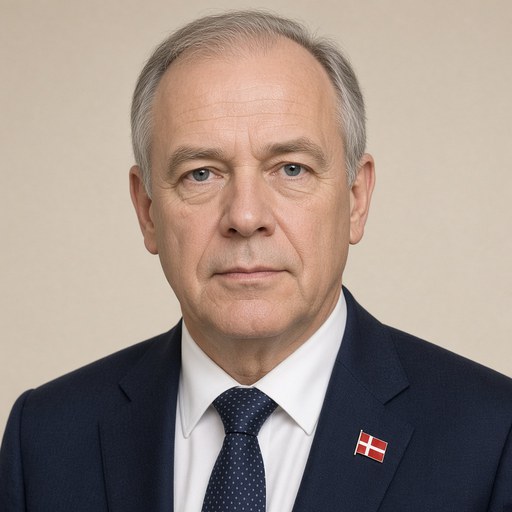
Prime Minister Poul Nyrup Rasmussen's statement at the concluding debate of the Folketing on May 31, 2001.
 Poul Nyrup Rasmussen · Prime Minister of Denmark
- Context
- Rasmussen delivered the closing statement of Denmark's Folketing parliamentary year on May 31, 2001, reviewing the government's legislative achievements.
- Main themes
- Legislative accomplishments, Danish welfare state, economic policy, labor market reform, social inclusion, welfare reform, international responsibility, environmental policy, educational policy, healthcare investment, Danish democracy, comparison with 1993
- Duration
- ~59 min
- Words
- 7,057
- Sentences
- 458
- Readability
- 53
- Grade
- 8.7
- Syntax
- 2.71
- Vocabulary
- 1.93
Translated from Danish
The broad sphere of national life a sentence belongs to. Every sentence has an Arena, so it is the denominator the other indices are read against.
Other458 sentences in 176 paragraphs
A new time – new tasks
It has truly been a busy year – but also a good year for Denmark.
It has been an intense working year, which naturally follows from the efforts of the past seven years in our society.
Last night, I sat down and reviewed the overview of our work here in the Folketing over the past year. I must conclude that the government has successfully carried out its legislative program, indeed quite well – also including a number of extra initiatives that we could not foresee a year ago.
I find this very satisfying. And I would like to start by expressing my gratitude for this in relation to the Folketing. It confirms that we – despite differences in standpoint – can also collaborate. It will continue to be, I would like to assure you, the government's ambition to cooperate, as a strong characteristic of Danish democracy.
We have passed many laws over the past parliamentary year – and tomorrow we will vote on the last group of our legislation.
* * *
Looking over the legislative program, there are a number of laws that stand out: New initiatives for a better working environment. Continued rights and obligations in the labor market, but also greater consideration for the individual. Easing of unemployment insurance. An active urban policy with greater consideration for our disabled and increased efforts for our homeless. A reform of early retirement pensions that focuses on what people can do, rather than concentrating on what they cannot do. An active gender equality policy and new initiatives in the area of equal pay. A completely reformulated business policy. DK 21 with proposals for partnership with Danish businesses. A rethinking in the Defense with an emphasis on our international responsibility and ambition. A new agenda for IT. An ambitious ongoing effort for a better natural environment. An active cultural policy. A long-term large – and thus resource-intensive – effort for better hospitals, for our elderly and for our children. A long-term traffic policy effort. An educational policy that is persistent and consistent. And last but not least, an active responsible foreign policy line, for which Denmark should continue to be known and recognized.
Some may say: "Are we passing too many laws in Denmark?" "Are we adapting, changing, and passing too many new rules in Denmark?" The answer would be yes, if the world stood still and Denmark with it. The answer would be yes, if all people who could work were employed, and all people had the opportunity and basis to live a good active life.
But that is not quite the case. That is not the case yet. The barometer does not indicate immutability but change. Especially in the international community, and that will shape us and our conditions in the coming years. We must prepare for that.
One could ask further – why do we have rules in our society at all? We have them because we do not want to accept that chance should dictate and exclude people. We have them because we do not want to accept that pure market forces should sort people in our society, simply because they are weaker, or because they perhaps did not get as many chances as most.
We have them because we need each other. We have them because we have decided that it is the very core of the Danish welfare society. I readily acknowledge to the Folketing and the entire Danish population that we have been quite busy in the past eight years of legislative work. I am pleased that the Danish population has made a tremendous effort to get our society back on the right track. That was indeed the ambition when we laid the lines eight years ago – back in 1993.
* * *
Back in 1993, when everyone knew someone who had become unemployed. Now most people know someone who has found work. It is and will remain crucial, as much as work fills our everyday lives as Danes.
Back in 1993, we heard about thousands of families who went bankrupt with their homes because the economy no longer held up. Today, it is almost the opposite. The demand is so great that the rise in house prices itself creates problems.
Back then, thousands of young people lacked the opportunity to get an education, and many, many young people dropped out. Today, far fewer fail to succeed.
Back then, there was despondency and doubt about the future. Today, more, far more, are included in our society.
* * *
I would like to emphasize to the Folketing that I am far from saying that everything is good. It is not. But I say that it is a better Denmark than back in 1993.
And I say that through a persistent and consistent economic policy, we have aimed to ensure a strong foundation for Denmark in the coming years.
All the balance problems we struggled with back then, we have overcome. I acknowledge that this has influenced our economic interventions. And often those interventions have not been popular – it is true – but it has nevertheless been the secret key to bringing Denmark onto the stable path we are on today.
We are in the process of reducing our debt. We are at the forefront of international work. Our businesses are experiencing good times – most recently, we have seen international companies invest – in Hillerød instead of in Ireland. This is an expression that the crucial strengths of this welfare society are also seen as competitive strengths in the eyes of international businesses.
We are reasonably well-prepared for tomorrow's problems. And our experiences confirm that we must not let pure market forces dictate development. Market forces must be the servant of humanity and not its master.
We can rightly say that the majority of the tasks we set for ourselves eight years ago are now nearing a solution. Denmark is back on the right track. Now it is time for us to set new tasks for Denmark. It is also a new time. That is precisely why we must use our efforts to tackle the challenges so that Denmark also navigates well through the coming years in a good way.
I say this to emphasize that none of the many reforms we have worked so hard on in the past eight years have been random or determined by the week's opinion polls. Much can be said about the government, but that we base our policy on the populism of opinion polls, that cannot be said of us. We may even have sometimes been too early in our actions, according to some opinions. We are, after all, not so sorry about that, because we have consciously wanted to organize a political effort for Denmark that took into account future challenges. That addressed the problems that existed before they became insurmountable crises. That were long-term in nature, and that had immediate effects. That have always aimed to provide the security that is a prerequisite for people to live under constant international change.
I also say this because the society we have now did not come about by itself. Because it could have been different – it certainly could have. The results came because we wanted them. Because the line was clear and consistent. And first and foremost because the Danish population – the school teacher, the metal worker, the slaughterhouse worker, the construction worker, the bus driver, the social and health assistant, the office assistant, the cashier, the IT employee – yes, everyone in the private and public sectors has made a tremendous effort.
We are now on a good path, which did not come from abroad, but first and foremost came from ourselves. Now it is about holding on and navigating wisely so that we can tackle the new tasks, just as we tackled the old ones.
* * *
In the coming years, the core of our political work will not be individual issues, but the whole and the will to think long-term. The will to intervene and make decisions that may not be equally popular everywhere in the present, but which in the longer perspective help to uphold our values and our community.
There is no need for magic formulas or experiments that question the fundamental security of society. It is natural to take new initiatives that work in people's everyday lives. That step by step improve the conditions of the vulnerable. That must ensure Denmark in a new time without creating division.
That is what I understand by political leadership on a clear value basis. We need a stronger community – not a weaker one.
We need to share the responsibility for Denmark's future – not to shy away from it.
We need greater justice in our society, both nationally and internationally. We need not only to gather around more welfare for each of us, but first and foremost greater quality in our welfare.
We need to create greater coherence in our society. Greater unity and greater belonging.
* * *
The international development – the so-called globalization – is here, as an unavoidable reality. A reality that we can neither close our eyes to, isolate ourselves from, nor draw the curtains against.
If we did that, we would truly be failing.
If we tried to lull the population into an illusion that we in Denmark could shape our lives and our development completely independently of the outside world, we would truly be shirking our responsibility. We in the government will tackle the new time openly, clearly, and ambitiously based on our values and our care.
* * *
There is no doubt that globalization has meant that free market forces in a number of situations have gained greater leeway and greater influence. Enormous sums of money can be moved between continents in seconds in search of new gains.
On the one hand, this means that resources can be quickly moved to where new opportunities are created and where they can be used best. But on the other hand, it also creates a new uncertainty if we in our society do not embrace the new time and shape a clear policy.
It is at the same time a great challenge for all societies for all peoples. If we do not unite in a new global strategy, we risk that the consequences will be brutal for those who are not as privileged as we are. We cannot just let things be and believe that the market is a closed circuit consisting of anonymous and invisible hands. Fortunately, it has not come to the point where the market is made the highest moral authority in our society. The market must continue to be the servant of humanity and not its master.
The pendulum, I feel, has swung in the wrong direction for too long on a global scale. Internationally, it is now time to make an effort to swing it in the right direction again.
* * *
Justice must be the key word both in Denmark and globally, and just as strongly the key to wholeness in life and the future for the individual. I believe many remember that behind the many new jobs created in Denmark in the past eight years, there are also very large gross movements. The new world is indeed a world where old jobs are replaced with new ones.
And when a person in a factory is told that so many employees must be laid off, I have often seen how great a sense of powerlessness it creates in people. Who made that decision? Why me? Why are we not informed in good time so that we can prepare ourselves? When will we be re-employed? Many ask themselves: Is this globalization? That we are told with such short notice that now it is our jobs that are no longer there?
I understand that feeling well. It is important that we shape the right answers. It is indeed happening to an increasing extent in these years that old jobs are replaced with new jobs. It is the government's clear position that there is a need to establish a new form of political offensive in relation to the international market forces of globalization. I also feel that we have good opportunities for that. Because we are in the process of building a collaboration with great reach, not least at the European level. We must use that as a starting point to tackle the international challenges.
We must equip people for change through further education and training, so they can take the new jobs.
It is our position that this should not only continue to happen in Denmark but be part of our international strategy. And I feel that we have good opportunities for this. That with European cooperation, we have extra good opportunities to shape a new response.
* * *
May I remind the Folketing that 25 international companies globally today control over half of world trade. Just think, that in these 25 boardrooms, crucial decisions are made that affect millions and millions of people's and wage earners' futures.
There is a need for more politics on a global scale – not less politics. There is a need for us, in the same way that we have done in Denmark – where we have built a human face around our market forces over the past 100 years, which became our welfare society – to make a new effort internationally. It should not take 100 years.
There is a need for us to use our European cooperation as a starting point. And I look forward to, together with the rest of the government, presenting – in the form of our White Paper on European cooperation – a contribution to precisely that ambition.
I envision that European cooperation can take on global leadership both in relation to the USA, in relation to Southeast Asia, and in relation to the Third World’s crying need for stronger, solidarity-based cooperation.
We need international agreements, I assure you. Agreements that can put an end to greed when it comes to our financial markets. When it comes to international tax havens. When it comes to the abuse of the world's resources. When it comes to solidarity.
* * *
The greatest security risk in the world is not found within ourselves. The greatest security risk in the world is if we forget the development conditions of the Third World. The future of the poor is in reality closely linked to our future.
And may I emphasize very strongly:
We do not become richer by others becoming poorer. We do not become richer by others remaining poor in the Third World. We do not become richer by the gap between them and us growing larger. In our own interest, and first and foremost in the interest of humanity and solidarity, we must continue to set a good example as the foremost when it comes to our development aid.
This is the prerequisite for us to speak with a loud and clear voice about the development aid of others. We cannot afford to do otherwise. As long as there is famine, disasters, hunger, and war victims, there is a desperate need for us.
As long as there are children who are starving, there is a desperate need for solidarity in development aid. As long as there are markets that have not been opened so that poor people can sell their goods, there is a great need for us and for European cooperation.
In the end, it is not so much that we need to give.
When we took on the task of helping with some of the most vulnerable social issues in the three Baltic countries – Estonia, Latvia, and Lithuania – it was for the same reason. A small two-digit million amount was all it took. But it is enough that there may be a chance for the Russian street children in Tallinn, Estonia, to have a slightly better future.
Perhaps a chance for Irina, who has lived as a prostitute on the street since the age of 12, to now break free from that existence. No one can, of course, guarantee that she will have a decent life for the rest of her days. But we can at least contribute to ensuring that the chance for her is also there.
And similarly, no one can, of course, say that Denmark can make the decisive difference in the Middle East. But we can contribute through a stronger European effort to ensure that the situation and tragedy in the Middle East can move back onto a path of peace.
For that is how it is. No one can manage alone. Neither the rest of the world nor Denmark. We need each other.
* * *
And soon we will embark on the next major move in international cooperation. The Danish government has already been active for some time. Most recently at the OECD cooperation summit in Paris under the Danish presidency. We succeeded here in getting the first important step adopted on the way to working for a new "Global Deal" – a new international partnership agreement. A new international handshake between rich and poor, between all countries, which will set the agenda in Johannesburg next year when we meet 10 years after Rio and embark on the new stretch.
This new global agreement must include aid, debt relief for poor communities, and free trade with a human face. It also concerns market access for developing countries, environmental and labor rights, and international environmental issues. The ambition is great, but it is important.
And people must be involved. Not by us coming and imposing, but something that people have co-ownership of.
We have also taken steps to help developing countries utilize international patent rules to bring life-saving medicine to HIV and AIDS-affected victims. It has not been pretty to see certain international pharmaceutical companies operate. But now we have, after all, managed to cut through. And I hope, and I expect, to see cheaper medicine brought to the poor in the world.
And food security is a concern for many families in their daily lives. We are pursuing a clear and consistent line here at home and in European cooperation. But it is, of course, equally clear that we cannot control everything fully and alone. Here too, there is a need for stronger international cooperation. The EU's agricultural support must be structured so that it does not mindlessly support production but supports the environment, health, and animal welfare.
* * *
I have started with this theme here in the Folketing because it is crucial for understanding Denmark's living conditions and the value creation we live off. We have always actively participated on the international stage. We have always wanted to sell our goods on the world market. Yes, we actually live off that. But it also means that we become very dependent on international agreements and regulations functioning.
We certainly demonstrated this clearly in connection with the foot-and-mouth disease discussion and developments in Europe. It showed us a bit of how vulnerable we actually are to interventions in free trade. And suddenly we saw it: Large markets for our agricultural exports were suddenly closed. And it required an extra and very skilled effort from both the Foreign Service and the Minister of Food and the affected industries to reopen the markets.
This underscores for me how important it is that we also expand our international rules in these areas. And it is, after all, a clear proof that we cannot stop global development. But that we, as a country and as a people, need to establish "traffic rules" for globalization.
We must be the country that pushes the hardest to include environmental and labor rights and consumer protection in the WTO negotiations. We will continue that pressure, also when it comes to our efforts to persuade the USA to participate in the Kyoto Protocol.
* * *
For eight years, Danish society and the government have faced many challenges head-on. We will continue that line just as resolutely, just as openly, and just as ambitiously in light of the challenges of globalization. This also applies to the other two communities of the Realm.
Far to the North, the two communities – the Faroe Islands and Greenland – also feel the effects of globalization. I say this because there are not many welfare societies in the world – and perhaps precisely for that reason, there is a particular need for good cohesion and cooperation among the small welfare societies.
* * *
The Lagting adopted a resolution on April 20 of this year aimed at establishing the Faroe Islands as a sovereign state.
The government's position is clear. We prefer an expanded cooperation within the Realm, but it is also clear that:
It is the Faroese people who ultimately determine the future of the Faroese people and their connection to Denmark.
It is clear that the government is ready to either discuss a genuine self-government reform within the Realm or a gradual takeover of the areas of responsibility within the current Home Rule Act, possibly a revised Home Rule Act.
It is clear that the government is very ready to negotiate a block grant agreement with the government of the Faroe Islands for one year - the financial year 2002.
And finally, I was pleased that we collectively emphasized in the recent debate in the Folketing that the government naturally acknowledges the agreement on raw materials in the underground, which was entered into on December 22, 1992, between the then government and the Faroese government.
I would like to thank the broad majority in the Folketing for their support of this main line.
I would like to emphasize that the government will continue constructively and consistently in negotiations with the Faroese government, regardless of which path the people of the Faroe Islands may choose to take. We will do this out of respect for the choice made in the Faroe Islands and on the basis of democratic cooperation. That is how it must continue to be.
* * *
The government and the Greenlandic government recently entered into an agreement on the block grant for the next two years - 2002 and 2003. The state is now also contributing a grant for the rescue services in Central Greenland and in Disko Bay.
I am pleased that the Greenlandic Home Rule is striving to make the Greenlandic economic community less dependent on fishing and state subsidies.
We have noted with great interest that the Home Rule has established a self-government commission to formulate Greenlandic wishes for future cooperation. When this work is completed, we are fully ready to discuss Greenlandic wishes in the future in our cooperation.
We are pleased to see the Greenlandic interest and the Greenlandic self-awareness in international work. This also applies to the EU, where we see good progress in a number of areas.
Fortunately, it is not only Denmark that is experiencing economic progress. This is also very much the case in the Faroe Islands and Greenland. Fishing has been good, and there are high growth rates in the two communities. Both places have their finances in order. We can only welcome this.
* * *
Here at home, we are also fully engaged in discussing how we should organize ourselves in the future.
Our value foundation is clear. I have already specified that. Community is the foundation.
* * *
But I must not hide the fact that one of the greatest frustrations that I believe many have in politics is the simple experience that things take time.
That it takes time before our laws work. Before our agreements with municipalities and counties work in practice. This can create impatience for many, for us here in the Folketing and not least for many in the Danish population. Progress has been made. But there is a need for continued progress.
* * *
We believe that we in Denmark must maintain the value foundation we have. We believe that the main focus is the duty and right to improve ourselves, and everyone's duty to and responsibility for the weakest and for each other.
We do not believe in new experiments that, through greater use of market forces, risk creating new insecurity for our elderly, for our children, for our families, for education, and for our use of the welfare society's resources.
For that is one of the paradoxes in politics. That what sounds good – the so-called free choice – actually creates less wise use of money, human labor, and greater insecurity.
If we leave more to market forces and so-called free choices, we risk significant problems in our education, in the differing development of our regions, and in our local communities in Denmark. Greater pressure on individual families to move, and tensions deep within individual families between children and their educational choices, between father and mother and their work in the local community.
We risk that the "mobility price" becomes too high. For we actually want, each of us in our Danish families, to be in the local community where we belong. To find our job there. To maintain our identity there. Our workplace. Our families' opportunities for development. This will also continue to be the government's firm anchor. And I am pleased that this is not incompatible with Denmark being one of the countries in Europe that simultaneously has the highest mobility in the labor market. Therefore, there is no contradiction between competitiveness and a secure welfare society, and there should not be one in the future either.
* * *
Quality, justice, and security in everyday life are only words that first gain meaning when accompanied by concrete policy. I would like to mention a number of key topics for the government's work that will also be expressed in the autumn.
First and foremost, there is a need for us to continue our efforts for the weakest in society. For the vulnerable – from the homeless to drug addicts and vulnerable children. For those who simply cannot manage without a society that can lend a helping hand.
Our homeless have received a number of offers. New housing offers and help to be in one place.
Drug addicts are entitled to better treatment options. Residential institutions have been established, and meeting places as well. But here too, there is a need for a stronger effort. And for all those who cannot speak up, not least our young people with mental illnesses, there is a need for a continued high and strong prioritized effort. This has been the case since we held the first opening speech here in the Folketing in 1993, and it must continue to be so.
* * *
I am pleased to strengthen cooperation with the counties on the new 10-point program we have developed together for the benefit of our mentally ill people in our country.
* * *
Fortunately, it is the case that the vast majority of people in Denmark look forward to going to work. It is challenging, it is exciting. Others find it okay. But there are also many who go to work with a desire to get home as quickly as possible. Because it is unpleasant. Because it is hard. Because it is wearing. Because it is stressful.
The vision of a top-modern Welfare Denmark also includes a vision of good workplaces with quality all around.
I say this because Denmark will always be in a situation where there is another spot on the earth where wages are lower and competition is tougher. I say this because there is no contradiction between a good workplace and being able to manage. I say this because our strongest resources in Denmark are working, skilled people.
A good working life is crucial for all of us to feel a little better in our overall lives. Because, frankly: There is no country where work means so much to so many people in their overall lives as right here.
And therefore, we must unite around a good working life. It is not quality to be extremely stressed. It is not quality that we have a high rate of absenteeism. It is not quality that one has to wait 17 years, in the worst case, to receive compensation for a work-related injury. And it is not quality that there are too many workplaces where the working environment is not good enough.
We waste too much talent, abilities, competencies, and experiences in too many places. We can do something about that, and we will.
The public sector is not good everywhere either. It also needs a push forward. I know that many, many skilled employees both in the public and private sectors look forward to that. Therefore, I am pleased that we here in the Folketing, with a modest majority – but still a majority – have implemented the new occupational health and safety legislation, which will mean so much for many, many thousands of people.
Influence over one's own work situation is fundamental. More offers of further education are immensely important. And I hope that this common understanding will spread among many, many companies. That a good working life, a good working environment, is not something that costs in the long run, but is the foundation for surplus and the foundation for competitiveness.
* * *
Greater quality in everyday life also means that all children have the right to a good start. A parental leave that gives the child and parents time in the first year. But I would like to emphasize that a good start in life does not end when the child celebrates its first birthday. Therefore, for us, it is not only about ensuring a longer parental leave, but about giving parents of young children better conditions to make work life and family life fit together better. Whether we are talking about one form or another, or an extra helping hand for the families with children who need it the most.
Children have the right to a good coherent start – not to quick fixes.
Therefore, the government will take the time to go through everything thoroughly and present a coherent proposal in the fall – a family policy, a family package, if you will.
I do not believe it is quality for parents of young children to simply receive a bag of money for childcare and then have to fend for themselves. We believe that families with children should have a welfare offer that supports the fact that parents in today's society need community more than ever before.
One of Denmark's greatest strengths is that both men and women today are almost equally represented in the labor market. We must be careful not to design a policy that sends women back home again. We must maintain our welfare and our increasing equality in the labor market.
The public school plays a crucial role in our entire value foundation and in the children's everyday lives. This is also an important priority on the government's agenda. It will also shape the upcoming municipal negotiations and the forthcoming political efforts.
We must continue our work for healthy food in our society, in our schools, for our sick and our elderly.
And when it comes to the other side of the environment, the external environment, the government is already working on the first considerations for the successor to the Water Environment Plan II, which we currently have in effect. There should also be no delays here.
* * *
That things are going well in Denmark is, of course, also reflected in housing prices. Unfortunately, this affects many, especially younger people, who have difficulty finding housing. Quality in everyday life is, of course, inextricably linked to having a decent roof over one's head.
Therefore, the government has presented an ambitious housing package that aims to provide approximately 10,000 new homes over the next five years, from cooperative housing and youth housing to housing for the elderly. With the housing package, we are putting movement into the housing market.
It is not reasonable that one should resort to solving housing problems by giving homeowners a tax break if they rent out a room. That will not create more youth rooms. The solution is more youth housing, especially in our large university cities.
* * *
Hospitals are high on the agenda of the Parliament, and so they are in the government. They are also a concern for the population.
How much we have added in resources since 1993. A number of large projects have been launched and have already shown their effect. This includes the heart plan, the cancer action plan, which fortunately – as I hear now – is progressing faster than we had dared to hope. This includes the efforts in the field of psychiatry, which I mentioned earlier. All this work must continue and be strengthened with the addition of both resources and collaboration.
In this context, the issue of private health insurance has resurfaced. I would say that one can be quite concerned about that development. I do not believe that free choices from private health insurance are the solution in Denmark.
I do not believe that the establishment of a parallel, private hospital system to the public hospital system is the solution in Denmark. Too many countries have tried it, and I doubt that it will be an insurance that is affordable for the chronically ill or the elderly.
And I doubt that insurance prices and premiums will hold up the day the insurance companies really have to start paying out money to the sick. We have seen it. We know it. From a number of other countries.
We should not have a privatized insurance Denmark in the hospital sector or in other areas. We need a community of values and a welfare community that ensures individuals opportunities, regardless of how deep their pockets are – or regardless of background or care needs.
In one municipality, I have seen that they are now considering offering a certain segment of the citizens a health insurance. I do not know what they have imagined.
This means that Mr. Olsen, who is working, can receive treatment, while his son with allergies and his wife, who is on early retirement, must see that the tax money in the municipality only benefits the healthy, active, and those who have jobs. I do not think that is fair, and it is also not a municipal task. We need community and clear distribution of responsibilities in our society.
* * *
I would also like to emphasize today that the issue is not merely about the distribution of money and public services. It is very much also about ensuring that we all have equal opportunities.
I am glad that we are beginning to see progress in our labor market. It needs to be made even more inclusive. I see increasing social responsibility from many companies. We need to strengthen that path. There is a need for rights and obligations to apply not only to the single mother – they apply to everyone in our society.
The number of people of working age who are supported by the public has fallen by nearly 110,000 since 1994. And among recipients of income transfers, an increasing proportion are in active offers aimed at improving their chances of returning to the labor market.
* * *
We need to continue our efforts for our elderly. They are not a burden and have never been a burden – regardless of technical terms and other matters.
Elderly citizens naturally have a fundamental right and need to receive the service and care they require as they become a bit weaker over the years. Fortunately, the majority of our elderly are healthy and active, and can thus also participate in society alongside the rest of us in ensuring the cohesion and voluntary efforts that are so fundamental.
Before we become elderly, there are also tendencies for companies to still forget about employees who have a bit more experience when it comes to organizing future collaboration.
We often experience situations where people over 50 are told: "By the way, we can no longer use you – you are no longer needed." I do not think that is wise. I do not think that is right. The government will encourage companies, both public and private, to consistently think long-term, especially in light of the fact that there will be fewer younger people in the Danish labor market.
* * *
The need for everyone also includes our refugees and immigrants. Here I would like to make a couple of additional remarks.
There are people who have the impression that once we have passed the new integration law, it will take effect almost immediately. There are people who believe that when refugees and immigrants come to Denmark, they will find work a couple of months later. But that is not how it works every day and all the time. We know that well.
There are two things that are necessary for society to function well when it comes to our refugees and immigrants. That we can live well side by side in a reasonable and humane community: One is that people learn Danish, and the other is that people get jobs. The first must be a decisive responsibility of society. The second is a responsibility we all share in our society. We must learn how to function better together. We must take the time to help get the newcomers into Danish workplaces. Getting into a construction site for the first time is not something that everyone finds equally easy. It applies to equal rights and obligations for all of us – regardless of different backgrounds.
* * *
There are good examples, but there are also bad examples of people not getting jobs when they are not named Sørensen, Jensen, or Rasmussen. I know examples myself, such as when a young girl in West Jutland calls an employer and offers her labor and receives a friendly remark on the phone: "We definitely need you. May I have your name and address?" When it turns out not to be Sørensen, Jensen, or Rasmussen, there is a bit of silence on the phone, and the employer says: "By the way, not right now – I will probably call back." But often, there is no call back.
We need to help ensure that calls are returned. So that the many refugees and immigrants, and all of us who are currently employed, can also see others get jobs.
I am completely convinced that this is the best thing we can do, and that is where the majority of our efforts should be focused.
* * *
I would like to emphasize today that the problem is not that we look different. The problem is not that we wear different clothing. The problem is not that we have different religions. But it is, of course, a problem if a few – including criminal asylum seekers – contribute to creating situations and conflicts that affect the many.
That is why I was glad that the Minister of the Interior succeeded in gathering a broad majority to implement the legislation we have just discussed here in Parliament. I believe that this is the wisest course. I am convinced that this is the right thing to do. I am glad and hopeful that this is the first step on a path that confirms that our immigration policy in Denmark is not suitable for block politics.
* * *
We must stick together in Denmark. We must stick together in our community. We must ensure the whole. And therefore, the government will also present our response to a sustainable action plan in June of this year, which encompasses the economic pillar, the social pillar, and the environmental pillar. Because they are indeed interconnected in order to be considered sustainable. The interconnected, sustainable Denmark on the three fundamental pillars.
* * *
My speech today has been about how we arrange ourselves with each other going forward. The welfare society in Denmark is not facing an end, but a beginning. Competitiveness is not in conflict with security, justice, and quality. They are not opposites, but rather prerequisites.
I have seen in certain countries that there is a tendency for business interests to take over politics and the media. May I say that there is a difference between thinking of Denmark solely as a business and thinking more broadly of Denmark as a whole society. May I emphasize that the best balance is achieved when the power in relation to the media, in relation to money, in relation to those who issue the rules, is genuinely separated from one another and not in the same hands.
I do not believe that it can ever serve the most vulnerable people to see a concentration of power that leaves too much to the market.
We must, of course, be ready to discuss opinions, values, and clear choices here in Parliament. Once that has happened, we must also be ready to cooperate. I am pleased that we are capable of that.
I am completely convinced that the future of society must be built on attitudes, must be built on clear direction. It must be established – not through experiments – but through clear attitudes. It must be established – not through coincidences – but through clear exclusions and clear inclusions. It is the tensions between clear attitudes and daily cooperation that are our strength here in the Danish Parliament.
The government also stated this in its Government Platform from March 1998. Allow me to conclude with this:
The government's working method is therefore the method of cooperation in Parliament and in harmony with all parts of society. This will be the government's guiding principle. We will initiate a collaborative process where the important questions are formulated based on clear attitudes, and where the answers are found through broad and dynamic cooperation.
This remains our guiding principle – I look forward to a good concluding debate.
The original Danish. The tags above are read on the English translation's sentences.
Ny tid – nye opgaver
Det har i sandhed været et travlt år – men også et godt år for Danmark.
Det har været et intenst arbejdsår, som falder i naturlig forlængelse af de seneste syv års indsats i vort samfund.
Jeg sad i går aftes og gennemså oversigten over vort arbejde her i Folketinget gennem det seneste år. Jeg må konstatere, at regeringen er kommet igennem med sit lovprogram, endda godt og vel – også inklusiv en række ekstra initiativer, som vi ikke kunne forudse for et år siden.
Jeg synes, det er meget tilfredsstillende. Og jeg vil gerne starte med at kvittere herfor i forhold til Folketinget. Det bekræfter, at vi - jo trods forskelle i ståsted - også kan samarbejde. Det skal fortsat, vil jeg gerne forsikre, være regeringens ambition at samarbejde, som et stærkt kendetegn for det danske folkestyre.
Vi har vedtaget mange love igennem det seneste folketingsår – og i morgen skal vi stemme om den sidste gruppe af vores lovgivning.
* * *
Ser vi hen over lovprogrammet, er der en række love, som falder i øjnene: Nye initiativer for et bedre arbejdsmiljø. Fortsat ret og pligt på arbejdsmarkedet, men også større hensyn til den enkelte. Lettelser i arbejdsløshedsforsikringen. En aktiv bypolitik med større hensyntagen til vore handicappede og forøget indsats for vore hjemløse. En førtidspensionsreform, der ser på det, folk kan, og ikke koncentrerer sig om, hvad folk ikke kan. En aktiv ligestillingspolitik og nye initiativer på ligelønsområdet. En helt ny formuleret erhvervspolitik. Dk 21 med oplæg til partnerskab med dansk erhvervsliv. En nytænkning i Forsvaret med understregning af vort internationale ansvar og ambition. En ny dagsorden for IT. Et ambitiøst fortsat arbejde for et bedre naturmiljø. En aktiv kulturpolitik. En langvarig stor - og så ressourcekrævende - indsats for bedre sygehuse, for vore ældre og for vore børn. En langsigtet trafikpolitisk indsats. En undervisningspolitik, der er vedholdende og konsekvent. Og sidst men ikke mindst en aktiv ansvarlig udenrigspolitisk linie, som Danmark fortsat skal være kendt og anerkendt for.
Nogen vil måske sige: ”Vedtager vi for mange love i Danmark?” ”Tilpasser, ændrer og vedtager vi for mange nye regler i Danmark?” Svaret ville være ja, hvis verden stod stille og Danmark med. Svaret ville være ja, hvis alle mennesker, der kunne, var i arbejde, og alle mennesker havde mulighed og grundlag for at kunne leve et godt aktivt liv.
Men sådan er det jo ikke helt. Sådan er det ikke endnu. Barometeret står ikke på uforanderlighed men på forandring. Især i det internationale samfund, og det vil sætte sit præg på os og på vores vilkår i de kommende år. Det skal vi forberede os til.
Man kunne spørge videre - hvorfor har vi i det hele taget regler i vores samfund? Det har vi, fordi vi ikke vil acceptere, at tilfældighederne skal råde og udstøde mennesker. Det har vi, fordi vi ikke vil acceptere, at de rene markedskræfter skal frasortere mennesker i vores samfund, blot fordi de er svagere, eller fordi de måske ikke fik så mange chancer, som de fleste.
Det har vi, fordi vi har brug hinanden. Det har vi, fordi vi har besluttet os for, at det er selve kernen i det danske velfærdssamfund. Jeg medgiver gerne Folketinget og hele den danske befolkning, at vi haft temmelig travlt i de seneste otte års lovgivningsarbejde. Jeg glæder mig over, at den danske befolkning har gjort en kæmpe indsats for at løfte vores samfund på ret spor igen. Det var jo det, der var ambitionen, da vi lagde linierne for otte år siden – dengang i 1993.
* * *
Dengang i 1993, hvor alle kendte en, der var blevet arbejdsløs. Nu kender de fleste en, der er kommet i arbejde. Det er og bliver afgørende, så meget som arbejdet fylder i vi danskeres hverdagsliv.
Dengang i 1993 hørte vi om tusindvis af familier, der var gået konkurs med deres hus, fordi økonomien ikke længere slog til. I dag er det næsten omvendt. Efterspørgslen er så stor, at husprisstigningerne i sig selv giver problemer.
Dengang manglede tusindvis af unge mulighed for at få en uddannelse og mange, mange unge faldt fra. I dag er der langt færre, som det ikke lykkes for.
Dengang var der mismod og tvivl om fremtiden. I dag er flere, langt flere, med i vort samfund.
* * *
Jeg vil gerne understrege for Folketinget, at jeg siger langt fra, at alt er godt. Det er det ikke. Men jeg siger, at det er et bedre Danmark end dengang i 1993.
Og jeg siger, at vi gennem en vedholdende konsekvent økonomisk politik har haft ambitionen om at sikre et stærkt grundlag for Danmark i de kommende år.
Alle de balanceproblemer, vi sloges med dengang, er vi kommet ud af. Det har præget vores økonomiske indgreb, det medgiver jeg. Og ofte har de indgreb ikke været populære - sandt nok - men det har alligevel været hemmeligheden i nøglen til at bringe Danmark ind på det stabile spor, vi nu i dag er på.
Vi er i gang med at afvikle vores gæld. Vi er med fremme i det internationale arbejde. Vores erhvervsliv oplever gode tider – senest har vi set internationale virksomheder investere – i Hillerød i stedet for i Irland. Det er udtryk for, at dette velfærdssamfunds afgørende styrker også ses som konkurrencestyrke med internationale virksomheders øjne.
Vi står rimeligt rustet til morgendagens problemer. Og vores erfaringer bekræfter os i, at vi ikke må lade de rene markedskræfter styre udviklingen. Markedskræfterne skal være menneskets tjener og ikke dets herre.
Vi kan med rette sige, at hovedparten af de opgaver, vi satte os for for otte år siden, nu nærmer sig en løsning. Danmark er kommet på rette spor. Nu er det tid, at vi sætter os nye opgaver for Danmark. Det er også en ny tid. Netop derfor skal vi bruge vore kræfter på at tage fat, så Danmark også kommer godt igennem de kommende år på en god måde.
Jeg siger det for at understrege, at ingen af de mange reformer, vi har arbejdet så hårdt med i de seneste otte år, har været tilfældige eller bestemt af ugens meningsmålinger. Meget kan man sige om regeringen, men at basere vores politik på populismens meningsmålinger, det kan man ikke sige, vi gør. Vi har måske endda nogen gange været for tidlig ude efter nogens opfattelse. Det er vi, når alt kommer til alt, ikke så kede af, fordi vi helt bevidst har ønsket at tilrettelægge et politisk arbejde for Danmark, som tog højde for de fremtidige udfordringer. Som tog fat om de problemer, der var, før de blev til uoverskuelige kriser. Som var langsigtede i deres natur, og som umiddelbart virkede i deres effekt. Som hele tiden har haft til formål at give den tryghed, som er forudsætningen for, at mennesker kan leve under den konstante internationale forandring.
Jeg siger det også, fordi det samfund, vi har nu, ikke kom af sig selv. Fordi det ikke kunne være anderledes – det kunne det sagtens. De resultater kom, fordi vi ville. Fordi linien var klar og konsekvent. Og først og fremmest fordi den danske befolkning - skolelæreren, metalarbejderen, slagteriarbejderen, bygningsarbejderen, buschaufføren, social- og sundhedsassistenten, kontorassistenten, kassedamen, IT-medarbejderen – ja, alle i den private og den offentlige sektor har gjort en kæmpe indsats.
Vi er altså nu inde på et godt spor, som ikke kom fra udlandet, men først og fremmest kom fra os selv. Nu gælder det om at holde fast og bære os klogt ad, så vi kan løfte de nye opgaver, som vi løftede de gamle.
* * *
Også i de kommende år vil kernen i vort politiske arbejde ikke være enkeltsager, men helhed og vilje til at tænke langsigtet. Vilje til at gribe ind og træffe beslutninger, som i nuet måske ikke er lige populære overalt, men som i det længere perspektiv er med til at bære vores værdier og vores fællesskab.
Der er ikke brug for trylleformularer eller eksperimenter, som sætter spørgsmålstegn ved samfundets grundlæggende tryghed. Det er naturligt at tage nye initiativer, som virker i folks hverdag. Som skridt for skridt forbedrer de svages vilkår. Som skal sikre Danmark i en ny tid uden at skabe splittelse.
Det er, hvad jeg forstår ved politisk lederskab på et klart værdigrundlag. Vi har brug for et stærkere fællesskab – ikke for et svagere.
Vi har brug for at dele ansvaret med hinanden for Danmarks fremtid – ikke for at fravælge os det.
Vi har brug for stadig større retfærdighed i vort samfund nationalt som internationalt. Vi har brug for, at vi ikke alene samler os om mere velfærd til hver af os, men først og fremmest større kvalitet i vores velfærd.
Vi har brug for at skabe større sammenhæng i vort samfund. Større sammenhold og større samhørighed.
* * *
Den internationale udvikling – den såkaldte globalisering – er her jo, som en ufravigelig realitet. En realitet, vi hverken kan lukke øjnene for, afspærre os fra eller rulle gardinerne ned for.
Gjorde vi det, ville vi for alvor svigte.
Hvis vi prøvede at lulle befolkningen ind i en illusion om, at vi i Danmark kunne forme vores liv og vores udvikling fuldstændig uafhængigt af omverdenen, så ville vi for alvor løbe fra vort ansvar. Vi vil i regeringen tackle den ny tid åbent, klart og ambitiøst på vores værdigrundlag og vores omsorg.
* * *
Der er ingen tvivl om, at globaliseringen har betydet, at frie markedskræfter i en række situationer har fået større råderum og større indflydelse. Enorme økonomiske summer kan på sekunder flyttes mellem verdensdele og søge nye gevinster.
Det betyder på den ene side, at ressourcerne hurtigt kan flyttes derhen, hvor der skabes nye muligheder, og hvor de kan bruges bedst. Men det skaber også på den anden side en ny usikkerhed, hvis ikke vi i vort samfund griber den nye tid og former en klar politik.
Det er samtidig en stor udfordring for alle samfund for alle folk. Hvis vi ikke samles i en ny global strategi, risikerer vi, at konsekvenserne vil være brutale for dem, der ikke er så privilegerede som os. Vi kan ikke bare lade stå til og tro, at markedet er et lukket kredsløb, der består af anonyme og usynlige hænder. Heldigvis er det ikke kommet så vidt, at markedet er gjort til den højeste moral i vort samfund. Markedet skal fortsat være menneskets tjener og ikke dets herre.
Pendulet, føler jeg, har i for lang tid svinget i den forkerte retning globalt set. Internationalt er det nu tid at gøre en anstrengelse for, at det svinger i den rigtige retning igen.
* * *
Retfærdighed skal være nøgleordet både i Danmark og globalt set, og lige så stærkt nøglen til helhed i livet og fremtiden for den enkelte. Jeg tror mange husker, at bag de nye mange arbejdspladser, der er skabt i Danmark i de seneste otte år, skjuler der sig også meget store bruttobevægelser. Den nye verden er jo en verden, hvor gamle arbejdspladser udskiftes med nye.
Og når et menneske på en fabrik får at vide, at nu skal der fyres så og så mange medarbejdere, så har jeg ofte set, hvor stor en afmagtsfornemmelse, det skaber hos folk. Hvem har besluttet det? Hvorfor lige mig? Hvorfor får vi ikke noget at vide i god tid, så vi kan forberede os? Hvornår bliver vi genansat? Mange spørger sig selv: Er det globalisering dette her? At vi med så kort varsel får at vide, at nu er det for resten vores job, der ikke længere er der?
Jeg forstår godt den følelse. Det er vigtigt, at vi former de rigtige svar. Det sker jo i stadig større omfang i disse år, at gamle job udskiftes med nye job. Det er regeringens klare holdning, at der er brug for at etablere en ny form for politisk offensiv i forhold til globaliseringens internationale markedskræfter. Jeg føler også, at vi har gode muligheder derfor. Fordi vi er i gang med at opbygge et samarbejde med stor rækkevidde, ikke mindst på europæisk niveau. Det skal vi bruge som afsæt for at tage fat om de internationale udfordringer.
Vi skal ruste mennesker til forandring gennem efteruddannelse og uddannelse, så man kan tage de nye job.
Det er vores holdning, at det ikke alene fortsat skal ske i Danmark, men være en del af vores internationale strategi. Og jeg føler, at vi har gode muligheder herfor. At vi med det europæiske samarbejde har ekstra gode muligheder for at forme et nyt svar.
* * *
Må jeg minde Folketinget om, at 25 internationale virksomheder globalt i dag kontrollerer over halvdelen af verdenshandlen. Tænk engang, at i disse 25 bestyrelseslokaler træffes der afgørende beslutninger, som berører millionvis og atter millionvis af menneskers og lønmodtageres fremtid.
Der er brug for mere politik globalt set – ikke mindre politik. Der er brug for, at vi på samme måde, som vi har gjort det i Danmark – hvor vi jo igennem 100 år har opbygget et menneskeligt ansigt omkring vores markedskræfter, der blev til vores velfærdssamfund – også gør os en ny anstrengelse internationalt. Det skal ikke tage 100 år.
Der er brug for, at vi anvender vores europæiske samarbejde som afsæt. Og jeg glæder mig til, sammen med den øvrige regering, at præsentere - i form af vores Hvidbog om det europæiske samarbejde – et bidrag til netop den ambition.
Jeg ser for mig, at det europæiske samarbejde kan påtage sig et globalt lederskab både i forhold til USA, i forhold til Sydøstasien og i forhold til den 3. verdens skrigende behov for et stærkere, solidarisk samarbejde.
Internationale aftaler har vi brug for, forsikrer jeg. Aftaler, der kan gøre op med grådigheden, når det gælder vores finansielle markeder. Når det gælder de internationale skattely. Når det gælder misbruget af verdens ressourcer. Når det gælder solidariteten.
* * *
Den største sikkerhedsrisiko i verden er såmænd ikke at finde hos os selv. Den største sikkerhedsrisiko i verden er, hvis vi glemmer den 3. verdens udviklingsvilkår. De fattige folks fremtid er i virkeligheden tæt forbundet med vores fremtid.
Og må jeg understrege meget stærkt:
Vi bliver ikke rigere af, at andre bliver fattigere. Vi bliver ikke rigere af, at andre forbliver fattige i den 3. verden. Vi bliver ikke rigere af, at forskellen mellem dem og os bliver større. I egen interesse, og først og fremmest i medmenneskelighedens og solidaritetens interesse, må vi fortsætte med det gode eksempel som de fremmeste, når det gælder vor ulandsbistand.
Det er jo forudsætningen for, at vi kan tale med en høj og klar stemme om de andres ulandsbistand. Andet kan vi ikke være bekendt. Så længe der er hungersnød, katastrofer, sult, krigsofre, er der desperat brug for os.
Så længe, der er børn, der sulter, er der desperat brug for en solidarisk ulandsbistand. Så længe der er markeder, der ikke er åbnet, så de fattige folk kan sælge deres varer, er der hårdt brug for os og for det europæiske samarbejde.
Det er såmænd til syvende og sidst ikke så meget, vi skal give.
Da vi for nogle få år siden påtog os at hjælpe med nogle af de mest udsatte sociale opgaver i de tre baltiske lande – Estland, Letland og Litauen – jamen, så var det jo af samme grund. Et lille tocifret millionbeløb skulle der kun til. Men det er nok til, at der måske er en chance for, at de russiske gadebørn i Tallinn, i Estland, får en lidt bedre fremtid.
Måske en chance for, at Irina, som har levet prostitueret på gaden siden 12 års alderen, nu kan slippe fri af den tilværelse. Ingen kan naturligvis garantere, at hun får et ordentligt liv resten af sin tilværelse. Men vi kan i det mindste give hende et bidrag til, at chancen for hende også er dér.
Og tilsvarende kan ingen naturligvis sige, at Danmark kan gøre den afgørende forskel i Mellemøsten. Men vi kan give vores bidrag gennem en stærkere europæisk indsats til, at det, der er situationen og tragedien i Mellemøsten, kan komme over i et freds spor igen.
For sådan er det jo. Ingen kan klare sig alene. Hverken resten af verden eller Danmark. Vi har brug for hinanden.
* * *
Og snart tager vi fat på det næste store træk i det internationale samarbejde. Den danske regering har allerede været i sving et stykke tid. Senest på OECD- samarbejdets topmøde i Paris under det danske formandskab. Det lykkedes os her at få vedtaget det første vigtige skridt på vejen i arbejdet for en ny ”Global Deal” – en ny international partnerskabsaftale. Et nyt internationalt håndslag mellem rige og fattige, mellem alle lande, som skal sætte dagsordenen i Johannesburg næste år, når vi mødes 10 år efter Rio og tager fat på den nye strækning.
Denne nye globale aftale skal indeholde bistand, gældslettelse til de fattige samfund, frihandel med et menneskeligt ansigt. Det gælder i øvrigt også markedsadgang for ulandene, miljø- og arbejdstagerrettigheder og internationale miljøspørgsmål. Ambitionen er stor, men den er vigtig.
Og folk skal være med. Ikke ved, at vi kommer og pådutter, men noget folk har medejerskab til.
Vi har også taget skridt til at hjælpe ulandene med at udnytte de internationale patentregler for at skaffe livsvigtig medicin frem til HIV- og Aidsramte ofre. Det har ikke været kønt at se visse internationale medicinalselskaber operere. Men nu har vi trods alt fået skåret igennem. Og jeg håber, og jeg forventer, at se billigere medicin ført frem til de fattige i verden.
Og fødevaresikkerheden er mange, mange familier med rette optaget af i deres hverdag. Vi fører en klar og en konsekvent linie herhjemme og i det europæiske samarbejde. Men det er naturligvis ligeså klart, at vi ikke kan kontrollere alt fuldt og helt og alene. Også her er der brug for et stærkere internationalt samarbejde. EU’s landbrugsstøtte skal indrettes, så det ikke bevidstløst støtter produktionen, men støtter miljø, sundhed og dyrevelfærd.
* * *
Jeg har lagt ud med dette tema her i Folketinget, fordi det er afgørende for forståelsen af Danmarks livsvilkår og den værditilvækst, vi lever af. Vi har jo altid deltaget aktivt på den internationale scene. Vi har altid gerne ville sælge vores varer på verdensmarkedet. Ja, det lever vi faktisk af. Men det betyder også, at vi bliver meget afhængige af, at de internationale aftaler og regelsæt fungerer.
Det fik vi jo unægtelig demonstreret tydeligt i forbindelse med mund- og klovsygediskussionen og udviklingen i Europa. Det viste os lidt af, hvor sårbare vi i virkeligheden er overfor indgreb i den fri handel. Og pludselig så vi det: Store markeder for vores landbrugseksport var pludselig lukkede. Og der måtte en ekstra og meget dygtig indsats til fra såvel Udenrigstjeneste som Fødevareministeren og de berørte erhverv til at få åbnet markederne igen.
Det understreger for mig, hvor vigtigt det er, at vi også på disse områder får udbygget vores internationale regler. Og det er vel også til syvende og sidst et klart bevis på, at vi ikke kan stoppe den globale udvikling. Men at vi som land og som folk har brug for at opstille ”trafikregler” for globaliseringen.
Vi skal være det land, der presser mest på for at få miljø- og arbejdstagerrettigheder og forbrugerbeskyttelse med i WTO-forhandlingerne. Det pres fortsætter vi, også når det gælder vores pres for at formå USA til at deltage i Kyoto-protokollen.
* * *
Gennem otte år har det danske samfund og regeringen mødt de mange udfordringer forfra. Den linie vil vi fortsætte lige så beslutsomt, lige så åbent og lige så ambitiøst i lyset af globaliseringens udfordringer. Det gælder også for Rigsfællesskabets to øvrige samfund.
For højt mod Nord mærker de to samfund – Færøerne og Grønland – jo også globaliseringens effekter. Jeg siger det, fordi der ikke er så mange velfærdssamfund i verden – og måske netop derfor, er der et særskilt behov for et godt sammenhold og samarbejde mellem de små velfærdssamfund.
* * *
Lagtinget vedtog den 20. april i år et beslutningsforslag, som sigter mod at oprette Færøerne som en suveræn stat.
Regeringens holdning er klar. Vi ser helst et udbygget samarbejde inden for Rigsfællesskabet, men det står også klart, at:
Det er den færøske befolkning, der til syvende og sidst bestemmer det færøske folks fremtid og tilknytning til Danmark.
Det står klart, at regeringen er rede til enten at drøfte en egentlig selvstyrereform inden for Rigsfællesskabet eller en gradvis overtagelse af sagsområderne inden for den nuværende hjemmestyrelov evt. en revideret hjemmestyrelov.
Det står klart, at regeringen er meget rede til at forhandle en bloktilskudsaftale med landsstyret for et år - Finansåret 2002.
Og endelig var jeg glad for, at vi i fællesskab understregede i Folketingets debat forleden, at regeringen naturligvis vedstår sig den aftale om råstoffer i undergrunden, som blev indgået den 22. december 1992 mellem den daværende regering og det færøske landsstyre.
Jeg vil gerne takke det brede flertal i Folketinget for tilslutningen til denne hovedlinie.
Jeg vil gerne understrege, at regeringen vil fortsætte konstruktivt og konsekvent i forhandlinger med det færøske landsstyre, uanset hvilken vej folket på Færøerne måtte vælge at gå. Det vil vi af respekt for det valg, der træffes på Færøerne og på grundlaget for det demokratiske samarbejde. Sådan skal det fortsat være.
* * *
Regeringen og Grønlands landsstyre indgik for kort tid siden her i marts måned en aftale om bloktilskuddet for de næste to år - 2002 og 2003. Staten bidrager nu også med et tilskud på redningsberedskabet i Midtgrønland og i Diskobugten.
Jeg glæder mig over, at det grønlandske hjemmestyre bestræber sig på at gøre det grønlandske økonomiske samfund mindre afhængigt af fiskeriet og af statens tilskud.
Vi har noteret os med stor interesse, at hjemmestyret har nedsat en selvstyrekommission, som skal formulere de grønlandske ønsker til det fremtidige samarbejde. Når dette arbejde er afsluttet, er vi helt rede til at drøfte grønlandske ønsker i fremtiden i vort samarbejde.
Vi er glade for at se den grønlandske interesse og den grønlandske selvbevidsthed i det internationale arbejde. Det gælder også i forhold til EU, hvor vi ser gode fremskridt i en række forhold.
Heldigvis er det ikke kun Danmark, der oplever økonomisk fremgang. Det gælder i høj grad også på Færøerne og på Grønland. Fiskeriet har været godt, og der er høje vækstrater i de to samfund. Begge steder er der styr på finanserne. Dette kan vi kun hilse med tilfredshed.
* * *
Også herhjemme er vi jo i fuld sving med at drøfte, hvordan vi skal indrette os i fremtiden.
Vores værdigrundlag ligger klart. Det har jeg allerede præciseret. Fællesskabet er grundlaget.
* * *
Men jeg skal ikke lægge skjul på, at en af de største frustrationer, jeg tror mange har i politik, det er den enkle erfaring, at ting tager tid.
At det tager tid, før vore love virker. Før vore aftaler med kommuner og amter virker i praksis. Det kan godt skabe utålmodighed for mange, hos os, herinde i Folketinget og ikke mindst hos mange i den danske befolkning. Fremskridtene er kommet. Men der er brug for fortsatte fremskridt.
* * *
Vi tror på, at vi i Danmark skal fastholde det værdigrundlag, vi har. Vi tror på, at hovedomdrejningen er pligt og ret til at dygtiggøre os, og alles pligt til og ansvar for de svageste og for hinanden.
Vi tror ikke på nye eksperimenter, der via større brug af markedskræfter risikerer at skabe ny usikkerhed for vore ældre, for vore børn, for vore familier, for undervisningen og for vores brug af velfærdssamfundets ressourcer.
For det er jo et af paradokserne i politik. At det, der lyder godt - det såkaldte frie valg - i virkeligheden skaber mindre klog brug af penge, menneskelig arbejdskraft og større usikkerhed.
Hvis vi overlader mere til markedskræfter og såkaldte frie valg, risikerer vi store problemer i vores undervisning, i en forskellig udvikling af vore regioner og i vores lokalsamfund i Danmark. Et større pres på den enkelte familie for at flytte sig, og spændinger langt ind i den enkelte familie mellem børnene og deres uddannelsesvalg, mellem far og mor og deres arbejde i lokalsamfundet.
Vi risikerer, at ”mobilitetsprisen” bliver for høj. For vi ønsker jo i virkeligheden, hver enkelt af os i vore danske familier, at være i det lokalsamfund, hvor vi hører til. Finde vores job der. Fastholde vores identitet der. Vores arbejdsplads. Vore familiers udfoldelsesmuligheder. Det vil også fortsat være regeringens faste holdepunkt. Og jeg glæder mig over, at det jo ikke er uforeneligt med, at Danmark er et af de lande i Europa, der samtidig har den højeste mobilitet på arbejdsmarkedet. Derfor er der ikke modstrid mellem konkurrencekraft og et trygt velfærdssamfund, og det skal der heller ikke være i fremtiden.
* * *
Kvalitet, retfærdighed og tryghed i hverdagen er kun ord, der først får mening, når det ledsages af konkret politik. Jeg vil gerne nævne en række hovedemner for regeringens arbejde, der også vil komme til udtryk i efteråret.
Først og fremmest er der brug for, at vi fortsætter vores indsats for de svageste i samfundet. For de udsatte – fra hjemløse til stofmisbrugere og sårbare børn. Til dem, der ganske enkelt ikke kan klare sig uden et samfund, der kan give en hjælpende hånd.
Vore hjemløse har fået en række tilbud. Nye boligtilbud og hjælp til at være et sted.
Stofmisbrugerne har krav på bedre behandlingstilbud. Døgninstitutioner er oprettet og væresteder med. Men også her er der brug for en stærkere indsats. Og for alle dem, der ikke kan råbe så højt, ikke mindst vores unge sindslidende, er der brug for en fortsat høj og stærk prioriteret indsats. Sådan har det været siden, vi holdt den første åbningstale her i Folketinget i 1993, og sådan skal det vedblive med at være.
* * *
Jeg glæder mig over at forstærke samarbejdet med amterne om det nye 10-punktsprogram, vi har udviklet i fællesskab til gavn for vores psykisk syge mennesker i vores land.
* * *
Heldigvis er det sådan, at langt de fleste mennesker i Danmark glæder sig til at gå på arbejde. Det er udfordrende, det er spændende. Andre finder, at det er OK. Men der er altså også mange, som går på arbejde med et ønske om hurtigst muligt at komme hjem igen. Fordi det er træls. Fordi det er hårdt. Fordi det er nedslidende. Fordi det er stressende.
Til visionen om et topmoderne Velfærdsdanmark hører også en vision om gode arbejdspladser med kvalitet hele vejen rundt.
Jeg siger det, fordi Danmark altid vil være i en situation, hvor der er en anden plet på jorden, hvor lønnen er lavere og konkurrencen hårdere. Jeg siger det fordi, der ikke er modstrid mellem den gode arbejdsplads og det at kunne klare sig. Jeg siger det fordi, vores stærkeste ressourcer i Danmark er arbejdende, dygtige mennesker.
Et godt arbejdsliv er fantastisk afgørende for, at vi alle sammen kan føle os lidt bedre tilpas i vores samlede liv. For ærlig talt: Der er jo ikke noget land, hvor arbejdet betyder så meget for så mange mennesker i deres samlede liv, som netop her.
Og derfor skal vi samle os om det gode arbejdsliv. Det er ikke kvalitet, at man er ekstremt stresset. Det er ikke kvalitet, at vi har et højt sygefravær. Det er ikke kvalitet, at man skal vente 17 år, i værste fald, for at få sin arbejdsskadeerstatning. Og det er ikke kvalitet, at der er for mange arbejdspladser, hvor arbejdsmiljøet ikke er godt nok.
Vi spilder for mange steder for meget talent, evner, kompetencer og erfaringer. Det kan vi gøre noget ved, og det vil vi.
Den offentlige sektor er såmænd heller ikke alle steder for god. Den skal også have et ryk fremad. Jeg ved, at mange, mange dygtige medarbejdere både offentligt og privat ser frem dertil. Derfor glæder det mig, at vi her i Folketinget, med et om end beskedent flertal - men dog flertal - der har gennemført den nye arbejdsmiljølovgivning, der kommer til at betyde så utrolig meget for mange, mange tusinde mennesker.
Indflydelse på egen arbejdssituation er fundamental. Flere tilbud om efteruddannelse er kolossal vigtigt. Og jeg håber, at den fælles erkendelse vil brede sig hos mange, mange virksomheder. At det gode arbejdsliv, det gode arbejdsmiljø, ikke er noget, der koster på længere sigt, men er grundlaget for overskud og grundlaget for konkurrencekraft.
* * *
Større kvalitet i hverdagen betyder også, at alle børn har krav på en god start. En barselsorlov, der giver barn og forældre tid i det første år. Men jeg vil gerne understrege, at en god start på livet jo ikke slutter, når barnet fejrer et års fødselsdag. Derfor handler det for os ikke alene om at sikre en længere barselsorlov, men om at give småbørnsforældre bedre vilkår til at få arbejdsliv og familieliv til at hænge bedre sammen. Hvad enten vi nu taler om den ene eller anden form, eller en ekstra hjælpende hånd til de børnefamilier, der trænger mest.
Børn har krav på en god sammenhængende start – ikke på hovsaløsninger.
Derfor vil regeringen bruge tid på at gå det hele godt igennem og til efteråret fremsætte et sammenhængende forslag – en familiepolitik, en familiepakke, om man vil.
Jeg tror ikke, det er kvalitet, at småbørnsforældre blot får en pose penge til børnepasning og derefter må sejle deres egen sø. Vi tror, at børnefamilierne skal have et velfærdstilbud, som understøtter, at forældre i nutidens samfund har behov for fællesskab mere end nogensinde før.
En af Danmarks største styrker er jo, at både mænd og kvinder i dag er næsten ligeligt repræsenteret på arbejdsmarkedet. Vi skal passe på ikke at tilrettelægge en politik, der sender kvinderne hjem igen. Vi skal holde vores velfærd og vores stigende ligestilling på arbejdsmarkedet.
Folkeskolen spiller en afgørende rolle i hele vores værdigrundlag og i børnenes hverdag. Også det her er en vigtig prioritet på regeringens dagsorden. Det kommer også til at præge de kommende kommuneforhandlinger og den kommende politiske indsats.
Vi skal fortsætte vores arbejde for sund mad i vores samfund, i vore skoler, til vore syge og vore ældre.
Og når det gælder den anden side af miljøet, det ydre miljø er regeringen allerede nu i gang med de første overvejelser om afløseren for den Vandmiljøplan II, vi nu har til at virke. Der skal heller ikke her ske forsinkelser.
* * *
At det går godt i Danmark, afspejles naturligvis også i huspriserne. Desværre går det ud over mange, især yngre mennesker, der har svært ved at finde en bolig. Kvaliteten i hverdagen hænger selvfølgelig uløseligt sammen med at have ordentligt tag over hovedet.
Derfor har regeringen fremlagt en ambitiøs boligpakke, der skal skaffe cirka 10.000 nye boliger over de næste fem år fra andelsboligformen og ungdomsboligformen til ældreboliger. Med boligpakken sætter vi bevægelse i boligmarkedet.
Det er ikke rimeligt, at man skulle forfalde til at løse boligproblemerne ved at give boligejerne en skattelettelse, hvis de udlejer et værelse. Det kommer der jo ikke flere ungdomsværelser frem af. Løsningen er flere ungdomsboliger især i vore store studiebyer.
* * *
Sygehusene står højt på Folketingets dagsorden, det gør det også i regeringen. Det gør det også i befolkningen.
Hvor har vi dog tilført mange ressourcer siden 1993. En række store projekter er sat i søen og har også allerede vist deres effekt. Det gælder hjerteplanen, det gælder kræfthandlingsplanen, der heldigvis – hvad jeg hører nu – går hurtigere fremad, end vi havde turdet håbe. Det gælder indsatsen på psykiatriområdet, som jeg var inde på før. Hele dette arbejde skal fortsættes og forstærkes med tilførsel af både ressourcer og samarbejde.
I den forbindelse er spørgsmålet om private sygeforsikringer igen dukket op. Jeg vil sige, at man kan gerne være ganske bekymret for den udvikling. Jeg tror ikke, at frie valg fra private sygeforsikringer er opskriften i Danmark.
Jeg tror ikke, at opbygningen af et parallelt, privat hospitalsvæsen til det offentlige sygehusvæsen er opskriften i Danmark. Alt for mange lande har prøvet det, og jeg tvivler på, at det vil være en forsikring, der er til at betale for kronikeren, for den ældre.
Og jeg tvivler på, at forsikringspriserne og -præmierne vil kunne holde den dag, forsikringsselskaberne for alvor skal til at udbetale penge til de syge. Vi har jo set det. Vi kender det. Fra en række andre lande.
Vi skal ikke have et privatiseret forsikringsDanmark på sygehusområdet eller på andre områder. Vi skal have et værdifællesskab og et velfærdsfællesskab, som sikrer den enkelte muligheder, uanset hvor stor pengepungen er – eller uanset baggrund eller plejebehov.
I en kommune har jeg set, at man nu er inde på tanken om at tilbyde en bestemt del af borgerne en sygeforsikring. Jeg ved ikke, hvad man har forestillet sig.
Det betyder, at hr. Olsen, der arbejder, kan få behandling, mens hans søn med allergi og hustruen, der er på efterløn, må se til, at skattepengene i kommunen kun kommer de raske, rørige og dem, der har arbejde, til gode. Jeg synes ikke, det er rimeligt og det er i øvrigt heller ikke en kommunal opgave. Vi har brug for fællesskab og klar ansvarsfordeling i vort samfund.
* * *
Jeg vil dernæst omkring retfærdigheden også understrege, at det ikke alene er et spørgsmål om fordeling af penge og offentlig service. Det er i høj grad også et spørgsmål om at sikre os alle lige muligheder.
Jeg er glad for, at vi begynder at se fremskridt på vores arbejdsmarked. Det skal gøres endnu mere rummeligt. Jeg ser stigende socialt ansvar for mange virksomheder. Den vej skal vi forstærke. Der er brug for, at rettigheder og pligter ikke kun gælder for den enlige mor – det gælder for alle i vort samfund.
Antallet af personer i den erhvervsaktive alder, som bliver forsørget af det offentlige, er faldet med knap 110.000 siden 1994. Og blandt modtagerne af indkomstoverførsler er en stigende andel i aktive tilbud, som skal forbedre deres muligheder for at vende tilbage til arbejdsmarkedet.
* * *
Der er brug for, at vi fortsætter vores indsats for vore ældre. De er ikke en byrde og har aldrig været en byrde – uanset teknikbetegnelser og andet.
Ældre medborgere har naturligvis et fundamentalt krav på og behov for at få den service og den omsorg, man har brug for, når man bliver lidt svagere gennem årene. Heldigvis er den største part af vore ældre sunde og rørige, og kan dermed også deltage i samfundet sammen med os andre om at sikre det sammenhold og den frivillige indsats, der er så fundamental.
Før vi bliver ældre, er der også tendenser til, at virksomhederne stadig mangler at huske på medarbejdere, som har en lidt længere erfaring, når det gælder tilrettelæggelsen af fremtidens samarbejde.
Vi oplever for mange gange prikkerunder, der rammer de mennesker, der er fyldt 50: ”For resten kan vi ikke længere bruge dig – der er ikke længere brug for dig.” Jeg synes ikke, at det er klogt. Jeg synes ikke, at det er rigtigt. Regeringen vil opfordre til, at virksomheder, både offentligt og privat, konsekvent tænker langsigtet, også i lyset af, at der bliver færre på det danske arbejdsmarked af yngre årgang.
* * *
Det, at have brug for alle, omhandler også vore flygtninge og indvandrere. Her vil jeg godt gøre et par ekstra bemærkninger.
Der er folk, der har den opfattelse, at når vi har vedtaget den nye integrationslov, så virker den stort set dagen efter. Der er folk, der har den opfattelse, at når der kommer flygtninge og indvandrere til Danmark, så kommer de i arbejde et par måneder efter. Men sådan fungerer det jo ikke hver dag og hele tiden. Det ved vi godt.
Der er to ting, der skal til, for at samfundet kan fungere godt, når det gælder vore flygtninge og indvandrere. At vi kan leve godt side om side i et fornuftigt og et menneskeligt fællesskab: Det ene er, at folk lærer dansk og det andet er, at folk får arbejde. Det første skal samfundet have et afgørende ansvar for. Det andet skal vi alle sammen i vores samfund have et ansvar for. Vi skal lære, hvordan vi fungerer bedre i fællesskab. Vi skal tage os tid til at hjælpe til med at få de nye ind på de danske arbejdspladser. Det, at komme i en skurvogn for første gang, er ikke noget, som enhver har lige let ved. Det gælder lige rettigheder og pligter for os alle sammen – uanset forskellig baggrund.
* * *
Der er gode eksempler men der er altså også dårlige eksempler på, at mennesker ikke får arbejde, når de ikke hedder Sørensen, Jensen eller Rasmussen. Jeg kender selv eksempler, når for eksempel en ung pige i Vestjylland ringer til en arbejdsgiver og tilbyder sin arbejdskraft og får en venlig bemærkninger i telefonen: ”Dig har vi da bestemt brug for. Må jeg lige få navn og adresse?” Når det så ikke er Sørensen, Jensen eller Rasmussen, bliver der lidt tavshed i telefonen, og arbejdsgiveren siger: ”For resten, ikke lige nu – jeg ringer nok tilbage”. Men ofte bliver der ikke ringet tilbage.
Vi har brug for, at vi hjælpes ad til, at der bliver ringet tilbage. Så de mange flygtninge og indvandrere og os alle sammen, der i dag har arbejde, også kan se andre få arbejde.
Jeg er fuldstændig overbevist om, at det er det bedste, vi kan gøre, og det er derom hovedparten af vores indsats skal samles.
* * *
Jeg vil gerne understrege i dag, at problemet ikke er, at vi ser forskellige ud. Problemet er ikke, at vi bærer forskellig klædedragt. Problemet er ikke, at vi har en forskellig religion. Men det er naturligvis et problem, hvis nogle få – inklusive kriminelle asylansøgere – medvirker til at skabe situationer og konflikter, der går ud over de mange.
Derfor var jeg glad for, at det lykkedes indenrigsministeren at få samlet et bredt flertal til at få gennemført den lovgivning, vi netop for kort tid siden har diskuteret her i Folketinget. Jeg tror, at det er det klogeste. Jeg er overbevist om, at det er det rigtige. Jeg er glad for og håber på, at dette er første skridt på en vej, der bekræfter, at vores udlændingepolitik i Danmark ikke er egnet til blokpolitik.
* * *
Vi skal holde sammen i Danmark. Vi skal holde sammen i vores fællesskab. Vi skal sikre helheden. Og derfor vil regeringen også i juni måned i år fremlægge vores svar på en bæredygtig handlingsplan, der både omfatter den økonomiske søjle, den sociale søjle og den miljømæssige søjle. For de hænger jo netop sammen for at kunne blive betragtet som bæredygtig. Det sammenhængende, bæredygtige Danmark på de tre grundfelter.
* * *
Mit indlæg i dag har handlet om, hvordan vi indretter os med hinanden fremover. Velfærdssamfundet i Danmark står ikke foran en afslutning, men foran en begyndelse. Konkurrencekraft er ikke i modstrid med tryghed, retfærdighed og kvalitet. Det er ikke modsætninger, men netop forudsætninger.
Jeg har set i visse lande, at der er en tendens til, at erhvervsinteresser overtager politik og medierne. Må jeg sige, at der er forskel på at tænke på Danmark alene som en forretning, og så tænke bredere på Danmark som et helt samfund. Må jeg understrege, at den bedste balance opnår vi nu engang, hvis magten i forhold til medierne, i forhold til pengene, i forhold til dem, der udsteder reglerne, er reelt adskilt fra hinanden og ikke på samme hånd.
Jeg tror aldrig, at det kan blive i de mest udsatte menneskers tjeneste at se en koncentration af kræfterne, der overlader for meget til markedet.
Vi skal naturligvis være parat til at diskutere holdninger, værdier og klare valg her i Folketinget. Når det så er sket, skal vi også være parate til at samarbejde. Det glæder jeg mig over, at vi er i stand til.
Jeg er fuldstændig overbevist om, at samfundets fremtid skal bygge på holdninger, skal bygge på klar retning. Skal fastlægges - ikke ved eksperimenter - men ved klare holdninger. Skal fastlægges - ikke ved tilfældigheder - men klare fravalg og klare tilvalg. Det er spændingerne mellem de klare holdninger og det daglige samarbejde, der er vores styrke her i det danske Folketinget.
Det sagde regeringen også i sit Regeringsgrundlag fra marts 1998. Tillad mig at slutte hermed:
Regeringens arbejdsmetode er derfor samarbejdets metode i Folketinget og i samklang med alle dele af samfundslivet. Det vil være regeringens ledetråd. Vi vil igangsætte en samarbejdsproces, hvor de vigtige spørgsmål formuleres på grundlag af klare holdninger, og hvor svarene findes gennem et bredt og dynamisk samarbejde.
Det er fortsat vores ledetråd – jeg glæder mig til en god afslutningsdebat.