





- Context
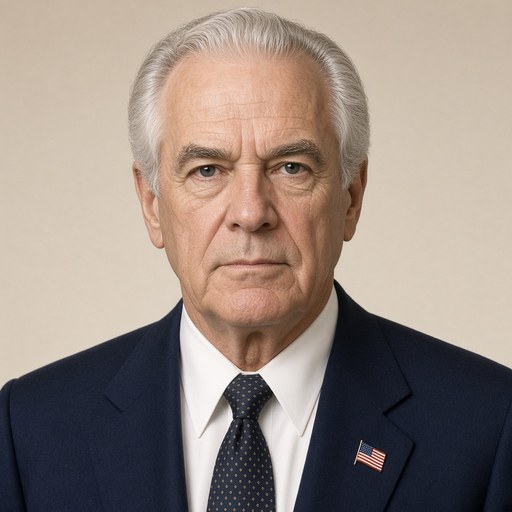
- Robert C. Byrd delivered a speech at the Munich Security Conference on 15 February 1988, addressing security issues during the Cold War era in Munich, Germany.
- Main themes
- Arms control, transatlantic alliance, INF treaty, NATO strategy, Soviet reforms, nuclear deterrence, conventional forces negotiations
- Duration
- ~21 min
- Words
- 2,534
- Sentences
- 119
- Readability
- 48
- Grade
- 11.6
- Syntax
- 2.92
- Vocabulary
- 2.30
The broad sphere of national life a sentence belongs to. Every sentence has an Arena, so it is the denominator the other indices are read against.
Other119 sentences in 48 paragraphs
Senator Majority Leader of the United States of America
Robert C. Byrd addressed the 25th Wehrkunde Conference on arms control and the future of the transatlantic alliance against the background of the “prospect of sweeping reform in the Soviet Union” tied to the emergence of Mikhail Gorbachev.
1988 promises to bring about a massive shift in the way most of the free world sizes up to its own security. The sudden emergence of Mikhail Gorbachev — and the prospect for sweeping reform in the Soviet Union — has provoked great hopes, even among the most skeptical. With remarkable force and openness, he has come more than halfway in the pursuit of arms reduction at a time when the Reagan presidency — and his chief adversary — is coming to a close.
The signing of the INF treaty last December has opened the door to new optimism — new uncertainties and new risks. For NATO, the treaty is both a tribute and a test — an invitation to fashion a stronger alliance among ourselves — and a more pragmatic strategy toward the Soviets.
I come today to give an accounting of the ratification prospects in the United States Senate — but more, to raise some crucial questions about the security of Europe and the United States beyond the INF agreement.
Given the nature of politics in America — particularly in an election year — the messages coming out of Washington are at times misleading. With the White House controlled by one party, and the Senate by another, the conventional wisdom is that the prospects for agreement on even the simplest issue are remote. But the truth is that, in the end, we manage to agree more often than not — a fact explained less by goodwill than by the nature of our institutions.
In the case of treaties, the document bears the mark of the President and his diplomats. It falls to the Senate to scrutinize the document from the perspective of a nation divided by region and ideology.
By historic construction, the Congress is the people’s forum and, in the end, the stabilizing force.
The INF treaty has been presented with a sense of urgency and promise. Given the tense and volatile relations between America and the Soviet Union since the War, it is hardly surprising to hear the echoes of old fears and suspicions rise for the Senate debate. Both countries have been looking at each other down the same gun sight for too long to expect unanimous ratification. For all the attendant flourish, the final vote will belie our entrenched skepticism toward the Soviets.
Much of our apprehension can be laid to Mr. Gorbachev’s stunning achievement in eclipsing his predecessors — both in style and message. At times he seems to have almost mesmerized Western publics with the prospect of détente with his adversaries abroad and the trappings of glasnost at home. Compared with the heavy-handed leaders that have gone before, he cuts a dashing new figure — even by the high art of image-making in the West. American polls are now recording a trust toward this Russian leader when none existed before. Yet, even those of us who have traditionally given our support to arms reduction pacts are still nagged by questions that must certainly move to the center of the Senate debate.
Where is the evidence that a half-century of Soviet pursuit of dominance and control has been bridled? Who is to risk deterrence on the professed goodwill of a man only three years into power? What gives us to believe that he will have the economic endurance, or the political backing to turn glasnost into prosperity and stability? Glasnost should not be confused with freedom of the press or freedom of speech by Western standards.
We all understand the argument that less distraction and tension from its traditional adversaries will allow the Soviets to reallocate revenues and attention from the military to domestic affairs. And that, in turn, will further ease tensions with the West. Yet, if Soviet and Russian history is any guide, we cannot take much comfort that a leader with an ambitious reform agenda will also promote foreign policies that favor us as well. Nikita Khrushchev was the last Soviet reformer of our time. But while he pressed for destabilization at home, he took the game of international brinksmanship to new limits — at the Berlin Wall and Cuba’s missile silos.
For now the implications for the West are very unclear should his domestic reforms work; and they are just as unclear if they do not. If they do, will Mr. Gorbachev’s new power be turned to peaceful competition — or a redoubling of the old policies of confrontation? If they do not — and his mandate is narrowed — will he be able to continue the bold initiatives toward the West that have so far defined his tenure?
These are the dark unknowns and the challenges that we in the United States and you in Europe must confront in the months ahead. Because it is our response that will be the measure of our common trust and our common bond for years to come. Let caution be the watchword.
Like it or not, we live in an age of instant perception — as changeable and as powerful as the wind. He who masters the game of images — the ability to turn 30 seconds of television into a global metaphor — becomes a force of enormous magnitude. The very act of suddenly halting his heavily guarded motorcade to greet a crowd of Washington bystanders was a more lasting image than the actual signing of the treaty. It was Mr. Gorbachev at his theatrical best, playing to a post-war generation raised on the dream of détente — a generation with no memory of a Berlin blockade, of Soviet tanks in Hungary. No banging a shoe in anger at the United Nations. No clicking glasses with bearded revolutionaries, merely the appearance of open friendship.
Mr. Gorbachev’s mastery of style has no more brilliant example than his seductive handling of the occupation of Afghanistan. History is pretty clear on the subject. The Soviet army invaded and carried on a scorched earth war against a nation with little more than courage to defend itself. After a decade, the Afghan people have refused to collapse. With public opinion, mounting casualty lists, and finances running against further engagement, Mr. Gorbachev is looking for a graceful way out. His hope is to make the Soviet withdrawal appear to be an act of generosity — rather than a surrender. He will use the withdrawal to advance Soviet diplomacy in the Middle East. We should no more reward the Soviets for having failed to devour Afghanistan than NATO should thank Moscow for pulling back from your borders an excessive show of nuclear forces aimed at intimidation.
While new style and the new substance are a welcome change from the brooding inflexibility that has marked Soviet foreign policy, in reality, they are in large measure due to the courage, the cohesion, and the vision of the West. Without cocking our guns, we made the point that democracy’s frontiers are worth defending, We proved that, together, we are the match for any aggressor — that we are the only real foil to Soviet expansionism.
Witness the fact that the Soviets gave up far more to get a treaty than we did — including on-site verification and dropping the linkage to SDI.
Their compromise does not mean that the treaty is not in the Soviets’ interest, and will not be used to advantage in other maneuverings with the West. But neither does it mean that we cannot seize opportunities to test the Soviet willingness to compromise on conventional forces and further arms control.
In the end, it would be ironic, indeed, if we allow our brief victory to conclude that our adversary has abandoned its historic goals on the world scene. Rather, our course should be one of new initiative to constantly test the confidence and the willingness of the new Soviet leaders to expand the pace and the radius of peaceful coexistence.
As leaders, we must change the perception held by too many of our own peoples that Mikhail Gorbachev has pulled the West to the nuclear negotiating table. He may have won the battle of the briefing books during the long months of negotiations. He may have won the competition for headlines during his visit to Washington. But we must not let him walk away from the INF table with nothing more than a signature and a promise. Nor must we let the Soviets quit Afghanistan with a shred of honor or reward.
We cannot effectively deal with the Soviets until our people are convinced that the Western alliance must be united, strong willed, and well-armed. We must sharpen the sense of need for continued deterrence in Europe. And we must test the Soviets with ever tougher initiatives for peace — real peace, not the image of peace.
For doubters and supporters alike, the central questions in the Senate debate will not be so much the terms of the treaty — but rather, the direction of NATO, the proper depth of our combined deterrence and, our ability above all and our will to sustain the doctrine of flexible response toward the Soviets.
These are both the questions and the challenges. If we cannot take our own measure, and give a response supported by our own people — then the INF treaty will become less a breakthrough to a peaceful world than a footnote to a dangerous illusion of security.
Strategists speculate whether the West can keep our combined level of deterrence credible in the face of Soviet claims that NATO modernization circumvents the INF treaty and jeopardizes future arms agreements. They wonder whether we can sustain the political will necessary to keep the Alliance countries truly secure — or whether we will be distracted by Soviet charges of “foul” as they continue to improve their own offensive capabilities.
I speak for the vast majority in the United States when I underscore our commitment to a strong European alliance — in arms and men, as well as in words. It is never easy to convince people to pay the high costs for their national security — to hedge against uncertainty in the future. But we have done it in the past, and we will do it in the future. Because America well understands that Europe is more than yesterday’s home for so many of our people — its security is our security as well — and worth paying a great price to maintain.
I was born at a time when Woodrow Wilson proclaimed World War I the “war to end all wars.” And I was a young man when Franklin Roosevelt galvanized a nation with his call to arms. A generation has come of age since America and Europe last fought side by side. That that generation has been spared the trauma of war is a credit to the trust and strength we have given on both sides of the Atlantic.
In the coming months, we have a number of opportunities to declare our unity of purpose — not just to the Soviets. But to our own public.
Our defense ministers should vote to move ahead with the Montebello decisions during their NATO meeting in April. I would certainly support whatever funding is necessary in the American budget cycle this spring to move ahead the Montebello program without delay.
A strong Western agreement to keep American troops at their present strength would counter any Soviet disinformation campaign aimed at forcing fissure into NATO on the grounds that America is not a reliable ally. America has stood the test before and will not waver in the future.
I welcome France’s proposals for bilateral initiatives, so long as they remain within the NATO context, and are a means to strengthen the alliance — not fragment it.
We should renew our support for joint maneuvers, combined brigades, the stationing of alliance troops across each other’s borders, and the modernization of our conventional and tactical nuclear forces. Guns are useless without ammunition. Such cooperative measures serve the cause of military preparedness and visibly make the case that deterrence in this era is not a unilateral or obsolete issue.
The French and British nuclear arsenals should be kept separate from arms control talks between the United States and the Soviets.
Pragmatism underscores the truth that we have no satisfactory substitute for nuclear deterrence in the pursuit of peace, not the peace that comes with bondage — which needs no deterrence — but peace with freedom, which does. As much as we all dream, we know we are still far from a time when the world is in perfect balance. We must still depend on the production and deployment of nuclear systems to remind would-be aggressors that aggression, even by conventional means, will be answered with nuclear force.
But the most immediate challenge for the NATO Alliance is to take the initiative on conventional forces negotiations by presenting a full-fledged reduction and constraints proposal to the Soviets this year. No matter how sincere the Soviets may be in calling for a total nuclear disarmament, there remains the dark truth that their offense rests less on the bomb rather than on the foot soldier.
If peace ultimately rests on balance, then we must address the existing asymmetry on all fronts. The Soviets agreed to eliminate more of their medium range missiles because they had more than we. So there is no reason why we should not ask that they respond with commensurate real reductions in the conventional threat. No other agreement would so bolster NATO’s security interests. For many in the United States Senate and the tens of millions of Americans we represent, it is the natural preface to any agreement on long-range missile reduction.
The truth, however, is that we can mount no strong proposal on conventional arms without the support of our own peoples. Perhaps the most difficult task for Western leaders in the months ahead is to deflect the Soviets’ attempt to play to our natural fear of nuclear arms, particularly among our youth. The entire West must come to understand that neither the denuclearization of Europe nor total nuclear disarmament will remove the threat of Soviet expansion — but would, instead, increase it.
In the end, the fulcrum for peace is credibility. We must redeclare ourselves an Alliance — not just in name, but in force. The Soviets must be convinced of our public support, the depth and flexibility of our armed response — and our staying power. All of this is within our reach. If we do not grasp the moment, we risk failing the cause of our common security.
Photo credit: Bettmann Archive/Getty Images
Related content
Chapter 2: Expanding Horizons (1980–1989) More
Chapter 2: Expanding Horizons (1980–1989)
John Glenn (1982) Photo credit: picture-alliance / dpa More
John Glenn (1982)
Photo credit: picture-alliance / dpa
Gerhard Stoltenberg (1990) Photo credit: Sven Simon/United Archives via Getty Images More
Gerhard Stoltenberg (1990)
Photo credit: Sven Simon/United Archives via Getty Images