




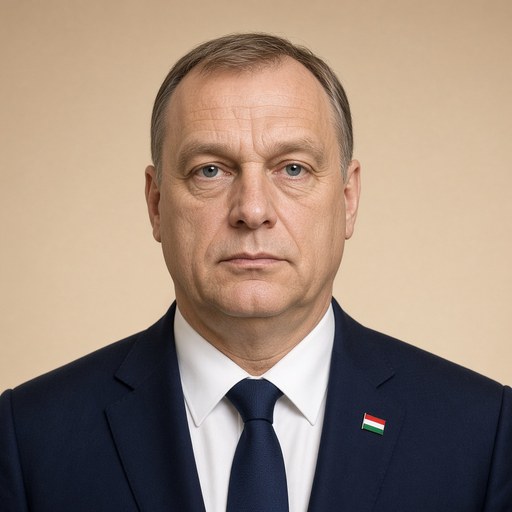

- Context
- Orbán delivered his annual address to the Hungarian National Assembly in February 2013, reviewing the events of 2012 and outlining his vision for the year ahead.
- Main themes
- Hungarian demographic growth, national economic history, quality of life, family policy, public debt and foreign loans, socialism's economic failures, national promise and political accountability, cultural identity, optimism for 2013 recovery
- Duration
- ~44 min
- Words
- 5,283
- Sentences
- 277
- Readability
- 53
- Grade
- 10.5
- Syntax
- 2.95
- Vocabulary
- 2.06
Translated from German
The broad sphere of national life a sentence belongs to. Every sentence has an Arena, so it is the denominator the other indices are read against.
Other277 sentences in 34 paragraphs
Dear President Pál Schmitt! Dear Mrs. Katalin! Dear Mrs. Dalma! Ladies and gentlemen, I wish you a good day!
It is easy to get the floor after a minister, but it is difficult to speak after a pastor, to give a speech. What could one say after the words of a servant of God? Since several have already attempted with an adventurous spirit to evaluate the events of the past year, it might be best, my friends, if I did not give a year-end speech, but rather the past year would evaluate itself: it could thus reveal what happened in 2012. Perhaps one could start by noting that in 2012, a total of 90,300 Hungarian babies were born, which is 2,251 more than the previous year. One could say that this is due to the measures for the protection of children and families that the Socialists implemented and which we reintroduced into the social system after 2010, or to the new tax system, which favors families from a tax perspective. However, if we were to consider only these facts, we could easily remain mired in the stinking political battles, although this may be a matter of greater importance. I want to believe that behind this good news, there are not only some, by the way, remarkable government measures. These Hungarian babies wanted to be born. Perhaps this is a more serious call, a stronger sign, or even a real encouragement that these babies already know something. Perhaps these babies know that today we wake up to snow, but spring is coming unstoppable, and thus instead of the stingy present, a generous future awaits. A future that transcends the shockwaves of the European crisis and a promise that holds something hopeful, better, brighter, and perhaps even something happier for us. Perhaps 2013 will indeed be a year of rise, as we have envisioned. Imagine, I recently read the report regarding the quality of life index of OECD countries, which summarizes the 34 most developed countries, and found that 69 percent of Hungarians have more positive than negative experiences on an average day. On a scale of ten, Hungarians rated their own quality of life at 4.9, so let’s say at 5. Is this too little, or too much? That is the question here. The average of the 34 countries examined is 80 percent or 6.7 points. From this perspective, our score is extremely low. However, if we consider this figure in light of the last hundred years of Hungarian history, the situation looks different. In the last hundred years, we have experienced that the Hungarian national economy is similar to the castle of Déva in the ballad "Kelemen Kőmíves": what is built by noon collapses by evening, and what is built by evening collapses by the next morning. In parentheses: when it comes to the term "culture," 43 percent of Hungarians think of literature, while the average in the European Union is only 23 percent; moreover, the use of Hungarian libraries has not declined even in difficult years. Therefore, there is still hope. In Hungary, one can still refer to Kelemen Kőmíves in a political speech. What our forefathers built was lost in the First World War and the subsequent peace system. What our great-grandfathers built was lost in the Second World War and the following peace system. What our grandfathers and parents painstakingly built was squandered by the useless economic policies of the communist regime; moreover, Hungary was lured into a debt trap and our entire country was locked in a cage. The bankruptcy and defeat of socialism is an economic loss in every respect, even if Hungary was a colony in Eastern Europe, resembling an unclear mix of a labor camp and a union recovery home. What we built after the political system change until 2002 ultimately collapsed between 2002 and 2010. When we consciously think of our frayed nerves, which due to our historical living conditions perhaps most resemble a used bicycle cable, such a satisfaction index, which shows at least some satisfaction, is not bad at all.
However, there are also much more important things than an index of numbers. Such things must be repeated daily: During the political system change, there was a common promise that – as a promise! – united all of us involved in the public affairs of this country, regardless of political party or political views, and which we gave to the Hungarian population as a unified promise. We will never repeat the mistakes of General Secretary János Kádár and the former Communist Party, the MSZMP: the mistake of financing welfare, social expenditures with foreign loans. Regardless of whether we are poor or find ourselves in a difficult financial situation, we will not finance social benefits and allowances, nor unbacked wage increases with foreign loans. If I must say it boldly, this promise was kept until 2002. Behind the collapse of the Hungarian national economy in 2008 lies the fact that the Socialists did not adhere to this historical agreement after 2002. We all know the consequences: pensions, family allowances, and a significant part of wages have disappeared. I know you have heard these facts from me a hundred times already. Since I know our people well, I know that Hungarians do not like lecturing speeches. Recently, when I was in Cegléd, I heard that a woman, while preparing for her golden wedding anniversary, reproached her husband with resentment that he never tells her that he loves her. The man simply replied that he had already said it once, and if that should change, he would let his wife know.
Ladies and gentlemen!
In the world of politics, however, there are things that must be repeated again and again, sometimes even a hundred times. Quite right, my friends, one must always point out that a national economy based on state debt can only build the papier-mâché decoration of prosperity, which will be blown away and destroyed by the first stronger wind. After the sirens comes the bitter and desperate awakening. Whoever claims that sooner or later one does not have to work for every forint spent is deceiving the people, but not only the people, but also themselves. This is the foundation upon which we have built our Hungarian politics since 2010; we have acted along this policy in 2012 as well. Therefore, we have a valid reason, and perhaps we should mention the fact that Hungary reduced its state debt in 2012 as an achievement, with only five of the total 28 member states of the European Union being able to achieve such a reduction – thus Hungary was finally able to control its finances; regarding the reduction of state debt, Hungary achieved a better result than the majority of European countries. The currently published forecasts of the European Union should not deceive you; for example, Brussels has never succeeded in accurately guessing the extent of our budget deficit. On the contrary, we keep our fingers crossed for Brussels and want to contribute and help ensure that Hungary's budget deficit will also be below 3 percent of Hungary's gross domestic product this year. Ladies and gentlemen, of course, the total amount of state debt is still high: while it is no longer up to our necks, we are still up to our chests in debt. Together with those responsible for the high state debt, the devil should take the state debt. Since the devil, of course, does not do this, we must also solve this task.
Ladies and gentlemen!
If it is true that Hungarian babies can feel the change in Hungary, they have probably also noticed the adults. If the adults have really noticed, they will not fall victim again to the old lies of the unsuccessful grudge masters, the frayed and outdated political magic, but will rethink everything. They will rethink their affairs here in Hungary, in the world, and in their own souls.
Ladies and gentlemen! My friends!
There are many people who see things as they are and ask: Why? Others see things as they should be and ask: Why not? And after the question, they get to work. These people are good students of Sándor Márai (correctly: Géza Ottlik – the editor), for according to his view, "one must not adapt to the world or reorganize the existing things, but always contribute to them." This is how great works come about. Although we Hungarians have contributed much to the world, we rarely talk about our great works, the works of Hungarians. We tend to forget our great works, but we must always be aware that Hungarians have always created astonishingly great works, even in difficult times. Our nation has always been extremely rich in individual works, successes, and great results; these have contributed not only to the glory of our own nation but also to the glory of the whole world. Accordingly, the world has received the chess machine, the ballpoint pen, the dynamo, the electric train, the holograph, the telephone exchange, the Rubik's Cube, and many other innovations, inventions, and records. All of these are works of Hungarians. Let us just look at the last year! Everyone knows the world-famous successes of Hungarian Olympians in London. But do you know who won the Abel Prize in 2012, which is considered the mathematical Nobel Prize? I will tell you: it was a Hungarian scientist, Endre Szemerédi; we would like to congratulate him once again. Do you know that at the International Logic Games Olympiad last year, for the first time, a Hungarian designer won with his logic game "Okostojás," which is considered the successor to the Rubik's Cube? We also want to congratulate András Zagyvai from here! Do you know, ladies and gentlemen, that a Hungarian chef is among the ten best in the world? Do you know, ladies and gentlemen, that a Hungarian ship in Budapest on the Danube was chosen as the best music club in the world? Do you know that a student in Pécs won the gold medal at the international student Olympiad and was thus the absolute winner of the event? Perhaps we do not pay enough attention, but do you know that at the European Championship for skilled workers, Hungary won five gold medals in areas such as furniture and construction, business informatics, or wood industry technology? With pride, we tip our hats to our talented young Hungarian skilled workers!
Ladies and gentlemen!
Hungarians, however, can create not only individually world-famous works. There are times when the whole nation brings together its strength, its talent, and its courage and can collectively bring something very great to life. While dozens of peoples have disappeared in the whirl of migrations, the Hungarians together completed the conquest of the Carpathians. The great work of the Hungarians was the Christian state foundation by our king, Saint Stephen, which definitively determined our place within Europe. The reconstruction of the destroyed, burned country after the Mongol invasion and subsequently the halt of the Turkish conquest were also great, extraordinary works of the Hungarians. We can only continue the list: the Hungarian Revolution in 1848 against the absolutism of the Habsburgs and against the incorporation of Hungary, as well as our revolution in 1956, with which we revealed communism to the whole world and were able to drive the first, most important nail into the coffin of the Soviet Empire. My dear friends, the situation now is that we are once again on the brink of a great Hungarian work. Although with humility, silence, and also with regard to the honor of our ancestors, we must emphasize this success again and again. In the last hundred years, our country has rarely been under its own control. Most of the time, Hungary was on a forced path and was subjected to the will of the great powers, the whims of foreign occupiers, and subsequently the interests of international economic and financial circles as well as banks. We did not do what we wanted and what was actually in our interest, but we did what others wanted. With a fashionable term, we were socialized to learn to be small over time. We hid under the carpet and always looked away with our heads bowed. However, after a long time, in 2010, we reached a turning point again. In 2010, we resolved that if the opportunity does not knock on our door, we will cut our own door of opportunities. We resolved that we would make Hungary a country where those people can rightfully come who wake up in the morning and can earn everything they need. If people do not find this, they will create it. We wanted to create a Hungary where citizens, in the face of obstacles, do not say that we should give up, but rather that we must show it! For years, we have seen that people are only taken from. While people were also encouraged to take and receive: they should take out loans and thereby take away their entire future and slowly deplete it. People were encouraged not to work, but rather to live off benefits. For years, one could earn more from benefits than from work. Madness! They gave us the impression that starting a family was hopeless from the outset, that our work was worthless, that our expertise was unwanted and worthless in the market, and that we could contribute nothing to the whole. Hungary was similar to a dilapidated tenement, whose residents could be thrown out at any time. In 2010, Hungary finally took its fate into its own hands. We Hungarians began to do what is in our own interest and not what others expect from us. We no longer listened to our unwelcome advisors. We are still a civic party, so we politely but firmly disregarded them. Somewhat like Mark Twain said, I quote: “From time to time, I go to the doctor and have myself examined, because the doctor wants to live too. Then I go to the pharmacy and buy the medicine, because the pharmacist wants to live too. Then I pour the medicine into the canal – because I want to live too.”
Ladies and gentlemen!
It was already time to clarify that weakness is not an answer to problems and that we must heed the greatest advice of the master, which is to never be afraid! Regardless of the fact that we have been in a crisis since 2008, or the fact that we have inherited mountains of debt and an economic and social ruin, we will not allow weakness to overcome us again.
Dear ladies and gentlemen!
He who is afraid will be bitten by the dog, falls from the horse, but also from the scooter. Due to unreliability, a cowardly nation has no homeland, nor friends or allies. An unreliable nation does not even trust itself, and if such a nation does not trust itself, why should others trust it? In 2010, the Hungarians recognized that permanent, obedient, and eternal adaptation, that is, weakness, is not a solution to problems, but the problem itself. That was the turning point, and that is why the only two-thirds parliamentary majority in Europe was formed. The unity of the nation is a clear proof that is evident from the great capitals of Europe. Even if not everyone was satisfied, everyone understood that the Hungarians now want to work for a new era and will do so. Since then, we have accomplished and achieved everything that the supporters of weakness said was impossible. Thus, the new work of the Hungarians began, the creation of a strong Hungary in the 21st century.
Dear ladies and gentlemen!
We are building a country whose citizens will not work for the profit of foreigners. We are building a country in which bankers and foreign bureaucrats do not determine how we should live, what kind of constitution we should have, or when we should raise wages or pensions. We are building a country where no one can impose their interests on the Hungarian population.
Dear ladies and gentlemen!
The economic history of Hungary in the 20th century is often depicted as a change of twenty-year periods. Sometimes it starts poorly but has a happy ending: the seventies began with debt, but this led to freedom in 1990. Sometimes it starts well and ends poorly: in 1990, we started with freedom and a market economy, and in the end, we found ourselves on the brink of financial bankruptcy. In 2010, our next twenty years began in the shadow of economic collapse, but this can still have a good ending. The new thing in the 21st century is that the speed of changes, the depth of turning points, and the competition of countries will wash away those nations that do not have a clear vision of the future and a plan, a kind of vision. We experienced the twenty years between 1990 and 2010 together. Although we abolished the past, we were unable to build the future, and accordingly, we found ourselves caught between the two worlds, which is why we feel these two decades as absurd. Therefore, it is now most important for us to have a clear vision for our future, the next twenty years, and to move forward in the right direction with our decisions in politics, in the economy, but also with our social decisions. According to our master plan, we will eliminate the foreign financial dependence of this country. We will eliminate Hungary's energy dependence. We will help every citizen to get out of foreign currency debt. We will prevent further population decline. Anyone who wants to work here will find a job in Hungary. The competitiveness of the country will rank among the top 30 in the world. With reindustrialization, Hungarian industry will collaborate with the Germans. The costs of money, energy, and information will be lower for domestic companies than the costs of competitors. We will establish ten thousand competitive Hungarian medium-sized enterprises, primarily focused on export. For the expansion of the Hungarian economy, 15-20 Hungarian regional large companies will be responsible, while we will reduce state debt to below 50 percent of Hungary's gross domestic product. We will allocate 4-5 percent of the gross domestic product for innovation and development. We will achieve that even more Hungarian universities are among the top 200 in the world. In the fields of culture, science, music, and sports, we will achieve significantly better positions compared to our population size – thus we can be a cultural nation again. We will culturally, publicly, and spiritually integrate Hungarians outside the borders of Hungary worldwide and in the Carpathian Basin. We will utilize the legal and technical possibilities of the modern era and build a world nation from the diaspora and ultimately achieve that the living standards of Hungarian families exceed the European average. We will realize this vision with well-developed plans, with a reorganized state, with the involvement of committed professionals, and with a society that can and wants to work.
Dear ladies and gentlemen!
Of course, a twenty-year vision is beautiful and exciting, and actually, we still have eighteen years ahead of us, but the question is much more exciting, what is now or the question of what will happen to us tomorrow? At the first cabinet meeting, the President of the United States, Ronald Reagan, said: “I hate two things, namely inflation and communism. Please do something about these.” Our task, the task of the Hungarian cabinet, is not so simple. Our task is much more complicated than that. However, I can officially announce to the public of the country that Hungary is fulfilling its task today better than before and is more successful in crisis management than most European countries. This is a success of Hungary. This is the success of Hungarians living here, thus our common success. Yes, it is also a success of the political opposition, as this success is good for everyone and everyone wins from it, regardless of political affiliation. I know that for those who have grown up with internationalism, it is extremely difficult to adopt the national idea, but perhaps they will one day understand that while our political parties can be in opposition, the whole nation cannot. It can happen – and I could tell a lot about this – that one must step down from the command bridge or leave the steering wheel behind, but the ship is still our common ship, and even then, one must row and not maneuver rebelliously with a drill at the bottom of the ship.
Dear ladies and gentlemen!
I can tell you that Hungary is performing better in alleviating the daily burdens of people than it has in the last twenty years. Under the socialist cabinets, municipal costs consistently increased, the price of natural gas tripled, and electricity prices doubled. Since January 2013, natural gas, electricity, and district heating have been ten percent cheaper for every Hungarian household. There has been no example in recent years in Hungary of reducing the municipal costs for households. We are good, but we can still improve. That is why we will further reduce these living costs in 2013. In terms of advocacy, Hungary is better than it was before 2010. Since our accession to the European Union, we have never been able to secure such a high financial source from the EU budget framework as we have now. Meanwhile, even though the overall budget of the European Union will decrease, we have received a larger share of the smaller budget compared to other member states. A great success of courage was that we were able to establish alliances with dozens of countries. This cooperation would not have come about if we had just watched like a small dog under the table, waiting for the greasy morsels to fall. Who would enter into an alliance with a cowardly beggar? We are getting better, but we must be even better, which is why we will direct 60 percent of any financial aid from the European Union directly into the Hungarian economy. In the area of family support, Hungary is also getting better. The socialist cabinets before 2010 systematically executed family benefits: first, tax reductions for children were abolished, and subsequently, the benefits for mothers were reduced to two years. Effective from 2011, we have increased this benefit back to three years and introduced a tax system for families with children that is better than any previous aid. We are getting better, but we must be even better. The situation for low-income families is extremely difficult. To solve this problem, we will introduce a new action plan in the second half of the year. Hungary is also better in terms of pension protection than most European countries. While during the economic crisis, pensions were reduced in several European countries, Hungary was able to maintain and even increase the real value of pensions. I remember well that the socialist cabinet wanted the burdens of the economic crisis to be borne by pensioners. We will not allow the standard of living of our older citizens to be reduced. I consider this requirement to be a litmus test of a strong Hungary and also of our new era, according to which our older citizens must be protected even during the crisis. If we succeed in this, it would also be proof to the older generation that their grandchildren and children are not just talking aimlessly. For us, the opinion of our parents is the most important; we want their recognition. We want them to say to us: Good job, my son!
Ladies and gentlemen!
Also regarding the recognition of work, Hungary is better than it was before 2010. The average wage is constantly increasing, and according to the data published today, it stands at gross 223,000 Forints, which is actually very low by European standards. Since the cabinet change in 2013, we have increased the minimum wage by 24,500 Forints; despite any counterclaims and lies, the remuneration of employees in public work programs has also increased by 73,200 Forints. We are getting better, but we are still not good enough! That is why we will expand the action plan for job protection, which we introduced in January, sometime in the middle of the year. Regarding the police, Hungary has also improved, as since the change of government, 3,500 new police officers have been recruited; at the same time, the police force has been streamlined, and those officers who had previously crossed over to the dark side of crime or were in any way compromised have been dismissed. We are getting better, but we must be even better. Especially against the new type of drug smuggling, we need to deploy more law enforcement, as this is a concerning problem. Although we have also dispersed the dog packs that lead to abuses daily, there are still those who have changed their red underwear to orange and always make sure that this new color is visible under their pants. The fight against these individuals promises to be a long and hard task for us.
Ladies and gentlemen!
Regarding the elimination of unnecessary cost expenditures, Hungary is better than ever before. As the only country in Europe, we have halved the number of politicians. In this regard, we were not only better but truly good. Hungary has been fighting for years to solve the problems in healthcare. Over the last year and a half, we have increased the wages of a total of 90,000 healthcare workers, and a unified state direction has been introduced. Currently, a total of 439 state investments in healthcare are underway, 91 of which concern hospitals with a total value of 223 billion Forints. This is the largest investment in healthcare in the last sixty years. We have put 120 new ambulances into service, and in addition, a hospital station is being built or renovated in 82 locations. Hungary has also improved in this regard, but we are still not good enough. We need 200 more ambulances, 6,460 nurses, and a financial package to help general practitioners. Ultimately, waiting lists must somehow be shortened. Hungary is also getting better in terms of the advancement of various social groups. In 2012, 261,000 people were employed under the start program. Although the employment coordinators from the Roma minority know that such a setup cannot be assembled, according to calculations, 54,750 citizens from the Roma minority participated in this work and earned their family's daily bread through honest work instead of living on benefits. They are our greatest success. In addition, we have 9,316 literal new hires who received their first employment and their first workplace in 2012. I am talking about adults. There are thousands of women from the Roma minority who participate in education as social workers or home caregivers.
My friends!
Hungary is good, but Hungary must be even better. We can only be satisfied when everyone who wants to work finds a job, at least within the framework of the start program. If we deliver good organizational work in cooperation with local governments, this great plan can be fulfilled in 2013.
Ladies and gentlemen!
These results show that Hungary is getting better and better. The Hungarians did not work so hard in 2012 for nothing. Leaving the forced track and taking our fate into our own hands was a very good decision, but not everyone is happy about it. Those who have drawn political and economic benefits from Hungary's weakness for years or even decades, both domestically and abroad, are not at all pleased with these successes. They want to pull Hungary back into the past. These people think that this past stands as a beautiful past for the Hungarian people over time. In my opinion, these people are mistaken, for a strong country does not forget. No, we will not forget these eight years. We will not forget who and how brought our country, our cities, our villages, and our families to the financial abyss. We will not forget that the opportunity to establish a new home was taken away from our youth. We will not forget that benefits and support were taken away from Hungarian families. We will not forget that a monthly pension amount was taken away from pensioners. And we will also not forget that these individuals always promised the opposite. We will not forget that these individuals lied to the Hungarian people for eight years, with their words: "in the morning, at night, and also in the evening." Perhaps there is a certain logic here. There are indeed things that simply surpass human understanding. And, my friends, we will also not forget that the riot police were used against peaceful citizens. We will not forget that these individuals jointly destroyed our country, our Hungary. They are already old players in politics; we know them well and know exactly what they intend. They would impose taxes at the expense of banks instead of taxing people again, lowering the minimum wage and also cutting pensions. The tax reductions regarding children in the family would also be a thing of the past, for that is what the banks and their beneficiaries expect. And the weak will always bend to the will of the strong. In reality, these individuals have never represented the interests of Hungarians, and they do not do so now either. Like flies around fresh meat, they are surrounded by strong foreign interest groups. In reality, these foreign interest groups are trying to reattach these weak individuals to the Hungarian population.
Ladies and gentlemen!
Ultimately, we must ask ourselves why we want a strong Hungary in the 21st century – besides the fact that it is always better to be strong than weak. In my opinion, Hungary's success in the future depends on only one thing. This is simultaneously a thought, a value, but also a program, as well as the true struggle and the important battle upon which Hungary's fate and also the success of our lives and the future of our children depend. It all revolves around this single value. Can we shape Hungary as a country where one can advance through hard and responsible work, regardless of what family one comes from, what one believes in, or how one looks? Only a strong country can create such a world and such a life. My friends, this is the goal of our struggle! We must also win our youth over to this goal. Somehow, we must emphasize to our youth with more conviction that our common interest and our common goal is that everyone must be a winner of the economic recovery in 2013. Those who work for it should also be entitled to enjoy a part of the successes. Individual freedom, but shared responsibility. Joint work and also joint successes. That is why it is natural that we want to keep our young, talented, and agile professionals, whom we train from the tax contributions of the Hungarian population, with us for at least a certain period. Our children must also utilize their knowledge here at home; only then can they pass on all this knowledge and experience to their children, to our grandchildren, what they have received from us. For three years, we have been working very hard to ensure that it never happens again in this country that children enter life with fewer opportunities than their parents did. For this, several million people have taken on the necessary challenges. Only this can provide security for a lasting rise of our Hungarian nation.
Hungary, long live!
The original German. The tags above are read on the English translation's sentences.
Sehr geehrter Herr Präsident Pál Schmitt! Sehr geehrte Frau Katalin! Liebe Frau Dalma! Meine Damen und Herren, ich wünsche Ihnen einen guten Tag!
Zwar ist es leicht, das Wort nach einem Minister zu erhalten, nach einem Pfarrer ist jedoch schwer zu sprechen, eine Rede zu halten. Was könnte man nach den Worten eines Dieners Gottes sagen? Da bereits mehrere mit einer abenteuerlichen Laune versucht haben, die Ereignisse des letzten Jahres zu bewerten, wäre vielleicht am Besten, meine Freunde, wenn nicht ich eine Jahresrede halten würde, sondern das vergangene Jahr sich selber bewerten würde: man könnte demnach offenbaren, was in 2012 passiert ist. Vielleicht könnte man damit anfangen, dass im Jahr 2012 insgesamt 90.300 ungarische Babys auf die Welt gekommen sind, welches um 2.251 mehr ist, als im vorigen Jahr. Man könnte sagen, dass dies den Maßnahmen für den Schutz der Kinder und der Familie zu verdanken ist, welche die Sozialisten ausgeführt haben und die wir nach 2010 erneut in das Sozialsystem zurückgeführt haben, oder dem neuen Steuersystem, durch welchen die Familie aus einem steuerrechtlichen Aspekt begünstigt wird. Wenn wir aber nur diese Tatsachen in Betracht ziehen würden, könnten wir leicht in den stinkenden politischen Kämpfen bleiben, obwohl es sich hierbei möglicherweise um eine wichtigere Sache handelt. Ich möchte daran glauben, dass im Hintergrund dieser guten Nachricht nicht nur einige, übrigens bemerkenswerte Regierungsmaßnahmen stehen. Diese ungarischen Babys wollten auf die Welt gebracht werden. Vielleicht ist dies ein ernsteres Aufrufsignal, ein stärkeres Zeichen oder gar eine wirkliche Zurede, dass diese Babys bereits etwas wissen. Vielleicht wissen diese Babys, dass wir heute zwar auf Schnee aufwachen, aber unaufhaltbar kommt der Frühling und demgemäß anstelle der unfreigiebigen Gegenwart eine großzügige Zukunft. Eine Zukunft, welche die Stoßwellen der europäischen Krise überschreitet und eine Zusicherung, welche etwas Hoffnungsvolles, Besseres, Heiteres und vielleicht auch etwas Glücklicheres für uns aufbewahrt. Vielleicht wird 2013 auch in Wahrheit ein Jahr des Anstieges sein, so wie wir uns das vorgestellt haben. Stellen Sie sich vor, neulich habe ich den Bericht betreffend dem Lebensqualitätindex der OECD-Länder, welches die 34 meist entwickelten Länder zusammenfasst, gelesen und festgestellt, das 69 Prozent der Ungarn in einem durchschnittlichen Tag mehr positive als negative Erlebnisse hat. Auf einer Zehner-Skala haben die Ungarn ihre eigene Lebensqualität auf 4,9, also sagen wir auf 5 bewertet. Ist dies zu wenig, oder zu viel? Das ist hier die Frage. Der Durchschnitt der untersuchten 34 Länder ist 80 Prozent bzw. 6,7 Punkte. Aus dieser Hinsicht ist unsere Punktzahl äußerst wenig. Wenn wir diese Angabe aus Hinsicht der letzten Hundert Jahre der ungarischen Geschichte betrachten, sieht die Sache bereits anders aus. In den letzten Hundert Jahren mussten wir erleben, dass die ungarische Nationalwirtschaft der Burg von Déva in der Ballade „Kelemen Kőmíves“ ähnlich ist: was man bis Mittag aufgebaut hat, ist bis Abend abgestürzt und was bis Abend aufgebaut wurde, ist auf den nächsten Morgen abgestürzt. In Klammer: von dem Begriff „Kultur” fällt 43 Prozent der Ungarn die Literatur ein, der Durchschnitt in der Europäischen Union ist nur 23 Prozent, darüber hinaus ist die Nutzung der ungarischen Bibliotheken auch in den schweren Jahren nicht zurückgefallen. Demnach gibt es noch Hoffnung. In Ungarn darf man sich noch in einer politischen Rede auf Kelemen Kőmíves berufen. Was unsere Elternväter aufgebaut haben, wurde im ersten Weltkrieg und im danach folgenden Friedenssystem verloren. Was unsere Urgroßväter aufgebaut haben, wurde im zweiten Weltkrieg und im darauffolgenden Friedenssystem verloren. Was unsere Großväter und unsere Eltern mit Mühe aufgebaut haben, wurde durch die nichtsnutze Wirtschaftspolitik des kommunistischen Regimes verschwendet; darüber hinaus wurde Ungarn in eine Schuldenfalle gelockt und unser ganzes Land in einem Käfig eingesperrt. Der Bankrott und die Niederlage des Sozialismus ist in jeder Hinsicht ein wirtschaftlicher Verlust, auch dann, wenn Ungarn eine Kolonie in Osteuropa war, welches der unklaren Mischung eines Arbeitslagers und einem Gewerkschaftserholungsheim ähnlich war. Was wir nach dem politischen Systemwechsel bis 2002 aufgebaut haben, ist letztlich zwischen 2002 und 2010 zusammengebrochen. Wenn wir dessen Bewusst an unsere abfaserte Nerven denken, welche aufgrund unserer historischen Lebensbedingungen am meisten vielleicht an einen benutzten Fahrradbowden erinnern, ist ein derartiges Zufriedenheitsindex, welcher halbwegs eine Zufriedenheit zeigt, überhaupt nicht schlecht.
Es gibt jedoch auch viel wichtigere Dinge als ein Index von Zahlen. Solche Dinge müssen wir täglich erneut wiederholen: Während dem politischen Systemwechsel gab es ein gemeinsames Versprechen, welches – als Versprechen! – für jeden von uns, die in den öffentlichen Angelegenheiten dieses Landes verwickelt war, über jede politische Partei sowie politische Ansichten hinaus vereinigt hat und welches wir der ungarischen Bevölkerung einheitlich als Versprechen unser Wort gegeben haben. Wir werden nie die Fehler von Generalsekretär János Kádár und der ehemaligen Kommunistischen Partei, der MSZMP wiederholen: den Fehler, dass wir aus ausländischem Kredit fürsorgerische, soziale Ausgaben finanzieren. Ohne Hinsicht darauf, ob wir arm sind oder in eine schwere finanzielle Situation geraten, werden wir keine Sozialleistungen und Beihilfen, aber auch keine unbedeckte Lohnerhöhungen aus ausländischem Kredit finanzieren. Wenn ich es husarisch sagen muss, wurde dieses Versprochen bis 2002 auch eingehalten. Im Hintergrund des Zusammenbruches der ungarischen Nationalwirtschaft in 2008 steht, dass die Sozialisten diese historische Vereinbarung nach 2002 nicht eingehalten haben. Die Folgen kennen wir alle, die Renten, die Familienbeihilfen und ein bedeutender Teil der Arbeitslöhne sind weggefallen. Ich weiß dass sie diese Tatsachen von mir bereits Hundert mal gehört haben. Da ich unseres Volk gut kenne, weiß ich, dass die Ungarn keine deutelnde Reden mögen. Als ich neulich in Cegléd war, habe ich gehört, dass eine Frau während der Vorbereitung auf die goldene Hochzeit ihrem Mann grollend vorgeworfen hat, dass er ihr nie sagt, dass er sie liebt. Der Mann hat darauf nur so viel geantwortet, dass er das einmal bereits gesagt hat und falls sich dies ändern sollte, wird er es seiner Frau bescheid sagen.
Sehr geehrte Damen und Herren!
In der Welt der Politik gibt es jedoch Dinge, welche immer erneut und erneut, manchmal auch hundertmal wiederholt werden müssen. Sehr Recht, meine Freunde, man muss immer wieder darauf hindeuten, das eine Nationalwirtschaft, welches auf Staatsschulden beruht, nur die Papiermaché-Dekoration des Wohlstandes aufbauen kann, welches durch das erste stärkere Wind fortgeblasen und zerstört wird. Nach den Sirenen kommt das bittere und verzweifelungsvolle Aufwachen. Derjenige, der behauptet, dass man früher oder später nicht für jeden ausgegebenen Forint arbeiten muss, betrügt die Menschen, aber nicht nur die Menschen, sondern auch sich selber. Dies ist das Fundament, auf welchen wir unsere ungarische Politik seit 2010 aufgebaut haben; auch in 2012 waren wir entlang dieser Politik tätig. Deswegen haben wir einen triftigen Grund und vielleicht sollen wir mit der nötigen Bescheidenheit und mit dem distanziertem Stolz der Hausfrauen die Tatsache als ein Erfolg erwähnen, dass Ungarn in 2012 ihre Staatsschulden gemindert hat – wobei zu einer solchen Minderung nur fünf Länder der insgesamt 28 Mitgliedstaaten der Europäischen Union fähig waren – demgemäß konnte Ungarn ihre Finanzen endlich kontrollieren; hinsichtlich der Minderung der Staatsschulden hat Ungarn ein besseres Ergebnis erzielt, als die Mehrheit der europäischen Länder. Die derzeit veröffentlichten Voraussagen der Europäischen Union sollten Sie nicht täuschen, Brüssel ist es zum Beispiel noch nie gelungen, das genaue Ausmaß unseres Haushaltsdefizits zu erraten. Im Gegensatz, wir drücken Brüssel die Daumen, und möchten auch dazu beitragen und helfen, dass das ungarische Staatshaushaltsdefizit auch dieses Jahr unter 3 Prozent des ungarischen Bruttoinlandsproduktes sein wird. Meine Damen und Herren, natürlich ist die Gesamtsumme der Staatsschulden noch immer hoch: zwar steht es uns nicht mehr bis zum Hals, aber wir stehen noch immer bis dem Brust in Schulden. Zusammen mit den Personen, die für die hohen Staatsschulden verantwortlich sind, sollte der Teufel die Staatsschulden holen. Da dies der Teufel natürlich nicht tut, müssen wir auch diese Aufgabe lösen.
Sehr geehrte Damen und Herren!
Wenn es wahr ist, dass die ungarischen Babys die Veränderung Ungarns fühlen können, haben diese wahrscheinlich auch die Erwachsenen bemerkt. Wenn es die Erwachsenen wirklich bemerkt haben, werden sie keine erneuten Opfer der alten Geflunker der nicht gelungenen Grollmeister, der fusseligen und überstiegenen politischen Zauberei, sondern denken alles um. Sie werden ihre Angelegenheiten hierzulande, in Ungarn, in der Welt und in ihrer eigenen Seele umdenken.
Sehr geehrte Damen und Herren! Meine Freunde!
Es gibt viele Menschen, die die Sachen so betrachten wie sie sind und fragen: Warum? Andere betrachten die Sachen so, wie sie sein sollten und fragen: Warum nicht? Und nach der Frage packen sie zu. Diese Personen sind gute Lehrlinge von Sándor Márai (richtig ist: Géza Ottlik – der Redakteur), denn nach seiner Ansicht „muss man sich an die Welt nicht anpassen oder die bereits vorhandenen Dinge nicht neu organisieren, sondern dazu stets beitragen.“ So kommen die großen Werke zustande. Obwohl wir Ungarn viel zu der Welt beigetragen haben, reden wir jedoch über unsere großen Werke, die Werke der Ungarn nur selten. Wir neigen dazu, unsere großen Werke zu vergessen, aber wir müssen immer dessen bewusst sein, dass die Ungarn immer, auch in schweren Zeiten erstaunlich große Werke ins Leben gerufen haben. Unsere Nation war in individuellen Werken, Erfolge sowie großen derartigen Ergebnissen immer äußerst reich; diese haben nicht nur zur Pracht der eigenen Nation sondern auch zur Pracht der ganzen Welt beigetragen. Dementsprechend hat die Welt die Schachmaschine, den Kugelschreiber, den Dynamo, die elektrische Bahn, den Holograf, die Telefonzentrale, die Rubik-Zauberwürfel und noch zahlreiche Erneuerungen, Erfindungen und Rekorde bekommen. All dies sind Werke der Ungarn. Sehen wir uns nur das letzte Jahr an! Jeder kennt die weltberühmten Erfolge der ungarischen Olympioniken in London. Wissen sie aber, wer in 2012 den Abel-Preis gewonnen hat, welches als der mathematische Nobel-Preis betrachtet wird? Ich verrate ihnen: es war ein ungarischer Wissenschaftler, Endre Szemerédi; wir möchten ihm hiermit erneut gratulieren. Wissen sie, dass auf der Olympiade der Internationalen Logikspiele im letzten Jahr erstmals ein ungarischer Entwerfer mit seinem Logikspiel „Okostojás“ gewonnen hat, welches als der Nachfolger der Rubik-Zauberwürfel gehandelt wird? Wir möchten auch András Zagyvai von hier gratulieren! Wissen sie, meine Damen und Herren, dass auch ein ungarischer Chefkoch unter den weltbesten zehn ist? Wissen sie, meine Damen und Herren, dass ein ungarisches Schiff in Budapest auf der Donau als der beste Musikclub der Welt gewählt wurde? Wissen Sie, dass die Goldmedaille auf der internationalen Studentenolympiade ein Schüler in Pécs erlangen hat und er somit auch der absolute Gewinner der Veranstaltung war? Vielleicht passen wir nicht genug darauf auf, aber wissen sie, dass auf der europäischen Meisterschaft der Facharbeiter Ungarn gleich fünfmal Gold in Bereichen wie Möbel- und Bauschreiung, Unternehmensinformatik oder Holzindustrietechnologie geholt hat? Vor Stolz nehmen wir den Hut vor unseren talentierten jungen ungarischen Facharbeiter!
Sehr geehrte Damen und Herren!
Die Ungarn können jedoch nicht nur individuell weltberühmte Werke ins Leben schaffen. Es gibt Zeiten, wenn die ganze Nation ihre Kraft, ihre Begabtheit und ihren Mut zusammenbringt und gemeinsam etwas sehr großes ins Leben rufen kann. Währenddessen dutzende von Völker im Wirbel der Völkerwanderung untergetaucht sind, haben die Ungarn gemeinsam die Landeseroberung in den Karpaten vollendet. Das große Werk der Ungarn war die christliche Staatsgründung von unserem König, dem Heiligen Stephan, womit wir unseren Platz innerhalb Europa endgültig bestimmt haben. Der Neuaufbau des zerstörten, niedergebrannten Landes nach dem Mongolensturm und darauffolgend die Aufhaltung der türkischen Eroberung waren ebenfalls große, außerordentliche Werke der Ungarn. Wir können die Liste nur fortsetzen: die ungarische Revolution in 1848 gegen den Absolutismus der Habsburger sowie gegen die Eingliederung Ungarns aber auch unsere Revolution in 1956, womit wir den Kommunismus vor der ganzen Welt enthüllt haben und der ersten, wichtigsten Nagel in den Sarg des sowjetischen Imperiums reinhauen konnten. Meine liebe Freunde, die Lage sieht jetzt so aus, dass wir erneut am Rande eines großen ungarischen Werkes stehen. Obwohl mit Bescheidenheit, Stille und auch mit Hinsicht auf die Ehre gegenüber unseren Urahnen müssen wir diesen Erfolg jedoch erneut und erneut betonten. In den letzten hundert Jahren war unser Land nur selten unter eigener Kontrolle. Meistens befand sich Ungarn auf einer Zwangsbahn und war den Willen der Großmächte, der Willkür ausländischer Besatzer und darauffolgend den Interessen der internationalen wirtschaftlichen und finanziellen Kreise sowie der Banken überliefert. Wir haben nicht das getan, was wir wollten und was eigentlich in unserem Interesse war, sondern wir haben das getan, was andere wollten. Mit einem modischen Begriff waren wir dazu sozialisiert und haben mit der Zeit gelernt, klein zu sein. Wir haben uns unter dem Teppich versteckt und mit gebeugtem Kopf immer nur weggesehen. Nach einer langen Zeit sind wir jedoch in 2010 erneut zu einem Wendepunkt gekommen. In 2010 haben wir uns vorgenommen, wenn bei uns die Möglichkeit nicht anklopft, werden wir unsere eigene Tür der Möglichkeiten schneiden. Wir haben uns vorgenommen, dass wir aus Ungarn ein Land machen, wo diejenigen Menschen zu Recht kommen, die morgens aufwachen und alles, was sie brauchen, verdienen können. Falls die Menschen diese nicht finden, werden sie es erschaffen. Wir wollten ein Ungarn erschaffen, wo die Bürger angesichts der Hindernisse nicht sagen, dass man das lassen soll, sondern eher, dass wir es zeigen müssen! Jahrelang haben wir gesehen, dass man von den Menschen nur wegnimmt. Wobei es den Menschen auch dazu ermutigt wurde, dass sie wegnehmen und aufnehmen müssen: sie sollen Kredite aufnehmen und dadurch ihre ganze Zukunft wegnehmen und langsam aufbrauchen. Die Menschen wurden dazu ermutigt, nicht zu arbeiten, sondern anstelle lieber aus Beihilfen zu leben. Jahrelang konnte man aus Beilhilfen mehr Geld verdienen, als von Arbeit. Wahnsinn! Sie haben uns eine Vorstellung gegeben, wonach die Gründung einer Familie von vornherein chancenlos ist, unsere Arbeit nichts wert sei, unsere Fachkenntnisse auf den Mark unbegehrt und wertlos sind und dass wir zum Ganzen nichts beitragen können. Ungarn war ähnlich zu einem heruntergekommenen Miethaus, deren Bewohner jederzeit ausgeschmissen werden können. In 2010 hat Ungarn endlich ihr Schicksal in die eigene Hand genommen. Wir Ungarn, haben angefangen zu tun, was unserer eigenen Interesse entspricht und nicht dass, was andere von uns erwarten. Wir haben nicht weiter an unsere unwillkommene Ratgeber gehört. Wir sind ja immer noch eine bürgerliche Partei, deswegen haben wir sie höflich, jedoch entschlossen außer Acht gelassen. Irgendwie so, wie es Mark Twain gesagt hat, ich zitiere: „Von Zeit zu Zeit gehe ich zum Arzt und lasse ich mich untersuchen, weil der Arzt ja auch leben möchte. Dann gehe ich in die Apotheke und kaufe die Medikamente, weil der Apotheker ja auch leben möchte. Dann schütte ich die Arznei in den Kanal – da auch ich leben möchte.“
Meine Damen und Herren!
Es war bereits Zeit klarzustellen, dass die Schwäche keine Antwort auf die Probleme ist und dass wir den größten Rat des Meisters beachten müssen, wonach man nie Angst haben soll! Ungeachtet das wir bereits seit 2008 in einer Krise sind, oder der Tatsache, dass wir Schuldenberge und eine wirtschaftliche sowie soziale Ruine geerbt haben, werden wir nicht zulassen, dass uns die Schwäche erneut überwindet.
Sehr geehrte Damen und Herren!
Derjenige, der Angst hat, wird durch den Hund gebissen, fällt vom Pferd, aber auch vom Roller. Wegen der Unzuverlässigkeit hat eine feigherzige Nation keine Heimat, aber auch keine Freunde oder Verbündete. Eine unzuverlässige Nation vertraut nicht einmal sich selber, und wenn eine solche Nation sich selber nicht vertraut, warum sollen ihr andere vertrauen? In 2010 haben die Ungarn erkannt, dass die dauerhafte, gehorsame und ewige Anpassung, also die Schwäche keine Lösung für die Probleme, sondern das Problem selbst ist. Das war der Wendepunkt und deswegen ist die einzige parlamentarische Zweidrittelmehrheit in Europa zustande gekommen. Die Einheit der Nation ist ein deutlicher Beweis, welcher von weiten Hauptstädten Europas ersichtlich ist. Wenn auch nicht jeder zufrieden war, hat jeder verstanden, dass die Ungarn jetzt nach einer neuen Zeitrechnung arbeiten möchten und arbeiten werden. Seitdem haben wir alles durchgeführt und erreicht, wovon die Unterstützer der Schwäche gesagt haben, dass dies unmöglich ist. Damit wurde das neue Werk der Ungarn angefangen, die Erschaffung eines starken Ungarns im 21. Jahrhundert.
Sehr geehrte Damen und Herren!
Wir bauen ein Land, dessen Bürger nicht für den Profit der Ausländer arbeiten werden. Wir bauen ein Land, in welchem nicht die Banker und die ausländischen Bürokraten bestimmen, wie wir leben sollen, was für eine Verfassung wir haben sollen oder wann wir die Arbeitslöhne oder die Renten erhöhen sollen. Wir bauen ein Land, wo keiner seine Interessen auf die ungarische Bevölkerung oktroyieren kann.
Sehr geehrte Damen und Herren!
Die ungarische Wirtschaftsgeschichte des 20. Jahrhunderts wird öfters als Wechsel von zwanzigjährigen Perioden dargestellt. Manchmal fängt es schlecht an aber hat ein glückliches Ende: die siebziger Jahre begannen mit einer Verschuldung, jedoch führte dies zur Freiheit in 1990. Manchmal fängt es gut an und endet schlecht: in 1990 haben wir mit Freiheit und Marktwirtschaft angefangen und am Ende fanden wir uns am Rande des finanziellen Bankrotts. In 2010 wurden unsere nächsten zwanzig Jahre im Schatten des wirtschaftlichen Zusammenbruches angefangen, jedoch kann dies noch ein gutes Ende haben. Das Neue im 21. Jahrhundert ist, dass die Schnelligkeit der Veränderungen, die Tiefe der Wendepunkte und die Konkurrenz der Länder diejenige Nationen, welche nicht über einen klare Zukunftsvorstellung und einen Plan, eine Art Vision verfügen, verspült. Die zwanzig Jahre zwischen 1990 und 2010 haben wir gemeinsam erlebt. Zwar haben wir die Vergangenheit abgeschafft, wir waren jedoch unfähig dazu, die Zukunft aufzubauen und demgemäß sind wir zwischen den beiden Welten geraten, deswegen fühlen wir diese zwei Jahrzehnte als abstrus. Deswegen ist für uns jetzt am allerwichtigsten, dass wir über unsere Zukunft, die nächsten zwanzig Jahre eine klare Vision haben und wir mit unseren Entscheidungen in der Politik, in der Wirtschaft, aber auch mit unseren gesellschaftlichen Entscheidungen in die richtige Richtung vorwärtsgehen. Entsprechend unserem Meisterplan werden wir die auswärtige finanzielle Abhängigkeit dieses Landes abschaffen. Wir werden die Energieabhängigkeit Ungarns abschaffen. Wir werden jedem Bürger helfen, um aus der Fremdwährungsschuld rauszukommen. Wir werden die weitere Minderung der Bevölkerung verhindern. Derjenige, der hierzulande arbeiten möchte, wird eine Arbeit in Ungarn finden. Die Wettbewerbsfähigkeit des Landes wird zu den besten 30 der Welt gehören. Mit der Neuindustrialisierung wird die ungarische Industrie mit der Deutschen zusammenarbeiten. Die Kosten von Geld, Energie sowie Information wird für die inländischen Unternehmen niedriger sein, als die Kosten der Konkurrenten. Wir werden zehntausend wettbewerbsfähige ungarische mittelständische Unternehmen aufbauen, die hauptsächlich auf den Export gerichtet sind. Für die Erweiterung der ungarischen Wirtschaft werden 15-20 ungarische regionale Großunternehmen sorgen, wobei wir die Staatsschulden unter 50 Prozent des ungarischen Bruttoinlandsproduktes vermindern werden. 4-5 Prozent des Bruttoinlandsproduktes werden wir für die Innovation und für die Entwicklung verwenden. Wir werden erreichen, dass noch mehr ungarische Universitäten unter den besten 200 der Welt sind. Im Bereich der Kultur, der Wissenschaft, der Musik und Sport werden wir im Vergleich zu unserer Bevölkerungszahl deutlich bessere Plätze erlangen – damit können wir erneut eine Kulturnation sein. Die Ungarn außerhalb der ungarischen Staatsgrenze weltweit und im Karpatenbecken werden wir kulturell, öffentlich-rechtlich und darüber hinaus auch geistig integrieren. Wir werden die rechtlichen und technischen Möglichkeiten der modernen Epoche nutzen und von der Zerstreutheit eine Weltnation aufbauen und letztlich erreichen, dass das Lebensniveau der ungarischen Familien den europäischen Durchschnitt übertrifft. Diese Vision werden wir mit genau ausgearbeiteten Plänen, mit einem neuorganisierten Staat, mit der Mitwirkung von verpflichteten Fachleuten und mit einer Gesellschaft, die arbeiten kann und auch arbeiten will, verwirklichen.
Sehr geehrte Damen und Herren!
Natürlich ist eine zwanzigjährige Vision schön und aufregend, und eigentlich sind noch achtzehn Jahre vor uns, aber die Frage ist viel aufregender, was jetzt ist oder die Frage, was mit uns Morgen passiert? Auf der ersten Kabinettsitzung sagte der Präsident der Vereinigten Staaten von Amerika Ronald Reagan: „Ich hasse zwei Dinge, nämlich die Inflation und den Kommunismus. Bitte unternehmen Sie gegen diese etwas.“ Unsere Aufgabe, die Aufgabe des ungarischen Kabinetts ist jedoch nicht so einfach. Unsere Aufgabe ist viel komplizierter als das. Jedoch kann ich aber an die Öffentlichkeit des Landes hiermit offiziell verkünden, dass Ungarn ihre Aufgabe heute besser erfüllt, als früher und in der Krisenverwaltung erfolgreicher ist, als meiste europäische Länder. Dies ist ein Erfolg Ungarns. Dies ist der Erfolg der hier lebenden Ungarn, also unser gemeinsamer Erfolg. Ja, es ist auch ein Erfolg der politischen Opposition, da dieser Erfolg für jeden gut ist und jeder dadurch gewinnt, ohne Hinsicht auf die politische Angehörigkeit. Ich weiß, dass es für diejenigen, die mit dem Internationalismus aufgewachsen sind, äußerst schwer ist, den nationalen Gedanken anzueignen, aber vielleicht werden sie es einmal auch verstehen können, dass zwar unsere politische Parteien in Opposition sein können, die ganze Nation jedoch nicht. Es kann passieren – und ich könnte auch viel darüber erzählen – dass man von der Kommandobrücke herabsteigen muss oder das Steuerrad hinter sich lassen muss, aber der Schiff ist auch dann unser gemeinsamer Schiff und auch dann muss man rudern und nicht am Schiffsgrund mit dem Bohrer aufsässig manövrieren.
Sehr geehrte Damen und Herren!
Ich kann Ihnen sagen, dass Ungarn in der Entlastung der täglichen Lasten der Menschen eine bessere Leistung abliefert, als in den letzten zwanzig Jahren. Unter den sozialistischen Kabinetten haben sich die Kommunalkosten durchgehends erhöht, der Preis von Erdgas hat sich verdreifacht und die Strompreise verdoppelt. Seit Januar 2013 ist für jeden ungarischen Haushalt der Erdgas, der Strom und die Fernwärme um zehn Prozent billiger. Für die Minderung der Kommunalkosten der Haushalte gab es in den letzten Jahren kein Beispiel in Ungarn. Wir sind gut, aber wir können uns noch verbessern. Deswegen werden wir die derartigen Lebensunterhaltskosten in 2013 weiter mindern. Im Bereich der Interessenvertretung ist Ungarn besser, als vor 2010. Seit unserem Beitritt zur Europäischen Union konnten wir noch nie eine derartig hohe finanzielle Quelle aus dem Haushaltsrahmen der Europäischen Union erkämpfen, wie jetzt. Währenddessen wird sich sogar das Gesamtbudget der Europäischen Union vermindern, so haben wir auch im kleineren Budget einen größeren Anteil im Vergleich zu den anderen Mitgliedstaaten erhalten. Ein großer Erfolg der Tapferkeit war, dass wir mit dutzenden von Ländern Bündnisse ins Leben rufen konnten. Diese Kooperation wäre nicht zustande gekommen, wenn wir wie ein kleiner Hund nur unter dem Tisch zusehen, wohin die fettigen Häppchen fallen. Wer würde ein Bündnis mit einem feigen Schnorrer eingehen? Wir werden immer besser, aber wir müssen noch besser sein, deswegen werden wir 60 Prozent jeglicher finanzieller Beihilfe seitens der Europäischen Union direkt in die ungarische Wirtschaft weiterleiten. Im Bereich der Unterstützung der Familien wird Ungarn auch immer besser. Die sozialistischen Kabinetten vor 2010 haben die Familienbeihilfe planmäßig ausgeführt: erstens wurden die Steuerermäßigungen nach den Kindern gestrichen und darauffolgend die Beihilfe für die Mütter auf zwei Jahre vermindert. Mit Wirkung von 2011 haben wir diese Beihilfe erneut auf drei Jahre erhöht und darüber hinaus einen Steuersystem für die Familien mit Kindern eingeführt, welches besser ist, als jede frühere Beihilfe. Wir werden immer besser, aber wir müssen noch besser sein. Die Situation der Familien mit einem niedrigen Gehalt ist äußerst schwer. Um dieses Problem zu lösen, werden wir in der zweiten Hälfte des Jahres einen neuen Aktionsplan einführen. Auch im Bereich der Schutz der Renten ist Ungarn besser, als meiste europäische Länder. Wobei während der Wirtschaftskrise in mehreren europäischen Ländern die Rentenbeträge herabgesetzt wurden, konnte Ungarn den Realwert der Renten halten, und diese auch erhöhen. Ich erinnere mich gut daran, dass das sozialistische Kabinett wollte, dass die Lasten der Wirtschaftskrise die Rentner bezahlen. Dagegen lassen wir es nicht zu, dass das Lebensniveau unserer älteren Mitbürger herabgesetzt wird. Ich betrachte dieses Erfordernis als ein Prüfstein des starken Ungarns und auch einer unserer neuen Epoche, demgemäß müssen unsere ältere Mitbürger auch während der Krise beschützt werden. Wenn uns dies gelingt, wäre es auch ein Beweis für die ältere Gesellschaftsschicht, dass ihre Enkel und Kinder nicht nur in den Tag hinein reden. Für uns ist nämlich die Meinung unserer Eltern am wichtigsten, wir möchten ihre Anerkennung. Wir möchten, dass sie uns sagen: Gute Arbeit, mein Sohn!
Sehr geehrte Damen und Herren!
Auch hinsichtlich der Würdigung der Arbeit ist Ungarn besser, als vor 2010. Der Durchschnittslohn wird stets erhöht und entsprechend den heute veröffentlichten Angaben liegt es in Höhe von brutto 223.000 Forint, welches im europäischen Durchschnitt eigentlich äußerst niedrig ist. Seit dem Kabinettswechsel in 2013 haben wir den Mindestlohn um 24.500 Forint erhöht; trotz jeglicher Gegenbehauptung und Lüge hat sich darüber hinaus das Honorar der Beschäftigten in den öffentlichen Arbeitsprogrammen um 73.200 Forint erhöht. Wir werden immer besser, aber wir sind noch nicht gut genug! Deswegen werden wir den Aktionsplan für den Schutz der Arbeitsplätze, welches wir im Januar eingeführt haben, irgendwann Mitte des Jahres ausweitern. Hinsichtlich der Polizei ist Ungarn auch besser geworden, da seit dem Regierungswechsel 3.500 neue Polizisten aufgenommen wurden; gleichzeitig wurde der Bestand der Polizei bereinigt und diejenige Polizisten entlassen, die früher auf die dunkle Seite der Straftäter übergetreten sind oder in irgendeiner Weise getrieben wurden. Wir werden immer besser, aber wir müssen noch besser sein. Besonders gegen die neue Art der Drogenschmugglerei müssen wir immer mehr Ordnungskräfte einsetzen, denn dies ist ein besorgniserregendes Problem. Zwar haben wir auch die in den Missbräuchen führende Hundekoppel täglich auseinandergetrieben, es gibt noch immer welche, die ihre rote Unterwäsche auf Orange gewechselt haben und stets darauf achten, dass diese neue Farbe unter der Hose auch ersichtlich ist. Der Kampf gegen diese Personen verspricht noch eine lange und harte Arbeit für uns.
Sehr geehrte Damen und Herren!
Hinsichtlich der Abschaffung der überflüssigen Kostenausgaben ist Ungarn besser als je zuvor. Als einziges Land in Europa haben wir die Anzahl der Politiker um die Hälfte vermindert. Hierbei waren wir nicht nur besser, sondern auch wirklich gut. Ungarn kämpft seit Jahren um die Lösung des Problems im Gesundheitswesen. Während den letzten anderthalb Jahren haben wir den Lohn von insgesamt 90.000 Beschäftigten im Gesundheitswesen erhöht, darüber hinaus wurde eine einheitliche staatliche Direktion im eingeführt. Derzeit sind insgesamt 439 staatliche Investitionen im Gesundheitswesen in Gang, 91 davon betreffen Krankenhäuser im Wert von insgesamt 223 Milliarden Forint. Dies ist die größte Investition im Bereich des Gesundheitswesens in den letzten sechzig Jahren. Wir haben 120 neue Krankenwagen in Dienst gestellt und darüber hinaus wird auf 82 Orten eine Krankenhausstation gebaut oder erneuert. Ungarn hat sich auch in dieser Hinsicht verbessert, aber wir sind immer noch nicht gut genug. Wir brauchen 200 weitere Krankenwagen, 6.460 Pflegerinnen und darüber hinaus ein Finanzpaket womit wir den Hausärzten helfen können. Letztlich müssen die Wartelisten irgendwie gekürzt werden. Ungarn wird auch im Bereich der Aufrückung der verschiedenen Gesellschaftsschichten immer besser. Im Jahr 2012 waren 261 Tausend Menschen im Rahmen des Startprogramms beschäftigt. Obwohl die Arbeitskoordinatoren aus der Zigeunerminderheit wissen, dass man eine solche Aufstellung nicht zusammenstellen kann, haben nach den Berechnungen 54.750 Bürger der Zigeunerminderheit in diesen Arbeiten teilgenommen und den täglichen Brot der Familie mit ehrlicher Arbeit verdient, anstelle von Beihilfen zu leben. Sie sind unser größter Erfolg. Darüber hinaus haben wir 9.316 wortwörtliche Neubeschäftigte, die in 2012 ihren erste Beschäftigung und ihren ersten Arbeitsplatz erhalten haben. Ich spreche von Erwachsenen. Es gibt Tausend Frauen aus der Zigeunerminderheit, die in der Bildung als Sozialhelferin oder Heimpflegerin teilnehmen.
Meine Freunde!
Ungarn ist gut, aber Ungarn muss noch besser sein. Wir können erst dann zufrieden sein, wenn jeder, der arbeiten will, einen Arbeitsplatz findet, zumindest im Rahmen des Startprogramms. Wenn wir in Kooperation mit den örtlichen Selbstverwaltungen eine gute organisatorische Arbeit abliefern, kann dieser große Plan in 2013 erfüllt werden.
Sehr geehrte Damen und Herren!
Diese Ergebnisse zeigen, dass Ungarn immer besser wird. Die Ungarn haben in 2012 nicht umsonst so hart gearbeitet. Die Zwangsbahn zu verlassen und unser Schicksal in die eigene Hand zu nehmen war eine sehr gute Entscheidung, jedoch sind darüber nicht alle froh. Diejenigen, die im Inland und im Ausland jahrelang oder gar jahrzehntelang aus Ungarns Schwäche politische und wirtschaftliche Nutzen gezogen haben, freuen sich über diese Erfolge überhaupt nicht. Sie möchten Ungarn in die Vergangenheit zurückziehen. Diese Menschen denken, dass diese Vergangenheit für das ungarische Volk mit der Zeit bereits als eine schöne Vergangenheit dasteht. Meiner Ansicht nach irren sich diese Menschen, denn ein starkes Land vergisst nicht. Nein, wir werden diese acht Jahre nicht vergessen. Wir werden nicht vergessen, wer und wie unser Land, unsere Städte, unsere Dörfer und unsere Familien in den finanziellen Abgrund gebracht hat. Wir werden nicht vergessen, dass man die Möglichkeit der Gründung eines neuen Zuhauses von unseren jugendlichen weggenommen hat. Wir werden nicht vergessen, dass man die Beihilfen und die Unterstützung von den ungarischen Familien weggenommen hat. Wir werden nicht vergessen, dass man von den Rentnern einen monatlichen Rentenbetrag weggenommen hat. Und wir werden auch nicht vergessen, dass diese Personen dabei immer das Gegenteil versprochen haben. Wir werden nicht vergessen, dass diese Personen acht Jahre lang das ungarische Volk angelogen haben, mit ihren Worten: „morgens, nachts und auch abends“. Vielleicht gibt es auch hier eine gewisse Logik. Es gibt nämlich Dinge, welches den menschlichen Verstand einfach übertrifft. Und, meine Freunde, wir werden auch nicht vergessen, dass die Sturmpolizei gegen die friedliche Bürger genutzt wurde. Wir werden nicht vergessen, dass diese Personen unser Land, unser Ungarn gemeinsam zerstört haben. Sie sind schon alte Mitspieler in der Politik, wir kennen sie gut und wissen genau, was sie vorhaben. Sie würden die Steuer zu Lasten der Banken ausführen und anstelle erneut die Menschen besteuern, den Mindestlohn herabsetzten und auch die Renten senken. Die Steuerermäßigungen hinsichtlich der Kinder in der Familie wäre ebenfalls Vergangenheit, denn das ist was die Banken und die Gewinnler von ihnen erwarten. Und die schwachen Menschen werden sich immer von den Willen der starken beugen. In der Wirklichkeit haben diese Menschen nie das Interesse der Ungarn vertreten, und jetzt tun sie es auch nicht. Wie die Fliegen um das frische Fleisch herum, so sind sie von den starken ausländischen Interessengruppen umfangen. In der Wirklichkeit versuchen diese ausländische Interessengruppen diese schwache Menschen an die ungarische Bevölkerung erneut anzuhängen.
Sehr geehrte Damen und Herren!
Letztlich müssen wir uns die Frage stellen, wieso wir ein starkes Ungarn im 21. Jahrhundert haben möchten – darüber hinaus natürlich, dass es immer besser ist, stark zu sein, als schwach. Meiner Ansicht nach hängt der Erfolg Ungarns in der Zukunft nur von einer Sache ab. Dies ist gleichzeitig ein Gedanke, ein Wert, aber auch ein Programm, darüber hinaus der wahre Kampf und die wichtige Schlacht, worüber Ungarns Schicksal und auch der Erfolg unseres Lebens und die Zukunft unserer Kinder abhängt. Dies alles dreht sich um diesen einzigen Wert. Können wir Ungarn als ein Land ausgestalten, wo man mit harter und verantwortungsvoller Arbeit vorangehen kann, ungeachtet der Tatsache, von was für einer Familie man kommt, woran man glaubt oder wie man aussieht? Nur ein starkes Land kann eine solche Welt und ein solches Leben erschaffen. Meine Freunde, dies ist das Ziel unseres Kampfes! Wir müssen unsere Jugendlichen auch für dieses Ziel gewinnen. Irgendwie müssen wir gegenüber unseren Jugendlichen mit mehr Überzeugung betonen, dass unsere gemeinsame Interesse und unser gemeinsames Ziel ist, dass jeder ein Gewinner des wirtschaftlichen Aufschwunges in 2013 sein muss. Derjenige, der dafür arbeitet, soll auch berechtigt sein, einen Teil in den Erfolgen zu genießen. Individuelle Freiheit, aber gemeinsame Verantwortung. Gemeinsame Arbeit und auch gemeinsame Erfolge. Deswegen ist es natürlich, dass wir unsere junge, talentierte und agile Fachleute, welche wir aus den Steuereinzahlungen der ungarischen Bevölkerung ausbilden, zumindest für einen bestimmen Zeitraum unter uns haben möchten. Unsere Kinder müssen ihre Kenntnisse auch hierzulande ausnutzen, nur dann können sie all diese Kenntnisse und Erfahrung an ihren Kindern, an unsere Enkel weitergeben, was sie von uns bekommen haben. Seit drei Jahren arbeiten wir sehr hart dafür und haben mit der vollständigen Neuorganisierung Ungarns angefangen, dass es hierzulande nie wieder passiert, dass die Kinder mit geringeren Chancen ins Leben eintreten, als ihre Eltern damals. Dafür haben mehrere Millionen Menschen die nötigen Herausforderungen auf sich genommen. Nur das kann eine Sicherheit für einen dauerhaften Aufstieg unserer ungarischen Nation geben.
Ungarn, lebehoch!