




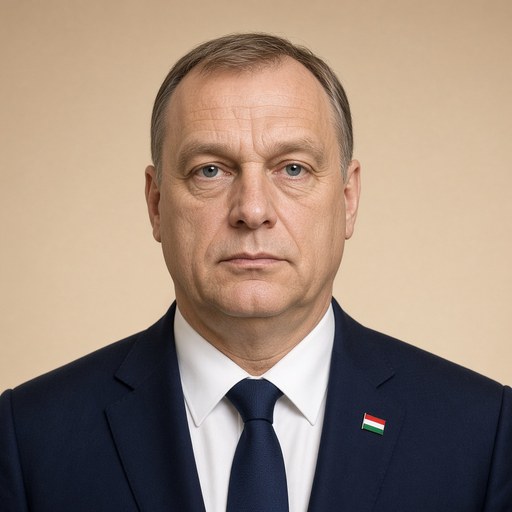
Prime Minister Viktor Orbán's Reply to Comments on his Pre-Agenda Speech
 Viktor Orbán · Prime Minister of Hungary
- Context
- Orbán replied to parliamentary comments on his pre-agenda speech on February 12, 2013, addressing energy policy, EU funds, and national sovereignty in the Hungarian Parliament.
- Main themes
- Hungarian national sovereignty, state ownership of energy assets, Paks nuclear power plant expansion, natural gas storage, EU agricultural funding, Land Act and farmland policy, public employment programs, national interests vs. multinational companies
- Duration
- ~16 min
- Words
- 1,972
- Sentences
- 73
- Readability
- 46
- Grade
- 13.5
- Syntax
- 3.12
- Vocabulary
- 2.06
The broad sphere of national life a sentence belongs to. Every sentence has an Arena, so it is the denominator the other indices are read against.
Other73 sentences in 14 paragraphs
Ladies and Gentlemen!
These agreements will now become the property of the State of Hungary. And if they do not become the property of the Hungarian state, then after 2015, when we next have the opportunity to sign a long-term agreement if we wish, then that contract will be signed by the State of Hungary. This is what we should talk about, Ladies and Gentlemen! This is why we must clearly talk about who are those who are on the side of the Hungarians and on the side of Hungarian national independence and sovereignty; who are those who support Hungarian families, and who, in contrast, are those who support multinational companies and foreign states, respected Ladies and Gentlemen! And with regard to the second element of this agreement package, which involves Hungarian gas storage reservoirs, I have never made a secret of the fact, and I will not do so now: our aim is for every reservoir in Hungary that is suitable for storing natural gas to become the property of the Hungarian State. This is our objective and we will achieve it through negotiation; we have made great steps along this path during the past months.
Ladies and Gentlemen!
With regard to the issue of Paks, and I would especially like to also direct this reply to my fellow Member of Parliament Attila Mesterházy, in 2009 the Hungarian Parliament adopted a resolution based on the proposal of the socialist government. This resolution states the following: Pursuant to Act such-and-such on atomic energy, Parliament hereby provides its preliminary consent to the commencement of preparatory activities regarding the installation of a new block or blocks at the site of the Paks Nuclear Power Plant. Later, the Justification goes on to state that Hungary needs these investments. There follows lengthy reasoning, including the minister himself, and at the end we vote. Taking a closer look: Attila Mesterházy also voted in favour of the motion. This is how things stand, Ladies and Gentlemen! I would like to say two things with relation to this issue. The first is a question of law. Once Parliament has brought a decision, it is the Government's job to see that Parliaments decision is executed, and this is the direction in which we are moving. The second is a question of politics: how should we evaluate the future of the Hungarian energy sector, and in what was should we decide on this investment. I would like to inform you of that fact that, in line with the related international regulations, an international tender will be launched. Any speculation with regard to ownership interests is clearly false. Making use of the opportunity I have been afforded by you, I would like to inform the Hungarian public that remains the property of the Hungarian State, and while we are in government it will most certainly continue to be so 100 percent.
I believe Antal Rogán has already spoken with precision on the numerical errors made by the right honourable Mr. Schiffer; I would just like to provide a short reply to the question of the destination of agricultural funding received from the European Union. Since a significant proportion of the agricultural funding received from the European Union is in the form of direct payments, meaning it goes to those who work the land, the answer to this question is that EU agricultural funding will reach those who otherwise actually work the land. In relation to this issue it is worth taking a look at the Land Act, which is currently before parliament, and which clearly wishes to define who may be regarded as a farmer and determine who can acquire farmland and under what conditions it may be worked. My view is that the harmonisation of the European Union's agricultural policy and Hungarian national interests may be realised through the Land Act, and the Acts on Integration and Agricultural Operations. This opportunity is here before Parliament, and I would ask my respected fellow Members to help create this harmony.
Ladies and Gentlemen!
In reply to the question of how money arriving form the European Union will help improve public employment, I must tell you that only a small proportion of monies received from the European Union may be applied to public employment programmes, because it may essentially only be used for work that is related to training programmes, meaning that there are legal barriers here, no matter what the Hungarian Government would like to do in this regard. I would prefer something else, but this is currently irrelevant. However I would again like to gently but firmly repel those attempts, and in this case they popped out of Mr. Schiffer's mind, which try again and again to portray public employment as a negative economic development. This requires rebuffing because only another half step is needed to offend those people who make a living from public employment. And in Hungary several hundred thousand people make a living from it. We cannot tell them what the macroeconomists would like to say, which is that the economy must be developed in such a way that the market provides everyone with job opportunities. This is what government told them for twenty years, that the market would solve everything. And I agree that the market's ability to provide work for as many people as possible should be reinforced. But, respected Ladies and Gentlemen, the story of the past twenty years has been that no matter what government happened to be in power, the market has never provided work to everyone who wanted it. For thsi reason, we are not going to wait for the market to develop to such an extent that it provides work to everyone, although we support and facilitate this, but in the meantime, until this happens, we will be organising increasingly expanding public employment, because in our minds we have an image of a Hungary in which we can suddenly state that everyone who wants to make a living through work in Hungary has the opportunity to work and can make a living from it. This is what we would like to achieve, and in this respect public employment is not dispensable. It is not a final solution, it is not our objective, but it is not something we can do without until the Hungarian economy is capable of providing employment to everyone regardless of qualification, including those who are illiterate, and until then we believe that it is the responsibility of the Hungarian State to organise public employment programmes that enable people to earn more money than they previously received in benefits. And the fact is that people who take on public employment, make a living from work and maintain their families through work, receive twice as much as they received in unemployment benefit.
Ladies and Gentlemen!
With regard to Mr. Schiffer's concerns about monies leaving Hungary, we share these worries. For this reason, the Government has initiated talks with Switzerland and Cyprus to ensure that monies that have left Hungary and not returned somehow first remain in our field of view, and later partly make their way back to the budget through taxation. I will inform the House as soon as there are developments to these negotiations.
And finally, I must reply to some comments made by my fellow MP Mr. Vona. First of all, I understand what he is saying about the fact that there is no need for communications trickery and when he warns u not to take that path. And I agree with you, the negotiation successes of the Hungarian Government require no communications trickery at all. The question, as you said, is then why do we disclose such figures? Because this is the truth. This is one of our principles, did you know? This is the truth, and in addition it is a truth which it is good for the Hungarian people to become aware of. I think it is the duty of the Hungarian Government to tell people clearly: how much support will arrive in Hungary from the European Union over the next seven years and how much we will be paying to the EU. Mr. Rogán has already stated that the correct method of calculation is to deduct what we must pay to the EU from the amount made available to us. The difference between the two is the amount that may remain in the pockets of Hungarian voters if we are able to access these funds. This difference means greater per capita funding greater than ever before, Ladies and Gentlemen, and it is a good thing if the people of Hungary are aware of this. Another reason, among many, that it is a good thing if they are aware of this is that Jobbik are forever trying to drag Hungarian politics into a referendum on the European Union, in the hope that they can convince Hungarians that it would be better for the if we left the Union, that we would do better to leave the EU. And they make no secret of this.
I, however, would like to regularly repeat my previous standpoint, which was formed during the last referendum, at which we stood by the fact that there are more arguments for joining the European Union than arguments for staying out of it. And since there are more arguments in support of joining, Fidesz support Hungary's accession tot he European Union. And if I do a calculation now, one that is perhaps more detailed that this shallow Parliamentary debate, then you will be able to ask me what the results of those calculations would be if Hungary were not a member of the European Union, did not pay the EU money, did not receive any funding from the EU, but would instead have to develop its foreign policy in the spirit of international foreign trade agreements. We have completed these calculations, ladies and Gentlemen! Every calculation makes it totally obvious that Hungary is incapable of developing a network of international trade policy agreements as a result of which the Hungarian economy would fare better than it currently does as a member of the European Union, as part of a system of trade, and while receiving such a high level of funding from the EU during the next seven years. This calculation is clearly in favour of membership of the European Union, and this will remain so for the next seven years. For this reason I think that, during the next seven years, it would not be a rational political position to hold a referendum on Hungary's membership of the European Union, because that would be bad for Hungary, although we of course accept that such requests exist.
Ladies and Gentlemen!
In closing, overall, this debate does hold another lesson. It is my strong belief that it is not a good thing if the success of the nation is a failure for the opposition. The country is a whole, and so the success of the nation is also the success of the opposition. This is also the case today. Despite the fact that you may have a different opinion and have often judged and opposed the policies which we represent in Europe, this success has achieved by jointly by us, Hungarians, together. The fact that you are arguing this is part of the nature of democracy. Nevertheless, it is easy to accept the conclusion of this argument, that the success now achieved by Hungary – and I am not speaking of the Government, but about Hungary – is also a success for you, the opposition, because if the country is successful it is a good thing for every citizen and serves the interests of every person in Hungary, regardless of which party they happen to sympathise with.
Thank you for your kind attention!