





- Context
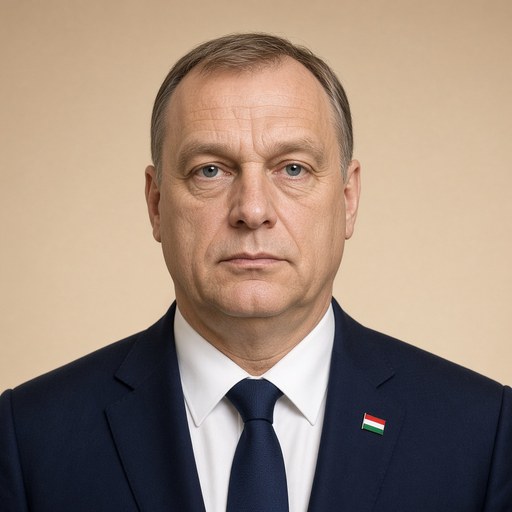
- Orbán addressed the public via Facebook on August 12, 2025, explaining Hungary's refusal to support an EU joint council statement on Ukraine and the ongoing peace negotiations.
- Main themes
- Hungary's opposition to EU joint statement, Ukraine EU accession, Voks2025 referendum, Russian-American negotiations, European geopolitical weakness, call for Russian-EU summit, Hungarian sovereignty in foreign policy, Russo-Ukrainian war diplomacy
- Duration
- ~2 min
- Words
- 270
- Sentences
- 13
- Readability
- 53
- Grade
- 10.9
- Syntax
- 3.21
- Vocabulary
- 2.28
The broad sphere of national life a sentence belongs to. Every sentence has an Arena, so it is the denominator the other indices are read against.
Other13 sentences in 3 paragraphs
Dániel Kacsoh:
In your Facebook post this morning, you wrote that Hungary doesn’t support this joint council statement because it doesn’t want Europe to intervene in negotiations to which it hasn’t been invited.
Hungary didn’t support this statement for two reasons. The first is that it contains a clear and unambiguous call for Ukraine to join the European Union. Hungary held a referendum, Voks2025, in which the Hungarian people said that they don’t want to be part of an integration, a European Union, with the Ukrainians – and therefore they don’t support their accession. So if they want us to accept a document that contradicts the decision of the Hungarian people, then I cannot support it. That’s the first reason. But there was another reason. This is that if there’s a European issue that you should have resolved – because Europe should resolve a European issue, and the Russo–Ukrainian war is a European issue – and you’re unable to do so, but two powerful men, the American president and the Russian president, sit down to negotiate, and you shout from the sidelines, then you’re pathetic and weak. And the worst thing that can happen to Europe is if it appears to be pathetic and weak – or if it turns out to be so. I suggest that the European Union should take a bolder line, and that it should wake up to reality. Europe is strong, this is a conflict in our backyard, and we need to play a leading role – as Hungary has repeatedly suggested. Instead of commenting on a Russian–American summit, we need a Russian–European Union summit.