




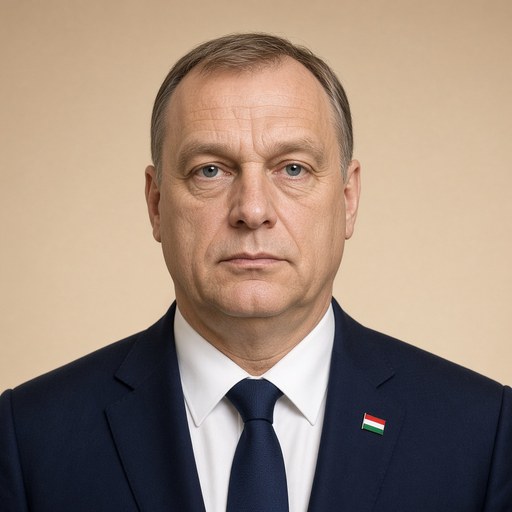
Viktor Orbán's press statement following his talks with Giorgia Meloni, the Prime Minister of Italy.
 Viktor Orbán · Prime Minister of Hungary
- Context
- Orbán addressed a joint press conference with Italian PM Meloni in Rome on June 24, 2024, ahead of Hungary's EU Council presidency beginning July 1.
- Main themes
- Hungarian EU Council presidency, European competitiveness pact, Italian-Hungarian bilateral relations, Western Balkans EU integration, illegal migration and Africa strategy, energy cooperation, defense cooperation, European right-wing party politics, green transition, trade and economic growth
- Duration
- ~10 min
- Words
- 1,164
- Sentences
- 62
- Readability
- 48
- Grade
- 11.2
- Syntax
- 2.90
- Vocabulary
- 2.04
Translated from Hungarian
The broad sphere of national life a sentence belongs to. Every sentence has an Arena, so it is the denominator the other indices are read against.
Other62 sentences in 9 paragraphs
Honorable Prime Minister! Ladies and Gentlemen!
As of July 1, Hungary will hold the presidency of the European Council. The Hungarian program has been prepared. I was in Berlin on Friday, I am here today, and on Wednesday I will be in Paris with the aim of securing the support of the major European countries for this program.
First, I will say what we did not discuss, as it will be asked anyway. We did not talk about party matters, as we closed those on Monday. On Monday in Brussels, I made it clear that we stand on a national basis, and we cannot be in a party alliance with an anti-Hungarian Romanian party, so there is nothing to discuss regarding the cooperation between my party and the ECR. We cannot join such a faction. We also agreed on Monday that regardless of this, we are all committed to advancing cooperation among European right-wing parties – even if we will not be sitting in the same faction in the upcoming period.
After this, I would like to say a few words about what we discussed. We talked about Italian-Hungarian relations, particularly its economic dimension. The Hungarian economy is in a phase of growth. You are our fifth most significant trading partner. The trade between the two countries has doubled over the past ten years, and our exports set a record last year. There are 600 Italian companies operating in Hungary, providing jobs for 20,000 people, for which we are grateful. We have two major joint developments, Italian-Hungarian: one is in Trieste, a port development, and the other is in Ukraine, in a place called Gorond, where we are trying to implement a large Italian-Hungarian logistics project. Our defense cooperation is very strong. Among the military forces stationed in Hungary, the Italians provide the most soldiers, with 256 Italian soldiers being part of the NATO forward deployed battlegroup in Hungary – that is its official name. Italians and Hungarians, Italian and Hungarian soldiers are working together in the Balkans. There are 260 Hungarian soldiers in Althea, and there is a strong Italian presence, and in KFOR, there are more than 600 Hungarian soldiers, and slightly more Italians. So it is clear that the cooperation between the two countries is significant both in the economy and in defense policy. And we want to expand our cooperation to energy. This has not been the case so far, as Slovenia has previously posed an obstacle to the connection between Italy and Hungary, not allowing the construction of the pipeline connecting the two countries. This has now changed, so there will be a Slovenian gas pipeline section, thus Italy and Hungary will be connected, and your LNG terminals represent a significant diversification source for us compared to eastern supply.
As for the upcoming presidency, we would like to put a major plan on the table, which has been prepared, and which is called the European Competitiveness Pact. We are convinced that Europe’s biggest problem at the moment is the decline in competitiveness. It is in the interest of both Italians and Hungarians that the European economy is successful and competitive. It is also in our common interest that Europe does not isolate itself from economic partners outside of Europe, and it is in our interest that there is a strong industry in Europe, and that the green transition is realized in cooperation with European industry and not against it. We will talk about all this in this competitiveness pact. I personally believe that if we do not conclude a European competitiveness pact, we will lose hundreds of thousands of jobs in the next decade.
The other topic we discussed, where we have common positions, is the integration of the Western Balkans and the Balkans into the European Union. I told the Prime Minister that I think it is shameful that the countries from this region that applied to the European Union have been waiting for fifteen years and two months to become members. This is simply unacceptable! Let’s either say yes or no, but let’s not do this!
We talked about illegal migration. You are closer to Africa than we are, but migrants also reach us, so the situation in Africa affects us as well. According to our calculations, Africa’s population will increase by 750 million in the next twenty years. So in the next twenty years, there will be twice as much population growth in Africa as there is in the entire population of the European Union. Just the growth! There are two options: either we have a development concept for Africa that keeps Africans at home, or there will be a mass migration against which we will not be able to defend ourselves. Therefore, we support what your Prime Minister proposed, that there should be a comprehensive European Africa development strategy.
Finally, I would like to make one more comment regarding the distribution of positions in Brussels, if the Prime Minister allows. I have served the longest as Prime Minister in the European Union. So I have seen how it was in 1998 when we were just candidates, and I have seen how it was in 2010. I also know when things went wrong. And the root of the European problems we are suffering from today lies in the fact that after the 2014 European elections, the then President of the European Commission announced that the Commission, which was previously a "Guardian of the Treaties," or a politically neutral body, needed to be transformed into a political body. This process started then. It has been progressing since then and is causing more and more trouble in the European Union. Now what is being prepared is that three parties are forming a coalition to distribute important European positions, excluding others, the opposite of the previous inclusion philosophy. This places the institutions of the European Union on a party basis, on a party political basis. Since there is no inclusion, there is exclusion, which is why there will be a majority, there will be a minority, there will be a government, there will be an opposition. This was not the idea! The union is not designed for this! The union is designed for inclusion. Everyone must be included, the big ones more, the smaller ones less, but somehow everyone must be included. It must not be allowed for any country to feel that it is in opposition in the union, that it belongs to the minority. Therefore, things have always gone in such a way that they have strived for inclusion. This is not what is happening now, and I think this is a wrong path both philosophically and strategically that the European Union should not follow. Therefore, I cannot support this upcoming party agreement on the distribution of positions on behalf of myself and Hungary. There are many exciting things left, but I do not want to abuse the Prime Minister's time.
Thank you very much for listening!
The original Hungarian. The tags above are read on the English translation's sentences.
Tisztelt Miniszterelnök Asszony! Hölgyeim és Uraim!
Július 1-jétől Magyarország adja az Európai Tanács elnökségét. A magyar program elkészült. Pénteken Berlinben voltam, ma itt vagyok, és szerdán pedig Párizsban vagyok azzal a céllal, hogy ehhez a programhoz a nagy európai országok támogatását megnyerjem.
Először elmondom, hogy miről nem beszéltünk, úgyis megkérdezik. Nem beszéltünk pártügyekről, mert azokat hétfőn lezártuk. Hétfőn Brüsszelben, ahol világossá tettem, hogy mi nemzeti alapon állunk, és mi egy magyarellenes román párttal nem tudunk egy pártszövetségben lenni, ezért eleve nincs miről tárgyalnunk az én pártom és az ECR együttműködését illetően. Mi egy ilyen frakcióba nem tudunk belépni. Abban is egyetértettünk hétfőn, hogy ettől függetlenül még mindannyian el vagyunk kötelezve, hogy az európai jobboldali pártok közötti együttműködés előrehaladjon – akkor is, ha nem fogunk egy frakcióban ülni a következő időszakban.
Ezek után mondanék néhány szót arról, amiről beszéltünk. Beszéltünk az olasz–magyar kapcsolatokról, annak a gazdasági dimenziójáról. A magyar gazdaság egy felívelő szakaszban lévő gazdaság. Önök a mi ötödik legjelentősebb kereskedelmi partnerünk. A két ország közötti forgalom tíz év alatt megduplázódott, és az exportunk tavaly rekordot döntött. 600 olasz cég működik Magyarországon, 20 ezer embernek adnak munkát, amiért mi hálásak vagyunk. Van két nagy közös fejlesztésünk, olasz–magyar: az egyik Triesztben van, kikötőfejlesztés, a másik pedig Ukrajnában van, egy Gorond nevű településen, ahol olasz–magyar nagy logisztikai projektet próbálunk végrehajtani. Nagyon erős a védelmi együttműködésünk. A Magyarországon állomásozó katonai erők közül az olaszok adják a legtöbb katonát, 256 olasz katona része a NATO Magyarországon települt előretolt zászlóalj-csoportjának – ez a hivatalos neve. Az olaszok és a magyarok, az olasz és a magyar katonák együtt dolgoznak a Balkánon. Az Altheában van 260 magyar katona, és erős az olasz jelenlét, és a KFOR-ban pedig több mint 600 magyar katona, és ennél valamivel több olasz. Tehát nyilvánvaló, hogy a két országnak az együttműködése mind a gazdaságban, mind a védelempolitikában jelentős. És ki akarjuk terjeszteni az együttműködésünket az energetikára. Ez eddig nem volt, ugyanis Olaszország és Magyarország összeköttetésének, vezetékkel való összeköttetésnek Szlovénia eddig akadályát jelentette, nem járultak hozzá a két országot összekötő vezeték megépítéséhez. Ez most megváltozott, ezért lesz szlovén gázvezeték-szakasz, így Olaszország és Magyarország össze lesz kötve, és az Önök LNG-termináljai számunkra egy jelentős diverzifikációs forrást jelentenek a keleti ellátáshoz képest.
Ami a soros elnökséget illeti, mi le szeretnénk tenni az asztalra egy nagy tervet, ami elkészült, és aminek az a neve, hogy európai versenyképességi paktum. Az a meggyőződésünk, hogy Európa legnagyobb problémája jelen pillanatban a versenyképesség hanyatlása. Mind az olaszoknak, mind a magyaroknak az az érdekük, hogy az európai gazdaság sikeres legyen és versenyképes. Az is közös érdekünk, hogy Európa ne szigetelje el magát az Európán kívüli gazdasági partnerektől, és az is érdekünk, hogy Európában erős ipar legyen, és a zöldátmenet az európai iparral együttműködve és ne az ellen valósuljon meg. Erről mind beszélni fogunk ebben a versenyképességi paktumban. Személyes meggyőződésem, hogyha nem kötünk egy európai versenyképességi paktumot, akkor munkahelyek százezreit fogjuk elveszíteni a következő évtizedben.
A másik téma, amiről beszéltünk, és ahol közös álláspontjaink vannak, a Nyugat-Balkán és a Balkán integrációja az Európai Unióba. Én elmondtam a miniszterelnök asszonynak, hogy szerintem az szégyellnivaló, hogy azok az országok, akik ebből a térségből jelentkeztek az Európai Unióba, jelen pillanatban tizenöt éve és két hónapja várják, hogy tagok legyenek. Ez egész egyszerűen egy elfogadhatatlan dolog! Mondjunk vagy igent, vagy nemet, de ezt ne csináljuk!
Beszéltünk az illegális migrációról. Önök közelebb vannak Afrikához, mint mi, de a migránsok hozzánk is eljutnak, tehát az afrikai helyzet bennünket is érint. A mi számításaink szerint a következő húsz évben Afrika lakossága 750 millió fővel fog nőni. Tehát a következő húsz évben kétszer akkora népességnövekedés lesz Afrikában, mint ami a teljes Európai Unió népessége. Csak a növekedés! Két lehetőség van: vagy lesz egy Afrika-fejlesztési koncepciónk, amivel otthon tudjuk tartani az afrikaiakat, vagy lesz egy olyan tömeges migráció, amivel szemben nem fogjuk tudni magunkat megvédeni. Ezért mi támogatjuk azt, amit az Önök miniszterelnök asszonya javasolt, hogy legyen egy átfogó európai Afrika-fejlesztési stratégia.
Végezetül egy megjegyzést még szeretnék tenni a Brüsszelben zajló pozíciók szétosztásához, ha megengedi a miniszterelnök asszony. Én szolgálok a leghosszabb ideje miniszterelnökként az Európai Unióban. Szóval én láttam, hogy hogy’ volt 1998-ban, mikor még csak jelöltek voltunk, és láttam, hogy hogy’ volt 2010-ben. Azt is tudom, hogy mikor mi romlott el. És az európai bajok gyökere, amitől ma szenvedünk, ott található, hogy a 2014-es európai választás után az Európai Bizottság akkori elnöke meghirdette azt, hogy a bizottságot, amely korábban „Guardian of the Treaties,” vagyis politikasemleges testület volt, át kell alakítani politikai testületté. Ez a folyamat akkor kezdődött. Ez azóta halad előre, és okoz egyre több bajt az Európai Unióban. Most ami készülődik, hogy három párt mintegy koalíciót alkotva szétosztja a fontos európai tisztségeket, és másokat ebbe nem von be, a korábbi bevonási filozófiának az ellenkezője. Ez pártalapra helyezi, pártpolitikai alapra helyezi az Európai Unió intézményeit. Miután nincs bevonódás, kizárás van, ezért lesz többség, meg lesz kisebbség, meg lesz kormány, meg lesz ellenzék. Nem ez volt az elképzelés! Az unió nem erre van kitalálva! Az unió a bevonódásra van kitalálva. Mindenkit be kell vonni, a nagyokat jobban, a kisebbeket kevésbé, de valahogy mindenkit be kell vonni. Nem szabad megengedni, hogy bármelyik ország úgy érezze az unióban, hogy ő ellenzékben van, hogy ő a kisebbséghez tartozik. Ezért eddig mindig úgy mentek a dolgok, hogy a bevonásra törekedtek. Most nem ez zajlik, és szerintem ez filozófiailag és stratégiailag is egy rossz ösvény, amin nem szabadna haladnia az Európai Uniónak. Ezért ezt a most készülődő pártmegállapodást a pozíciók szétosztásáról én a magam részéről, illetve Magyarország részéről nem is tudom támogatni. Rengeteg izgalmas dolog van még, de nem akarok visszaélni a miniszterelnök asszony idejével.
Köszönöm szépen, hogy meghallgattak!