




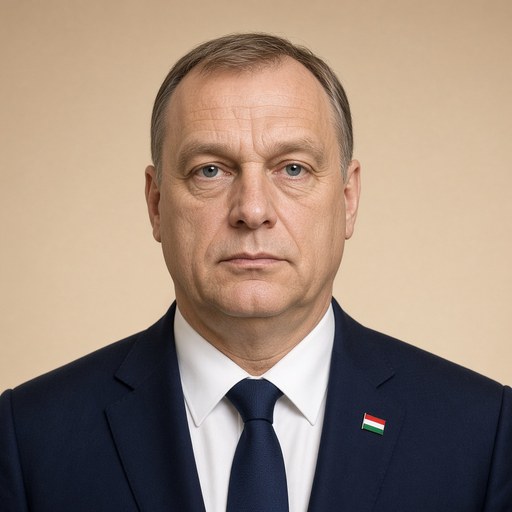
Press statement by Viktor Orbán following his talks with Robert Fico, Prime Minister of Slovakia.
 Viktor Orbán · Prime Minister of Hungary
- Context
- Orbán delivered a press statement in Budapest on January 16, 2024, following bilateral talks with Slovak Prime Minister Robert Fico.
- Main themes
- Hungary-Slovakia bilateral relations, border security and illegal migration, economic and energy cooperation, Central European solidarity, connectivity and infrastructure, sovereignty and anti-Brussels sentiment, long-term political partnership, Latin Christian civilizational bonds
- Duration
- ~9 min
- Words
- 1,046
- Sentences
- 48
- Readability
- 45
- Grade
- 12.3
- Syntax
- 3.06
- Vocabulary
- 2.07
Translated from Hungarian
The broad sphere of national life a sentence belongs to. Every sentence has an Arena, so it is the denominator the other indices are read against.
Other48 sentences in 10 paragraphs
Good afternoon, esteemed Ladies and Gentlemen! Honorable Prime Minister Robert Fico! Dear Slovak Friends!
Today, Hungary has the great honor of welcoming the delegation of Prime Minister Robert Fico here in Budapest. We have been looking forward to this meeting. We have been waiting for this meeting for years. We are glad that it has happened. From my side, this may be easily understandable. Since our first bilateral meeting, dear Robert, which took place in April 2012, today marks the thirty-third occasion we have had a bilateral discussion. This could easily be a European record. And since we are living in a time when continuity, security, and stability are the most important political values, I believe that such a long-term relationship will serve the interests of both peoples. Continuity, transparency, predictability, and an approach based on mutual respect are present in our case due to our shared long historical past. I think this is good news for the citizens of both Slovakia and Hungary.
Moreover, we are both aware that while one of us may be tied to the traditions of the right and the other to the European left, we are actually part of a Central European community of fate. The histories of the two peoples cannot be separated, and deep down – even if we do not speak about it – there is a very strong civilizational bond; that is, both countries belong to the world of Latin Christianity, and this is independent of whether someone is on the left or the right. This is a cultural and civilizational basis upon which a policy based on mutual respect can be built.
Esteemed Ladies and Gentlemen!
We have reviewed the relations between the two countries. I can say that our interests point in the same direction at least 99 percent of the time. Sovereignty is important for both countries. From Hungary's side – and I feel there is a commonality here – we do not welcome the Brussels superstate initiatives. We do not welcome efforts to legitimize illegal migration at all. We want to protect our borders, and we want to decide who we let into our countries. The truth is that the relations between the two countries have never been as good as they are at this moment, as the two countries are connected within the union in a way that strengthens each other. We strengthen each other in terms of physical security, economic security, and energy security as well.
I take this opportunity, while speaking about physical security, to thank Prime Minister Fico, because according to the agreement made with him many years ago, Slovak police regularly help protect Hungary's southern borders. And I have gathered this: in recent years, Slovak police have assisted in stopping 20,000 illegal migrants at the Hungarian southern border. If the Slovak police had not been there, down south, there would perhaps be 20,000 more illegal migrants today, maybe not in Hungary, but in Austria and Germany. So, dear Robert, on behalf of Hungary, I thank you very much for the assistance we have received from you over the past years, and we ask you to continue to provide this to us in the future. In return, in terms of physical security, we are happy to contribute to the airspace management tasks in Slovak airspace starting from the beginning of this year.
As for economic security, we have fantastic data at our disposal. The development of the relationship between the two countries has led to Slovakia becoming Hungary's third most important trading partner today, and our trade has stabilized in the range of 15 billion euros. I say quietly that we have been sweating blood to bring our figures with Turkey – which is still a country of over ninety million – to the 5-6 billion euro range, while in the Slovak-Hungarian relationship, it is 15 billion, and we are talking about a ten million and a six million country here. In terms of economic security, Hungary provides the transit for Slovakia's oil supply, while in return, a quarter of our electricity imports come from Slovakia. We thank you very much for this as well!
We have reached this point, esteemed Ladies and Gentlemen, because in recent years both governments have prioritized connectivity, its expansion, and development. We have built bridges, railways, roads, ferries, gas and electricity lines. In 2014, when we started cooperating as prime ministers, we made an agreement with each other, which we have fully implemented on both sides of the border. Thanks to this agreement and the governmental work that has executed it, at the moment of signing, the number of border crossing points between the two countries was around twenty, and now it is forty. And I am not talking about this as a political achievement, but just imagine how much it matters for the people living along the border that they do not have to detour twenty, thirty, or sometimes fifty kilometers to take care of their affairs and cooperate. I am convinced that as a result of the cooperation in the previous period, both of our governments have significantly contributed to the tangible and noticeable improvement in the quality of life for those living in the border area. Living next to a border is a unique situation, a special living condition; it can be bad or good. Since we have been cooperating, it has been more good than bad, because we are both interested in the border not separating the communities living on either side, but rather connecting them; the border should unite us. Today, a convergence of intentions has occurred to create a second major cooperation package after the previous large cooperation package. We have agreed to set up a preparatory committee that will assemble the most important issues that we hope to realize for the benefit of both countries in the coming years as a result of our hopefully long-lasting parallel governance. There will be such a development package, and we will talk about it next time.
Once again, I would like to thank the Prime Minister and his delegation for visiting us, and I wish him personally, his government, and the people of Slovakia much strength, success, and encouraging years ahead!
Thank you for being with us, Robert!
The original Hungarian. The tags above are read on the English translation's sentences.
Jó napot kívánok, tisztelt Hölgyeim és Uraim! Mélyen tisztelt Robert Fico Miniszterelnök Úr! Kedves Szlovák Barátaink!
A mai napon Magyarország nagy tisztelettel köszöntötte Robert Fico miniszterelnök úr delegációját Budapesten. Vártunk már erre a találkozóra. Évek óta vártunk erre a találkozóra. Örülünk, hogy ez megtörtént. Az én részemről talán ez könnyen megérthető. Az első kétoldalú találkozónk óta, kedves Robert, ami 2012 áprilisában volt, harmincharmadik alkalommal volt közöttünk a mai napon kétoldalú megbeszélés. Ez könnyen lehet, hogy Európa-rekord. És miután egy olyan időszakban élünk, amikor a folyamatosság, a biztonság és a stabilitás a legfontosabb politikai érték, ezért egy ilyen hosszú távú kapcsolat – meggyőződésem szerint – mind a két nép javát fogja majd szolgálni. A folytonosság, az átláthatóság, a kiszámíthatóság és a kölcsönös tiszteleten alapuló megközelítés a mi esetünkben a közös hosszú történelmi múltunk miatt is adottságként van jelen. Ez szerintem jó hír mind Szlovákia, mind Magyarország polgárai számára.
Ráadásul mind a ketten tudatában vagyunk annak, hogy bár lehet, hogy egyikünk a jobb-, a másik meg az európai baloldal hagyományaihoz kötődik, de valójában egy közép-európai sorsközösségben vagyunk. A két nép történelmét nem lehet egymástól elválasztani, és a mélyben – ha nem is beszélünk róla – van egy nagyon erős összekötő civilizációs kapocs; ez pedig az, hogy mind a két ország a latin kereszténység világához tartozik, és ez független attól, hogy valaki éppen bal- vagy jobboldali. Ez egy olyan kulturális, civilizációs bázis, amelyre a kölcsönös tiszteletre épülő politikát fel lehet húzni.
Tisztelt Hölgyeim és Uraim!
Áttekintettük a két ország közötti kapcsolatokat. Azt tudom mondani, hogy az érdekeink legalább 99 százalékban egy irányba mutatnak. Mind a két ország számára fontos a szuverenitás. Magyarország részéről – és úgy érzem, hogy itt van azonosság – nem örülünk a brüsszeli szuperállami kezdeményezéseknek. Egyáltalán nem örülünk az illegális migrációt legitimálni akaró törekvéseknek. Meg akarjuk védeni a határainkat, és mi akarjuk megmondani, hogy kiket engedünk be az országainkba. Az igazság az, hogy a két ország közötti kapcsolatok sohasem voltak olyan jók, mint ebben a pillanatban, ugyanis a két ország úgy kapcsolódik össze az unión belül, hogy egymást erősítjük. Egymást erősítjük a fizikai biztonság tekintetében, a gazdasági biztonság tekintetében és az energiabiztonság tekintetében is.
Itt ragadom meg az alkalmat, amikor a fizikai biztonságról beszélek, hogy köszönetet mondjak Fico miniszterelnök úrnak, mert a korábban, hosszú évekkel ezelőtt még vele kötött megállapodás szerint szlovák rendőrök rendszeresen segítenek megvédeni Magyarország déli határait. És ki is gyűjtöttem: az elmúlt években a szlovák rendőrök a magyar déli határon 20 ezer illegális migráns megállításában nyújtottak segítséget. Ha a szlovák rendőrök nem lettek volna ott, délen, akkor ma 20 ezerrel több illegális migráns lenne talán nem Magyarországon, hanem Ausztriában meg Németországban. Úgyhogy, kedves Robert, Magyarország nevében köszönöm szépen a segítséget, amit tőletek kaptunk az elmúlt években, és kérünk Benneteket, hogy a jövőben is adjátok meg ezt nekünk. Cserébe viszont, a fizikai biztonság tekintetében mi örömmel járulunk ahhoz, hogy az idei év elejétől közreműködjünk a légtérrendészeti feladatok ellátásában, a szlovák légtérben.
Ami a gazdasági biztonságot illeti, fantasztikus adatok állnak rendelkezésünkre. A két ország kapcsolatának a fejlődése oda vezetett, hogy ma Magyarország számára Szlovákia a harmadik legfontosabb kereskedelmi partnerünk, és a forgalmunk állandósult a 15 milliárd eurós sávban. Halkan mondom, hogy mióta izzadunk vért, hogy, mondjuk, Törökország – amely mégiscsak egy kilencven-egynéhány milliós ország – esetében valahogy az 5-6 milliárd eurós sávba vigyük ezt a mutatónkat, miközben a szlovák–magyar kapcsolatrendszerben ez 15 milliárd, és itt egy tízmilliós és egy hatmilliós országról beszélünk. A gazdasági biztonság tekintetében Magyarország biztosítja a tranzitot Szlovákia kőolajellátásához, cserébe viszont a villamosenergia-importunk negyede Szlovákiából érkezik. Ezt is köszönjük szépen!
Úgy jutottunk el ide, tisztelt Hölgyeim és Uraim, hogy az elmúlt években mindkét kormány az összeköttetéseket tartotta a legfontosabbnak, azok bővítését és fejlesztését. Hidakat, vasutakat, utakat, kompokat, gáz- és villanyvezetékeket építettünk. 2014-ben, amikor miniszterelnökként kezdtünk együttműködni, mi kötöttünk egy megállapodást egymással, amely megállapodást maradéktalanul végre is hajtottuk a határ mindkét oldalán. És ennek a megállapodásnak, illetve az azt végrehajtó kormányzati munkának köszönhető, hogy az aláírás pillanatában a két ország közötti határátkelőhelyek, határátkelési lehetőségek száma valahol húsz körül lehetett, és mostanra ez negyven. És most nem arról beszélek, hogy ez politikai teljesítmény, hanem képzeljék el, hogy azok az emberek, akik a határ mentén élnek, az ő életük szempontjából mennyit számít, hogy az ügyeik intézése meg az együttműködés érdekében nem kell húsz-harminc, időnként ötven kilométert is kerülniük. Meggyőződésem, hogy a korábbi időszak együttműködésének eredményeképpen mindketten, mindkettőnk kormányai jelentős mértékben járultak hozzá ahhoz, hogy a határsávban élők életminősége tapinthatóan, érzékelhetően javuljon. Határ mellett élni egy sajátos helyzet, egy különleges élethelyzet, ez lehet rossz is meg jó is. Mióta mi együttműködünk, azóta ez inkább jó, semmint rossz, mert mind a ketten abban vagyunk érdekeltek, hogy a határ ne elválassza a határ két oldalán élő közösségeket, hanem inkább összekapcsolja, a határ összekössön bennünket. A mai napon szándékegybeesés jött létre, hogy a korábbi nagy együttműködési csomag után alkossunk meg egy második nagy együttműködési csomagot. Abban maradtunk, hogy fölállítunk egy előkészítő bizottságot, amely összerakja azokat a legfontosabb ügyeket, amelyeket a következő években – reményeink szerint hosszan tartó párhuzamos kormányzásunk eredményeképpen – meg is fogunk majd valósítani mind a két ország javára. Lesz egy ilyen fejlesztési csomag, a következő alkalommal majd erről fogunk beszélni.
Még egyszer szeretném megköszönni a miniszterelnök úrnak és a delegációjának, hogy ellátogatott ide, neki személyesen, kormányának is és Szlovákia népének is sok erőt, sok sikert és biztató éveket kívánok!
Köszönöm, hogy itt voltál velünk, Robert!