




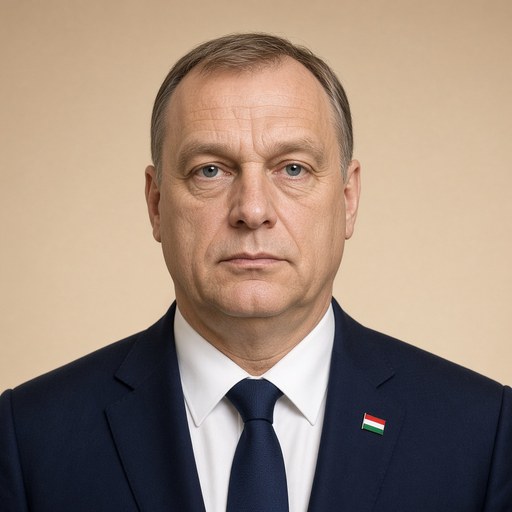
Speech by Prime Minister Viktor Orbán at a conference organised to evaluate Hungary’s EU Presidency
 Viktor Orbán · Prime Minister of Hungary
- Context
- Orbán addressed a conference evaluating Hungary's six-month EU Council Presidency, reviewing achievements and criticising EU policy direction on January 20, 2025.
- Main themes
- Hungarian EU Presidency evaluation, EU institutional dysfunction, Ukraine war and peace diplomacy, European economic competitiveness, migration and border policy, national sovereignty, Western Balkans enlargement, family and demographic policy, energy prices, Patriots for Europe, Hungary's economic modernisation, anti-Semitism
- Duration
- ~28 min
- Words
- 3,343
- Sentences
- 189
- Readability
- 53
- Grade
- 10.3
- Syntax
- 2.90
- Vocabulary
- 2.13
The broad sphere of national life a sentence belongs to. Every sentence has an Arena, so it is the denominator the other indices are read against.
Other189 sentences in 15 paragraphs
Ladies and Gentlemen,
But what has this got to do with the Hungarian Presidency? What has this got to do with our work? My Friends, over the course of six months we saw what goes on in Brussels up close: we saw it to its very core, we were able to examine it under a microscope. We were in the belly of the whale, and what we found was not pretty. What I found was that Brussels is the only geopolitical centre that is not at all concerned with these issues determining the future – with neither global political changes nor with their consequences for us. The European Union is not only behind in the contest, as shown in the Draghi Report, but has not even begun to prepare for the contest. It is sitting comfortably in the locker room, as if unaware that outside a fateful showdown is about to begin. If this continues, the Union will be ruled out of the contest, its economy will buckle and its secure living conditions will vanish. The European Union should therefore be sobering up, but instead it is still in the inebriation phase. It does not want peace, but pushes for war; it does not want border defence, but wants migrants; it does not protect families, but protects gender; it does not want affordable energy, but wants green policies.
Our conscience is clear: we have spoken out – even in the face of fierce opposition we have spoken out, and we have sounded the warning. The Hungarian Presidency said that the war is weakening Europe and that we will be defeated – or, to be more precise, that we have already been defeated. This is not a football match: it is not a question of who is on whose side, who is cheering for whom. This is not a game: this is war, and the conflict will hit us directly. If a war is fought on the European continent, we can only lose – all of us. It is not just Ukraine that has been hit by the war, but all European economies. Prices are sky-high, our money is being consumed by the Ukrainian front, sanctions have punched our businesses in the solar plexus, and energy prices are killing off European companies that were competitive before the war. The Hungarian Presidency has raised the banner of peace, opened the door to ceasefire and peace talks, opened dialogue with the warring parties, and put pressure on European leaders to also relaunch diplomacy and communication. The only war in which there is no communication, and none is needed, is one in which the parties are intent on destroying each other. But do we really believe that our soldiers will be marching under the EU flag into Moscow’s Red Square? If we do not believe this, then we must keep the diplomatic negotiation channels open. This is what we did – even if we could only do so on a national basis, because the majority of Member States were against peace. But we persevered, and today we are proud to hand over the flag of peace to the new US administration. Let us face up to the fact that it suits them better – or rather they are equal to its scale. Good intentions, courage, diplomatic skill and Christian duty are all very well, but in the end peace requires strength.
Working in our own geopolitical interests, we have resolved the accession of Romania and Bulgaria to the border-free European area, we have opened accession negotiations with Albania, and we have brought all the Balkan countries closer to the European Union. We have overseen adoption of a common plan for simpler economic regulation, stronger agriculture and lower energy prices. We have even achieved successes in policies for strengthening identities. With Ms. Meloni at the helm, we led a revolt against Brussels’ migration policy. We held a symposium on demographic issues, perhaps for the first time in the history of the European Union, we oversaw the adoption of documents recognising the values of Jewish life in the face of a resurgent wave of anti-Semitism in Western Europe. And we founded the Patriots for Europe party, a grouping which strongly represents national sovereignty in Brussels.
Ladies and Gentlemen,
This is what has happened, this is what we have achieved in Europe. This step forward is not a small one, and it is one that has not been seen for years. The question is this: Where in all this is Hungary? Like the big players, we Hungarians are also working to become winners in the new world order which is taking shape, and which promises to last. In the early 2010s we already modernised the basic structure of our economy, shifting the tax system’s centre of gravity from labour to consumption, with low taxes on labour, a million new jobs, full employment, an environment conducive to investment and entrepreneurship, and steady wage growth. All this was true with the exception of one year: 2023, the year of war sanctions. We put families at the heart of the economy and society. Then we integrated universities into the economic system, we put research and innovation on a new footing, and finally we started building the most advanced new industries in Hungary. The world’s most advanced factories in the field of electromobility, building and launching our own satellite system, participating in the most advanced military research, launching our laser technology industry and cutting-edge medical research – a field in which we have a Nobel Prize laureate. This work is never finished, and there can never be enough new technologies. Starting in 2010, we replaced liberal democracy with a new constitution based on sovereigntist foundations and on Christian traditions, protecting the nation, the family and the community, and introducing a new method of state organisation. As they say about us in America: we were Trump before Trump. We are doing well in the areas of the economy, state organisation and identity. We are no longer followers, as we were for centuries, but we are now at the forefront of the world, among the pioneers, trailblazers and brave experimenters. This is why we are icons to Western conservatives, and why we are deeply hated by Western liberals. And it is precisely our struggles over the past fifteen years that now give Hungary the opportunity for a new economic policy. We have just launched this new economic policy. Its first 21-point action plan is now becoming a reality in Hungarian economic life. Its political foundation and backing is the recent national consultation on economic neutrality. Around 1.35 million people participated in the consultation, with 95 per cent of them supporting a new economic policy based on neutrality, on economic neutrality. Here I must say a few words about economic neutrality in the context of the European Union. Liberals see the doctrine of economic neutrality more as a communication device or pretence which does not go to the heart of the matter, an idea that does not drill down to deeper matters. Yet economic neutrality is the idea and the political orientation that defines Hungary’s place and path in the international space. It is a place and a path that differs from – and even contradicts – the expectations of Brussels. It marks out, one might say, Hungary’s independent policy path. The point is, Ladies and Gentlemen, that the European Union has been condemned to isolation by its present leaders. We should not be deceived by the fact that they call us the ones who are isolated. We are up against an old communist trick: they always accuse their opponents of what they themselves are doing. The truth is that in the new world order no other continent is so isolated from all the major players. Europe has isolated itself from the new American leadership. The European liberals have demonised Donald Trump; and, to our pain, this will be remembered not only by us Europeans, but also by the new US administration. The EU has isolated itself from China by calling one of the world’s economic superpowers a systemic rival, and launching a tariff war against it. The EU has also isolated itself from Russia: European leaders claim the Russo–Ukraine war as their own; and they have dismantled the “cheap Russian energy–advanced European technology” pairing and economic structure, without replacing it with anything else. And the EU has also isolated itself from the continent of the future: from Africa. Instead of common sense, they have made cooperation conditional on LGBTQ and gender politics, which are completely alien to that region; and in so doing they have made it impossible to maintain a system of relations based on trust. Meanwhile, during the Hungarian Presidency we Hungarians continuously built future cooperation with the Republican President, who in the interim won a landslide victory. We have maintained a channel of communication and rational cooperation with Russia to guarantee energy security. Almost half of Chinese high-tech investments in Europe come to Hungary. And Hungarian water and agricultural expertise is welcomed everywhere in Africa. If all this continues, in the new world order the EU will be the absolute loser. Thank you, but we want no part in that loserism. We want friends, cooperation, economic ties, business benefits and advantages in international politics.
And let us pause here for a moment, Dear Brusseleer Comrades. Because the mask that up to now we have seen you wearing has dropped: it is hard to find any political class anywhere else in the world that is as hypocritical as the Brussels bureaucrats. While they have been demanding disengagement from Russian energy, more Russian liquefied natural gas has arrived in Western Europe than ever before. Meanwhile, big EU companies have been buying their own Russian oil, via some alternative Asian routes. A Brussels official, who gave a 45-minute presentation on systemic sanctions avoidance, summed up the talk by saying that the sanctions are working. And when I look at the new package of sanctions, I see that these people’s imaginations have now extended to proposing that football clubs be put on the new list.
Ladies and Gentlemen,
We Hungarians – unlike Brussels – have a well-developed strategy for the coming world era. The results are obvious. Even when our opponents dispute them, they tend to do so with a sense of shame and embarrassment. Everyone has work. Our families pay the lowest household energy prices in Europe. We have beaten inflation – so much so that last year we were able to increase pensions in real terms, giving pensioners 150 billion forints more than the inflation-linked increase. Wages have started to rise. We have doubled the family tax allowance. We are introducing workers’ loans alongside student loans. The budget deficit is falling and public debt is not rising. No one disputes that in 2025 the Hungarian economy will grow at least twice as fast as the European Union average. Public investment valued at 450 billion forints will be launched. In 2025 Hungarian small and medium-sized enterprises will have access to 1.4 trillion forints. Hungarian family savings will be at least one and a half times the EU average.
Ladies and Gentlemen,
In light of this, the question is this: If Brussels is facing that way and we are facing this way, if they are like that and we are like this, what will the relationship between Brussels and Hungary be like in the coming years? Our starting point is that what stood at the heart of the Hungarian Presidency was not the EU Presidency, but the Hungarian people. In the same way, we will shape the Brussels–Budapest relationship to serve the interests of the Hungarian people. What will happen cannot be derived from the interests of the European Union, but from Hungary’s grand strategy. The initial question is this: Do we have an interest in Europe – the European Union – being sick or healthy? We could say that if the Union is sick, then let it be sick; Hungary should be healthy. This would be because we do not want to shape Europe, but just want to live our own lives in a way that suits us. And our only interest is to ensure that others cannot stand in the way of this. This is tough and sounds good, but unfortunately things are not that simple. Unfortunately this attitude will no longer be sustainable in 2025. Firstly, this is because the content and quality of EU economic rules affect the success of Hungarian economic operators. The negative effects of bad economic policy in Brussels can be dampened in Budapest, but they cannot be completely eliminated. Moreover, there are exclusive EU competences, such as trade and customs policy, which are important issues – and even fundamental. So for Hungary the question of whether the EU is sick or healthy is not one of mere academic interest: it is a boundary condition for our own Hungarian success. And the EU is sick. Today the sick man of Europe is the European Union itself. The symptoms are obvious, well known, and the subject of frequent and detailed analysis. Without going into details, it should suffice to say that the EU is incapable of guaranteeing peace and security in Europe and its immediate neighbourhood. Just think of the war between Russia and Ukraine. Nor can the EU guarantee Europe’s prosperity. Just think of the Draghi Report. The EU cannot stop illegal migration either. The EU does not offer prospects to European agriculture, and with Ukraine’s membership of the EU it would destroy European farmers. The Hungarian Presidency addressed these issues openly, in clear, understandable language and in a straightforward political style. But in the future, debate, discussion and deliberation will not be enough. It will be a waste of words and time, because you cannot build policy on the judgement of Brussels bureaucrats. We knew this, and the experience of the Presidency confirmed it. They are intransigent. Of course the Union’s crisis did not emerge overnight – we have been struggling with these problems for more than a decade. This also raises the question of the responsibility of institutions and individuals – after all, we are talking about politics. But that is a subject for another speech. What is important here and now is that the Union is piling up failure after failure, and at the same time the EU institutions are constantly being strengthened and reinforced through the acquisition of ever more powers. Let us look at the list. In 2000 we decided that by 2010 the European Union would be the most competitive knowledge-based economy in the world. This was the Lisbon Strategy. We can see where we are now. Then came the Europe 2020 strategy, with specific development goals. They stayed on paper. Then came the green transition plan. It failed after five years. And lo and behold, instead of self-examination, Brussels has responded to these failures with new centralised policies and the appropriation of Member States’ powers. At the same time – obviously in the interests of this goal – Brussels is abusing its power in an increasingly open manner, hobbling the Member States with legal and financial constraints. These are acts of pure reprisal and punishment: conditionality rules in the case of Hungary, but there are also more complex and sophisticated instruments and methods.
As I see it, with this six months behind me, I can confidently say that in Brussels they do not think that the European Union is sick at all. They think that it is working exactly as it should. I have to say that today the goal of European integration is integration itself. The right question is – or should be – this: Do collective policies make Member States more successful together than they would be separately, or not? But for Brussels, the question is rather how collective policies contribute to a supranational bureaucracy. Now, the question is this: If we see this, how should we Hungarians react to this situation? How do we – how can we – heal the Union, which has set itself the goal of federalisation, and the abolition of national sovereignty? How is it possible to heal, to heal a Union that has set itself the goal of federalisation and the abolition of national sovereignty? The short answer I can give you to this question is that change is needed, and that change can be achieved through political means: from outside, and through conflicts with Brussels. Of course it is also worth using instruments within the EU – for example, agreements must be concluded from time to time. But in reality we – we in Hungary – are the opponents of the Brussels system. In consequence, we are also the opposition to the political elite that has grown onto the Brussels system. Let us be frank: Brussels is under occupation by an oligarchy organised by the left-liberal and transatlantic elite. It is a system of power. It is a system of power that is not European but global, that is not a democracy but an oligarchy, and that is not based on the sovereignty of nation states but is federal. Even a blind man can see that we are facing a progressive liberal united front, financed by George Soros. They are attacking us because we are sovereigntists, indeed patriots. They are attacking us because we demand that the rule of law should also apply to Brussels. They are attacking us because we demand that the fight against corruption should also apply to Brussels. There is the scandalous case of Commissioner Reynders. For years he had been baiting Hungary, accusing it of corruption and violation of the rule of law. And now that his mandate is over, he is being prosecuted – for corruption and abuse of power. We are being lectured to by those who cannot see the beam in their own eyes.
Ladies and Gentlemen,
We know how they fight. They will use any means necessary, promising jobs, scholarships, recognition, fame, power and money. They threaten, if necessary, with money, fines, financial sanctions, and the withdrawal of voting rights. Let us be under no illusions: there will always be those among us who are frightened, and who think there is a lesser evil. But if we do not end this spiral of blackmail now, it will only get worse. Then, of course, the current favourites will come along, their hired guns to be let loose on the Member States. Let us keep our eyes fixed on Warsaw! In fact it was the bureaucrats in Brussels who replaced the Polish conservative government with the present Polish liberal government. We can see that their tools are not ineffective and not without danger. By contrast, our political strength comes from a different source. We do not look to Brussels to usher us into the halls of power. Our power does not come from Brussels, nor from the approval of the left-liberal elite. We ask for and receive empowerment from the citizens of Europe. In the European elections, a new majority of the Right that can displace the Brussels elite is realistically within reach. And in the debate in the European Parliament on the Hungarian Presidency, this new force presented a show of strength for the first time. The Hungarian Presidency has demonstrated the need and the possibility for change. The stars under which we now stand are much more favourable than they were in 2024. Not only have we gained in strength, but the flagship of liberal politics in the West has sunk. The Western world has a patriotic, pro-peace, anti-migration, pro-family President in Washington. In just a few hours, the sun will shine differently over Brussels. A new President in America, a large patriotic grouping in Brussels, great enthusiasm, patriots who are tried and tested and who love their countries. Let the great offensive begin. I hereby launch the second phase of the operation to take Brussels. Thank you for your attention.
Go Hungary, go Hungarians!