




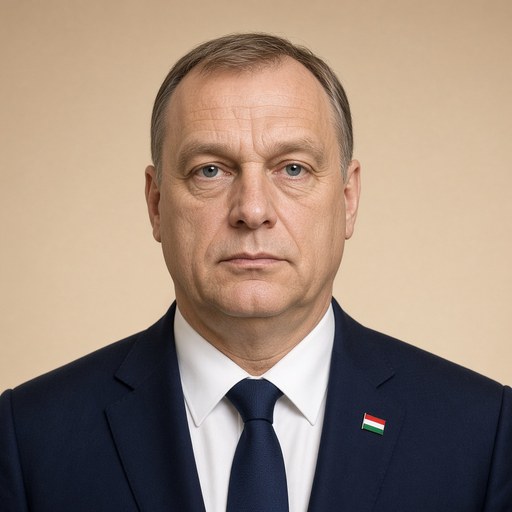
Speech by Viktor Orbán at the Award Ceremony on the 26th Day of Entrepreneurs
 Viktor Orbán · Prime Minister of Hungary
- Context
- Orbán addressed entrepreneurs at the 26th Day of Entrepreneurs award ceremony on December 5, 2025, honoring Hungarian business achievements amid wartime economic challenges.
- Main themes
- Hungarian entrepreneurship, war's economic impact, GDP growth, tax reduction program, minimum wage, Hungary's economic resilience, Western Europe comparison, budget revenue, family support policy, SME support
- Duration
- ~16 min
- Words
- 1,974
- Sentences
- 75
- Readability
- 44
- Grade
- 13.5
- Syntax
- 3.17
- Vocabulary
- 2.01
Translated from German
The broad sphere of national life a sentence belongs to. Every sentence has an Arena, so it is the denominator the other indices are read against.
Other75 sentences in 15 paragraphs
This is a solemn occasion. Today is the Day of Hungarian Entrepreneurs, and on this occasion, we can present the professional awards granted by VOSZ to Hungarian entrepreneurs. Congratulations! Unfortunately, this prevents me from talking about what I would most like to discuss, because in four months there will be elections, but on a holiday, one cannot hold a campaign speech, so I must approach the matter differently now.
First of all, I would like to thank the entrepreneurs for their work and achievements. Under extremely difficult circumstances, let’s say under wartime conditions, they have delivered the performances we have seen in the past year and in previous years. I agree with my predecessors and perhaps with everyone present that businesses drive and advance the economy. The problem is that there are other actors: the war is blocking everything. So while entrepreneurs would be advancing and boosting the economy, the war is blocking everything. Just to express the strength of this blockade in monetary terms, here is a rule of thumb: 1 percent GDP growth, growth of the gross domestic product from the perspective of the budget, means 400 billion Forint in revenue from the perspective of the state treasury. So we are currently in a growth area of about 1 percent. According to the general European calculation method, this figure would be at 3 percent without the war, and with a growth of 3 percent, this would mean an additional 800 billion Forint for the budget, part of which – since it is somewhat ethereal – could evaporate, another part would of course be extracted by a group interested in distribution, which by the way also needs it, with pleas and begging, but if we get all that behind us, the friction losses and the necessary distributions, there would still be plenty of several hundred billion Forint left that we could invest in the Hungarian economy for economic development purposes. So I must say that the war primarily harms Hungarian entrepreneurs. They must feel the most that the war is your enemy. Overall, I must say that, even though the war slows and blocks the economy, compared to other Western European countries, in Hungary the war is on the losing side and the entrepreneurs are on the winning side. The war is failing in Hungary primarily because we have not surrendered to it and have not submitted to it, but have kept ourselves out of this war. We have kept ourselves much better and stronger out than our Western European friends who have participated. They are now in trouble and will face even greater difficulties. When they meet with their own entrepreneurs and tell them the same figures I just shared with you, the missing sum there is much larger than the sum that is missing here.
Because war, ladies and gentlemen, is an expensive affair. It is no coincidence that those who know the most about the economy or whose mindset is most determined by business – I mean the Americans – have already exited. Our Western European friends, on the other hand, are going in, must pay the price of war alone, and that will be high, especially since they are already in a bad position regarding international competitiveness, and thus even more so! But Hungary is not losing in this war not only because we are not involved, but also because the war cannot block the economy to the same extent as it can in other countries, and that the Hungarian economy has not been blocked to the same extent as, for example, our most important economic area, Germany, which is solely thanks to Hungarian entrepreneurs.
On behalf of the government, I would like to thank all entrepreneurs who, in these difficult, extremely difficult wartime conditions, have not given up, have not held back, have not slowed down, have not stopped, have not been suspended, but have continued, have tried, have been innovative, have sought opportunities, have invested energy, and thus created the possibility for the Hungarian economy to achieve at least 1 percent growth. Had you not brought this energy and performance, the Hungarian Minister of Economy could have distributed as well as he wanted, the equation would never have worked, and we would not have been able to announce the recent 11-point program for tax reduction and business support for small and medium-sized enterprises amounting to 90 to 100 billion. This was possible because the economy, under the leadership of entrepreneurs, generated the amount we could return to you, 90 billion. That is why I say this is a victory for entrepreneurs. It is also your victory that we were able to agree yesterday on the level of the minimum wage increase for next year. It is also your victory that we were able to strengthen the family support system in Hungary during these wartime conditions, that mothers do not have to pay taxes, and that we have doubled the tax benefits for children. And in my opinion, it is also a victory for entrepreneurs that we have money in these wartime conditions to grant a loan of 3 percent for the acquisition of housing and the construction of first homes, and that we can also grant a loan of 3 percent to entrepreneurs.
Ladies and gentlemen!
So much for the past and the present. We are here to celebrate, but we cannot help but also talk about the future. I would like to say two things about the future. Two factors will determine what your next year will look like. The first is the question of war and peace, which we have already discussed, the second is the question of what economic policy will look like in Hungary. And now I say, without naming parties, that your success and opportunities largely depend on whether a right-wing or a left-wing economic policy is pursued in Hungary. This is a new situation we are not used to, because for the past fifteen years there has only been a right-wing economic policy, and it is very hard to imagine what it is like if it is not this one but the other kind. Therefore, it may be important to refresh our knowledge and to simply tell you that my experiences – and these are not short, I would call them decades long – have taught me that in a left-wing economic policy, the essence is that politicians always know better where the money should go. Therefore, they take as much as possible from those who have something and try to distribute the money they have taken from you based on their greater knowledge or their supposedly greater knowledge, which they mysteriously call justice. That is the economic policy of the left. My experience with it is that this always leads to bureaucracy, overregulation, social benefits and abuse of social benefits, as well as corruption, which always and repeatedly leads to tax increases. The core of right-wing economic policy is the idea that one cannot be successful without work and performance and that families and businesses that have earned the money know best where that money should go, so let’s leave it to them. We only take as much from them as is necessary for the common needs – from the military to security to public lighting and education – to finance our common needs from the budget. Such an economic policy usually leads to tax reductions. If someone tries to convince you that there is a third economic policy besides these two, do not believe them. In all of Europe, one can only choose between these two. If businesses turn left, they have always paid the price everywhere and at all times. The rule of the right applies to businesses, ladies and gentlemen! I recommend that you take this into account and adhere to it if possible.
Ladies and gentlemen!
This will be even more the case now, as the situation has simplified so extremely not only in Hungary but throughout Europe. We rarely look at Brussels from an economic philosophical perspective, but perhaps this is not unfounded in the current situation, and I can confidently tell you that what we see in Brussels and what I see is nothing other than left-wing economic policy. All of Europe has moved towards left-wing economic policy and continues to move in this direction, which is why today everyone has come to the almost banal realization that Europe is losing its competitiveness. This is not a divine decree; we are not falling behind the Americans, Chinese, and Asians because it has to be that way, but because in Europe – I have been sitting there and watching for many years, yes, almost two decades – left-wing economic policy is constantly being attempted, which leads to bureaucracy, overregulation, and even corruption, and subsequently to tax increases.
Ladies and gentlemen!
That is why I suggest that you make good use of the few months before the upcoming elections, think about what opportunities Hungary has, and make your decision to the best of your knowledge and belief. I recommend that you do not listen to those who suggest that Hungary should move closer to the European Union, because we need to move away from it, not towards it. If Europe needs anything, it is for Brussels to move closer to Hungary. According to the laws of attraction, this is not so simple, as mass and size play a role here, but we should not give up, because Brussels has already aligned itself with us on the migration issue. Despite Newton's laws of attraction, the larger has aligned itself with the smaller. This will also be the case in the event of a war. In the end, Brussels will approach the Hungarian standpoint. And I am sure that the moment is not far off when Brussels will also approach Hungarian competition policy and adopt our measures, programs, and models to promote competitiveness, which, by the way, are currently keeping the Hungarian economy alive.
Ladies and gentlemen!
I would like to emphasize one more thing here amidst the celebrations, which you should pay attention to in the near future, because not only the content of regulations but also the procedures are important for entrepreneurs. And when the moment comes, which I neither wish for us nor for you, that on one side the institution of asset assessments is introduced, about which I could tell you a lot, because I have been preparing my own asset declaration every year for 35 years. If you also have to prepare asset tax declarations as a basis for the asset tax – because how could you declare your assets otherwise if they are not registered? – they will bring back, on the one hand, the procedures we have already left in the past, such as the asset investigation, to the tax office: on the one hand, the asset statement and on the other hand, the asset investigation. This is a vice grip that twists your wrist. And that is an unpleasant feeling, believe me! Therefore, I recommend that you think carefully about this, read the economic programs that are on the table, consider what is involved, and do not believe that the current performance of the country can also be achieved with autopilot. The current level of performance requires a corresponding government performance, and I ask you to make your voting decision after careful consideration.
Overall, I can tell you, ladies and gentlemen, that I wish for you to preserve the freedom of your businesses, that you do not allow bureaucracy to suppress your businesses, that there will also be an economy in Hungary next year that values performance.
I wish you a peaceful new year, a war-free 2026, a beautiful Advent season, and a Merry Christmas!
Thank you for your attention!
The original German. The tags above are read on the English translation's sentences.
Dies ist ein feierlicher Anlass. Heute ist der Tag der ungarischen Unternehmer, und aus diesem Anlass können wir die vom VOSZ verliehenen Fachpreise an ungarische Unternehmer überreichen. Herzlichen Glückwunsch! Leider hindert mich das daran, über das zu sprechen, worüber ich am liebsten sprechen würde, denn in vier Monaten sind Wahlen, aber an einem Feiertag kann man keine Wahlkampfrede halten, deshalb muss ich die Sache jetzt anders angehen.
Vor allem danke ich den Unternehmern für ihre Arbeit und ihre Leistungen. Unter extrem schwierigen Umständen, sagen wir mal unter Kriegsbedingungen, haben sie die Leistungen erbracht, die wir im letzten Jahr und in den vergangenen Jahren gesehen haben. Ich stimme meinen Vorrednern und vielleicht allen Anwesenden zu, dass die Unternehmen die Wirtschaft antreiben und vorantreiben. Das Problem ist, dass es noch andere Akteure gibt: Der Krieg blockiert nämlich alles. Während also die Unternehmer die Wirtschaft vorantreiben und ankurbeln würden, blockiert der Krieg alles. Nur um die Stärke dieser Blockade in Geld auszudrücken, ist dies eine Faustregel: 1 Prozent GDP-Wachstum, Wachstum des Bruttoinlandsprodukts aus Sicht des Haushalts, bedeutet aus Sicht der Staatskasse 400 Milliarden Forint Einnahmen. Wir befinden uns also derzeit in einem Wachstumsbereich von etwa 1 Prozent. Nach allgemeiner europäischer Berechnungsmethode würde dieser Wert ohne Krieg bei 3 Prozent liegen, und bei einem Wachstum von 3 Prozent würde dies zusätzliche 800 Milliarden Forint für den Haushalt bedeuten, von denen ein Teil – da es sich um etwas Luftartiges handelt – sich verflüchtigen könnte, ein anderer Teil würde natürlich von einer Gruppe, die an einer Verteilung interessiert ist und die ihn übrigens auch braucht, mit Bitten und Betteln herausgeholt werden, aber wenn wir all das hinter uns haben, die Reibungsverluste und die notwendigen Verteilungen, blieben immer noch reichlich einige hundert Milliarden Forint übrig, die wir in die ungarische Wirtschaft für wirtschaftliche Entwicklungszwecke investieren könnten. Ich muss also sagen, dass der Krieg vor allem den ungarischen Unternehmern schadet. Sie müssen am meisten spüren, dass der Krieg Ihr Feind ist. Insgesamt muss ich sagen, dass, auch wenn der Krieg die Wirtschaft bremst und blockiert, im Vergleich zu den anderen westeuropäischen Ländern in Ungarn der Krieg auf der Verliererseite steht und die Unternehmer auf der Gewinnerseite. Der Krieg steht in Ungarn vor allem deshalb vor dem Scheitern, weil wir uns ihm nicht ergeben und uns ihm nicht ausgeliefert haben, sondern uns aus diesem Krieg herausgehalten haben. Wir haben uns viel besser und stärker herausgehalten als unsere westeuropäischen Freunde, die sich daran beteiligt haben. Diese sind jetzt in Schwierigkeiten und werden noch größere Schwierigkeiten bekommen. Wenn sie sich mit ihren eigenen Unternehmern treffen und ihnen dieselben Zahlen nennen, die ich Ihnen gerade genannt habe, dann ist die fehlende Summe dort noch viel größer als die Summe, die hier fehlt.
Denn Krieg, meine Damen und Herren, ist eine teure Angelegenheit. Es ist kein Zufall, dass diejenigen, die sich am besten mit Wirtschaft auskennen oder deren Denkweise am stärksten vom Geschäft bestimmt wird – ich meine die Amerikaner –, bereits ausgestiegen sind. Unsere westeuropäischen Freunde hingegen gehen hinein, müssen den Preis des Krieges allein bezahlen, und der wird hoch sein, zumal sie ohnehin in Bezug auf die internationale Wettbewerbsfähigkeit in einer schlechten Lage sind, und so erst recht! Aber Ungarn verliert in diesem Krieg nicht nur deshalb nicht, weil wir nicht dabei sind, sondern auch, weil der Krieg die Wirtschaft nicht in dem Maße blockieren kann, wie dies in anderen Ländern der Fall ist, und dass die ungarische Wirtschaft nicht in dem Maße blockiert wurde wie beispielsweise der für uns wichtigste Wirtschaftsraum, Deutschland, was ausschließlich den ungarischen Unternehmern zu verdanken ist.
Im Namen der Regierung möchte ich allen Unternehmern danken, die in diesen schwierigen, extrem schwierigen Kriegszeiten nicht aufgegeben, sich nicht zurückgehalten, nicht gebremst, nicht aufgehört, nicht ausgesetzt, sondern weitergemacht, es versucht haben, innovativ gewesen sind, nach Möglichkeiten gesucht, Energie investiert und so die Möglichkeit geschaffen haben, dass die ungarische Wirtschaft zumindest ein Wachstum von 1 Prozent erreichen konnte. Hätten Sie diese Energie und Leistung nicht eingebracht, hätte der ungarische Wirtschaftsminister noch so gut verteilen können, wie er wollte, die Rechnung wäre nie aufgegangen, und wir hätten das jüngste 11-Punkte-Programm zur Steuersenkung und Unternehmensförderung für kleine und mittlere Unternehmen im Umfang von 90 bis 100 Milliarden nicht ankündigen können. Dies war möglich, weil die Wirtschaft unter der Führung der Unternehmer den Betrag erwirtschaftet hat, von dem wir Ihnen 90 Milliarden zurückgeben konnten. Deshalb sage ich, dass dies ein Sieg der Unternehmer ist. Es ist auch Ihr Sieg, dass wir uns gestern auf die Höhe der Mindestlohnerhöhung für das nächste Jahr einigen konnten. Es ist auch Ihr Sieg, dass wir in diesen Kriegszeiten in der Lage waren, das System der Familienunterstützung in Ungarn zu stärken, dass Mütter keine Steuern zahlen müssen und dass wir die Steuervergünstigungen für Kinder verdoppeln. Und meiner Meinung nach ist es auch ein Sieg für die Unternehmer, dass wir in diesen Kriegszeiten Geld haben, um einen Kredit von 3 % für den Erwerb von Wohnraum und den Bau von Erstwohnungen zu gewähren, und dass wir auch Unternehmern einen Kredit von 3 % gewähren können.
Meine sehr geehrten Damen und Herren!
Soviel zur Vergangenheit und zur Gegenwart. Wir sind hier, um zu feiern, aber wir kommen nicht umhin, auch über die Zukunft zu sprechen. Ich möchte zwei Dinge zur Zukunft sagen. Zwei Faktoren entscheiden darüber, wie Ihr nächstes Jahr aussehen wird. Der erste ist die Frage von Krieg und Frieden, darüber haben wir bereits gesprochen, der zweite ist die Frage, wie die Wirtschaftspolitik in Ungarn aussehen wird. Und jetzt sage ich, ohne Namen von Parteien zu nennen, dass Ihr Erfolg und Ihre Möglichkeiten in hohem Maße davon abhängen, ob in Ungarn eine rechte oder eine linke Wirtschaftspolitik verfolgt wird. Das ist eine neue Situation, an die wir nicht gewöhnt sind, denn in den letzten fünfzehn Jahren gab es nur eine rechte Wirtschaftspolitik, und es ist sehr schwer vorstellbar, wie es ist, wenn es nicht diese, sondern die andere Art gibt. Deshalb ist es vielleicht wichtig, unser Wissen aufzufrischen und Ihnen der Einfachheit halber zu sagen, dass meine Erfahrungen – und diese sind nicht kurz, ich würde sie als jahrzehntelang bezeichnen – mich gelehrt haben, dass bei einer linken Wirtschaftspolitik das Wesentliche darin besteht, dass die Politiker immer besser wissen, wo das Geld hingehört. Deshalb nehmen sie so viel wie möglich denen weg, die etwas haben, und versuchen, das Geld, das sie Ihnen weggenommen haben, auf der Grundlage ihres größeren Wissens oder ihres vermeintlich größeren Wissens, das sie auf mysteriöse Weise als Gerechtigkeit bezeichnen, zu verteilen. Das ist die Wirtschaftspolitik der Linken. Meine Erfahrung damit ist, dass dies immer zu Bürokratie, Überregulierung, Sozialleistungen und Missbrauch von Sozialleistungen sowie Korruption geführt hat, was immer und immer wieder zu Steuererhöhungen geführt hat. Im Mittelpunkt der rechten Wirtschaftspolitik steht der Gedanke, dass man ohne Arbeit und Leistung nicht erfolgreich sein kann und dass Familien und Unternehmen, die das Geld verdient haben, am besten wissen, wo dieses Geld hingehört, also lassen wir es ihnen. Wir nehmen ihnen nur so viel weg, wie für die gemeinsamen Bedürfnisse – vom Militär über die Sicherheit bis hin zur öffentlichen Beleuchtung und Bildung – notwendig ist, um unsere gemeinsamen Bedürfnisse aus dem Haushalt finanzieren zu können. Eine solche Wirtschaftspolitik führt in der Regel zu Steuersenkungen. Wenn Ihnen jemand weismachen will, dass es neben diesen beiden Wirtschaftspolitiken noch eine dritte gibt, glauben Sie ihm nicht. In ganz Europa kann man nur zwischen diesen beiden wählen. Wenn Unternehmen nach links abbiegen, haben sie bisher immer und überall draufgezahlt. Bei Unternehmen gilt die Rechtsregel, meine Damen und Herren! Ich empfehle Ihnen, dies zu berücksichtigen und wenn möglich einzuhalten.
Meine sehr geehrten Damen und Herren!
Dies wird jetzt umso mehr der Fall sein, da sich die Lage nicht nur in Ungarn, sondern in ganz Europa so extrem vereinfacht hat. Wir betrachten Brüssel selten aus wirtschaftsphilosophischer Sicht, aber vielleicht ist dies in der gegenwärtigen Situation nicht unbegründet, und ich kann Ihnen getrost sagen, dass das, was wir in Brüssel sehen und was ich sehe, nichts anderes als linke Wirtschaftspolitik ist. Ganz Europa hat sich in Richtung linker Wirtschaftspolitik bewegt und bewegt sich weiterhin in diese Richtung, weshalb heute schon jeder zu der mittlerweile fast schon banalen Erkenntnis gelangt ist, dass Europa seine Wettbewerbsfähigkeit verliert. Das ist kein göttliches Gebot, wir fallen nicht hinter die Amerikaner, Chinesen und Asiaten zurück, weil es so sein muss, sondern weil in Europa – ich sitze dort und sehe, jetzt schon seit vielen Jahren, ja sogar seit fast zwei Jahrzehnten – ständig linke Wirtschaftspolitik versucht wird, was zu Bürokratie, Überregulierung, ja sogar Korruption führt, und anschließend zu Steuererhöhungen.
Meine sehr geehrten Damen und Herren!
Deshalb schlage ich Ihnen vor, die wenigen Monate vor den bevorstehenden Wahlen gut zu nutzen, darüber nachzudenken, welche Möglichkeiten Ungarn hat, und Ihre Entscheidung nach bestem Wissen und Gewissen zu treffen. Ich empfehle Ihnen, auf keinen Fall auf diejenigen zu hören, die vorschlagen, dass Ungarn sich der Europäischen Union annähern soll, denn wir müssen uns nicht dorthin, sondern davon wegbewegen. Wenn Europa etwas braucht, dann ist es, dass sich Brüssel Ungarn annähert. Nach den Gesetzen der Anziehungskraft ist das nicht so einfach, da hier Masse und Größe eine Rolle spielen, aber wir sollten nicht aufgeben, denn Brüssel hat sich in der Migrationsfrage bereits an uns angeglichen. Trotz der Newtonschen Gesetze der Anziehungskraft hat sich doch das Größere an das Kleinere angeglichen. So wird es auch im Falle eines Krieges sein. Am Ende wird Brüssel sich dem ungarischen Standpunkt annähern. Und ich bin mir sicher, dass der Moment nicht mehr fern ist, in dem sich Brüssel auch der ungarischen Wettbewerbspolitik annähern und unsere Maßnahmen, Programme und Modelle zur Förderung der Wettbewerbsfähigkeit übernehmen wird, die übrigens heute die ungarische Wirtschaft am Leben erhalten.
Meine sehr geehrten Damen und Herren!
Ich möchte Ihnen hier inmitten der Feierlichkeiten noch eine Sache ans Herz legen, auf die Sie bitte in der nächsten Zeit achten sollten, denn nicht nur der Inhalt der Vorschriften, sondern auch die Verfahren sind für Unternehmer von Bedeutung. Und wenn der Moment kommt, den ich weder uns noch Ihnen wünsche, dass auf der einen Seite die Institution der Vermögensprüfungen eingeführt wird, über die ich Ihnen viel erzählen könnte, weil ich seit 35 Jahren jedes Jahr meine eigene Vermögenserklärung erstelle. Wenn auch Sie Vermögenssteuererklärungen als Grundlage für die Vermögenssteuer erstellen müssen – denn wie könnten Sie Ihr Vermögen anders angeben, wenn es nicht registriert ist? –, bringen sie einerseits die Verfahren, die wir bereits der Vergangenheit überlassen haben, wie die Vermögensuntersuchung, zurück zum Finanzamt: einerseits die Vermögensaufstellung und andererseits die Vermögensuntersuchung. Das ist eine Kneifzange, mit der man Ihnen das Handgelenk einrenkt. Und das ist ein unangenehmes Gefühl, glauben Sie mir! Deshalb empfehle ich Ihnen, gründlich darüber nachzudenken, die Wirtschaftsprogramme, die auf dem Tisch liegen, zu lesen, zu überlegen, was damit verbunden ist, und nicht zu glauben, dass die derzeitige Leistung des Landes auch mit einem Autopiloten erreichbar ist. Das derzeitige Leistungsniveau erfordert eine entsprechende Regierungsleistung, und ich bitte Sie, Ihre Wahlentscheidung nach reiflicher Überlegung zu treffen.
Insgesamt kann ich Ihnen also sagen, meine sehr geehrten Damen und Herren, dass ich mir wünsche, dass Sie die Freiheit Ihrer Unternehmen bewahren, dass Sie nicht zulassen, dass die Bürokratie Ihre Unternehmen unterdrückt, dass es auch im nächsten Jahr in Ungarn eine Wirtschaft gibt, die Leistung schätzt.
Ich wünsche Ihnen ein friedliches neues Jahr, ein kriegsfreies 2026, eine schöne Adventszeit und frohe Weihnachten!
Vielen Dank für Ihre Aufmerksamkeit!