




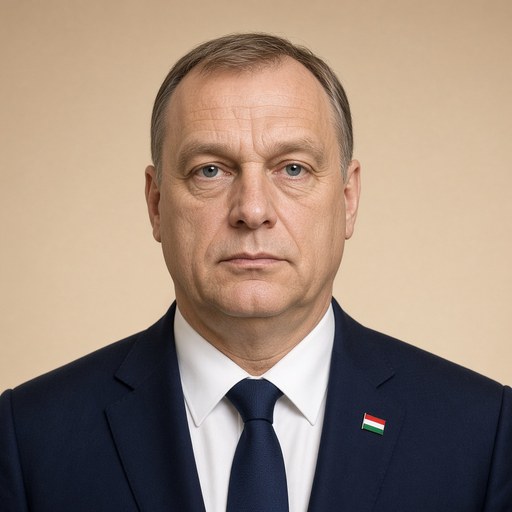

- Context
- Orbán addressed the tenth Lámfalussy Conference in Budapest on January 27, 2025, marking the occasion with tributes to outgoing central bank governor György Matolcsy and Alexandre Lámfalussy.
- Main themes
- Hungarian national sovereignty, geopolitical change, Lámfalussy Conference anniversary, György Matolcsy's legacy, euro and fiscal policy, Central European EU accession, Hungarian inventions and national pride, economic policy thinking
- Duration
- ~28 min
- Words
- 3,402
- Sentences
- 171
- Readability
- 50
- Grade
- 11.1
- Syntax
- 3.00
- Vocabulary
- 2.16
Translated from Hungarian
The broad sphere of national life a sentence belongs to. Every sentence has an Arena, so it is the denominator the other indices are read against.
Other171 sentences in 28 paragraphs
Well, what on earth am I going to talk about after Jeffrey Sachs?
Welcome to all of you. Good morning to everybody. If you allow me, I will use one of the secret weapons of the Hungarian nation, the Hungarian language, which is not just a language, but the first line of defense of our national sovereignty as well.
So, good morning, esteemed ladies and gentlemen, Professor ladies and gentlemen, ladies and gentlemen!
We thank Jeffrey Sachs for his moving words about Hungarians; indeed, the Hungarians believe, esteemed Professor, that we have given more to the world than we have received from it. It was a beautiful list that you wrote in our favor, for which we are grateful. If I may add two things. Here in my hand is this tool, which is called a Biro in America. This is an invention of a Hungarian man: the Biro pen. And although you may not know it, Illy café and espresso coffee are also Hungarian inventions, thanks to Ferenc Illy. There are few good things in wars; this is a small example that we can still find something in it, because he was a prisoner of war captured by the Italians in World War I, as a Hungarian from Timișoara, he married an Italian coffee trader, and from this came Illy café after he discovered espresso made with high-pressure steam. This is what Hungarians are like, esteemed ladies and gentlemen.
Esteemed Professor!
Once again, we thank you for your encouraging words.
I first spoke at this conference in 2014. I read my speech from that time before I arrived here today, and this alone proved the importance of this conference, as we found not only in my remarks back then but also in the speeches of other speakers the warnings and signals that today represent the most important challenges of geopolitics. Then in 2017, I was here with you again, and I spoke about how the world is changing, and there are clear signs of this. Many doubted it at that time, but since 2017, if you recall that year, the world has changed so much that it is hardly recognizable. This is the tenth Lámfalussy conference. We have heard about several anniversaries here, but there is another special element to our gathering today, as, by the natural order of things, as President Lagarde also mentioned, every mandate eventually comes to an end. Now, of course, I am not thinking of my own, as one hopes that theirs never ends, but the reality is that every mandate eventually ends, even a central bank mandate. So today we heard for the last time as central bank governor a greeting to the audience of the Lámfalussy conference from György Matolcsy. We can say to the central bank governor that this is not the end of the story. From the film Terminator, we learned that there is no fate, only if you fulfill it. However, that is still some time away. I am sure that the governor will continue to be a significant and defining player in Hungarian economic policy thinking. In this capacity – including today’s conference – we owe him our gratitude for the past ten years. The legacy that the governor leaves here elevates him among the greatest; in the Hungarian context, I must mention Kálmán Széll, Sándor Wekerle, or even the first central bank governor, Sándor Popovics. György Matolcsy is a historic economic politician and a historic central bank governor. Thank you very much for your work!
Esteemed ladies and gentlemen!
I must also commend Sándor Lámfalussy today, as the foreigners say: Alexandre Lamfalussy. I said this is the first line of defense; no matter how hard they try, they will never be able to pronounce Lámfalussy Sándor. He, as a true Central European, played a lion's share in ensuring that the accession of Central European countries to the European Union went as smoothly as possible. He was so helpful that between 1999 and 2002, when I could also be prime minister, and we were preparing for accession, he assisted my work as an advisor. I am grateful to him for that. I remember our discussions about the euro back then. What is this, what will come of it? Lámfalussy knew better than anyone else how the euro works; after all, it is his own invention, he saw the possibilities in it, but we talk less about that today; he also saw the potential operational flaws. I remember asking him, I am not an economist, I studied law, but as an unauthorized inquirer, I asked, "And, dear Sándor, how will there be a common currency without a common fiscal background?" It may not seem absurd to an economist that there is a common currency without a common fiscal background, but to a law graduate who meddles in economic policy, it is indeed a strange thing; we have never seen anything like it. How will this work? And Sándor said that with the introduction of the euro, the question of a common fiscal policy was settled. Unstoppable. The euro will bring with it the common fiscal policy of eurozone members. It cannot be otherwise. Professor Lámfalussy was a very smart man, and he may have been right that it cannot be otherwise, but he forgot to mention one thing: how much time it takes. Twenty-five years have passed since our conversation, and there is no common fiscal policy behind the euro. This little story only draws our attention to the fact that it is certainly not fortunate to base such large-scale things on the sober judgment of politicians.
Esteemed ladies and gentlemen!
Mr. Lámfalussy also expressed criticisms. He said that if we, European leaders, are not clever enough, if we do not take important steps, then the situation will not arise where every member of the eurozone can benefit from the euro. I think I once heard this from President Lagarde as well; Mr. Lámfalussy said that if we do not change, only the richest will benefit from the eurozone. The less sizable and less wealthy countries of the eurozone will not gain from this. If we look at the data, a rather sad picture unfolds before us. Since the introduction of the euro, the productivity and competitiveness of the United States have improved at a much greater pace than that of the eurozone. The GDP of the USA has grown by about 170 percent since 2000, while that of the eurozone has grown by 140 percent. In its current form, the euro, as Lámfalussy warned us, favors already strong and competitive economies but does not help the strengthening of emerging economies. This is a serious warning, perhaps the most important legacy of Lámfalussy for the Hungarians, who are not yet members of the eurozone. Precisely listening to his advice, we are not members of the eurozone. The legacy of the father of the euro for Hungary is the advice to be careful; if your economy is not prepared for accession, joining will kill you.
Well, esteemed ladies and gentlemen, we have heeded this advice. Finally, I would like to say one more thing regarding Sándor Lámfalussy. A cheekily provocative liberal journalist once asked him in an interview, which is a dangerous question around here, "Dear Professor Lámfalussy, are you a Christian?" I remember this interview. Here, I do not know how it is in America or in the countries of our guests, but around here, this is not a proper question. A gentleman does not inquire about three things, one of which is another person's religion. But it happened; the question was asked and later published. One of the greatest lessons and pieces of advice in my life was Lámfalussy's response to this. He replied: "Are you a Christian, Mr. Lámfalussy?" "I try, but I do not always succeed." And this reminds us, Christians, that Christianity is not a theory but a practice, which perhaps even has a place in monetary policy.
Esteemed ladies and gentlemen!
And there is another economist professor among us, about whom I would like to say a few words. He is Professor Jeffrey Sachs, whom I am happy to commend, as we have known each other for decades. Professor, let us reveal this secret of ours. Both of our lives had an extremely exciting period when you decided to turn towards the countries of the Eastern bloc during the Central European regime changes. This is when you appeared on our horizon, on our radar, in our lives. You were the most renowned Western economist who came to our region to help with the economic transition. So, the professor and I are old soldiers of the Westernization and catching up of Central Europe. And as is often the case in camaraderie, we had a few friendly exchanges of views. But we always agreed, and I believe we still agree, that we, Hungarians, must connect with the whole world as soon as possible and as deeply as possible. If I remember correctly, Professor, we first met at your home in Washington, near Washington. I remember that we had significantly different views on many issues, and looking back over the past thirty years, I see that our positions have come closer. I see that those globalists, let me use this political language, who once urged the opening of borders, are the same people who today advocate blockades, isolation, and war. Here I must mention another famous compatriot, George Soros, who has been at the forefront of this, as there are financial circles, there have always been such, and there still are today, let us call them globalists, who have been able to make a fortune over the past thirty years by spreading neoliberal principles, and today they can make a lot of money from war. The rest is just empty chatter, moreover, a sleight of hand or a populist charade; this is the bare political truth. In contrast, Professor Sachs has always maintained that the world can be made a better and more peaceful place through free trade and cooperation based on common interests. In recent years – obviously not independent of the character of the American government – this opinion has been met with excommunication, but he has persisted, always representing the same position, for which we owe him our respect. Moreover, let me reveal a little workshop secret that before the Hungarian government launched its official foreign policy strategy, which we call connectivity, it was preceded by a long and deep exchange of ideas with the professor. Without him, we probably would not have gotten this far. I can therefore say that over thirty years, we have moved from Washington dissent to Budapest consensus.
It may not be unreasonable to use the term Budapest consensus, as the preceding consensus, the liberal Washington consensus, seems to have, if I understand the world correctly, just died. It was already nearing its end in previous years, but since Donald Trump's victory, it can no longer hope for resurrection. Since there is no Washington consensus, it is worth defining what it is that we all believe in and what we can consider a compass; we could also call this the Budapest consensus, I am talking about a projected normative vision cast over the whole world, which can be briefly defined as every nation has the right to consider itself the center of the world and the most important point of reference. For example, for us, while fully respecting the Sachs doctrine that we just heard, which states that size matters, I must still say that Hungarians believe that regardless of economies of scale, Hungary is the center of the world. Just as we accept that every nation views its own country as the center of the world. From this, it follows that every nation, including Hungary, must seek the answer to the question of how we can ensure our survival, and if possible, our prosperity in this new world. For a country to be able to answer this, it must first clarify what the world ahead of us will be like. Professor, you spoke profoundly about this. If I want to summarize my answer to the question of what the world ahead of us will be like, in my own language, which is not the language of economics, I would say that the liberal era is being replaced by a sovereignist era.
Since we here in Hungary have been building, uniquely in the Western world, for fifteen years, this sovereignist era, we can say a thing or two about the characteristics of the era ahead of us. I will now say a few things. The first important experience is stability and security. Security will be revalued in the upcoming period. Those who cannot defend themselves will not be partners, nor even allies; at best, they can be subordinates. Therefore, for every nation, preserving its own self-defense capability will be a key issue. Interestingly, the focus today is not even on the Ukrainian-Russian war, but on migration. Today, the security and stability of Western, primarily European countries will be determined by migration and its mathematically predictable consequences. Those who do not manage this will not be able to find their place, their favorable place in the new world.
The second experience is an effective state. What may sound strange to your ears, because, as we heard from Ms. Lagarde, independence is also to be understood as the independence of the central bank from governments. But still, believe me, one of the great competitions of the upcoming period will be the competition between state organization models, or perhaps it already is. As neoliberal state organization models are currently failing, having already failed in America and now failing in Europe, the question is what other state organization models will emerge, wrapped in different national cultures and national peculiarities. We will see which state organization model will be the most successful in the next fifteen to twenty years.
Our third experience is foreign policy based on connectivity. A country that is unwilling to connect with other significant players cannot be successful. However, those who can connect with everyone will increase their weight and role. Let us take a look at Hungary! Our liberal opponents often portray Hungary as an isolated country. In contrast, today we maintain the best relationship with the new American Republican administration across all of Europe, we maintain the best relationship with China, and we maintain the best relationship with Russia. It is not Hungary that is isolated, but the European Union. The European Union has fallen out with the new American administration, even before they took office, it has isolated itself from China because it started a trade war, and it has isolated itself from Russia, with which it is at war. Who is isolated here? So I must say that our feeling is that we are on the main street of history, while the European Union is wandering and stumbling somewhere in the muddy side streets.
And the fourth and final thing I would like to say about the new world relates to the middle class. Our fourth experience is that we can only build resilient societies with a strong middle class. Indeed, Europe is facing very serious social shocks in the coming decades. I spoke about migration, but we can also recall many foreseeable shocks. And I am convinced that in this new world, only those will remain standing where these troubles, these shocks do not cause domestic political instability. It would be impolite of me to mention either France or Germany, so I will not do that now, but only those countries can be successful where the social order resting on the middle class is unshakeable and unassailable. A strong middle class will be the key issue in the next fifteen to twenty years.
Ladies and gentlemen!
In Hungary, in this regard, if I may say a few words about it, I can say that we did not allow what happened to our west, where the liberal state organization model weakened the Western middle classes. Today, to our west, this is happening, while the European middle classes are shrinking, at the same time, in the East Asian world, hundreds of millions are being lifted into the middle class from below, creating not only stability but also economic prosperity for themselves. In 1998, the average income of the urban population in China was found in the lower half of the income distribution scale; today, these incomes are in the upper third, while in several Western European countries, these values have started to decline. Since 2010, we have been working on creating a strong middle class. Those who are here may know less, but today there are one million more people working than in 2010. In a country of ten million – I am talking about the total population – there are one million more people working since 2010. The employment rate for the age group between 20 and 64 has risen from 64 percent in 2010 to 81 percent today. The financial wealth of households has quadrupled, hovering around 90 trillion forints. This is the 13th largest financial savings in the entire European Union, after 45 years of communism behind us, ladies and gentlemen! We are not talking about accumulation through generations of historical families, as communism made that impossible, but still, a middle-class policy has managed to achieve that we are now in 13th place in the European Union. And out of ten Hungarians – I say this to our guests, at home this is evident – nine Hungarians live in their own property.
Ladies and gentlemen!
Micro-enterprises – let’s leave the big ones aside – have doubled their revenue in ten years, rising from 10 trillion forints to 20 trillion forints, and this is still growing. And this has happened in Hungary, even though due to our close relationship with the American Republicans, the Brussels bureaucracy wants to impose financial sanctions on Hungary, and due to the Russian-Ukrainian war, the Hungarian economy has lost 19.5 billion euros in three years. This is how much the Russian-Ukrainian war has cost Hungary so far. Against this background, the strengthening of the middle class has taken place.
Ladies and gentlemen!
Since 2010, in Hungary, the real income of 60-70 percent of workers has increased every year. Every year! The only exception to this is the year 2023, the year of war, the second year of the Russian-Ukrainian war that started in 2022, when it is true that there was a slight decrease in real income in Hungary overall. So if there is a country that is interested in peace, it is Hungary. If there is a country that is interested in Donald Trump being successful in ending the Russian-Ukrainian war, it is Hungary. The success of the American administration's peace efforts is not ideological, nor is it even geostrategic, but a matter of pressing, everyday economic interest for Hungary. That is why we hope that there will be peace, that the sovereignist geopolitical transformation will take place, and that we will be able to finalize the American-Hungarian, large economic agreement, which will give a boost to the Hungarian economy.
Ladies and gentlemen!
I do not say that I have reached the end of my remarks, but this is the point where I will stop. In our community, among the Calvinists, there is a well-known story, when during a long, long sermon, a little child asks his father when it will end. When will he finish? The father replies: "He has already finished, he just cannot stop." I would like to avoid making that mistake now, so I will stop here, and I would like to express my great respect and appreciation to those who created this conference and help us with their thoughts to navigate Hungary successfully through global challenges. We have a good chance, with your help, that Hungary will find its place not only on the old but also on the newly emerging global economic map. I encourage you to tell us everything that the Hungarian government can utilize from your thoughts.
Thank you very much for the invitation! Respect to Sándor Lámfalussy! Congratulations to President Christine Lagarde! Thanks to Professor Jeffrey Sachs, and gratitude to György Matolcsy, the central bank governor! Thank you for having me here!
The original Hungarian. The tags above are read on the English translation's sentences.
No jó, de mi az ördögről fogok én beszélni Jeffrey Sachs után?
Welcome to All of You. Good morning to Everybody. If you allow me, I will use one of the secret weapons of the Hungarian nation, the Hungarian language, which is not just a language, but the first defense line of our national sovereignty as well.
Szóval, jó reggelt kívánok, tisztelt Hölgyeim és Uraim, Professzor Asszonyok és Urak, Hölgyeim és Uraim!
Köszönjük Jeffrey Sachsnak a magyarokról mondott, a lelkünket megindító szavait, valóban úgy gondolják a magyarok, tisztelt Professzor úr, hogy többet adtunk a világnak, mint amit kaptunk tőle. Szép lista volt, amit a javunkra írt, ezt köszönjük. Két dologgal, ha szabad még ki is egészíteném. Itt van a kezemben ez az eszköz, amit Amerikában Birónak hívnak. Ez egy magyar ember találmánya: Biro pen. És bár nem tudják, de az Illy café és az eszpresszókávé is egy magyar találmány, amit Illy Ferencnek köszönhetünk. Kevés jó dolog van a háborúkban, ez egy kicsi példa, hogy mégis találhatunk benne valamit, mert ő egy hadifogoly volt, akit az olaszok ejtettek foglyul az első világháborúban, temesvári magyarként, elvett egy olasz kávékereskedő hölgyet, és ebből lett az Illy café, miután ő fölfedezte a magas nyomású gőzzel előállítható eszpresszót. Hát ilyenek ezek a magyarok, tisztelt Hölgyeim és Uraim.
Tisztelt Professzor Úr!
Még egyszer köszönjük a biztató szavait.
2014-ben beszéltem először ezen a konferencián. Elolvastam az akkori beszédemet, mielőtt ma megérkeztem ide, Önökhöz, és már önmagában ez bizonyította ennek a konferenciának a fontosságát, hiszen nemcsak az én akkori megjegyzéseimben, hanem az akkori többi előadó beszédeiben is ott találtuk azokat a figyelmeztetéseket és jelzéseket, amelyek ma a legfontosabb kihívásait jelentik a geopolitikának. Aztán 2017-ben is jártam itt Önöknél, akkor arról beszéltem, hogy a világ változik, és ennek világos jelei vannak. Ebben akkor sokan kételkedtek, de 2017 óta, ha visszaemlékeznek arra az évre, a világ annyira megváltozott, hogy alig lehet ráismerni. Ez a tizedik Lámfalussy konferencia. Hallhattunk itt több jubileumról, de van még egy különleges eleme ennek a mai együttlétünknek, hiszen a dolgok természetes rendje folytán, amiről Lagarde elnökasszony is megemlékezett, minden mandátum véget ér egyszer. Most persze nem a sajátomra gondolok, mert az ember abban reménykedik, hogy az övé sosem ér véget, de a valóság az, hogy minden mandátum véget ér egyszer, még a jegybanki mandátum is. Úgyhogy ma hallottuk utoljára jegybankelnökként köszönteni a Lámfalussy konferencia közönségét Matolcsy Györgytől. Azt tudjuk mondani a jegybankelnök úrnak, hogy ez még nem a történet vége. A Terminátor című filmből megtanulhattuk, hogy nincs végzet, csak ha bevégzed. Ez azonban még odébb van. Biztos vagyok abban, hogy az elnök úr továbbra is jelentős, meghatározó szereplője marad a magyar gazdaságpolitikai gondolkodásnak. Ebben a minőségében – a mai konferenciát is ideértve – köszönettel tartozunk neki az elmúlt bő tíz évért. Az örökség, amit az elnök úr itt hagy, a legnagyobbak közé emeli, magyar összefüggésben Széll Kálmánt, Wekerle Sándort vagy éppen az első jegybankelnököt, Popovics Sándort kell említenem. Matolcsy György korszakos gazdaságpolitikus és korszakos jegybankelnök. Köszönjük szépen a munkáját!
Tisztelt Hölgyeim és Uraim!
Méltatnom kell az elnök úron kívül ma még itt Lámfalussy Sándort is, ahogy a külföldiek mondják: Alexandre Lamfalussyt. Mondtam, ez az első védelmi vonal, hiába is próbálják, sosem fogják tudni kimondani, hogy Lámfalussy Sándor. Ő igazi közép-európaiként oroszlánrészt vállalt abban, hogy a közép-európai országok csatlakozása minél gördülékenyebben történjen meg az Európai Unióhoz. Olyannyira segítőkész volt, hogy 1999 és 2002 között, akkor szintén miniszterelnök lehettem, és a csatlakozást akkor készítettük elő, ő tanácsadóként segítette a munkámat. Hálás vagyok neki ezért. Emlékszem az euróról folytatott akkori beszélgetéseinkre. Mi is ez, mi lesz ebből? Lámfalussy mindenki másnál jobban ismerte az euró működését, mégiscsak a saját találmányáról van szó, látta benne a lehetőségeket, de erről ma már ritkábban beszélünk, látta benne a lehetséges működési hibákat is. Emlékszem, megkérdeztem tőle, nem vagyok közgazdász, jogi tanulmányokat végeztem, de ilyen illetéktelen érdeklődőként megkérdeztem, hogy és, kedves Sándor, hogy’ lesz közös pénz közös fiskális háttér nélkül? Az lehet, hogy egy közgazdásznak nem tűnik abszurdnak, hogy közös pénz van közös fiskális háttér nélkül, de egy ilyen ágrólszakadt jogásznak, aki belekontárkodik a gazdaságpolitika, mégiscsak furcsa dolog, ilyet még nem láttunk. Hogy’ lesz ez? És Sándor azt mondta, az euró bevezetésével a közös fiskális politika kérdése eldőlt. Megállíthatatlan. Az euró magával fogja hozni az eurózónatagok közös fiskális politikáját. Nem lehet másként. Lámfalussy professzor úr nagyon okos ember volt, és lehet, hogy igaza van, hogy nem lehet másként, egy dolgot felejtett elmondani, de mennyi idő kell hozzá. A beszélgetésünk óta eltelt 25 év, és nincs az euró mögött közös fiskális politika. Ez a kis történet csak arra hívja fel a figyelmünket, hogy a politikusok józan belátására alapozni ilyen nagyléptékű dolgokat semmiképpen nem szerencsés.
Tisztelt Hölgyeim és Uraim!
Lámfalussy úr kritikákat is fogalmazott meg. Azt mondta, hogyha nem leszünk elég ügyesek mi, európai vezetők, ha nem teszünk fontos lépéseket, akkor nem jön létre az a helyzet, hogy az euróból az euróövezet minden tagja profitálhasson. Ezt egyszer talán Lagarde elnök asszonytól is hallottam valahol, azt mondta Lámfalussy úr, hogyha nem változtatunk, akkor csak a leggazdagabbak profitálnak majd az eurózónából. Az eurózóna kevésbé méretes és kevésbé gazdag országai ezzel nem fognak nyerni. Ha az adatokat megnézzük, elég szomorú kép tárul elénk. Az euró bevezetése óta az Egyesült Államok termelékenysége és versenyképessége sokkal nagyobb ütemben javul, mint az eurózóna versenyképessége és termelékenysége. Az USA GDP-je 2000 óta nőtt körülbelül 170 százalékkal, az euróövezeté meg 140-nel. Jelenlegi formájában az euró, ahogyan Lámfalussy erre figyelmeztetett bennünket, az eleve erős és versenyképes gazdaságoknak kedvez, de nem segíti a felzárkózó gazdaságok megerősödését. Ez komoly figyelmeztetés, talán a legfontosabb hagyatéka Lámfalussynak a magyarok számára, akik még nem vagyunk tagjai az eurózónának. Éppen az ő intelmeire hallgatva nem vagyunk tagjai az eurózónának. Az eurózóna atyjának az öröksége Magyarország számára az a tanács, hogy vigyázzatok, ha a gazdaságotok nincs fölkészülve a csatlakozásra, a csatlakozás meg fog ölni benneteket.
Nos, tisztelt Hölgyeim és Uraim, ezt a tanácsot mi megfogadtuk. Végezetül még egy dolgot szeretnék Lámfalussy Sándorral kapcsolatban elmondani. Egy szemtelenül provokatív liberális újságíró egy interjúban föltette neki azt a kérdést, ami errefelé egy veszélyes kérdés, hogy kedves Lámfalussy professzor úr, Ön keresztény? Emlékszem erre az interjúra. Errefelé, nem tudom, Amerikában hogy’ van, vagy a vendégeink országaiban hogy’ van, de itt mifelénk ez nem helyes kérdés. Úriember három dolog felől nem érdeklődik, ebből az egyik a másik ember vallása. De hát megtörtént, a kérdés elhangzott, nyomtatásba is került később. Életem egyik legnagyobb útravalója és tanulsága, amit erre Lámfalussy válaszolt. A következőt válaszolta: „Ön keresztény, Lámfalussy úr?” „Igyekszem, de nem mindig sikerül.” És ez arra emlékeztet bennünket, keresztényeket, hogy a kereszténység nem egy elmélet, hanem egy gyakorlat, aminek talán még a pénzügypolitikában is lehet helye.
Tisztelt Hölgyeim és Uraim!
És van még itt egy közgazdász professzor körünkben, akiről szeretnék néhány szót mondani. Ő Jeffrey Sachs professzor úr, akit szívesen is méltatok, hiszen évtizedek óta ismerjük egymást. Professzor úr, adjuk ki ezt a titkunkat. Mindkettőnk életében egy rendkívül izgalmas időszak volt, amikor Ön úgy döntött, hogy a közép-európai rendszerváltások idején a keleti blokk országai felé veszi az irányt. Ekkor jelent meg Ön a mi horizontunkon, a radarunkon, a mi életünkben. Ön volt a legnevesebb nyugati közgazdász, aki eljött a térségünkbe segíteni a gazdasági átmenetet. Úgyhogy a professzor úr és jómagam régi katonái vagyunk Közép-Európa nyugatosításának és felzárkóztatásának. És ahogy az a fegyverbarátságokban lenni szokott, akadt is köztünk néhány baráti pengeváltás. De abban mindig egyetértettünk, és azt hiszem, azóta is egyetértünk, hogy nekünk, magyaroknak mihamarabb és minél mélyebben össze kell kapcsolódnunk az egész világgal. Ha jól emlékszem, Professzor úr, először mi az Ön washingtoni otthonában találkoztunk, Washington melletti otthonában. Emlékszem, számos kérdésben tért el lényegesen az álláspontunk, és azt látom az elmúlt harminc évre visszatekintve, hogy az álláspontjaink közeledtek. Azt látom, hogy azok a globalisták, hadd használjam ezt a politikai nyelvezetet, akik egykor a határok összenyitását sürgették, ugyanazok az emberek ma blokkosodást, bezárkózást és háborút szorgalmaznak. Itt egy másik híres hazánkfia nevét, Soros György nevét meg kell említenem, aki ebben élen járt, hiszen vannak olyan pénzügyi körök, mindig voltak ilyenek, ma is vannak, nevezzük globalistáknak őket, akik harminc éve a neoliberális elvek terjesztésével tudták degeszre keresni magukat, ma meg a háborúval tudnak rengeteg pénzt keresni. A többi csak üres fecsegés, mi több, szemfényvesztés vagy népbutító színjáték, ez a pőre politikai igazság. Ellenben Sachs professzor mindig is kitartott amellett, hogy a világ jobb és békésebb hellyé tehető a szabad kereskedelem és a közös érdekek mentén történő együttműködés, összekapcsolódás segítségével. Az elmúlt években – nyilván nem függetlenül az amerikai kormányzat karakterétől – ezért a véleményért kiátkozás járt, de ő kitartott, mindig ugyanazt az álláspontot képviselte, ezért tisztelettel tartozunk neki. Sőt, azt a kis műhelytitkot is engedjék meg, hogy fölfedjem, hogy mielőtt a magyar kormány megindította volna a hivatalos külpolitikai kormánystratégiáját, amit konnektivitásnak nevezünk, ezt megelőzte a professzor úrral tartott hosszú és mély eszmecsere. Nélküle valószínűleg nem is jutottunk volna el idáig. Azt is mondhatom tehát, hogy harminc év alatt eljutottunk a washingtoni disszenzustól a budapesti konszenzusig.
Talán nem indokolatlan ezt a kifejezést, hogy budapesti konszenzus használni, hiszen a megelőző konszenzus, a liberális, washingtoni, úgy tűnik, ha jól értem a világot, éppen kimúlt. Már az előző években is a végét járta, de Donald Trump győzelme óta már a feltámadásban sem reménykedhet. Miután nincs washingtoni konszenzus, érdemes definiálni, mégis mi az, amiben mindannyian hiszünk, és amit iránytűnek tekinthetünk, ezt nevezhetnénk budapesti konszenzusnak is, egy kivetített, az egész világra kivetített normatív elképzelésről beszélek, ami röviden úgy határozható meg, hogy minden nemzetnek joga van ahhoz, hogy önmagát tekintse a világ közepének és a legfontosabb viszonyítási pontnak. Például számunkra, a legteljesebb tisztelettel elfogadva a Sachs-doktrínát, amit az előbb hallhattunk, arról, hogy a méretnek jelentősége van, mégis azt kell mondanom, hogy a magyarok azt gondolják, hogy mérethatékonyság ide vagy oda, mégiscsak a világ közepe Magyarország. Mint ahogy elfogadjuk, hogy minden nemzet úgy tekint a saját országára, mint a világ közepére. Ebből pedig az következik, minden nemzet, így Magyarország számára is arra a kérdésre kell keresnünk a választ, hogy hogyan tudjuk biztosítani a megmaradásunkat, ha lehet, a gyarapodásunkat ebben az új világban. Hogy egy ország erre választ tudjon adni, először tisztáznia kell, hogy milyen is lesz az előttünk álló világ. Erről Professzor úr mélyen szántó módon beszélt előttem. Ha röviden akarom összefogni a magam válaszát erre a kérdésre, milyen lesz az előttünk álló, most formálódó világ, akkor a magam nyelvén, ami nem a közgazdaság nyelve, azt mondanám, hogy a liberális korszakot egy szuverenista korszak váltja fel.
Miután mi itt, Magyarországon tizenöt éve építjük, egyedül a nyugati világban, egyedül itt, mi Magyarországon tizenöt éve építjük ezt a szuverenista korszakot, tudunk egyet s mást mondani ennek az előttünk álló korszaknak a sajátosságairól. Én is mondok most néhány dolgot. Az első fontos tapasztalat a stabilitás és a biztonság. A biztonság fölértékelődik az előttünk álló időszakban. Aki nem tudja magát megvédeni, az nem partner, de még csak nem is szövetséges, legjobb esetben alárendelt lehet. Ezért minden nemzet számára a saját önvédelmi képességének a megőrzése kulcskérdés lesz. Érdekes módon ennek középpontjában ma nem is az ukrán–orosz háború áll, hanem a migráció. Ma a nyugati, elsősorban európai országok biztonságát és stabilitását a migráció és annak matematikailag előrejelezhető következményei jelentik majd. Aki ezt nem kezeli, nem tudja megtalálni a helyét, a kedvező helyét az új világban.
A második tapasztalat a hatékony állam. Ami az Önök fülének nyilván furcsa, mert, mint Lagarde asszonytól is hallottuk, a függetlenség is úgy értelmezendő, hogy az kormányzatoktól való függetlensége a jegybanknak. De mégis higgyék el, hogy az előttünk álló időszak egyik nagy versenye az az államszervezési modellek közötti verseny lesz, vagy talán már most is az. Miután a neoliberális államszervezési modellek éppen most buknak meg, Amerikában már megbuktak, de Európában is most buknak meg, ezért az a kérdés, hogy milyen más államszervezési modellek jönnek különböző nemzeti kultúrákból, nemzeti sajátosságokkal körülpántozva. Látni fogjuk majd, hogy melyik államszervezési modell lesz a legsikeresebb a következő tizenöt-húsz évben.
A harmadik tapasztalatunk a konnektivitás alapú külpolitika. Amelyik ország nem hajlandó összekapcsolódni a többi jelentős szereplővel, nem lehet sikeres. Aki viszont össze tud kapcsolódni mindenkivel, annak megnő a súlya és a szerepe. Vessünk egy pillantást Magyarországra! A mi liberális ellenfeleink Magyarországot egy elszigetelt országnak szokták ábrázolni. Ehhez képest ma egész Európában mi ápoljuk a legjobb kapcsolatot az új amerikai republikánus adminisztrációval, mi ápoljuk a legjobb kapcsolatot Kínával, és mi ápoljuk a legjobb kapcsolatot Oroszországgal. Nem Magyarország van elszigetelve, hanem az Európai Unió. Az Európai Unió összeveszett az új amerikai adminisztrációval, még hivatalba se léptek, elszigetelte magát az Európai Unió Kínától, mert vámháborút indított, és elszigetelte magát Oroszországtól, akivel meg háborúban áll. Ki van itt elszigetelve? Szóval azt kell mondanom, hogy a mi érzésünk az, hogy mi a történelem főutcáján járunk, miközben az Európai Unió valahol a sáros mellékutcákban kódorog és botorkál.
És a negyedik, utolsó dolog, amit az új világról szeretnék mondani, az a középosztályhoz tartozik vagy kapcsolódik. A negyedik tapasztalatunk, hogy csak erős középosztállyal tudunk fölépíteni ellenálló társadalmakat. Ugyanis Európában a következő évtizedekben nagyon súlyos társadalmi megrázkódtatások várnak ránk. A migrációról beszéltem, de még számos előre látható megrázkódtatást tudunk fölidézni. És az a meggyőződésem, hogy ebben az új világban csak azok maradnak talpon, ahol ezek a bajok, a megrázkódtatások nem okoznak belpolitikai instabilitást. Udvariatlan dolog lenne, ha megemlíteném akár Franciaországot vagy Németországot, ezt most nem is teszem, de csak azok az országok lehetnek sikeresek, ahol a középosztályon nyugvó társadalmi rend megingathatatlan és megbillenthetetlen. Erős középosztály lesz a kulcskérdés a következő tizenöt-húsz évben.
Tisztelt Hölgyeim és Uraim!
Magyarországon e tekintetben, ha mondhatok erről néhány szót, azt tudom mondani, hogy nem engedtük, hogy megtörténjen az, ami tőlünk nyugatra megtörtént, ahol a liberális államszervezési modell elgyengítette a nyugati középosztályokat. Ma tőlünk nyugatra ez történik, úgy, hogy miközben az európai középosztályok fogyatkoznak, aközben a kelet-ázsiai világban százmillió számra emelnek be alulról a középosztályba hatalmas nagy társadalmi rétegeket – nemcsak stabilitást, hanem gazdasági prosperitást is teremtve ezzel maguknak. 1998-ban az átlagos kínai városi lakosság jövedelme a jövedelemeloszlási skála alsó felében volt található, mára ezek a jövedelmek a fölső harmadban vannak, és közben számos nyugat-európai országban ezek az értékek lefelé indultak el. Mi itt 2010 óta dolgozunk az erős középosztály megteremtésén. Akik itt vannak, talán kevésbé tudják, de egymillióval több ember dolgozik ma, mint 2010-ben. Egy 10 milliós ország esetében – a teljes népességről beszélek – 2010 óta egymillióval több ember dolgozik. A 20 és 64 közötti korosztálynak a foglalkoztatási rátája a 2010-es 64 százalékról ma 81 százalékon van. A háztartások pénzügyi vagyona négyszeresére nőtt, valahol 90 ezer milliárd forint környékén van. Ez a 13. legnagyobb pénzügyi megtakarítás az egész Európai Unióban, 45 év kommunizmussal a hátunk mögött, tisztelt Hölgyeim és Uraim! Nem történelmi családok nemzedékein keresztül történő fölhalmozásról beszélünk, mert a kommunizmus ezt lehetetlenné tette, de így is egy középosztálypolitika el tudta érni, hogy ma a 13. helyen legyünk az Európai Unióban. És tíz magyarból – ezt a vendégeinknek mondom, itthon ez evidens – kilenc magyar saját tulajdonú ingatlanban lakik.
Tisztelt Hölgyeim és Uraim!
A mikrovállalkozások – hagyjuk a nagyokat – tíz év alatt megduplázták a bevételüket, 10 ezer milliárd forintról fölmentek 20 ezer milliárd forintra, és ez egyre nő. És ez úgy történt meg Magyarországon, hogy közben az amerikai republikánusokkal fönntartott szoros kapcsolatunk miatt a brüsszeli bürokrácia pénzügyi szankciók alá akarja tenni Magyarországot, és az orosz–ukrán háború miatt három év alatt a magyar gazdaság elvesztett 19,5 milliárd eurót. Ennyibe került Magyarországnak az orosz–ukrán háború eddig. Ilyen háttéradatok mellett történt meg a középosztály megerősítése.
Tisztelt Hölgyeim és Uraim!
Magyarországon 2010 óta minden évben a munkavállalók 60-70 százalékának nőtt a reáljövedelme. Minden évben! Ez alól egyetlen év a kivétel, a 2023-as év, a háború éve, a 2022-ben kezdődött orosz–ukrán háború második éve, amikor igaz, hogy összességében csekély mértékben, de mégis reáljövedelem-csökkenés történt Magyarországon. Ha tehát van ország, amelyik érdekelt a békében, az Magyarország. Ha van ország, amelyik érdekelt abban, hogy Donald Trump sikeres legyen az orosz–ukrán háború lezárásában, az éppen Magyarország. Az amerikai adminisztráció békeerőfeszítésének sikere nem ideológiai, még csak nem is geostratégiai, hanem húsbavágó, mindennapos gazdasági érdeke Magyarországnak. Ezért is reménykedünk abban, hogy lesz béke, megtörténik a szuverenista világpolitikai átalakítás, és tető alá tudjuk hozni az amerikai–magyar, nagy gazdasági megállapodást, amivel lendületet fogunk adni a magyar gazdaságnak.
Tisztelt Hölgyeim és Uraim!
Nem mondom, hogy a mondandóm végére értem, de ez az a pont, ahol abba fogom hagyni. A mi közösségünkben, a kálvinistáknál egy ismert történet, amikor a hosszú-hosszú prédikáció során a kisgyerek megkérdezi az édesapját, hogy mikor ér már a végére? Mikor fejezi már be? Az apa azt válaszolja: „már befejezte, csak nem tudja abbahagyni.” Ezt a hibát szeretném én most elkerülni, ezért én most abbahagyom, és nagy tisztelettel szeretném megköszönni, és nagyrabecsülésemet kifejezni azok iránt, akik ezt a konferenciát létrehozták, és segítenek bennünket a gondolataikkal abban, hogy Magyarország sikeresen navigáljon a globális kihívások között. Jó esélyünk van, az Önök segítségével is, hogy Magyarország nemcsak a régi, de a most kirajzolódó új globális gazdaság térképén is megtalálja a saját helyét. Bátorítom Önöket, mindent mondjanak el nekünk, amit a magyar kormány az Önök gondolataiból hasznosítani tud.
Köszönöm szépen a meghívást! Tisztelet Lámfalussy Sándornak! Gratuláció Lagarde elnökasszonynak! Köszönet Jeffrey Sachs professzor úrnak, és hála Matolcsy György jegybankelnöknek! Köszönöm, hogy itt lehettem!