




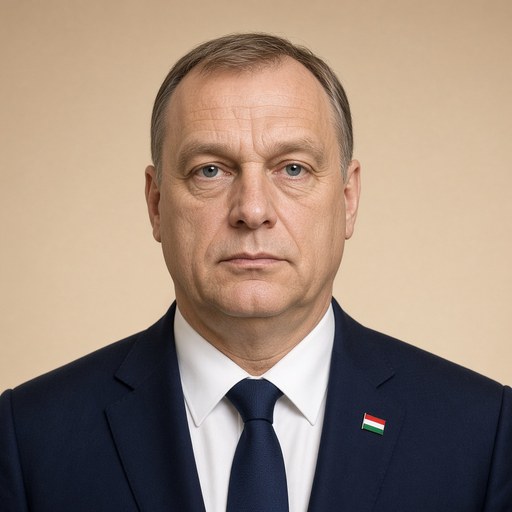
Speech by Viktor Orbán on the occasion of the celebrations for the 130th anniversary of the inauguration of the Mária-Valéria Bridge.
 Viktor Orbán · Prime Minister of Hungary
- Context
- Orbán spoke at the 130th anniversary celebration of the Mária-Valéria Bridge inauguration, addressing Hungarian and Slovak guests at Esztergom-Párkány in 2025.
- Main themes
- Hungarian-Slovak friendship, peace vs. war in Europe, EU war policy criticism, bridge reconstruction symbolism, World War memory, Brussels destabilization accusations, Central European solidarity, sovereignty and oppression, new freight bridge proposal, anti-war stance
- Duration
- ~5 min
- Words
- 656
- Sentences
- 47
- Readability
- 62
- Grade
- 8.1
- Syntax
- 2.57
- Vocabulary
- 2.13
Translated from German
The broad sphere of national life a sentence belongs to. Every sentence has an Arena, so it is the denominator the other indices are read against.
Other47 sentences in 7 paragraphs
Ladies and gentlemen!
We did not want either of the two wars. Neither the Hungarians nor the Slovaks wanted to participate in either of the two world wars. Nevertheless, we were sent to the front, our lives turned upside down in the name of imperial interests. With the reconstruction of the bridge, both peoples simultaneously expressed that they do not want any more bridge-destroying wars in Europe. When I stood here for the first time, Commissioner for Enlargement Verheugen was also here, and at that time we, Slovaks, Hungarians, and the representative of the Union, expressed through our joint appearance that we want to join the European Union, which is destined to guarantee peace on the continent. I suggest we let the words “the European Union, which is destined to guarantee peace on the continent” resonate with us. Since then, however, the world has changed significantly. Like the old empires that crippled us, the European Union has also transformed into a war project. It is openly stated in Brussels that the task of the next decade is to defeat Russia on the Eastern Front, meaning that all Europeans, all European economic actors, and all European nation-states should serve this goal if they belong to the Union. We Hungarians do not want that, but we are still being forced into it. That, my dear friends, is called oppression. We are not very surprised by this. We have experienced something like this before. I remember that during the communist era, they spoke of freedom, even the newspaper was named that way, but of course, it meant oppression. When Brussels today speaks of European peace, it actually means war. The Hungarians and Slovaks know what war means. Young people are sent to the front. Sooner or later, our goods will be taken from us and used for war purposes. Then comes economic hardship, and we can only pray that the front does not come here, because then not a stone will be left upon another. Nothing remained of this bridge after the First and also after the Second World War. This bridge means to me that we do not want Europe to repeat this mistake again.
Ladies and gentlemen!
As the Slovak Prime Minister has already mentioned, the representatives of Brussels' war policy are present in all Central European countries. It is not for me to speak about Slovakia. From here, one can see well what is going on over there. But I can say that they are stirring unrest in Serbia. And here in Hungary, they are also at work. They are easy to recognize. They are aggressive, violent, they threaten. Here with us, dear Robert, they come to public gatherings with firearms. They threaten honorable people with execution, they insult and harass even old priests at church doors. Here with us, Robert, they are all people from Brussels. Spreading fake news, slander, whisper propaganda, and their goal is destabilization, but you know that better than I do. We live in times that require prudence, calmness, and cool-headedness, and we must repeatedly say that we believe in the power of love and solidarity.
Dear Robert! Honorable Prime Minister! Dear residents of Párkány and Esztergom!
Those who learn from the past protect the future. I would like to assure our Slovak friends on behalf of all of us that we Hungarians are working to ensure that this bridge never has to be rebuilt again. But we are happy to do what you have suggested: We will build another bridge between Esztergom and Párkány! A freight bridge would indeed be very useful. I can tell you that the preparatory work has already begun, the plans are on the table, and we will find a way to raise the money. And I hope that we will see each other again at the inauguration of this bridge. Thank you for your attention!
God be with us all, Hungarians above all! Forward, Hungary!
The original German. The tags above are read on the English translation's sentences.
Meine Damen und Herren!
Wir wollten keinen der beiden Kriege. Weder die Ungarn noch die Slowaken wollten an einem der beiden Weltkriege teilnehmen. Dennoch wurden wir an die Front geschickt, unser Leben wurde unter Berufung auf imperiale Interessen auf den Kopf gestellt. Mit dem Wiederaufbau der Brücke haben beide Völker gleichzeitig zum Ausdruck gebracht, dass sie keine weiteren Brücken zerstörenden Kriege in Europa wollen. Als ich zum ersten Mal hier stand, war auch Erweiterungskommissar Verheugen hier, und damals haben wir, Slowaken, Ungarn und der Vertreter der Union, mit unserem gemeinsamen Auftreten zum Ausdruck gebracht, dass wir der Europäischen Union beitreten wollen, die dazu berufen ist, den Frieden auf dem Kontinent zu garantieren. Ich schlage vor, wir lassen die Worte „der Europäischen Union, die dazu berufen ist, den Frieden auf dem Kontinent zu garantieren” auf uns wirken. Seitdem hat sich die Welt jedoch stark verändert. Wie die alten Reiche, die uns verkrüppelten, hat sich auch die Europäische Union zu einem Kriegsprojekt gewandelt. In Brüssel wird offen gesagt, dass die Aufgabe des nächsten Jahrzehnts darin besteht, Russland an der Ostfront zu besiegen, d. h. alle Europäer, alle europäischen Wirtschaftsakteure und alle europäischen Nationalstaaten sollten diesem Ziel dienen, wenn sie zur Union gehören. Wir Ungarn wollen das nicht, aber man will uns dennoch dazu zwingen. Das, meine lieben Freunde, nennt man Unterdrückung. Wir sind darüber nicht sehr überrascht. Wir haben so etwas schon einmal erlebt. Ich erinnere mich, dass man in der kommunistischen Zeit von Freiheit sprach, sogar die Zeitung hieß so, aber natürlich bedeutete das Unterdrückung. Wenn Brüssel heute von europäischem Frieden spricht, bedeutet das in Wirklichkeit Krieg. Die Ungarn und Slowaken wissen, was Krieg bedeutet. Die jungen Leute werden an die Front geschickt. Früher oder später werden uns unsere Güter weggenommen und für Kriegszwecke verwendet. Dann kommt die wirtschaftliche Not, und wir können nur beten, dass die Front nicht hierher kommt, denn dann bleibt kein Stein auf dem anderen. Auch von dieser Brücke ist nach dem Ersten und auch nach Zweiten Weltkrieg nichts übrig geblieben. Diese Brücke bedeutet für mich, dass wir nicht wollen, dass Europa diesen Fehler erneut wiederholt.
Meine Damen und Herren!
Wie der slowakische Ministerpräsident bereits erwähnt hat, sind die Vertreter der Brüsseler Kriegspolitik in allen mitteleuropäischen Ländern präsent. Über die Slowakei zu sprechen, das steht mir nicht zu. Von hier aus kann man gut sehen, was dort drüben vor sich geht. Aber ich kann sagen, dass sie in Serbien Unruhe stiften. Und hier in Ungarn sind sie auch am Werk. Sie sind leicht zu erkennen. Sie sind aggressiv, gewalttätig, sie drohen. Bei uns, lieber Robert, kommen sie mit Schusswaffen zu öffentlichen Versammlungen. Sie drohen ehrbaren Menschen mit der Hinrichtung, sie beleidigen und belästigen sogar alte Priester in Kirchentoren. Hier bei uns, Robert, sind sie alle Leute aus Brüssel. Fake-News-Verbreitung, Verleumdung, Flüsterpropaganda, und ihr Ziel ist die Destabilisierung, aber das weißt du besser als ich. Wir leben in Zeiten, in denen Besonnenheit, Gelassenheit und Kaltblütigkeit gefragt sind, und wir müssen immer wieder sagen, dass wir an die Kraft der Liebe und der Solidarität glauben.
Lieber Robert! Sehr geehrter Herr Ministerpräsident! Liebe Einwohner von Párkány und Esztergom!
Wer aus der Vergangenheit lernt, schützt die Zukunft. Ich möchte unseren slowakischen Freunden im Namen von uns allen versichern, dass wir Ungarn daran arbeiten, dass diese Brücke nie wieder neu gebaut werden muss. Aber wir tun gerne, was Sie vorgeschlagen haben: Wir bauen eine weitere Brücke zwischen Esztergom und Párkány! Eine Lastbrücke wäre wirklich nützlich. Ich kann Ihnen sagen, dass die Vorbereitungsarbeiten bereits begonnen haben, die Pläne liegen auf dem Tisch, und das Geld werden wir schon irgendwie aufbringen. Und ich hoffe, dass wir uns bei der Einweihung dieser Brücke wiedersehen werden. Vielen Dank für Ihre Aufmerksamkeit!
Gott sei über uns allen, Ungarn vor allen Dingen! Vorwärts, Ungarn!