




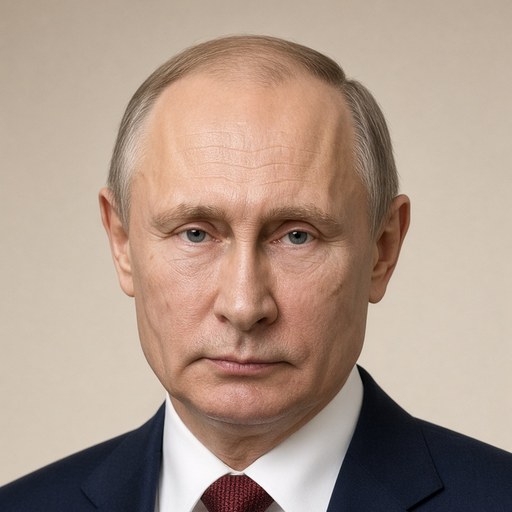
Vladimir Putin congratulated VGTRK staff on the 25th anniversary of its first television broadcast
 Vladimir Putin · President of Russia
- Context
- Putin congratulated VGTRK staff at a ceremony marking the 25th anniversary of the Russian state television and radio holding's first broadcast on May 13, 2016.
- Main themes
- VGTRK anniversary, media and journalism, Russian state television, information monopoly, foreign policy information support, war reporting and journalist courage, cultural programming, alternative media perspectives, global media landscape
- Duration
- ~5 min
- Words
- 635
- Sentences
- 40
- Readability
- 67
- Grade
- 7.9
- Syntax
- 2.72
- Vocabulary
- 1.82
The broad sphere of national life a sentence belongs to. Every sentence has an Arena, so it is the denominator the other indices are read against.
Other40 sentences in 15 paragraphs
Twenty-five years is both a long and a short time; it depends on perspective. For a human life, it is perhaps – no, definitely – a very long time. For a large company like VGTRK, 25 years is not so long. Over this short period, the company has become one of the leading media holdings in Europe.
As far as I remember, the holding has just over 20,000 employees, and as I just looked it up, it has 30 television companies, five radio stations and 94 regional branches. Programmes are broadcast in 54 languages spoken in Russia. These are very strong and important indicators even for a major international holding.
What I would like to stress is, firstly, the company’s newswires that the audience certainly has much trust and interest in, mainly because they are truthful, detailed and appealing.
I can imagine how difficult it is to work in this mode, to constantly make these hot “news pancakes” on a hot stove. When I came in, by the way, I told your bosses that it was too warm in the newsrooms where the news is made. They said it was fine. So I said, “Why don’t you sit there and see for yourselves?”
Remark: It is already fixed.
Fixed already? I hope they will fix it although I was, of course, joking.
It is certainly very hard work, and I am well aware of this. It is also hard work to be in conflict areas, which is another point I wanted to make. Your reporters demonstrate true personal courage.
Mr Dobrodeyev [Director General] knows that there have been cases when I directly told him to remove a certain reporter from a conflict area. Yes, [Anastasia] Popova is one of those who caught my attention. Actually, not mine. Several years ago, I was watching one of your programmes with one of my good friends, a colleague from Europe. He said, “Get that girl out of there as soon as possible.” I asked why. “They are so used to bullets it may not end well. They tend to get too close, and this is dangerous,” he replied.
Why have I been saying all this? Because I want to thank you for the job done. It is hard and problem-laden, and implies personal risk, but you carry on with it. Largely thanks to your work, we are overcoming the information monopoly used by some of our opponents – I mean the global media monopoly.
As soon as you are a success, we see a prompt response: whatever does not suit someone in terms of information support of our foreign policy or whatever does not fit in with their vision in your standard of news presentation immediately moves our opponents to criticise it all toughly, up to branding it as propaganda.
Getting into a debate with our partners is the last thing I want to do now. I want to thank you for your work as this is is what we really need – not only to support our foreign policy activities but also to carry alternative information to television and radio audiences.
Monopoly is always pernicious, all the more so information monopoly. Even when we make a mistake, we should have the right to speak about it, and the people who listen to us and watch our broadcasts must see and hear an alternative opinion.
Last but not least, your revivals of classics – I mean the films you make after old and modern Russian and foreign classics – always come as landmarks in this country’s cultural life.
Thus, your versatile work is very interesting and popular. I would like to wish you every success in the future. I have no doubt that you will score ever new successes, considering your wonderful twenty-thousand-strong staff.
Thank you very much.