




- Context
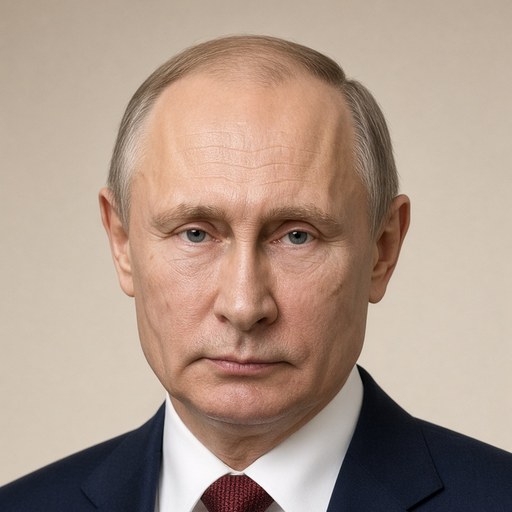
- Putin addressed the annual Valdai Discussion Club meeting in Sochi on October 3, 2019, speaking on Asia's growing role in global affairs and multipolarity.
- Main themes
- Rise of Asia in global affairs, multipolarity and world order, Russia-Asia relations, economic growth of Asian states, sovereignty and globalization, cultural heritage of Asian civilizations, international law, geopolitical shifts, integration and regionalism
- Duration
- ~178 min
- Words
- 21,363
- Sentences
- 1,225
- Readability
- 52
- Grade
- 10.4
- Syntax
- 2.89
- Vocabulary
- 2.14
Translated from Russian
The broad sphere of national life a sentence belongs to. Every sentence has an Arena, so it is the denominator the other indices are read against.
Other1,225 sentences in 465 paragraphs
Your Majesty King Abdullah! Esteemed Ilham Heydarovich! Esteemed Kassym-Jomart Kemelevich! Esteemed Mr. Rodrigo Duterte! Friends! Ladies and gentlemen!
I am very pleased to welcome all of you to Sochi for the annual meeting of the Valdai Club. As is customary at this venue, we strive to set aside current political issues, even diplomatic discussions, and aim to reflect, so to speak, "in the long term" – in a historical, cultural, philosophical context, to look into the future and outline its contours.
This time, the organizers have proposed a truly inexhaustible and, I would say, fascinating topic – the East. The role of Asia as the largest and most populous part of the world in global affairs. The relations between Russia and Asian states, which have always been important and held special significance for us, I believe, are of interest to all. And the nature of our, Russian relations with Asia is dictated not only by today's realities but also by history.
India and China, Egypt and Iran, Turkey and Japan, the countries of Central and Southeast Asia – heirs of great ancient civilizations that have gifted humanity with unique knowledge and technologies, achievements in medicine, mathematics, culture, and art.
Among intellectuals and creative individuals, Asia has always awakened special feelings, seeming somewhat mysterious and mystical, renowned as a source of spiritual strength and wisdom, perhaps not always fully understood, but invariably evoking interest.
In Russia, the bright colors of the East have inspired many of our writers, poets, artists, and musicians. I mean Pushkin, Rimsky-Korsakov, Arsenyev, Vereshchagin, Kandinsky, and Roerich. The Russian audience, and not only the Russian one, knows these names.
Today, Asia across its vast expanse from the Maghreb and the Middle East to East and Southeast Asia is reclaiming its natural place in global affairs, commensurate with its great heritage and today's, undoubtedly, immense and growing potential.
The strengthening of the positions of Asian states is evident in all spheres. Especially, of course, in the economy. The region is already forming more than a third of the world's gross product. Living standards are rising, outpacing global averages. The most advanced technologies are being actively implemented. Unprecedented in scope, integration processes and globalization are literally attracting both individual external players and entire neighboring subregions to Asia.
Asian countries, demonstrating impressive examples of progress, while preserving their uniqueness, safeguarding traditions, remembering their roots, and in their movement forward, prove that the principles of state sovereignty do not contradict openness and globalization, that sustainable development is possible based on independence and self-sufficiency, and does not necessarily require renouncing them, that the growing economic and humanitarian potential of a state demands political subjectivity.
It is natural that having effectively and wisely utilized the fruits and benefits of globalization and the technological revolution, and having entered the ranks of economic leaders, Asian states seek to play a more significant role in global politics. This is an absolutely natural process. They advocate their own opinions on key issues of the international agenda, value their independence, and expect that their objectively growing influence will be recognized. In our view, this is fair and fully corresponds to today's and future realities.
By the way, at one time, the so-called awakening of Asia, the national and cultural renaissance of the countries in the region played a huge role in the democratization of international relations. And today it is evident that global problems cannot be solved without Asia. Of course, one can try to do this out of inertia and old memory. But the legitimacy, and most importantly, the practical sense, the value of such solutions claiming to be global and universal, is highly questionable.
The world, largely thanks to Asian states, has objectively become multipolar and, as a consequence, undoubtedly more complex. But multipolarity itself – I have already spoken about this – is not a panacea, nor does it mean that acute issues and contradictions in international relations will be resolved overnight by themselves.
The authors of the annual report of the Valdai Club assert, and we have just heard this, that we have entered an era in which there will be no world order at all. This was just said practically. Yes, indeed, such a scenario is possible. But it harbors many threats, we all understand this. We hope that no matter how difficult relations between states may be, no matter how dangerous legal gaps may be, for example, in the field of nuclear and missile weapons – the world order, based on the key role of international law, will transform but will remain. We will all work to protect it. The other path is undoubtedly fraught with global catastrophes for virtually all of humanity.
Of course, the world system is diverse and complex and at the same time unprecedentedly interconnected. Each has its own objective interests, which do not always coincide with the interests of others, this is also evident. But there is also a sense of common responsibility. Finally, I hope, I do not actually doubt that there is also common sense, a desire for security.
Therefore, a systematic world order is indispensable. But flexibility is undoubtedly needed, and I would add, non-linearity, which would mean not a rejection of the system, but the ability to organize a complex process based on realities, which implies the capacity to take into account different cultural and value systems, the necessity to act together, stepping beyond stereotypes and geopolitical templates. Only in this way can we effectively resolve tasks at the global, regional, and even national levels.
And we have such examples before our eyes. Those of you who attended the Valdai Club meeting in 2015 may remember: practically at that time, the decision was made to begin the Russian operation in Syria. I will say frankly, not everyone, including the experts present in the hall then, believed that this could end positively. On the contrary, they were quite skeptical about it, and many asked questions about why this was necessary, inquired whether we understood what hornet's nest we were getting into, and some foreign partners, I mean, of course, not the experts present, but simply foreign partners with whom we work on the international stage, were also, frankly speaking, trying to interfere and counteract.
But I want to draw your attention to the main thing that was done, and primarily, of course, I mean what was done for our country, as I represent its interests. We dealt a blow to the terrorist international that was practically winning on Syrian territory and prevented the return, the infiltration into our country and into neighboring states, with which we, by the way, have no visa regime, we have transparent borders with them, we prevented the infiltration of hundreds, and perhaps in the future thousands, of armed thugs.
In just a few years, the majority of Syrian territory has been liberated from terrorists, and the level of violence has drastically decreased. Together with partners in the Astana format, with the support of the UN, we managed to launch an intra-Syrian political process, establish close working contacts for this with Iran, Turkey, Israel, Saudi Arabia, Jordan, other countries in the Middle East, and with the United States. Esteemed colleagues, agree that such a complex diplomatic arrangement involving very different states, with very different emotions towards each other, was difficult to imagine just a few years ago. But now this is a fact that we have managed to achieve.
And in our view, the Syrian settlement can become a kind of model for resolving regional crises. Moreover, in the vast majority of cases, it will be diplomatic mechanisms that will work. The use of force here is an extreme, forced exception. After all, in Syria, we faced an attempt to create an entire terrorist quasi-state, with a real – I say this without any exaggeration – with a real terrorist army.
Sometimes it seems that many new and chronic, old problems and crises are too tangled, even the approach to them is not defined. But, I repeat, now is the time for extraordinary, non-standard steps and actions. And in the Syrian direction, Russia, together with partners – of course, we could never have done this alone – precisely with partners, adhering to and following the norms of international law, respecting sovereignty, thinking primarily about the lives, safety, and interests of people, has nevertheless accomplished a great deal.
I am convinced that it is on the basis of such approaches that we can address other existing problems in the world, including in Asia. Among them, for example, the situation on the Korean Peninsula, which has long been "in a clinch."
In this regard, I note: as soon as the United States decided to have a direct conversation with the Democratic People's Republic of Korea, without preliminary formalities and conditions, abandoning the usual, sometimes quite rude, even insulting rhetoric, hope for a peaceful settlement immediately emerged.
Of course, we understand and see that there are still many unresolved problems, a long way ahead. But still, there is movement in the right direction. Here we must give credit to the courage and ability for extraordinary steps of President Trump. For many decades, American presidents ignored the DPRK, perceiving it as nothing more than a pariah. Mr. Trump was able to take a historic step, overcome the "demarcation line" of misunderstanding and alienation, meet with Kim Jong-un, and start the negotiation process.
I will repeat once again: it is on the principles of mutual cooperation, respect, recognition of the interests of all parties, and the rejection of various kinds of shackles and bloc philosophy that we need to untangle the most complex conflict knots. Such as, for example, the Palestinian-Israeli, Afghan, and the situation surrounding the Iranian nuclear program.
In this regard, I want to remind you that it is in this logic that Russia presented the Concept of Collective Security in the Persian Gulf region in July of this year. I believe that given the current acute and unpredictable situation in this region, the idea is more than relevant to this day.
We propose to set aside accumulated prejudices, mutual claims, and to attempt to create a security and cooperation organization in this region from a clean slate, in which, in addition to the Gulf states, Russia, China, the USA, the EU, India, and other interested states could participate as observers.
Esteemed participants of the meeting!
The foundation for building equal, future-oriented political relations, including between Asian countries, is undoubtedly economic partnership, which opens real prospects for sustainable and long-term development for all.
As an example, I will cite transport interconnectedness. Without the creation of modern road, maritime, and railway infrastructure, it is impossible to develop trade, industrial cooperation, and establish mutual exchanges in any other spheres. We need to think together about how to accelerate the formation of such a Eurasian transport framework, a true network of latitudinal and longitudinal trade routes.
Undoubtedly, Russia is open to such joint work and is already implementing a number of joint projects here. One of them – the North-South trade route – will pass through our territory from European countries through the Caspian region to Central Asian states, Iran, and India. Another – Europe-Western China – will connect Russian ports in the Baltic with ports in the Yellow Sea.
Another promising route – the Arctic-Siberia-Asia. Its essence is to connect the ports of the Northern Sea Route with the ports of the Pacific and Indian Oceans through Eastern Siberia – the center of Eurasia – via transport highways. To realize this idea, to form the missing links, we intend to accelerate the construction of railway approaches to the port of Sabetta – this is in the far north of Russia, on the Yamal Peninsula – we intend to accelerate and complete the implementation of the entire complex of projects of the "Northern Latitudinal Route," as well as the construction of the railway line Kuragino-Kyzyl, this is the Republic of Tuva in the east of the Russian Federation, with its subsequent connection to the railway network of Mongolia, China, and other states in the region. We are ready to work on this initiative, which has a pan-Eurasian significance, with all interested partners.
In our view, transboundary, transnational transport arteries serve as the key, the stimulus for building relationships based not only on natural competition but also, which is very important, on solidarity. Because if there is no political or economic stability in one of the countries through which the route passes, the entire chain will not work. And therefore, neighbors should naturally strive for each other's prosperity.
It is precisely by adhering to the principles of joint, common progress that we, together with partners, are building the Eurasian Economic Union. This integration association is based on equality, pragmatism, and consideration of each other's interests. At the same time, our union is not a closed market.
The EAEU is actively developing international ties. Agreements on a free trade zone have been concluded with Vietnam; just recently, literally in the past few days, we signed a similar agreement with Singapore. A temporary agreement on a free trade zone has been signed with Iran. Negotiations are underway with Israel and Egypt, and the first round of negotiations with India is forthcoming. The Eurasian Union has concluded an agreement on trade and economic cooperation with China. The implementation of the cooperation program between the Eurasian Commission and ASEAN for 2019-2020 has also begun.
All these agreements are important for forming a large Eurasian partnership with the potential participation of the EAEU countries, the CIS, the SCO, ASEAN, and a number of other states.
One of the "cornerstones" of Greater Eurasia is intended to be the integration of the Eurasian Economic Union project and the Chinese initiative "One Belt, One Road." We have agreed with our Chinese friends to intensify this work.
In bringing all these examples, I want to emphasize a very simple and, in my opinion, obvious thought, namely: building such types of relations between states, based on pragmatism and consideration of each other's interests, is not a matter of good wishes and dreams, nor is it a question of a distant future. It is possible and, moreover, is being realized right now.
Dear colleagues!
Russia, from the very beginning, by the way, of its creation and formation, is a multinational, multi-confessional country. In a certain sense, it is a civilization-state that has organically absorbed many traditions and cultures, preserved their distinctiveness, uniqueness, and at the same time maintained unity, which is very important – the unity of the peoples living in it. We are very proud of this harmony of individuality and common destiny of the peoples of the Russian Federation and we cherish it greatly.
It is obvious to us that diversity within a state is the norm. And it teaches both patience and tolerance in the true sense of these words – as the ability to understand and accept different points of view, traditions, ways of life, rather than imposing one's model as an axiom. We believe that this experience of ours can be useful to many of our partners.
If we talk about the world as a whole, since all states are undoubtedly different, uniformity and universalization are impossible by definition. A system is needed in which different values, ideas, and traditions coexist, interact, and enrich each other while preserving and emphasizing their characteristics and differences.
In the 19th century, in relation to diplomacy, there was a certain image... Here my colleagues – good diplomats – are present, and today, in this sense, I can say that our Minister of Foreign Affairs prompted me, it can be said, that today is MGIMO Day, because among my colleagues are the Presidents of Kazakhstan and Azerbaijan – graduates of MGIMO, and the other two colleagues – President Duterte and the King of Jordan – are honorary professors of the university [MGIMO], which has traditionally been, from the very beginning, the leading university in the field of training personnel for the diplomatic service.
So, in due time, they spoke in the 19th century about the "concert of great powers." Today it is time to talk about a global "concert" of development models, interests, cultures, and traditions, where the sound of each instrument is important, irreplaceable, and valuable. And for the "music" to be played without false notes, without cacophony, but rather to sound harmoniously, it is important to take into account the opinions and interests of all participants in international life. I repeat: it is precisely between independent, sovereign states that truly mutually respectful, pragmatic, and therefore predictable and durable relations can be built.
Russia is sincerely committed to such approaches and implements a positive agenda. We advocate for strict adherence to international law, strengthening mutual trust and respect. We build inter-state relations and communication on fair, democratic principles, focusing on the provisions of the UN Charter.
Our country is focused on strengthening security and stability, combating international terrorism, and other challenges and threats. We are working towards creating – including in Asia – a system of equal and indivisible security based on broad collective efforts.
By the way, in three weeks, right here in Sochi, the Russia-Africa summit will take place, during which we are ready to offer our African colleagues and friends an extensive agenda for equal cooperation covering a wide range of areas: economy, energy, transport, education, and ecology.
And in conclusion, a small digression from the topic, but still related to our main theme. Here is what I want to say: almost twenty years ago, on the eve of the year 2000, my article was published, titled "Russia at the Turn of the Millennium." The analysis made in it at that time regarding the state of the world, the prospects for development, seems to me to correspond to reality as a whole.
Russia indeed went through one of the most difficult periods in its history in the 1990s. Alongside acute domestic political, economic, and social crises, we also faced aggression from international terrorism. Russia approached a very dangerous line at that time, beyond which the worst could happen for any people, any nation, and any country – the collapse and disintegration of the state. This threat hung in the air, and for the most part, people felt it.
We could have, of course, it was absolutely real, plunged into the abyss of large-scale civil war, lost state unity and sovereignty, and found ourselves on the periphery of world politics. And only thanks to the exceptional patriotism, courage, rare patience, and hard work of the Russian people and other peoples of Russia was our country pushed away from this dangerous line.
Over these twenty years, something could certainly have been done differently, better. But we gained a unique experience, and I believe it is in demand in the world. We, along with our colleagues, before entering this hall, discussed one of the most important problems – terrorism.
We still have many unresolved problems in Russia. At the same time, thanks to political stability and the efforts of the entire nation, Russia has not only recovered and continues to strengthen economically and socially, but also confidently occupies a place among the leading, influential, and responsible powers on the planet. Our country fully fulfills its obligations as one of the guarantors of the existing world order. I am confident that this will continue. This will be especially effective if we work together.
Thank you very much for your attention.
V. Naumkin: Thank you, Vladimir Vladimirovich.
Now the floor is given to His Majesty King Abdullah II ibn Al-Hussein of the Hashemite Kingdom of Jordan.
Abdullah II: My dear friends, President Putin, my brothers, the Presidents of Azerbaijan, Kazakhstan, and the Philippines!
Thank you for the warm welcome. I am glad to be in Russia and to see so many friends, including my friend for almost 20 years, Mr. Putin.
Mr. President, you are a supporter of my region, you support us, and I thank you for your unwavering cooperation and partnership with Jordan.
Today, Russia's role is key in many regions and on many fronts: economy, security, and diplomatic issues, even inter-religious relations, which are so important for our future. And this is of unique importance for the Valdai Discussion Club. You have earned a reputation as a forum where important issues are discussed, but you also open doors for Russian partners. It is a great pleasure for me to join your dialogue today.
In 2009, Jordan hosted the Valdai Discussion Club when we discussed the future of the region. That was ten years ago. And as you know, over the last ten years, we have seen the emergence of new issues to discuss. But some realities have not changed. Jordan and Russia continue to share an understanding of the need for close cooperation to achieve regional and global peace. Russia and Jordan remain committed to the key values that unite us, and we act in their spirit. This is the most important weapon we have against extremism and division. Jordan and Russia continue to strive for peace and stability in the Middle East. There are numerous challenges, but there are also opportunities. We have a role in achieving a new positive world order. This is Jordan's vision, that is, ensuring sustainable growth.
Despite economic difficulties, the stability of our country, mediated by our young active population, has allowed us to establish partnerships with the whole world. Our partners also share key interests in resolving the crisis in the Middle East, countering the terrorist threat, the crisis in Syria, and also the denial of Palestinian statehood. These are not just regional issues; they are issues of global significance.
ISIS has suffered a crushing defeat. A ceasefire agreement has also been reached, and Jordan, together with Russia and the United States, has contributed to stabilizing the situation in Syria.
We continue to bear a certain, significant burden of the influx of refugees, but the situation with refugees remains a costly endeavor. To end this crisis, we need to reach a political solution, preserving the sovereignty and territorial integrity of Syria, and also ensuring the safe and voluntary return of refugees. Jordan supports the Geneva process and also additional measures, especially the Astana process in accordance with UN resolutions. In fact, all this would have been impossible without Russia's role.
Next is the terrorist threat. Regional victories over those who use Islam for their terrorist purposes should not mislead us. In fact, we are talking about the fact that threats also come from Islamophobia. This is a danger that is perceived by every region.
And various initiatives. We are working with various countries from Asia to Africa, from Europe to other countries, so that we can develop a comprehensive approach, an all-encompassing approach. We must ensure that young people have hope and a subject of that hope.
I want to touch on the heart of the crisis in our region – the denial of Palestinian statehood. We all supported the two-state solution. This solution would actually ensure security. If only the Palestinian conflict ends, and it can only end through a two-state solution, only then can we ensure peace in this region in accordance with UN resolutions, only then can we put an end to this conflict.
And in accordance with the borders of 1967 with Jerusalem as its capital, this state could live side by side with Israel in peace and harmony. We are deeply concerned about those who advocate for the preservation of Jerusalem as a capital, valuable to both Muslims and Christians. All this raises certain concerns for us, its future. But all countries bear the responsibility of preserving the heritage of this holy city, so that it becomes a city of unity, a city of peace.
After seven years, it has become clear that peace cannot prevail in this region through violence. It cannot be imposed from above on this land or through the construction of walls. This can only be achieved by ensuring human rights, and the alternative solution is only the two-state solution; otherwise, it will be an undemocratic regime. We need to take more effective measures.
Ten years ago, when Valdai held its first meeting in the Middle East, the theme of the meeting was "The Middle East – 2020: Is a Comprehensive Solution to Conflicts Possible?" And my answer is: yes. Despite all the difficulties, such a comprehensive peace is indeed possible, and not only is it possible, but it is also necessary, but this will only happen with your help. Allow me to wish the Valdai Discussion Club all the best in achieving its goals, and thank you very much for leading us in resolving these key issues.
Thank you very much.
V. Naumkin: Thank you.
Dear colleagues, we have given the floor to our guests. We are moving from west to east, so that the principle by which we give the floor is clear.
Now the floor is given to the next speaker, the President of the Republic of Azerbaijan, Ilham Heydarovich Aliyev. Please.
I. Aliyev: Dear Vladimir Vladimirovich! Esteemed heads of state! Ladies and gentlemen!
First of all, I would like to express my deep gratitude to Vladimir Vladimirovich Putin for the invitation to participate in the next meeting of the Valdai Discussion Club.
I would like to note that Azerbaijan is following the activities of the club with great interest. It has transformed into one of the most important international platforms where pressing issues of the modern world are discussed and recommendations for deepening cooperation are provided.
I listened with great interest to Vladimir Vladimirovich's speech. I agree with him on everything. The only thing he did not mention when talking about the situation that arose in Russia at the turn of the millennium is that the main factor in Russia's honorable exit from the most severe trials is the factor of Vladimir Putin. This is the truth, and everyone should know it. And it is precisely thanks to his courage, determination, wisdom, and patriotism that Russia emerged from the most severe trials and today is a leading world power.
Today we had a meeting with Vladimir Vladimirovich. Our meetings are regular, and even a small break of a few months is already perceived by us as a pause.
The relations between our countries have strategic significance. We do not call each other strategic partners by chance. Today we walked through a very extensive agenda of bilateral relations and outlined paths for further interaction.
There is a very active political dialogue between our countries, and regular meetings of heads of state and other officials contribute to deepening our cooperation. We actively interact within international organizations, traditionally supporting each other on the most important and pressing issues.
At the June session of the Parliamentary Assembly of the Council of Europe, where the issue of Russia's return to this organization was discussed, the Azerbaijani delegation voted in full for Russia's return to PACE. And I would like to congratulate our colleagues on this achievement.
There is a positive dynamic in the development of trade and economic relations. We are increasing trade turnover every year. It is becoming increasingly difficult to do this, because last year we are talking about approximately a 20 percent increase, and this year even more. And the definition of priority areas for cooperation within the framework of the five "road maps" will undoubtedly lead to further growth in trade relations.
In Azerbaijan, there are about 700 companies with Russian capital. Azerbaijani investments in Russia amount to 1.2 billion dollars, while Russian investments in Azerbaijan total 4.6 billion. We are lagging behind here, but there are objective reasons for this.
I would also like to note that Russian banks are very helpful to us in the process of industrialization, having allocated loans of nearly one billion dollars for projects in the real sector of the economy.
Military-technical cooperation is actively developing. Today we agreed to continue working in this direction, despite the fact that the contracts recently signed between us for the acquisition of Russian equipment amount to five billion dollars, of which three billion have already been implemented. As I said, we intend to continue working in this direction.
Another important area of our cooperation is the transport sector. In 2018, the volume of cargo transported through the "North-South" corridor was eight times greater than in the previous year. The volumes are still small, but the dynamics are impressive.
I would like to point out that the "North-West" corridor is now operational. Cargo from Russia through the territory of Azerbaijan is directed not only southward but also westward, largely thanks to our agreed tariff policy, and due to the significant investments made in Azerbaijan's modern transport infrastructure recently.
One indicator of our relations speaks most vividly about the spirit and character of the relationships not only between countries but also between peoples. Last year, 880,000 Russians visited Azerbaijan. This year, their number is already higher. And it is no secret that tourists come not only to see the sights and try the national cuisine, but they go where they feel safe, comfortable, and at home. I believe this is precisely the case that illustrates the rapid growth of tourism.
I would like to highlight significant achievements in the field of education. For many years, there has been a branch of Moscow State University in Azerbaijan, as well as a branch of the First Moscow State Medical University. All state universities in Azerbaijan have departments in the Russian language. A total of 25,000 students in our country study in Russian, and 130,000 schoolchildren are also educated in Russian in 338 schools with Russian instruction.
One of the topics of ongoing discussions is the resolution of the Armenian-Azerbaijani Nagorno-Karabakh conflict. Russia is a co-chair of the OSCE Minsk Group, which has a mandate to mediate. I must note that for more than 25 years, Nagorno-Karabakh and seven other territories of Azerbaijan have been under Armenian occupation.
Nagorno-Karabakh is historically Azerbaijani land. During the Soviet era, the Nagorno-Karabakh Autonomous Oblast was created. I must say that there is a wide range of opinions regarding the conflict, often not reflecting reality. To clarify, I must state that in 1921, the decision of the Caucasian Bureau was, word for word, to leave Nagorno-Karabakh within Azerbaijan, and not to transfer it, as is often interpreted by the Armenian side.
Before the conflict, the population of the Nagorno-Karabakh Autonomous Oblast of the Azerbaijan SSR consisted of Azerbaijanis and Armenians in a ratio of 25 to 75 percent. As a result of the conflict, all the Azerbaijani population from Nagorno-Karabakh, as well as from seven other regions of Azerbaijan, was expelled. In other words, ethnic cleansing was carried out, and to this day, there is no Azerbaijani population in the occupied territories, and the majority of the occupied territories are scorched earth, with destroyed houses, schools, and public buildings. As a result of the conflict, Azerbaijan faced a humanitarian disaster: more than 700,000 internally displaced persons from Nagorno-Karabakh and other occupied territories of Azerbaijan, plus 250,000 Azerbaijanis who were expelled from their historical lands in present-day Armenia.
The UN Security Council adopted four resolutions, including resolutions demanding the immediate and unconditional withdrawal of Armenian forces from the occupied territories. For more than 25 years, they have not been implemented. Here we come to the important question of the implementation of the adopted decisions. The UN Security Council is the highest international body, and if for more than 25 years the decisions made by the Security Council are not implemented, it raises many questions about the effectiveness of this organization.
We in Azerbaijan are concerned about the selective nature of the implementation of the resolutions. Sometimes they are implemented within days, while at other times they are not required at all for certain military actions; in our case, the resolutions remain on paper. The resolution of the Nagorno-Karabakh Armenian-Azerbaijani conflict must be within the framework of Azerbaijan's territorial integrity, as recognized by the entire world, the UN Charter, the UN Security Council resolutions, and the Helsinki Final Act.
I must say that recently the Prime Minister of Armenia has often stated that the resolution of the conflict must be acceptable to the people of Azerbaijan, the people of Armenia, and the people of Nagorno-Karabakh. I must say that the concept of "the people of Nagorno-Karabakh" does not exist. There is a population of Nagorno-Karabakh, which before the conflict consisted of Azerbaijani and Armenian populations with equal rights.
As for what solution is acceptable to Azerbaijan, it consists of restoring Azerbaijan's territorial integrity, recognized by the entire world, the return of refugees and internally displaced persons to their ancestral lands, including Nagorno-Karabakh. This corresponds to the UN Security Council resolutions and the Helsinki Final Act.
I must say that Armenia's military aggression against Azerbaijan continues to this day. Yesterday, an Armenian sniper killed a civilian, a resident of the Gazakh district, located far from the conflict zone, on the border of Armenia with Azerbaijan. I must also say that during the military provocation in April 2016, six Azerbaijani civilians, including a child, a girl, were killed.
I would also like to touch upon the surprising statement made by the Prime Minister of Armenia – a surprise not only in Azerbaijan but also a corresponding reaction was given by the Russian Federation during the Valdai Forum – the statement was almost word for word: "Karabakh is part of Armenia, period." First of all, this is, to put it mildly, a lie. Karabakh is recognized by the whole world – both the plain and the mountainous – as an integral part of Azerbaijan. Armenia itself does not recognize this illegal formation. Karabakh is historical, ancestral Azerbaijani land. So, Karabakh is Azerbaijan, and that is an exclamation mark.
Despite the occupation and the humanitarian disaster of the early 1990s, when every eighth person in our country was a refugee, Azerbaijan has come a long way in development and creation. With the exception of the first years of independence, when the country was ruled by a puppet, anti-people, corrupt regime of the Popular Front, Azerbaijan has lived in a stable environment for 26 years, and the main credit goes to President Heydar Aliyev, who managed to prevent a civil war, stop the occupation, overcome chaos and devastation, and set Azerbaijan on the path of creation. Thus, for 26 years, the Azerbaijani people have lived in conditions of stability and development.
The international positions of our country are strengthening. One indicator of this is the election of our country as a non-permanent member of the UN Security Council several years ago, which was supported by 155 states. It was not easy; it took us three days and 16 rounds. But justice prevailed. I would also like to note that we received significant support from the Russian Federation and all other 154 countries.
We are pleased that Baku has been chosen for several years as the venue for meetings of the top military command of Russia and NATO, and we see this as an expression of trust in us. This month, at the end, a summit of the Non-Aligned Movement will be held in Baku, and Azerbaijan will chair this organization for three years.
In addition to the international agenda, we are primarily focusing on internal issues related to economic growth. In this regard, significant results have been achieved in recent years. Azerbaijan is a country with a low external state debt; in this regard, we rank ninth, with external debt amounting to 17 percent of GDP. For reference, Russia ranks sixth. We are not competitors, but we always aim for the best results.
A great deal of work has been done to reduce poverty, which has decreased from 49 to 5 percent since 2003. Economic growth also allows us to address social issues. This year, the minimum wage has almost doubled, and the minimum pension has increased by 70 percent.
We are investing in modern technologies. About 80 percent of our population are internet users. Azerbaijan is a country with three satellites, two for telecommunications and one for Earth observation.
As a result, I would also like to support the thesis of Vladimir Vladimirovich that transport projects not only contribute to increasing trade but also serve as a bridge between peoples in this regard. The "North-South" and "East-West" projects that pass through our country are indeed steps and projects in that direction, expanding international cooperation and reducing risks.
Thank you for your attention.
V. Naumkin: Thank you very much.
And now I give the floor to the next speaker, the President of the Republic of Kazakhstan, Kassym-Jomart Kemelovich Tokayev.
K.-Zh. Tokayev: Ladies and gentlemen!
First of all, I would like to express my heartfelt gratitude to the President of the Russian Federation, Vladimir Vladimirovich Putin, for the invitation to such an authoritative forum. The issues of the forum are close to me, as I have spent more than 11 years working in Asia and, of course, observing the evolution of this mega-continent.
As for Kazakhstan, as you know, this country is essentially and geographically Eurasian. Of course, a large part of the territory is located in Asia, but we must not forget that 4 percent of Kazakhstan's territory is located on the European continent, which is about 120,000 square kilometers.
We are located at the crossroads of Islamic, Confucian, and Eastern Christian civilizations. The Great Silk Road, the Golden Horde, and Eurasianism are important links in the cultural code of the Kazakhs. An informed audience such as the current one does not need lengthy discussions on the topic of the Asian century. This is a fact confirmed by the growth rates of population, gross domestic product, trade, industry, and high-tech production.
Sixty percent of the world's population lives in Asia, and 21 of the 30 largest cities in the world are located there. According to estimates, by next year, half of the representatives of the global middle class will be from Asian countries. Today, Asia accounts for 36 percent of global production, compared to 26 percent at the beginning of the 2000s. In 2018, 210 of the 500 largest companies in the world by revenue were Asian. Asian companies today are among the world leaders in digital technologies. In terms of patent applications received, Asian countries far outpace other regions. As a result, the countries of the continent account for more than 50 percent of global GDP growth, stimulating international trade and investment. It is necessary to fully utilize the new opportunities that are opening up. A lot has already been done on this path.
As for Kazakhstan, we have an infrastructure program called "Nurly Zhol," or "Bright Path," which is closely linked to the Chinese "Belt and Road" project, not to mention that we view this program as part of the Eurasian economic space and work in this area in close proximity to Russia.
We reasonably position ourselves as a transit and trade bridge between Europe and Asia. Over the past decades, Kazakhstan has invested more than 30 billion dollars in transport infrastructure. More than two thousand kilometers of railroads have been built, seven thousand kilometers of highways have been reconstructed, and port capacities on the Caspian Sea have increased to 27 million tons. As a result, today, five railway and six road international corridors pass through Kazakhstan. By 2025, we plan to invest an additional 20 billion dollars in transport and logistics projects. We advocate for the openness of our space to new viable transport and logistics solutions.
In the modern world, in addition to the development and sale of natural resources, transport and logistics services are becoming a priority. Kazakhstan plans to receive more than five billion dollars additionally in the budget specifically in this area over the next two years.
You know that Kazakhstan is an active participant in a number of Eurasian structures, including the OSCE, the Shanghai Cooperation Organization, and the Conference on Interaction and Confidence-Building Measures in Asia. Every three years, we hold a congress of leaders of world and traditional religions. This is our modest contribution to the global dialogue between religions and civilizations.
Our first president, Nursultan Nazarbayev, is the author of the idea of Eurasian integration. This year we celebrate the 25th anniversary of its proposal.
Unfortunately, against the backdrop of the positive factors mentioned, there are also trends that are alarming and even intensifying.
First: throughout the East, geopolitical time bombs are scattered, so to speak, in the form of numerous conflict points. I mean the Korean Peninsula, the South China Sea, Kashmir, Afghanistan, Yemen, Syria, the Palestinian-Israeli conflict zone, and the situation around Iran. The intensity of confrontational rhetoric, the intensity of proxy-hybrid wars, and the arms race, including nuclear weapons, have reached a critical point. They are fraught with full-scale cataclysms with severe consequences for the entire world.
Second: this situation is a consequence of a severe deficit of trust and dialogue among the main regional players. We are anxiously observing the revival of the Cold War era. Confrontation, sanctions, distrust – this is a blow primarily to the global economy.
It is appropriate to recall that there have never been solid agreements on borders in Asia. In Europe, however, at one time, they agreed to create the Conference on Security and Cooperation in Europe based on agreements on the inviolability of post-war borders and the status of West Berlin.
What happened next? Germany was reunified, the Soviet Union collapsed, Yugoslavia and Czechoslovakia also disintegrated. Nevertheless, the Conference on Security and Cooperation in Europe not only survived but transformed into the Organization for Security and Cooperation in Europe. With the accession of Mongolia, the OSCE became truly a Eurasian organization.
As for the Shanghai Cooperation Organization, it is also located in Asia, and in my opinion, I think you will agree, it is an example of successful cooperation and interaction. What is the secret? The secret is that this organization has mutual trust and common goals, as well as a desire to achieve a positive outcome regarding the universal agenda of this organization. Therefore, it is necessary to seek effective formulas against the fragmentation of security in Asia. Today, we see, unfortunately, a "patchwork quilt" of various bilateral alliances, regional and sub-regional institutions. As they say in China, in Asia, people sleep in the same bed but dream different dreams. Therefore, as the chair of the Conference on Interaction and Confidence-Building Measures in Asia for the next two years, Kazakhstan intends to intensify contacts with other multilateral institutions.
Third: if the confrontation of the Cold War era was based on ideological motives, today it has been replaced by more practical considerations, cloaked in the form of national interests. This is the promotion of trade interests and the struggle for levers of influence over the future economic order. These interests and levers include breakthrough technologies, artificial intelligence, big data, 5G, the Internet of Things, and so on.
The main arena of confrontation is once again becoming Asia. Here, no one is particularly discerning or fastidious. Methods of sanctions, trade, currency wars, investment restrictions, technological espionage, and brain drain are actively employed.
Fourth: during the 74th session of the UN General Assembly, dedicated to the implementation of the Sustainable Development Goals by 2030, pressing issues of climate change were discussed in detail. The rise in global temperatures is leading to accelerated glacier melting, desertification, and soil erosion. In this regard, the focus of confrontation in Asia may shift to the control of freshwater sources. It is well known that this issue is among the potential destabilizing factors in the Central Asian region. In other words, fair distribution of water resources and access to clean water is, in fact, one of the security challenges in the Central Asian region. In this difficult situation, Kazakhstan is betting on consistent joint work with the relevant states in the region and with international organizations to prevent conflict situations. At the same time, we proceed from a sober assessment of our capabilities and international resources.
We continue to work on promoting a businesslike, pragmatic agenda specifically for Central Asia. Central Asia is becoming an important factor, a player in pan-Asian cooperation and security. You know well that it is this region that attracts the interests of the leading states of the world, and here Russia, in my opinion, should play a leading role, because historically Central Asia was part of the Russian Empire. It is quite natural for the long-term presence of the Russian Federation, whether in politics or economics, in this region.
Kazakhstan intends to work constructively within the framework of the Eurasian Economic Union. Despite the difficulties associated with the worsening situation, our integration association is becoming an authoritative economic organization. A clear sign of this is the expansion of the network of trade partnerships of the Eurasian Economic Union from Singapore to Serbia.
Kazakhstan is a proponent of honest mediation in the resolution of regional conflicts. For example, within the framework of the Astana process, 13 rounds of intra-Syrian negotiations have already taken place, where the positive role of the Russian side is absolutely evident and cannot be questioned. The Syrian issue is an element of the overall dismal situation in the Middle East. Therefore, from the podium of the UN General Assembly, I expressed my readiness to support efforts to find viable solutions for this region, based on Kazakhstan's international resources.
We pay close attention to Afghanistan and provide the necessary assistance. In recent months, the situation there has unfortunately seriously deteriorated. We hope that the intra-Afghan process, with the assistance of all interested parties, will bring the long-awaited peace to this country.
Kazakhstan has always been and remains a proponent of preventive diplomacy and disarmament. The Conference on Interaction and Confidence-Building Measures in Asia can play a useful role, having proven its relevance as a platform for developing collective approaches to security issues. I believe it is time to think and discuss the issue of transforming this forum into an organization. Achieving a world free of nuclear weapons remains a key priority of my country's foreign policy. We have come a long way to global leadership in nuclear disarmament and non-proliferation. We intend to continue this work.
It is well known that the risks of modernity are interconnected. Without a comprehensive solution to the multifaceted security challenges, the Asian economic miracle may turn out to be a colossus with feet of clay. Without collective efforts, instead of an Asian age of prosperity, we may face an Asian time of troubles with dire consequences for the entire globe.
Building an effective security architecture in the East is impossible without interaction with the West. Kazakhstan has repeatedly proposed to establish interaction between the Conference on Interaction and Confidence-Building Measures in Asia and the OSCE to harness the potential of these forums for a good cause.
The main element, in my opinion, of our collective work in our region can be the fight against terrorism, extremism, organized crime, illegal migration, and drug trafficking. The constructive agenda can include: the development of human capital, the implementation of best practices in public administration, the enhancement of innovative potential, and the effective and rational use of water resources.
And in conclusion, I would like to say a few words about Russia. Russia, in my opinion, is a great state. No one can deny the fact that in the modern world, without the constructive participation of Russia, no key problem, whether global or regional, can be resolved. In this, of course, the key credit goes to the President of the Russian Federation, Vladimir Vladimirovich Putin.
Today we held bilateral negotiations. We reaffirmed our desire and intention to develop strategic partnership and allied relations. I assure this audience that on the part of Kazakhstan, we will consistently fulfill our obligations under bilateral agreements, as well as agreements that we have signed within the framework of integration processes.
Thank you for your attention.
V. Naumkin: Now, allow me to give the floor to the last speaker, the President of the Republic of the Philippines, Rodrigo Duterte.
R. Duterte: Esteemed President Putin! Heads of state! Participants of the Valdai Discussion Club! Distinguished guests! Ladies and gentlemen! Hello!
For nearly two decades after the end of the Cold War, the foreign policy of the Philippines has hardly changed – Russia remained somewhere on the periphery of our diplomacy. And I believe this was a strategic oversight, a result of bureaucratic inertia, blind adherence to old principles, and an inability to seize the winds of change and take advantage of new opportunities. Of course, the Philippine state and people deserve better. When I became president in 2016, I promised to rectify this situation.
In 2017, I came to Russia for the first time, although I had to cut my visit short. I am convinced that our relations are developing positively, but I had to return home because the city of Marawi on the island of Mindanao was attacked and became a site of violence.
We intend to continue this path, and that is why it is a great honor and pleasure for me to come to Russia for the second time. I want to thank President Putin for reaffirming the commitment to reliable cooperation between Russia and the Philippines.
I am also grateful to the Valdai Discussion Club for the great honor of speaking before you and discussing a topic of utmost importance to all of us. When we discuss the world order and changes in global politics today, we are talking about justice and equality, about a stable world order.
The liberal world order established after World War II was essentially Pax Americana. And today it is facing problems. As the 21st century began, the legitimacy of this world order is being questioned, it is weakening, and its influence on countries is declining.
There are several factors that can explain this situation. First and foremost, we are talking about exceptionalism and double standards, which are repeatedly manifested by the proponents of this current world order. The great Russian writer Leo Tolstoy wrote: all happy families are alike; each unhappy family is unhappy in its own way. The same can be said about countries.
Developing countries like the Philippines, with their own histories, face their own unique challenges and problems that require their own solutions. And so-called friends begin to behave as if they know all the answers to our problems and impose certain socio-economic and political conditions.
They create rules and norms for practically everyone. Yet they do not always follow them themselves. Take the issues of the Paris Agreement on climate change. Even the issue of human rights is used as a tool, and they do not notice the consequences for those people they are trying to protect.
Look at what is happening in Libya and Iraq, at the chaos and instability following military intervention in these countries. Some of our partners sometimes criticize my government for using too much force in the fight against drugs. They try to justify their own prejudices and do not want to understand what is really happening in our country. Is this how friends treat each other?
They withdraw from defense contracts, assuming that we are supposedly ready to use weapons to violate human rights, while the same countries supply modern weaponry to parties that have shown complete disregard for human rights, and their achievements in this area leave much to be desired.
We are trying to protect our republic and defend ourselves from those who want to tear it apart. We are fighting against criminals, crime that undermines the structure of governance. We are merely trying to defend ourselves against those who may encroach upon our territorial integrity.
Do not all countries have the right to such protection? Do democratically elected governments not have the right to this? And this weakens the government's ability to protect law-abiding citizens from criminals, limits our ability to stop the vicious cycle of internal conflicts and developmental lag. They clip our wings, weakening us, complicating our ability to change anything for our people.
Let me ask you this: in what universe can this be justified? Of course, in some self-sufficient "bubbles" of certain societies, where luxury comes first, it may be different. But we are tired of these crusades, and it is time to challenge them.
I want to be very clear: I am not against the United States or the West. The United States is a close friend of the Philippines, our only treaty ally. We have deep ties with the American people. We share a common history and common values. Of course, America can offer a lot.
And I want to emphasize again: I am not against liberalism in politics and economics. Liberalism, in my view, is the best path to a just society. And for emerging democracies like the Philippines, there is no better alternative than a philosophy that celebrates the freedom and dignity of the individual.
We are not against the current world order; we are against the actions of certain subjects of international law that violate the very principles that underpin this world order.
The Philippines does not demand any special treatment from its partners; we do not seek any exceptions to the rules and principles that have supported peace in the world for many decades. We strive, in my opinion, for the same things that the Russian people and other nations strive for: justice, equality, and mutual respect.
We want the world order to be based on certain rules, where both small and large countries are equal and treated the same. We want unrestricted freedom guaranteed by the Constitution, including the right to govern our country as we see fit. We want to maintain friendship, and we want our friends and partners to respect our independence in making sovereign decisions, just as we respect their corresponding rights.
The principle of respect for state sovereignty, non-interference, and peaceful resolution of disputes must be upheld at all times; otherwise, the world order collapses. This is especially important today, as we watch the power of new countries begin to rise while the strength of some other countries declines.
Today, we also face geopolitical challenges. I have three years left in my term, and we want to make efforts in Philippine diplomacy to engage more closely with Latin America, Africa, and Central Asia. It is time for the Philippines to look at the Middle East with fresh eyes, to see it not only as a source of oil or a destination for migrants from the Philippines.
The Philippines must also take responsibility for the development of its own country and for helping other developing countries on their path to progress. We will strengthen our economic ties with these regions, open new markets, and ensure the free exchange of ideas, technologies, and innovations.
It is necessary for the horizons of the Filipino people to expand, so that we enrich our cultural traditions with what the American continent, Central Asia, the Middle East, and so on can offer. There is no place for isolationism in the modern world. We must collectively embrace a common destiny if we want to overcome the existential threats that exist today.
But please remember: while we recognize the independence of other countries, we also value our own independence. Openness and cooperation without preconditions is the answer to the serious threats we face today, from terrorism to climate change, from migration issues to the refugee crisis, from epidemics to the use of vital resources. This multifaceted problem is important, and it affects international identity and sovereignty.
We have no choice but to act together for survival and prosperity, rather than using these issues to maintain the status quo, where the rich get richer and the poor get poorer, which is exactly what some wealthy countries want. We want to help each other. If we strive for sincere cooperation, we must choose development and environmental protection.
We must also remember to maintain diversity and uphold national identity, to respect certain rights and maintain order in our countries. These seemingly contradictory goals will help us solve problems. It is in this context that the UN must strengthen global efforts towards constructive solutions that will help us address our complex local issues.
But this must be done while adhering to the rules, principles, and ideas that are necessary not only for individuals but for entire countries. And those countries that choose non-alignment must also have their voice. We want our voice to be heard, especially on issues that are important to all. And we must act together.
Your Majesty! Your Excellency! Ladies and gentlemen!
We need a stable world order. In our time of fluctuations, we must expand our own self-perception to include others and use persuasion rather than coercion to follow the path of peace, in order to respond to the aspirations of our peoples. We only wish for peace for all humanity.
Thank you very much for your attention.
V. Naumkin: Now, allow me to move on to questions. And I will take the liberty of being the first.
Vladimir Vladimirovich, you vividly described the successes that Russia has achieved in the fight against terrorism in Syria. The war is now practically over, and the situation is stabilizing. But what should be done next regarding the Syrian issue?
We have answered this question many times or questions of a similar nature.
Military actions, large-scale, I want to say, because local pockets of terrorism still remain, but large-scale hostilities have indeed ended. And with military actions, no matter what result is achieved, a final solution cannot be reached.
Therefore, we now need to address the issues of political settlement, which we are persistently doing. In any case, we are creating conditions for the most profound issues to be resolved through political means.
We have done a lot to form the Constitutional Committee, the idea of which, by the way, was born here in Sochi during a large-scale event that involved both representatives of the Government and practically all opposition forces.
The Syrians themselves agreed to create a Constitutional Committee for the possible adoption of a new Constitution or amendments to the existing Constitution. Then there was quite a long period of forming this committee.
I must say that we and our Iranian partners, Turkish partners, made tremendous efforts to finally have it formed. And now we are expecting the start of this constitutional process, the work of this committee in Geneva under the auspices of the UN.
V. Naumkin: Now questions for His Majesty King Abdullah bin Al-Hussein.
Your Majesty, you are a direct descendant in the male line of the Prophet Muhammad in the 42nd generation. Could you share your perspective on the problem of international terrorism and extremism, considering that extremists often hide behind the name of the Prophet, claiming that they are fighting for the true faith, embodying his teachings? What could you say about this?
Abdullah II: I believe I have openly stated several times that we are witnessing a kind of third world war, but in a different form. This is a challenge that will require us the next ten years to overcome.
And we are observing a kind of civil war not only within the Islamic world. But we are united not only by Syria or Iraq, Libya, where there are problems. Organizations like Al-Shabaab, for example. We are working with our colleagues in the Philippines, and there are problems in Europe.
To solve this problem, it is necessary for all religions to unite together. And there is a principle that unites all monotheistic religions: love God and love your neighbor. President Putin and I have long talked about how we – religions and peoples – can come together to fight against this scourge. And of course, there is another challenge – Islamophobia, which also threatens all of us.
Rational people around the world know that we must unite and develop these common principles. I ask myself this question: can we solve this problem together? How will we unite to overcome this problem? So far, the world, it seems to me, has not fully realized the scale of the problem, and this is problematic, of course.
And lastly – Jerusalem. For Muslims, Christians, and Jews, Jerusalem should unite us as a symbol of the problem that lies before us and will remain for the next ten years. And therefore, I am very pleased with the role that President Putin personally and Russia play in strengthening the connection between Christians and Islam in protecting Christians in the Islamic world.
And of course, Russia and the Russian Orthodox Church play an important role in this process, uniting and promoting rapprochement.
V. Naumkin: Now a question for President Aliyev.
Integration projects in the economy involving our countries, including the trade route "North-South," the transport corridor "North-West" you mentioned, create unique prerequisites for establishing a regional security system.
How do you see the parameters of such a system from Baku, and to what extent do Russian-Azerbaijani security ties contribute to its construction?
I. Aliyev: Certainly, these issues are interconnected, and I mentioned in my comments that transport projects not only create opportunities for shippers or additional income for transit countries, but they also make countries interdependent.
Any transit country must have good relations with its neighbors; otherwise, this transit simply will not happen. And regarding Azerbaijan, we have long invested both in the creation of modern transport infrastructure and in creating an atmosphere of trust in our region.
I believe that through the joint efforts of partner countries, we have managed to create a unique format of cooperation that today serves the purpose of enhancing the well-being of our peoples, as well as strengthening security. Interdependence and complementarity, I believe, are one of the important factors of stability and security in international practice as a whole.
Azerbaijan has invested significant funds in transport infrastructure. We have commissioned the largest trading port near Baku. Railways connect us with three of our neighbors, and roads also contribute to increasing cargo flow.
Geographical location, of course, depends on the geopolitical situation; it can be both positive and negative. I think it is the task of every government to transform its geography positively. I believe we have succeeded in this.
Azerbaijan is an active participant in the "One Belt, One Road" project and participated as the only country in the South Caucasus in the conference in Beijing this April. We are also an important partner in the "North-South" project.
And Azerbaijan is the only country that participates in both the "East-West" corridor and the "North-South." I said today that we are also pleased that the "North-West" corridor is already operational. Thus, these projects will naturally contribute to strengthening regional security.
As for the second part of your question, how relations between Russia and Azerbaijan contribute to strengthening security, I think it is enough to look at our region to see that in a raging sea of clashes, chaos, civil wars, conflicts, and religious extremism, Russia and Azerbaijan are countries with a stable socio-political situation and countries that closely interact, including in the fight against international terrorism and extremism.
Both Russia and Azerbaijan are Caucasian countries. Naturally, we are united by the Caucasus, we are united by the Caspian. I must note that the signing of the Convention on the Legal Status of the Caspian Sea in August last year in Aktau played a significant role in strengthening security and cooperation. Thus, Russian-Azerbaijani relations have long gone beyond bilateral, becoming an important factor of stability in our region.
V. Naumkin: The next question is for President Tokayev.
Your country is situated between two major powers – Russia and China. You mentioned your participation in the process of linking your projects with the "One Belt, One Road" project. You mentioned your active role in the development of Eurasian integration.
So you are simultaneously involved in projects promoted by both Russia and China. How do you manage to harmonize your relations with these two major countries?
K.-Zh. Tokayev: This is quite natural.
As you said, Kazakhstan is located between the largest Asian states. The length of the border with China is 1,700 kilometers. As for Russia, we have the longest land border in the world.
Therefore, speaking about our infrastructure program and the Chinese megaproject "One Belt, One Road," as well as the Russian Federation, which is developing its own programs, I think we can talk not only about harmonization but also about the synergy of these projects.
All of this is beneficial for Kazakhstan, as without our country's participation, the Chinese megaproject "New Silk Road" is essentially unfeasible. And it is quite understandable, and not coincidental, that Chairman Xi Jinping first announced the concept of the Great Silk Road in Kazakhstan in 2013.
We believe that this concept, when linked and subsequently synergized, is absolutely beneficial for our country. In my speech, I provided figures: in 2018, an additional three billion dollars flowed into the budget. We expect an increase in revenues from participation in this megaproject.
Overall, in the modern world, the extraction and sale of natural resources certainly occupies a prominent place, but in the very near future, transport and logistics may very well take the lead in terms of revenue.
It is transport and logistics that will ensure the prosperity of the respective states, as they will contribute to the development of industry, and most importantly, they will promote the development of small and medium-sized businesses in the involved states. Therefore, Kazakhstan will continue to increase efforts to participate in these megaprojects.
And regarding the Eurasian Economic Union, in my speech, I said that this is also a very important integration association that, in principle, harmonizes, naturally harmonizes with the concept of the "Silk Road."
V. Naumkin: And finally, a question for President Duterte.
Mr. President, you mentioned that the United States is your traditional ally. At the same time, we see that your country has fundamentally restructured its system of foreign relations from a nearly one-sided orientation towards that country to a multilateral system, in which Russia has taken, as we see, a significant place. You have also managed to improve and strengthen your relations with China. How do you manage to do all this?
R. Duterte: First of all, we were a colony of Spain, then under the rule of the United States. We were under Spanish rule for three hundred years, and then for almost a hundred years under the United States. All of this is in the past, and we are ready to determine our own destiny.
For many years, I saw that the foreign policy of the Philippines always followed the wake of the Americans. And then we could not simply, for example, turn to communist countries to establish trade or economic relations; no, the American government would look very, very unfavorably on all of that.
And at some point, I was confused; I did not know where to look, whom to turn to; I had no contacts. And, to be honest, I did not even think that I would come to power, that I would be able to win. I was in fourth place a week before the elections. But then suddenly my rating jumped up, and I achieved a significant victory. I was striving for something that could give us not just one single country.
Yes, of course, we received some good things from the United States, and some not so good – products and assets that were provided to us, but mostly everything we received came from NATO. For example, we bought three aircraft, two of which crashed almost immediately and were lost. In addition, we were constantly criticized for human rights violations, for instance, from the United States Congress, such criticism was voiced.
You know, let's say, the United States of America itself told us that if we are not careful, our country will simply be engulfed by the drug problem. This was said to us by two presidents ago. And mayors of cities, heads of local organizations – all of them faced this problem.
And when I finally came to power, I even learned that nine generals were involved in drug trafficking. In other words, I came to power and began to fight not only against corruption but also against drug trafficking, and I had to fight these two problems even within the government itself. And therefore, I needed to do something radical.
Some claim that my statements incite people to kill drug lords. Frankly, I would be glad if that were happening. I established a rule when I became President. To be honest, I adhered to this rule while serving as mayor for 21 years.
I said back then, when I was still mayor, that I wanted to make the city safe, comfortable, where one can live freely. And I told the police: ask your wives, children to walk the streets at night, if they can return home safely – that would be wonderful.
That is how it should be, they should feel safe. They should not become victims of robbery, violence, as very often happens. I said that this is the goal, this is the environment I strive for.
And so I ask the international community: is there anything wrong with the President saying that he is appealing: do not destroy my country, otherwise I will destroy you! I said this to the armed forces and the police. I will tell you, I flew here and learned that two more generals are still involved in what I was talking about.
I repeat, I have already made an appeal, I said: do not destroy my country. Many families simply stop functioning because of this problem. It only takes one drug addict in a family for the entire family to collapse, to be disorganized from a social point of view. Of course, this requires decisive measures.
Meanwhile, human rights defenders accuse me of killings. These people, the human rights defenders, they protect, one could say, the corpses of these drug dealers, drug couriers. They wonder why they were destroyed, despite the evidence of their crimes.
For example, one of the mayors cooperating with drug traffickers was killed. And do you know that instead of wallpaper, money was simply glued to the walls inside?
And I said back then: I warned you, do not do this, do not engage in such activities, otherwise I will destroy you. And I appeal to the armed forces and law enforcement agencies, I ask them to destroy the system that supports drug trafficking. Of course, if they are in danger, if it is either them or the lives of drug traffickers, of course, I tell them that they must shoot, because their lives are also at risk.
The drug problem is everywhere for us, yet human rights defenders still do not see that something is going wrong. The criminal network must be dismantled. If you have to kill in the process – well, then it must be done. I take full responsibility for all the consequences of this drug war. And only I bear this responsibility.
And if someone needs to be hanged, then I will volunteer, I will even put the noose around my own neck. I think that the main thing is to restore normalcy. It would be an honor for me to die in this struggle. But I do not aspire to that. I am just an ordinary citizen, a government worker, and I will do everything necessary to protect my country. This is what I have faced: they have always threatened me that they would put me on the gallows, but I am ready for that.
In our country, judges are independent and prosecutors do not communicate with them. And if there are problems, I said: I will take responsibility for everything, but you nevertheless need to deal with this.
However, we still had a problem of corruption that was destroying the very foundations of justice. I said that I would fight not only against criminals and drug lords, I had to fight against the employees of my own government and against the corruption that thrived there.
I can tell you that drugs do not lead to prosperity. And only the police and the army can allow drug dealers to feel free in the country. I tell them that they should not do that.
If you, for example, have been to the Philippines, do not just look at organized crime, you better look at those families that have suffered losses and can no longer function, you better look at them, think about them.
If you have a drug addict in the family or someone in the family, a daughter or son, who uses drugs, then that is a tragedy. But for some reason, they think about the rights of criminal drug dealers.
I do not have a universal right to destroy families. I do not allow our army to exceed its authority. But I think that drug dealers and drug addicts will only become a threat to you when you feel a threat to your own life, so shoot first before you are killed. Because if I am at the crime scene, if I see that you have been killed, then I will hit you again, because you acted foolishly. Do not allow yourself to be weak.
Indeed, this problem worries me, the government.
I can only speak for two minutes. I would like to ask for another two minutes for my speech.
We have a problem with insurgents, and many soldiers of our army have died, and the rifles have been fired so many times that they no longer function properly, they have lost their combat qualities.
I wanted to buy 24,000 M-16s for my police in the USA. And one congressman stood up and said: do not sell this weapon to the Philippines, especially to this mayor, because he will use these rifles to kill the citizens of the Philippines, his subordinates. And this is indeed a paradox.
And I would ask the U.S. Congress: please, first understand the situation, you have the CIA. Even now, there are CIA officers present here listening to us. I think there is no problem conveying your message to the higher echelons.
Before you accuse someone, you need to conduct an investigation. And before you make any conclusions, let us speak. This is a divine right given to every person, wherever you live, in an autocracy, under tyranny – every person has the right to be heard. This is a basic human right.
The U.S. did not supply us with these rifles, they stopped supplies during the uprising in Marawi. I was here then, in Russia, and I wanted to discuss trade, economic issues. I had many meetings scheduled, but that schedule fell through. The President had just flown to Moscow specifically to meet with me. And it took five months for the situation to fully normalize.
This only happened when Russia and China supplied us with the necessary weapons, very high-quality weapons. And now we can fight from long distances, and there is no need to approach the enemy closely. This weapon can shoot two kilometers, there is no need to get close. And this is indeed very good weaponry. And this is the path we are taking.
I also tried to buy helicopters. I looked into the possibility of purchasing such helicopters from South Korea, Russia, and Israel. They said: no, buy from us. And when "Canadian Helicopters" made me an offer, but said that I could not use these machines against my own citizens, I told them: listen, idiots, I am buying these helicopters to kill insurgents, I want to arm my army and my police. They wanted to sell me these helicopters and said that I could not arm them, but use them only for transportation, for example, for humanitarian missions or for transporting wounded soldiers.
But these insurgents are rising up because they want to overthrow the government. And there were both ISIS militants, and we really tried to defeat them, they were blowing up churches in our country, they were blowing up military camps. I do not know who they were, but they looked like white people, I do not know what their racial background was.
F. Lukyanov: Mr. President, I am not a very polite person. I am sorry to interrupt you, but perhaps we can continue the discussion and then return to you.
R. Duterte: Yes, two minutes have already passed. One more minute, please.
In conclusion, I want to say that this is indeed a serious problem in the Philippines. But I want to say that, despite all this, they say that terrorists have a religion. But religion does not play a major role in this issue.
I want to invite the Russian Orthodox Church, missionaries, to come to the Philippines and perhaps establish their Orthodox Church there instead of that religion. There is already a church there, it was built in 1922, then it was destroyed.
V. Naumkin: Excuse me, Mr. President, there is still a minute left, but it is already coming to an end.
R. Duterte: I would like to talk about freedom of religion. Unfortunately, I will have to finish, because otherwise I am taking too much of your time.
I am not a killer. Some say so. But you all are engaged in killings. And I have not killed anyone yet. However, I often say "I will kill you," but that is just exaggeration, of course. I have not killed anyone yet.
Do I still have half a minute?
V. Naumkin: We have questions from the audience.
R. Duterte: Okay. I will be happy to answer these questions.
V. Naumkin: Thank you.
Now let’s move on to questions from the audience.
Who would like to ask a question, please state to whom you are asking the question, and introduce yourself if possible. I see many hands here, but I think our friend Dr. Nandan from India was first. Please, go ahead.
N. Unnikrishnan: I am from India. I want to thank you for giving me the opportunity to ask a question.
My first question is to President Putin.
Vladimir Vladimirovich, the world is going through very big problems after the end of unipolarity. And during this process of transition to a new world order, various new concepts arise: Eurasia, Greater Eurasia, and so on.
And there is one concept that encompasses the Indian Ocean and the Pacific Ocean, called the Indo-Pacific. Many say that this concept was developed by the U.S. to contain China, although Indian Prime Minister Narendra Modi recently said that this is not the case and the Indian Indo-Pacific concept is completely different, it is a completely open system, any countries can join.
What is your opinion on this concept?
You see, there are already different interpretations of this concept. May I speak about our concept? Our concept is to avoid creating new blocs like Europe or North Atlantic after World War II.
Today, in Asia, I think the central organization is ASEAN, after all, and the structure of various organizations and platforms around this central organization ASEAN. There is "ASEAN+1" and so on, the meeting of defense ministers of ASEAN countries.
If a network structure of various organizations and their interaction is created, then it can be called whatever you want.
But if there is an attempt to create some bloc organizations, in my opinion, first of all, this is alien to Asia in general and to the current state of affairs in Asia. Secondly, and this is unlikely to succeed, because I know the mood of many of our friends in Asia: they do not want to join any blocs against anyone. They want to create a network situation of cooperation in various directions, and as I said in my speech today – in order to seek compromises, find them, and move forward together, taking into account each other's interests. They do not want to be involved in confrontations between any states, and even more so, they do not want to participate in any blocs. That is the first part.
The second, regarding attempts to contain China. I think that this is, by definition, impossible. And if someone attempts to do so, he – the one who will do it – will understand that it is impossible, and in the course of these attempts, he will undoubtedly cause himself harm and damage.
In any case, I consider such a possible development of events to be destructive and harmful, while uniting efforts to create an atmosphere of friendly cooperation and seeking common security systems for all is what we should work on together, including, of course, one of the closest countries to us in the world, and especially in Asia – India.
V. Naumkin: Thank you.
Now, I think Mr. Galib, please, you. And then, perhaps, prepare from this side. I saw several hands, I will choose. Let’s go to you later. Okay? Get ready.
G. Dalai: Hello!
My name is Galib Dalai.
I want to ask my question to President Putin. In your speech, you talked a lot about the Syrian settlement and the Persian Gulf. Recently, you even presented a concept of collective security in this gulf.
One of the root causes of instability is the rivalry between Iran and Saudi Arabia. How does Russia intend to solve this problem, especially in light of the fact that previous attempts have ended in failure?
And, secondly, do you see a possibility of a connection between reducing tensions in the gulf and the Syrian settlement? Is there such a connection?
Let’s start with the second part of your question. There is such a connection, in my opinion. Because the confrontation between the largest and most influential countries in the region cannot but reflect on the entire complex of the situation in this region of the world, including the situation in Syria.
And I know that both the leadership of Saudi Arabia, where I am going for a visit in the near future, and the leadership of Iran – we are in constant contact with our Iranian partners, I literally met with the President of Iran just a few days ago – they want good and peace for the Syrian people.
And we urge them, guided by this noble impulse, to do everything to not use the territory of Syria as a platform for confrontation. And I very much hope that when and if this understanding comes and our partners act in this way, they will see that besides confrontation there is also the possibility of cooperation to achieve common goals.
But, in my opinion, there are also other motivating factors to change the situation between Saudi Arabia and Iran and to move from confrontation to interaction. Because in both cases, the first and second countries sometimes face common threats: radicalism, separatism, and terrorism. There are common goals, and above all, these are development goals.
You asked how Russia intends to overcome these disagreements? Russia cannot overcome this. Only our friends in Saudi Arabia and Iran can do that. We can only facilitate this, create conditions, and offer various options for solving the problem. But the solution is up to Saudi Arabia and Iran.
V. Naumkin: Please, we give you the floor.
Lan Jing: Thank you very much. I also have a question for President Putin.
I came from the East. My question relates to what was said by my colleague from India.
Prime Minister Abe presented the concept of an open Indo-Pacific strategy. The goal, the idea is interconnectedness. That is why I am very pleased to hear that you mentioned this interconnectedness in your speech, Mr. President.
The Japanese approach is mainly focused on economic connectivity, which is a somewhat different approach. Russia is a major player in the Indo-Pacific region, particularly strengthening its ties with India.
And therefore we are also waiting for the Russian side to present such an Indo-Pacific strategy, because France has already even presented one. So do you have a vision of such a Russian Indo-Pacific strategy?
You say: even France has presented one. I do not understand such a remark. Why "even"? France is a great power, a permanent member of the Security Council. It thinks globally and offers global solutions to global problems. There is nothing surprising about that.
As for Russia, I can clarify our position once again. Look: Japan proposes an Indo-Pacific development strategy. Russia and other countries are actively developing contacts within the Shanghai Cooperation Organization, which has proven itself very well.
It started its work with rather primitive tasks, solving simple tasks – border demarcation after the dissolution of the Soviet Union with China. Everything went very well, and we moved on. Now new members are appearing there and many countries in the region want to join the work of this organization.
The Chinese project "One Belt, One Road" has already been mentioned here. We also talked about the Eurasian Economic Union. All of this is very close to each other in spirit and objectives. And we see that all of this is feasible and compatible.
In my opinion, if we combine the efforts of various already established structures, organizations, even concepts, and create such a network structure for the interaction of all these directions and already existing structures, then we can come to what I have repeatedly talked about – a large Eurasian partnership.
Should it be institutionalized in the near future? In the near future, hardly. But creating favorable conditions for cooperation is quite possible. Then we can develop some forms and formulas for joint behavior and organizational cooperation.
But if we strive for such democratic interaction, taking into account each other's interests and respecting each other's peculiarities, then I think we will achieve the necessary result for all of us in terms of development.
V. Naumkin: Please do not be offended if I may not be able to give the floor to everyone. But we will try.
Now Sergey Luzianin.
S. Luzianin: Sergey Luzianin, Institute of the Far East of the Russian Academy of Sciences.
Dear Vladimir Vladimirovich!
We all know that this year is a jubilee year for us and for China, 70 years since the establishment of the People's Republic of China, 70 years since the establishment of diplomatic relations between our countries. We have already congratulated our Chinese friends and partners within the framework of the Valdai Club.
Our partnership has reached a very high level. In this regard, the question is: what opportunities, which are already successfully being implemented within the framework of the partnership, do you see as beneficial for both countries? And what areas of our partnership? Perhaps, there is still not a complete alignment or, for objective reasons, not a fully complete format of cooperation, what we need to do. That is, successes and what could be the opportunities for the future.
Thank you.
As for successes, they are obvious. First of all, we have an unprecedentedly high level of trust and cooperation. These are allied relations in the full sense of a multifaceted strategic partnership. This is reflected in the economy.
We are increasing trade turnover at an accelerated pace. As you know, last year it reached 108 billion dollars, although we planned to achieve this in a couple of years. Now we will move towards the mark of 200 billion.
The structure is diversifying. Yes, of course, over 70 percent from our side are energy resources and so on, but that is natural. We have this product, and China needs this product. This does not mean that we are not engaged in other productions, other areas of economic cooperation.
We have already built four blocks of the Tianwan nuclear power plant, this is high-tech cooperation, and we are also working on four more blocks. This is a serious, large, simply colossal volume of work.
We are working on a wide-body long-haul aircraft, on a heavy helicopter. And all of this will be done, I have no doubt. We are actively working in space, expanding in agriculture. We cannot even meet China's needs, say, for soybeans. They are ready to buy from us as much as we can produce, but we are not ready for that ourselves.
So, partially answering your question: where have we not yet worked enough? We could have set up, and I apologize for the simplicity of the expression, our agrarians could have earned on this. But we are not yet capable, we are not ready for such a volume: there are no prepared areas and the corresponding investments have not been made.
We will continue to work in the field of space, in the field of military-technical cooperation. I do not know, I probably will not reveal a big secret, it will become clear anyway: we are currently helping our Chinese partners create a missile attack warning system. This is a very serious thing that will fundamentally enhance the defense capability of the People's Republic of China. Because now only the USA and Russia have such a system.
We are very closely and deeply engaged in humanitarian cooperation. I will not list everything now.
And regional interaction is at a very high level. I am not even talking about the infrastructure that is developing, joint infrastructure, but the border provinces of China and the corresponding subjects of the Russian Federation in the Far East interact very well with each other. Therefore, this is a whole complex, a set of interactions.
At the same time, I want to emphasize this especially, we have never done and do not do what? We do not befriend and do not work together against anyone. We always work positively, in the interests of each other.
F. Lukyanov: Vitaly Vyacheslavovich, can I make your job a little easier at least?
We understood when we prepared that there would clearly be more questions than opportunities, so we collected and grouped some questions in advance at the Valdai Club. I will just ask some of them then occasionally to save time.
You have talked a lot about this topic, but nevertheless, it seems there is still demand. Over the past year, there have been a number of events in the field of nuclear stability, they are quite diverse. On the one hand, the United States withdrew from the INF Treaty, there has been a lot of discussion on this topic, and Russia was accused.
On the other hand, after that, Mr. Bolton, who was the main proponent of the withdrawal, lost his job, and President Trump, in general, seemed to indicate something else. The discussion on the START Treaty is ongoing, but it is still unclear in which direction.
A year ago, we were sitting with you on this stage, and you then said a very vivid expression that in the case, God forbid, of nuclear aggression, the aggressors will die, and we will go to paradise. So, over this year, have we become closer to paradise?
We are all always equally close to the Lord, and He will determine where we will be after the end of our earthly journey. But the situation has not improved, of course. It has worsened due to the United States' withdrawal from the Intermediate-Range Nuclear Forces Treaty. This is obvious to everyone. Now we are waiting for the next decision.
Moreover, I think that the fact that very quickly after the announcement of the withdrawal, the United States tested such a ground-based medium-range missile indicates that they had been working on this for a long time. Such tasks are not solved technologically in a couple of months. This means they had been working on this for at least several years. And everything else...
A pretext for withdrawal was sought, and it was found. I think it was not very successful, actually, because there were no grounds to accuse Russia of violating anything. On the contrary, we were always told that Aegis systems could not be used for launching ground-based medium-range missiles – the Aegis systems that are now already in Europe: in Romania, and soon will be in Poland.
We were told that no, it is impossible to use them. And then – boom, and they themselves announced that the Aegis launch systems had been used to launch these medium-range missiles. They could have at least made the pause a bit longer. It is clear that we were being deceived or they were trying to deceive us. Then they admitted it themselves.
Well, never mind, that is not the point. The point is that the situation has not improved. We, considering such an escalation, immediately said, I said right away, that we would do the same, but we announce in advance that we will not deploy medium-range ground-based missiles in those regions and for as long as American-made systems do not appear in those regions.
I have said this five times – no one reacts: neither in the States have they reacted so far, nor in Europe. It is as if they have gone deaf, they do not hear! There are many specialists here, I think it is unnecessary to explain to you again: I said once, twice, five times – how many more times? Silence, no reaction.
Then suddenly we heard from the American military that the first step in this direction would be taken precisely in Asia. But it also affects us, because it is necessary to understand: where in Asia, will it reach Russian territory or not?
By the way, it is immediately clear what the primary cause of the withdrawal was: not Russia and not mythical violations by us of the Treaty. If they are going to deploy in Asia, then Asia is the primary cause of the withdrawal from this Treaty. I think experts understand this, and no matter how much the press tries to downplay it, it is an obvious fact.
We are discussing problems in Asia today. We will watch for further steps: where in Asia will they appear, how, who will they threaten? Is this good or not? Very bad. Because there will certainly be adequate mirror responses.
Will this improve the situation in Asia or not? No, it will not. It will only worsen, it will create new threats. But I very much hope that while final decisions have not been made, there are still certain opportunities for resolving this situation.
V. Naumkin: Kassym-Jomart Kemelevich, if I redirect this question to you, could you say a few words on this topic regarding Fyodor Lukyanov's question?
K.-J. Tokayev: Who will be closer to God?
F. Lukyanov: This is also interesting, but in general, you mentioned in your speech about Kazakhstan's global leadership in nuclear disarmament, which certainly relates to this.
K.-J. Tokayev: Indeed, we have both the moral and political right to speak about this, because by the decree of the President in 1991, the Semipalatinsk nuclear test site was closed. And since then we have been talking about the importance of nuclear disarmament. At the same time, we understand that, of course, this problem is very complex.
In essence, the Treaty on the Non-Proliferation of Nuclear Weapons from 1968 is not working, de facto nuclear states have emerged, and so-called threshold states have appeared. But in any case, we must strive for a nuclear-free world. And therefore, Kazakhstan has been and remains committed to such a world.
Well, everything else is, of course, up to the members of the nuclear club, to those states that want to become nuclear. But possessing nuclear weapons in the modern world is not a guarantee of security and especially economic prosperity.
Sometimes it is better not to have nuclear weapons, but to attract more investments to your economy, to maintain and develop good relations with all states of the world, which Kazakhstan does in practice.
Saddam Hussein thought so too.
V. Naumkin: It would probably be right if we now give the floor to our Ukrainian guest – colleague Pogrebinsky, because this topic is very interesting.
M. Pogrebinsky: Thank you very much.
We have already slightly deviated from the agenda. I will continue this topic of deviation.
I am from Ukraine, and our country is going through difficult times. I want to ask a question to Vladimir Vladimirovich.
We all know that this year there has been a large electoral cycle, our legislative and executive power has been "rebooted." Based on these elections and surveys, it is clear that public opinion has formulated a stable demand for a peaceful resolution in the east of the country.
And already the new authorities are trying to take their first steps, such timid steps in this direction of seeking peace. But they are so timid that they raise doubts about their readiness and ability to reach a logical conclusion of this process.
As you see, are there any political forces in Ukraine that could act as drivers of this political settlement process?
And a second, short half-question: in Ukraine, Russian federal channels are watched, especially various political talk shows that used to be very popular, and there are complaints that Ukraine is portrayed on some channels, on some programs, not in a very flattering light. This temptation seems to have also affected the popular program of Vladimir Solovyov. Do you not think it is time to change this editorial policy or line?
If you believe that our channels, television channels, as strange as it may seem, even state channels, are conducting an independent editorial policy, that they portray, as you said, Ukraine in an unfavorable light, I agree with you.
If this is the case, then it is wrong; we should not portray our neighbor, our closest neighbor and fraternal people, without any exaggeration, in an unfavorable light.
We may be talking about the policies of the current authorities, but not about the country, not about the people. If you interpret it this way, then something is lacking in our programs; they should always emphasize this.
Now regarding the efforts of the new leadership of the country in connection with the settlement in the southeast of the country. I do not know how strong those who oppose the settlement are today, especially based on the Minsk agreements. Thus, the public demand for a settlement is obvious.
I think that primarily based on this demand, Mr. Zelensky convincingly won the elections. People are waiting for a resolution of this issue in Ukraine. And if he has the political courage and strength to see this through to the end, I think he will establish himself as an honest politician, brave and capable of achieving the decisions made.
I believe that he sincerely wants to do this; it is his sincere conviction, his aspiration, at least. Whether he can do it or not, whether he can withstand those who oppose this process, it is difficult for me to say now, but we certainly see certain fluctuations.
This seems to be inevitable; he must seek some compromises, must negotiate with all members of society, with all the people, regardless of their views, but he must still fulfill his electoral promises made to the majority of the Ukrainian people.
V. Naumkin: Thank you.
I think we have a bit of gender inequality happening, so I suggest we give the floor to Ms. Kastueva.
Please.
T. Kastueva-Zhan: Good afternoon!
Tatiana Kastueva-Zhan – expert at the French Institute of International Relations in Paris.
Vladimir Vladimirovich, I have a question for you. At the very beginning of your speech, you suggested outlining the contours of the future and talking about it. One of the topics that naturally comes to mind is global warming, climate.
Russia recently ratified the Paris Agreement on climate, and you know that this topic is very dear to President Emmanuel Macron; it is one of his priority topics. By the way, it seems to me that you and President Macron are entering a new stage of relations, which would also be interesting to discuss.
But I will return to my question. In France, in principle, and in Europe, there is some basic consensus on climate change, although recently, the girl Greta Thunberg has brought a lot of polarization even to this issue, where there was, in principle, a consensus.
What has she done?
T. Kastueva-Zhan: She has introduced some polarization into this debate. As for Russia, it seems to me that there has always been a duality in relations even in doctrines, because the Doctrine of Environmental Security of Russia states very correct things, while the Doctrine of Economic Security until 2025 states that the development of a "green" economy is one of the threats and risks to the Russian economy, and it is clear why: because the share of oil and gas is very high in exports.
The same duality exists in the explanations for climate change. Is it a result of human activity or global cycles of the Earth?
The same duality exists at the level of enterprises. Is this some kind of chance for the future? We talked in the first morning session about how perhaps Russia can take a very interesting place in the new global "green" economy. Or is it a risk, a loss of margin, a loss of profit for enterprises?
And the same applies to global competition – we also discussed this at the Valdai Club meeting – that the environmental tool can also become a means of economic, trade, and financial warfare in the hands of strong players.
And by signing and ratifying this agreement, do you think Russia has put an end to all these doubts, fluctuations, dilemmas? Will there now be some new socio-economic development paradigm at the national level and in the global external context? Will this topic be a unifying measure or a topic that will create another dividing line?
As for the uniformity of approaches and assessments, it probably will never exist. And indeed, specialists in various fields who try to answer the question of the causes of climate change do not provide unequivocal answers to the causes of climate change. There are different points of view; I have heard them myself.
There are those who say that these are some global changes in space in general, and this affects the Earth, and periodically such colossal changes occur on our planet. I personally was on the Lena River, where there are huge high banks, and there are clearly deposits of tropical mammals, of tropical origin, from tropical seas – on the Lena, which is in the Far North. This means there was such a climate. And what, were there any anthropogenic emissions then? No, of course. You see, there is no answer.
Nevertheless, my position is that if humanity at least somehow influences climate change, and these changes lead to severe consequences, even if we can do anything to slow down at least this process, to avoid its negative consequences, we must do this to the maximum. This is our position. Despite all the contradictions, we will support this process in the world in the fight against climate change.
We have indeed ratified the Paris Agreement and intend to implement it. You said we have doubts or disputes. They will always exist. But look at what obligations we have taken on ourselves and what obligations other partners have taken. We have committed to reduce anthropogenic emissions into the atmosphere by 70-75 percent by 2050.
The European Union, by the way, has committed to reduce such emissions by 60 percent. We have adopted a whole national program in the field of ecology. And it is simply outlined point by point what we must do and by when. We have adopted 12 federal programs within the framework of the national project to combat the changing situation in the field of ecology. Emissions in our 12 major megacities, where emissions affect people's lives and have a negative impact on the environment, must be reduced by 20 percent.
We have adopted a whole program for landfills – not only for primitive landfills but also for hazardous waste. We have adopted a program to increase specially protected areas by five million square kilometers. We have a whole set of measures that we are not just intending to implement but are already implementing, and these measures are already enshrined in Russian law. So we are determined to move along this path, which is outlined in the Paris Agreements, together with our partners.
As for hydrocarbons, I think I mentioned yesterday that we have one of the "greenest" energy structures in Russia, one of the "greenest." Our nuclear energy and hydropower account for one-third of our entire energy, and the rest, 50 percent, is gas. We have the "greenest" energy, one of the "greenest" energy structures in the world, plus the carbon absorption capacity of our forests. Therefore, we understand the threats that everyone, including us, is exposed to. After all, the pace of warming in Russia is 2.5 percent faster than in the rest of the world. We understand this.
And this: in one place, our forests are burning, in another place, floods are occurring nearby, droughts, and so on. We are fully aware of this and proceed from the understanding that we will join the whole world, all of humanity, to make maximum efforts to do everything in our power to preserve nature and ecology.
Perhaps our partners will say something, our friends and discussion participants will say something on this matter?
F. Lukyanov: Environmental issues probably concern everyone. Perhaps they will indeed express their opinions?
Ilham Heydarovich?
I. Aliyev: I fully support the theses of Vladimir Vladimirovich.
From my side, I would like to say that in Azerbaijan, we also use gas and hydro resources for electricity production. And in this regard, we are also fulfilling our obligations regarding emissions.
This topic has a global character, and of course, the main, decisive word should be said by those countries that are the main "contributors," so to speak, to climate warming. Our country is territorially small and has a small population, so we do not significantly influence global processes.
But as a responsible member of the international community, we are taking the necessary measures to improve the environmental situation both in our country and in the Caspian region, because this concerns not only us but also other coastal states and the region as a whole.
V. Naumkin: Anyone else, perhaps, from the speakers?
Kazakhstan is also an oil-producing country.
F. Lukyanov: Kazakhstan – it would be very important.
K.-J. Tokayev: The energy balance of Kazakhstan has developed in such a way that 74 percent is coal. For some reason, there is an understanding that we mainly live off oil and gas. Yes, indeed, in terms of budget revenue, oil certainly occupies a leading position. But in the energy balance, it is coal. We are now bringing gas to the capital, working on the issue with the Russian Federation regarding the construction of a gas pipeline to the northern cities: Petropavlovsk, Pavlodar, Kokshetau, and others.
Therefore, as for "green" technologies, they account for no more than one and a half percent in Kazakhstan's energy balance. This is a reality. Nevertheless, of course, we must strive to develop "green" technologies, so-called renewable energy sources.
But it must be understood that this is a very expensive thing, and to switch to "green" technology overnight – even in Europe, it is very difficult to do, let alone us. Therefore, we must approach such issues realistically.
As for climate change, one very well-known scientist told me that this issue was discussed 300 years ago, 200 years ago, and 100 years ago. This, so to speak, if I may express it figuratively, is a chip that has been discussed for many, many years. The climate indeed changes in one direction or another. Therefore, I would not think to exaggerate what is happening with the climate now.
But as for the Paris Agreement, of course, this is a universal document; we have joined it and will fulfill our obligations. But again, I repeat, we should not harbor illusions regarding renewable energy sources; we must rely on what we have.
Thank you.
F. Lukyanov: The most important thing is probably that this issue is discussed even 300 years after us. Otherwise, if suddenly there is no one to discuss it, then we have made a mistake.
If I may, I will intervene – as in the show "What? Where? When?" there is a person who represents the team of viewers, I want to stand up for our disciplined Valdai members who proposed their questions in advance. I will summarize part of them, and part, if possible, from the audience.
There is a group of questions – Angela Stend, Jill Doherty, for example, ask Vladimir Vladimirovich, and this can actually be asked of all participants: right now, the internal situation in the United States is quite complicated, especially in the last week. It is somehow difficult to understand what is happening there; domestic political issues are clearly dominating. How can relations be built in such a case, or perhaps it is better to wait?
Another question from the same category is from Professor Wan Wei from China. He asks: can you share your experience with the Chinese leadership because they do not understand how to deal? Perhaps you have some secret – you, Vladimir Vladimirovich, or all present?
I do not think the Chinese need our advice. If they say they do not understand something, they do not want you to know that they understand. Perhaps it is beneficial for them for you to think that they do not understand.
In fact, I assure you, I have very close, I am not exaggerating, friendly relations – we publicly say this all the time, but also privately – we have developed friendly relations with the leader of China, Mr. Xi Jinping. I see what level, world level, this policy is. They understand everything, they know everything, and in principle, they are ready to react to any development of events.
As for the development of the situation in the States, how to deal with them when they are so engrossed in domestic politics… It is clear that this happens during election campaigns in any country, including the States. But there, all this internal political struggle has taken on, of course, extreme forms. I do not think there has ever been anything like this in the history of the United States.
But life goes on; we must take into account what is happening inside. But it is impossible not to work with such a global power as the United States. We intend to do this as much as they themselves are ready for it.
F. Lukyanov: Your Majesty, you also have a very rich experience of interaction with the United States. What are your impressions now?
Abdullah II: I believe that His Excellency President Putin has answered for both of us.
F. Lukyanov: Then a follow-up question, although on a different topic. Professor Boniface from France – I don’t see where he is sitting, but he sent a question – asks: President Macron, speaking recently to diplomats, said that the so-called deep state, that is, some deep structures within the administration, are hindering the development of relations with Russia, obstructing it. He would like to move faster, but he is being hindered.
And the question is: why, in fact, do these deep structures in France, and perhaps elsewhere, hinder relations specifically with Russia? What is it that Russia represents to them?
In which administration – in the American administration?
F. Lukyanov: In France.
In the French administration?
F. Lukyanov: Yes.
So who is the President of France – me or Macron? Let him put things in order. Why ask me? First of all, I haven’t heard what he said, I’m not aware. But if someone is hindering him from his subordinates, he should put them in their place. Or change them. Then bring in your supporters and like-minded people into the administration, and everything will work as a single team with high results.
F. Lukyanov: Here sits Professor Mohan, he has a very good question on your favorite topic, Vladimir Vladimirovich.
Please give the microphone to Professor Mohan.
S. Mohan: Mr. President, two years ago you said something about artificial intelligence, you said it would change world politics. You said that the country that becomes a leader in this area will achieve world hegemony. After two years, how do you see this situation? This is the first question.
The second: now the US and China are striving ahead. Does Russia have its own national policy that could contribute to the development of this area and in partnership with other countries? And in the long term, can Russia somehow contribute to the development of new norms that regulate artificial intelligence, as Russia, for example, did in the 20th century regarding nuclear technologies? In civilian applications and in military.
Regarding what I said two years ago. You know, I must admit, I was just plagiarizing; this is not my statement, this is what specialists around the world say, that artificial intelligence will radically change the world and our approaches to solving pressing problems and future issues.
Entire industries will simply change, some will cease to exist, new ones will emerge, new jobs will be required. Old professions will die out, and we will need to understand how to address the social problems associated with the released workers, and so on, and so forth.
Medical issues will change radically. Artificial intelligence will affect the defense capabilities of states because those who will possess these technologies will gain advantages that may be incomparable to nuclear weapons.
What has changed during this time? The speed of changes is increasing.
Can Russia make any contribution to the collective efforts to develop artificial intelligence or, say, genetics? Of course, it can. Our programmers work all over the world and work very successfully. We have a historically, traditionally developed mathematical school, and the foundation of artificial intelligence is primarily based on developments in mathematics, deeply. The technologies are there, but the mathematical developments are still at the core.
So what are we doing? We have a whole state program created for the development of artificial intelligence, just like in China, just like in the United States, and in some other countries. We are ramping up our efforts. We believe that here we not only cannot lag behind, but we have every chance to succeed in this direction.
But it would be best if humanity's efforts were united and common rules for working with new technologies were developed. Common rules for communication in this area are extremely important for ensuring a stable world.
F. Lukyanov: Another good question – I will ask Alexander Rar to please ask it.
A. Rar: Vladimir Vladimirovich, there is a rather strange question, but let’s move to Europe. In Europe, the European Parliament has adopted, in my opinion, an inadequate decision – a resolution that seeks to equate fascist Germany with communist Russia. And they insist that both Stalin and Hitler started World War II together.
I believe that this will legitimize further NATO expansion, lead to a new division, greater problems, and, most importantly, a lack of understanding among the youth and people in Europe. What can be done to somehow stop this?
I do not want to characterize the Stalinist regime right now. You know, we all know what is associated with repression, camps, losses among our people, our citizens during these repressions. This is a dark page in the history of our country.
But to say that Stalin unleashed the war is the height of cynicism. As if at four o'clock in the morning on June 22, the Soviet Union attacked Germany, rather than the German troops crossing the border of the Soviet Union and, despite the existing non-aggression pact, violating this pact and unilaterally attacking the Soviet Union without declaring war.
Let us not forget the sad result, the tragic result, tragic for the people of the Soviet Union: 25-27 million dead – no one can even count that to this day – about 10 million dead in Germany. This is a tragedy!
Let us not forget that it was the troops of the Soviet Union that stormed Berlin. Here, all sorts of speculations arise about the contribution of various countries to the fight against fascism.
I just said: the losses of the Soviet Union – 25-27 million people, the losses of the United States – half a million people, and the losses of the United Kingdom – in general, I think, 350-400 thousand people.
All German troops, mainly – not all, but the most elite forces in terms of both quantity and quality – were concentrated on the Eastern Front. All of this is being mixed up for some reason, hidden, distorted.
It seems to me that the threat lies in one thing: the threat is that in the process of these manipulations, the main thing may be lost – people may stop fearing the repetition of such tragedies. That is the issue. And, in my opinion, we all, sane people, must resist this.
F. Lukyanov: Another question that brings us back to the big theme of the entire conference. I will take the liberty of asking it; Tim Colton sent it, and I will read it myself for speed.
We keep talking – and at this conference, in fact, too: East-West, this opposition. Meanwhile, more and more is being said in the world about the dichotomy of North-South. And essentially, we see that problems are grouping a little differently.
So it turns out that East-West is, on the one hand, some very old colonial legacy, this division, and on the other hand, a legacy of the Cold War. Perhaps it is indeed time for us to change our optics, our views on the world?
And I would like to understand, Vladimir Vladimirovich, you, President Aliyev, President Tokayev, and King Abdullah, it would be very interesting to understand why we still stand in this stereotypical picture?
We always, when discussing the world, oppose East and West. And the question is, why do we do this? Perhaps it is time to abandon this geographical division altogether or, for example, to look from completely different positions?
Ask the President of the Philippines how he thinks, can we equate East and West? Seriously, I’m not joking.
Mr. Duterte, can we equate East and West? Just like in unisex clothing: everything that is for men is also for women. So East and West, is this division something that has come down to us from the past, or is it still a natural division – East and West among themselves?
R. Duterte: There has always been this division between East and West, and in financial terms as well. There were various dynasties, various processes. Many countries faced colonial experiences, and therefore it cannot be said now that we can equate East and West.
Indonesia was under Dutch rule, the Philippines – under Spanish rule, then America, and Malaysia was also a colonial country. Therefore, any attempts to force them to adapt to Western life are wrong.
We must talk about other social processes, and all this should not be limited exclusively to diplomatic channels. There should also be exchanges between people. This will allow for some exchanges, and people from Southeast Asia can travel to the West and see how people live there.
It is very difficult for us to imagine a situation of equating the West and the East. We have our own course. Not that we want to present an alternative course of relations with America; we want to understand the course we have pursued since gaining independence in 1947.
We must understand what we should do now because for a long time we did not have concrete relations with the Eastern bloc and with Russia. At that time, Russia and the Eastern bloc were portrayed as enemies of democracy, while democracy embodied the Western world.
And they said that the rest of the world consisted of authoritarian rulers, various despots. And this gives us food for thought. And we still see this propaganda in the US.
And perhaps the future generation will deal with this; I am the last representative of my generation, I was born in 1945. And the Western path, the Western ideology still exists. But with education and new positions, we can change this, but it will take time.
It is difficult for the people of the Philippines to understand this ideology, the ideology of democracy that the US promotes; it is all American propaganda. When Berlin was liberated, this division into East and West emerged, this ideological division. And now we are exchanging opinions and trying to understand each other, but that is not enough.
There is also a financial component. They always look down on us; we always eat only the crumbs from their table. But America is the country that does not fulfill its obligations as a former colonial power. And we remember how we were under the rule of others.
This colonial question is indeed acute in Southeast Asia: Malaysia, Indonesia, and other countries, and in the Philippines as well. And all this pain cannot be forgotten in a short time. It takes two or three generations to fully overcome this so that Asians are accepted by the rest of the world as partners.
We remember the "Opium Wars," the imposition of ideologies, opinions. We always remember that our history was a struggle, and this is part of our history when we were under colonial power, under violent power; this is a common part of our paradigm.
F. Lukyanov: We have understood that our hypothesis is incorrect, that between East and West, everything remains as before. So I withdraw my question.
K.-J. Tokayev: May I say just a few words?
Of course, Asia is Asia, Europe is Europe. But there is a concept called Eurasianism. For example, Kazakhstan is not only territorially, geographically, but also mentally a Eurasian state. But the classic Eurasian state, in my opinion, is Russia.
Being the largest European state in the world, at the same time, Russia is also an Asian state. And the corresponding mentality of our countries, of course, influences both politics and lifestyle.
In 1940, this is a historical fact, Stalin received the Japanese Foreign Minister. At that time, there were fears that Japan might attack the Soviet Union. Stalin then told the Japanese Foreign Minister: we, Asians, must stick together. Therefore, in principle, I am not a fan of Stalin, of course, but the very formulation of the question, especially since Asians – today’s topic of this forum, Euro-Asians, we must stick together.
V. Naumkin: Dear colleagues!
The head of our state has a very busy schedule. I think the other leaders present here do as well. I apologize that I cannot provide the opportunity for everyone who raised their hand to ask a question.
Therefore, as we approach the end, I would like to ask the last question, and then I will also give Fedor Lukyanov a chance to say a few words on behalf of the club. And the question is addressed to Vladimir Vladimirovich and His Majesty the King.
We have been discussing various issues related to the current state of the world order here for four days. And, in general, the conclusion has been unequivocal that it is currently in crisis, and the future world order will be shaped with the increasing role of Eastern countries.
How do you see the future world order?
Abdullah II: Undoubtedly, the Middle East is at a crossroads right now. I hope that in the near future we will see positive developments. Certainly, we have to overcome huge obstacles not only at the borders of Jordan but also in other parts of the region.
And the future problem that we will see in the coming decades is the problem of struggle, which will move beyond the purely military dimension. And the President understands that the international community still does not understand who our enemy is, who our common enemy is.
If we do not understand what challenge we have here within Islam and within other religions, then we will see a situation of insecurity for the entire world.
I have a colleague from India here, and we all see how India has fought against radicalization in Syria and Iraq. Because in these countries, there is a large proportion of the Muslim population, and only a hundred militants went to Syria and Iraq. In Bulgaria, for example, no one went from there to Syria or Iraq. For instance, a small country sent 177 of its militants there.
Therefore, until we understand the threat of radicalism, there will be no stability in the world, and there is no stability in the countries that represent Boko Haram and Al-Shabaab.
And there will be no stability in the Balkans. There will be problems in the Philippines, and possibly problems will arise in Indonesia. Because if we do not name our common enemy – radicalism, then global problems will only worsen.
That is why the relationship between Russia and Jordan is so good. We understand this threat. We have not always agreed on Syria, but we have always spoken honestly with each other in order to resolve all existing problems.
From our point of view, if we do not understand that we are all on the same side, and do not recognize the common threat, then it will take us a very long time to stabilize the situation in the world.
The existing system of international relations, international institutions, and structures was formed after and as a result of the Second World War. The situation in the world is changing radically both in Europe and on the American continent, where new rapidly growing, developing players are also emerging, as well as in Africa, and especially in Asia.
The existing system with its institutions, if it wants to survive, must correspond to the realities of a changing world. I proceed from the premise that we should not break anything that has been created in previous decades, but rather gradually transform and adapt it to the realities of today's world, taking into account the growing power and development prospects of Asia as a whole and individual Asian states in particular. They certainly have the right and should take their rightful place in the global system, in global politics, and in international affairs.
F. Lukyanov: Thank you very much.
Today is undoubtedly a historic day for the Valdai Club, because we have never had so many heads of state at our final session before. We have been enriched by the wisdom and knowledge from different parts of the world.
This is very valuable; it is, in fact, in the spirit of what we are trying to do. But, of course, as is now customary, our main source of inspiration is still Eurasia, so the Valdai Club takes as a guiding principle what President Tokayev said.
He quoted a proverb to us – a Chinese one, I understood, that they sleep in the same bed but see different dreams. We are advocates of the inviolability of sovereignty and non-interference in anyone's affairs, so we will not interfere in what these communities do in the same bed.
Well, the Valdai Club will engage in harmonizing dreams, because, as we understand, the most important thing is that these dreams and visions of the future coincide and do not contradict each other. In fact, we will try to contribute to this with our work.
Thank you very much, everyone.
The original Russian. The tags above are read on the English translation's sentences.
Ваше Величество Король Абдалла! Уважаемый Ильхам Гейдарович! Уважаемый Касым‑Жомарт Кемелевич! Уважаемый господин Родриго Дутерте! Друзья! Дамы и господа!
Я очень рад приветствовать всех вас в Сочи на ежегодном заседании Валдайского клуба. По сложившейся традиции на этой площадке мы стараемся отложить в сторону текущие политические проблемы, даже дипломатические дискуссии и стремимся порассуждать, что называется, «в долгую» – в историческом, культурном, философском контексте, заглянуть в будущее, очертить его контуры.
В этот раз организаторы предложили нам поистине неисчерпаемую и весьма, я бы сказал, увлекательную тему – Восток. Роль Азии как самой крупной и густонаселённой части света в мировых делах. Отношения России и азиатских государств, которые для нас всегда были важны и имели особое значение, думаю, представляют интерес для всех. И такой характер наших, российских отношений с Азией продиктован не только сегодняшними реалиями, но и историей.
Индия и Китай, Египет и Иран, Турция и Япония, страны Центральной и Юго-Восточной Азии – наследники великих древних цивилизаций, которые подарили человечеству уникальные знания и технологии, достижения в медицине, в математике, в культуре и искусстве.
В среде интеллектуалов, людей творческих Азия всегда пробуждала особые чувства, казалась немного загадочной и мистической, слыла источником духовной силы и мудрости, возможно, не всегда до конца понятной, но неизменно вызывавшей интерес.
В России яркие краски Востока вдохновляли многих наших писателей, поэтов, художников, музыкантов. Имею в виду Пушкина, Римского-Корсакова, Арсеньева, Верещагина, Кандинского и Рериха. Российская аудитория, да и не только российская, знает эти имена.
Сегодня Азия на всём громадном протяжении от Магриба и Ближнего Востока до Восточной и Юго-Восточной Азии возвращает себе естественное место в мировых делах, сомасштабное её великому наследию и сегодняшнему, безусловно, громадному, растущему потенциалу.
Укрепление позиций азиатских государств заметно во всех сферах. Особенно, конечно, в экономике. В регионе уже формируется более трети мирового валового продукта. Опережая среднемировые темпы, повышается и уровень жизни. Активно внедряются самые передовые технологии. Беспрецедентные по охвату интеграционные процессы, глобализация буквально притягивают к Азии как отдельных внешних игроков, так и целые сопредельные субрегионы.
Азиатские страны, демонстрируя впечатляющие примеры прогресса, при этом сохраняют свою самобытность, берегут традиции, помнят о своих корнях и в своём движении вперёд доказывают, что принципы государственного суверенитета не противоречат открытости и глобализации, что устойчивое развитие возможно на основе независимости и самостоятельности, а необязательно отказа от них, что растущий экономический, гуманитарный потенциал государства требует и политической субъектности.
Закономерно, что эффективно, мудро использовав плоды, выгоды глобализации, технологической революции и войдя в число экономических лидеров, государства Азии стремятся играть более значимую роль и в мировой политике. Это абсолютно естественный процесс. Они отстаивают собственное мнение по ключевым вопросам международной повестки дня, дорожат независимостью и рассчитывают, что их объективно растущее влияние будет признано. На наш взгляд, это справедливо и в полной мере отвечает сегодняшним да и будущим реалиям.
Кстати, в своё время так называемое пробуждение Азии, национальное и культурное возрождение стран региона сыграло огромную роль в демократизации международных отношений. А сегодня очевидно, что глобальные проблемы без Азии просто невозможно решить. Конечно, можно по инерции и старой памяти пытаться это делать. Но вот легитимность, а главное, практический смысл, ценность таких решений, претендующих на глобальность и универсальность, весьма сомнительна.
Мир во многом благодаря азиатским государствам объективно стал многополярным и, как следствие, безусловно, и более сложным. Но сама многополярность – я уже говорил об этом – не является панацеей, тем более не означает, что острые вопросы и противоречия в международных отношениях будут в одночасье сами по себе сняты.
Авторы ежегодного доклада Валдайского клуба утверждают, и мы сейчас только слышали это, что мы вступили в эпоху, когда мирового порядка вовсе не будет. Вот сейчас только практически это было сказано. Да, действительно, такой сценарий возможен. Но он таит в себе много угроз, мы все это понимаем. Хочется надеяться, что как бы сложно ни выстраивались отношения между государствами, сколь опасными ни были бы правовые лакуны, например, в области ядерных и ракетных вооружений – мировой порядок, основанный на ключевой роли международного права, будет трансформироваться, но сохранится. Мы все будем работать над тем, чтобы его защитить. Другой путь, безусловно, чреват глобальными катастрофами практически для всего человечества.
Конечно, мировая система многообразна и сложна и при этом беспрецедентно взаимосвязанна. У каждого есть и свои объективные интересы, далеко не всегда совпадающие с интересами других, это тоже очевидно. Но есть и чувство общей ответственности. Наконец, надеюсь, даже, собственно, не сомневаюсь в том, что есть и здравый смысл, стремление к безопасности.
Поэтому без системности мирового порядка не обойтись. Но нужна, безусловно, и гибкость и, добавлю, нелинейность, которая означала бы не отказ от системы, а умение организовать сложный процесс исходя из реалий, что предполагает способность учитывать разные культурно-ценностные системы, необходимость действовать сообща, переступая через стереотипы и геополитические шаблоны. Только так можно эффективно разрешать задачи на глобальном и региональном да и национальном уровне.
И такие примеры у нас перед глазами. Те из вас, кто присутствовал на заседании Валдайского клуба в 2015 году, наверное, помнят: практически в те дни было принято решение о начале российской операции в Сирии. Скажу прямо, далеко не все, в том числе эксперты, находившиеся тогда в зале, верили в то, что это может закончиться как‑то позитивно. Наоборот, весьма скептически относились к этому, а многие задавали вопросы, зачем это нужно, спрашивали, есть ли у нас понимание, в какое осиное гнездо мы полезли, а некоторые зарубежные партнёры, я имею в виду, конечно, не присутствующих экспертов, а просто зарубежных партнёров, с которыми мы работаем на международной арене, ещё и, честно говоря, пытались мешать, противодействовать.
Но я хочу обратить ваше внимание на главное из того, что было сделано, и прежде всего, конечно, имею в виду, что было сделано для нашей страны, поскольку представляю её интересы. Мы нанесли поражение уже практически побеждавшему на территории Сирии террористическому интернационалу и предотвратили возвращение, инфильтрацию в нашу страну и в соседние государства, с которыми у нас, кстати, нет визового режима, у нас прозрачные с ними границы, предотвратили инфильтрацию к нам сотен, а может быть, в дальнейшем тысяч вооружённых головорезов.
За несколько лет б о льшая часть сирийской территории освобождена от террористов, уровень насилия кардинально снизился. Совместно с партнёрами по астанинскому формату, при поддержке ООН нам удалось запустить внутрисирийский политический процесс, наладить для этого тесные рабочие контакты с Ираном, Турцией, Израилем, Саудовской Аравией, Иорданией, другими странами Ближнего Востока и с Соединёнными Штатами. Уважаемые коллеги, согласитесь, такой сложный дипломатический расклад из очень разных государств, с очень разными эмоциями по отношению друг к другу ещё несколько лет назад трудно было себе даже представить. Но сейчас это свершившийся факт, нам это удалось сделать.
И на наш взгляд, сирийское урегулирование может стать своего рода моделью разрешения региональных кризисов. Причём в абсолютном большинстве случаев работать будут именно дипломатические механизмы. Применение силы здесь крайнее, вынужденное исключение. Ведь в Сирии мы столкнулись с попыткой создания целого террористического квазигосударства, с настоящей – говорю это без всякого преувеличения – с настоящей террористической армией.
Порой кажется, что многие и новые, и хронические, старые проблемы, кризисы слишком запутанны, даже подход к ним не обозначен. Но, повторю, сейчас время неординарных, нестандартных шагов и действий. И на сирийском направлении Россия вместе с партнёрами – конечно, в одиночку мы не смогли бы этого сделать никогда, – именно с партнёрами, придерживаясь и следуя нормам международного права, уважая суверенитет, думая прежде всего о жизни, безопасности и интересах людей, всё‑таки многое сделали.
Убеждён, именно на основе таких подходов можно решать и другие имеющиеся проблемы в мире, в том числе в Азии. Среди них, например, ситуация на Корейском полуострове, которая уже давно пребывала «в клинче».
В этой связи отмечу: как только Соединённые Штаты решились на прямой разговор с Корейской Народно‑Демократической Республикой, причём без предварительных формальностей и условностей, отказавшись от привычной, порой весьма грубой, вплоть до оскорблений, риторики, сразу появилась и надежда на мирное урегулирование.
Конечно, мы понимаем и видим, что ещё много нерешённых проблем, впереди очень большой путь. Но всё‑таки движение в правильном направлении есть. Тут нужно отдать должное и смелости, способности к неординарным шагам Президента Трампа. Ведь многие десятилетия американские президенты игнорировали КНДР, воспринимали её не иначе как изгоя. Господин Трамп смог сделать исторический шаг, преодолеть «демаркационную линию» непонимания и отчуждения, встретиться с Ким Чен Ыном и начать переговорный процесс.
Повторю ещё раз: именно на принципах взаимного сотрудничества, уважения, признания интересов всех сторон, отказа от разного рода шор и блоковой философии нужно и можно распутывать самые сложные конфликтные узлы. Такие как, например, палестино-израильский, афганский, ситуацию вокруг иранской ядерной программы.
В этой связи хочу напомнить, что именно в такой логике Россия в июле текущего года представила Концепцию обеспечения коллективной безопасности в зоне Персидского залива. Думаю, что с учётом текущей острой и непредсказуемой ситуации в этом регионе идея более чем актуальная до сих пор.
Мы предлагаем отложить в сторону накопившиеся предубеждения, взаимные претензии и фактически с чистого листа попытаться создать в этом регионе организацию по безопасности и сотрудничеству, в которую помимо стран Залива на правах наблюдателей могли бы войти Россия, Китай, США, ЕС, Индия и другие заинтересованные государства.
Уважаемые участники встречи!
Основой для выстраивания равноправных, направленных в будущее политических отношений, в том числе между азиатскими странами, безусловно, является экономическое партнёрство, которое открывает реальные перспективы для устойчивого и долгосрочного развития всех.
В качестве примера приведу транспортную взаимосвязанность. Без создания современной автомобильной, морской, железнодорожной инфраструктуры невозможно развивать торговлю, промышленную кооперацию, налаживать взаимные обмены в любых других сферах. Необходимо вместе подумать, как нам ускорить формирование такого евразийского транспортного каркаса, настоящей сети широтных и меридианных торговых маршрутов.
Безусловно, Россия открыта для такой совместной работы и уже реализует здесь целый ряд совместных проектов. Один из них – торговый маршрут север – юг, пройдёт через нашу территорию из стран Европы через Каспийский регион в центральноазиатские государства, Иран и Индию. Другой – Европа – Западный Китай, соединит российские порты на Балтике с портами Жёлтого моря.
Ещё один перспективный маршрут – Арктика – Сибирь – Азия. Его смысл в том, чтобы через Восточную Сибирь – центр Евразии – соединить транспортными магистралями порты Северного морского пути с портами Тихого и Индийского океанов. Чтобы реализовать эту идею, сформировать недостающие звенья, мы намерены ускорить строительство железнодорожных подходов к порту Сабетта – это на самом севере России, на полуострове Ямал, – реализацию всего комплекса проектов «Северный широтный ход» намерены ускорить и завершить, а также строительство железнодорожной магистрали Курагино – Кызыл, это Республика Тыва на востоке Российской Федерации, с последующим её выходом на железнодорожную сеть Монголии, Китая и других государств региона. Готовы работать по этой инициативе, имеющей общеевразийское значение, со всеми заинтересованными партнёрами.
На наш взгляд, трансграничные, транснациональные транспортные артерии служат ключом, стимулом к выстраиванию отношений, основанных не только на естественной конкуренции, но и, что очень важно, на солидарности. Потому что, если не будет политической или экономической стабильности в одной из стран, через которую проходит маршрут, не заработает и вся цепочка. И поэтому соседи естественным образом должны стремиться к процветанию друг друга.
Именно руководствуясь принципами совместного, общего прогресса вместе с партнёрами мы строим Евразийский экономический союз. Это интеграционное объединение основано на равноправии, прагматизме, учёте интересов друг друга. При этом наш союз – это не закрытый рынок.
Евразэс активно развивает международные связи. Заключены соглашения о зоне свободной торговли с Вьетнамом; только что, буквально на днях, подписали соответствующий, такой же договор с Сингапуром. Временное соглашение о зоне свободной торговли подписано с Ираном. Ведутся переговоры с Израилем и Египтом, вскоре предстоит первый раунд переговоров с Индией. С Китаем Евразийский союз заключил соглашение о торгово-экономическом сотрудничестве. Стартовала и реализация программы сотрудничества между Евразийской комиссией и АСЕАН на 2019–2020 годы.
Все эти договорённости важны для формирования большого евразийского партнёрства с потенциальным участием стран Евразэс, СНГ, ШОС, АСЕАН и ряда других государств.
Одной из «несущих опор» большой Евразии призвано стать сопряжение проекта Евразийского экономического союза и китайской инициативы «Один пояс, один путь». Мы договорились с нашими китайскими друзьями об активизации этой работы.
Приводя все эти примеры, хочу подчеркнуть очень простую и, на мой взгляд, очевидную мысль, а именно: построение такого типа отношений между государствами, основанного на прагматизме, учёте интересов друг друга, – это не благие пожелания и мечты, не вопрос отдалённого будущего. Оно возможно и, более того, реализуется прямо сейчас.
Уважаемые коллеги!
Россия с самого начала, кстати говоря, её создания, формирования – это многонациональная, многоконфессиональная страна. В известном смысле это страна-цивилизация, которая органично впитала многие традиции и культуры, сберегла их своеобразие, уникальность и при этом сохранила единство, что очень важно, – единство живущих в ней народов. Мы этой гармонией самобытности и общности судьбы народов Российской Федерации очень гордимся и очень этим дорожим.
Для нас очевидно, что многообразие внутри государства – это норма. А она учит и терпению, и терпимости в подлинном смысле этих слов – как способность понять и принять разные точки зрения, традиции, уклад, а не навязывать свою модель в качестве аксиомы. Думаем, что этот наш опыт может быть полезен многим нашим партнёрам.
Если говорить о мире в целом, то, поскольку все государства, безусловно, разные, единообразие, универсализация невозможны по определению. Нужна система, при которой различные ценности, идеи, традиции сосуществуют, взаимодействуют и обогащают друг друга и при этом сохраняют и подчёркивают свои особенности и различия.
В XIX веке применительно к дипломатии был так образ… Здесь коллеги мои – хорошие дипломаты, у нас сегодня в этом смысле, можно сказать, мне подсказал наш Министр иностранных дел, можно сказать, день МГИМО, потому что среди моих коллег Президент Казахстана и Президент Азербайджана – выпускники МГИМО, а два других коллеги – Президент Дутерте и Король Иордании – почётные профессора университета [МГИМО], который у нас традиционно, изначально является ведущим вузом в сфере подготовки кадров для дипломатической службы.
Так вот в своё время говорили в XIX веке о «концерте великих держав». Сегодня пришло время поговорить о глобальном «концерте» моделей развития, интересов, культур и традиций, где звучание каждого инструмента важно, незаменимо и ценно. И чтобы «музыка» исполнялась без фальши, без какофонии, а наоборот, звучала гармонично, важно учитывать мнение и интересы всех участников международной жизни. Повторю: именно между самостоятельными, суверенными государствами могут выстраиваться по‑настоящему взаимоуважительные, прагматичные, а значит – предсказуемые и прочные отношения.
Россия искренне привержена таким подходам и реализует позитивную повестку дня. Мы выступаем за неукоснительное соблюдение международного права, укрепление взаимного доверия и уважения. Строим межгосударственные отношения, общение на справедливых, демократических началах с упором на положения Устава ООН.
Наша страна сосредоточена на укреплении безопасности и стабильности, на борьбе с международным терроризмом, другими вызовами и угрозами. Мы действуем в пользу создания – в том числе и в Азии – системы равной и неделимой безопасности, основанной на широкой коллективной работе.
К слову, через три недели здесь же, в Сочи, состоится саммит Россия–Африка, в ходе которого мы готовы предложить африканским коллегам, друзьям обширную повестку равноправного взаимодействия, охватывающую самые разные сферы: экономику, энергетику, транспорт, образование и экологию.
И в заключение небольшое отвлечение от темы, но всё равно связанная с нашей основной темой история. Вот о чём хочу сказать: почти двадцать лет назад, накануне наступления 2000 года, вышла моя статья, она называлась «Россия на рубеже тысячелетий». Сделанный в ней тогда анализ состояния мира, перспектив развития, как мне кажется, в целом соответствовал реальности.
Россия действительно пережила в 90‑е годы ХХ века один из самых трудных периодов своей истории. Наряду с острейшими внутриполитическими, экономическими, социальными кризисами мы ещё и подверглись агрессии со стороны международного терроризма. Россия подошла к очень опасной тогда черте, за которой могло произойти самое худшее для любого народа, для любой нации и страны – развал и распад государства. Угроза эта висела в воздухе, и в большинстве своём люди её чувствовали.
Мы тогда могли, конечно, это было абсолютно реально, погрузиться в бездну крупномасштабной гражданской войны, утратить государственное единство и суверенитет и оказаться на периферии мировой политики. И только благодаря исключительному патриотизму, мужеству, редкому терпению и трудолюбию русского народа и других народов России наша страна была отодвинута от этой опасной черты.
За эти двадцать лет что‑то наверняка можно было сделать иначе, лучше. Но мы получили уникальный опыт, и, думаю, он востребован в мире. Мы с коллегами, перед тем как войти в этот зал, говорили и обсуждали одну из важнейших проблем – терроризм.
У нас ещё действительно много нерешённых проблем в России. Вместе с тем благодаря политической стабильности, напряжению сил всего народа Россия не только восстановилась и продолжает укрепляться в экономическом, социальном плане, но и уверенно занимает место среди ведущих, влиятельных и ответственных держав планеты. Наша страна полностью выполняет свои обязанности одного из гарантов существующего миропорядка. Уверен, так будет и дальше. Особенно это будет эффективно, если мы будем работать вместе.
Большое спасибо вам за внимание.
В.Наумкин: Спасибо, Владимир Владимирович.
Сейчас слово имеет Его Величество король Иорданского Хашимитского Королевства Абдалла II ибн Хусейн.
Абдалла II: Мои дорогие друзья, Президент Путин, мои братья Президенты Азербайджана, Казахстана и Филиппин!
Благодарю за тёплый приём. Рад быть в России и видеть так много друзей, включая моего друга уже в течение почти 20 лет господина Путина.
Господин Президент, Вы являетесь сторонником моего региона, поддерживаете нас, и я благодарю Вас за Ваше неуклонное сотрудничество и партнёрство с Иорданией.
Сегодня роль России – ключевая во многих регионах и на многих аренах: экономика, безопасность и дипломатические вопросы, даже межрелигиозные отношения, которые так важны для нашего будущего. И это представляет уникальную важность для дискуссионного клуба «Валдай». Вы завоевали репутацию форума, на котором обсуждаются важные вопросы, но также вы открываете двери и российским партнёрам. Для меня большое удовольствие присоединиться к вашему диалогу сегодня.
В 2009 году Иордания стала местом проведения Валдайского дискуссионного клуба, когда мы обсуждали вопрос будущего региона. Это было десять лет назад. И как вы знаете, за последние десять лет мы увидели появление новых вопросов, о которых можно поговорить. Но некоторые реальности не изменились. Иордания и Россия продолжают разделять понимание относительно тесного сотрудничества для достижения регионального и общемирового мира. Россия и Иордания остаются привержены ключевым ценностям, которые объединяют нас, и мы действуем в их духе. Это самое важное оружие, которое у нас есть, против экстремизма и разделения. Иордания и Россия продолжают добиваться мира и стабильности на Ближнем Востоке. Существуют многочисленные вызовы, но также есть и возможности. У нас есть роль в достижении нового положительного миропорядка. Это видение Иордании, то есть обеспечение устойчивого роста.
Несмотря на экономические трудности, стабильность нашей страны при посредничестве нашего молодого активного населения позволила нам заключить партнёрские отношения со всем миром. Наши партнёры также разделяют ключевые интересы в разрешении кризиса на Ближнем Востоке, отражении террористической угрозы, кризиса в Сирии и также отрицании государственности Палестины. Это всё не региональные вопросы, это вопросы мирового значения.
ИГИЛ потерпело сокрушительное поражение. Также было достигнуто соглашение о перемирии, и Иордания вместе с Россией, вместе с Соединёнными Штатами Америки внесла свой вклад в стабилизацию обстановки в Сирии.
Мы продолжаем нести определённое, значительное бремя притока беженцев, но ситуация с беженцами остаётся достаточно дорогостоящим мероприятием. Для того чтобы покончить с этим кризисом, нам необходимо принять политическое решение, сохранив суверенитет и территориальную целостность Сирии, и также обеспечить безопасное и добровольное возвращение беженцев. Иордания поддерживает женевский процесс и также дополнительные меры, особенно астанинский процесс в соответствии с резолюциями ООН. На самом деле это всё было бы невозможно без роли России.
Следующее – это террористическая угроза. Региональные победы над теми, кто использует ислам в своих террористических целях, не должны нас вводить в заблуждение. На самом деле мы говорим о том, что угрозы исходят ещё и от исламофобии. Это опасность, которая представляется каждым регионом.
И различные инициативы. Мы работаем с различными странами от Азии до Африки, от Европы до других стран, для того чтобы мы могли выработать целостный подход, всеобъемлющий подход. Мы должны сделать так, чтобы у молодёжи была надежда и предмет этой надежды.
Я хочу коснуться сердца кризиса в нашем регионе – это отрицание государственности Палестины. Мы все поддержали решения о двух государствах. Это решение на самом деле обеспечило бы безопасность. Если только палестинский конфликт закончится, а закончиться он может только при помощи решения о двух государствах, только так мы можем обеспечить мир в этом регионе в соответствии с резолюциями ООН, только так мы можем положить конец этому конфликту.
И в соответствии с границами 1967 года с Иерусалимом в качестве столицы это государство могло было бы жить бок о бок с Израилем в мире и согласии. Глубоко обеспокоены те, кто выступает за сохранение Иерусалима как столицы, ценной и для мусульман, и для христиан. Всё это представляет определённое беспокойство для нас, его будущее. Но все страны несут обязанность по сохранению наследия этого святого города, для того чтобы он стал городом единства, городом мира.
После семи лет уже стало очевидно, что мир не может воцариться в этом регионе за счёт насилия. Нельзя навязать сверху на эту землю или навязать при помощи строительства каких‑то стен. То есть этого можно достичь только за счёт обеспечения прав человека, и альтернативное решение – это только решение двух государств, иначе это будет недемократический режим. Нам необходимо принять более эффективные меры.
Десять лет назад, когда Валдай проводил свою первую встречу на Ближнем Востоке, тема встречи была «Ближний Восток – 2020: возможно ли всеобъемлющее решение конфликтов?» И мой ответ: да. Несмотря на все трудности, подобный всеобъемлющий мир действительно возможен, и не только он возможен, но он и необходим, но это произойдёт только с вашей помощью. Разрешите, я пожелаю Валдайскому дискуссионному клубу всего лучшего в достижении целей, и большое спасибо за то, что возглавляете нас в разрешении этих ключевых вопросов.
Большое спасибо.
В.Наумкин: Спасибо.
Уважаемые коллеги, мы предоставляли слово нашим гостям. Мы идём как бы с запада на восток, чтобы понятен был принцип, по которому мы предоставляем слово.
Сейчас слово предоставляется следующему спикеру, Президенту Азербайджанской Республики Ильхаму Гейдаровичу Алиеву. Пожалуйста.
И.Алиев: Уважаемый Владимир Владимирович! Уважаемые главы государств! Дамы и господа!
В первую очередь хотел бы выразить глубокую благодарность Владимиру Владимировичу Путину за приглашение принять участие в очередном заседании дискуссионного клуба «Валдай».
Хотел бы отметить, что в Азербайджане с большим интересом наблюдают за деятельностью клуба. Он трансформировался в одну из важнейших международных площадок, где обсуждаются актуальные вопросы современного мира и даются рекомендации для углубления сотрудничества.
Я с большим интересом слушал выступление Владимира Владимировича. С ним согласен во всём. Единственное, что он не сказал, говоря о ситуации, которая сложилась в России на рубеже тысячелетия, – это то, что главным фактором того, что Россия с честью вышла из тяжелейших испытаний, является фактор Владимира Путина. Это правда, это должны знать все. И именно благодаря его мужеству, решительности, мудрости, патриотизму Россия вышла из тяжелейших испытаний и сегодня является ведущей мировой державой.
Сегодня у нас состоялась встреча с Владимиром Владимировичем. Наши встречи носят регулярный характер, и даже небольшой перерыв в несколько месяцев уже воспринимается нами как пауза.
Отношения между нашими странами имеют стратегическое значение. Мы не случайно называем друг друга стратегическими партнёрами. Сегодня мы прошлись по очень обширной повестке дня двусторонних отношений и наметили пути дальнейшего взаимодействия.
Между нашими странами существует очень активный политический диалог, и регулярные встречи глав государств и других официальных лиц способствуют углублению нашего сотрудничества. Мы активно взаимодействуем в рамках международных организаций, традиционно поддерживая друг друга в самых важных и насущных вопросах.
На июньской сессии Парламентской ассамблеи Совета Европы, где обсуждался вопрос о возвращении России в эту организацию, азербайджанская делегация в полном составе выступила и проголосовала за то, чтобы Россия вернулась в ПАСЕ. И хотел бы поздравить наших коллег с тем, что это произошло.
Существует положительная динамика развития торгово-экономических отношений. Мы с каждым годом наращиваем товарооборот. Это делать всё сложнее, потому что в прошлом году где‑то мы говорим о примерно 20‑процентном росте, в этом году ещё больше. И определение приоритетных направлений сотрудничества в рамках пяти «дорожных карт», безусловно, приведёт к дальнейшему наращиванию торговых отношений.
В Азербайджане действует около 700 компаний с российским капиталом. Азербайджанские инвестиции в Россию в размере 1,2 миллиарда долларов, российские в Азербайджан – 4,6. Мы здесь отстаём, но здесь есть объективные причины.
Также хотел бы отметить, что нам в деле индустриализации очень помогают российские банки, которые выделили кредиты на почти миллиард долларов под проекты в реальном секторе экономики.
Активно развивается военно-техническое сотрудничество. Сегодня мы договорились о том, что продолжим работу в этом направлении, несмотря на то что только подписанные контракты между нами в рамках приобретения российской техники составляют пять миллиардов долларов, из которых три миллиарда уже реализованы. Как я сказал, мы намерены продолжать работу в этом направлении.
Также одним из важных направлений нашего сотрудничества является транспортная сфера. В 2018 году по коридору «север – юг» было транспортировано в восемь раз больше грузов, чем в предыдущий год. Объёмы пока небольшие, но динамика впечатляющая.
Хотел бы отметить, что заработал коридор «Север – Запад». Грузы из России через территорию Азербайджана направляются не только в южном направлении, но и западном во многом благодаря тому, что мы согласовали тарифную политику, и благодарю тому, что в Азербайджане за последнее время были вложены большие инвестиции в современную транспортную инфраструктуру.
Один показатель наших отношений ярче всего говорит о духе и характере отношений не только между странами, но и между народами. В прошлом году 880 тысяч россиян посетили Азербайджан. В этом году их количество уже больше. И не секрет, что туристы едут не только посмотреть достопримечательности и попробовать национальную кухню, а едут туда, где им безопасно, комфортно, где они чувствуют себя как дома. Думаю, это как раз тот случай, который и говорит о стремительном росте туризма.
Большие достижения хотел бы отметить в сфере образования. В Азербайджане действует уже много лет филиал МГУ, а также филиал Первого московского медицинского университета. Во всех государственных вузах Азербайджана существуют отделения на русском языке. Всего 25 тысяч студентов в нашей стране обучаются на русском языке, 130 тысяч школьников также обучаются на русском языке в 338 школах с русским обучением.
Одной из тем постоянных дискуссий является урегулирование армяно-азербайджанского нагорнокарабахского конфликта. Россия является сопредседателем Минской группы ОБСЕ, которая имеет мандат на посредничество. Должен отметить, что на протяжении более 25 лет Нагорный Карабах и другие семь территорий, районов Азербайджана находятся под армянской оккупацией.
Нагорный Карабах – исконно азербайджанская земля. В советское время была создана Нагорно-Карабахская автономная область. Должен сказать, что в связи с конфликтом существует достаточно широкий разброс мнений, зачастую не отражающий реалии. Так вот для того, чтобы внести ясность, должен сказать, что в 1921 году решение Кавбюро было, дословно, оставить Нагорный Карабах в составе Азербайджана, а не передать, как это зачастую интерпретирует армянская сторона.
До начала конфликта в Нагорно-Карабахской автономной области Азербайджанской ССР проживало азербайджанское и армянское население в пропорции 25 на 75 процентов. В результате конфликта всё азербайджанское население из Нагорного Карабаха, а также из семи других районов Азербайджана было изгнано. Иными словами, была проведена этническая чистка, и на сегодняшний день на оккупированных территориях азербайджанского населения нет, и оккупированные территории, б о льшая их часть, – это выжженная земля, разрушенные дома, школы, общественные здания. В результате конфликта Азербайджан столкнулся с гуманитарной катастрофой: более 700 тысяч вынужденных переселенцев из Нагорного Карабаха и других оккупированных территорий Азербайджана плюс 250 тысяч азербайджанцев, которые были изгнаны со своих исторических земель на территории современной Армении.
Совет Безопасности ООН принял четыре резолюции, в том числе резолюции, требующие немедленного и безоговорочного вывода армянских сил с оккупированных территорий. Более 25 лет они не выполняются. Тут мы подходим к важному вопросу имплементации принятых решений. Совет Безопасности ООН – высший международный орган, и если более 25 лет решения, принятые Советом Безопасности, не выполняются, то это вызывает очень много вопросов об эффективности этой организации.
Нас в Азербайджане беспокоит выборочный характер реализации, имплементации резолюций. Иной раз они выполняются в течение дней, иной раз они вообще не требуются для проведения определённых военных действий, в нашем же случае резолюции остаются на бумаге. Решение нагорнокарабахского армяно-азербайджанского конфликта должно быть в рамках территориальной целостности Азербайджана, принятого всем миром Устава ООН, резолюции Совета Безопасности ООН и Хельсинкского заключительного акта.
Должен сказать, что в последнее время Премьер-министр Армении часто говорит, что решение конфликта должно быть приемлемо народу Азербайджана, народу Армении и народу Нагорного Карабаха. Так вот должен сказать, что понятия «народ Нагорного Карабаха» не существует. Есть население Нагорного Карабаха, которое до конфликта состояло из азербайджанского и армянского населения, обладающего равными правами.
Что касается того, какое решение приемлемо для Азербайджана, то оно заключается в восстановлении территориальной целостности Азербайджана, признанной всем миром, возврате беженцев и вынужденных переселенцев на свои исконные земли, в том числе и в Нагорный Карабах. Это соответствует резолюциям Совета Безопасности ООН и Хельсинкскому заключительному акту.
Должен сказать, что военная агрессия Армении против Азербайджана продолжается и сегодня. Вчера армянским снайпером был убит мирный житель, житель Газахского района, находящегося вдали от зоны конфликта, на границе Армении с Азербайджаном. Также должен сказать, что во время военной провокации в апреле 2016 года шесть мирных жителей Азербайджана, включая ребёнка, девочку, были убиты.
Также хотел бы коснуться вызывающего удивление заявления Премьер-министра Армении – удивление не только в Азербайджане, но и соответствующая реакция была дана и со стороны Российской Федерации в рамках Валдайского форума, – так вот заявление почти дословно: Карабах – часть Армении, и точка. Во‑первых, это, мягко говоря, ложь. Карабах всем миром – равнинный, нагорный – признан как неотъемлемая часть Азербайджана. Армения сама не признаёт это незаконное образование. Карабах является исторической, исконной азербайджанской землёй. Так что Карабах – это Азербайджан, и восклицательный знак.
Несмотря на оккупацию и гуманитарную катастрофу начала 90‑х годов, когда каждый восьмой в нашей стране был беженцем, Азербайджан прошел большой путь развития, созидания. За исключением первых лет независимости, когда в стране правил марионеточный антинародный продажный режим Народного фронта, 26 лет Азербайджан живёт в стабильной обстановке, и главная заслуга принадлежит Президенту Гейдару Алиеву, которому удалось предотвратить гражданскую войну, остановить оккупацию, преодолеть хаос, разруху и поставить Азербайджан на путь созидания. Таким образом, в течение 26 лет азербайджанский народ живёт в условиях стабильности и развития.
Укрепляются международные позиции нашей страны. Одним из индикаторов этого является избрание несколько лет назад нашей страны непостоянным членом Совета Безопасности ООН, за которое проголосовало 155 государств. Это было непросто, нам потребовалось три дня и 16 туров. Но справедливость восторжествовала. Также хотел бы отметить, что большую поддержку нам оказала Российская Федерация и все другие 154 страны.
Нас радует, что Баку уже не первый год выбран местом проведения встреч высшего военного командования России и НАТО, тем самым мы рассматриваем это как выражение доверия к нам. В этом месяце, в конце, в Баку пройдёт саммит Движения неприсоединения, и Азербайджан на три года станет председателем в этой организации.
Помимо международной повестки дня, конечно, мы в основном концентрируемся на внутренних проблемах, связанных с экономическим ростом. И в данном направлении за последние годы были достигнуты большие результаты. Азербайджан – страна с низким внешним государственным долгом, по этому показателю мы находимся на девятом месте, внешний долг его составляет 17 процентов от ВВП. Для справки скажу, что Россия находится на шестом месте. Мы не конкуренты, но всегда ориентируемся на лучшие результаты.
Большая работа была проведена по снижению бедности, которая с 2003 года сократилась с 49 до 5 процентов. Также экономический рост позволяет решать социальные проблемы. В этом году минимальная зарплата выросла почти в два раза, минимальная пенсия – на 70 процентов.
Мы инвестируем в современные технологии. Около 80 процентов нашего населения являются пользователями интернета. Азербайджан – страна с тремя спутниками, два телекоммуникационных, один – по наблюдению за поверхностью Земли.
И в результате хотел бы также сказать и поддержать также тезис Владимира Владимировича о том, что транспортные проекты не только способствуют увеличению торговли, но и служат мостом между народами в данном направлении. Проекты «Север – Юг» и «Восток – Запад», которые проходят через нашу страну, – именно шаги, проекты в том направлении, когда расширяется международное сотрудничество и сокращаются риски.
Благодарю за внимание.
В.Наумкин: Спасибо большое.
А сейчас слово предоставляется следующему спикеру, Президенту Республики Казахстан Касым‑Жомарту Кемелевичу Токаеву.
К.-Ж.Токаев : Уважаемые дамы и господа!
Прежде всего я хотел бы выразить сердечную благодарность Президенту Российской Федерации Владимиру Владимировичу Путину за приглашение на столь авторитетный форум. Проблематика форума мне близка, поскольку более 11 лет мне довелось работать в Азии и, естественно, наблюдать за эволюцией этого мегаконтинента.
Что касается Казахстана, то, как вам известно, эта страна по сути и по географии является евразийской. Конечно же, большая часть территории находится в Азии, но нельзя забывать, что 4 процента территории Казахстана расположено на европейском континенте, а это примерно 120 тысяч квадратных километров.
Мы расположены на перекрёстке исламской, конфуцианской и восточнохристианской цивилизаций. Великий шёлковый путь, Золотая Орда, евразийство составляют важные звенья культурного кода казахов. Столь информированная аудитория, как нынешняя, не нуждается в пространных рассуждениях на тему азиатского века. Это факт, который подтверждается темпами прироста населения, валового внутреннего продукта, торговли, промышленного и высокотехнологичного производства.
В Азии проживает 60 процентов населения земли, расположены 21 из 30 крупнейших городов мира. По расчётам, уже в следующем году половина представителей среднего класса планеты будет представлена жителями азиатских стран. Сегодня на Азию приходится 36 процентов мирового производства по сравнению с 26 процентами в начале 2000‑х годов. В 2018 году 210 из 500 крупнейших компаний мира по доходам были азиатскими. Азиатские компании сегодня являются одними из мировых лидеров в сфере цифровых технологий. По полученным патентным заявкам азиатские страны в разы опережают другие регионы. В результате страны континента обеспечивают более 50 процентов роста глобального валового внутреннего продукта, стимулируя международную торговлю и инвестиции. Необходимо сполна использовать открывающиеся новые возможности. На этом пути уже сделано немало.
Что касается Казахстана, то у нас имеется инфраструктурная программа, которая называется «Нурлы жол», или «Светлый путь», и она тесно сопряжена с китайским проектом «пояса и пути», не говоря, конечно, о том, что мы рассматриваем эту программу как часть евразийского экономического пространства и работаем в этой сфере в непосредственной близости с Россией.
Мы резонно позиционируем себя как транзитный и торговый мост между Европой и Азией. За последние десятилетия Казахстан инвестировал более 30 миллиардов долларов в транспортную инфраструктуру. Построено более двух тысяч километров железных дорог, реконструировано семь тысяч километров автомагистралей, портовые мощности на Каспии увеличились до 27 миллионов тонн. В итоге сегодня через Казахстан проходит пять железнодорожных и шесть автомобильных международных коридоров. До 2025 года мы планируем инвестировать дополнительно 20 миллиардов долларов в транспортно-логистические проекты. Мы выступаем за открытость нашего пространства для новых жизнеспособных транспортно-логистических решений.
В современном мире помимо освоения и продажи природных ресурсов приоритетными становятся транспортные и логистические услуги. Казахстан в течение двух лет планирует получить более пяти миллиардов долларов дополнительно в бюджет именно в этой сфере.
Вы знаете, что Казахстан является активным участником ряда евразийских структур, включая ОБСЕ, Шанхайскую организацию сотрудничества и Совещание по взаимодействию и мерам доверия в Азии. Каждые три года мы проводим съезд лидеров мировых и традиционных религий. Это наш посильный вклад в глобальный диалог между религиями и цивилизациями.
Наш первый президент Нурсултан Назарбаев является автором идеи евразийской интеграции. В этом году мы отмечаем 25‑летие её выдвижения.
К сожалению, на фоне перечисленных позитивных факторов сохраняются и даже усиливаются тенденции, вызывающие тревогу.
Первое: по всему Востоку разбросаны геополитические мины замедленного действия, если можно так выразиться, в виде многочисленных конфликтных точек. Я имею в виду Корейский полуостров, Южно‑Китайское море, Кашмир, Афганистан, Йемен, Сирию, зону палестино‑израильского конфликта, ситуацию вокруг Ирана. Накал конфронтационной риторики, интенсивность прокси‑гибридных войн, гонка вооружений, в том числе ядерных, достигли критической точки. Они чреваты полномасштабными катаклизмами с тяжёлыми последствиями для всего мира.
Второе: данная ситуация является следствием острого дефицита доверия и диалога между основными региональными игроками. С тревогой наблюдаем за возрождением эпохи холодной войны. Противостояние, санкции, недоверие – это удар прежде всего по мировой экономике.
Уместно вспомнить, что в Азии никогда не было прочных договорённостей о границе. В Европе же в своё время договорились создать Совещание по безопасности и сотрудничеству в Европе на основе соглашений о незыблемости послевоенных границ и статусе Западного Берлина.
Что произошло далее? Германия воссоединилась, Советский Союз распался, Югославия, Чехословакия также распались. Но тем не менее Совещание по безопасности и сотрудничеству в Европе не только выжило, но и превратилось в Организацию по безопасности и сотрудничеству в Европе. С вступлением в неё Монголии ОБСЕ стала поистине евразийской организацией.
Что касается Шанхайской организации сотрудничества, она ведь тоже расположена в Азии, то, на мой взгляд, я думаю, вы согласитесь, это пример успешного сотрудничества и взаимодействия. В чём секрет? Секрет в том, что именно в этой организации присутствует взаимное доверие и наличие общих целей, а также желание достичь позитивного, положительного результата в том, что касается универсальной повестки дня данной организации. Поэтому необходимо искать действенные формулы против фрагментации безопасности в Азии. Сегодня мы видим, к сожалению, «лоскутное одеяло» из различных двусторонних альянсов, региональных и субрегиональных институтов. Как говорят в Китае, в Азии спят в одной кровати, но видят разные сны. Поэтому в качестве председателя Совещания по взаимодействию и мерам доверия в Азии в предстоящие два года Казахстан намерен активизировать контакты с другими многосторонними институтами.
Третье: если в основе противостояния времён холодной войны лежали идеологические мотивы, то сегодня на смену им пришли более практические соображения, облекаемые в форму национальных интересов. Это продвижение торговых интересов и борьба за рычаги влияния на будущий экономический порядок. К этим интересам и рычагам относятся прорывные технологии, искусственный интеллект, большие данные, 5G, «интернет вещей» и так далее.
Основной ареной столкновения вновь становится Азия. Здесь никто не отличается особой разборчивостью, щепетильностью. В ход активно идут методы санкционных, торговых, валютных войн, инвестиционных ограничений, технологического шпионажа, переманивания умов.
Четвёртое: в ходе 74‑й сессии Генеральной Ассамблеи ООН, посвящённой реализации целей устойчивого развития до 2030 года, достаточно подробно обсуждались злободневные проблемы изменения климата. Рост мировых температур приводит к ускорению темпов таяния ледников, опустыниванию, эрозии почвы. В этой связи фокус противостояния в Азии может сместиться в сферу контроля над источниками пресной воды. Хорошо известно, что эта тема входит в число потенциальных факторов дестабилизации и в регионе Центральной Азии. Другими словами, справедливое распределение водных источников, доступ к чистой воде – это, по сути дела, один из вызовов безопасности центральноазиатского региона. В этой непростой обстановке Казахстан делает ставку на последовательную совместную работу с соответствующими государствами регионами, с международными организациями с целью недопущения конфликтных ситуаций. При этом мы исходим из трезвой оценки наших возможностей и международного ресурса.
Мы продолжаем работу по продвижению деловой, прагматичной повестки дня именно для Центральной Азии. Центральная Азия становится важным фактором, игроком общеазиатского сотрудничества и безопасности. Вы хорошо знаете, что именно к этому региону прикованы интересы ведущих государств мира, и здесь Россия, на мой взгляд, должна играть ведущую роль, потому что исторически Центральная Азия являлась частью Российской империи. Вполне естественно долговременное присутствие Российской Федерации, будь это политика или экономика в этом регионе.
Казахстан намерен конструктивно работать в рамках Евразийского экономического союза. Несмотря на трудности, связанные с ухудшением конъюнктуры, наше интеграционное объединение становится авторитетной экономической организацией. Явный признак этого – расширение сети торговых партнёрств Евразийского экономического союза на пространстве от Сингапура до Сербии.
Казахстан является сторонником честного посредничества в урегулировании региональных конфликтов. Например, в рамках астанинского процесса прошли уже 13 раундов межсирийских переговоров, где положительная роль российской стороны абсолютно очевидна и не может подвергаться какому‑либо сомнению. Сирийский сюжет является элементом общей удручающей ситуации на Ближнем Востоке. Поэтому с трибуны Генеральной Ассамблеи ООН я выразил готовность поддержать усилия по поиску жизнеспособных решений для этого региона, при этом исходя из международного ресурса Казахстана.
Мы уделяем пристальное внимание Афганистану и оказываем необходимую помощь. В последние месяцы ситуация там, к сожалению, серьёзно ухудшилась. Надеемся, что межафганский процесс при содействии всех заинтересованных сторон принесёт долгожданный мир этой стране.
Казахстан всегда был и остаётся последователем, сторонником превентивной дипломатии и разоружения. Полезную роль может сыграть Совещание по взаимодействию и мерам доверия в Азии, которое доказало свою востребованность как площадка для выработки коллективных подходов к решению проблем безопасности. Считаю, что настало время подумать и обсудить вопрос о преобразовании данного форума в организацию. Достижение мира, свободного от ядерного оружия, остаётся ключевым приоритетом внешней политики моего государства. Мы прошли долгий путь к глобальному лидерству в сфере ядерного разоружения и нераспространения. Намерены продолжать эту работу.
Хорошо известно, что риски современности носят взаимосвязанный характер. Без комплексного решения многогранных вызовов безопасности азиатское экономическое чудо может оказаться колоссом на глиняных ногах. Без коллективных усилий вместо азиатского века процветания можно получить азиатское смутное время с мрачными последствиями для всего земного шара.
Построение эффективной архитектуры безопасности на Востоке невозможно без взаимодействия с Западом. Казахстан неоднократно предлагал наладить взаимодействие между Совещанием по взаимодействию и мерам доверия в Азии и ОБСЕ, чтобы использовать потенциал этих форумов на благое дело.
Главным элементом, на мой взгляд, общей работы в нашем регионе может стать борьба с терроризмом, экстремизмом, организованной преступностью, нелегальной миграцией и наркотрафиком. К созидательной повестке дня можно отнести: развитие человеческого капитала, внедрение лучших практик в госуправление, наращивание инновационного потенциала, эффективное и рациональное использование водных ресурсов.
И в заключение я хотел бы сказать несколько слов о России. Россия, на мой взгляд, – это великое государство. Никто не сможет отрицать тот факт, что в современном мире без конструктивного участия России ни одна ключевая проблема, будь это глобальная проблема или региональная проблема, решаться не может. В этом, конечно же, абсолютно ключевая заслуга принадлежит Президенту Российской Федерации Владимиру Владимировичу Путину.
Сегодня мы провели двусторонние переговоры. Вновь подтвердили желание и намерение развивать взаимоотношения стратегического партнёрства и союзнические отношения. Заверяю данную аудиторию, что со стороны Казахстана мы будем последовательно выполнять свои обязательства согласно двусторонним соглашениям, а также соглашениям, которые мы подписали в рамках интеграционных процессов.
Спасибо вам за внимание.
В.Наумкин: Сейчас позвольте предоставить слово последнему спикеру, Президенту Республики Филиппины Родриго Дутерте.
Р.Дутерте (как переведено) : Уважаемый Президент Путин! Главы государств! Участники Валдайского дискуссионного клуба! Уважаемые гости! Дамы и господа! Здравствуйте!
Практически два десятилетия после окончания холодной войны внешняя политика Филиппин практически не менялась – Россия оставалась где‑то на полях нашей дипломатии. И я считаю, что это был недосмотр стратегических масштабов, результат бюрократической инерции слепого следования старым принципам и также неспособность ухватить ветер перемен и воспользоваться новыми возможностями. Конечно, Филиппинское государство и народ заслуживают лучшего. Когда я в 2016 году стал президентом, я пообещал исправить эту ситуацию.
В 2017 году я приехал в Россию впервые, хотя визит мне пришлось прервать. Я убеждён в том, что наши отношения развиваются позитивно, но мне пришлось вернуться домой из‑за того, что город Марави на острове Минданао был подвергнут атаке и стал местом насилия.
Мы намерены продолжать этот путь, и вот почему для меня огромная честь, удовольствие приехать в Россию во второй раз. Хочу поблагодарить Президента Путина за подтверждение приверженности надёжному сотрудничеству между Россией и Филиппинами.
Я также благодарен Валдайскому дискуссионному клубу за огромную честь выступить перед вами и поговорить о важнейшей для всех нас теме. Когда сегодня мы обсуждаем миропорядок и изменения в мировой политике, мы говорим о справедливости и равенстве, о стабильном миропорядке.
Либеральный миропорядок, созданный после Второй мировой войны, фактически был Pax Americana. И сегодня он испытывает проблемы. По мере того как начался XXI век, легитимность этого миропорядка ставится под сомнение, он ослабляется, и его влияние на страны спадает.
Есть несколько факторов, которые могут объяснить эту ситуацию. Прежде всего мы говорим об исключительности и двойных стандартах, которые снова и снова проявляются приверженцами этого текущего миропорядка. Великий писатель России Лев Толстой писал: все счастливые семьи счастливы одинаково, все несчастливые семьи несчастливы по‑своему. То же самое можно сказать и о странах.
Развивающиеся страны, такие как Филиппины, со своей собственной историей, сталкиваются со своими особыми вызовами и проблемами, которые требуют своих решений. И так называемые друзья начинают вести себя, как будто они знают все ответы на наши проблемы, и навязывают определённые социально-экономические и политические условия.
Они создают правила, нормы практически для всех. А сами им не всегда следуют. Возьмём вопросы Парижского соглашения об изменении климата. И даже вопрос прав человека используется в качестве инструмента, и они не замечают последствий для тех людей, которых стараются защитить.
Посмотрите, что происходит в Ливии и Ираке, на весь хаос и нестабильность после военного вмешательства в эти страны. Некоторые из наших партнёров иногда высказывают критику против моего правительства из‑за того, что мы применяем слишком много силы в сражении с наркотиками. Они пытаются оправдать какие‑то свои предрассудки и не хотят понять, что на самом деле происходит в нашей стране. Разве так друзья обращаются друг с другом?
Они выходят из оборонных контрактов, предполагая, что мы якобы готовы использовать оружие для нарушения прав человека, и те же самые страны поставляют современное вооружение сторонам, которые совершенно не уважали права человека, и их достижения в этой сфере оставляют желать лучшего.
Мы стараемся защитить свою республику и защититься от тех, кто хочет разорвать её на части. Мы боремся с преступниками, криминалом, который разрушает структуру управления. Мы всего лишь пытаемся защититься против тех, кто может посягнуть на нашу территориальную целостность.
Разве не у всех стран есть право на такую защиту? Разве не на это имеют право демократически выбранные правительства? И это ослабляет способность правительства защищать законопослушных граждан от преступников, ограничивает нашу возможность остановить порочный круг внутренних конфликтов и отставание в развитии. Они подрезают наши крылья, ослабляя нас, осложняя для нас возможность что‑то изменить на самом деле для наших жителей.
Спрошу вас вот что: в какой вселенной можно такое оправдать? Конечно, в каких‑то самодостаточных «пузырях» некоторых обществ, где на первом месте роскошь, может быть и по‑другому. Но мы устали от этих крестовых походов, и пора бросить им вызов.
Хочу сказать очень чётко: я не против США или Запада. США – близкий друг Филиппин, наш единственный союзник по договору. У нас глубокие связи с американским народом. У нас есть общая история и общие ценности. Конечно, Америка может предложить многое.
И хочу ещё раз подчеркнуть: я не против либерализма в политике и экономике. Либерализм, с моей точки зрения, – это наилучший путь к справедливому обществу. И для таких начинающих демократий, как Филиппины, нет лучшей альтернативы, чем философия, которая прославляет свободу и достоинство отдельного человека.
Мы не против текущего миропорядка, мы против поступков определённых субъектов международного права, которые нарушают те самые принципы, которые положены в основу этого миропорядка.
Филиппины не требуют к себе какого‑то особого отношения от своих партнёров, мы не ищем каких‑то исключений из правил и принципов, которые способны поддержать мир в мире многие десятилетия. Мы стремимся, по моему мнению, к тому же, к чему стремится и русский, российский народ и другие народы: справедливость, равенство и взаимоуважение.
Мы хотим, чтобы миропорядок был основан на определённых правилах, по которым и малые, и большие страны равны, к ним относятся одинаково. Мы хотим неограниченной свободы, которая гарантирована Конституцией, в том числе право управлять своей страной, как это мы считаем нужным. Мы хотим поддерживать дружбу, и мы хотим, чтобы наши друзья и партнёры уважали нашу независимость в принятии суверенных решений, так же как и мы уважаем их соответствующие права.
Принцип уважения государственного суверенитета, невмешательства, мирного разрешения споров нужно соблюдать во все времена, иначе миропорядок рушится. Это важно особенно сегодня, когда мы смотрим, как начинает расти мощь новых стран и сила каких‑то других стран идёт на спад.
Также сегодня мы сталкиваемся с геополитическими вызовами. Мне ещё осталось три года до конца моего срока, и мы хотим приложить усилия филиппинской дипломатии, для того чтобы более тесно взаимодействовать с Латинской Америкой, Африкой и Центральной Азией. Пора Филиппинам посмотреть свежим взглядом на Ближний Восток, чтобы видеть там не только источник нефти или место, куда едут мигранты из Филиппин.
Филиппины также должны взять на себя ответственность за развитие своей страны и также за помощь другим развивающимся странам на их пути к прогрессу. Мы будем укреплять наши экономические связи с этими регионами, открывать новые рынки и обеспечивать свободный обмен идеями, технологиями и инновациями.
Нужно, чтобы горизонт взглядов филиппинцев расширился, чтобы мы обогатили свои культурные традиции тем, что может дать и американский континент и Центральная Азия, Ближний Восток и так далее. Изоляционизму не место в современном мире. Мы должны вместе принять общую судьбу, если хотим преодолеть экзистенциальные угрозы, которые существуют сегодня.
Но, пожалуйста, помните: притом что мы признаём независимость других стран, мы ценим и свою независимость. Открытость и сотрудничество без предварительных условий – это и есть ответ на те серьёзные угрозы, с которыми мы сегодня сталкиваемся, от терроризма до климатических изменений, от вопросов миграции до кризиса с беженцами, от эпидемий до использования важнейших ресурсов. Эта многоаспектная проблема важна, и она влияет на международную идентичность и суверенитет.
У нас нет выбора, кроме как совместно действовать для выживания и процветания, вместо того чтобы использовать эти вопросы для поддержания статус‑кво, для того чтобы богатые богатели, а бедные беднели, и именно этого хотят некоторые богатые страны. Мы хотим помогать друг другу. Если мы будем стремиться к искреннему сотрудничеству, мы должны выбирать развитие и защиту окружающей среды.
Также мы должны помнить о поддержании разнообразия и поддержании национальной идентичности, помнить о соблюдении каких‑то прав и соблюдении порядка в своих странах. Эти кажущиеся противоречивыми цели помогут нам решить проблемы. Именно в этом контексте ООН должна усилить мировые усилия в сторону конструктивных решений, которые помогут нам справиться с нашими сложными локальными проблемами.
Но при этом это нужно делать, соблюдая правила, принципы и идеи, которые необходимы не только для отдельных людей, но и для целых стран. И те страны, которые выбирают неприсоединение, также должны иметь свой голос. Мы хотим, чтобы наш голос услышали, особенно по вопросам, которые важны для всех. И мы должны действовать вместе.
Ваше величество! Ваше превосходительство! Дамы и господа!
Нам нужен стабильный миропорядок. В наш период колебаний мы должны расширить и собственное представление о себе, чтобы включить в него и других, и использовать убеждение, а не принуждение, чтобы мы следовали путём мира, для того чтобы ответить на чаяния наших народов. Мы лишь желаем мира для всего человечества.
Большое спасибо за внимание.
В.Наумкин: Теперь разрешите перейти к вопросам. И я позволю себе быть первым.
Владимир Владимирович, Вы рассказали очень ярко о тех успехах, которых добилась Россия в борьбе с терроризмом в Сирии. Сейчас война практически закончилась, ситуация стабилизируется. Но что делать дальше с сирийским вопросом?
Мы много раз отвечали на этот вопрос или на вопросы подобного рода.
Военные действия, крупномасштабные, я хочу сказать, потому что локальные очаги терроризма ещё сохраняются, но крупномасштабные боевые действия действительно закончены. И военными действиями, какой бы результат ни был достигнут, всё равно окончательного решения достичь невозможно.
Поэтому сейчас нужно заниматься вопросами политического урегулирования, что мы настойчиво и делаем. Во всяком случае, создаём условия для того, чтобы решались самые глубинные вопросы именно политическими средствами.
Мы очень много сделали для формирования Конституционного комитета, идея которого родилась, кстати, здесь, в Сочи, во время проведения крупномасштабного мероприятия, в котором приняли участие как представители Правительства, так и практически всех оппозиционных сил.
Договорились тогда сами сирийцы о создании Конституционного комитета для возможного принятия новой Конституции либо внесения изменений в действующую Конституцию. Потом был довольно большой период формирования этого комитета.
Надо сказать, что мы приложили мы и иранские партнёры наши, турецкие) огромные усилия для того, чтобы наконец он был сформирован. И сейчас мы ожидаем начала этого конституционного процесса, работы этого комитета в Женеве под эгидой ООН.
В.Наумкин: Сейчас вопросы к Его величеству Королю Абдалле бен аль‑Хусейну.
Ваше величество, Вы являетесь прямым потомком по мужской линии в 42‑м поколении пророка Мухаммеда. Не могли бы Вы высказать свою точку зрения на проблему международного терроризма и экстремизма, учитывая то, что экстремисты часто прикрываются именем пророка, утверждают, что именно они сражаются за истинную веру, воплощение его заветов? Что бы Вы могли сказать по этому поводу?
Абдалла II: Я полагаю, что уже не раз открыто говорил, что наблюдается своеобразная третья мировая война, но уже в другой форме. Это вызов, на преодоление которого нам потребуются следующие десять лет.
И мы наблюдаем своеобразную гражданскую войну не только внутри исламского мира. Но нас объединяют не только Сирия или Ирак, Ливия, где есть проблемы. Такие организации как «Аль‑Шабаб», например. Мы работаем с нашими коллегами на Филиппинах, в Европе наблюдаются проблемы.
Чтобы решить эту проблему, необходимо, чтобы все религии объединились вместе. И есть принцип, который объединяет все монотеистические религии: люби Бога и люби ближнего своего. Мы с Президентом Путиным уже давно говорим об этом, как мы – религии и народы – можем объединиться вместе, чтобы бороться против этого бича. И конечно, есть ещё другой вызов – это исламофобия, которая также угрожает всем нам.
Разумные люди во всём мире знают, что мы должны объединиться и развивать эти общие принципы. Такой вопрос я задаю себе: можем ли мы решить эту проблему вместе? Как мы объединимся, чтобы преодолеть эту проблему? Пока что мир, мне кажется, не вполне осознал масштабы проблемы, и это проблематично, конечно.
И последнее – Иерусалим. Для мусульман, христиан, иудеев Иерусалим должен объединять нас как символ проблемы, которая стоит перед нами и будет стоять ещё на протяжении десяти следующих лет. И поэтому я очень рад той роли, которую Президент Путин лично и Россия играют в укреплении взаимосвязи между христианами и исламом в защите христиан в исламском мире.
И конечно, Россия и Русская православная церковь играют важную роль в этом процессе, объединяя и содействуя сближению.
В.Наумкин: Теперь вопрос к Президенту Алиеву.
Интеграционные проекты в сфере экономики с участием наших стран, в том числе торговый маршрут «север – юг», упомянутый Вами транспортный коридор «Север – Запад» создают уникальные предпосылки для создания системы региональной безопасности.
Как из Баку видятся параметры такой системы, в какой степени её построению способствуют российско-азербайджанские связи в сфере безопасности?
И.Алиев: Безусловно, эти вопросы взаимосвязаны, и я сказал в своих комментариях о том, что транспортные проекты не только создают возможности для грузоотправителей или же дополнительные возможности получать доходы для транзитных стран, а они делают страны взаимозависимыми.
Любая транзитная страна должна иметь хорошие отношения со своими соседями, иначе этот транзит просто не состоится. И что касается Азербайджана, мы давно инвестируем как, собственно, в создание современной транспортной инфраструктуры, так и в создание атмосферы доверия в нашем регионе.
Думаю, что общими усилиями стран‑партнёров нам удалось создать уникальный формат сотрудничества, который сегодня служит делу повышения благосостояния наших народов, а также делу укрепления безопасности. Взаимозависимость и взаимодополняемость, считаю, в международной практике являются одним из важных факторов стабильности и безопасности в целом.
Азербайджан инвестировал в транспортную инфраструктуру значительные средства. Нами введён в строй крупнейший торговый порт недалеко от Баку. Железные дороги соединяют нас с тремя нашими соседями, и автодороги также способствуют увеличению грузопотока.
Географическое расположение, оно, естественно, зависит от геополитической ситуации, оно может быть и со знаком плюс, и со знаком минус. Думаю, задача каждого правительства трансформировать его географию в позитив. Думаю, нам это удалось.
Азербайджан – активный участник проекта «Один пояс, один путь» и принимал участие как единственная страна Южного Кавказа в конференции в Пекине в этом апреле. Также мы важный партнёр проекта «север – юг».
И Азербайджан – единственная страна, которая участвует как в коридоре «Восток – Запад», так и «север – юг». Я сегодня сказал, что также мы рады тому, что уже заработал коридор «Север – Запад». Таким образом, эти проекты, естественно, будут способствовать укреплению региональной безопасности.
Что касается второй части Вашего вопроса, как отношения между Россией и Азербайджаном способствуют укреплению безопасности, думаю, достаточно посмотреть на наш регион, чтобы увидеть, что в бушующем море столкновений, хаоса, гражданских войн, конфликтов, религиозного экстремизма Россия и Азербайджан являются странами со стабильной общественно‑политической ситуацией и странами, которые тесно взаимодействуют, в том числе в борьбе против международного терроризма и экстремизма.
И Россия, и Азербайджан – это кавказские страны. Естественно, нас объединяет Кавказ, нас объединяет Каспий. Должен отметить, что большую роль в деле укрепления безопасности и сотрудничества сыграло подписание Конвенции об урегулировании правового статуса Каспийского моря в августе прошлого года в Актау. Таким образом, российско-азербайджанские отношения уже давно вышли за рамки двусторонних, являются важным фактором стабильности в нашем регионе.
В.Наумкин: Следующий вопрос Президенту Токаеву.
Ваша страна находится между двумя крупными державами – Россией и Китаем. Вы упомянули о вашем участии в процессе сопряжения ваших проектов с проектом «Один пояс, один путь». Вы упомянули о вашей активной роли в развитии евразийской интеграции.
То есть вы участвуете одновременно в проектах, которые продвигают и Россия, и Китай. И как вам удаётся гармонизировать ваши отношения с этими двумя крупными странами?
К.-Ж.Токаев: Это вполне естественно.
Как Вы сказали, Казахстан расположен между крупнейшими азиатскими государствами. С Китаем протяжённость границы 1700 километров. Что касается России, то у нас самая протяжённая сухопутная граница в мире.
Поэтому, говоря о нашей инфраструктурной программе и китайском мегапроекте «Один пояс, один путь», а также о Российской Федерации, которая развивает собственные программы, я думаю, что можно говорить не только о гармонизации, но и о синергии указанных проектов.
Всё это выгодно для Казахстана, поскольку без участия нашей страны, по сути дела, китайский мегапроект «нового шёлкового пути» нереализуем. И вполне можно понять, и вовсе не случайно, что Председатель Си Цзиньпин впервые обнародовал концепцию Великого шёлкового пути именно в Казахстане в 2013 году.
Мы считаем, что эта концепция в случае её сопряжения и последующей синергии абсолютно выгодна для нашей страны. В своём выступлении я приводил цифры: в 2018 году в бюджет дополнительно поступило три миллиарда долларов. Мы рассчитываем на увеличение доходов от участия в данном мегапроекте.
В целом в современном мире добыча и продажа природных ресурсов, конечно же, занимает видное место, но в самое ближайшее время по доходам, вполне возможно, на первое место могут выйти транспорт и логистика.
Именно транспорт и логистика будут обеспечивать процветание соответствующих государств, поскольку будут содействовать развитию промышленности, индустрии и, самое главное, будут содействовать развитию малого и среднего бизнеса вовлечённых государств. Поэтому Казахстан будет продолжать наращивать усилия с целью участия в данных мегапроектах.
И что касается Евразийского экономического союза, в своём выступлении я сказал, что это тоже очень важное интеграционное объединение, которое в принципе сопрягается, естественным образом сопрягается с концепцией «шёлкового пути».
В.Наумкин: И, наконец, вопрос к Президенту Дутерте.
Господин Президент, Вы упомянули о том, что США являются вашим традиционным союзником. Одновременно мы видим, что ваша страна коренным образом перестроила систему своих внешнеполитических связей от едва ли не односторонней ориентации на эту страну к многосторонней системе, в которой Россия заняла, как мы видим, немаловажное место. Вам также удалось и улучшить, и укрепить ваши отношения с Китаем. Как вам всё это удается делать?
Р.Дутерте: Прежде всего мы были колонией Испании, затем под властью США. Под испанским владычеством находились в течение трёх сотен лет, а затем в течение почти ста лет – под США. Всё это уже в прошлом, и мы готовы сами решать свою судьбу.
На протяжении многих лет я видел, что внешняя политика Филиппин всегда следовала в фарватере американской. И тогда мы не могли просто‑напросто, например, обратиться к коммунистическим странам, чтобы наладить торговые или экономические связи, нет, на всё это американское правительство смотрело бы очень‑очень неблагоприятно.
И в какой‑то момент я был в замешательстве, я не знал, куда смотреть, к кому обратиться, у меня не было контактов. И, честно говоря, я даже не думал, что приду к власти, что сумею победить. Я был на четвёртом месте за неделю до выборов. Но затем внезапно мой рейтинг скакнул вверх, и я одержал внушительную победу. Я стремился к чему‑то, что нам может дать не только какая‑то одна‑единственная страна.
Да, конечно, что‑то хорошее мы получили от Штатов, что‑то не очень хорошее – продукты и активы, которые нам предоставлялись, но в основном всё, что мы получали, мы получали от НАТО. Мы, например, купили три воздушных судна, два из них почти сразу же разбились и погибли. Помимо этого нас постоянно критиковали за нарушение прав человека, со стороны Конгресса Соединённых Штатов, например, звучала такая критика.
Знаете, скажем так, Соединённые Штаты Америки сами сказали нам, что если мы не будем осторожны, то просто‑напросто наша страна будет поглощена проблемой наркотиков. Это говорили нам ещё два президента тому назад. И мэры городов, главы местных организаций – все они столкнулись с этой проблемой.
И когда я наконец пришёл к власти, я, например, даже узнал, что девять генералов были вовлечены в торговлю наркотиками. Иными словами, я пришёл к власти и начал бороться не только с коррупцией, но и с наркоторговлей, причём мне приходилось бороться с этими двумя проблемами даже внутри самого правительства. И поэтому мне необходимо было сделать что‑то радикальное.
Некоторые утверждают, будто мои заявления побуждают людей убивать наркобаронов. Честно говоря, я был бы рад, если бы это происходило. Я выступил с правилом, став Президентом. Я, честно говоря, придерживался этого правила, и занимая пост мэра на протяжении 21 года.
Я говорил тогда, будучи ещё мэром, что хочу сделать город безопасным, комфортным, где можно свободно жить. И я говорил полицейским: попросите ваших жён, детей ходить ночью по улицам, если они смогут спокойно вернуться – это прекрасно.
Так должно быть, то есть они должны чувствовать себя в безопасности. Они не должны становиться жертвами грабежей, насилия, как очень часто это происходит. Я говорил, что именно к такой цели, к такой среде я стремлюсь.
И потому я задаю вопрос международному сообществу: разве есть что‑то плохое в том, что Президент говорит, что он обращается: не уничтожайте мою страну, в противном случае я вас уничтожу! Я сказал это и вооружённым силам, и полиции. Я скажу вам, я сюда прилетел и узнал, что ещё два генерала по‑прежнему занимаются тем, о чём я говорил.
Повторю, я обращался уже с призывом, я говорил: не уничтожайте мою страну. Очень многие семьи из‑за этой проблемы просто‑напросто перестают функционировать. Достаточно одного наркомана в семье, чтобы вся семья рухнула, с социальной точки зрения была дезорганизована. Конечно, это требует решительных мер.
А между тем правозащитники меня обвиняют в убийствах. Эти люди, правозащитники, они защищают, можно сказать, трупы этих наркодилеров, наркокурьеров. Они задаются вопросом, почему они были уничтожены, несмотря на то что есть доказательства их преступлений.
Например, один из сотрудничающих с наркоторговцами мэров был убит. А вы знаете, что у него вместо обоев были деньги просто‑напросто наклеены на стены внутри?
И я сказал тогда: я ведь предупреждал, не делайте этого, не занимайтесь таким, в противном случае я вас уничтожу. И я обращаюсь к вооружённым силам и правоохранительным органам, я прошу их уничтожать систему, которая поддерживает наркоторговлю. Конечно, если они находятся в опасности, если это либо они, либо жизнь наркоторговцев, конечно, я говорю им, что они должны стрелять, ведь их жизни тоже угрожают.
Проблема наркотиков у нас стоит повсеместно, однако по‑прежнему защитники прав человека не видели, что что‑то происходит не так. Нужно разрушить криминальную сеть. Если вам приходится убивать в процессе – что же, значит, так нужно. Я беру на себя ответственность за все последствия этой нарковойны. И только я несу за это ответственность.
И если нужно будет кого‑то повесить, то я буду добровольцем, я даже сам себе петлю на шею надену. Я думаю, что главное – это восстановить нормальную ситуацию. Для меня было бы честью погибнуть в этой борьбе. Но я к этому не стремлюсь. Я всего лишь обычный гражданин, работник правительства, и я буду делать всё необходимое, для того чтобы защищать свою страну. Вот с чем я сталкивался: они всегда мне угрожали, что подведут меня под эшафот, но я к этому готов.
В нашей стране судьи независимы и прокуроры с ними не общаются. И если будут проблемы, я сказал: я отвечу за всё, но вам тем не менее нужно этим заниматься.
Однако у нас ещё существовала проблема коррупции, которая разрушала самые основы правосудия. Я сказал, что я буду бороться не только с преступниками и наркобаронами, мне пришлось бороться и с сотрудниками своего правительства, и с коррупцией, которая там процветала.
Могу вам сказать, что наркотики не ведут к процветанию. И только полиция и армия могут позволить наркодилерам свободно себя чувствовать в стране. Я им говорю, что они не должны этого делать.
Если вы, например, были в Филиппинах, то не смотрите именно на криминальную организованную преступность, вы лучше посмотрите на те семьи, которые понесли потери и теперь не могут функционировать, вы лучше на них посмотрите, подумайте о них.
Если у вас, допустим, есть наркоман в семье или кто‑то в семье, дочка или сын, принимает наркотики, то это трагедия. Но они почему‑то думают о правах преступников‑наркодилеров.
У меня нет универсального права разрушать семьи. Я не позволяю нашей армии превышать свои полномочия. Но я думаю, что наркодилеры и наркоманы станут для вас угрозой только тогда, когда вы почувствуете угрозу для своей собственной жизни, поэтому стреляйте первыми, прежде чем вас убьют. Потому что если я нахожусь на месте преступления, если я вижу, что погибли вы, то я вас ещё дополнительно ударю, потому что вы поступили глупо. Не позволяйте себе слабости.
Действительно, меня эта проблема беспокоит, правительство.
Я могу только две минуты выступать. Я бы хотел ещё две минуты попросить на своё выступление.
У нас есть проблема повстанцев, и очень многие солдаты нашей армии погибли, и винтовки столько раз стреляли, что они уже даже не функционировали должным образом, они потеряли свои боевые качества.
Я хотел купить 24 тысячи М‑16 для своих полицейских в США. И один конгрессмен встал и сказал: не продавайте это оружие Филиппинам, в особенности этому мэру, потому что он будет использовать эти винтовки для того, чтобы убивать граждан Филиппин, своих подчинённых. И это действительно парадокс.
И я бы спросил Конгресс США: пожалуйста, сначала разберитесь в ситуации, у вас есть ЦРУ. Даже сейчас здесь присутствуют офицеры ЦРУ и нас слушают. Я думаю, что нет никакой проблемы донести свой посыл до высших кругов.
Прежде чем вы кого‑то обвиняете, нужно проводить расследование. И прежде чем вы делаете какие‑то выводы, позвольте нам высказаться. Это божественное право, которое дано каждому человеку, где бы вы ни жили, в автократии, в условиях тирании – у каждого человека есть право быть услышанным. Это базовое право человека.
США не поставили нам эти винтовки, они остановили поставки во время восстания в Марави. Я был здесь тогда, в России, и я хотел обсуждать торговлю, экономические вопросы. У меня было заявлено много встреч, но это расписание сорвалось. Президент как раз прилетел тогда в Москву специально для того, чтобы встретиться со мной. И потребовалось пять месяцев для того, чтобы ситуация полностью нормализовалась.
Это произошло только тогда, когда Россия и Китай поставили нам необходимое оружие, очень качественное оружие. И теперь мы можем с дальних дистанций вести бой, и не нужно близко подходить к своему врагу. Это оружие может стрелять на два километра, не нужно подходить близко. И это действительно очень хорошее оружие. И это тот путь, по которому мы идём.
Я пытался также купить вертолёты. Я смотрел на возможность покупки таких вертолётов у Южной Кореи, России и Израиля. Они говорили: нет, покупайте у нас. И когда «Вертолёты Канады» сделали мне предложение, но сказали, что я не могу использовать эти машины против своих собственных граждан, я им сказал: послушайте, идиоты, я покупаю эти вертолёты для того, чтобы убивать повстанцев, я хочу вооружить свою армию и свою полицию. Они хотели мне продать эти вертолёты и сказали, что я не могу вооружать их, а использовать их только исключительно для транспортировки, например, для гуманитарных миссий или для транспортировки раненых солдат.
Но эти повстанцы восстают, потому что они хотят свергнуть правительство. И там присутствовали и боевики ИГИЛ, и мы действительно пытались победить их, они взрывали церкви в нашей стране, они взрывали военные лагеря. Я не знаю, кто они были, но они были похожи на белых людей, не знаю, кто они были по расовой принадлежности.
Ф.Лукьянов: Господин Президент, я не очень вежливый человек. Очень жаль, что мне приходится Вас прерывать, но, возможно, мы сможем продолжить дискуссию, а потом вернуться к вам.
Р.Дутерте: Да, две минуты уже истекли. Ещё минутку, пожалуйста.
В заключение хочу сказать, что это действительно серьёзная проблема на Филиппинах. Но я хочу сказать, что, несмотря на всё это, они говорят, что у террористов есть религия. Но религия в этом вопросе не играет главную роль.
Я хочу пригласить российскую православную церковь, миссионеров, приехать на Филиппины и, возможно, установить там свою православную церковь вместо той религии. Там уже есть церковь, она была построена в 1922 году, затем она была разрушена.
В.Наумкин: Простите, господин Президент, минута ещё есть дополнительная, но она уже заканчивается.
Р.Дутерте: Я хотел бы поговорить о свободе вероисповедания. К сожалению, мне придётся закончить, потому что иначе я слишком много времени у вас отнимаю.
Я не киллер. Некоторые так говорят. Но вы все этим занимаетесь – убийствами. И я ещё никого не убил. Однако я много говорю «я вас убью», но это просто преувеличение, конечно. Я ещё никого не убил.
У меня, может быть, ещё есть полминутки?
В.Наумкин: У нас есть вопросы из зала.
Р.Дутерте: Хорошо. Я буду рад ответить на эти вопросы.
В.Наумкин: Спасибо.
А теперь перейдём к вопросам из зала.
Кто хотел бы задать вопрос, пожалуйста, говорите, кому вы задаёте вопрос, и представьтесь, если можно. Я вижу здесь очень много рук, но, по‑моему, первый был наш друг доктор Нандан из Индии. Пожалуйста, прошу Вас.
Н.Унникришнан: Я из Индии. Хочу поблагодарить Вас за то, что Вы дали мне возможность задать вопрос.
Мой первый вопрос Президенту Путину.
Владимир Владимирович, мир проходит через очень большие проблемы после окончания однополярности. И в ходе этого процесса транзита в новый миропорядок возникают различные новые концепции: Евразия, большая Евразия и так далее.
И есть одна концепция, которая охватывает Индийский океан и Тихий океан, называется Indo‑Pacific. Многие говорят, что эта концепция разработана США, для того чтобы сдержать Китай, хотя индийский премьер Нарендра Моди недавно сказал, что это не так и индийская концепция Indo‑Pacific полностью отличается, это вполне открытая система, любые страны могут подключиться.
Каково Ваше мнение об этой концепции?
Видите, уже есть разные толкования этой концепции. Можно я скажу о нашей концепции? Наша концепция заключается в том, чтобы не создавать новых блоков по примеру Европы или северной Атлантики после Второй мировой войны.
На сегодняшний день в Азии, я так думаю, центральной организацией является АСЕАН всё‑таки и структура различных организаций и площадок вокруг этой центральной организации АСЕАН. Есть «АСЕАН+1» и так далее, встреча министров обороны стран АСЕАН.
Если будет создаваться такая сетевая структура различных организаций и их взаимодействие между собой, то тогда её можно назвать как угодно.
А если будет предприниматься попытка создать какие‑то блоковые организации, на мой взгляд, во‑первых, это чуждо Азии вообще и сегодняшнему состоянию дел в Азии. Во‑вторых, и это вряд ли удастся сделать, потому что я знаю настроение очень многих наших друзей в Азии: они не хотят вступать ни в какие блоки против кого бы то ни было. Они хотят создать сетевую ситуацию сотрудничества по разным направлениям, и как я говорил в своём выступлении сегодня – с тем чтобы, учитывая интересы друг друга, искать компромиссы, находить их и двигаться вместе вперёд. Они не хотят быть вовлечёнными в противоборство между какими‑то государствами, а тем более не хотят участвовать в каких‑то блоках. Это первая часть.
Вторая, по поводу попыток сдержать Китай. Думаю, что это по определению невозможно. И если кто‑то будет предпринимать такие попытки, он – тот, кто будет это делать, – поймёт, что это невозможно, и в ходе этих попыток, безусловно, будет наносить себе ущерб и урон.
Во всяком случае, такое возможное развитие событий считаю деструктивным и вредным, а объединение усилий по созданию обстановки доброжелательного сотрудничества и поиска общих для всех систем безопасности – это то, чем мы должны заниматься вместе, включая, безусловно, и одну из самых близких для нас стран в мире вообще, а Азии тем более – Индию.
В.Наумкин: Спасибо.
Сейчас, по‑моему, господин Галиб, пожалуйста, Вы. А потом, может быть, с этой стороны готовьтесь. Я несколько рук видел, я выберу. Давайте Вам потом. Хорошо? Готовьтесь.
Г.Далай (как переведено) : Здравствуйте!
Меня зовут Галиб Далай.
Я хочу задать свой вопрос Президенту Путину. В Вашем выступлении Вы много говорили о сирийском урегулировании и о Персидском заливе. Недавно Вы выступили даже с концепцией коллективной безопасности в этом заливе.
Одна из коренных причин нестабильности – это соперничество между Ираном и Саудовской Аравией. Каким образом Россия намерена решить эту проблему, в особенности в свете того, что до сих пор попытки оканчивались неудачей?
И, во‑вторых, видите ли Вы возможность взаимосвязи между сокращением напряжённости в заливе и сирийским урегулированием? Есть ли связь такая?
Начнём со второй части Вашего вопроса. Такая связь есть, на мой взгляд. Потому что противоборство между крупнейшими и самыми влиятельными странами региона не может не отражаться на всём комплексе ситуации в этом регионе мира, в том числе на ситуации в Сирии.
И я знаю, что и руководство Саудовской Аравии, куда я собираюсь в ближайшее время с визитом, и руководство Ирана – мы с иранскими партнёрами в постоянном контакте, буквально на днях я виделся с Президентом Ирана, – они хотят добра и мира для сирийского народа.
И мы призываем их, руководствуясь этим благородным порывом, сделать всё, для того чтобы не использовать территорию Сирии в качестве площадки для противоборства. И я очень рассчитываю на то, что когда и если это осознание придёт и наши партнёры будут действовать именно таким образом, то они увидят, что кроме противоборства есть ещё и возможность к сотрудничеству ради достижения общих целей.
Но, на мой взгляд, есть и другие побудительные мотивы, для того чтобы изменить ситуацию между Саудовской Аравией и Ираном и перейти от конфронтации к взаимодействию. Потому что и в первом, и во втором случае первая и вторая страна сталкиваются подчас с общими угрозами: это радикализм, это сепаратизм и это терроризм. Есть общие цели, и прежде всего это цели развития.
Вы сказали, каким образом Россия намерена преодолеть эти разногласия? Россия не может это преодолеть. Это могут сделать только сами наши друзья как в Саудовской Аравии, так и в Иране. Мы можем только способствовать этому, создавать условия, предлагать различные варианты решения проблемы. Но решение это за Саудовской Аравией и за Ираном.
В.Наумкин: Пожалуйста, Вам даём слово.
Лан Цзин (как переведено) : Спасибо большое. У меня есть также вопрос к Президенту Путину.
Я приехал с Востока. Мой вопрос соотносится с тем, что было сказано моим коллегой из Индии.
Премьер-министр Абэ представил концепцию открытой индо‑тихоокеанской стратегии. Цель, её идея заключается во взаимосвязанности. Вот почему мне очень приятно слышать, что Вы упомянули эту взаимосвязанность в Вашей речи, господин Президент.
В основном японский подход сконцентрирован на экономической связанности, это несколько другой подход. Россия является крупнейшим игроком в Индо‑Тихоокеанском регионе, в частности укрепляя свои связи с Индией.
И поэтому мы тоже ждём, когда такую стратегию индо‑тихоокеанскую представит и российская сторона, потому что Франция уже даже выступила с такой. Так что есть ли у Вас видение такой индо‑тихоокенской стратегии, российское?
Вы говорите: даже Франция выступила. Я не понимаю такой ремарки. Почему «даже»? Франция – великая держава, постоянный член Совета Безопасности. Она глобально мыслит и предлагает глобальные решения глобальных проблем. Здесь нет ничего удивительного.
Что касается России, я могу пояснить нашу позицию ещё раз. Смотрите: Япония предлагает индо‑тихоокеанскую стратегию развития. У России и других государств активно развиваются контакты в рамках Шанхайской организации сотрудничества, которая себя очень хорошо зарекомендовала.
Она же начала свою работу с достаточно примитивных задач, решения задач простых – пограничное размежевание после прекращения существования Советского Союза с Китаем. Всё прошло очень удачно, и мы пошли дальше. Сейчас новые члены там появляются и желание многих стран региона присоединиться к работе этой организации.
Здесь уже упоминалось о китайском проекте «Один пояс – один путь». Говорили мы также и о Евразийском экономическом союзе. Всё это очень близко друг к другу по духу, по задачам. И мы видим, что это всё реализуемо и совместимо.
На мой взгляд, если мы будем объединять усилия различных уже созданных структур, организаций, даже концепций и будем создавать такую сетевую структуру взаимодействия всех этих направлений и уже существующих структур, тогда мы можем прийти к тому, о чём я уже неоднократно говорил, – к большому евразийскому партнёрству.
Должно ли быть оно как‑то институировано в ближайшее время? В ближайшее время вряд ли. Но создать благоприятные условия для сотрудничества вполне возможно. Потом можно вырабатывать и какие‑то формы и формулы совместного поведения и сотрудничества организационные.
Но вот если мы будем стремиться к такому демократическому взаимодействию с учётом интересов друг друга и с уважением к особенностям друг друга, тогда я думаю, что мы добьёмся нужного для всех нас результата развития.
В.Наумкин: Прошу на меня не обижаться, если я, может быть, не всем смогу дать слово. Но постараемся.
Сейчас Сергей Лузянин.
С.Лузянин: Сергей Лузянин, Институт Дальнего Востока Российской академии наук.
Уважаемый Владимир Владимирович!
Мы все знаем, что этот год юбилейный и для нас, и для Китая, 70 лет образования Китайской Народной Республики, 70 лет установления дипломатических отношений между нашими странами. Мы тут уже в рамках Валдайского клуба поздравляли наших китайских друзей и партнёров.
Наше партнёрство достигло очень высокого уровня. В этой связи вопрос: какие возможности, которые уже успешно реализуются в рамках партнёрства, Вы видите как бы на благо двух стран? И какие сферы нашего партнёрства? Возможно, ещё нет полной состыковки или там по объективным причинам не до конца полный формат кооперации, то, что нам предстоит сделать. То есть успехи и вот как бы возможности будущего.
Спасибо.
Что касается успехов, они очевидны. Во‑первых, у нас беспрецедентно высокий уровень доверия, сотрудничества. Это союзнические отношения в полном смысле многопланового такого, стратегического партнёрства. Это отражается на экономике.
Мы с опережающим темпом увеличиваем товарооборот. Как вы знаете, в прошлом году он достиг 108 миллиардов долларов, хотя мы планировали это сделать через пару лет ещё. Сейчас будем двигаться к отметке в 200 миллиардов.
Структура диверсифицируется. Да, конечно, за 70 процентов с нашей стороны это энергоносители и так далее, но это естественно. У нас есть этот товар, а Китай нуждается в этом товаре. Это совсем не значит, что мы не занимаемся другими производствами, другими направлениями экономического сотрудничества.
Мы уже построили четыре блока Тяньваньской атомной электростанции, это высокотехнологичное сотрудничество, и работаем ещё над четырьмя блоками. Это серьёзный, большой, просто колоссальный объём работ.
Мы работаем над широкофюзеляжным дальнемагистральным самолётом, над тяжёлым вертолётом. И это всё будет сделано, я даже не сомневаюсь. Мы в космосе работаем активно, в сельском хозяйстве расширяем и расширяем. Мы даже не можем покрыть потребности Китая, скажем, в сое. Они готовы купить у нас столько, сколько мы можем произвести, но мы сами к этому не готовы.
Вот частично ответ на Ваш вопрос: где мы ещё не доработали? Можно было бы поставить, и, извините за простоту выражения, заработать на этом наши аграрии могли бы. Но мы не в состоянии пока, мы не готовы к такому объёму: нет подготовленных площадей и не было сделано соответствующих капиталовложений.
Мы будем работать дальше в области космоса, в области военно-технического сотрудничества. Не знаю, большой тайны, наверное, не открою, всё равно это станет ясно: мы сейчас помогаем нашим китайским партнёрам создать систему СПРН – систему предупреждения о ракетном нападении. Это очень серьёзная вещь, которая капитальным, кардинальным образом повысит обороноспособность Китайской Народной Республики. Потому что сейчас такую систему имеют только США и Россия.
Мы очень тесно и глубоко занимаемся вопросами гуманитарного сотрудничества. Я сейчас не буду всё перечислять.
И региональное взаимодействие очень на высоком уровне находится. Я уж сейчас не говорю об инфраструктуре, которая развивается, совместная инфраструктура, но пограничные провинции Китая и соответствующие субъекты Российской Федерации на Дальнем Востоке очень хорошо взаимодействуют друг с другом. Поэтому это целый комплекс, набор взаимодействия.
При этом, хочу это особенно подчеркнуть, мы никогда не делали и не делаем чего? Мы не дружим и не работаем вместе против кого бы то ни было. Мы всегда работаем в позитив, в интересах друг друга.
Ф.Лукьянов: Виталий Вячеславович, можно я Вам работу облегчу чуть‑чуть хотя бы?
Просто мы понимали, когда готовились, что вопросов будет явно больше, чем возможностей, поэтому мы некоторые вопросы в Валдайском клубе заранее собрали и сгруппировали. Я просто некоторые из них тогда буду задавать иногда, чтобы время экономить.
Вот Вы много на эту тему говорили, но тем не менее, видимо, всё равно есть спрос. За истекший год был целый ряд событий в сфере ядерной стабильности, они такие разнонаправленные. С одной стороны, Соединённые Штаты вышли из Договора РСМД, много дискуссий на эту тему, Россию обвиняли.
С другой стороны, после этого господин Болтон, который был главный сторонник выхода, он работу потерял, и Президент Трамп, в общем, как‑то этим обозначил, видимо, что‑то другое. Дискуссия по Договору СНВ идёт, пока непонятно, в какую сторону.
Год назад мы сидели с Вами на этой сцене, и Вы тогда сказали яркое очень выражение, что в случае, не дай бог, ядерной агрессии агрессоры сдохнут, а мы в рай попадём. Вот за этот год мы к раю ближе стали?
Мы все всегда одинаково близки к Господу, и он определит, где нам находиться после окончания нашего земного пути. Но ситуация лучше не стала, конечно. Она ухудшилась в связи с выходом Соединённых Штатов из Договора о ракетах средней и меньшей дальности. Это очевидно для всех. Теперь мы ждём следующего решения.
Больше того, думаю, что тот факт, что очень быстро после объявления о выходе Соединённые Штаты испытали такую ракету средней дальности наземного базирования, говорит о том, что они давно над этим уже работали. За пару месяцев такие задачи технологически не решаются. Это значит, работали уже минимум несколько лет над этим. А всё остальное…
Был осуществлён поиск предлога для выхода, он был найден. Думаю, что не очень удачный на самом деле, потому что никаких оснований обвинять Россию в том, что она что‑то нарушала, не было. Наоборот, нам всё время говорили, что системы «Иджис» не могут быть использованы для пусков ракет средней дальности наземного базирования, – «Иджисы», которые стоят сейчас уже в Европе: в Румынии, скоро в Польше будут стоять.
Нам говорили, что нет, это невозможно использовать. А потом – бум, и сами объявили о том, что пусковые системы «Иджис» были использованы для запуска этих ракет средней дальности. Хоть бы паузу сделали побольше. Ясно, что нас надували или пытались надуть. Потом сами в этом признались.
Ну бог с ними, дело не в этом. А дело в том, что ситуация лучше не стала. Мы, имея в виду такое обострение, сразу сказали, я сказал сразу же, что мы будем делать то же самое, но заранее объявляем, что мы не будем размещать ракеты, если они у нас появятся, наземного базирования средней дальности, в тех регионах и до тех пор, пока в этих регионах не появятся системы американского производства.
Сказал раз пять – никто не реагирует: ни в Штатах не отреагировали до сих пор, ни в Европе. Как будто оглохли, не слышат! Здесь же много специалистов, я думаю, что вам лишний раз объяснять не нужно: сказал раз, два, пять – ну сколько можно ещё? Тишина, никакой реакции.
Потом вдруг услышали от американских военных, что первый шаг в этом направлении будет сделан как раз в Азии. Но он и нас затрагивает, потому что надо понять: где в Азии, будет доставать это российскую территорию или нет?
Кстати говоря, сразу понятно, что было первопричиной выхода: не Россия и не мифические нарушения нами Договора. Если они собираются ставить в Азии, то Азия и является первопричиной выхода из этого Договора. Я думаю, что экспертам это понятно и, как бы это ни замалчивалось прессой, это очевидный факт.
Мы сегодня обсуждаем проблемы Азии. Будем смотреть за дальнейшими шагами: где в Азии появятся, как, кому будут угрожать? Хорошо это или нет? Очень плохо. Потому что наверняка будут адекватные зеркальные ответы.
Будет это улучшать ситуацию в Азии или нет? Нет, не будет. Будет только ухудшать, будет создавать новые угрозы. Но я очень рассчитываю на то, что пока окончательных решений не принято, есть ещё определённые возможности для урегулирования и этой ситуации.
В.Наумкин: Касым‑Жомарт Кемелевич, а если этот вопрос Вам переадресовать, Вы могли бы несколько слов сказать на эту тему что‑то? По вопросу Фёдора Лукьянова.
К.-Ж.Токаев: Кто ближе к Богу окажется?
Ф.Лукьянов: Это тоже интересно, но, вообще, Вы сказали в Вашей речи о глобальном лидерстве Казахстана в вопросах ядерного разоружения, это, безусловно, имеет отношение.
К.-Ж.Токаев: Действительно, у нас есть и моральное, и политическое право говорить об этом, потому что указом Президента в 1991 году закрыт Семипалатинский ядерный полигон. И с тех пор мы говорим о важности ядерного разоружения. При этом понимаем, что, конечно же, эта проблема очень сложная.
По сути дела, Договор о нераспространении ядерного оружия от 1968 года не работает, появились де‑факто ядерные государства, появились так называемые пороговые государства. Но по‑любому надо, конечно же, стремиться к безъядерному миру. И поэтому Казахстан был и остаётся приверженцем именно такого мира.
Ну а всё остальное – это, конечно, за членами ядерного клуба, за теми государствами, которые хотят стать ядерными. Но обладание ядерным оружием в современном мире не есть гарантия безопасности и особенно экономического процветания.
Иногда лучше не иметь ядерного оружия, но зато привлекать больше инвестиций в свою экономику, поддерживать и развивать хорошие отношения со всеми государствами мира, что делает Казахстан на практике.
Саддам Хусейн тоже так думал.
В.Наумкин: Наверное, будет правильно, если мы сейчас дадим слово нашему украинскому гостю – коллеге Погребинскому, потому что эта тема очень интересна.
М.Погребинский: Спасибо большое.
Мы уже немного отклонились от повестки. Я продолжу эту тему отклонения.
Я из Украины, и наша страна переживает непростые времена. Я хочу задать вопрос Владимиру Владимировичу.
Знаем мы все, что в этом году прошёл большой электоральный цикл, у нас «перезагрузилась» и законодательная, и исполнительная власть. На основании этих выборов и опросов видно, что общественное мнение сформулировало такой устойчивый запрос на мирное урегулирование на востоке страны.
И уже первые шаги новая власть пытается сделать, робкие такие шаги в этом направлении поиска мира. Но они настолько робкие, что вызывают сомнение вообще в готовности и способности дойти до логического завершения этого процесса.
Как Вы видите, есть ли какие‑то, можете назвать, может быть, какие‑то политические силы на Украине, которые могли бы выступить в роли драйверов этого процесса политического урегулирования?
И второй, короткий, полвопроса: в Украине смотрят российские федеральные каналы, особенно популярны раньше были всякие политические ток‑шоу, и жалуются, что Украина выставляется на некоторых каналах, на некоторых программах не в очень симпатичном виде. Этого соблазна, похоже, не избежала и популярная программа Владимира Соловьёва. Не кажется ли Вам, что пора как‑то поменять эту редакционную политику или линию?
Если вы полагаете, что наши каналы, телевизионные каналы, как это ни покажется странным, даже государственные каналы, они ведут независимую редакционную политику, что они выставляют, как Вы сказали, Украину в невыгодном свете, я с Вами согласен.
Если это так, то это неправильно, мы не должны выставлять нашего соседа, нашего ближайшего соседа и братский народ без всякого преувеличения в каком‑то невыгодном свете.
Речь может идти о политике действующих властей, но никак не о стране, никак не о стране, не о народе. Если Вы так это трактуете, значит, чего‑то не хватает в наших программах, они должны всегда это подчёркивать.
Теперь по поводу усилий нового руководства страны в связи с урегулированием на юго‑востоке страны. Я не знаю, насколько сильны на сегодняшний день те, кто против урегулирования, особенно на основе Минских договорённостей. Значит, запрос общества на урегулирование очевидный.
Думаю, что прежде всего на основе этого запроса господин Зеленский и так убедительно выиграл выборы. Люди ждут решения этого вопроса на Украине. И если у него хватит политического мужества, силы довести это до конца, я думаю, что он утвердится как честный политик, мужественный и способный добиваться принятых решений.
Думаю, что он искренне хочет это сделать, это его искреннее убеждение, стремление, во всяком случае. Сможет он это сделать или нет, сможет ли он противостоять тем, кто против этого процесса, мне сейчас трудно сказать, но мы видим, конечно, определённые колебания.
Это вроде бы неизбежно, он должен искать какие‑то компромиссы, должен договариваться со всеми членами общества, со всем народом, каких бы взглядов они ни придерживались, но всё‑таки должен выполнять свои предвыборные обещания, данные большинству украинского народа.
В.Наумкин: Спасибо.
У нас немножко гендерное неравенство, по‑моему, происходит, поэтому я предлагаю дать слово госпоже Кастуевой.
Пожалуйста.
Т.Кастуева-Жан: Добрый день!
Татьяна Кастуева-Жан – эксперт Французского института международных отношений в Париже.
Владимир Владимирович, у меня к Вам вопрос. Вы в самом начале своего выступления предложили очертить контуры будущего и поговорить о нём. Одна из тем, конечно, которая напрашивается, – это тема глобального потепления, климата.
Россия недавно ратифицировала Парижский договор по климату, и Вы знаете, что эта тема очень дорога Президенту Эммануэлю Макрону, это одна из приоритетных тем для него. Кстати, по‑моему, у Вас с Президентом Макроном начинается какой‑то новый этап отношений, об этом тоже было бы интересно поговорить.
Но я вернусь к своему вопросу. Во Франции в принципе и в Европе есть какой‑то базовый консенсус по климатическим изменениям, хотя в последнее время девочка Грета Тунберг принесла очень много поляризации даже в этот вопрос, в котором в принципе консенсус был.
Что она сделала?
Т.Кастуева-Жан: Она внесла некую поляризацию в этот дебат. А что касается России, здесь, мне кажется, всегда была такая двойственность в отношениях даже в доктринах, потому что в Доктрине экологической безопасности России сказаны очень правильные вещи, а в Доктрине экономической безопасности до 2025 года написано, что развитие «зелёной» экономики – это одна из угроз и рисков для российской экономики, и понятно почему: потому что доля нефти и газа высокая очень в экспорте.
То же самое, та же двойственность и в причинах объяснения климатических изменений. Является ли это результатом человеческой деятельности или же это глобальные циклы Земли?
Та же самая двойственность в отношениях предприятий. Является ли это каким‑то шансом на будущее? Мы сегодня говорили в первой утренней сессии о том, что, может быть, Россия может занять очень интересное место в новой мировой «зелёной» экономике. Либо же это риск, потеря маржи, потеря профита для предприятий?
И то же самое на уровне глобального соперничества – мы тоже об этом говорили на заседании Валдайского клуба, – что экологический инструмент может стать в руках сильных игроков в том числе и инструментом экономической, торговой, финансовой войны.
И подписав, ратифицировав этот договор, как Вы считаете, Россия положила конец всем этим сомнениям, колебаниям, дилеммам? Начнётся ли сейчас какая‑то новая социально‑экономическая парадигма развития в национальном плане и во внешнем глобальном плане? Будет ли эта тема объединяющая мера или тема, которая проложит ещё одну раскалывающую линию?
Что касается единообразия подходов и оценок, его, наверное, никогда и не будет. И действительно, специалисты в различных областях, которые так или иначе пытаются ответить на вопрос о причинах изменения климата, однозначных ответов на причины изменения климата ведь не дают. Есть разные точки зрения, я сам их слышал.
Есть те, которые говорят, что это какие‑то глобальные изменения в космосе вообще, и это влияет на Землю, и периодически на нашей планете происходят такие колоссальные изменения. Я лично был на Лене, нашей реке, там огромные высокие берега, там отложения явно тропических млекопитающих, тропического происхождения, тропических морей – на Лене, это Крайний Север. Значит, там был такой климат. А что, тогда были какие‑то антропогенные выбросы? Нет, конечно. Понимаете, ответа нет.
Тем не менее моя позиция заключается в том, что если хотя бы как‑то человечество влияет в какой‑то мере на изменение климата, а эти изменения приводят к тяжёлым последствиям, даже если хоть что‑нибудь мы можем сделать с точки зрения замедления хотя бы этого процесса, избежания негативных последствий его, мы должны сделать это по максимуму. Вот в этом заключается наша позиция. Несмотря на все противоречия, мы будем поддерживать этот процесс в мире по борьбе против изменения климата.
Мы действительно фактически ратифицировали Парижское соглашение и намерены его выполнять. Вот вы сказали, у нас там сомнения или споры. Они всегда будут. Но вы посмотрите, какие взяли на себя мы обязательства и какие – другие партнёры. Мы взяли на себя обязательства сократить выбросы в атмосферу антропогенные на 70–75 процентов к 50‑му году.
Евросоюз, кстати говоря, взял на себя обязательства сократить такие же выбросы на 60 процентов. Мы приняли целую национальную программу в сфере экологии. И там просто по пунктам расписано, что мы и как должны делать и в какие сроки. У нас принято 12 федеральных программ в рамках национального проекта по борьбе за изменение ситуации в сфере экологии. На 20 процентов должны быть сокращены выбросы в 12 наших крупных мегаполисах, где выбросы влияют на жизнь людей и оказывают негативное воздействие на окружающую среду.
Мы целую программу по свалкам – не только по примитивным свалкам, но и по опасным отходам – приняли. Мы приняли программу увеличения особо охраняемых территорий на пять миллионов квадратных километров. У нас целый набор мер, которые мы не просто намерены, а уже осуществляем, и эти мероприятия заложены уже в российский закон. Так что мы полны решимости вместе с нашими партнёрами двигаться по этому пути, который изложен в Парижских соглашениях.
Что касается углеводородов, я, по‑моему, ещё вчера говорил, у нас одна из самых «зелёных» структур энергетики, в России, одна из самых «зелёных». У нас атомная энергетика и гидроэнергетика – это одна треть всей нашей энергетики, а всё остальное, 50 процентов – это газ. У нас самая «зелёная» энергетика, одна из самых «зелёных» структур энергетики в мире, плюс поглощающие способности наших лесов. Поэтому мы понимаем угрозы, которым подвержены все, в том числе и мы. У нас ведь темпом в 2,5 процента быстрее потепление идёт, на территории России, чем во всём мире. Мы понимаем это.
И вот это: в одном месте у нас леса горят, в другом месте, недалеко уже, наводнения происходят, засухи и так далее. Мы в этом прекрасно отдаём себе отчёт и исходим из того, что мы будем вместе со всем миром, со всем человечеством принимать максимальные усилия, для того чтобы делать всё от нас зависящее для сохранения природы и экологии.
Может быть, наши партнёры что‑нибудь скажут, наши друзья и участники дискуссии скажут что‑то на этот счёт?
Ф.Лукьянов: Экологические вопросы, наверное, всех волнуют. Может быть, действительно выскажутся?
Ильхам Гейдарович?
И.Алиев: Я поддерживаю полностью тезисы Владимира Владимировича.
Со своей стороны хотел бы сказать, что в Азербайджане также для производства электроэнергии мы используем газ и гидроресурсы. И в этом плане тоже мы выполняем обязательства по выбросам.
Эта тема носит глобальный характер, и, конечно же, главное, решающее слово должны сказать те страны, которые являются главными «вкладчиками», если можно так сказать, в потепление климата. Наша страна территориально небольшая по населению тоже, поэтому мы не влияем серьёзно на глобальные процессы.
Но, как ответственный член международного сообщества, со своей стороны принимаем необходимые меры, для того чтобы улучшать экологическую ситуацию как в нашей стране, так и в регионе Каспия, потому что это касается не только нас, но и других прибрежных государств, так и в регионе в целом.
В.Наумкин: Ещё кто‑нибудь, может быть, из спикеров?
Казахстан – тоже нефтедобывающая страна.
Ф.Лукьянов: Казахстан – очень было бы важно.
К.-Ж.Токаев: Энергетический баланс Казахстана сложился таким образом, что 74 процента – это уголь. Почему‑то есть такое понимание, что мы в основном живём за счёт нефти и газа. Да, действительно, с точки зрения получения доходов бюджета, конечно же, прежде всего нефть занимает ведущее место. А так в энергетическом балансе – уголь. Мы сейчас ведём газ в столицу, прорабатываем вопрос с Российской Федерацией о проведении газопровода в северные города: Петропавловск, Павлодар, Кокчетав и другие.
Поэтому что касается «зелёных» технологий, то в энергобалансе Казахстана они занимают не более полутора процентов. Это реальность. Тем не менее, конечно же, надо стремиться к тому, чтобы развивать «зелёные» технологии, так называемые возобновляемые источники энергии.
Но надо понимать, что это очень дорогая вещь, и в одночасье перейти на «зелёную» технологию – даже в Европе это очень трудно сделать, а что уж говорить о нас. Поэтому надо реально, реалистично подходить к подобного рода вопросам.
Что касается изменения климата, то мне один из очень известных учёных сказал, что этот вопрос обсуждался и 300 лет назад, и 200 лет тому назад, и 100 лет тому назад. Это, так сказать, если выразиться образно, это фишка такая, которая обсуждается на протяжении многих‑многих лет. Климат действительно меняется то в одну, то в другую сторону. Поэтому преувеличивать то, что происходит сейчас с климатом, я бы не думал.
Но что касается Парижского соглашения, конечно, это универсальный документ, мы к нему присоединились, будем выполнять свои обязательства. Но опять же, повторяю, иллюзий в отношении возобновляемых источников энергии питать не следует, надо полагаться на то, что имеешь.
Спасибо.
Ф.Лукьянов: Самое главное, наверное, чтобы обсуждали и 300 лет после нас этот вопрос. А то, если вдруг будет некому, тогда, значит, мы ошиблись с этим.
Если можно, я встряну – как в передаче «Что? Где? Когда?» есть человек, который представляет команду телезрителей, – я хочу заступиться за наших дисциплинированных валдайцев, которые заранее предлагали свои вопросы. Часть я суммирую, а часть, если можно, из зала.
Есть группа вопросов – Анжела Стенд, Джил Доэрти, например, спрашивают Владимира Владимировича, и это на самом деле можно спросить всех участников: сейчас в Соединённых Штатах довольно сложная внутренняя ситуация, а последнюю буквально неделю – особенно. Как‑то тяжело понять, что там происходит, внутриполитические темы явно доминируют. Как вообще можно выстраивать отношения в таком случае или, может быть, надо, наоборот, подождать?
Ещё из той же категории вопрос профессора Ван Вэя из Китая. Он спрашивает: можете ли вы поделиться с китайским руководством опытом, потому что они не понимают, как иметь дело? Может быть, у вас какой‑то есть секрет – у Вас, Владимир Владимирович или у всех присутствующих?
Не думаю, что китайцы нуждаются в наших советах. Если они говорят, что они чего‑то не понимают, они не хотят, чтобы вы знали, что они понимают. Может быть, им выгодно, чтобы вы думали, что они не понимают.
На самом деле, я вас уверяю, у меня очень близкие, я без преувеличения говорю, дружеские отношения – мы это всё время публично говорим, но и непублично, – у нас сложились дружеские отношения с лидером Китая господином Си Цзиньпином. Я вижу, какого уровня, мирового уровня, эта политика. Всё они понимают, всё знают и в принципе готовы к реакции на любое развитие событий.
Что касается развития ситуации в Штатах, как с ними иметь дело, когда они так увлечены внутренней политикой… Ясно, что в условиях предвыборной борьбы так происходит всегда, в любой стране, в том числе и в Штатах. Но там вся эта внутриполитическая борьба приобрела, конечно, крайние формы. Такого, мне кажется, в истории Соединённых Штатов никогда и не было.
Но жизнь идёт своим чередом, надо делать поправку на то, что там происходит внутри. Но невозможно не работать с такой глобальной державой, как Соединённые Штаты. Мы намерены это делать настолько, насколько они сами к этому готовы.
Ф.Лукьянов: Ваше величество, у Вас же тоже очень богатый опыт взаимодействия с Соединёнными Штатами. У Вас какие впечатления сейчас?
Абдалла II: Я полагаю, что Его превосходительство Президент Путин ответил за нас обоих.
Ф.Лукьянов: Тогда вопрос в продолжение, хотя на другую тему. Профессор Бонифас из Франции – я не вижу, где он сидит, но он присылал – спрашивает: Президент Макрон, недавно выступая перед дипломатами, сказал, что так называемый deep state, то есть какие‑то глубинные структуры в администрации, препятствуют развитию отношений с Россией, мешают. Он хотел бы быстрее, а ему мешают.
И вопрос: почему, собственно говоря, эти глубинные структуры во Франции, а может быть, ещё где‑нибудь препятствуют отношениям именно с Россией? Что им Россия, собственно?
В какой администрации – в американской администрации?
Ф.Лукьянов: Во Франции.
Во французской администрации?
Ф.Лукьянов: Да.
Так кто Президент Франции – я или Макрон? Пусть наведёт порядок. Меня‑то чего спрашивать? Во‑первых, я не слышал того, что он сказал, я не в курсе. Но если ему кто‑то там мешает из подчинённых, поставь на место. Или поменяй. Приведи тогда в администрацию своих сторонников и единомышленников, и всё будет работать как единая команда с высоким результатом.
Ф.Лукьянов: Вот сидит профессор Мо́хан, у него очень хороший вопрос на любимую Вами тему, Владимир Владимирович.
Пожалуйста, дайте микрофон профессору Мо́хану.
С.Мохан (как переведено) : Господин Президент, два года тому назад Вы что‑то сказали об искусственном интеллекте, сказали, что он изменит мировую политику. Вы сказали, что страна, которая будет лидером в этой области, сможет добиться мировой гегемонии. Спустя два года как Вам видится эта ситуация? Это первый вопрос.
Второй: сейчас США и Китай стремятся вперёд. Есть ли у России своя национальная политика, которая могла бы способствовать развитию этой области и в партнёрстве с другими странами? И в долгосрочной перспективе может ли Россия каким‑то образом внести свой вклад в разработку новых норм, которые регулируют искусственный интеллект, как Россия, например, делала в XX веке в отношении ядерных технологий? По гражданскому применению и по военному.
Что касается того, о чём я сказал два года назад. Вы знаете, я должен признаться, я только занимался плагиатом, это, собственно, не я говорю, это специалисты говорят во всём мире, что искусственный интеллект самым кардинальным образом изменит мир и наши подходы к решению насущных проблем и проблем будущего.
Просто изменятся целые отрасли производства, некоторые перестанут существовать, появятся новые, потребуются новые рабочие места. Старые профессии отомрут, и надо будет понимать, как решать в этой связи социальные проблемы с высвобождающимися работниками, и так далее, и так далее.
Изменятся кардинальным образом вопросы медицины. Искусственный интеллект повлияет на вопросы обороноспособности государств, потому что те, кто будет владеть этими технологиями, получат преимущества, может быть, несопоставимые с ядерным оружием.
Что изменилось за это время? Скорость изменений увеличивается.
Может ли Россия внести какой‑то вклад в общие усилия по развитию искусственного интеллекта или, скажем, генетики? Конечно, может. Наши программисты во всём мире работают и работают очень успешно. У нас просто исторически, традиционно развита математическая школа, а в основе искусственного интеллекта лежат прежде всего разработки в области математики, глубинно. Технологии есть, но в основе всё равно математические разработки.
Поэтому что мы делаем? У нас целая государственная программа создана по развитию искусственного интеллекта, так же как в Китае, так же как в Соединённых Штатах, в некоторых других странах. Мы наращиваем свои усилия. Мы считаем, что здесь мы не только не можем опоздать или отстать, но здесь мы имеем все шансы преуспеть по этому направлению.
Но будет лучше всего, если усилия человечества будут объединяться и будут вырабатываться общие правила работы с новыми технологиями. Общие правила общения в этой сфере чрезвычайно важны, для того чтобы мир был устойчивым.
Ф.Лукьянов: Ещё хороший вопрос – я попрошу, Александр Рар, задайте, пожалуйста.
А.Рар: Владимир Владимирович, тут один такой странный вопрос, но перейдём на Европу. В Европе Европейский парламент принял, с моей точки зрения, не очень адекватное решение – резолюция, где хотят сопоставить фашистскую Германию с коммунистической Россией. И там твердят, что Вторую мировую войну начали и Сталин и Гитлер вместе.
Я считаю, что это всё будет легитимировать дальнейшее расширение НАТО, приведёт к новому расколу, большим проблемам и, главное, невзаимопониманию среди молодёжи и среди людей в Европе. И что можно сделать, чтобы каким‑то образом это остановить?
Я не хочу сейчас давать характеристику сталинскому режиму. Вы знаете, все мы знаем, что связано с репрессиями, лагерями, потерями среди наших людей, наших граждан в ходе этих репрессий. Это чёрная страница в истории нашей страны.
Но уж сказать, что Сталин развязал войну, – это верх цинизма. Как будто в четыре часа утра 22 июня Советский Союз напал на Германию, а не наоборот, германские войска перешли границу Советского Союза и, несмотря на имевшийся договор о ненападении, нарушив этот договор, напали в одностороннем порядке без объявления войны на Советский Союз.
Не будем забывать при этом и печальный результат, трагический результат, трагический для народа Советского Союза: 25–27 миллионов погибших – там даже никто посчитать до сих пор не может, – под 10 миллионов погибших в Германии. Это трагедия!
Не будем забывать, что именно войска Советского Союза взяли штурмом Берлин. Вот здесь всякие домыслы сейчас о вкладе в борьбу с фашизмом тех или иных стран.
Я сейчас сказал: потери Советского Союза – 25–27 миллионов человек, потери Соединённых Штатов – полмиллиона человек, а потери Великобритании – вообще, по‑моему, 350–400 тысяч человек.
Все германские войска в основном – не все, а самые ударные силы и по количеству, и по качеству – сосредоточены были на Восточном фронте. Всё это пытаются зачем‑то смешать, спрятать, извратить.
Мне кажется, что угроза в одном: угроза в том, что в процессе этих подтасовок может быть утрачено главное – люди могут перестать бояться повторения подобных трагедий. Вот в чём дело. И, на мой взгляд, мы все, здравые люди, должны этому противостоять.
Ф.Лукьянов: Ещё один вопрос, который возвращает нас к большой теме всей конференции. Я возьму на себя смелость, Тим Колтон его прислал, я для скорости сам оглашу.
Мы всё время говорим до сих пор – и на этой конференции на самом деле тоже: Восток–Запад, вот это противопоставление. Между тем и в мире всё больше говорят о дихотомии Север–Юг. И по существу мы видим, что проблемы, они группируются немножко по другому.
То есть получается, что Восток–Запад – это, с одной стороны, наследие какое‑то совсем старое, колониальное, вот это деление, а с другой стороны, наследие холодной войны. Может быть, действительно нам пора менять оптику, взгляды на мир?
И хотелось бы, Владимир Владимирович, Вы и Президент Алиев, и Президент Токаев, и Король Абдалла, очень было бы интересно понять, почему мы до сих пор стоим в этой картине стереотипной?
Мы всё время, рассуждая о мире, противопоставляем Восток и Запад. А вопрос в том, а почему мы это делаем? Может быть, пора уже вообще отказаться от этого деления по географическому принципу или, например, смотреть с совершенно других позиций?
Спросите Президента Филиппин, как он считает, можно ли поставить знак равенства между Востоком и Западом? Серьёзно, я без всяких шуток.
Господин Дутерте, можно ли поставить знак равенства между Востоком и Западом? Вот как в одежде унисекс: всё, что для мужчин, то и для женщин. Вот Восток и Запад, это деление, оно досталось нам из прошлого или всё‑таки это естественное деление – Восток и Запад между собой?
Р.Дутерте: Всегда было это разделение между Востоком и Западом, и в финансовом плане тоже. Были различные династии, различные процессы. Многие страны столкнулись с колониальным опытом, и поэтому нельзя сейчас говорить о том, чтобы уравнять Восток и Запад.
Индонезия была под господством Голландии, Филиппины – под господством Испании, затем Америки, и Малайзия также была колониальной страной. Поэтому любые попытки заставить их приспособиться под западную жизнь – это неправильно.
Мы должны говорить о других социальных процессах, и всё это не должно ограничиваться исключительно дипломатическими каналами. Также должны быть обмены между людьми. Это позволит некоторым образом проводить обмены, и люди из Юго‑Восточной Азии могут ездить на Запад и смотреть, как там люди живут.
Очень тяжело с нашей стороны представить ситуацию уравнения Запада и Востока. У нас есть свой собственный курс. Не то чтобы мы хотим представить альтернативный курс отношений с Америкой, мы хотим понять тот курс, который мы преследовали после обретения независимости в 1947 году.
Мы должны понять, что нам делать сейчас, потому что долгое время у нас не было конкретных отношений с Восточным блоком и с Россией. Тогда Россия и Восточный блок выставлялись как враги демократии, а демократия олицетворяла собой западный мир.
И они говорили, что весь остальной мир – это авторитарные правители, различные деспоты. И это даёт нам пищу для размышлений. И мы видим всю эту пропаганду до сих пор в США.
И, возможно, уже будущее поколение будет этим заниматься, я последний представитель своего поколения, я родился в 45‑м году. И по‑прежнему существует вот этот западный путь, западная идеология. Но с помощью образования и новых позиций мы сможем это изменить, но на это потребуется время.
Жителям Филиппин тяжело понять эту идеологию, идеологию демократии, которую продвигают США, это всё американская пропаганда. Когда был освобождён Берлин, появилось это разделение на Запад и Восток, это идеологическое разделение. И сейчас мы проводим обмен мнениями и пытаемся понять друг друга, но этого недостаточно.
Здесь есть ещё и финансовый компонент. Они всегда смотрят на нас снисходительно, мы всегда поедаем лишь крошки с их барского стола. Но Америка – это та страна, которая не выполняет свои обязательства как бывшая колониальная держава. И мы помним, как мы находились под властью других людей.
Это колониальный вопрос, он действительно стоит остро в Юго‑Восточной Азии: Малайзии, Индонезии и других странах, и на Филиппинах тоже. И всю эту боль не забыть за короткое время. Нужно два или три поколения, чтобы полностью это преодолеть, для того чтобы азиатов принял весь остальной мир как партнёров.
Мы помним «опиумные войны», навязывание идеологии, мнений. Мы всегда помним, что наша история была борьбой, и это часть нашей истории, когда мы были под колониальной властью, под насильственной властью, это общая часть нашей парадигмы.
Ф.Лукьянов: Мы поняли, что наша гипотеза неправильная, что между Востоком и Западом всё как прежде. Так что я свой вопрос снимаю.
К.-Ж.Токаев: Можно я буквально несколько слов скажу?
Конечно же, Азия – это Азия, Европа – это Европа. Но есть такое понятие, как евразийство. Например, Казахстан не только территориально, географически, но и ментально является евразийским государством. Но классическое евразийское государство, на мой взгляд, это Россия.
Будучи крупнейшим европейским государством мира, в то же время Россия является и азиатским государством. И соответствующий менталитет наших стран, естественно, влияет и на политику, и на образ жизни.
В 1940 году, это исторический факт, Сталин принимал Министра иностранных дел Японии. Тогда были опасения, что Япония может произвести нападение на Советский Союз. Сталин тогда японскому Министру иностранных дел сказал: мы, азиаты, должны держаться вместе. Поэтому в принципе я не поклонник Сталина, естественно, но сама постановка вопроса, тем более азиаты – сегодня тема этого форума, евроазиаты, мы должны держаться вместе.
В.Наумкин: Уважаемые коллеги!
У главы нашего государства очень напряжённый график. Я думаю, что и у других присутствующих здесь лидеров тоже. Я прошу извинить меня, что не могу предоставить возможность всем, кто поднимал руку, задать вопрос.
Поэтому, приближаясь к концу, я бы хотел задать последний вопрос, а потом ещё предоставить возможность несколько слов сказать Фёдору Лукьянову от клуба. И вопрос адресован Владимиру Владимировичу и Его величеству Королю.
Мы здесь четыре дня обсуждали различные вопросы, связанные с текущим состоянием мирового порядка, мироустройства. И, в общем‑то, вывод был сделан однозначный, что оно пребывает сегодня в кризисе, и будущее мироустройство будет формироваться при возрастающей роли стран Востока.
Каким Вы видите будущее мировое устройство?
Абдалла II : Безусловно, сейчас Ближний Восток находится на перепутье. Я надеюсь, что в ближайшем будущем мы увидим позитивные подвижки. Безусловно, нам предстоит преодолеть огромные препятствия в том, что не только на границах Иордании, но и в других частях региона.
И будущая проблема, которую мы увидим в ближайшие десятилетия, – это проблема борьбы, которая уйдёт из плоскости исключительно военного измерения. И Президент понимает, что международное сообщество по‑прежнему не понимает, кто наш враг, кто наш общий враг.
Если мы не поймём, какой у нас есть вызов здесь в рамках ислама и в рамках других религий, то мы тогда увидим ситуацию отсутствия безопасности для всего мира.
У меня есть коллега из Индии здесь, и все посмотрим, как Индия боролась с радикализацией в Сирии и Ираке. Потому что в этих странах большая доля мусульманского населения, и всего лишь сотня боевиков поехали в Сирию и Ирак. В Болгарии, например, никто не поехал оттуда в Сирию или в Ирак. Например, маленькая страна одна поставила 177 своих боевиков туда.
Поэтому пока мы не поймём угрозу радикализма, не будет стабильности в мире, нет стабильности в странах, которые представляют «Боко харам» и «Аль-Шабаб».
И на Балканах не будет стабильности. Будут проблемы на Филиппинах, возможно, появятся проблемы в Индонезии. Потому что если мы не дадим имя нашему общему врагу – радикализму, тогда глобальные проблемы будут только ухудшаться.
Именно поэтому отношения между Россией и Иорданией такие хорошие. Мы понимаем эту угрозу. Мы не всегда соглашались по поводу Сирии, но всегда мы честно говорили друг с другом, для того чтобы разрешить все существующие проблемы.
С нашей точки зрения, если мы не поймём, что мы все на одной стороне, и не поймём общую угрозу, то нам потребуется очень много времени для стабилизации ситуации в мире.
Существующая система международных отношений, международных институтов и структур образовалась после и как результат Второй мировой войны. Ситуация в мире кардинальным образом меняется и в Европе, и на американском континенте, там тоже появляются новые быстро растущие, развивающиеся игроки, и в Африке, и тем более в Азии.
Существующая система с её институтами, если она хочет сохраниться, она должна соответствовать реалиям меняющегося мира. Я при этом исхожу из того, что нельзя ничего ломать из того, что было создано в предыдущие десятилетия, а нужно постепенно трансформировать и приспосабливать к реалиям сегодняшнего мира с учётом растущей мощи и перспектив развития Азии в целом и отдельных азиатских государств в частности. Они, безусловно, имеют право и должны занять своё достойное место в мировой системе, в мировой политике и в международных делах.
Ф.Лукьянов: Спасибо большое.
Для Валдайского клуба сегодня, безусловно, исторический день, потому что у нас никогда не было раньше такого количества глав государств на нашем финальном заседании. Мы напитались мудростью и знаниями из разных частей мира.
Это очень ценно, это, собственно, в духе того, что мы пытаемся делать. Но, конечно, как сейчас принято, основной источник вдохновения всё‑таки у нас Евразия, поэтому Валдайский клуб берёт в качестве руководства к действию всё‑таки то, что сказал Президент Токаев.
Он нам процитировал пословицу – китайскую, я так понял, что спят в одной кровати, но видят разные сны. Мы приверженцы незыблемости суверенитета и невмешательства ни в чьи дела, поэтому в то, что делают в одной кровати эти общности, мы вмешиваться не будем.
Ну а Валдайский клуб займётся гармонизацией снов, потому что, как мы понимаем, в этом самое главное – чтобы эти сны и видение будущего совпадали и не противоречили друг другу. Собственно, мы постараемся своей работой этому способствовать.
Спасибо большое всем.