




- Context
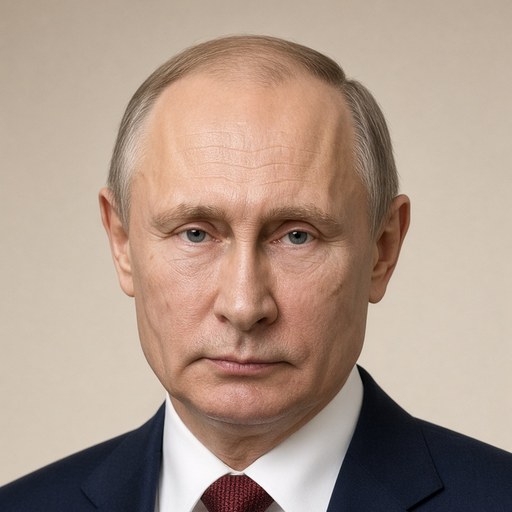
- Putin spoke at the State Hermitage Museum in St. Petersburg on June 21, 2013, during a visit with German Federal Chancellor Merkel to a joint Russian-German Bronze Age exhibition.
- Main themes
- Russian-German cultural cooperation, Hermitage Museum exhibition, Bronze Age European proto-culture, depoliticization of cultural heritage, displaced cultural artifacts, Europe without borders, common European roots, museum diplomacy
- Duration
- ~3 min
- Words
- 408
- Sentences
- 23
- Readability
- 59
- Grade
- 9.2
- Syntax
- 2.85
- Vocabulary
- 2.09
Translated from Russian
The broad sphere of national life a sentence belongs to. Every sentence has an Arena, so it is the denominator the other indices are read against.
Other23 sentences in 11 paragraphs
Good evening, esteemed ladies and gentlemen!
First of all, I would like to thank the Federal Chancellor for coming to the new spaces of the State Hermitage Museum. For me personally, this is very interesting; I am here for the first time.
We are used to seeing the Hermitage and understanding it as something classical, the classics of European art. Here, the Hermitage presents itself to us in new facets. And, of course, it was very interesting to see the joint exhibition of Russian and German partners and specialists in the field of museum art.
The IV–I millennium BC, before the birth of Christ, is the Bronze Age. This is essentially the time of European proto-culture, proto-history. The exhibition well showcases this time – these are our common roots.
The slogan of the exhibition is "Europe without borders." But back then, there were probably no borders in today's understanding, although there were some between peoples. But what certainly did not exist was visas. One could say, Europe without a visa regime.
What is especially pleasing is that German and Russian specialists have been working together for many years and give us the opportunity to get acquainted with unique works of art from the past that unite us all.
Moreover, they do this completely outside the context of the political backdrop of our modern times. This gives us the opportunity today to get acquainted with unique works from the past, precisely through this depoliticized approach.
I think we need to thank them and take them as an example. Because if we act in the same way at the political level, then indeed, we will have no restrictions on our development. And many acute problems that we inherited from the past will not be perceived so emotionally, in a negative sense.
Indeed, what difference does it make to an ordinary citizen where these displaced values are viewed: in Berlin, in St. Petersburg, in Moscow, or in Turkey? And then, perhaps, the Turks will not demand the Schliemann collections, the Germans will not demand displaced values from us, and we will not demand from anyone to find and return Russian values.
On the contrary, when there is no fear of these demands, perhaps everyone who is hiding all this in basements today will bring it to light and show it to the public, show it to the people. People will rejoice, and this will unite us all.
Thank you very much.
The original Russian. The tags above are read on the English translation's sentences.
Добрый вечер, уважаемые дамы и господа!
Прежде всего хочу поблагодарить госпожу Федерального канцлера за то, что она приехала на новые площади Государственного Эрмитажа. Для меня самого это очень интересно, я здесь в первый раз.
Мы привыкли видеть Эрмитаж и понимать под Эрмитажем что‑то классическое, классику европейского искусства. Здесь Эрмитаж предстаёт перед нами новыми гранями. И, конечно, очень интересно было посмотреть совместную выставку российских и немецких партнёров и специалистов в области музейного искусства.
IV–I тысячелетия до нашей эры, до Рождества Христова, – это бронзовый век. Это, по сути, время европейской протокультуры, протоистории. На выставке хорошо показано вот это время – это наши общие корни.
Лозунгом выставки является «Европа без границ». Но тогда границ, наверно, не было в сегодняшнем понимании, но какие‑то были между народами. Но уж точно чего не было, это не было виз. Можно сказать, Европа без визового режима.
Что особенно приятно, что немецкие и российские специалисты в течение многих лет совместно работают и дают нам возможность познакомиться с уникальными произведениями искусства прошлого, объединяющего всех нас.
Причём делают это абсолютно вне контекста политического сопровождения нашего современного времени. Это даёт нам возможность сегодня познакомиться с уникальными произведениями прошлого, именно такой их деполитизированный подход.
Я думаю, что нам нужно поблагодарить их и взять с них пример. Потому что если мы на политическом уровне будем действовать таким же образом, то, действительно, у нас не будет никаких ограничений для того, чтобы развиваться. И многие острые проблемы, которые достались нам из прошлого, не будут так эмоционально, в негативном плане восприниматься.
Действительно, какая конкретному гражданину разница, вот эти перемещённые ценности где он посмотрит: в Берлине, в Петербурге, в Москве или в Турции? И тогда, может быть, турки не будут требовать собраний Шлимана, немцы не будут требовать от нас перемещённые ценности, а мы не будем требовать от кого‑то найти и вернуть российские ценности.
Наоборот, когда не будет страха перед этими требованиями, может быть, все, кто сегодня прячет всё это по подвалам, достанут их на свет божий и покажут общественности, покажут людям. Люди будут радоваться, и это всех нас будет объединять.
Спасибо большое.