




- Context
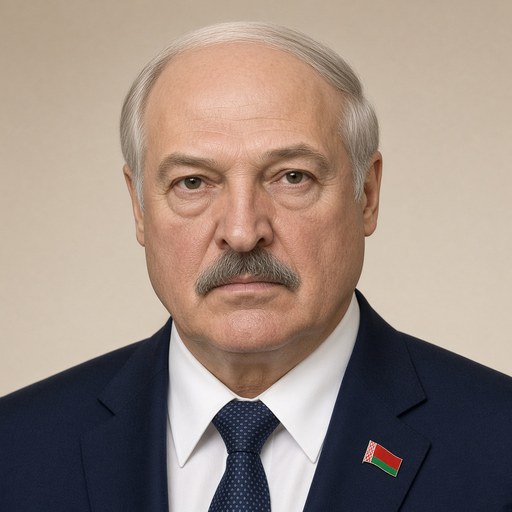
- Lukashenko addressed the National Assembly of Serbia in Belgrade on December 3, 2019, during an official visit marking 25 years of Belarusian-Serbian diplomatic relations.
- Main themes
- Belarusian-Serbian relations, solidarity and friendship, NATO aggression against Yugoslavia, sovereignty and territorial integrity, historical memory and World War II, global security dialogue, Non-Aligned Movement, peaceful resolution of conflicts, international law, unity of small and medium states, 25th anniversary of diplomatic relations
- Duration
- ~13 min
- Words
- 1,596
- Sentences
- 86
- Readability
- 47
- Grade
- 11.2
- Syntax
- 2.95
- Vocabulary
- 2.19
Translated from Russian
The broad sphere of national life a sentence belongs to. Every sentence has an Arena, so it is the denominator the other indices are read against.
Other86 sentences in 19 paragraphs
"Today, at the meeting with the President of Serbia, Mr. Aleksandar Vučić, I said that I have come to my close friends, to a country with which we share much. These are indeed the feelings that I and our entire delegation experience every time we are in Belgrade. But this visit has a special significance for me," said Alexander Lukashenko.
He noted that this year the countries celebrated the 25th anniversary of diplomatic relations. According to the Head of State, during this time, a difficult historical path has been traversed. "Our main achievement is the ability to be masters on our own land, to independently determine the directions of development that correspond to the spirit of the times and the state interests," emphasized the President.
Alexander Lukashenko recalled how 20 years ago he visited Belgrade to express support for the fraternal Serbian people. "At that time, during the brutal, inhumane aggression of NATO against sovereign Yugoslavia, thousands of innocent people lost their lives. The echoes of that war are still felt today," added the Head of State. "In those moments, we were by your side and supported you in every way. Belarus consistently stands by Serbia on issues related to its territorial integrity and sovereignty. Our position has remained unchanged for many years and will continue to be so."
In the President's opinion, it is human solidarity, empathy, coming from the heart, that forms the cultural and spiritual community and serves as the foundation of Belarusian-Serbian relations. "This is our great heritage, which we must preserve and pass on to our children and grandchildren. After all, Serbs, like Belarusians, know firsthand what war is, its destructive consequences, and irreparable losses," he emphasized.
In 2019, the countries marked the 75th anniversary of liberation from Nazism. Alexander Lukashenko pointed out that the number of living witnesses to the most terrible tragedy in human history decreases every year. Therefore, it is especially important to preserve the memory of the heroes and innocent victims of the war. "This must be done for our own security in the name of a peaceful future for Europe and the planet as a whole," stated the Belarusian leader.
A campaign for elections to the National Assembly is about to start in Serbia. The President wished the deputies success in passing this important exam before the people. "Do not fight among yourselves. Serbs are the only powerful stronghold that remains from the once great state, Yugoslavia. Perhaps some do not agree with me that it was a great country, but that is how we saw it in the Soviet Union. We envied you greatly for your development, advanced economy, society, and the order that has always been in your country. You achieved a lot back then, and our authorities were sometimes very jealous of you, even to the point of hostility at certain stages. So be a united whole, because there are plenty of opponents and enemies of Serbs and Belarusians. They are around, there are many of them. So it is necessary to calm down, to think about this holy land, about the people," emphasized the Head of State.
Alexander Lukashenko also noted that Serbia should be among the states interested in discussing global security issues. The Head of State pointed out the growing tension in relations between countries, the undermining of the foundations of global security, and the increase in the number of regional conflicts. In his opinion, it is necessary to advocate for the resolution of any disputes exclusively by peaceful means, based on the norms of international law.
"Belarus has put forward an initiative to renew a broad dialogue from the Atlantic to Vladivostok on strengthening measures of trust, security, and cooperation. I believe that Serbia will be among the states interested in discussing these issues. After all, Yugoslavia was once one of the founders of the Non-Aligned Movement. This organization allowed the so-called third world countries to assert themselves on the international stage, to make their voices heard by the great powers," said Alexander Lukashenko.
At the same time, the President believes that today the Non-Aligned Movement exists formally and does not exert any influence on major states. He is convinced that if major players cannot come to an agreement, it does not mean that small and medium-sized states should sit idly by and patiently wait for someone from the great powers to determine their fate. "I think our voice should be heard. Together we can do much more for the benefit of our countries and peoples, in the name of peace and stability," the Head of State is confident.
On the other hand, noted Alexander Lukashenko, Belarus constantly calls for resolving problems peacefully, based on international law. However, it no longer exists; everyone acts from a position of strength, stated the President. "Sometimes, from the height of my presidential years, I begin to think whether a new division of our planet has begun. And we all know well what this can lead to," added the Belarusian leader.
The Head of State emphasized that the traditional friendship between the Belarusian and Serbian peoples, the positive history of bilateral relations contribute to the interaction of the two countries in all areas: in politics, trade, industry, agriculture, high technologies, and innovations. "We have managed to restore lost cooperative ties. The result is Belarusian tractors and buses being assembled in Serbia, which have gained recognition among consumers. Next in line are new projects that can help us firmly establish ourselves in the Balkan market and ensure access to the markets of European Union countries," stated the President.
The Belarusian side welcomed the recent signing by Serbia of an agreement on a free trade zone with the Eurasian Economic Union. According to Alexander Lukashenko, the advantages of the agreement are obvious: Serbian businesses have gained the right to free trade across the vast continent. "You have the opportunity for unlimited exports of a wide range of goods. Belarus is the gateway to this multimillion market," he noted.
Alexander Lukashenko pointed out that the visa-free regime, clear logistics, and direct air communication create additional prerequisites for expanding business contacts. He reported that today, during the Belarusian-Serbian business forum, contracts for the supply of Belarusian products worth over $100 million were signed. The parties also concluded a package of documents on cooperation in the fields of science, education, and innovation. "This is a good example for those who are still hesitant or are only considering options for working in our country," said the President.
The Head of State noted that throughout his long political career, he has met many skeptics who, after visiting Belarus once, radically changed their attitude towards the country. Alexander Lukashenko invited Serbian deputies to discover Belarus: hospitable, welcoming, enterprising and responsible, rich in its cultural and historical heritage, truly Slavic, soulful, and very close to Serbia. "I assure you that each of you will feel at home in our country and will never be disappointed," stated the Belarusian leader.
In the Serbian parliament, the Head of State also commented on the results of the recent elections held in Belarus. "Believe me, we will not achieve more democracy and freedom than what was present during the elections in Belarus. We probably just cannot conduct them better. We tried in every way to please not only our sponsors and supporters in the East but also in the European Union. And what was the result? Some were delighted with the election results, while others said: the opposition did not get into parliament - what a disaster, it means it is bad, undemocratic, it means there is still no freedom, dictatorship. Complete nonsense. We did not pressure anyone," emphasized Alexander Lukashenko.
The President stated that Western observers had prepared negative reports on the elections in Belarus in advance and then simply signed them. "I wanted there to be three, five, or ten opposition members," he added. "But how can they be elected if the opposition has 3.5% of the votes? A maximum of 4% for two people. How can they be brought into parliament, and even by democratic means, as required? They couldn't even be taken by the hand and brought in."
In the Head of State's opinion, the trouble with the Belarusian opposition is that it only works during electoral campaigns. "What kind of people will elect such an opposition? And the opposition lives on foreign grants: the Ebert Foundation, the Adenauer Foundation, American funds. They do not work anywhere - they live in nice mansions, drive nice cars. The people ask the question: where does it come from? There is no answer," noted Alexander Lukashenko.
In the recent parliamentary elections in Belarus, citizens supported those candidates who work and bring benefits to society, the President is confident. "During parliamentary work, it will be clear who takes what position and defends it, but I am absolutely convinced that these are people devoted to their country and patriots," he stated.
Alexander Lukashenko added that Western partners do not like the policy pursued by Belarus, which is why, at one time, the USA and the European Union imposed sanctions against the country. However, over time, they realized that it was a mistake, the President pointed out. "They were looking for a reason to exit this situation while saving face. And our position on the main agenda of international relations turned out to be acceptable for the world. Therefore, the situation changed sharply, and today we are trying to establish our relations with the European Union, categorically opposing any 'Brexits' and against its disintegration," noted the Belarusian leader.
The original Russian. The tags above are read on the English translation's sentences.
"Сегодня на встрече с Президентом Сербии господином Александром Вучичем я сказал о том, что прибыл к своим близким друзьям, в страну, с которой нас многое связывает. Это действительно те чувства, которые я и вся наша делегация каждый раз испытываем, находясь в Белграде. Но нынешний визит для меня имеет особое значение", - сказал Александр Лукашенко.
Он обратил внимание, что в текущем году страны отметили 25-летие дипломатических отношений. По словам Главы государства, за это время пройден непростой исторический путь. "Наше главное достижение - возможность быть хозяевами на своей земле, самостоятельно определять направления развития, соответствующие духу времени и государственным интересам", - подчеркнул Президент.
Александр Лукашенко вспомнил, как 20 лет назад посещал Белград, чтобы выразить поддержку братскому сербскому народу. "Тогда же, в ходе жестокой, бесчеловечной агрессии НАТО против суверенной Югославии, погибли тысячи ни в чем не повинных людей. Отзвуки этой войны вы переживаете и сейчас, - добавил Глава государства. - В те минуты мы были рядом и всячески поддерживали вас. Беларусь постоянно выступает на стороне Сербии по вопросам, связанным с ее территориальной целостностью и суверенитетом. Наша позиция остается неизменной уже долгие годы и будет такой впредь".
По мнению Президента, именно человеческая солидарность, сопереживание, идущие от сердца, формируют культурную и духовную общность, являются фундаментом белорусско-сербских отношений. "Это наше великое наследие, которое мы должны сберечь и передать своим детям и внукам. Ведь сербы, как и белорусы, не понаслышке знают, что такое война, ее разрушительные последствия и невосполнимые потери", - подчеркнул он.
В 2019 году страны отметили 75-летие освобождения от нацизма. Александр Лукашенко обратил внимание, что живых очевидцев самой страшной трагедии в истории человечества с каждым годом остается все меньше. Поэтому особенно важно сохранить память о героях и невинных жертвах войны. "Это нужно сделать для нашей же безопасности во имя мирного будущего Европы и планеты в целом", - заявил белорусский лидер.
В Сербии скоро стартует кампания по выборам в Народную скупщину. Президент пожелал депутатам успешно сдать этот важный экзамен перед народом. "Не сражайтесь друг с другом. Сербы - это единственный мощный оплот, который остался от некогда великого государства, Югославии. Может, кто-то не согласен со мной, что это была великая страна, но так нам в Советском Союзе виделось. Мы вам очень завидовали за ваше развитие, продвинутую экономику, общество, порядок, который всегда был в вашей стране. Вы тогда многого добились, и наши власти к вам порой очень ревниво относились, вплоть до враждебности на каких-то этапах. Поэтому будьте единым целым, потому что противников и врагов у сербов и белорусов предостаточно. Они вокруг, их хватает. Так надо успокоиться, думать об этой святой земле, о народе", - подчеркнул Глава государства.
Александр Лукашенко также отметил, что Сербия должна быть в числе государств, заинтересованных в обсуждении проблем мировой безопасности. Глава государства обратил внимание на нарастание напряженности в отношениях между странами, расшатывание основ глобальной безопасности, увеличение числа региональных конфликтов. По его мнению, необходимо выступать за решение любых споров исключительно мирным путем, на основе норм международного права.
"Беларусь выдвинула инициативу об обновлении широкого диалога от Атлантики до Владивостока по укреплению мер доверия, безопасности и сотрудничества. Считаю, что Сербия будет в числе государств, заинтересованных в обсуждении этих проблем. Ведь Югославия в свое время была одним из основоположников Движения неприсоединения. Эта организация позволила странам так называемого третьего мира заявить о себе на международной арене, донести свой голос до великих держав", - сказал Александр Лукашенко.
В то же время Президент считает, что сегодня Движение неприсоединения существует формально и не оказывает никакого влияния на крупные государства. Он убежден, что если крупные игроки не могут договориться, то это не означает, что малые и средние государства должны сидеть сложа руки и смиренно ждать, пока кто-то из великих определит их судьбу. "Думаю, голос наш должен быть слышен. Вместе мы сможем сделать гораздо больше на благо наших стран и народов, во имя мира и стабильности", - уверен Глава государства.
С другой стороны, отметил Александр Лукашенко, Беларусь постоянно призывает решать проблемы мирным путем, на основании международного права. Однако его уже не существует, все действуют с позиции силы, заявил Президент. "Я иногда с высоты прожитых президентских лет начинаю думать, не начался ли новый передел нашей планеты. И все мы хорошо знаем, к чему это может привести", - добавил белорусский лидер.
Глава государства подчеркнул, что традиционная дружба белорусского и сербского народов, позитивная история двусторонних отношений способствуют взаимодействию двух стран во всех сферах: в политике, торговле, промышленности, сельском хозяйстве, высоких технологиях, инновациях. "Нам удалось восстановить утраченные кооперационные связи. Результатом являются собираемые в Сербии белорусские тракторы и автобусы, получившие признание потребителей. На очереди – новые проекты, которые могут помочь нам серьезно закрепиться на балканском рынке и обеспечить себе выход на рынки стран Европейского союза", - заявил Президент.
Белорусская сторона приветствовала недавнее подписание Сербией соглашения о зоне свободной торговли с Евразийским экономическим союзом. По словам Александра Лукашенко, преимущества соглашения очевидны: сербский бизнес получил право свободной торговли на просторах огромного континента. "Вы имеете возможность безлимитного экспорта широкой номенклатуры товаров. Входом на этот многомиллионный рынок является Беларусь", - отметил он.
Александр Лукашенко обратил внимание, что безвизовый режим, понятная логистика, прямое авиасообщение создают дополнительные предпосылки для расширения деловых контактов. Он сообщил, что сегодня во время белорусско-сербского бизнес-форума подписаны контракты на поставки белорусской продукции на сумму свыше $100 млн. Стороны также заключили пакет документов о сотрудничестве в области науки, образования и инноваций. "Это хороший пример для тех, кто пока сомневается или только обдумывает варианты работы в нашей стране", - сказал Президент.
Глава государства отметил, за свою продолжительную политическую карьеру ему довелось встретить много скептиков, которые, однажды побывав в Беларуси, кардинально изменили свое отношение к стране. Александр Лукашенко пригласил сербских депутатов открыть для себя Беларусь: радушную, гостеприимную, предприимчивую и ответственную, богатую своим культурным и историческим наследием, истинно славянскую, душевную и очень близкую Сербии. "Уверяю, что каждый из вас почувствует себя в нашей стране как дома и никогда не будет разочарован", - заявил белорусский лидер.
В сербском парламенте Глава государства также прокомментировал итоги состоявшихся недавно в Беларуси выборов. "Поверьте, больше той демократии и свободы, в которой проходили выборы в Беларуси, мы не сделаем. Мы, наверное, просто не сумеем провести лучше. Мы всячески старались угодить не только нашим спонсорам и болельщикам на Востоке, но и в Евросоюзе. И что в результате? Одни были восхищены итогами выборов, а другие сказали: оппозиция не попала в парламент - беда, значит, плохо, недемократично, значит, опять нет свободы, диктатура. Чепуха полная. Мы никого не давили", - подчеркнул Александр Лукашенко.
Президент заявил, что западные наблюдатели заранее подготовили негативные отчеты о выборах в Беларуси, а потом только подписали их. "Я хотел, чтобы было три-пять-десять оппозиционеров, - добавил он. - Но как их провести, если у оппозиционеров 3,5% голосов? Максимум 4% у двух человек. Как их можно провести в парламент, да еще демократическим путем, как требуют? Их даже за руку нельзя было взять и привести".
По мнению Главы государства, беда белорусской оппозиции в том, что она работает только в периоды электоральных кампаний. "Какой народ изберет такую оппозицию? И живет оппозиция на зарубежные гранты: фонды Эберта, Аденауэра, американские фонды. Нигде не работают - в хороших особняках живут, на хороших автомобилях разъезжают. Народ задается вопросом: откуда? Ответа нет", - заметил Александр Лукашенко.
На прошедших парламентских выборах в Беларуси граждане поддержали тех кандидатов, которые трудятся и приносят пользу обществу, уверен Президент. "В ходе парламентской работы будет видно, кто какую позицию занимает и отстаивает, но я абсолютно убежден, что это преданные своей стране люди и патриоты", - заявил он.
Александр Лукашенко добавил, что западным партнерам не нравится проводимая Беларусью политика, поэтому в свое время США и Евросоюз ввели против страны санкции. Однако со временем они поняли, что это была ошибка, обратил внимание Президент. "Они искали повод, чтобы, сохранив лицо, выйти из этой ситуации. И наша позиция по основной повестке международных отношений оказалась для мира приемлемой. Поэтому ситуация резко поменялась, и мы сегодня пытаемся наладить наши отношения с Европейским союзом, выступая категорически против всяких "брекситов" и против его распада", - отметил белорусский лидер.