




Speech at the Plenary Session of the V Forum of Regions of Belarus and Russia
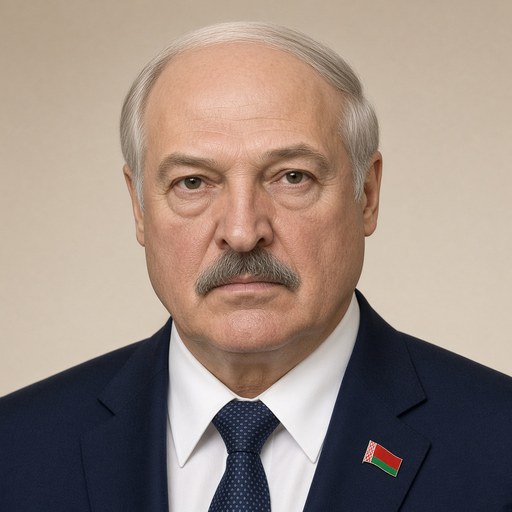
 Alexander Lukashenko · President of Belarus
- Context
- Lukashenko addressed the Fifth Forum of Regions of Belarus and Russia in Mogilev on October 12, 2018, alongside President Putin, to advance bilateral interregional integration.
- Main themes
- Belarus-Russia interregional cooperation, economic integration, production and technological chains, trade and investment, agro-industrial complex cooperation, import substitution, machine engineering and industry, joint ventures, regional partnerships, elimination of trade restrictions, Union State development
- Duration
- ~13 min
- Words
- 1,500
- Sentences
- 80
- Readability
- 38
- Grade
- 12.5
- Syntax
- 2.79
- Vocabulary
- 2.26
Translated from Russian
The broad sphere of national life a sentence belongs to. Every sentence has an Arena, so it is the denominator the other indices are read against.
Other80 sentences in 29 paragraphs
Dear Vladimir Vladimirovich! Dear friends!
Allow me once again to welcome you to Belarusian soil, in the beautiful Mogilev, which warmly greets the participants of the next, already the fifth Forum of the Regions of Belarus and Russia.
I would like to join my colleague in expressing gratitude to the organizers - the leaders of the upper chambers of the parliaments of our Belarus and Russia, who truly "care" about this forum, and have done a great deal to elevate the fifth Forum of our regions to such a level.
This event has become a good tradition for the presidents of the two countries, regional leaders, representatives of the business community, and experts, serving as a platform for discussing key issues of interstate relations.
We have carefully studied how our common plans in social policy, agriculture, and industry are being implemented at the local level. We have familiarized ourselves with promising areas for the development of high technologies, innovations, and the information society. Today, we need to analyze and identify the areas in which interregional cooperation could have an additional positive impact on the integration processes within our union.
Currently, more than 8,000 enterprises from both countries are linked by production cooperation. In Belarus, there are about 3,000 organizations with Russian charter capital. In Russia, around 50 joint ventures have been registered, and about 160 entities in the distribution network have been created with Belarusian capital. This represents hundreds of thousands of jobs, which is a significant achievement in today's context.
It is in the regions of our countries that many production and technological chains for the manufacture of joint products begin. Practically every Belarusian product, whether it is a tractor, a heavy-duty or passenger car, or a household appliance, contains a Russian component.
The high intensity of exchange visits by delegations of various levels is a testament to our mutual interest in developing interregional ties. Approximately 80 cooperation agreements have been signed with 36 subjects of the Russian Federation. The main trading partners remain Moscow, St. Petersburg, the Republics of Tatarstan and Bashkortostan, Perm Krai, as well as Bryansk, Kaluga, Moscow, Smolensk, Tyumen, and other regions. The trade volume with these regions accounts for more than 70% of the Belarusian-Russian trade turnover.
This is a very high result, but it is important to establish the same pace of cooperation with other subjects of the Russian Federation. I believe we have all the necessary tools. Currently, joint working groups and councils for business cooperation have been established with almost 60 regions of Russia. Our Russian partners have the opportunity to address all relevant issues directly with officials in our government and local authorities in Belarus.
I am grateful that three dozen leaders of Russian regions are present here. I believe they will confirm what I have said. I must note that none of them will take offense at me, because the arrival of a leader from a Russian region is a mandatory meeting with the President of Belarus, an analysis of the problems that arise in relations between Belarus and a specific region, and the adoption of specific measures on the ground.
The issue of conducting a coordinated policy in the industrial sector and deepening cooperation remains relevant. The most important priority of interregional interaction is the implementation of production and cooperative projects in machine engineering, woodworking, food, and light industries.
It is necessary to ensure the required load for already operating enterprises by creating joint import substitution programs. Then our productions will be able to develop in the interests of both countries. At a recent meeting in Sochi, we discussed this issue in detail. I hope that in the near future we will make decisions that will remove all obstacles to the development of joint productions.
The attractiveness of any integration association is determined by the conditions of economic cooperation among its subjects. This involves creating conditions for comfortable trade, as well as the opportunity to jointly implement profitable projects in various fields.
Our main tasks continue to be the elimination of all restrictions in mutual trade and ensuring equal conditions for the activities of economic entities. But I will speak frankly: I would like us, along with the President of Russia, to spend less time on issues that should be resolved at the level of governments, agencies, ministries, and regions.
The most sensitive issue is cooperation in the agro-industrial complex. In many regions of Russia, Belarusians are known as conscientious and reliable partners, and Belarusian products are valued and loved. Often, joint efforts to improve the quality of exported food are replaced by restrictive measures. However, we have finally agreed, on the eve of this forum, on how we will untangle such problems. Moreover, we have reached a clear agreement, which has been supported by the governments of both countries.
A promising direction is the development of cooperation in the construction sector. Belarusian specialists can qualitatively construct any facilities for socio-economic infrastructure. In several cities of the Central Federal District, such projects have been implemented by us. There is positive experience even in faraway, yet so familiar Sakhalin.
Clusters, industrial parks, and territories of advanced development are being created in Russia. We are ready and must participate in such projects. We must effectively utilize the vast scientific, industrial, and human resources of both countries to create joint products.
We have positive examples in machine tool construction, the development of engines for quarry dump trucks, and the supply of components for automotive enterprises. In addition, various brands of technical carbon are already being produced in Belarus at the "Omsk Carbon Mogilev" plant, and the "Sodruzhestvo" group of companies (Kaliningrad region) has created a production and logistics complex and an oil extraction plant for the production of products from soy and rapeseed in Smorgon.
All these projects have been implemented and are operating with the direct support of the governors of Belarus and Russia. Much of this is thanks to their determination that positive initiatives are being realized, which bring our states closer together and fill Belarusian-Russian relations with concrete meaning.
Dear friends!
The development of cooperation with the regions of Russia is a key foreign economic priority for Belarus. I am convinced that this forum will allow us, through open discussion, to explore ways to enhance the effectiveness of interstate cooperation, we will be able to outline possible breakthrough directions and define specific tasks for the future.
However, it is not only the economy that underpins our relationships. The next two years are significant for our fraternal peoples: we will together celebrate the 75th anniversary of the liberation of Belarus from the fascists and the 75th anniversary of the Great Victory - our joint Victory.
For both Belarusians and Russians, everything related to the Great Patriotic War is sacred. We must educate a new generation of citizens of Belarus and Russia as true patriots, drawing on the example of the heroism of Soviet soldiers who defended our common Motherland at that time.
It is important for us to create all the conditions for young people to receive a quality education and the opportunity to work honestly. After all, today they, ambitious and talented, are needed everywhere: in production, politics, business, science, education, and public administration.
Therefore, I propose to you, esteemed participants of the plenary session, to dedicate the next Forum of Regions to issues related to youth themes. This is very important. I will say a banal thing: the future belongs to the youth. And we must do everything to ensure that our youth, from Belarus and Russia, look primarily at each other, rather than, as sometimes happens, Russians look through Belarus further to the West, and Belarusians do the same.
I recently met with the ambassador (the ambassador of Russia to Belarus, Mikhail Babich), and he told me a figure: about 50 Belarusians enroll in Russian universities, while two thousand have gone to the West to obtain an education. We cannot close ourselves off; it is each person's choice. But we must ensure that our young people study in Russia and Belarus. More Russians in Belarus, and more Belarusians in Russia. I emphasize again: the future belongs to the young. Think about it; perhaps we could indeed organize a substantial forum dedicated to youth.
We should discuss the real aspects of education, culture, creative development, patriotic education, and the formation of a healthy lifestyle for young people. Our younger generation needs to be instilled with the desire to live and work on their native land. After all, the future of our two countries depends on the youth. The future of two countries - in unity and togetherness.
Dear friends! Dear Vladimir Vladimirovich!
I greatly appreciate that we have gathered here today in such a composition. Thank you very much. No event along the lines of the Union of Belarus and Russia can replace such forums. These forums bring our peoples closer together, unite us into a single whole, which is practically impossible for anyone to tear apart.
The original Russian. The tags above are read on the English translation's sentences.
Уважаемый Владимир Владимирович! Дорогие друзья!
Позвольте еще раз приветствовать вас на белорусской земле, в прекрасном Могилеве, который гостеприимно встречает участников очередного, уже V Форума регионов Беларуси и России.
Хочу присоединиться к словам благодарности моего коллеги в адрес организаторов - руководителей верхних палат парламентов нашей Беларуси и России, они действительно "болеют" этим форумом, они очень много сделали для того, чтобы V Форум наших регионов поднять на такой уровень.
Это мероприятие стало хорошей традицией для президентов двух стран, руководителей регионов, представителей бизнес-сообщества, экспертов, площадкой для обсуждения ключевых вопросов межгосударственных отношений.
Мы внимательно изучили, как на местном уровне реализуются наши общие планы в социальной политике, аграрной, промышленной сферах. Ознакомились с перспективными направлениями развития высоких технологий, инноваций и информационного общества. Сегодня нам необходимо проанализировать и определить те сферы, в которых межрегиональное взаимодействие могло бы оказать дополнительное положительное влияние на интеграционные процессы в рамках нашего союза.
В настоящее время более 8 тыс. предприятий двух государств связаны производственной кооперацией. В Беларуси около 3 тыс. организаций с российским уставным капиталом. В России зарегистрировано порядка 50 совместных производств, создано около 160 субъектов товаропроводящей сети с белорусским капиталом. Это сотни тысяч рабочих мест, что в нынешнее время является определенным достижением.
Именно в регионах наших стран начинается множество производственных, технологических цепочек по выпуску совместной продукции. Практически в каждом белорусском изделии, будь это трактор, большегрузный или легковой автомобиль, бытовой прибор, есть российский компонент.
О взаимной заинтересованности в развитии межрегиональных связей свидетельствует высокая интенсивность обмена визитами делегаций различного уровня. Подписано порядка 80 договоров о сотрудничестве с 36 субъектами Российской Федерации. Основными торговыми партнерами остаются Москва, Санкт-Петербург, республики Татарстан и Башкортостан, Пермский край, а также Брянская, Калужская, Московская, Смоленская, Тюменская и другие области. Объем торговли с данными регионами составляет более 70% белорусско-российского товарооборота.
Это очень высокий результат, но важно наладить такой же темп сотрудничества и с другими субъектами Российской Федерации. Считаю, что у нас имеются все необходимые инструменты. В настоящее время почти с 60 регионами России созданы совместные рабочие группы и советы по деловому сотрудничеству. У российских партнеров есть возможность отрабатывать в Беларуси все актуальные вопросы напрямую с должностными лицами в нашем правительстве, в местных органах власти.
Я благодарен за то, что здесь присутствуют три десятка руководителей российских регионов. Я думаю, они подтвердят то, что я сказал. Должен заметить, что ни один из них не обидится на меня, потому что приезд руководителя российского региона - это обязательная встреча с Президентом Беларуси, это анализ тех проблем, которые складываются в отношениях между Беларусью и конкретным регионом, и принятие на месте конкретных мер.
По-прежнему остается актуальной тема проведения согласованной политики в промышленной сфере и углубления кооперации. Важнейшим приоритетом межрегионального взаимодействия является реализация производственно-кооперационных проектов в машиностроении, деревообработке, пищевой, легкой промышленности.
Следует обеспечить необходимую загрузку уже действующих предприятий путем создания совместных программ по импортозамещению. Тогда наши производства смогут развиваться в интересах двух стран. На недавней встрече в Сочи мы детально обсуждали этот вопрос. Надеюсь, в ближайшее время примем решения, которые снимут все препятствия в развитии совместных производств.
Привлекательность любого интеграционного объединения определяется условиями экономического сотрудничества его субъектов. Речь идет о создании условий для комфортного ведения торговли, а также возможности совместно реализовать прибыльные проекты в различных сферах.
Нашими главными задачами продолжают оставаться устранение всяких ограничений во взаимной торговле и обеспечение равных условий деятельности хозяйствующих субъектов. Но скажу откровенно: хотелось бы, чтобы мы с Президентом России меньше занимались теми проблемами, которые должны решаться на уровне правительств, ведомств, министерств и регионов.
Наиболее чувствительный вопрос - это сотрудничество в агрокомплексе. Во многих регионах России белорусов знают как добросовестных и надежных партнеров, а белорусские продукты ценят и любят. Зачастую совместная работа по повышению качества экспортируемого продовольствия подменяется ограничительными мерами. Но мы наконец-то в канун этого форума договорились о том, как будем развязывать подобные проблемы. Притом договорились однозначно, и это поддержано правительствами двух стран.
Перспективным направлением является развитие взаимодействия в строительной сфере. Белорусские специалисты могут качественно возвести любые объекты социально-экономической инфраструктуры. В ряде городов Центрального федерального округа такие проекты нами реализованы. Есть позитивный опыт и на далеком, но таком родном Сахалине.
В России создаются кластеры, индустриальные парки, территории опережающего развития. Мы готовы и должны участвовать в таких проектах. Мы должны эффективно задействовать огромный научный, промышленный и кадровый потенциал двух стран для создания совместной продукции.
У нас есть положительные примеры в станкостроении, разработке двигателя для карьерных самосвалов, поставке компонентов для предприятий автопрома. Кроме того, в Беларуси уже производятся различные марки технического углерода на заводе "Омск Карбон Могилев", а также группой компаний "Содружество" (Калининградская область) созданы производственно-логистический комплекс и маслоэкстракционный завод по выпуску продукции из сои и рапса в Сморгони.
Все эти проекты реализованы и работают при непосредственной поддержке белорусских и российских губернаторов. Во многом именно благодаря их целеустремленности воплощаются в жизнь позитивные начинания, которые сближают наши государства, наполняют конкретным смыслом белорусско-российские отношения.
Дорогие друзья!
Развитие сотрудничества с регионами России является важнейшим внешнеэкономическим приоритетом Беларуси. Убежден, что и нынешний форум позволит нам в ходе откровенной дискуссии обсудить пути повышения эффективности межгосударственного сотрудничества, мы сможем наметить возможные прорывные направления, определить конкретные задачи на перспективу.
Однако не только экономика лежит в основе наших взаимоотношений. Следующие два года являются знаковыми для наших братских народов: мы вместе будем отмечать 75 лет со дня освобождения Беларуси от фашистов и 75 лет Великой Победы - нашей совместной Победы.
И для белорусов, и для россиян свято все, что связано с Великой Отечественной войной. На примере подвига советских солдат, которые защищали тогда нашу общую Родину, мы должны воспитывать новое поколение граждан Беларуси и России настоящими патриотами.
Для нас важно создать все условия, чтобы молодые люди получили качественное образование и возможность честно трудиться. Ведь сегодня они, устремленные и талантливые, нужны везде: на производстве, в политике, бизнесе, науке, образовании, государственном управлении.
Поэтому предлагаю вам, уважаемые участники пленарного заседания, следующий Форум регионов посвятить рассмотрению вопросов, связанных с молодежной тематикой. Это очень важно. Скажу банальную вещь: за молодежью будущее. И мы должны сделать все, чтобы наша молодежь, Беларуси и России, смотрела прежде всего друг на друга, а не так, как порой бывает: россияне смотрят через Беларусь дальше на Запад, и белорусы.
Я недавно встречался с послом (послом России в Беларуси Михаилом Бабичем. - Прим.), и он мне назвал цифру: около 50 белорусов поступают в российские вузы, а на Запад уехали две тысячи для того, чтобы получить образование. Закрыться не можем, это дело каждого. Но мы должны сделать так, чтобы наши молодые люди учились в России и в Беларуси. Россияне - побольше в Беларуси, а белорусы - побольше в России. Еще раз подчеркиваю: будущее - за молодыми. Подумайте, может быть, действительно мы смогли бы организовать солидный форум и посвятить его молодежи.
Следует обсудить реальные аспекты образования, культуры, творческого развития, патриотического воспитания и формирования здорового образа жизни молодых людей. Нашему подрастающему поколению необходимо прививать желание жить и работать на родной земле. Ведь именно от молодежи зависит будущее наших двух стран. Именно двух стран - в единстве и единении.
Дорогие друзья! Дорогой Владимир Владимирович!
Я очень ценю то, что мы в таком составе собрались здесь сегодня. Спасибо вам огромное. Такие форумы не заменит ни одно мероприятие по линии Союза Беларуси и России. Эти форумы сближают, объединяют наши народы, делают единым целым, которое разорвать практически никому невозможно.