




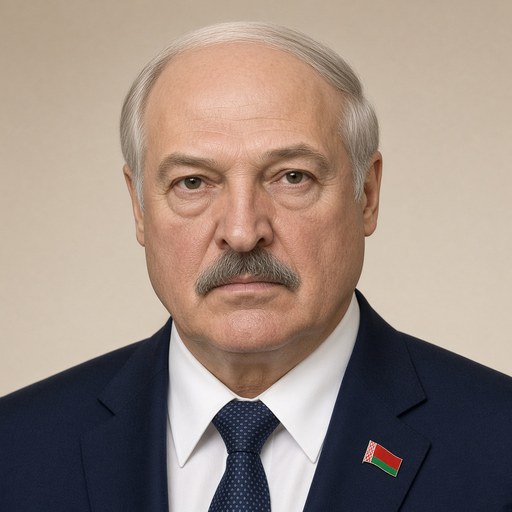
Speech by President A.G. Lukashenko at the solemn assembly and concert of the masters of arts of Belarus and Russia, dedicated to the 70th anniversary of the liberation of the Republic of Belarus from the German-fascist invaders and the Day of Independence of the Republic of Belarus (Republic Day)
 Alexander Lukashenko · President of Belarus
- Context
- Lukashenko addressed a solemn assembly and concert in Minsk on July 1, 2014, marking the 70th anniversary of Belarus's liberation from Nazi occupation and Independence Day.
- Main themes
- 70th anniversary of Belarus liberation, World War II memory and sacrifice, Belarusian independence and patriotism, anti-fascism, Belarus-Russia unity, national identity, resistance and partisan warfare, civic duty, preservation of sovereignty, historical memory as warning
- Duration
- ~26 min
- Words
- 3,084
- Sentences
- 236
- Readability
- 56
- Grade
- 8.7
- Syntax
- 2.55
- Vocabulary
- 2.20
Translated from Russian
The broad sphere of national life a sentence belongs to. Every sentence has an Arena, so it is the denominator the other indices are read against.
Other236 sentences in 88 paragraphs
Dear friends!
Dear compatriots!
Esteemed foreign guests!
Seventy years ago, in July nineteen forty-four, the main Nazi symbol — the sinister black swastika — was toppled from the Belarusian House of Government.
These few majestic moments were captured by the newsreel. And since then, the iconic shot of the recently liberated Minsk has become one of the bright symbols of the collapse of Nazism.
On that distant day, the capital of our Motherland became free. And it is deeply symbolic that July third is the main state holiday — Independence Day of the Republic of Belarus.
By making this decision in a referendum, the Belarusian people restored the connection of the times. Our entire nation bowed in gratitude before the great feat of the heroes who liberated our native land.
Formally, the Nazis occupied the territory of Belarus. But they could not bring the Belarusians to their knees.
The resistance became truly nationwide. Five thousand partisan units, one and a half million front-line soldiers — Belarusians fought against the enemy.
In the fires of war, the lives of every third compatriot were burned.
More than two hundred cities were destroyed. Almost ten thousand villages and settlements were annihilated. Hundreds of them were burned along with their people.
The occupiers set up a terrible conveyor of death on Belarusian soil, creating two hundred sixty concentration camps and one hundred ten ghettos.
We cannot forget this!
Memory is the alarming bell of History.
It warns the world that any war is madness.
It warns that no goal is worth a human life.
It warns that any aggressor will sooner or later meet with disgraceful defeat.
Today we pay tribute to all the fallen — the liberator heroes and the innocent victims of that bloody massacre. We remember and are proud of the feat of the generation of Victors.
And we promise that we will not give our Victory to anyone!
The fight against fascism forged the best traits of our national character — patriotism, love of freedom, and resilience. These are the qualities that have always helped us overcome any difficulties.
The war left a deep mark in the genetic memory of the Belarusian nation. It instilled in the soul of each of us an incredible rejection of violence. Therefore, we, more than anyone else in the world, value the opportunity to live without fear and to raise our children.
Our fidelity to the memory of that great war is not just a tribute to the Soviet past. It was there, in the fire of popular resistance, that the feeling of unity, which creates a nation, was truly strengthened.
The national poet of Belarus, Pimen Panchanka, spoke about his war:
"We were killed by one shell, A Russian woman bandaged us With one bandage in the ambulance... Since then, we have many relatives In kinship, partisanship, and front-line."
And I would add to the poet's words this clarification. The Belarusian freedom and independence of today were defended by Belarusians and Russians, Ukrainians and Georgians, Azerbaijanis and Armenians... All in partisan and front-line uniforms were united in the fight against fascism, living with understanding and awareness of their unity. This was facilitated by the eternal humanity of the Belarusian people. It is no coincidence that we have always said: "Where there is no agreement, there is no order."
Our people gather and develop their well-being in public consensus, in goodwill and respect for the whole world. Perhaps that is why it is so comfortable in our country, rich in national culture, in the state language spoken by Belarusians. The foundation of understanding with neighbors and the world lies in our military history.
This unity saved us during the war period. It gave us the wisdom and strength to build an independent Belarus in a new time. And we must preserve it and remember: anyone who threatens the unity of the nation is an enemy of Belarus!
Dear comrades!
Today we must be worthy of the historical relay passed to us by the generation of Victors. Now, in new conditions, we face the same task — to preserve the freedom and independence of our native land.
And we must remember: the most important foundation of independence is the citizen. It is us. After all, a country is not just several million people randomly settled in a certain territory. A country is a united community of citizens. People united by a common historical memory, traditions, and values. People united by a sincere relationship to the land inherited from their ancestors.
There is one main condition under which we will forever preserve our Independence — if this idea lives in the hearts and souls of our people. If each of us is a true citizen of our country — a Citizen with a capital letter.
It is easy to be proud of your country in words. It is easy to talk about patriotism. It is much harder to back up words with deeds.
The native land must be cherished and defended not only in times of war. In peacetime, the country also needs the care and attention of each of us.
Patriotism is not only the struggle with arms in hand — that is an extreme, God forbid. It is also simple, prosaic everyday deeds. In them, no less than in war, a person's attitude towards their homeland is manifested.
A simple but telling example.
Many consider it a special chic to criticize everything that is ours, Belarusian. They say everything is bad here, the goods cannot be worse, we do not want anything of our own, let’s have everything imported. I understand you: this is purely Belarusian.
I am far from the thought of praising my own simply because it is mine. Probably, it is hard to find a harsher critic of the quality of Belarusian goods than your President.
But I will put the question differently: who produces Belarusian goods? Germans? Chinese? Americans? Maybe Russians? No! Belarusian goods are produced by us, Belarusians.
And when we evaluate Belarusian goods — we look at ourselves in the mirror. We made it. And if it is somehow bad, then that is a reproach only to ourselves.
Pride in your country is not only pride in the victories won by our ancestors. It is not only pride in the achievements of our athletes in competitions where we are present as spectators and fans.
Pride in your country should primarily be expressed in pride in the results of your own labor.
Working with integrity is also a moral category. This is daily patriotism — externally unnoticed, but today the most important and necessary for our country.
Or, for example, let’s take such a boring matter as paying taxes as a citizen. You may ask: what does this have to do with patriotism?
The ancient Romans believed: a citizen is primarily one who pays taxes. One who supports the state. One who voluntarily gives part of their labor to the common cause.
Yes, paying taxes is an obligation. Moreover, many consider it a duty. A duty from which one wants to escape by any means.
But taxes are not only an economic category. They are a political and, if you will, moral category. This is a specific contribution of a citizen to the construction of our common home — Belarus. To its peace and security, to the education and health of the nation, to the comfort and beauty of our cities and villages.
And the desire to evade this contribution by any means is a kind of moral betrayal of the Motherland. It is dishonesty towards those who live and work honestly. And in a sense, it is treason towards those who many years ago did not spare their lives for the Motherland, which is worth a hundred times more than any money.
The personal honesty of each, working with integrity in any field — whether it be a mechanic, driver, teacher, programmer, builder, or scientist — is patriotism. And at the same time, it is the foundation of a strong economy. And a strong economy is the guarantee of independence, freedom, and prosperity of Belarus.
I have already said and am ready to repeat once again — if there arises any threat to the independence of our country, it will only be for economic reasons.
You know, this is especially relevant lately. And for me, more than anyone. I am constantly frightened by the experience of Ukraine: that hordes will come to us from the east, and from the east they start to scare that hordes will come from the west. They will dismember. They will crush. They will tear apart. As President, I do not dismiss any options. Even the most absurd. I must keep this in mind. That is why I always, everywhere, and today speak about labor, about taxes, about the economy. No hordes today can destroy our country! If we destroy it, it will only be ourselves. For economic and ownership reasons. If we want not only to live ourselves... We have already lived 20 years in an independent and free Belarus. But if we want our children and grandchildren to live on their piece of land, if we want our children not to be under the whip and not to kneel before anyone anymore, we must lay this foundation, no matter what it costs us. And no hordes, no tanks, no airplanes can put us on our knees today. Not even alone — us, Belarusians. Everything depends on us.
A true citizen is not required to do much: be an honest person, work with integrity, and honestly pay the same taxes.
We must instill this attitude from childhood: in school, in university, and then in the workplace. This is what the formula of patriotism consists of today.
Dear comrades!
We live in the information age, in the age of the internet and telecommunications. But, unfortunately, high technologies are often used to the detriment of humanity. We hear more and more about information wars and cybercrime.
One person with a computer can sometimes be more dangerous than ten with a gun. With one click of a button, he can cause more harm than any armed unit.
Honest information about our country, an open and frank dialogue — this is what will nullify any attempts to drag Belarus into an information war.
An excellent illustration of how this can happen was the May World Ice Hockey Championship. Our guests saw a modern, beautiful, worthy European state. A state where there is no place for malice, hatred, and conflicts. Where people are not divided by skin color, language, religion, or property status.
We, Belarusians, by nature are calm and non-conflict, tolerant and unoffended. But forcing us and intimidating us is futile, useless, and counterproductive, as diplomats say.
We have established equal relations with the largest world powers — an alliance with the Russian Federation, a strategic partnership with the People's Republic of China. We are developing mutually beneficial economic cooperation with many other large and small states.
Just recently, together with Russia and Kazakhstan, we created the Eurasian Economic Union. We have been working on the signing of this document for several years.
Since January 1, 2015, we guarantee participants in our markets the free movement of goods, services, capital, and labor. We have agreed to implement a coordinated policy in key sectors of the economy: in energy, industry, agriculture, and transport.
Thus, we are together forming the largest economic union of countries in the post-Soviet space, where 170 million people live.
I am confident that such a Union will become a powerful center of economic development.
Recently, many voices have been raised: they say that this is unprofitable for Belarus. Not more profitable than for Russia and Kazakhstan. I will say frankly: we agreed on the division of the same duties that we receive from imports. And we received more in the budget than we received before. What did we lose? Nothing. And most importantly. We sell 75-80 percent of everything we create in Belarus outside our country. Our economy is export-oriented. It is based on sales. On foreign markets. That is how it has developed before, and we cannot lose that.
Of course, it is dangerous when so much needs to be sold. And when there is a crisis in the world and among our partners, it is hard for us too. But to endure, to live normally, we must be half a step ahead of our competitors. This always encourages the nation to modernize, to move forward, to develop. In order to be competitive. So, if we sell 75 percent in foreign markets, what is wrong with us getting this market of free access to 170 million people? We desperately needed this economic union. You may ask: is this the solution to all problems? No. This is a good guarantee, with good work, to realize our products.
And yet, I set the task of diversifying our economy and exports. We must not rely only on those countries with which we have traditionally worked and sold. Therefore, we are going to Cuba, Nicaragua, Ecuador, Brazil, Venezuela. We are exploring the African market. We are working with Syria, Iraq, Iran — countries where it is very difficult to work today. But wars eventually end, and peace comes. And people always want to eat and cultivate the land, and we can offer this to our partners. That is why we are "bouncing" around all countries in an attempt to find our interests. And not to the detriment of our partners, neighbors — those states with which we cooperate. And the agreement on the Eurasian Economic Union has brought nothing bad for Belarus and will not bring anything bad in the future. Nothing but benefit.
Dear comrades!
A truly independent state cannot exist without a strong army. Especially if this army is the heir of victorious warriors.
We are strengthening our defense capability by providing our troops with the most modern weapons and equipment. We ensure the protection of the borders of the Union State of Belarus and Russia and solve this task together with our brothers.
But the security of the state is not only the army. It is the entire power block — the police and border guards, the KGB and other special services. All of them stand guard over the interests of the state and the Belarusian people.
Life shows: one cannot relax. Armed conflicts are not a myth. Recent events confirm this. For several years, there has been a civil war in Libya and Egypt, in Syria and Iraq, without interruption. Who could have predicted the events in Ukraine a year ago? Against this backdrop, peace and stability, calmness and harmony in society, and the unity of the people are preserved in Belarus. This is a unique fact of modern history.
They say that human nature is such that it does not appreciate what it has. As the folk proverb goes: "What we have — we do not cherish, having lost — we cry."
Peace, tranquility, and security are such subtle values. When they are present, no one notices them; it seems that everything is as it should be. The peaceful sky above, the calm streets, and the measured, safe life are all taken for granted.
It is only when disaster strikes, when shells begin to explode and bullets whistle, when the night is illuminated not by the quiet light of street lamps but by the ominous glow of fires, when it becomes frightening not just to step outside but even to approach a window, when loved ones perish — only then does one begin to realize the value of peace and harmony.
Some of us may have thought that war is a thing of the past, forever confined to museums, books, and films, or that war is very far away, in the mountains and deserts of foreign lands.
But the tragedy of our close neighbor Ukraine has reminded us: war is something that can be very close. And unexpectedly close. War is what happens when peace, stability, and harmony are not valued. When society splits and falls into revolutionary turmoil.
We, Belarusians, have a great value — peace, tranquility, and harmony in society. Let us remember this, cherish it, and protect this great achievement of ours. If we can preserve peace, then we can become worthy of the deeds of our ancestors and pass an independent Belarus on to our children and grandchildren.
Dear compatriots!
Dear veterans!
I want to sincerely congratulate you on the significant date of our heroic history — the 70th anniversary of liberation and Independence Day of Belarus. I sincerely wish you happiness, goodness, health, and success in your work for the benefit of our beloved Motherland.
None of us, who were not part of that great war, can fully understand or feel the weight of the fate that befell you.
You were not prepared to be heroes — you became heroes yourselves when Motherland called.
You did what seemed impossible for an ordinary person.
You are soldiers, front-line fighters, underground fighters, partisans, those who lived in occupied territories, those who were in besieged Leningrad, those who stood to the death near Moscow, those who were in Siberia, far from these places, producing ammunition and weapons for our soldiers — you are all heroes. You went into battle not only for your families, not only for our country — you went into battle for all humanity, for its life, freedom, and future. And this humanity must always be grateful to you. That is why we build museums, hold events to show all of humanity that it must kneel in gratitude to the Soviet people and our Belarusian people for that Great Victory. For the cleansing from Nazism, which did not come from our land.
You won!
Eternal glory to you, the living, and to those who are no longer with us!
A low bow and gratitude to all who brought Victory closer! Wishing you good health for many years. Most importantly, I always tell you, live long! You are living witnesses. As long as you live — peace lives, and everyone remembers that great victory. Without you, it will be harder for us. We vow to you that we will preserve peace and harmony on our land, defend its Freedom and Independence. We will be worthy of you! We have no right to do otherwise!
Happy holiday, dear friends! Happy Independence Day!
The original Russian. The tags above are read on the English translation's sentences.
Уважаемые друзья!
Дарагiя суайчыннiкi!
Паважаныя замежныя госцi!
Семдзесят гадоў назад, у лiпенi тысяча дзевяцьсот сорак чацвёртага года з беларускага Дома Урада быў зрынуты галоўны нацысцкi сiмвал — злавесная чорная свастыка.
Гэтыя некалькi велiчных iмгненняў адлюстравала кiнахронiка. I з той пары знакамiты кадр з толькi што вызваленага Мiнска стаў адным з яркiх сiмвалаў краху нацызму.
У той далёкi дзень сталiца нашай Радзiмы стала вольнай. I глыбока сiмвалiчна, што менавiта трэцяга лiпеня з’яўляецца галоўным дзяржаўным святам — Днём Незалежнасцi Рэспублiкi Беларусь.
Прыняўшы на рэферэндуме такое рашэнне, беларускi народ аднавiў сувязь часоў. Уся наша нацыя схiлiлася ў паклоне ўдзячнасцi перад велiчным подзвiгам герояў, якiя вызвалiлi родную зямлю.
Фармальна гiтлераўцы акупiравалi тэрыторыю Беларусi. Але паставiць беларусаў на каленi яны не змаглi.
Супрацiўленне стала сапраўды ўсенародным. Пяць тысяч партызанскiх атрадаў, паўтара мiльёна франтавiкоў–беларусаў змагалiся з ворагам.
У вогнiшчы вайны згарэла жыццё кожнага трэцяга нашага суайчыннiка.
Былi разбураны больш за дзвесце гарадоў. Знiшчаны амаль дзесяць тысяч вёсак i пасёлкаў. Сотнi з iх спалены разам з людзьмi.
Акупанты ўстроiлi на беларускай зямлi страшны канвеер смерцi, стварыўшы дзвесце шэсцьдзесят канцэнтрацыйных лагераў i сто дзесяць гета.
Забываць пра гэта нельга!
Памяць — гэта трывожны звон Гiсторыi.
Ён папярэджвае сусвет, што любая вайна — гэта вар’яцтва.
Ён папярэджвае, што нi адна мэта не варта чалавечага жыцця.
Ён папярэджвае, што любога агрэсара рана цi позна спасцiгне ганебны крах.
Сёння мы аддаём данiну пашаны ўсiм загiнуўшым — героям–вызвалiцелям i бязвiнным ахвярам той крывавай бойнi. Мы памятаем i ганарымся подзвiгам пакалення Пераможцаў.
I мы абяцаем, што Нашу Перамогу мы нiкому не аддадзiм!
Барацьба з фашызмам выкавала лепшыя рысы нацыянальнага характару — патрыятызм, свабодалюбства i стойкасць. Тое, што нам заўсёды дапамагала пераадольваць любыя цяжкасцi.
Вайна пакiнула глыбокi след у генетычнай памяцi беларускай нацыi. З неверагоднай сiлай уплавiла ў душу кожнага з нас непрыняцце гвалту. Таму мы, як нiхто iншы ў свеце, цэнiм магчымасць жыць без страху i гадаваць нашых дзяцей.
Наша вернасць памяцi аб той вялiкай вайне — гэта не проста данiна савецкаму мiнуламу. Менавiта там, у агнi народнага супрацiўлення па–сапраўднаму ўмацавалася тое пачуццё адзiнства, якое i стварае нацыю.
Народны паэт Беларусi Пiмен Панчанка сказаў пра сваю вайну:
«Нас адным снарадам забiвала, Руская жанчына бiнтавала У санбаце нас адным бiнтом... З той пары раднi у нас багата Крэўнай, партызанскай, франтавой».
А я дадаў бы да слоў паэта i такое ўдакладненне. Беларускую свабоду i незалежнасць сённяшняга дня адстойвалi беларус i рускi, украiнец i грузiн, азербайджанец i армянiн... Усе ў партызанскiм i франтавым страi былi ў згодзе ў барацьбе з фашызмам, жылi з разуменнем i асэнсаваннем сваёй еднасцi. Гэтаму спрыяла адвечная людскасць народа Беларусi. Нездарма ў нас спрадвеку казалi: «Дзе няма згоды, там няма ладу».
Свой дабрабыт наш народ збiрае i развiвае ў агульнаграмадскай згодзе, у прыхiльнасцi i павазе да ўсяго свету. Вiдаць, таму так i ўтульна ў нашай багатай на нацыянальную культуру краiне дзяржаўным мовам, на якiх гавораць беларусы. Аснова паразумення з суседзямi i светам — у нашай ваеннай гiсторыi.
Гэтае адзiнства выратавала нас у ваенны перыяд. Яно дало нам мудрасць i моц ужо ў новы час пабудаваць незалежную Беларусь. I мы павiнны захоўваць яго i памятаць: кожны, хто замахваецца на адзiнства нацыi, — вораг Беларусi!
Уважаемые товарищи!
Сегодня мы должны быть достойны исторической эстафеты, переданной нам поколением Победителей. Сейчас перед нами в новых условиях стоит все та же задача — сберечь свободу и независимость родной земли.
И мы должны помнить: самый главный фундамент независимости — это гражданин. Это — мы с вами. Ведь страна — это не просто несколько миллионов человек, случайно расселившихся на определенной территории. Страна — это единое сообщество граждан. Людей, объединенных общей исторической памятью, традициями и ценностями. Людей, объединенных искренним отношением к земле, доставшейся в наследство от предков.
Есть одно главное условие, при котором мы навсегда сохраним нашу Независимость, — если эта идея будет жить в сердцах и душах наших людей. Если каждый из нас будет настоящим гражданином своей страны — Гражданином с большой буквы.
Легко гордиться своей страной на словах. Легко рассуждать о патриотизме. Гораздо труднее слова подкреплять делами.
Родную землю нужно беречь и защищать не только в лихую военную годину. В мирное время страна также нуждается в заботе и внимании каждого из нас.
Патриотизм — это не только борьба с оружием в руках — это крайность, это — не дай Бог. Это и простые прозаические повседневные дела. В них не менее ярко, чем на войне, проявляется отношение человека к своему Отечеству.
Простой, но показательный пример.
Многие считают особым шиком ругать все свое, белорусское. Мол, все у нас плохо, товары хуже не бывает, ничего своего не хотим, давай все импортное. Я понимаю, вы тоже: это чисто по-белорусски.
Я далек от мысли хвалить свое просто потому, что оно свое. Наверное, сложно найти более жесткого критика качества белорусских товаров, чем ваш Президент.
Но я поставлю вопрос по–другому: а кто производит белорусские товары? Немцы? Китайцы? Американцы? Может, россияне? Нет! Белорусские товары производим мы с вами, белорусы.
И когда мы оцениваем белорусский товар — мы смотрим на себя в зеркало. Его сделали мы с вами. И если он чем–то плох, то, значит, это упрек только нам самим.
Гордость за свою страну — это не только гордость за победы, которые добыли не мы, а наши предки. Это не только гордость за достижения наших спортсменов на состязаниях, где мы присутствуем как зрители и болельщики.
Гордость за свою страну должна выражаться прежде всего в гордости за результаты собственного труда.
Работать на совесть — это тоже нравственная категория. Это и есть ежедневный патриотизм — внешне незаметный, но сегодня самый важный и самый необходимый нашей стране.
Или, к примеру, возьмем такую скучную материю, как уплата гражданином налогов. Вы спросите: а при чем тут патриотизм?
Еще древние римляне считали: гражданин — это прежде всего тот, кто платит налоги. Тот, кто содержит государство. Тот, кто часть своего труда добровольно отдает на общее дело.
Да, платить налоги — это обязанность. Более того, многие считают ее повинностью. Повинностью, от которой хочется любыми способами избавиться.
Но ведь налоги — это не только экономическая категория. Это категория политическая и, если хотите, нравственная. Это конкретный вклад гражданина в строительство нашего общего дома — Беларуси. В ее спокойствие и безопасность, в образование и здоровье нации, в комфорт и красоту наших городов и сел.
И стремление любыми способами увернуться от этого вклада — это своего рода нравственная измена Родине. Это непорядочность по отношению к тем, кто честно живет и трудится. И в каком–то смысле это предательство по отношению к тем, кто много лет назад не жалел для Родины жизни, которая во сто крат ценнее любых денег.
Личная честность каждого, работа на совесть на любом участке — будь то механизатор, водитель, учитель, программист, строитель или ученый — это и есть патриотизм. И одновременно это фундамент крепкой экономики. А крепкая экономика — это залог независимости, свободы и процветания Беларуси.
Я уже говорил и готов повторить еще раз — если и возникнет хоть какая–то угроза независимости нашей страны, то только по экономическим причинам.
Вы знаете, это особенно актуально в последнее время. И для меня больше всего. Меня все время пугают на опыте Украины: то с востока к нам полчища придут, а на востоке начинают пугать, что полчища придут с запада. Расчленят. Раздавят. Растерзают. Как Президент я не отбрасываю ни один из вариантов. Даже самых абсурдных. Я обязан это иметь в виду. Поэтому я всегда, везде и сегодня говорю о труде, о налогах, об экономике. Никакие полчища сегодня не в состоянии разрушить нашу страну! Мы ее если разрушим, то только сами. По экономическим и собственническим причинам. Если мы хотим не только жить сами... Мы уже пожили 20 лет в независимой и свободной Беларуси. Но если мы хотим, чтобы наши дети и внуки жили на своем клочке земли, если мы хотим, чтобы наши дети не были под плеткой и не стояли больше ни перед кем на коленях, мы должны заложить этот фундамент, чего бы нам это ни стоило. И никакие полчища, никакие танки, никакие самолеты не в состоянии сегодня поставить нас на колени. Даже в одиночку — нас, белорусов. Все зависит от нас.
От настоящего гражданина не требуется много: будь порядочным человеком, работай на совесть, честно плати те же налоги.
Такое отношение мы должны воспитывать с самого детства: в школе, вузе, а дальше — в трудовом коллективе. Именно в этом сегодня и состоит формула патриотизма.
Уважаемые товарищи!
Мы живем в информационную эпоху, в век интернета и телекоммуникаций. Но, к сожалению, зачастую высокие технологии используются во вред человечеству. Все чаще мы слышим об информационных войнах и киберпреступности.
Один человек с компьютером порой может быть опаснее десяти с ружьем. Одним нажатием кнопки он может нанести больший вред, чем любое вооруженное до зубов подразделение.
Честная информация о нашей стране, откровенный и открытый диалог — это то, что сведет на нет любые попытки втянуть Беларусь в информационную войну.
Отличной иллюстрацией того, как это может происходить, стал майский чемпионат мира по хоккею с шайбой. Наши гости увидели современное, красивое, достойное европейское государство. Государство, где нет места злобе, ненависти и конфликтам. Где людей не делят ни по цвету кожи, ни по языку, ни по религии, ни по имущественному положению.
Мы, белорусы, по своей природе спокойны и неконфликтны, терпимы и необидчивы. Но понуждать нас и запугивать — бесперспективно, бесполезно, контрпродуктивно, как говорят дипломаты.
У нас выстроены равноправные отношения с крупнейшими мировыми державами — союз с Российской Федерацией, стратегическое партнерство с Китайской Народной Республикой. Мы развиваем взаимовыгодное экономическое сотрудничество со многими другими большими и малыми государствами.
Совсем недавно вместе с Россией и Казахстаном мы создали Евразийский экономический союз. К подписанию документа мы шли несколько лет.
С 1 января 2015 года мы гарантируем участникам наших рынков свободное перемещение товаров, услуг, капиталов, рабочей силы. Мы договорились осуществлять согласованную политику в ключевых отраслях экономики: в энергетике, промышленности, сельском хозяйстве, транспорте.
Таким образом, мы вместе формируем крупнейший на постсоветском пространстве экономический союз стран, в котором живет 170 миллионов человек.
Уверен, такой Союз станет мощным центром экономического развития.
В последнее время много раздается голосов: мол, Беларуси это невыгодно. Не выгоднее, чем России и Казахстану. Скажу откровенно: мы договорились о дележке тех же пошлин, которые получаем от импорта. И мы в бюджет получили больше, чем получали раньше. Что мы потеряли? Ничего. И самое главное. Мы продаем за пределы нашей страны 75 — 80 процентов всего того, что мы создаем в Беларуси. Наша экономика ориентирована на экспорт. На продажи. На внешние рынки. Так она сложилась раньше и терять это нельзя.
Это, конечно, опасно, когда столько надо продать. И когда кризис в мире и у наших партнеров, тогда и нам тяжело. Но чтобы выдержать, чтобы жить нормально, надо быть на полшага впереди наших конкурентов. Это всегда подстегивает нацию модернизироваться, идти вперед, развиваться. Для того чтобы быть конкурентоспособными. Так, если 75 процентов продаем на внешних рынках, что же плохого, что мы получили этот рынок свободного доступа в 170 миллионов человек? Нам крайне необходим был этот экономический союз. Вы спросите: это решение всех проблем? Нет. Это хороший залог при хорошем труде реализовать нашу продукцию.
И тем не менее я ставлю задачу диверсифицировать нашу экономику и экспорт. Мы не должны опираться только на те страны, в которых традиционно работали и продавали. Поэтому мы едем на Кубу, в Никарагуа, в Эквадор, в Бразилию, в Венесуэлу. Осваиваем африканский рынок. Работаем с Сирией, Ираком, Ираном — странами, в которых очень трудно сегодня работать. Но войны когда–то заканчиваются и приходит мир. И люди всегда хотят кушать и обрабатывать землю, а мы можем это предложить нашим партнерам. Вот почему мы «мечемся» по всем странам в попытках нащупать свои интересы. И не во вред нашим партнерам, соседям — тем государствам, с которыми мы сотрудничаем. И договор о Евразийском экономическом союзе ничего плохого для Беларуси не принес и впредь не принесет. Ничего, кроме выгоды.
Уважаемые товарищи!
По–настоящему независимое государство без сильной армии существовать не может. Тем более если эта армия является наследницей воинов–победителей.
Мы укрепляем свою обороноспособность, обеспечивая наши войска самым современным вооружением и техникой. Мы обеспечиваем охрану рубежей Союзного государства Беларуси и России и решаем эту задачу совместно с нашими братьями.
Но безопасность государства — это не только армия. Это весь силовой блок — милиция и пограничники, КГБ и другие спецслужбы. Все они стоят на страже интересов государства и белорусского народа.
Жизнь показывает: нельзя расслабляться. Вооруженные конфликты — это не миф. Последние события тому подтверждение. Фактически без перерывов на протяжении нескольких лет идет гражданская война в Ливии и Египте, в Сирии и Ираке. Кто мог год тому назад предсказать события в Украине? На этом фоне в Беларуси сохраняются мир и стабильность, спокойствие и согласие в обществе, единство народа. Это уникальный факт новейшей истории.
Говорят, человеческой натуре свойственно не ценить то, что есть. Как гласит народная пословица: «Что имеем — не храним, потерявши — плачем».
Мир, покой и безопасность относятся к таким незаметным ценностям. Когда они есть — никто их не замечает, вроде бы все так и должно быть. И мирное небо над головой, и спокойные улицы, и размеренная, безопасная жизнь. Все это воспринимается как само собой разумеющееся.
И лишь когда приходит беда, когда начинают рваться снаряды и свистеть пули, когда ночь освещается не тихим светом уличных фонарей, а зловещим заревом пожаров, когда становится страшно не то чтобы выйти из дома, а даже подойти к окну, когда гибнут близкие — только тогда начинает осознаваться ценность мира и согласия.
Кому–то из нас, возможно, казалось, что война — это давнее дело, навсегда оставшееся в музеях, книгах и фильмах, или что война — это очень далеко, в горах и пустынях чужой земли.
Но трагедия близкой нам Украины напомнила нам: война — это то, что может оказаться очень близко. И неожиданно близко. Война — это то, что случается, когда не ценится мир, стабильность и согласие. Когда общество раскалывается и впадает в революционную смуту.
Мы, белорусы, имеем великую ценность — мир, покой и согласие в обществе. Давайте помнить об этом, ценить и беречь это наше великое завоевание. Если мы сумеем сберечь мир, то тогда мы сможем стать достойными подвига наших предков и сможем передать независимую Беларусь нашим детям и внукам.
Уважаемые соотечественники!
Дорогие ветераны!
Я хочу от всей души поздравить вас со знаменательной датой нашей героической истории — 70–летием освобождения и Днем Независимости Беларуси. Искренне желаю вам счастья, добра, здоровья и успехов в труде на благо любимой Родины.
Ни одному из нас, из тех, кто не был на той великой войне, не понять до конца, не прочувствовать тяжесть доли, выпавшей вам.
Вас не готовили в герои — вы стали героями сами, когда позвала Родина–Мать.
Вы сделали то, что казалось не под силу обычному человеку.
Вы — солдаты, фронтовики, подпольщики, партизаны, кто жил на оккупированных территориях, кто был в блокадном Ленинграде, кто насмерть стоял под Москвой, кто был в Сибири, далеко от этих мест, производя боеприпасы и оружие для наших солдат, — вы все герои. Вы шли в бой не только за свои семьи, не только за нашу страну — вы шли в бой за все человечество, за его жизнь, свободу и будущее. И это человечество должно быть всегда благодарно вам. Поэтому мы строим музеи, проводим мероприятия, чтобы показать всему человечеству, что оно должно стоя на коленях благодарить советский народ и наш белорусский народ за ту Великую Победу. За очищение от нацизма, который пришел не с нашей земли.
Вы победили!
Вечная слава вам, живым, и тем, кого уже нет с нами!
Низкий поклон и благодарность всем, кто приближал Победу! Доброго вам здоровья на долгие годы. Главное, я всегда вам это говорю, живите долго! Вы живые свидетели. Пока вы живете — живет мир и все помнят о той великой победе. Не будет вас — нам будет сложнее. Мы клянемся вам, что сбережем мир и согласие на нашей земле, отстоим ее Свободу и Независимость. Мы будем достойны вас! Мы не имеем права на иное!
С праздником, дорогие друзья! С Днем Независимости!