




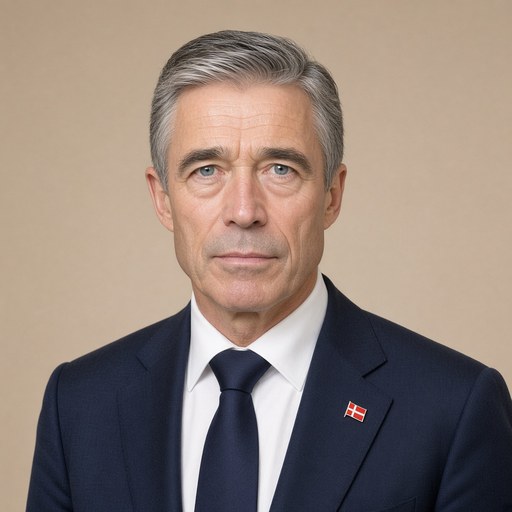
Prime Minister Anders Fogh Rasmussen's presentation on June 28, 2002, of the program for the Danish EU Presidency July-December 2002.
 Anders Fogh Rasmussen · Prime Minister of Denmark
- Context
- Rasmussen presented Denmark's EU Presidency program in Copenhagen on June 28, 2002, ahead of Denmark assuming the EU Council Presidency on July 1.
- Main themes
- EU enlargement, Danish EU Presidency program, One Europe vision, freedom security and justice, counter-terrorism, cross-border crime, asylum and immigration policy, sustainable development, food safety, global responsibility, EU membership negotiations with candidate countries
- Duration
- ~15 min
- Words
- 1,808
- Sentences
- 160
- Readability
- 53
- Grade
- 8.7
- Syntax
- 2.40
- Vocabulary
- 2.08
Translated from Danish
The broad sphere of national life a sentence belongs to. Every sentence has an Arena, so it is the denominator the other indices are read against.
Other160 sentences in 63 paragraphs
Welcome.
On Monday, Denmark will take over the presidency of the EU from Spain. On Monday, we will be at the helm of the EU. Today, we are announcing our program for the presidency. Now here in Copenhagen. And this afternoon in Brussels.
This is a day we have looked forward to. We have prepared thoroughly and for a long time. Ahead of us lies a great task. The Danish presidency has the most comprehensive and important agenda that a presidency has had in many years. In several areas, it is do or die. It is a challenge. We must work hard from day one. We are looking forward to getting started.
Title
The title of the program for the Danish presidency is 'Ét Europa'. In English, 'One Europe'.
The heading "Ét Europa" succinctly and clearly states what it is about. Now we must create one united Europe. Now we must expand the EU with a number of new democracies in Eastern and Central Europe.
The program has five main headings. They are:
From Copenhagen to Copenhagen,
Freedom, security, and justice,
Sustainable development,
Safe food,
Global responsibility.
I will go through the headings one by one. The expansion first.
From Copenhagen to Copenhagen
The expansion of the EU is the main priority for the Danish presidency. The goal is to conclude negotiations on EU membership with up to 10 countries by the end of this year.
It was in Copenhagen in 1993 that the conditions for joining the EU were established. And it may now be in Copenhagen in 2002 that we conclude the negotiations on expansion. Hence the heading: "From Copenhagen to Copenhagen".
It has now been 13 years since the fall of the wall, 9 years since the last summit in Copenhagen, and 5 years since the negotiations began. Now we cannot ask the applicant countries to wait any longer. It is now that we must deliver on the promises. It is now that we must be aware of our historical responsibility. It is now that we must close one of the dark chapters in Europe's history.
We believe and hope for an expansion in Copenhagen with all 10 countries. But it is, of course, also up to the applicant countries themselves. We will decide in December to expand the EU with those who are ready.
Our timeline has three phases:
First, by October, we must resolve all the specific issues that any candidate country may have. We can then, at the end of October, assess which countries are ready for membership. This will be based on an evaluation from the Commission.
Second, by the beginning of November, we must present the EU's proposals on the last open questions to the candidate countries. Then, from the Danish side, we can negotiate these matters with the candidate countries in the time leading up to December.
And on that basis, we will, thirdly, be able to conclude the negotiations at the summit in Copenhagen in December, where the final nails will be hammered in.
It is absolutely crucial to stick to this plan. We do not have much time available. There is no room for slippage. There is no time for detours.
I would strongly warn against the thought that one might just push the expansion a couple of months into 2003. That is a dangerous game. It is here and now - in the next few months - that there is an open window for expansion. If we do not achieve a result in Copenhagen, we risk pushing the expansion far into the future.
The Danish presidency will do its utmost to ensure that this succeeds. But the presidency cannot alone bring the expansion home. The candidate countries must maintain the pace and avoid creating unrealistic expectations. The member states must live up to their promises and refrain from taking the expansion hostage to gain small advantages in other areas – for example, in agricultural policy.
The expansion is a shared responsibility. The expansion will benefit everyone.
No one should be able to come back later and say that the Danish presidency did not do what it could. We will give it our all.
Freedom, security, and justice
The second heading is: Freedom, security, and justice. This section has three main elements.
First, the fight against terrorism. Here, we will emphasize strengthening international cooperation - not least with the USA. The goal is, among other things, an agreement on the extradition of terrorists across the Atlantic.
Second, a more effective fight against cross-border crime. This involves a number of initiatives. Let me highlight a Danish proposal for the protection of export drivers against violent attacks. Violence and crime on European roads is a growing problem for our export drivers. Now we are doing something about it in the EU. We will, among other things, strengthen security on vulnerable routes and facilitate access to information about safe rest areas.
Finally, thirdly, cooperation on asylum and immigration. This is an issue that rightly concerns many. Therefore, it is important that we, from a political standpoint, address the matter. The Danish government has done so. And the EU is doing so.
The summit in Seville resulted in decisions that are forward-looking, concrete, and balanced. They provide a good starting point for the work under the Danish presidency. We will concentrate our efforts on four areas:
We will strengthen the fight against illegal immigration.
We will improve border control at the EU's external borders.
We will take initiatives towards the countries from which illegal immigration originates. This involves both support and possible reactions.
And finally – we will promote the work of adopting the proposals that have already been presented on asylum and immigration. These are the rules that, among other things, allow Denmark to send an asylum seeker back to another EU country if he has arrived in Denmark via that country.
Sustainable development
The third main heading is sustainable development.
We will seek to promote the development of a strong and competitive European economy. This is a prerequisite for continued growth, prosperity, and welfare in our countries. And the development must take place on a sustainable basis, where economic growth goes hand in hand with environmental protection.
We will seek to create a single market for financial services. Consumers should benefit from a well-functioning internal market for, among other things, insurance, consumer credit, pensions, and securities. This makes it easier for companies to raise capital and create jobs. And it allows for larger pensions that can secure our elderly.
We will also push for the liberalization of energy markets. This will mean freer choices and lower prices for businesses and ordinary consumers.
Safe food
The fourth heading is: Safe food. We will emphasize the work on food safety. We want, for example, to adopt rules for better hygiene at all levels - from the stable door through the slaughterhouses and to the goods in the stores. This will benefit consumers and provide greater security for good food. We also want to adopt new common rules on food labeling. The labeling should be better and contain all the relevant information that consumers – for example, allergy sufferers – need.
This heading also covers two large and difficult tasks. A review of the common agricultural policy and reform of the common fisheries policy.
The EU Commission will present its so-called mid-term review of agricultural policy on July 10. We will ensure progress in the discussions on this important issue. I want to make it clear that we expect difficult negotiations. Therefore, the negotiations on agricultural policy must be maintained in a separate track that runs parallel to the expansion negotiations. The two matters should not be mixed together. Otherwise, we risk losing both.
The EU Commission has presented its proposals for a new fisheries policy. Here we are working with a deadline that states that a new policy must be in place by the end of the year. This may be difficult. But we will also, of course, do our utmost here.
Global responsibility
The last main heading in the program is global responsibility. It covers the entire area of foreign and security policy.
In this section, we describe the major international meetings under the Danish presidency. This includes, for example, the Johannesburg Summit on Sustainable Development. We emphasize in the program that the goal in Johannesburg is a global agreement on free trade, development aid, good governance, and the environment. We are working towards this, among other things, in cooperation with the South African government. But we face a tough piece of work. Denmark or the EU cannot solve the issue alone. All parties – including the USA and developing countries – must be involved in a solution.
We also outline the presidency's plans regarding various third countries and regions. I would particularly like to highlight the relationship with the USA and the relationship with Russia, including the Kaliningrad issue. The relationship with Russia and the new neighbors - Ukraine, Belarus, and Moldova - will be a central task.
The Foreign Minister will provide further details on the program in the area of foreign policy.
Finally, I would like to conclude by saying that:
The presidency will be characterized by openness. We have a clear ambition in this area. This applies to our relationship with the press. And it applies to the work in the Council of Ministers.
We will work to make the European Council and the Council of Ministers more effective. Among other things, we will reduce the number of ministerial councils from 16 to 9.
Finally, we lay out in the program - first and foremost - for close cooperation with our partners. This applies in the Council, but it also applies equally to the European Parliament and the Commission. The Minister for European Affairs will elaborate on this cooperation.
The form of the program
In conclusion, I would like to say about the form of the program that we have worked hard to ensure a presentation that allows the text to be used as broadly as possible.
The program consists of two parts. A short introduction of a more political nature, presented in a form that speaks to a relatively broad readership. And then the more traditional overview of the individual policy areas, which will contain precise and concise information for EU specialists – politicians, officials, and journalists. The structure follows the five main headings I have mentioned.
Finally, I can mention that we will, of course, also utilize the internet. The official presidency website has the address www.eu2002.dk. The program will be posted on the website today.
We face a great task.
It is a great responsibility that has been placed upon us. We cannot solve it alone. But we will put all our efforts into the work.
And we look forward to getting started.
The original Danish. The tags above are read on the English translation's sentences.
Velkommen.
På mandag overtager Danmark formandskabet for EU efter Spanien. På mandag står vi ved roret i EU. I dag offentliggør vi vort program for formandskabet. Nu her i København. Og i eftermiddag i Bruxelles.
Det er en dag, vi har set frem til. Vi har forberedt os længe og grundigt. Foran os ligger en stor opgave. Det danske formandskab har den mest omfattende og vigtigste dagsorden, et formandskab har haft i mange år. På flere områder er det knald eller fald. Det er en udfordring. Vi skal arbejde hårdt fra dag 1. Vi glæder os til at komme i gang.
Titel
Titlen på programmet for det danske formandskab er 'Ét Europa'. På engelsk 'One Europe'.
Overskriften ”Ét Europa” siger kort og klart, hvad det drejer sig om. Nu skal vi skabe ét forenet Europa. Nu skal vi udvide EU med en række nye demokratier i Øst- og Centraleuropa.
Programmet har fem hovedoverskrifter. De er:
Fra København til København,
Frihed, sikkerhed og retfærdighed,
Bæredygtig udvikling,
Sikre fødevarer,
Globalt ansvar.
Jeg vil gennemgå overskrifterne én for én. Udvidelsen først.
Fra København til København
Udvidelsen af EU er hovedprioriteten for det danske formandskab. Målsætningen er at afslutte forhandlingerne om optagelse i EU med op til 10 lande inden udgangen af i år.
Det var i København i 1993, at betingelserne for at blive optaget i EU blev lagt fast. Og det kan nu blive i København i 2002, at vi afslutter forhandlingerne om udvidelsen. Derfor overskriften: ”Fra København til København”.
Der er nu gået 13 år siden murens fald, 9 år siden sidste topmøde i København og 5 år siden forhandlingerne blev indledt. Nu kan vi ikke bede ansøgerlandene om at vente længere. Det er nu, vi skal levere på løfterne. Det er nu, vi skal være os vort historiske ansvar bevidst. Der er nu, vi skal lukke ét af de mørke kapitler i Europas historie.
Vi tror og håber på en udvidelse i København med alle 10 lande. Men det er selvfølgelig også op til ansøgerlandene selv. Vi vil til december beslutte at udvide EU med dem, der er klar.
Vores tidsplan har tre faser:
For det første skal vi frem til oktober have løst alle de særlige problemer, som det ene eller andet kandidatland måtte have. Vi kan så i slutningen af oktober tage stilling til, hvilke lande der er klar til medlemskab. Det sker på baggrund af en vurdering fra Kommissionen.
For det andet skal vi senest i begyndelsen af november forelægge EU’s udspil på de sidste åbne spørgsmål for kandidatlandene. Så kan vi fra dansk side forhandle disse sager på plads med kandidatlandene i tiden frem til december.
Og på den baggrund vil vi så for det tredje kunne afslutte forhandlingerne på topmødet i København til december, hvor de sidste søm bliver slået i.
Det er helt afgørende at holde fast i denne plan. Vi har ikke megen tid til rådighed. Der er ikke plads til slinger. Der er ikke tid til svinkeærinder.
Jeg vil kraftigt advare mod den tanke, at man måske bare kan skubbe udvidelsen et par måneder ind i 2003. Det er et farligt spil. Det er her og nu - i de næste måneder - at der er et åbent vindue for udvidelsen. Får vi ikke et resultat i København, risikerer vi at skyde udvidelsen langt ud i fremtiden.
Det danske formandskab vil gøre sit yderste for, at dette her skal lykkes. Men formandskabet kan ikke alene bringe udvidelsen i hus. Kandidatlandene skal opretholde tempoet og undgå at skabe urealistiske forventninger. Medlemslandene skal leve op til deres løfter og undlade at tage udvidelsen som gidsel for at opnå små fordele på andre områder – f.eks. inden for landbrugspolitikken.
Udvidelsen er et fælles ansvar. Udvidelsen vil komme alle til gode.
Ingen skal bagefter kunne komme og sige, at det danske formandskab ikke gjorde, hvad det kunne. Vi vil give den fuld skrue.
Frihed, sikkerhed og retfærdighed
Den anden overskrift er: Frihed, sikkerhed og retfærdighed. Dette afsnit har tre hovedelementer.
For det første kampen mod terrorisme. Her vil vi lægge vægt på at styrke det internationale samarbejde - ikke mindst med USA. Målet er bl.a. en aftale om udlevering af terrorister på tværs af Atlanten.
For det andet en mere effektiv bekæmpelse af grænseoverskridende kriminalitet. Her er der tale om en række initiativer. Lad mig fremhæve et dansk forslag om beskyttelse af eksportchauffører mod voldelige overfald. Vold og kriminalitet på de europæiske veje er et voksende problem for vore eksportchauffører. Nu gør vi noget ved det i EU. Vi vil bl.a. styrke sikkerheden på de udsatte ruter og lette adgangen til information om sikre rastepladser.
Endelig for det tredje samarbejdet om asyl og indvandring. Det er et spørgsmål, der med rette optager mange. Derfor er det vigtigt, at vi fra politisk side tager fat på sagen. Det har den danske regering gjort. Og det gør EU.
Topmødet i Sevilla resulterede i beslutninger, der er fremadrettede, konkrete og balancerede. De udgør et godt udgangspunkt for arbejdet under dansk formandskab. Vi vil koncentrere indsatsen på fire områder:
Vi vil forstærke kampen mod ulovlig indvandring.
Vi vil forbedre grænsekontrollen ved EU’s ydre grænser.
Vi vil tage initiativer over for de lande, hvorfra den ulovlige indvandring kommer. Det drejer sig både om støtte og om mulige reaktioner.
Og endelig – vil vi fremme arbejdet med at vedtage de forslag, der allerede er fremlagt om asyl- og indvandring. Det er de regler, der bl.a. gør det muligt for Danmark at sende en asylansøger tilbage til at andet EU-land, hvis han er kommet til Danmark via dette land.
Bæredygtig udvikling
Den tredje hovedoverskrift er bæredygtig udvikling.
Vi vil søge at fremme udviklingen af en stærk og konkurrencedygtig europæisk økonomi. Det er en forudsætning for fortsat vækst, velstand og velfærd i vore lande. Og udviklingen må ske på et bæredygtigt grundlag, hvor økonomisk vækst går hånd i hånd med beskyttelse af miljøet.
Vi vil søge at skabe et indre marked for finansielle tjenesteydelser. Forbrugerne skal nyde godt af et velfungerende indre marked for bl.a. forsikring, forbrugerkredit, pension og værdipapirer. Det gør det nemmere for virksomhederne at rejse kapital og skabe arbejdspladser. Og det giver mulighed for større pensioner, der kan sikre vore ældre.
Vi vil også presse på for at få liberaliseret energimarkederne. Det vil betyde friere valg og lavere priser for virksomheder og almindelige forbrugere.
Sikre fødevarer
Den fjerde overskrift er: Sikre fødevarer. Vi vil lægge vægt på arbejdet med fødevaresikkerhed. Vi ønsker f.eks. at vedtage regler om bedre hygiejne i alle led - lige fra stalddøren over slagterierne og til varen ligger i butikkerne. Det vil være til gavn for forbrugerne og give større sikkerhed for gode fødevarer. Vi ønsker også at vedtage nye fælles regler om mærkning af fødevarer. Mærkningen skal være bedre og indeholde alle de relevante oplysninger, som forbrugerne – f.eks. allergikere – har brug for.
Denne overskrift dækker samtidig over to store og vanskelige opgaver. Gennemgang af den fælles landbrugspolitik og reform af den fælles fiskeripolitik.
EU-kommissionen fremlægger sin såkaldte midtvejsgennemgang af landbrugspolitikken den 10. juli. Vi vil sikre fremdrift i drøftelserne af denne vigtige sag. Jeg vil gerne gøre det klart, at vi forventer vanskelige forhandlinger. Forhandlingerne om landbrugspolitikken skal derfor fastholdes i et selvstændigt spor, der løber parallelt med udvidelsesforhandlingerne. De to ting skal ikke blandes sammen. Ellers risikerer vi at tabe begge dele på gulvet.
EU-kommissionen har fremlagt sine forslag til en ny fiskeripolitik. Her arbejder vi med en tidsfrist, der siger, at en ny politik skal være på plads inden årsskiftet. Det kan blive svært. Men vi vil også her selvsagt gøre vort yderste.
Globalt ansvar
Den sidste hovedoverskrift i programmet er globalt ansvar. Den dækker over hele det udenrigs- og sikkerhedspolitiske område.
I dette afsnit beskriver vi de store internationale møder under det danske formandskab. Det gælder f.eks. Johannesburg-topmødet om Bæredygtig Udvikling. Vi fremhæver i programmet, at målet i Johannesburg er en global aftale om frihandel, udviklingsbistand, god regeringsførelse og miljø. Det arbejder vi for, bl.a. i samarbejde med den sydafrikanske regering. Men vi står foran et hårdt stykke arbejde. Danmark eller EU kan ikke løse sagen alene. Alle parter – herunder USA og u-landene – skal være med på en løsning.
Vi redegør også for formandskabets planer med hensyn til forskellige tredjelande og regioner. Særlig vil jeg fremhæve forholdet til USA og forholdet til Rusland, herunder Kaliningrad-spørgsmålet. Forholdet til Rusland og de nye naboer - Ukraine, Hviderusland og Moldova - bliver en central opgave.
Udenrigsministeren vil redegøre nærmere for programmet på det udenrigspolitiske område.
Endelig vil jeg runde af med at sige, at:
Formandskabet vil være præget af åbenhed. Vi har en klar ambition på dette område. Det gælder i forhold til pressen. Og det gælder arbejdet i Ministerrådet.
Vi vil arbejde for, at Det Europæiske Råd og Ministerrådet bliver mere effektive. Bl.a. vil vi reducere antallet af ministerråd fra 16 til 9.
Endelig lægger vi i programmet - først som sidst - op til et tæt samarbejde med vore partnere. Det gælder i Rådet, men det gælder lige så vel Europa-Parlamentet og Kommissionen. Europaministeren vil komme nærmere ind på dette samarbejde.
Programmets form
Afslutningsvis vil jeg om programmets form sige, at vi har arbejdet hårdt for at sikre en fremstilling, der gør, at teksten kan blive anvendt så bredt som muligt.
Programmet består af to dele. En kort indledning af en mere politisk karakter, holdt i en form, der taler til en forholdsvis bred læserskare. Og så den mere traditionelle gennemgang af de enkelte politikområder, der skal rumme præcis og kortfattet information til EU-specialister – politikere, embedsmænd og journalister. Strukturen følger de fem hovedoverskrifter, jeg har nævnt.
Endelig kan jeg nævne, at vi naturligvis også tager internettet i brug. Den officielle formandskabshjemmeside har adressen www.eu2002.dk.Programmet vil blive lagt ud på hjemmesiden i dag.
Vi står foran en stor opgave.
Det er et stort ansvar, der er lagt på os. Vi kan ikke løse den alene. Men vi vil lægge alle vore kræfter i arbejdet.
Og vi glæder os til at gå i gang.