




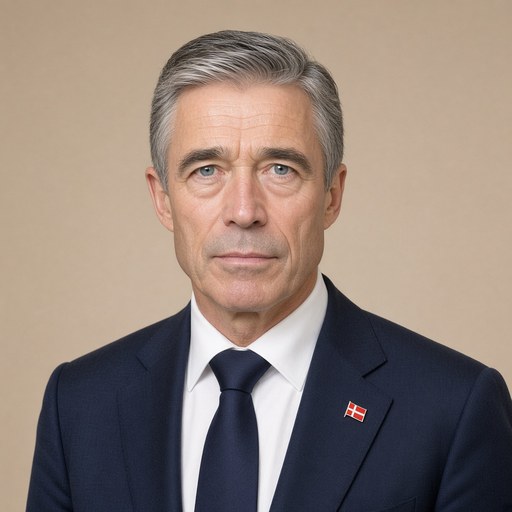
The Prime Minister's speech to the Nordic Council's Presidium – committee and party group meeting on June 25.
 Anders Fogh Rasmussen · Prime Minister of Denmark
- Context
- Rasmussen addressed the Nordic Council's Presidium in June 2002, outlining Denmark's upcoming EU presidency priorities and celebrating the Council's 50th anniversary.
- Main themes
- Danish EU presidency, EU enlargement, Nordic Council 50th anniversary, Northern Dimension, new EU neighbors and Russia, Copenhagen criteria, future of the EU, Kaliningrad transit, Nordic cooperation, EU budget and agricultural policy, Convention on EU's future
- Duration
- ~15 min
- Words
- 1,854
- Sentences
- 117
- Readability
- 47
- Grade
- 10.6
- Syntax
- 2.73
- Vocabulary
- 2.19
Translated from Danish
The broad sphere of national life a sentence belongs to. Every sentence has an Arena, so it is the denominator the other indices are read against.
Other117 sentences in 17 paragraphs
First, I would like to express my sincere gratitude for the invitation. I would like to start by congratulating the Nordic Council on its 50th anniversary. It is a collaboration that has created dynamism and results in many areas, and which has brought the Nordic peoples closer together. The Danish government places the greatest emphasis on cooperation within the Nordic Council, and I look forward to participating in the Council's 50th anniversary in Helsinki in October. I am also pleased to have the opportunity to speak to the Nordic Council at a time when Europe is facing some historic decisions that will have consequences for a long time to come – including for Nordic cooperation.
I will strive to keep my remarks relatively brief so that we have time for discussion.
I will focus my remarks on two topics:
First, the Danish EU presidency. There is only a little over a week until it begins, and it is, of course, the completely dominant task for me personally and for the Danish government. The presidency has been planned for a long time – we are well prepared – and we look forward to getting started. Secondly, the debate on the future of the EU, which is closely linked to enlargement. First the presidency, where I will focus on enlargement.
The Presidency
The most important task for the presidency is the enlargement with up to 10 countries. It was in Copenhagen in 1993 that the criteria were adopted that applicant countries must meet to become members of the EU – and it is in Copenhagen that we now, about 10 years later, have the opportunity to conclude the negotiations and admit them into the EU fold. It is our ambition to conclude negotiations with as many countries as possible. It is a fundamental principle that negotiations should be concluded with the countries that are ready. I hope that this will apply to all 10 countries. But I will not compromise on the overarching principles for admission. It is important to maintain December 2002 as a crucial and binding deadline. Experience shows that the EU is best at handling one major task at a time. The next six months are dedicated to enlargement. After that, other tasks will press for attention. In 2003, we must conclude discussions in the Convention on the future of the EU and begin work in the subsequent intergovernmental conference. 2004 will be dominated by the intergovernmental conference as well as elections to the European Parliament. And in 2005 and 2006, the framework for the next budget period 2007-2013 must be established.
In other words, it is here and now – in the coming months – that we have a unique opportunity to bring enlargement to fruition. Whether we succeed in concluding the first round of enlargement negotiations in Copenhagen is ultimately not entirely in our hands. But the government is determined to prioritize very clearly. No one should be able to say afterward that Denmark did not do its utmost to ensure a successful outcome. If enlargement is to succeed, it requires a willingness to compromise on both sides. But there are also a number of concrete issues that need to be resolved in connection with the enlargement negotiations. I am thinking here of issues related to agricultural policy, the EU's budget, Cyprus, and the Irish referendum on the Nice Treaty.
It is important to view enlargement in a broader context. Enlargement must not create new dividing lines in Europe. The benefits of enlargement must not stop at the new external borders. That would go against the values that underpin European cooperation. Therefore, the Danish presidency will pay close attention to relations with Russia and our "new neighbors": Ukraine, Belarus, and Moldova. We need to formulate new policies in relation to these countries. By building on existing programs, we must promote healthy political and economic development in these countries. Cooperation within the framework of the Northern Dimension is also an important instrument to avoid new dividing lines. The Northern Dimension is an effective – complementary – tool for enlargement. With an actively cooperating Russia, the Northern Dimension can help strengthen relations between the EU and Russia – to the benefit of the entire Nordic region. The task of the Danish presidency is to outline guidelines for the future of the Northern Dimension – which will initially mean guidelines for a new action plan for 2003-2006. This includes better framework conditions for businesses, cross-border cooperation, environmental and nuclear safety, as well as the fight against terrorism. Work outside the Northern Dimension fits well into traditional Nordic cooperation and the broader Baltic Sea cooperation. During our presidency, we will seek to utilize all the many points of contact that exist between the various forums.
During our presidency, we will also need to find an effective and flexible solution regarding transit to and from Kaliningrad in compliance with EU regulations. This issue is the subject of an analysis in the Commission with a view to clarification by the time of the EU-Russia summit in Copenhagen in November. Let me conclude my remarks on enlargement by saying that we have a historical and moral obligation to do everything in our power to admit the applicant countries. We must not allow short-term political and economic considerations to jeopardize enlargement. Enlargement is a common challenge and a common opportunity. In addition to enlargement, the presidency takes on an exceptionally comprehensive and heavy agenda. We place great emphasis on also fulfilling this task, and we will do our utmost to promote work across all EU policy areas. The presidency will particularly focus on the following areas: 1. Increased emphasis on freedom, security, and justice, which includes a strengthened effort against illegal immigration, international terrorism, and crime, 2. Sustainable development with higher prosperity and more people in work, 3. Food security, which requires a review of agricultural and fisheries policy, and 4. The EU's global responsibility, which includes the summit in Johannesburg and the ASEM summit in September. I am confident that we will greatly benefit from close Nordic cooperation in many of these areas. The Nordic community of values is a natural starting point for a close dialogue. The tasks that the Danish presidency will address are largely related to the question of how Europe should look in the future.
The Debate on the Future of the EU
My starting point for the discussion on the future of Europe is actually very simple. We need a strong and effective EU – this is crucial for a smaller country like Denmark. But we also need an EU that people can comprehend, and that does not take up more space in everyday life than people can accept. In the following, I will touch on some of my ideas for how we can tackle these challenges. Not as a definitive list. Not as a final government position. But as a basis for discussion. In my view, we should primarily pursue three goals in the Convention and during the intergovernmental conference:
1. We need a clearer description of the division of labor between the EU and the member states. 2. We must strengthen the national parliaments – not least in relation to the application of the principles of subsidiarity and proportionality. 3. We need more openness and transparency.
First – a clearer division of labor. It is necessary to have a clearer description of what the EU should deal with and what the member states are responsible for. There is currently too much uncertainty about the boundaries of what the EU can and should deal with. This contributes to public skepticism and can sometimes block a nuanced debate on EU issues. I would like to emphasize that for me, this is not about rolling back the development in the EU. On the contrary. In a number of areas, we need stronger cooperation than we have today. But we need to make it clearer what the EU is responsible for and what the member states are responsible for. One way to do this is to make it explicitly clear what the EU should not deal with. Just to be on the safe side, so to speak, and to emphasize the rights of the member states. The second goal concerns strengthening the national parliaments. This is primarily about ensuring that decisions are made as close to the citizens as possible. And that decisions are not more intrusive than absolutely necessary to achieve the goal. This means that the so-called principles of subsidiarity and proportionality are respected. Today, the parliaments of EU countries primarily play a role through oversight of their respective governments. This should also be their most important role in the future. But to ensure that they can fulfill that role satisfactorily, we must provide them with the best possible working conditions. This means, first and foremost, that decisions in the EU system should be made as openly as possible. Parliaments should have access to the documents being processed and sufficient time to familiarize themselves with them. But the oversight function in relation to their own governments does not need to be the only role for the national parliaments. I also believe that there is a need for independent political oversight at the EU level. I would like to see a forum of national parliamentarians who can continuously evaluate the legislative activities of the Commission, the Council, and the European Parliament.
Again, the specific model is not crucial. What is crucial is finding a model that ensures increased involvement of the national parliaments.
Finally, thirdly, openness should play a significant role in future cooperation. It is important that European citizens can closely follow the work of the EU. This requires, among other things, that openness is an integral part of the Council's working methods. From a Danish perspective, all legislative activity in the Council should, in principle, take place in openness. Open debates do not exclude substantive discussions on important political issues. At the European Council in Seville, we adopted a number of necessary reforms of the Council. These will, among other things, mean increased openness. I support this work, and we will also work to create momentum in this area during the Danish presidency.
Conclusion
In conclusion, I would like to emphasize that the next six months will significantly shape the future of the EU. I am confident that we in the Nordic region will understand how to make our mark on this development. We now have a firm tradition of the prime ministers of the three Nordic EU countries meeting before each EU summit. This has proven to be a suitable and useful opportunity to coordinate the Nordic voice in the EU. The Danish presidency will, of course, impose limitations on the possibility of common Nordic initiatives, but the meetings will take place. Likewise, we place great emphasis on a close dialogue with Iceland and Norway regarding developments within the EU. The next six months will open up new opportunities that we must learn to seize so that Europe can maintain its position as a region characterized by prosperity and economic growth.
The original Danish. The tags above are read on the English translation's sentences.
Først vil jeg gerne sige mange tak for indbydelsen. Jeg vil starte med at ønske Nordisk Råd tillykke med 50-året for dets oprettelse. Det er et samarbejde, som har skabt dynamik og resultater på mange områder, og som har bragt de nordiske befolkninger tættere på hinanden. Den danske regering lægger den største vægt på samarbejdet i Nordisk Råd og jeg ser frem til at deltage i Rådets 50-års jubilæum i Helsingfors i oktober. Jeg er samtidig glad for at få lejlighed til at tale til Nordisk Råd på et tidspunkt, hvor Europa står overfor nogle historiske beslutninger, som vil få konsekvenser lang tid fremover – også for det nordiske samarbejde.
Jeg vil bestræbe mig på at holde et relativt kort indlæg, så vi kan få tid til diskussion.
Jeg vil koncentrere mit indlæg om to emner:
For det første det danske EU-formandskab. Der er kun en lille uge, til det går løs, og det er selvfølgelig den helt dominerende opgave for mig personligt og for den danske regering. Formandskabet har været planlagt gennem lang tid – vi er godt forberedte – og vi glæder os til at komme i gang. For det andet debatten om EU ́s fremtid, som først og fremmest hænger tæt sammen med udvidelsen. Først formandskabet, hvor jeg vil fokusere på udvidelsen.
Formandskabet
Den vigtigste opgave for formandskabet er udvidelsen med op til 10 lande. Det var i København i 1993, at man vedtog de kriterier, som ansøgerlandene skulle opfylde for at blive medlemmer af EU – og det er i København, at vi nu ca. 10 år efter har muligheden for at afslutte forhandlingerne og optage dem i EU-kredsen. Det er vores ambition at afslutte forhandlingerne med så mange lande som muligt. Det er et bærende princip, at forhandlingerne skal afsluttes med de lande, som er klar. Jeg håber, at det vil gælde for alle 10 lande. Men jeg vil ikke gå på kompromis med de overordnede principper for optagelse. Det er vigtigt at fastholde december 2002 som en afgørende og forpligtende tidsfrist. Al erfaring viser, at EU er bedst til at håndtere én stor opgave af gangen. Det næste halve år er afsat til udvidelsen. Derefter presser andre opgaver sig på. I 2003 skal vi afslutte drøftelserne i Konventet om EU’s fremtid og begynde arbejdet i den efterfølgende regeringskonference. 2004 vil være domineret af regeringskonferencen samt valg til Europa-Parlamentet. Og i 2005 og 2006 skal rammerne for næste budgetperiode 2007-2013 fastlægges.
Det er med andre ord her og nu – i de kommende måneder – at vi har en enestående chance for at bringe udvidelsen i hus. Om det lykkes at afslutte første runde af udvidelsesforhandlingerne i København, er vi i sidste ende ikke selv herrer over. Men regeringen er indstillet på at prioritere meget klart. Ingen skal bagefter kunne sige, at Danmark ikke gjorde sit yderste for at sikre et succesfuldt resultat. Hvis udvidelsen skal lykkes, kræver det kompromisvillighed på begge sider. Men der er også en række konkrete spørgsmål, som skal løses i forbindelse med udvidelsesforhandlingerne. Jeg tænker her på spørgsmålene om landbrugspolitikken, EU ́s budget, Cypern og den irske folkeafstemning om Nice-traktaten.
Det er vigtigt at anskue udvidelsen i en bredere kontekst. Udvidelsen må ikke skabe nye skillelinjer i Europa. Fordelene ved udvidelsen må ikke stoppe ved de nye ydre grænser. Det ville gå stik imod de værdier, som ligger til grund for det europæiske samarbejde. Derfor vil det danske formandskab være meget opmærksom på relationerne til Rusland og vore ”nye naboer”: Ukraine, Hviderusland og Moldova. Vi bliver nødt til at formulere nye politikker i forhold til disse lande. Ved at bygge på eksisterende programmer må vi fremme en sund politisk og økonomisk udvikling i disse lande. Samarbejdet indenfor rammerne af Den Nordlige Dimension er også et vigtigt instrument til at undgå nye skillelinjer. Den Nordlige Dimension er et effektivt - supplerende – redskab til udvidelsen. Med et aktivt samarbejdende Rusland vil Den Nordlige Dimension kunne bidrage til at forstærke relationerne mellem EU og Rusland – til glæde for hele Norden. Det danske formandskabs opgave er at udstikke retningslinjer for Den Nordlige Dimensions fremtid – det vil i første omgang sige retningslinjer for en ny handlingsplan for 2003-2006. Det drejer sig blandt andet om bedre rammebetingelser for virksomheder, grænsesamarbejde, miljø og nuklear sikkerhed samt kampen mod terrorisme. Arbejdet uden for Den Nordlige Dimension passer fint ind i det traditionelle nordiske samarbejde og det bredere Østersøsamarbejde. Vi vil under vort formandskab søge at udnytte alle de mange kontaktflader, som findes mellem de forskellige fora.
Vi vil under vort formandskab også skulle finde en effektiv og smidig løsning med hensyn til transitten til og fra Kaliningrad under overholdelse af EU’s regelsæt. Dette spørgsmål er genstand for en analyse i Kommissionen med henblik på en afklaring senest ved topmødet mellem EU og Rusland i i København i november. Lad mig runde mine bemærkninger om udvidelsen af med at sige, at vi har en historisk og moralsk forpligtelse til at gøre alt i vores magt for at optage ansøgerlandene. Vi må ikke lade kortsigtede politiske og økonomiske overvejelser bringe udvidelsen i fare. Udvidelsen er en fælles udfordring og en fælles mulighed. Ud over udvidelsen overtager formandskabet en ualmindeligt omfattende og tung dagsorden. Vi lægger stor vægt på også at løfte denne opgave, og vi vil gøre vort yderste for at fremme arbejdet inden for alle EU’s politikområder. Formandskabet vil særligt fokusere på følgende områder: 1. Øget vægt på frihed, sikkerhed og retfærdighed, der blandt andet vedrører en styrket indsats mod illegal indvandring, international terrorisme og kriminalitet, 2. En bæredygtig udvikling med højere velstand og flere i arbejde, 3. Sikre fødevarer, der blandt andet kræver en gennemgang af landbrugs- og fiskeripolitikken, og 4. EU ́s globale ansvar, der blandt andet vedrører topmødet i Johannesburg og ASEM-topmødet i september. Jeg er sikker på, at vi på mange af disse områder vil have stor nytte af et tæt nordisk samarbejde. Det nordiske værdifællesskab er et naturligt udgangspunkt for en tæt dialog. De opgaver, som det danske formandskab skal beskæftige sig med, vedrører i høj grad spørgsmålet om, hvordan Europa skal se ud i fremtiden.
Debatten om EU ́s fremtid
Mit udgangspunkt for diskussionen om Europas fremtid er egentlig meget enkelt. Vi har brug for et stærkt og effektivt EU – det er helt afgørende for et mindre land som Danmark. Men vi har også brug for et EU, som folk kan overskue, og som ikke fylder mere i hverdagen, end folk kan acceptere. I det følgende vil jeg komme ind på nogle af mine idéer til, hvordan vi kan tackle disse udfordringer. Ikke som en facitliste. Ikke som en endelig regeringsholdning. Men som oplæg til diskussion. For mig at se bør vi i konventet og under regeringskonferencen først og fremmest gå efter tre mål:
1. Vi har brug for en klarere beskrivelse af arbejdsdelingen mellem EU og medlemslandene. 2. Vi skal styrke de nationale parlamenter – ikke mindst i forhold til anvendelsen af nærheds- og proportionalitetsprincippet. 3. Vi har brug for mere åbenhed og gennemskuelighed.
For det første – en klarere arbejdsdeling. Det er nødvendigt med en klarere beskrivelse af, hvad EU skal beskæftige sig med, og hvad medlemslandene er ansvarlige for. Der er i dag for stor usikkerhed om grænserne for, hvad EU kan og bør beskæftige sig med. Det bidrager til den folkelige skepsis og kan til tider virke blokerende for en nuanceret debat om EU-spørgsmål. Jeg vil gerne understrege, at det for mig ikke er et spørgsmål om at rulle udviklingen i EU tilbage. Tværtimod. På en række områder har vi brug for et stærkere samarbejde end i dag. Men vi har altså brug for at gøre det mere klart, hvad EU tager sig af, og hvad medlemslandene tager sig af. Én måde at gøre dette er at gøre det helt eksplicit, hvad EU
ikke
skal beskæftige sig med. For en sikkerheds skyld så at sige og for at understrege medlemslandenes rettigheder. Det andet mål vedrører en styrkelse af de nationale parlamenter. Det handler ikke mindst om at sikre, at beslutningerne træffes så tæt på borgerne som muligt. Og at beslutningerne ikke er mere indgribende end højest nødvendigt for at nå målet. Det vil sige, at de såkaldte principper om nærhed og proportionalitet overholdes. I dag spiller EU-landenes parlamenter først og fremmest en rolle gennem kontrollen med de enkelte landes regeringer. Det skal også i fremtiden være deres vigtigste rolle. Men for at sikre, at de kan udfylde den rolle tilfredsstillende, må vi sikre dem de bedst mulige arbejdsbetingelser. Det betyder først og fremmest, at beslutninger i EU-systemet skal træffes i størst mulig åbenhed. Parlamenterne skal både have adgang til de dokumenter, som behandles og tilstrækkelig tid til at sætte sig ind i dem. Men kontrolfunktionen i forhold til egne regeringer behøver ikke være den eneste rolle for de nationale parlamenter. Jeg mener også, at der er behov for en uafhængig politisk kontrol på EU-niveau. Jeg så gerne et forum af nationale parlamentarikere, som løbende kan evaluere Kommissionens, Rådets og Europa-Parlamentets lovgivende virksomhed.
Igen er det afgørende ikke den konkrete model. Det afgørende er, at man finder en model, der sikrer en øget inddragelse af de nationale parlamenter.
Endelig for det tredje bør åbenheden spille en stor rolle i det fremtidige samarbejde. Det er vigtigt, at de europæiske borgere kan følge arbejdet i EU på tæt hold. Det kræver blandt andet, at åbenhed er en integreret del af Rådets arbejdsform. Efter dansk opfattelse bør al lovgivende virksomhed i Rådet principielt ske i åbenhed. Åbne debatter udelukker ikke substantielle drøftelser om vigtige politiske spørgsmål. I Det Europæiske Råd i Sevilla vedtog vi en række nødvendige reformer af rådet. De vil bl.a. betyde øget åbenhed. Jeg støtter dette arbejde, og vi vil også under det danske formandskab arbejde for at skabe fremdrift på dette område.
Afslutning
Til slut vil jeg gerne fremhæve, at de kommende 6 måneder på afgørende vis vil præge EU ́s fremtid. Jeg er sikker på, at vi i Norden vil forstå at sætte vores markante præg på denne udvikling. Vi har nu en fast tradition for, at de tre nordiske EU-landes statsministre mødes før hvert topmøde i EU. Det har vist sig at være en egnet og nyttig lejlighed til at koordinere den nordiske stemme i EU. Det danske formandskab vil naturligvis lægge begrænsninger for muligheden for fælles nordiske udspil, men møderne vil blive holdt. Ligeledes lægger vi fra dansk side stor vægt på en tæt dialog med Island og Norge om udviklingen inden for EU. De næste seks måneder vil åbne nogle nye muligheder, som vi skal forstå at udnytte, så Europa kan fastholde sin position som et område præget af velstand og økonomisk vækst.