




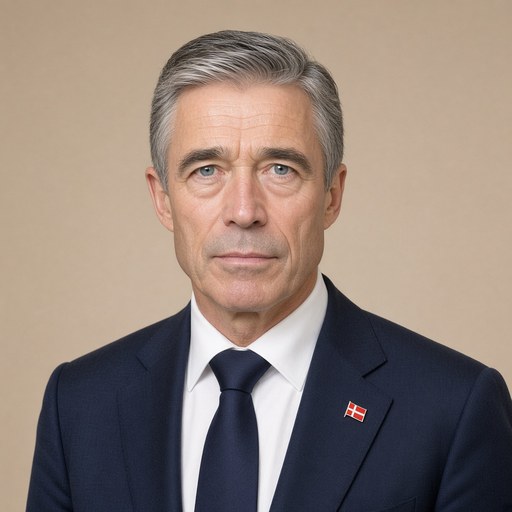
Prime Minister Anders Fogh Rasmussen's speech at the Fynske Day, Svanninge Bakker, on June 16, 2002.
 Anders Fogh Rasmussen · Prime Minister of Denmark
- Context
- Rasmussen addressed attendees at the Funen Day celebration at Svanninge Bakker on June 16, 2002, reflecting on Danish identity amid globalization and Denmark's upcoming EU presidency.
- Main themes
- Danish national identity, globalization and cultural roots, EU presidency, European enlargement, Danishness and language, tradition and modernity, European history and peace, youth and global connectivity, nationalism and democracy
- Duration
- ~14 min
- Words
- 1,649
- Sentences
- 90
- Readability
- 55
- Grade
- 10.1
- Syntax
- 2.88
- Vocabulary
- 2.15
Translated from Danish
The broad sphere of national life a sentence belongs to. Every sentence has an Arena, so it is the denominator the other indices are read against.
Other90 sentences in 46 paragraphs
It was with great pleasure that my wife and I accepted the invitation to come here today and participate in "The Funen Day." The organizers have put together a festive program with plenty of good music and communal singing in beautiful surroundings.
The Funen Day is a good opportunity to engage with Denmark, the Danish, and our place in the global world.
It is thought-provoking that even though we receive more and stronger influences from outside every day, we are able to uphold our own traditions. The Funen Day is an example of this.
CNN and the Internet have revolutionized our view of news and information and brought us into direct and close contact with people all over the globe. Our children and young people watch the news and communicate online with the greatest ease. They surf, chat, and text with a frequency and naturalness that we have never experienced when writing letters to even our closest family members.
Yes, they even have their own websites and perform quite complicated tasks with their mobile phones or computers.
They live in the global world. And that creates a natural longing for the outside.
And it certainly puts Danishness under pressure. Yes, there are even some who believe and fear that the Danish cannot survive in a world where we are bombarded daily with news and impressions from larger and foreign cultures.
I do not share this fear. On the contrary, I believe that we are facing a future where the awareness of our own roots and our identity will become stronger and stronger.
The paradox is that the more we travel around the world, the more foreign cultures we encounter, the stronger globalization becomes, the greater the need for a rooting and an identity. The more of the world we meet, the greater our need becomes to know where our world comes from.
But what does it mean to be Danish? Yes, a people is held together by a common history, the myth of common descent, mentality, customs, and traditions. Language and shared history are crucial factors.
Our great poet, Grundtvig, defined nationality in the poem, "Everything must now be popular":
To a people they all belong who count themselves among it have for the mother tongue an ear have for the fatherland a fire
To cultivate the Danish and to be aware of the Danish root is not an expression of narrow-minded nationalism. Knowing one's roots does not contradict being open to others. Yes, one might say that just as a tree with the best root system grows large and strong and unfolds in all its splendor, so too will a person with a strong root system have the surplus to unfold and open up to others.
I believe that young people today have all the opportunities to unfold more splendidly than ever before. But it is, of course, important that we do not throw our history away. It is more important than ever that we hold on to our values and dare to insist that not everything is equally good or equally valid. For then it will end up being irrelevant.
In an increasingly complex and complicated world with all its almost limitless possibilities, having solid roots is therefore crucial to avoid ending up rootless.
But as I said, I am optimistic. When young Danes travel abroad and do well, the bonds to Denmark rarely, if ever, weaken. Just as when Funen people travel to other parts of the country. One may lose a bit of the singing Funen accent over the years, but the roots are never forgotten.
Our own history is part of European history. A history that, unfortunately, is also filled with much ugliness, cruelty, and brutality.
We have grown up with a divided Europe created in the ruins of terrible wars. Since the fall of the wall, we have experienced a Europe undergoing strong transformation. The populations in the East threw out the old communists and turned towards the West.
But amid all the joy, we also saw extreme nationalism rearing its ugly head again. The war in the Balkans is the most extreme and gruesome example. But also in other places, where the communists were removed, extreme nationalism and other totalitarian forces threaten to gain a foothold.
The hope for peaceful coexistence and cooperation in Europe is a fragile hope. It is not a given state, and history is filled with examples of tyrants and other unscrupulous individuals who are ready to set fire to European peace.
In just over two weeks, Denmark will take over the presidency of the EU. This comes at a time when we have a historic opportunity to bind Europe together again and close a brutal chapter in European history.
Under the Danish presidency, we will conclude negotiations on the admission of several Eastern and Central European countries. Countries that have all played central roles in European history but were torn from the European family under communism. Both countries and populations were neglected to such an extent that living standards, democracy, and human rights were a distant dream when the wall finally fell and the populations could breathe freely again.
The period from World War II to the fall of the wall is a dark chapter in European history marked by the Cold War with its constant threats and oppression of the populations in the communist dictatorships.
The development that has taken place in the new Eastern and Central European democracies since 1989 is impressive.
In just a few years, it has been possible to create democratic traditions, restore historical consciousness, and implement political and economic reforms that enable the countries to now become members of the EU.
It has not gone equally fast or painlessly in all countries. Serbia's aggression and the war in the Balkans are the saddest example of this. In countries like Moldova and Belarus, democracy is extremely fragile, while other countries fight a daily and stubborn battle to develop in a direction that points towards participation in the international community.
In December, we have the opportunity to welcome up to 10 new countries into the European community in the EU. This is a unique and crucial opportunity to create a whole Europe. The Danish presidency and I personally will do everything to make this happen.
If it does not succeed in December, the perspective is indeed extremely bleak and gray.
The applicant countries have undergone significant reforms and upheavals in their respective countries to reach as far as they are today. It has required political courage and leadership to take the lead in this necessary, but also at times difficult and unpopular, reform work.
If the current EU countries fail due to internal disagreements, we risk sending a wave of disillusionment and disappointment across all of Eastern and Central Europe. For it is not only the applicant countries that will follow the summit in December with excitement. So will all the other countries that hope for admission at a later time. A failed admission of the current applicant countries will also extinguish the hopes of these countries.
The only ones who will benefit from a failed expansion are those who do not wish for democracy and freedom in Europe.
In other words: Now is the time for admission to be secured. Now is the time for the EU to show that we can heal Europe. Now is the time for the EU to show the Eastern European populations that they did not throw the communists out in vain. Now we all must show that our words about freedom and democracy are not reserved for ourselves, but values we want to share with others.
I believe that it will succeed. And I also believe that it will not be a coincidence that the negotiations on the expansion of the EU were started in Copenhagen in 1993 and hopefully will be concluded in Copenhagen in 2002.
For while we are a small country that will always be dependent on other countries, precisely because we are a small country, we also have the ability to rise above our own self-understanding and strive for greater goals.
An expanded Europe will pose new demands and challenges to the EU and Denmark. It will undoubtedly focus on a long range of workflows and distributions of responsibilities and competencies between the EU and the member states.
Here in Denmark, we have at times been a bit too anxious and have held back from making our voice heard. We have at times lacked the belief that we could make a difference.
It is my hope that taking on the presidency of the EU will help strengthen our belief in ourselves and the belief that through committed cooperation we can help change things.
We have a tendency in Denmark to cultivate an incredible inferiority complex. We sing Kaalund's "on the level, on the level – not in the sky blue."
Another well-known line, where we wholeheartedly cultivate the inferiority complex, goes: "We are not made for height and wind, to stay close to the ground serves us best."
I am glad that our young people and children have not adopted these lines when they throw themselves into the Internet or into the world in general.
We must renew attitudes in Denmark. We must value our own nationality and express it.
We must dare to rise above "the level, on the level." And we must increasingly feel that we are made for height and wind.
Such a popular self-awareness and determination is a prerequisite for making a special Danish contribution to European development.
Let this be a call in a year when we simultaneously welcome millions of Europeans from Eastern and Central Europe into the European community.
Before we – as tradition dictates – sing, "There is a lovely land," I would like to raise a threefold toast to Denmark.
Long live Denmark,….
The original Danish. The tags above are read on the English translation's sentences.
Det var med stor fornøjelse, min kone og jeg sagde ja tak til invitationen til at komme her i dag og deltage i ”Den fynske Dag”. Arrangørerne har sammensat et festligt program med masser af god musik og fællessang i smukke omgivelser.
Den fynske Dag er en god anledning til at beskæftige sig med Danmark, det danske og vor placering i den globale verden.
Det er jo tankevækkende, at selv om vi dagligt modtager stadig flere og stærkere påvirkninger udefra, så er vi i stand til at holde vor egne traditioner i hævd. Den fynske Dag er et eksempel på dette.
CNN og Internettet har revolutioneret vort syn på nyheder og informationer og bragt os i direkte og tæt kontakt med mennesker over alt på kloden. Vore børn og unge ser nyheder og kommunikerer via nettet med den allerstørste selvfølgelighed. De surfer, chatter, sms ́er med en større hyppighed og selvfølgelighed, end vi nogen sinde har skrevet breve til selv de nærmeste i familien.
Ja, de har sågar deres egne hjemmesider, og udfører ganske komplicerede ting med deres mobiltelefoner eller computere.
De lever i den globale verden. Og det giver en naturlig udlængsel.
Og det sætter selvfølgelig danskheden under pres. Ja, der er sågar nogen der tror og frygter, at det danske ikke kan overleve i en verden, hvor vi dagligt bombarderes med nyheder og indtryk for større og fremmede kulturer.
Jeg deler ikke denne frygt. Tværtimod tror jeg, at vi står over for en fremtid, hvor bevidstheden om vore egne rødder og vor identitet bliver stærkere og stærkere.
Det paradoksale er jo, at jo mere vi farer omkring i verden, desto flere fremmede kulturer vi møder, jo stærkere globaliseringen bliver, desto større bliver behovet for et rodfæste og en identitet. Jo mere af verden vi møder, desto større behov får vi for at vide, hvorfra vor verden går.
Men hvad vil det sige at være dansk? Ja, et folk holdes sammen af en fælles historie, myten om fælles afstamning, mentalitet, skikke og traditioner. Sproget og den fælles historie er afgørende faktorer.
Vor store digter, Grundtvig, definerede nationaliteten i digtet, ”Folkeligt skal alt nu være”:
Til et folk de alle høre som regne sig selv dertil har for modersmålet øre har for fædrelandet ild
Det at dyrke det danske og det at være sig den danske rod bevidst, er ikke udtryk for snæversynet nationalisme. At kende sin rod står ikke i modsætning til at være åben over for andre. Ja, man sige, at lige som træet med det bedste rodnet vokser sig stort og stærkt og folder sig ud i al sin pragt, sådan vil også et menneske med et stærkt rodnet have overskuddet til at folde sig ud og åbne sig for andre.
Jeg tror, at de unge i dag har alle muligheder for at folde sig ud prægtigere end nogensinde. Men det er selvfølgelig vigtigt, at vi ikke kaster vor historie i grams. Det er vigtigere end nogensinde, at vi holder fast i vore værdier og tør insistere på, at ikke alt er lige godt eller lige gyldigt. For så ender det med at blive ligegyldigt.
I en stadig mere kompleks og kompliceret verden med alle dens næsten uanede muligheder er det at have solide rødder derfor helt afgørende for ikke at ende i rodløshed.
Men jeg er som sagt optimistisk. Når unge danskere rejser ud og klarer sig godt, så kappes båndene sjældent endsige aldrig til det danske. På samme måde som når fynboer rejser til andre dele af landet. Man mister måske lidt af det syngende fynske med årene, men rødderne dem glemmer man aldrig.
Vor egen historie er en del af den europæiske historie. En historie, der desværre også er fyldt med megen hæslighed, grusomhed og brutalitet.
Vi er vokset op med et delt Europa skabt i ruinerne af forfærdelige krige. Siden murens fald har vi så oplevet et Europa under stærk forvandling. Befolkningerne i Øst kastede de gamle kommunister ud og vendte sig imod Vest.
Men midt i al glæden så vi også den ekstreme nationalisme stikke sit hæslige fjæs frem på ny. Krigen på Balkan som det mest ekstreme og grusomme eksempel. Men også andre steder, hvor kommunisterne blev fjernet truer den ekstreme nationalisme og andre totalitære kræfter med at vinde fodfæste.
Håbet om fredelig sameksistens og samarbejde i Europa er et skrøbeligt håb. Det er ikke nogen naturgiven tilstand, og historien er fyldt med eksempler på tyranner og andre skruppelløse personer, der er parat til at sætte ild i den europæiske fred.
Om godt to uger overtager Danmark formandskabet for EU. Det sker på et tidspunkt, hvor vi står med en historisk chance for at binde Europa sammen igen og afslutte et brutalt kapitel i den europæiske historie.
Under det danske formandskab skal vi afslutte forhandlingerne om optagelse af en række øst- og centraleuropæiske lande. Lande som alle har spillet centrale roller i den europæiske historie, men som under kommunismen blev revet ud af den europæiske familie. Både lande og befolkninger blev misrøgtet i en sådan grad, at levestandard, demokrati og menneskerettigheder var en by i Rusland, da muren endelig faldt og befolkningerne igen kunne ånde frit.
Tiden fra 2. verdenskrig til murens fald er et mørkt kapitel i den europæiske historie præget af den kolde krig med dens konstante trusler og undertrykkelse af befolkningerne i de kommunistiske diktaturer.
Den udvikling der har fundet sted i de nye øst- og centraleuropæiske demokratier siden 1989 er imponerende.
I løbet af ganske få år er det lykkes at skabe demokratiske traditioner, genskabe den historiske bevidsthed og gennemføre politiske og økonomiske reformer, der gør landene i stand til at nu at kunne blive medlemmer af EU.
Det er ikke gået lige stærkt eller smertefrit i alle landene. Serbiens aggression og krigen på Balkan er det mest triste eksempel på dette. I lande som Moldavien og Hviderusland er demokratiet uhyre skrøbeligt, mens andre lande kæmper en daglig og stædig kamp for at udvikle sig i en retning, der peger frem imod deltagelse i det internationale selskab.
I december måned har vi muligheden for byde op til 10 nye lande indenfor i det europæiske fællesskab i EU. Det er en enestående og afgørende mulighed for at skabe et helt Europa. Det danske formandskab og jeg selv personligt vil gøre alt for, at dette lykkes.
Hvis det ikke lykkes i december, er perspektivet nemlig uhyre trist og gråt.
Ansøgerlandene har gennemført store reformer og omvæltninger i deres respektive lande for at nå så vidt som de er i dag. Det har krævet politisk mod og lederskab at stille sig i spidsen for dette nødvendige, men også til tider besværlige og upopulære, reformarbejde.
Hvis de nuværende EU-lande fejler i intern uenighed, risikerer vi at sende et bølge af desillusion og skuffelse ind over hele Øst- og Centraleuropa. For det er ikke kun ansøgerlandene, der vil følge topmødet i december med spænding. Det gør også alle de andre lande som håber på optagelse på et senere tidspunkt. En mislykket optagelse af de nuværende ansøgerlande, vil også slukke lyset for disse landes forhåbninger.
De eneste, der vil have glæde af en mislykket udvidelse er dem, der er ikke ønsker demokrati og frihed i Europa.
Med andre ord: Det er nu optagelsen skal på plads. Det er nu EU skal vise, at vi magter at hele Europa. Det er nu, at EU skal vise de østeuropæiske befolkninger, at de ikke forgæves kastede kommunisterne på porten. Det er nu vi alle skal vise, at vores ord om frihed og demokrati ikke er forbeholdt os selv, men værdier vi vil dele med andre.
Jeg tror, at det vil lykkes. Og jeg tror også, at det ikke vil være nogen tilfældighed, at forhandlingerne om udvidelsen af EU blev startet i København i 1993 og forhåbentlig vil blive afsluttet i København 2002.
For nok er vi et lille land, der altid vil være afhængig af andre lande. Men netop fordi vi er et lille land har vi også evnen til at sætte os ud over vor egen selvforståelse og gå efter større mål.
Et udvidet Europa vil stille nye krav og udfordringer til EU og Danmark. Det vil utvivlsomt sætte fokus på en lang række arbejdsgange og fordelinger af ansvar og kompetencer mellem EU og medlemslandene.
Her har vi i Danmark til tider være lidt for angste og veget tilbage for at lade vor stemme høre. Vi har til tider manglet troen på, at vi kunne gøre en forskel.
Det er mit håb, at varetagelsen af formandskabet for EU vil være med at styrke troen på os selv og troen på, at vi gennem forpligtende samarbejde kan være med til at ændre tingene.
Vi har jo i Danmark en tendens til at dyrke et utroligt mindreværdskompleks. Vi synger Kaalunds ”på det jævne, på det jævne – ikke i det himmelblå”
En anden kendt strofe, hvor vi af hjertens lyst dyrker mindreværdskomplekset lyder: ”Vi er ikke skabte til højhed og blæst, ved jorden at blive det tjener os bedst.”
Jeg er glad for, at vore unge og børn ikke har taget disse strofer til sig, når de kaster sig ud på Internettet eller ud i verden generelt.
Vi skal forny holdningerne i Danmark. Vi skal værdsætte vor egen nationalitet og give udtryk for det.
Vi skal turde hæve os over ”det jævne, på det jævne”. Og vi skal i højere grad føle os skabte til højhed og blæst.
En sådan folkelig selvbevidsthed og målbevidsthed er en forudsætning for at yde et særligt dansk bidrag til den europæiske udvikling.
Lad det være en opfordring i et år, hvor vi samtidig byder millioner af europæere fra Øst- og Centraleuropa velkommen i det europæiske fællesskab.
Inden vi – som traditionen byder – synger, ”Der er et yndigt land”, vil jeg gerne udbringe et trefoldigt leve for Danmark.
Danmark længe leve,….