




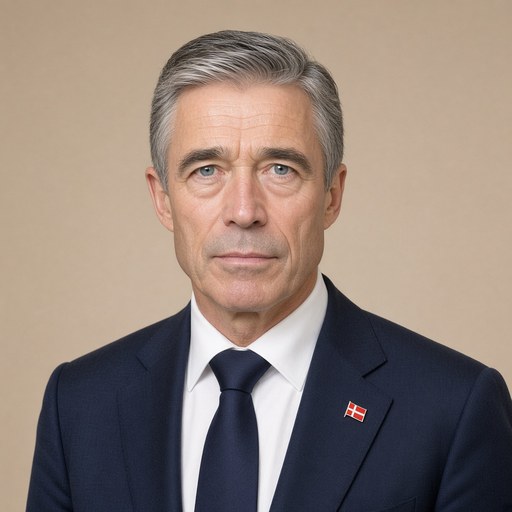
The Prime Minister's speech at DIIS "GLOBAL CHALLENGES FOR EUROPE - The EU after Enlargement"
 Anders Fogh Rasmussen · Prime Minister of Denmark
- Context
- Rasmussen addressed the Danish Institute for International Studies on March 9, 2004, speaking on global challenges facing the EU after enlargement, drawing on a recent visit to China.
- Main themes
- EU enlargement and global challenges, China's economic and technological rise, European competitiveness, knowledge society and innovation, research and education investment, global division of labor, EU single market, brain drain, high-tech job creation, EU research framework program, Europe-China relations, security policy
- Duration
- ~29 min
- Words
- 3,453
- Sentences
- 227
- Readability
- 44
- Grade
- 10.6
- Syntax
- 2.74
- Vocabulary
- 2.06
Translated from Danish
The broad sphere of national life a sentence belongs to. Every sentence has an Arena, so it is the denominator the other indices are read against.
Other227 sentences in 79 paragraphs
Thank you for the invitation to speak here at the institute. Today, I will talk about the global challenges for the EU.
A couple of weeks ago, I visited China with a business delegation and had meetings with the new Chinese leadership. After this visit, it became clear to me that we in Europe will face entirely new challenges in the coming years. Challenges that most people probably have a sense of, but that very few have realized the extent of. In any case, my eyes were opened quite significantly.
It has long been clear that Europe is lagging behind the USA when it comes to economy, technology, and international influence. What is new is that China is beginning to resemble an economic, technological, and security superpower in the making.
China's economy is still modest. But the dynamics and growth rate are so enormous that in a few years, China will have overtaken Europe's largest countries. China has not yet reached the same high-tech level as we have. But the Chinese are moving forward at a rapid pace and are betting heavily on investments in research, education, and innovation. China is still keeping a low profile in global security policy. But the Chinese have begun to play a more active role, most recently in the six-party talks on North Korea.
We should not view this development as a threat. On the contrary, we can gain significant benefits from closer cooperation with China. But for Europe, this requires that we think much more offensively and globally. We must be much better equipped to participate in the global division of labor, both in terms of economy and security policy.
* * *
In the coming years, we will see a significant global relocation of jobs. Production will move to where the best conditions exist. The production that requires a lot of labor will move to where there is plenty of cheap labor, including to China and the rest of Asia. The production that requires large investments will move to where there is plenty of cheap capital, for example, to the USA and Europe.
This is a global division of labor that can be to our mutual benefit. But only if we in Europe become better at creating new jobs. Europe must simply take a mega-step forward in terms of investments in high-tech jobs and the development of a knowledge society where research and education are top priorities. We must develop Europe's economy into a strong, competitive, and dynamic economy.
We have taken the first significant steps. In the 1980s, we started the development of a single market. In the 1990s, we created the common currency, the Euro. And on May 1 of this year, we are implementing the expansion of the EU from 15 to 25 member states. A large single market with over 450 million inhabitants. The world's largest economy.
But unfortunately, not the world's most dynamic economy. We are falling behind technologically. We are losing old jobs, and we are creating too few new jobs.
In a country like China, the annual growth is nearly 10%. And the enterprising Chinese coastal regions receive an influx of 20 million new workers each year. This is growth and development that is tangible.
Also in vital areas such as research and innovation, Europe is lagging behind. This is especially true in relation to the USA. Americans spend more money on research and development. They have more high-tech patents per capita than Europe. There are more researchers in the USA relative to the population than in Europe. However, this is not because Europe does not educate many researchers – we do, but we cannot retain them. It is estimated that more than 400,000 European researchers work in the USA.
We must put employment for Europe's population at the center. And therefore, we must now launch a large-scale plan for the development of the EU into a leading knowledge society. We should invest very heavily and very purposefully.
I propose that we set the goal of developing a new and genuine common area for research, development, and education.
Research and education should continue to be national matters. But we should supplement the national efforts with initiatives at the EU level. By pooling our resources in the EU, we can undertake research projects that individual member states cannot manage on their own. This applies, for example, to advanced space research.
I believe that in the coming years, we should double the EU's efforts in research, education, and development.
I will specifically propose five elements in a strategy for developing a single market for research, development, and education.
First, funding for the EU's framework program for research should be significantly increased.
Second, we should establish a new basic research fund at the EU level. The fund should be used to strengthen European basic research in future technologies, such as nano, hydrogen, and environmental technology.
Third, we should strengthen cooperation on innovation and technology dissemination. The task is to translate research results into new productions as quickly as possible. We should facilitate the exchange of information about new research results across borders, for example, by establishing technological platforms where multiple stakeholders work together to solve common problems. The European patent should be implemented immediately.
Fourth, we should significantly expand the EU's programs for European exchange of students, teachers, and researchers. The ambition should be to see the EU as one area where students, teachers, and researchers naturally study, teach, and research anywhere in the EU. And we should establish a European research prize that can highlight the great importance we attach to research in Europe.
Fifth, we should expand our exchange programs with other regions of the world. The ambition is to make Europe a leading international center for education and research. We should attract students from, among others, America and Asia to a much greater extent than today. And we should establish Europe colleges or universities in other regions, such as America, Asia, and the Middle East.
Such a strong investment in new areas requires that we make significant reallocations in the EU's budget. A ceiling has already been set on the EU's agricultural expenditures from 2007, so they will constitute a declining share of the EU budget. We can also target structural support to the poorer regions of the EU so that it more effectively stimulates the development of knowledge societies.
The single market, the common currency, and the expansion of the EU represent significant steps forward for Europe. Now we need to take a new significant step forward. Make the EU a leading knowledge economy. By creating a common area for research, development, and education.
We must put people first. Also in the EU. We must ensure employment by investing in jobs with a future. And by educating and qualifying ourselves for future jobs.
* * *
But we also face new challenges in security policy. International terrorism, failed state formations, the proliferation of weapons of mass destruction, civil wars, man-made disasters, the whole well-known list. Europe must address these global challenges together with like-minded and proactive actors, primarily the USA.
The EU should play a particularly responsible security role in Europe and in Europe's neighborhood, for example, in the Middle East and Africa. The EU must be able to deploy its many economic, aid, diplomatic, and other instruments alongside military ones. This will create added value in security policy.
But this requires that we enhance the capacity of EU countries to initiate and carry out military operations in conflict-affected areas. And it requires that we improve the possibilities for formulating and following a common foreign and security policy in the EU.
The cornerstone of European security will continue to be NATO – and thus cooperation with the USA and Canada. But within this framework, we should strengthen Europe's ability to prevent and resolve regional conflicts on its own.
The EU has taken the first step by establishing a rapid reaction force that can undertake military peacekeeping, peace enforcement, and humanitarian tasks when NATO as such does not wish to engage.
The EU has already taken over the first military operation from NATO, namely in Macedonia. In a few months, the EU will take responsibility for the operation in Bosnia from NATO. SFOR will become EUFOR. The largest and most demanding task for the EU to date.
Also in conflict-ridden Africa, the EU can play a positive role. Both through direct operations, as we have already seen in Congo, and by supporting African organizations' own peacekeeping efforts.
As in NATO, we are still talking about national military contributions. Defense remains a national matter. But countries that wish to do so can contribute troops to such EU-led operations.
It is a natural next step to improve the military capacity of EU countries. Therefore, it has been proposed to establish a European agency for defense material, research, and military capacity. I believe this is a good proposal because it can hopefully also contribute to strengthening Europe's own technological research and development.
But the EU will only become a serious player on the international stage if we become better at speaking with one voice.
Let us not be naive: Foreign, defense, and security policy will continue to be primarily a national matter. But we should be better at finding a common position and following a common stance. Only such a common approach will give Europe's voice weight in the international community.
That is why we should establish the new position of EU Foreign Minister. A strong office where the EU Foreign Minister will chair the Foreign Affairs Council and have the right to propose initiatives alongside the member states.
Such a position does not guarantee that EU countries will speak with one voice. But if we choose the right person, who understands the balance between national and common interests, then I have no doubt that the EU will take a significant step forward towards a stronger role on the international stage.
* * *
The Middle East and North Africa are part of the EU's neighborhood. From the Danish side, there has traditionally been a tendency to view the entire region in light of the Israeli-Arab conflict. And that is how most other European countries have viewed it as well.
But we need to consider the region from a broader perspective. The populations in most of the Arab world live in unfreedom and under such miserable conditions that it creates intense anger and frustration. This frustration can quickly be directed against the rest of the world – not least the USA and Europe. Although the causes of the populations' woes and frustrations must primarily be found in domestic political conditions in the individual countries.
Here is a foreign and security policy challenge that the EU must prioritize highly in the coming years. There is a need for cooperation with the countries in the Middle East and North Africa, a partnership based on five main points.
First, a political dialogue on democracy and human rights. The goal is to ensure respect for human rights, to reform political institutions, to ensure free exchange of news, information, and ideas, to strengthen the rule of law, and to combat corruption.
Second, ensuring women's rights and their participation in public life.
Third, improving the education system and the social system.
Fourth, economic cooperation, where the goal is more free trade and strengthening the private sector through special programs for small and medium-sized enterprises.
Fifth, a regional security cooperation. The goal is disarmament and arms control, but also ensuring the legitimate security interests of the countries. In such a regional security cooperation, NATO should play an active role.
The EU's efforts could consist of providing support for reforms in these areas in the Arab countries.
Some may rightly ask what incentive the authoritarian regimes in the Middle East would have to initiate cooperation on democratization and opening their societies.
I can see at least two incentives. First, the economic benefits of enhanced economic cooperation. Second, the regional security cooperation with NATO. But this last point emphasizes that a new partnership with the Arab world cannot be carried by the EU alone. I believe that the establishment of such a new partnership with the Arab world must occur in cooperation between the EU, the USA, and the Arab countries, which must have a sense of ownership for the necessary changes in their societies.
In reality, we could be inspired by the model that was used in Europe in the 1970s. In the midst of the Cold War, it was possible to create a dialogue across interest differences and attitude differences between the communist dictatorships in the East and the rest of Europe and the USA and Canada in the West. The formal framework was the security conference, the CSCE, the Conference on Security and Cooperation in Europe.
Perhaps we need a similar formal framework for dialogue and partnership with the Arab countries, the Conference on Security and Cooperation in the Middle East, CSCM.
But the crucial thing is not structures and institutions. The crucial thing is the content. And there have been several proposals for establishing such a partnership with the Arab countries. We must now consider them. But I consider it absolutely essential that the EU formulates a special strategy for the Middle East.
The Nordic and Baltic countries started with a concrete proposal at the EU summit in the spring of 2003. This has since been followed up with an interesting French-German initiative. And we know that the American government is also very focused on this idea. The summer summits of the G-8, EU/USA, and NATO will likely deal intensively with how we can strengthen dialogue and cooperation with the Arab countries on security, democracy, and economic development.
* * *
A comprehensive and long-term strategy for the Middle East is, in my view, a natural point in the transatlantic cooperation between the EU and the USA.
There is a need for new momentum in transatlantic cooperation. Over the past year, we have witnessed a number of serious political tensions in the transatlantic relationship. This is particularly true regarding the Iraq conflict. But also the International Criminal Court, the Kyoto Protocol, climate policy, and the trade dispute over genetically modified foods are examples of difficult and principled disagreements that have strained the relationship.
In my opinion, there is a need for a genuine relaunch of cooperation between the EU and the USA. A new beginning.
NATO is today the framework for the security policy dialogue between Europe and the USA. But in fact, NATO is the only formal forum we have for a regular and organized transatlantic dialogue. Between the EU and the USA, there is a rather formalistic and bureaucratized dialogue centered around an annual EU-USA summit.
In my view, there is a clear need to strengthen cooperation on larger themes based on a discussion of the real, difficult challenges that Europe and the USA share. Also the points where we disagree.
Let me highlight three major themes of cooperation that I find central:
First, we should continue to expand cooperation in the field of trade policy. We have vital interests at stake in ensuring a smooth conduct of transatlantic trade. The vast majority of trade between Europe and the USA is unproblematic. But it is clear that we must continue to work to avoid unfortunate trade disputes. Here, both sides must take responsibility for the trade. I would like to see developments lead to a genuine transatlantic free trade area in the long term.
The second area is development policy and sustainable development. Here, the EU and the USA truly face a common challenge. We must stand together to combat poverty in the world. It is a matter of human decency and justice. And it is a matter of long-term security and stability in the world. We must work together for sustainable development based on increased market access and free trade, development aid, good governance, and a greater effort for a better environment. Development policy and the environment are areas where the EU is the leading force in the world. And we must insist that these issues are given high priority in the transatlantic dialogue. It is also in the USA's long-term interest to seek an expansion of cooperation in this area.
Third, there is a need for a broader foreign and security policy dialogue between Europe and the USA. Counter-terrorism should be a main topic for such contacts between the EU and the USA. We have a mutual interest in a stable world order and the promotion of freedom and democracy.
Cooperation between the EU and the USA should, of course, be characterized by balance and equality. Here, the EU countries can make a significant contribution by improving the EU's ability to speak with one voice. A united EU with 25 countries will be the world's most powerful economic entity. If we manage to stay united on a common line in major international issues, we will be strong and impossible to ignore.
The first steps to strengthen transatlantic ties should be taken at the upcoming summit between the EU and the USA in June. Here, we should seriously address the major and difficult themes of cooperation that I have mentioned. In the next phase, we should also consider whether strengthened cooperation should lead to a more permanent and decision-making structure for the transatlantic dialogue. A possible model could be to develop a Charter or an agreement between the EU and the USA as a basis for a dialogue that extends beyond pure security policy.
With the Constitutional Treaty, we are proposing a significant strengthening of the EU's general foreign policy capacity, among other things with the new EU foreign minister and a permanent president of the European Council. One of the areas where it will be most obvious to utilize this new capacity is in a revitalized EU-USA cooperation.
Europe and the USA share a common past and a common political and cultural heritage. We have shared values. And we face tasks and challenges that, in my conviction, we can only solve together.
The USA is today the world's only superpower. But the USA needs partners to address the challenges of the future. The EU is the world's largest economic entity. But it cannot act alone in a global context. We have a mutual interest in cooperating. The relationship with the USA should be central to the EU's common foreign policy and our efforts to create a strengthened European role on the global stage. And the USA has a clear long-term interest in a strong Europe as a global partner.
Therefore, there is no contradiction between wanting a stronger EU and at the same time wanting to strengthen transatlantic cooperation. On the contrary, the USA needs a Europe that is strong and united. And Europe needs to be strong and united so that cooperation with the USA can take place in a balanced and equal manner.
* * *
Today, I have deliberately not spoken about the Danish exceptions. For I would like to put an end to the kind of Europe debate where we in Denmark cannot discuss the great challenges of the future because we keep digging into the debate about the Danish exceptions.
The Danish exceptions are harmful, yes. But primarily for Denmark itself. They do not affect the global development and the global challenges we face.
I would like us to have a Danish debate about what we want with the EU. How we can use the EU to meet the global challenges.
My conclusion is clear: The global challenges are so great that the countries of Europe must cooperate to meet them economically, in foreign policy, and in security policy. Therefore, we need stronger cooperation in the enlarged EU to give Europe a significant boost forward to become a leading knowledge economy in the world. And we need enhanced foreign, security, and defense policy cooperation. That is also why we need to get the new Constitutional Treaty in place as soon as possible.
Europe enters the 21st century reunited and strengthened. But also with a new agenda and new challenges.
With the enlargement, the EU has truly taken the step from a regional to a global actor. Europe must increasingly engage actively with the world around it in the coming years. This applies economically, in foreign policy, and in security policy.
Europe's potential is great. And the goal is clear – we must be at the forefront of development in the 21st century. We must engage positively and constructively in global development. For this to succeed, it requires the will to tackle the big tasks and think anew.
The original Danish. The tags above are read on the English translation's sentences.
Tak for invitationen til at tale her i instituttet. Jeg vil i dag tale om de globale udfordringer for EU.
For et par uger siden besøgte jeg Kina sammen med en erhvervsdelegation og havde møder med den nye kinesiske ledelse. Efter dette besøg står det klart for mig, at vi i Europa vil stå over for helt nye udfordringer i de kommende år. Udfordringer, som de fleste nok har en fornemmelse af, men som de færreste har indset omfanget af. I hvert fald blev mine øjne åbnet ganske kraftigt.
Det har længe stået klart, at Europa halter bagefter USA, når det gælder økonomi, teknologi og international indflydelse. Det nye er, at Kina begynder at ligne en økonomisk, teknologisk og sikkerhedspolitisk supermagt i svøb.
Endnu er Kinas økonomi beskeden. Men dynamik og vækstrate er så enorm, at Kina om få år har overhalet Europas største lande. Endnu har Kina ikke nået samme højteknologiske niveau som os. Men kineserne bevæger sig fremad med stormskridt og satser benhårdt på investeringer i forskning, uddannelse og innovation. Endnu holder Kina en lav profil i global sikkerhedspolitik. Men kineserne er begyndt at spille en mere aktiv rolle. Senest i 6-parts-forhandlingerne om Nordkorea.
Denne udvikling skal vi ikke betragte som en trussel. Tværtimod kan vi drage stor fordel af et tættere samarbejde med Kina. Men for Europas vedkommende kræver det, at vi tænker langt mere offensivt og globalt. Vi skal være langt bedre rustede til at deltage i den globale arbejdsdeling, både når det gælder økonomi og sikkerhedspolitik.
* * *
I de nærmeste år vil vi se en omfattende global flytning af arbejdspladser. Produktionen vil flytte derhen, hvor der er de bedste forudsætninger. Den produktion, som kræver megen arbejdskraft, vil flytte derhen, hvor der er rigeligt med billig arbejdskraft, bl.a. til Kina og det øvrige Asien. Den produktion, som kræver store investeringer, vil flytte derhen, hvor der er rigeligt med billig kapital, f.eks. til USA og Europa.
Det er en global arbejdsdeling, som kan blive til fælles bedste. Men kun hvis vi i Europa bliver bedre til at oprette nye arbejdspladser. Europa må simpelt hen tage et mega-skridt fremad med hensyn til investeringer i højteknologiske arbejdspladser og udvikling af et videnssamfund, hvor forskning og uddannelse ligger helt i top. Vi skal udvikle Europas økonomi til en stærk, konkurrencedygtig og dynamisk økonomi.
Vi har taget de første betydningsfulde skridt. I firserne startede vi udviklingen af et indre marked. I halvfemserne skabte vi den fælles valuta, Euro’en. Og den 1. maj i år gennemfører vi udvidelsen af EU fra 15 til 25 medlemslande. Et stort indre marked med over 450 millioner indbyggere. Verdens største økonomi.
Men desværre ikke verdens mest dynamiske økonomi. Vi sakker agterud teknologisk. Vi mister gamle arbejdspladser, og vi opretter for få nye arbejdspladser.
I et land som Kina er den årlige vækst næsten 10 %. Og de driftige kinesiske kystregioner modtager årligt en tilgang på 20 millioner nye arbejdstagere. Det er en vækst og udvikling, det er til at tage og føle på.
Også inden for så vitale områder som forskning og innovation halter Europa efter. Det gælder ikke mindst i forhold til USA. Amerikanerne bruger flere penge på forskning og udvikling. De har flere høj-teknologiske patenter pr. indbygger end Europa. Der er flere forskere i USA i forhold til befolkningen end i Europa. Det skyldes imidlertid ikke, at Europa ikke uddanner mange forskere – det gør vi, men vi kan ikke holde fast på dem. Det er anslået, at mere end 400.000 europæiske forskere arbejder i USA.
Vi skal sætte beskæftigelsen for Europas befolkning i centrum. Og derfor må vi nu iværksætte en storstilet plan for udvikling af EU til et førende vidensamfund. Vi bør satse meget stort og meget målbevidst.
Jeg foreslår, at vi sætter det mål at udvikle et nyt og reelt fælles område for forskning, udvikling og uddannelse.
Forskning og uddannelse bør fortsat være nationale anliggender. Men vi bør supplere den nationale indsats med initiativer på EU-plan. Ved at lægge kræfterne sammen i EU kan vi løfte forskningsprojekter, som de enkelte medlemslande ikke selv kan overkomme. Det gælder f.eks. den avancerede rumforskning.
Jeg mener, at vi i de kommende år bør fordoble EU’s indsats inden for forskning, uddannelse og udvikling.
Jeg vil helt konkret foreslå fem elementer i en strategi for udvikling af et indre marked for forskning, udvikling og uddannelse.
For det første bør bevillingerne til EU’s rammeprogram for forskning forøges væsentligt.
For det andet bør vi på EU-plan etablere en ny grundforskningsfond. Fonden skal bruges til at styrke europæisk grundforskning i fremtidens teknologier, f.eks. nano-, hydrogen- og miljøteknologi.
For det tredje bør vi styrke samarbejdet om innovation og teknologispredning. Opgaven er at omsætte forskningsresultater til nye produktioner så hurtigt som muligt. Vi bør lette udvekslingen af information om nye forskningsresultater over landegrænserne, f. eks. ved at etablere teknologiske platforme, hvor flere interessenter arbejder sammen om løsningen af fælles problemer. Det Europæiske patent skal straks sættes i værk.
For det fjerde bør vi udvide EU’s programmer for europæisk udveksling af studerende, lærere og forskere markant. Ambitionen bør være at se EU som ét område, hvor uddannelsessøgende, lærere og forskere som den mest naturlige ting studerer, underviser og forsker hvor som helst i EU. Og vi bør etablere en europæisk forskningspris, der kan vise den store betydning, vi tillægger forskning i Europa.
For det femte bør vi ekspandere vore udvekslingsprogrammer i forhold til andre regioner i verden. Ambitionen er at gøre Europa til et førende internationalt center for uddannelse og forskning. Vi bør i langt højere grad end i dag tiltrække studerende fra bl.a. Amerika og Asien. Og vi bør etablere Europa-colleges eller –universiteter i andre regioner, f.eks. Amerika, Asien og Mellemøsten.
En så kraftig satsning på nye områder kræver, at vi foretager en betydelig omprioritering på EU’s budget. Der er allerede lagt et loft over EU’s landbrugsudgifter fra 2007, så de vil udgøre en faldende andel af EU-budgettet. Vi kan også målrette strukturstøtten til de fattige regioner i EU, så den i højere grad stimulerer udviklingen af vidensamfund.
Det indre marked, den fælles valuta og udvidelsen af EU repræsenterer markante skridt fremad for Europa. Nu behøver vi at tage et nyt markant skridt fremad. Gøre EU til en førende vidensøkonomi. Ved at skabe et fælles område for forskning, udvikling og uddannelse.
Vi skal sætte mennesker først. Også i EU. Vi skal sikre beskæftigelsen ved at investere i arbejdspladser med fremtid i. Og ved at uddanne og kvalificere os til fremtidens jobs.
* * *
Men også sikkerhedspolitisk står vi over for nye udfordringer. Den internationale terrorisme, fejlslagne statsdannelser, spredning af masseødelæggelsesvåben, borgerkrige, menneskeskabte katastrofer, hele den velkendte liste. Europa må tage disse globale udfordringer op sammen med ligesindede og handlekraftige aktører, i første række USA.
EU bør spille en særligt ansvarsfuld sikkerhedspolitisk rolle i Europa og i Europas nærområde, f.eks. i Mellemøsten og Afrika. EU skal kunne bringe sine mange økonomiske, bistandsmæssige, diplomatiske og øvrige instrumenter i anvendelse sammen med de militære. Derved vil der blive skabt sikkerhedspolitisk merværdi.
Men det kræver, at vi udbygger EU-landenes kapacitet til at iværksætte og gennemføre militære operationer i konfliktramte områder. Og det kræver, at vi forbedrer mulighederne for at formulere og følge en fælles udenrigs- og sikkerhedspolitik i EU.
Hovedhjørnestenen i europæisk sikkerhed vil fortsat være NATO – og dermed samarbejdet med USA og Canada. Men indenfor denne ramme bør vi styrke Europas evne til selv at forebygge og løse regionale konflikter.
EU har taget det første skridt ved at etablere en udrykningsstyrke, som kan påtage sig militære fredsskabende, fredsbevarende og humanitære opgaver, når NATO som sådan ikke ønsker at engagere sig.
EU har allerede overtaget den første militære operation fra NATO, nemlig i Makedonien. Om nogle måneder overtager EU ansvaret for operationen i Bosnien fra NATO. SFOR bliver til EUFOR. Den hidtil største og mest krævende opgave for EU.
Også i det konfliktplagede Afrika kan EU komme til at spille en positiv rolle. Dels gennem direkte operationer, som vi allerede har set det i Congo, dels ved støtte til afrikanske organisationers egne fredsskabende bestræbelser.
Ligesom i NATO er der fortsat tale om nationale militære styrkebidrag. Forsvar er fortsat et nationalt anliggende. Men de lande, som ønsker det, kan tilmelde tropper til sådanne EU-ledede operationer.
Det er et naturligt næste skridt at forbedre EU-landenes militære kapacitet. Derfor er det foreslået at etablere et europæisk agentur for forsvarsmateriel, forskning og militær kapacitet. Det, mener jeg, er et godt forslag, fordi det forhåbentlig også kan bidrage til at styrke Europas egen teknologiske forskning og udvikling.
Men EU bliver kun en seriøs spiller på den internationale scene, hvis vi bliver bedre til at tale med én stemme.
Lad os ikke være naive: Udenrigs-, forsvars- og sikkerhedspolitik vil fortsat som udgangspunkt være et nationalt anliggende. Men vi bør være bedre til at finde en fælles holdning og følge en fælles holdning. Kun en sådan fælles optræden vil give Europas stemme vægt i det internationale samfund.
Det er derfor vi bør oprette den nye post som EU-udenrigsminister. Et stærkt embede hvor EU-udenrigsministeren bliver formand for udenrigsministerrådet og får ret til at foreslå initiativer på linie med medlemslandene.
En sådan post giver ikke garanti for, at EU-landene taler med én stemme. Men hvis vi vælger den rette person, som forstår balancen mellem de nationale og de fælles interesser, så er jeg ikke i tvivl om, at EU hermed tager et væsentligt skridt fremad mod en stærkere rolle på den internationale scene.
* * *
Mellemøsten og Nordafrika er en del af EU’s nærområde. Fra dansk side har der traditionelt været en tendens til at se på hele regionen i lyset af den israelsk-arabiske konflikt. Og sådan har de fleste andre europæiske lande også set på det.
Men vi er nødt til at betragte regionen i et bredere perspektiv. Befolkningerne i størstedelen af den arabiske verden lever i ufrihed og under så usle vilkår, at det skaber voldsom vrede og frustration. Den frustration kan hurtigt blive rettet mod den øvrige verden – ikke mindst USA og Europa. Selvom årsagerne til befolkningernes dårligdomme og frustrationer først og fremmest skal findes i indenrigspolitiske forhold i de enkelte lande.
Her er en udenrigs- og sikkerhedspolitisk udfordring, som EU må give højeste prioritet i de kommende år. Der er brug for et samarbejde med landene i Mellemøsten og Nordafrika, et partnerskab baseret på fem hovedpunkter.
For det første en politisk dialog om demokrati og menneskerettigheder. Målet er at sikre respekt for menneskerettighederne, at reformere de politiske institutioner, at sikre fri udveksling af nyheder, informationer og idéer, at styrke retssamfundet og at bekæmpe korruption.
For det andet en sikring af kvinders rettigheder og deres deltagelse i samfundslivet.
For det tredje en forbedring af uddannelsessystemet og det sociale system.
For det fjerde et økonomisk samarbejde, hvor målet er mere frihandel og styrkelse af den private sektor gennem særlige programmer for små og mellemstore virksomheder.
For det femte et regionalt sikkerhedssamarbejde. Målet er nedrustning og våbenkontrol, men også en sikring af landenes legitime sikkerhedsinteresser. I et sådant regionalt sikkerhedssamarbejde bør NATO spille en aktiv rolle.
EU’s indsats kunne bestå i at yde støtte til reformer på disse områder i de arabiske lande.
Nogen kan med rette spørge, hvilket incitament de autoritære regimer i Mellemøsten skulle have til at indlede et samarbejde om demokratisering og åbning af deres samfund.
Jeg kan se mindst to incitamenter. For det første de økonomiske fordele ved et forstærket økonomisk samarbejde. For det andet det regionale sikkerhedssamarbejde med NATO. Men dette sidste understreger, at et nyt partnerskab med den arabiske verden ikke kan løftes af EU alene. Jeg tror, at etableringen af et sådant nyt partnerskab med den arabiske verden skal ske i et samarbejde mellem EU, USA og de arabiske lande, som skal have en følelse af ejerskab for de nødvendige forandringer af deres samfund.
I virkeligheden kunne vi lade os inspirere af den model, som blev anvendt i Europa i halvfjerdserne. Midt under Den Kolde Krig lykkedes det at skabe en dialog på tværs af interesseforskelle og holdningsforskelle mellem de kommunistiske diktaturer i Øst og det øvrige Europa og USA og Canada i Vest. Den formelle ramme var sikkerhedskonferencen, CSCE, Konferencen for Sikkerhed og Samarbejde i Europa.
Måske behøver vi en lignende formel ramme for dialog og partnerskab med de arabiske lande, Konferencen for Sikkerhed og Samarbejde i Mellemøsten, CSCM.
Men det afgørende er ikke strukturer og institutioner. Det afgørende er indholdet. Og der er kommet flere bud på etablering af et sådant partnerskab med de arabiske lande. Dem må vi nu overveje. Men jeg anser det for helt afgørende, at EU formulerer en særlig strategi for Mellemøsten.
De nordiske og baltiske lande lagde ud med et konkret forslag på EU’s topmøde i foråret 2003. Det er siden blevet fulgt op med et interessant fransk-tysk udspil. Og vi ved, at den amerikanske regering også er meget optaget af denne tanke. Sommerens topmøder i G-8, EU/USA og NATO vil sandsynligvis beskæftige sig intenst med, hvordan vi kan styrke dialogen og samarbejdet med de arabiske lande om sikkerhed, demokrati og økonomisk udvikling.
* * *
En samlet og langsigtet strategi for Mellemøsten er for mig at se et naturligt punkt i det transatlantiske samarbejde mellem EU og USA.
Der er behov for ny fremdrift i det transatlantiske samarbejde. Vi har i det seneste år været vidne til en række alvorlige politiske spændinger i det transatlantiske forhold. Det gælder selvsagt først og fremmest omkring Irak-konflikten. Men også Den Internationale Straffedomstol, Kyoto-aftalen og klimapolitikken og den handelspolitiske uenighed om genetisk modificerede fødevarer er eksempler på vanskelige og principielle uoverensstemmelser, der har belastet forholdet.
Efter min opfattelse er der behov for en egentlig relancering af samarbejdet mellem EU og USA. En ny start.
NATO er i dag rammen om den sikkerhedspolitiske dialog mellem Europa og USA. Men faktisk er NATO det eneste formelle forum, vi har, for en regelmæssig og organiseret transatlantisk dialog. Mellem EU og USA er der en ret formalistisk og bureaukratiseret dialog med omdrejningspunkt i et årligt EU-USA-topmøde.
Efter min opfattelse er der et klart behov for styrkelse af samarbejdet omkring større temaer med udgangspunkt i en diskussion om de reelle, vanskelige udfordringer, som Europa og USA er fælles om. Også de punkter, hvor vi er uenige.
Lad mig fremhæve tre store samarbejdstemaer, som jeg finder centrale:
For det første bør vi fortsat udbygge samarbejdet på det handelspolitiske felt. Vi har vitale interesser på spil i at sikre en smidig afvikling af den transatlantiske samhandel. Langt den overvejende del af samhandlen mellem Europa og USA er uproblematisk. Men det er klart, at vi fortsat må arbejde på at undgå de uheldige handelspolitiske tvister. Her må begge sider være sig sit ansvar for samhandlen bekendt. Jeg ser gerne, at udviklingen på sigt kan føre til en reel transatlantisk frihandelszone.
Det andet område er udviklingspolitik og bæredygtig udvikling. Her står EU og USA virkelig over for en fælles udfordring. Vi må stå sammen om at bekæmpe fattigdom i verden. Det er et spørgsmål om menneskelig anstændighed og retfærdighed. Og det er et spørgsmål om langsigtet sikkerhed og stabilitet i verden. Vi skal sammen arbejde for en bæredygtig udvikling baseret på øget markedsadgang og frihandel, udviklingsbistand, god regeringsførelse og en større indsats for et bedre miljø. Udviklingspolitik og miljø er områder, hvor EU er den førende kraft i verden. Og vi skal insistere på, at disse spørgsmål vægtes højt i den transatlantiske dialog. Det er også i USA langsigtede interesse at søge en udbygning af samarbejdet på dette område.
For det tredje er der behov for en bredere udenrigs- og sikkerhedspolitisk dialog mellem Europa og USA. Terrorbekæmpelse bør være et hovedemne for sådanne kontakter mellem EU og USA. Vi har en gensidig interesse i en stabil verdensorden og fremme af frihed og demokrati.
Samarbejdet mellem EU og USA bør selvsagt være præget af balance og ligeværdighed. Her kan EU-landene yde et betydeligt bidrag ved at forbedre EU’s evne til at tale med én stemme. Et samlet EU med 25 lande vil være verdens mægtigste økonomiske enhed. Hvis vi formår at holde sammen om en fælles linie i store internationale spørgsmål, så vil vi stå stærkt og ikke være til at komme udenom.
De første skridt til at styrke de transatlantiske forbindelser bør tages allerede på det kommende topmøde mellem EU og USA i juni. Her bør der for alvor tages fat på de store og vanskelige samarbejdstemaer, jeg har nævnt. I næste fase bør vi også overveje, om et styrket samarbejde skal føre til en mere permanent og beslutningsdygtig struktur for den transatlantiske dialog. En mulig model kunne være at udarbejde et Charter eller en aftale mellem EU og USA som grundlag for en dialog, der rækker ud over den rene sikkerhedspolitik.
Med forfatningstraktaten lægger vi op til en betydelig styrkelse af EU’s almene udenrigspolitiske handleevne, blandt andet med den nye EU-udenrigsminister og en permanent formand for Europæisk Råd. Et af de områder, hvor det vil være mest oplagt at udnytte denne nye handlemulighed, er i et revitaliseret EU-USA samarbejde.
Europa og USA deler en fælles fortid og en fælles politisk og kulturel arv. Vi har fælles værdier. Og vi står over for opgaver og udfordringer, som vi efter min overbevisning kun kan løse i fællesskab.
USA er i dag verdens eneste supermagt. Men USA har brug for partnere til at håndtere fremtidens udfordringer. EU er verdens største økonomiske enhed. Men kan ikke handle på egen hånd i en global sammenhæng. Vi har en gensidig interesse i at samarbejde. Forholdet til USA bør stå centralt i EU’s fælles udenrigspolitik og vore bestræbelser på at skabe en styrket europæisk rolle på globalt plan. Og USA har på sin side en klar langsigtet interesse i et stærkt Europa som en global partner.
Der er derfor ikke nogen modsætning mellem at ønske et stærkere EU og så samtidig ønske en styrkelse af det transatlantiske samarbejde. Tværtimod har USA brug for et Europa, som står stærkt og samlet. Og Europa har brug for at stå stærkt og samlet, så samarbejdet med USA kan foregå balanceret og på lige fod.
* * *
I dag har jeg med fuldt overlæg ikke talt om de danske undtagelser. For jeg vil gerne gøre op med den form for Europa-debat, hvor vi i Danmark ikke kan diskutere fremtidens store udfordringer, fordi vi hver gang graver os ned i debatten om de danske undtagelser.
De danske undtagelser er skadelige, ja. Men først og fremmest for Danmark selv. De påvirker ikke den globale udvikling og de globale udfordringer, vi står overfor.
Jeg vil gerne, at vi får en dansk debat om, hvad vi vil med EU. Hvordan vi kan bruge EU til at møde de globale udfordringer.
Min konklusion er klar: De globale udfordringer er så store, at Europas lande må samarbejde om at møde dem økonomisk, udenrigspolitisk og sikkerhedspolitisk. Derfor behøver vi et stærkere samarbejde i det udvidede EU om at give Europa et gevaldigt løft fremad til at blive en førende vidensøkonomi i verden. Og vi behøver et forstærket udenrigs-, sikkerheds- og forsvarspolitisk samarbejde. Også derfor har vi brug for at få den nye forfatningstraktat på plads hurtigst muligt.
Europa træder ind i det 21. århundrede genforenet og styrket. Men også med en ny dagsorden og nye udfordringer.
Med udvidelsen har EU for alvor taget skridtet fra en regional til en global aktør. Europa må i de kommende år i stigende grad forholde sig aktivt til verden omkring sig. Det gælder økonomisk, det gælder udenrigspolitisk, og det gælder sikkerhedspolitisk.
Europas potentiale er stort. Og målsætningen er klar – vi skal være i front af udviklingen i det 21. århundrede. Vi skal engagere os positivt og konstruktivt i den globale udvikling. Skal det lykkes, kræver det vilje til at tage fat på de store opgaver og tænke nyt.